
Hyundai's new all-electric workhorse van offers convenience and efficiency you won’t find in most commercial vehicles. Before buying the Toyota Hiace, make an informed choice about your business's emission-free courier-bus, and fit more in with a Staria Load Electric...
Save thousands on a new Staria Load Electric
Fill in the form - we’ll get you a great price without the stress
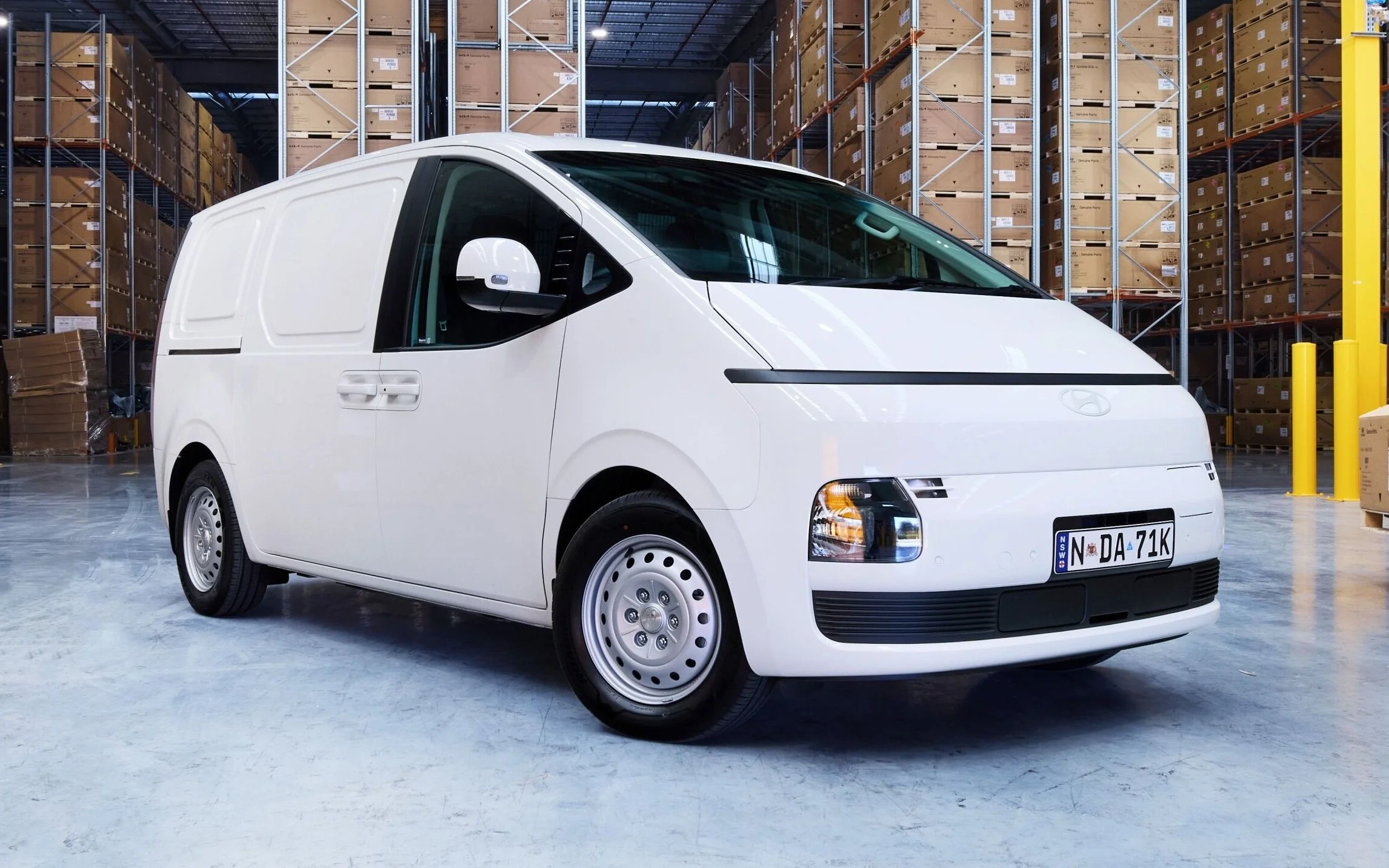
The Staria Load Electric is a large commercial van platform with a fully battery-electric powertrain and oodles of inherent practicality.
If you need a van, you probably should be looking at Hyundai Staria Load and Toyota Hiace, but now you can add the convenience of an all-electric powertrain that can recharge overnight either at home or on-site.
The Staria Load Electric is one of the best usage cases for an electric commercial vehicle because of the nature of the work and the unique way batteries and electric motors handle that…load.
If payload is your currency, a van is better than a ute, especially if your cargo needs to wait behind a locked door before being delivered.
But an electric van makes for an even better proposition thanks to the nature of stop-start deliveries, the native traffic environment in city/metro areas and large provincial towns.
Not only is an electric van a practical option in terms of dimensions and weight it can carry, but it also keeps your reputation intact if you need your business to be seen doing what it can to reduce air pollution.
Zero tailpipe emissions is a term that gets bandied around a lot in the realm of electric vehicles, but why that matters to you has more to do with the nature of the work delivering your clients’ precious widgets to their local area.
In the olden days (and also even today) a smokey old diesel van is a repugnant thing when you’re delivering to inner-city cafes, laneways, suburban shopfronts and bougie restaurants who typically prefer cracked pepper on their braised swan, not soot.
So let’s take a deep-dive into the electric version of the Hyundai Staria Load Electric and see how well it stacks up.

If you’re new to vans - or you simply want to know more before buying your business’s next new load-hauler, check out my Measuring Cargo Volume report here >>
ENGINE
Hiace has a big 84kWh battery powering a 160kW, 350Nm AC electric motor that drives the front wheels
So, no new surprises there - good or bad - in either case. Hyundai’s engine is smaller, but it goes just as hard, and it’s been more reliable, historically, than Toyota’s. Anyway, performance is about the same. But Staria Load promises 15 per cent better fuel efficiency, according to the official standardised tests - and that could be a pretty important detail for you, if you’re going to clock up the kays, and you want to maximise profit at the end of the day. Because you’re running a business
Hiace ‘only’ tows 1500 kilos, which is hardly trivial. Notionally, Staria Load tows 2500 - but the towball download limit on the Staria is only 100 kilos, so in practise, that’s going to limit you to something like 1500 kilos ATM in any case.
Both vans have just over a tonne of payload (Hiace slightly ahead there, but it’s pretty similar).
DRIVING
If maneuverability matters to you, doing a 10-point turn in the inner city is less than ideal, which is why vans are the best option for couriers and that includes for transporting heavy equipment, because good vans can not just be functional from an access point of view, they can also take the weight.
So getting a big, cumbersome, heavy component into a tight space makes sense with a van because the load bay doesn’t need to be half the height of the vehicle and thereby limiting forklift access. vans can off forklift access in low headroom environments because the floor is only a few inches from the floor level.
If you have pellets to deliver that are stacked tall, an electric van that can drive into an enclosed space be off-loaded and reverse out again makes perfect sense. Staria Load’s 11.9-metre turning circle makes it a full metre better than a Triton, and half a metre better than Hilux and Ranger. Not to mention a Staria Load has metres of physical cargo space inside its locked doors, which again beats any of the conventional fleet utes, even in their 4X2 single-cab configurations.
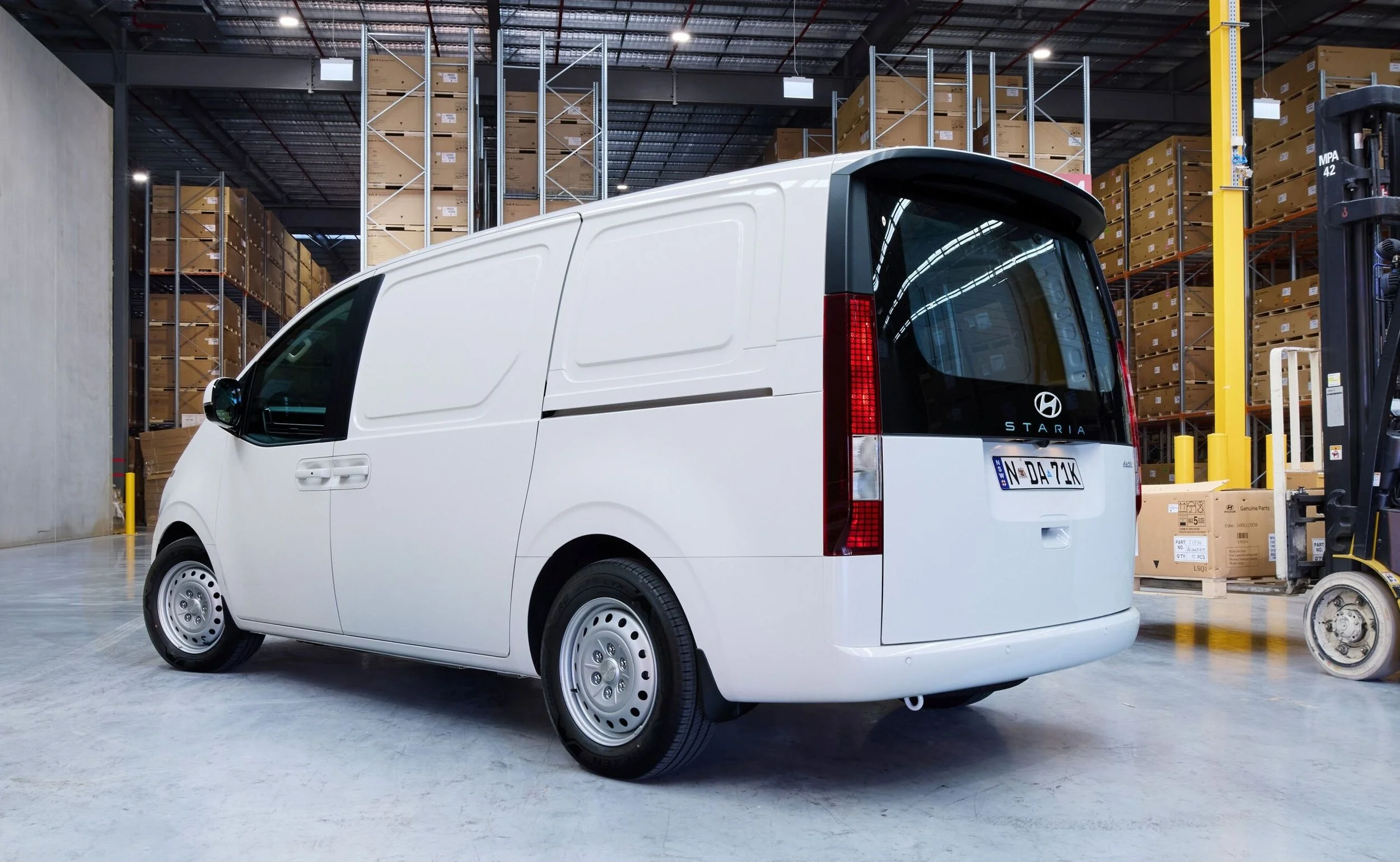
Staria Load rides very politely when carrying your mobile workshop but isn’t back-breaking if (ever) unladen
So, you’ll need to know the Toyota Hiace will 180 itself in one hit if the kerbs are no less than 11 metres apart, while the Hyundai needs almost one metre more (11.94). Pro Tip: Do your U-turn as slowly as possible to reduce understeer - the faster you try to turn, the wider you’ll push the vehicle, reducing your ability to follow the tightest radius possible.
You get a great camera system on the Staria Load, however, which you don’t get on a Hiace. You can set it up however you want, either an overhead view, split screen, side view. If you’re in tight parking mode, it’s really helpful. So are the low sills and big mirrors for seeing the environment around you.
There’s even some aerodynamic treatment on the door mirror mounting: four big, fat vortex generators which re-energise the air flow and stop it noisily and turbulently separating through that quasi-venturi, as the pressure drops. And, yeah, I know it seems ridiculous to use the word ‘aerodynamics’ in a report on a big white box on wheels.

Internal dimensions for Staria Load Electric are identical to diesel & hybrid versions; payload is up 0.8%
Happily, you can also start upgrading your Staria-Load in the event that the standard vehicle doesn’t quite meet your needs, which is typical of any self-respecting electrician or plumber. You’re forever loading on and off of the roof in particular.
There’s a Premium version of Staria-Load to meet those needs, which includes better headlights, a bit of bling in the form os machine-faced 17-inch alloy wheels and a nudge bar for protecting your beehive grille from touch-parking.
So, Staria Load is comfortable enough, and very well equipped - for a van. It’s stacked, unlike vans of the past with tiny screens, no tech, and safety only ever being an afterthought.
Happily, you will not need a physio after two hours on the freeway, and two hours back, and it’s easy enough to get in and out of, which is important if you’ve got a whole suburb’s worth of online shopping to deliver, five days a week.
Unladen, Staria Load has that jittery ride that’s emblematic of a device that’s designed to accept about 800 kilos of heavy crap every day. You can just tell that with 400-odd kilos on board, the ride is going to be ideal for a van.
So if you’re a tradie with $10,000 worth of powertools, rolls of cable and endless fittings, a floor covered in gear like a welding helmet >>, and a roof rack loaded with ladders and building materials, the ride is gunna be beyond acceptable. But if you’re a delivery contractor, the trip to the depot in the morning, and the trip home in the evening might just be just a bit bouncy.
Goulburn is a couple of hundred kilometres away from outer norther Sydney, and in the unlikely event you need to drive it dead empty, it will not be terrible despite the condition of the roads. It is also abundantly quiet at highway speeds thanks to the electric powertrain.
You’ll like the overall battery-electric powertrain refinement, and the adaptive cruise which works seamlessly in dense traffic on the freeway on the way home after an exhaustive day, incidentally. It is such a drastic improvement over previous generations of vans, most of which didn’t even have standard cruise until quite recently.
SAFETY
Staria Load is very safe, too, inclusive of the new centre airbag that stops you getting headbutted by your apprentice passenger.
Staria Load has been awarded five stars by ANCAP, together with the Staria people mover. It scored 85 per cent for adult occupant protection, 65 per cent for vulnerable road user protection and 74 per cent for safety assistance tech. Child occupant protection was unrated, because it’s a van. The Staria people mover scored 86 per cent on the kid safety front.
You can view Staria-Load’s full crash test report here >> if you need to, but keep in mind the Staria people mover has a full-length curtain airbag which won’t pertain in the van. But the driver does get curtain airbags, obviously.

Staria Load holds up very well to the bone-crunching pole test at 35km/h.
Potentially life-saving crash avoidance features on Staria Load include autonomous emergency braking, lane support and blind-spot monitoring as standard. But it lacks AEB ‘Junction Assist’ and ‘Backover’ (reverse).
I'll help you save thousands on a new Hyundai Staria-Load van here
Just fill in this form. No more car dealership rip-offs. Greater transparency. Less stress.
FUNCTIONALITY
Hiace is rear-wheel drive, while the Staria is front-wheel drive (which helps make the Toyota 200kg heavier, unladen). Hiace has a six-speed auto, whereas the Hyundai has eight - and I think the smaller displacement engine together with the additional transmission ratios goes a long way to explaining the Hyundai’s lower thirst for fuel.
Of course, actual consumption in either case is going to depend on operational factors, but mainly how hard you flog its tits off, heavily loaded.
Staria Load is built on the Santa Fe platform - but there’s no AWD option in the van, despite the Staria people mover diesel copping AWD. You’ll have to fantasise about turning up at the campsites in an AWD Staria Load,
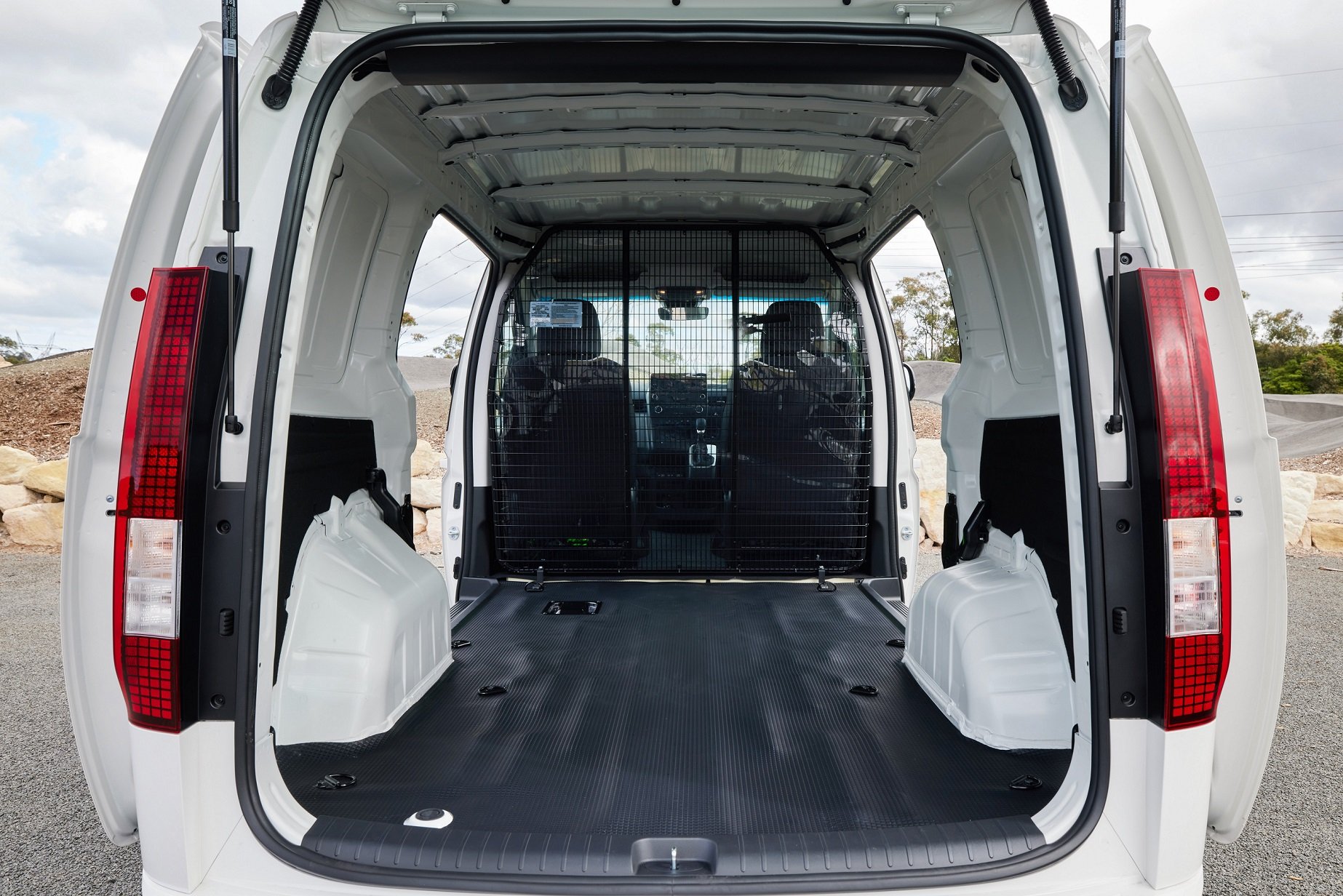
There’s almost five cubic metres of load-space in a Staria Load - which is enough for multiple pallets of cargo.
If you want to learn more about Staria-Load’s payload potential, check out my dedicated Measuring Cargo Volume report here >> or watch the video below.
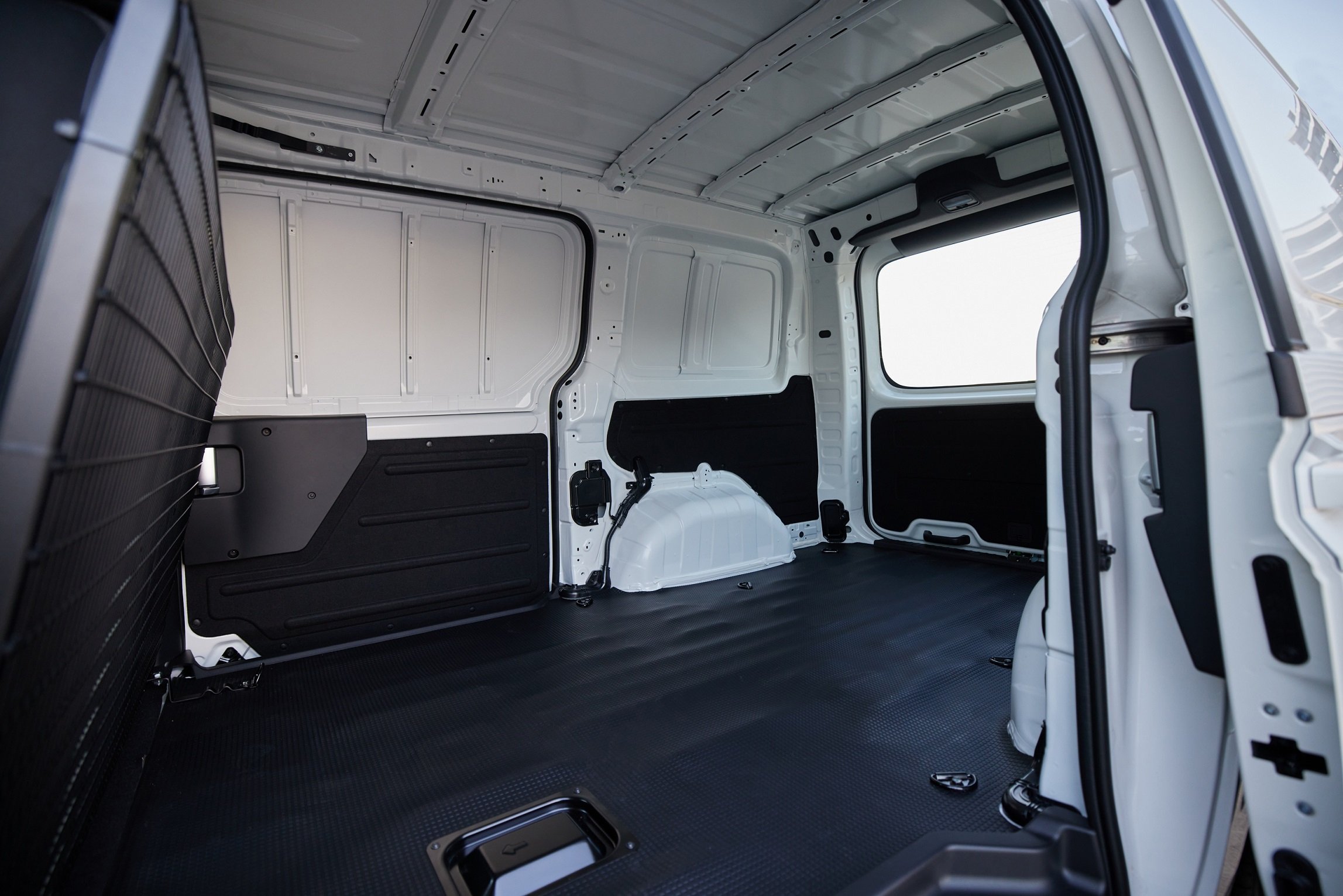
Staria-Load’s dimensions are important to know if you have to fit it into small spaces. It’s 5.24 metres long, but if you need the tailgate open, you’ll need an extra 1.4 metres of space behind. It also acts as an excellent shelter from the rain on-site.
Staria-Load is exactly 2.0 metres tall and 1.99 metres wide, while the sliding side-door offers 870mm of width to load your precious cargo, your payload limit for which can be as much as 1018kg. The load bay length inside is exactly 2.6 metres, and it’s 1.64 metres wide, with a maximum 1.43 metres in load height.
Gross vehicle mass (GVM) is 3020kg, and gross combination mass (GCM) is 5520kg meaning: You can tow your maximum 2500kg with 100kg towball download (although I strongly advise against doing that), but with only 918kg of payload (including you), in a van weighing 2002kg. That’s the critical limit - and probably not that safe if you don’t drive ultra-conservatively.
If you max-out your payload of 1018kg, you cannot tow.
Wanna know more about how much Staria Load can carry versus the Toyota Hiace? Here it is:
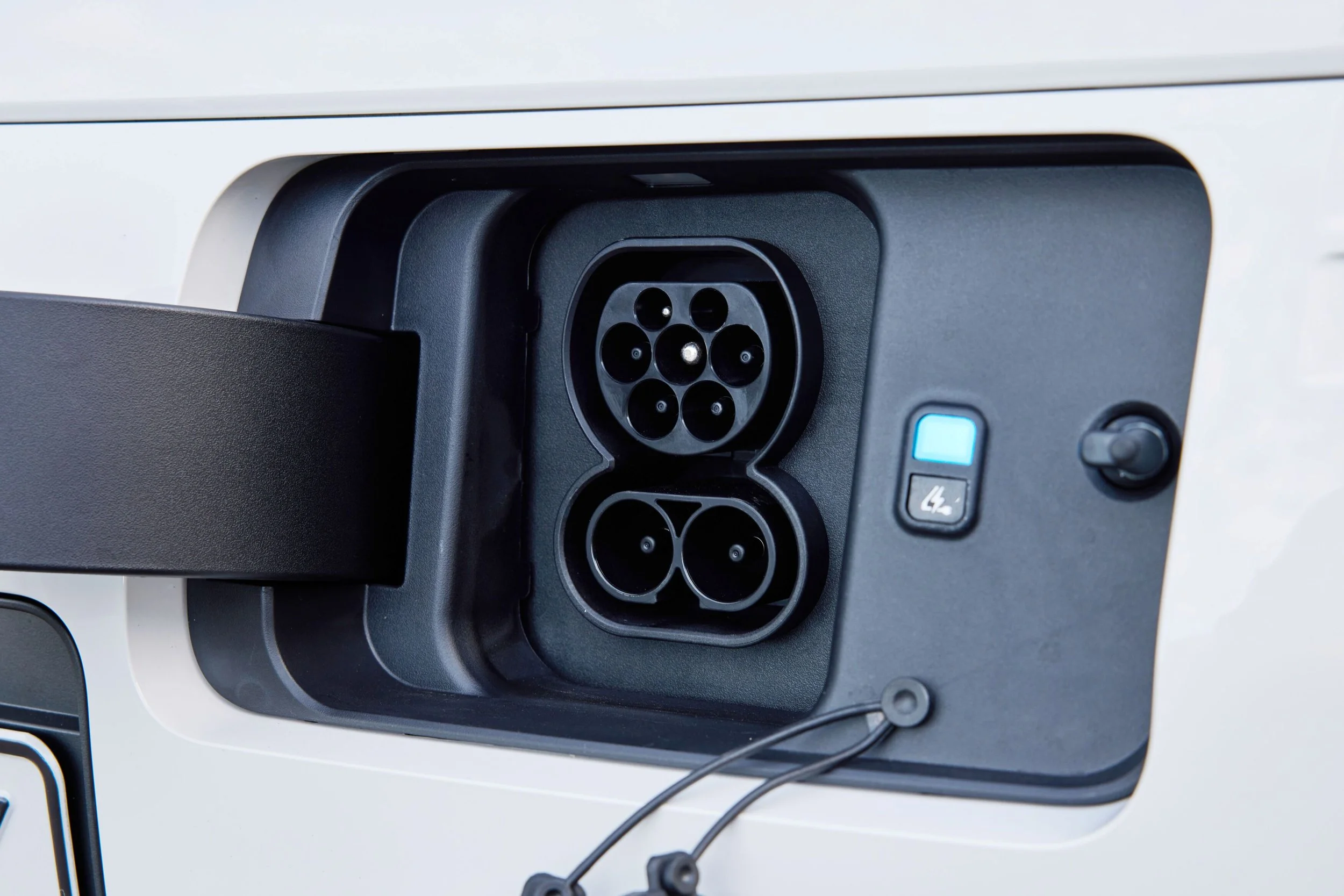
As for charging, you’ll have to park front-on to the public charging infrastructure because the charging receptacle is on the front passenger side, meaning you won’t be able to reverse park and make the cable reach.
This is a good news/bad news story because at least then you can still access the rear of the vehicle while you’re charging, especially if you’re cunning enough to do so while making a delivery of some kind. Killing two birds with one stone here means you can actually open that enormous tailgate which would otherwise most likely run into the yellow bollards typically protecting the charging station box itself.
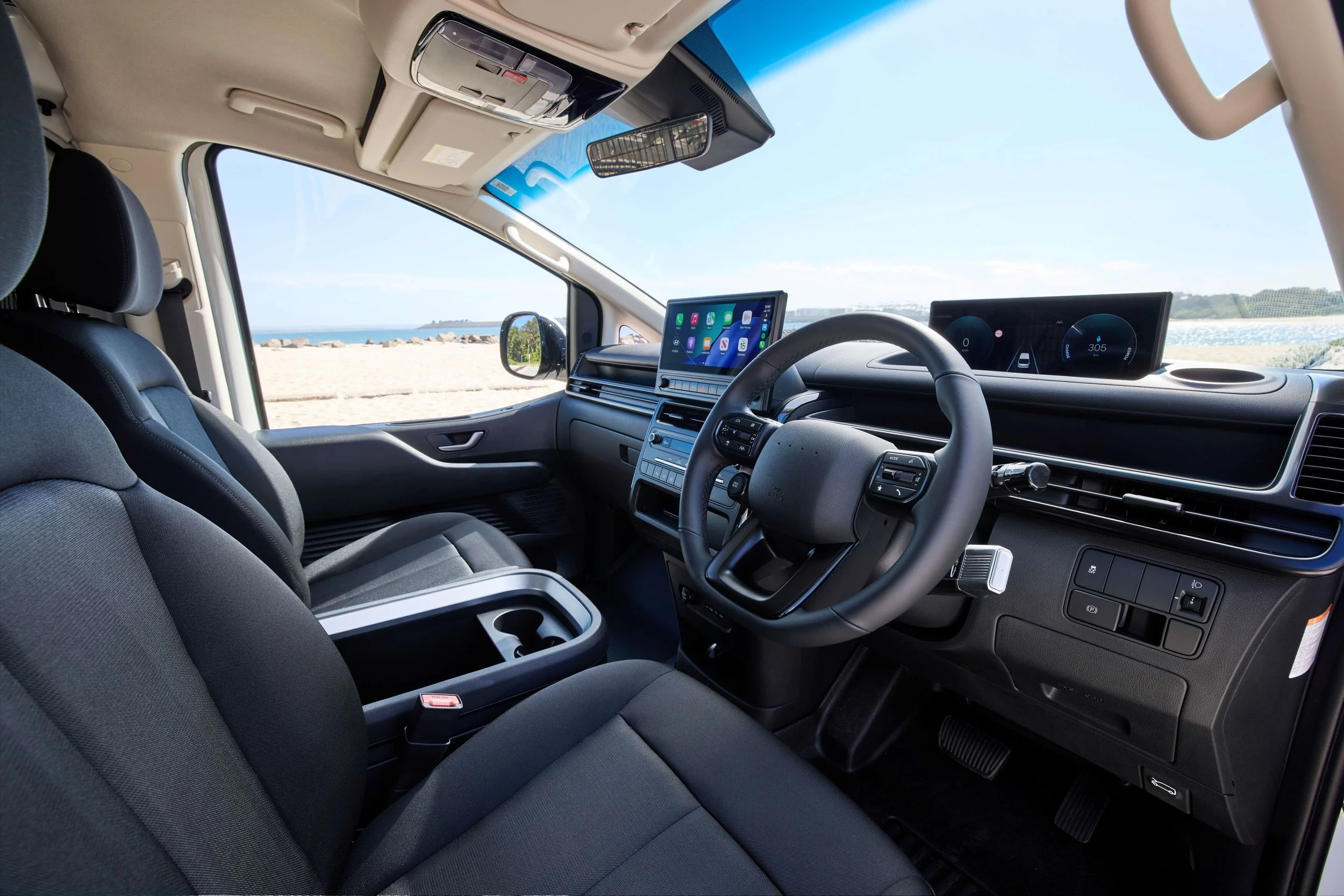
Thankfully, Hyundai has used black buttons with white icons and on/off backlights, so you’ll be able to see during sunny afternoons.
TECH
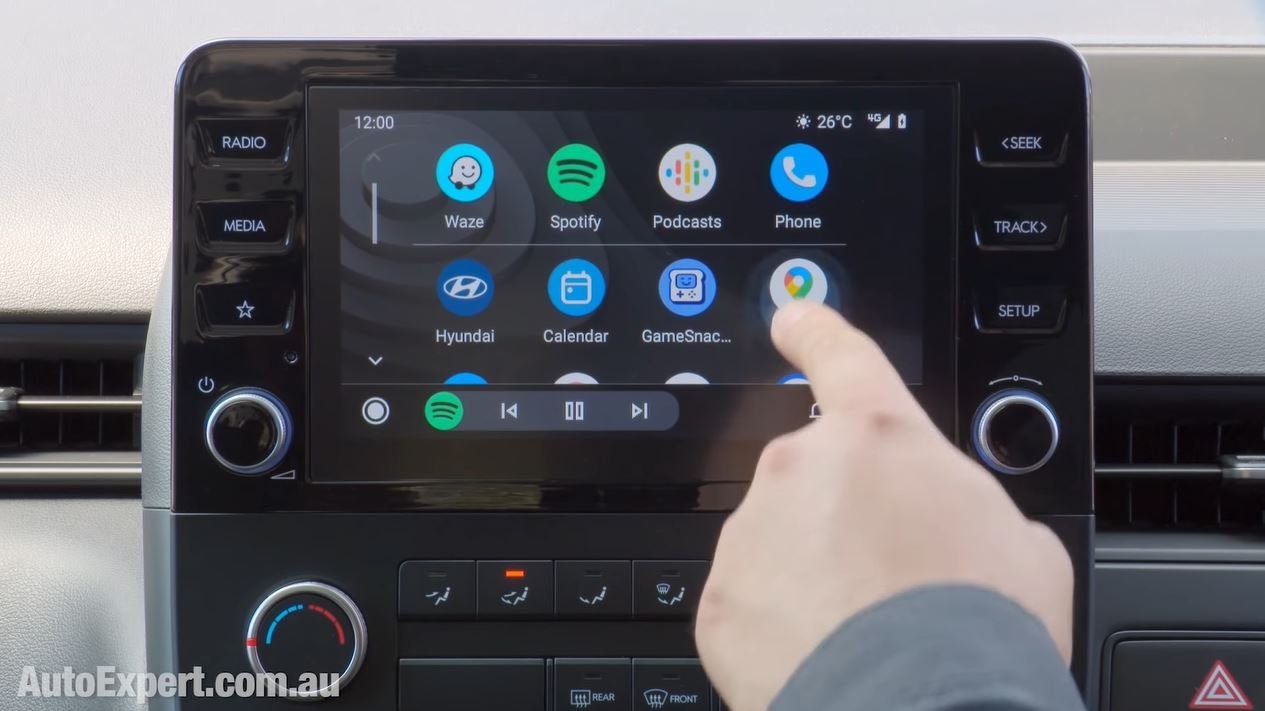
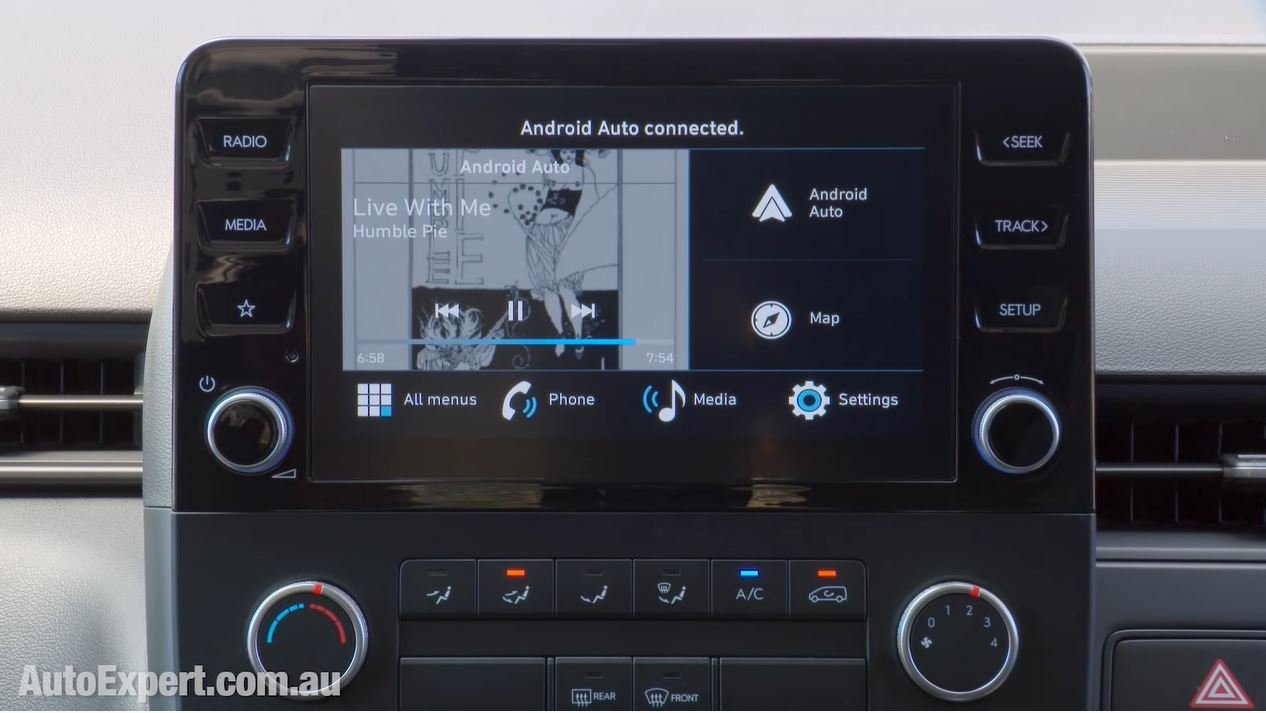
AndroidAuto worked seamlessly for me, and Google Maps is so much better than every carmaker nav system ever. Google Maps can find you every Bowens, Bunnings or Mitre 10 in seconds. Carmaker nav is agony.
I made quite a few calls, too, apparently call clarity was quite good.
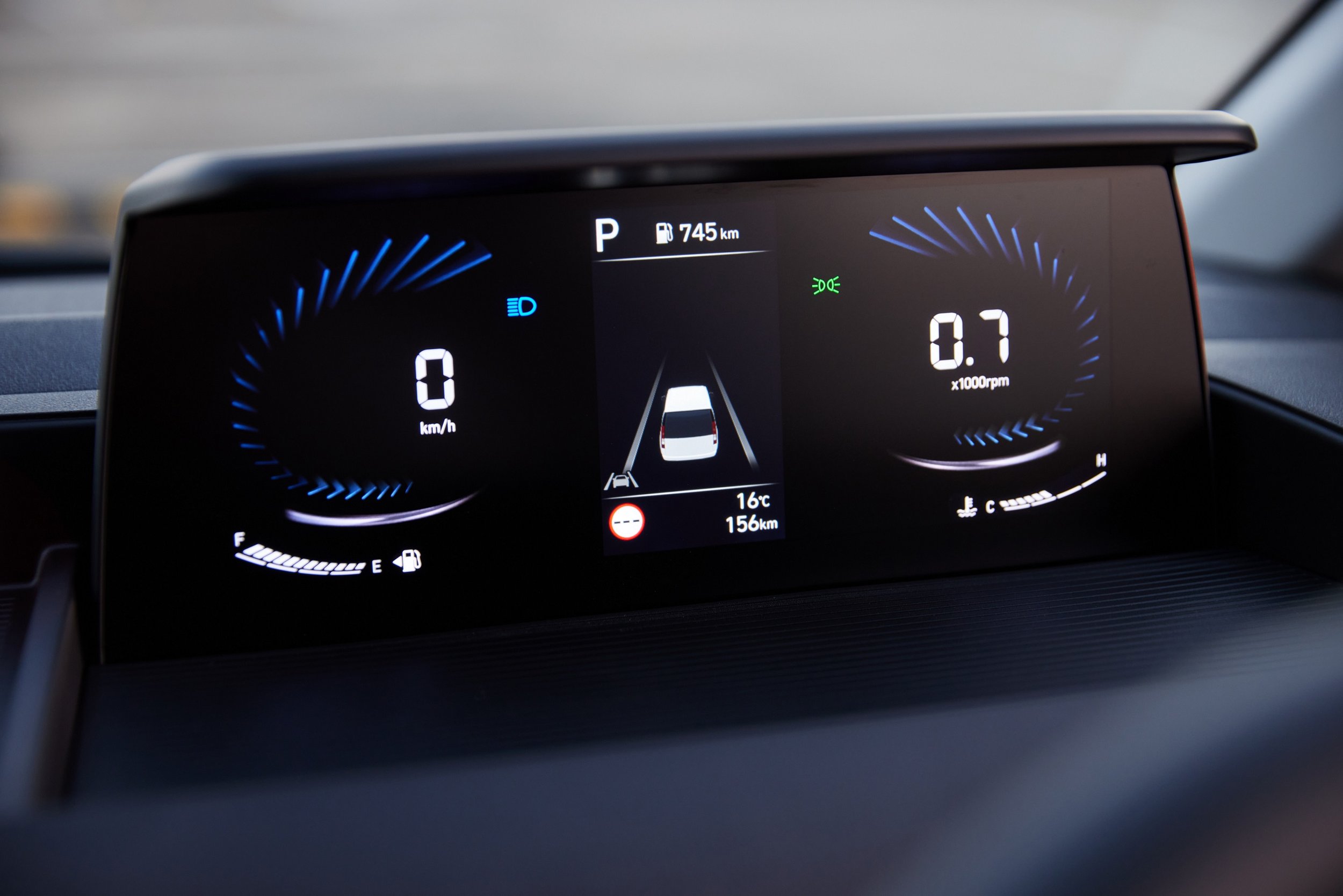
The default instrument cluster is quite awful, as is the digital speedo and digital tacho, sitting vaguely inside barely round bar-shaped gauges with no actual analogue number. Presentation looks futuristic, but stupid, and makes the whole display pointless because you can’t distinguish what revs you’re doing anyway. It’s design for the sake of design, rather than thinking about the end-user, like normal people who use hammers and extension leads. And a digital tacho is completely useless. Fortunately, you’ll be looking at the road 90 per cent of the time, so you may never even look at these things.
There’s a conventional transmission shifter, which is old school and easy to operate, and the infotainment system looks great. The aircon and ventilation - also old school, and easy to use.
Overall, there’s this odd mashup of conventional and futuristic design in the cabin. But it doesn’t always work - you can’t be making a practical, utilitarian workhorse and a hyper-stylish futuristic design statement. If you’re going to do that, it needs to hit every beat, which this doesn’t.
For example, the sills on the doors are really quite low relative to the seat height. On the plus side, it’s good for external vision, and it makes the cabin seem quite open and airy. On the minus side, you can’t crank the side windows right down. It also means you may not have somewhere to rest your elbow, depending on your height.
There’s a heap of space in the cabin itself, enough for a mini fridge between the seats, plus heaps of storage like in the doors, overhead, in the dashboard. You want to set it up like a full-on digital office with a minibar and coffee machine, there’s room.
The twin sliding doors are robust and easy to open/close frequently. I tried them out on some extreme slopes, upon which I live and they’re dead easy to use, and there’s an option of either centre split ‘barn’ doors for the rear, or the overhead awning mentioned in dimensions.
And I guess the usage case there is: Barn doors for forklift access at the rear. Swing-up hatch if you’re a tradie and you want under-awning access to keep you dry if it’s pissing down, and you still need to pack some gear away. It’s a big awning and those gas struts are doing a mighty job.
My final objective criticism is the headlights: They’re awful. You’ll be wanting a light bar on the front at the very least - but you’ll need to engineer that around the forward-looking camera and the emergency braking/adaptive cruise radar unit.

CONCLUSION
In the olden days, Australian tradies and delivery sub-contractors really only had one choice of van. If you weren’t an outcast buying something like the odd Kia Preggio, or Mitsubishi Express, the working class predominantly only ever bought a Toyota Hiace.
But then, in 2008, the South Koreans plonked the Hyundai iLoad right in front of potential Toyota buyers.
Hyundai has been selling vehicles in Australia for 35 years now and the iLoad has been one of its most successful models because Toyota was forced to concede territory.
The iLoad came with a raft of advanced features, for a van, such as doors that unlocked at the press of a button, and windows that needed not three minutes of manual cranking to go from open to closed - but not cruise control.
Now, after 10 years of basically doing bugger-all, new Hiace is actually a pretty compelling van. And the bonus with Hiace is it doesn’t look ridiculous.
Staria Load - especially the white one - has taken some aesthetic adaptation but kinda fits in now. Adding the electric powertrain and therefore making the front much more missile-like has actually improved the styling significantly.
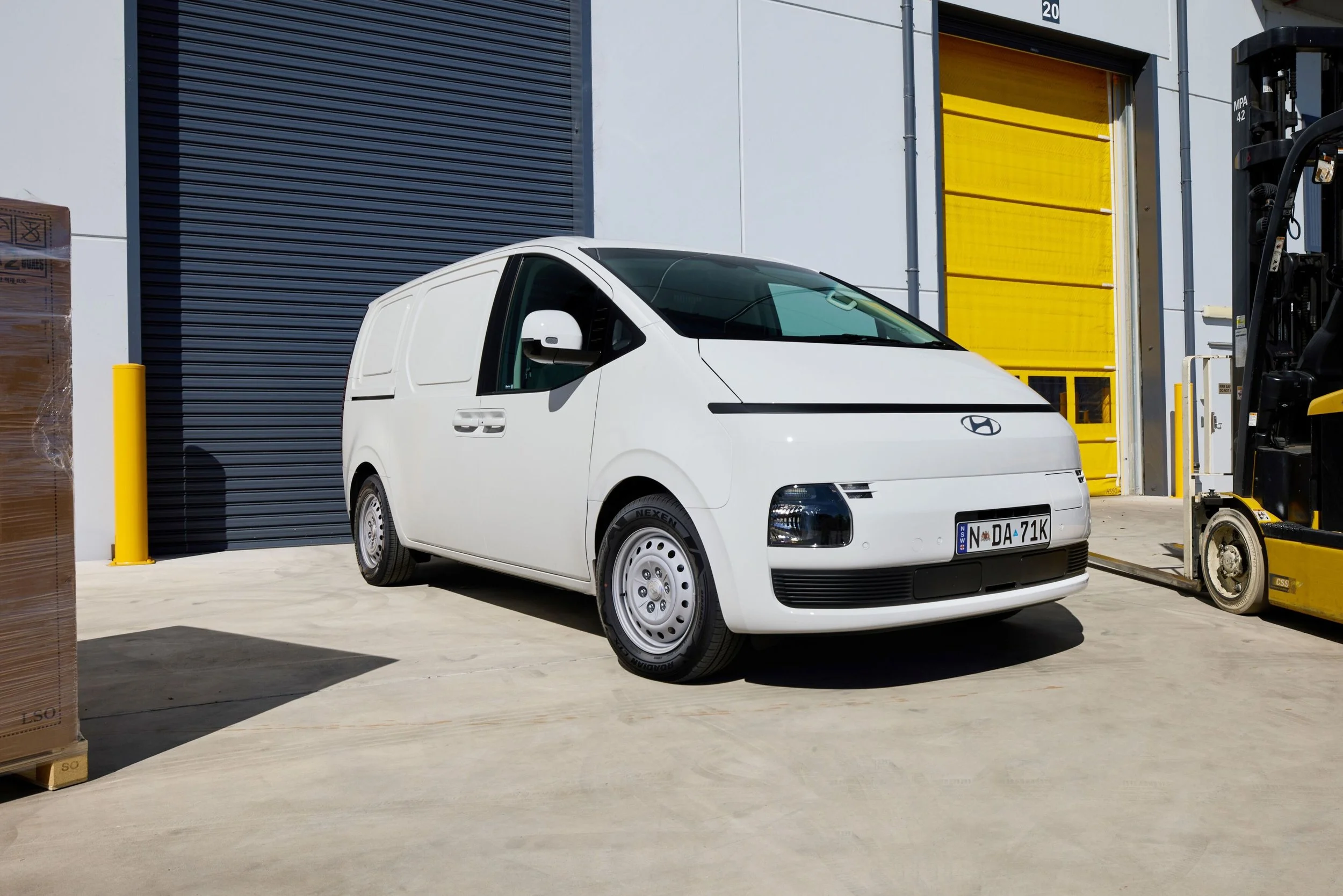
If you value functio over form, Staria Load Electric does a lot of work - but asks a big chunk of investment
If you’re actually considering buying this van like any self-respecting tradie, but you’re a sole trader who runs a small business, or you have to get up at 5am to be on-site by 7am digging in the mud, the electric version is probably not going to suit you if long distances are reality for you.
But the hybrid version might actually be the better choice, more affordable and better looking (and therefore easier to be seen in in public than the diesel). Reality is tradies don’t need to cop endless shit from the real men in their Rangers when you arrive in your Staria Load to fix the downlights.
The saving grace with this electric Staria Load design is that owning a business that operates a fleet of vans, which you need to stand out, for marketing, Staria Load would really work. And the ability to charge overnight and zip out for a bunch of stop-start deliveries makes rational, operational sense.
It’s quite hard to make a white box on wheels look distinctive, but they have achieved this. And not by a small margin. This vehicle protrudes in traffic.
So, if you need a futuristic-distinctive canvas for your mobile fleet and its branding, you’ve found a winner.

More reports


Hyundai Tucson looks futuristic and drives very nicely on Australian roads. It offers grunty, reliable engines, plenty of features and 5-seat practicality at a modest price that makes it an ideal, safe family SUV.