
Nissan Navara review and buyer’s guide
There’s a new Navara ute in Australia in 10 years and this one is finally worth your time and money thanks to the Mitsubishi Triton it’s heavily based on. Here’s why it should be on your shortlist for towing, heavy payloads and off-road capability.
Save thousands on a new Navara
Fill in the form - we’ll get you a great price without the stress
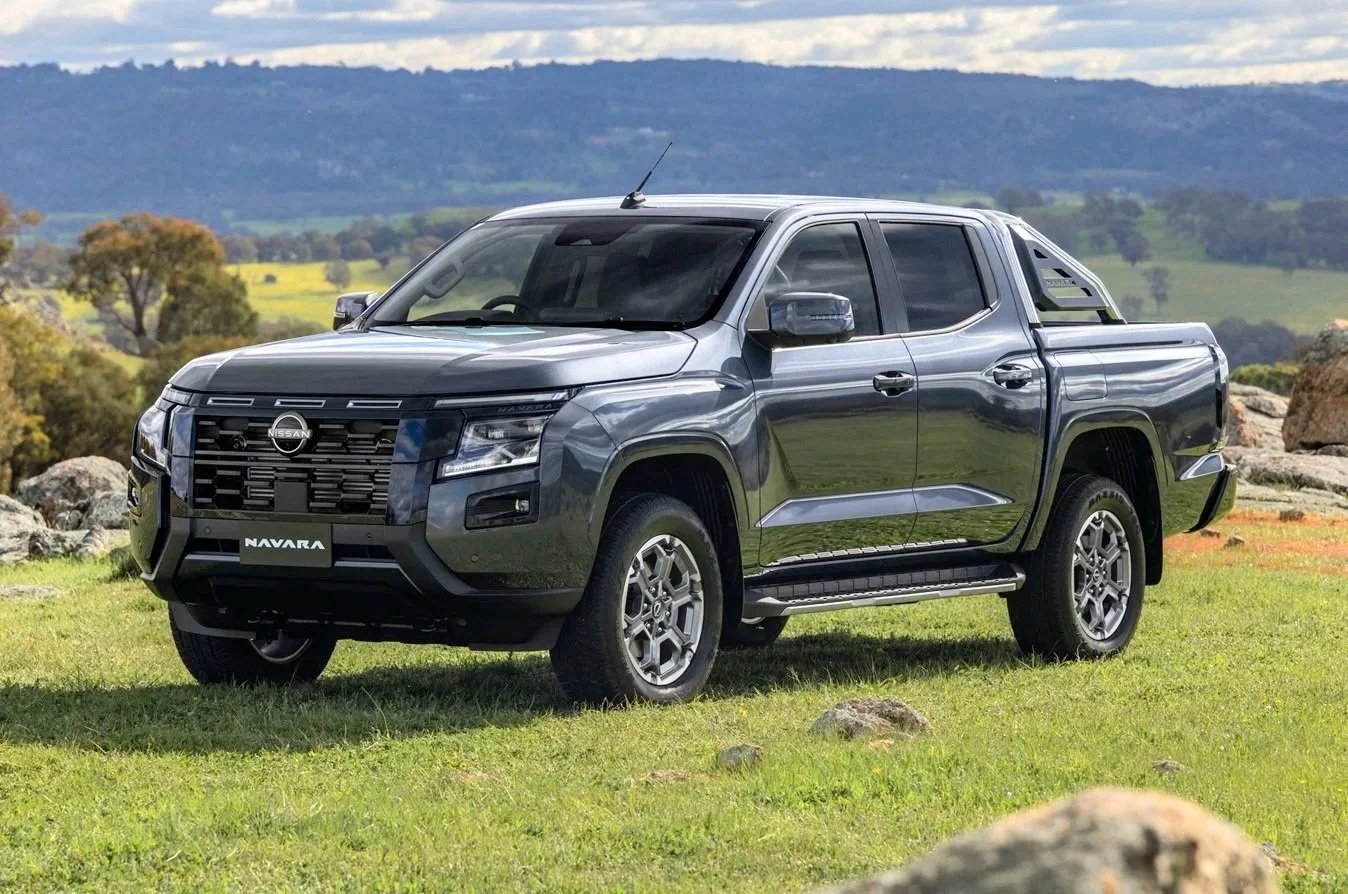
The Nissan Navara is a dual-cab ute that was recently one of the last authentic Nissan-built vehicles left, but is now a Triton with tweaked hair and make-up.
The Navara offers reasonable value with its balance of bi-turbo grunt, reputable Mitsubishi-developed off-road performance, and plenty of features. But the future is uncertain for Nissan here in Australia, so let’s see if Navara still holds up in 2026.
The Nissan Navara (NP300/D23) has been replaced after what has been a medium volume seller. The new Navara today is surrounded on all sides, metaphorically, by utes brands from China, the Mitsubishi Triton and Mazda BT-50, and the Kia Tasman.
The fact is Nissan hasn’t had the financial imprimatur to innovate with the Navara in recent years and has instead outsourced that work to a company called Premcar to do all the R&D work. Now, props to Nissan Australia for helping to employ people locally in Melbourne, Victoria, utilising Australian talent to develop new bits to go on the Navara and Patrol to become the Warrior sub-brand.
But we need to acknowledge here that Nissan could have done this themselves - employing locals and growing their in-house Australian engineering base to develop these products - if they had the economic stability to grow such capabilities. Clearly this has not been the case.
Evidently it’s been more viable to simply outsource this work instead, meaning someone else’s business has to deal with the overheads associated with designing new stickers, putting some new dampers in, designing a new dashboard, screwing up some new wheelarch flares and bolting on some laser-cut, red powder-coated bash plates.
Despite all the machismo and supposed toughness this Warrior pack has brought to the Navara range, sales have been consistently worsening with every passing year.
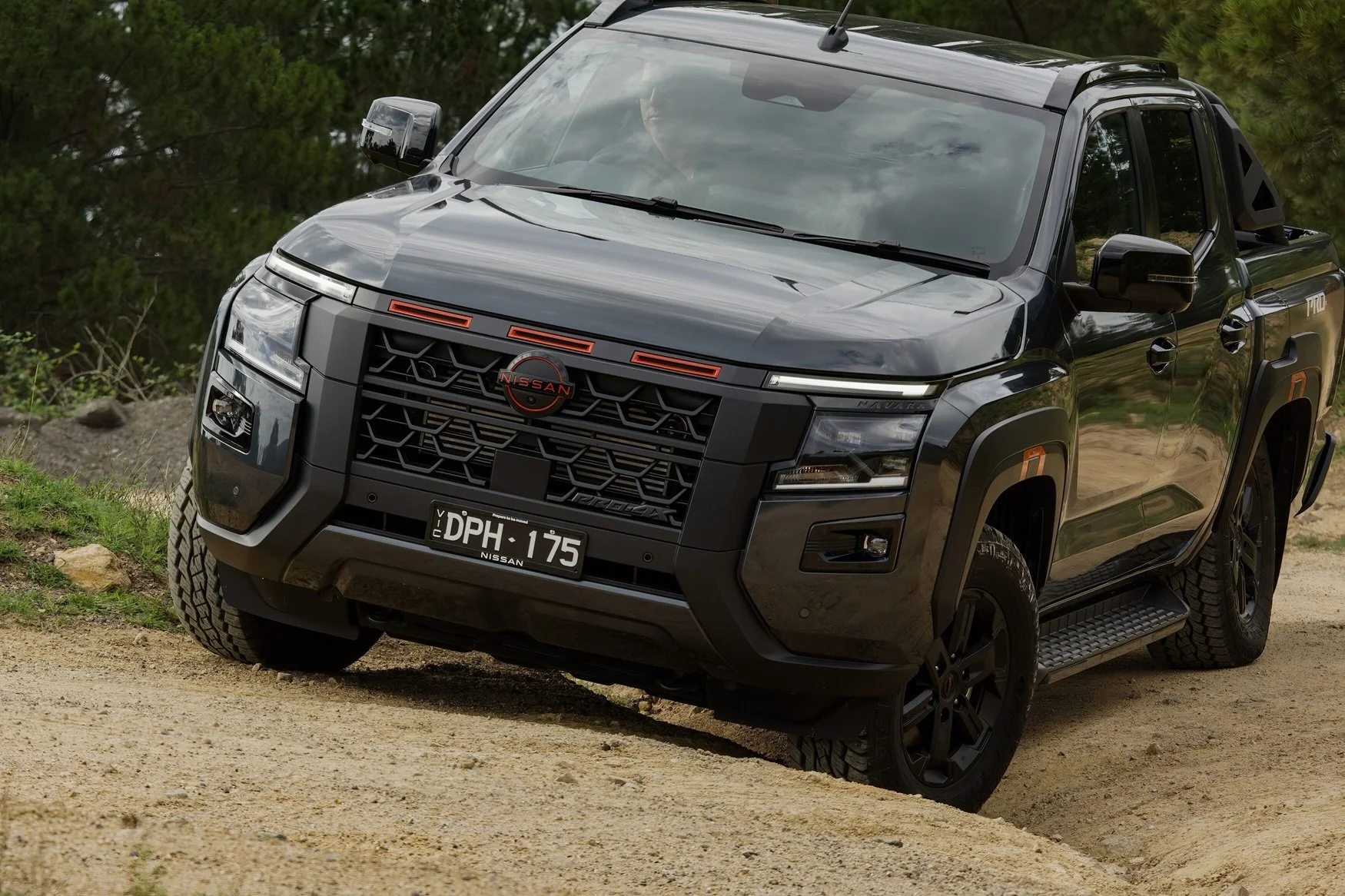
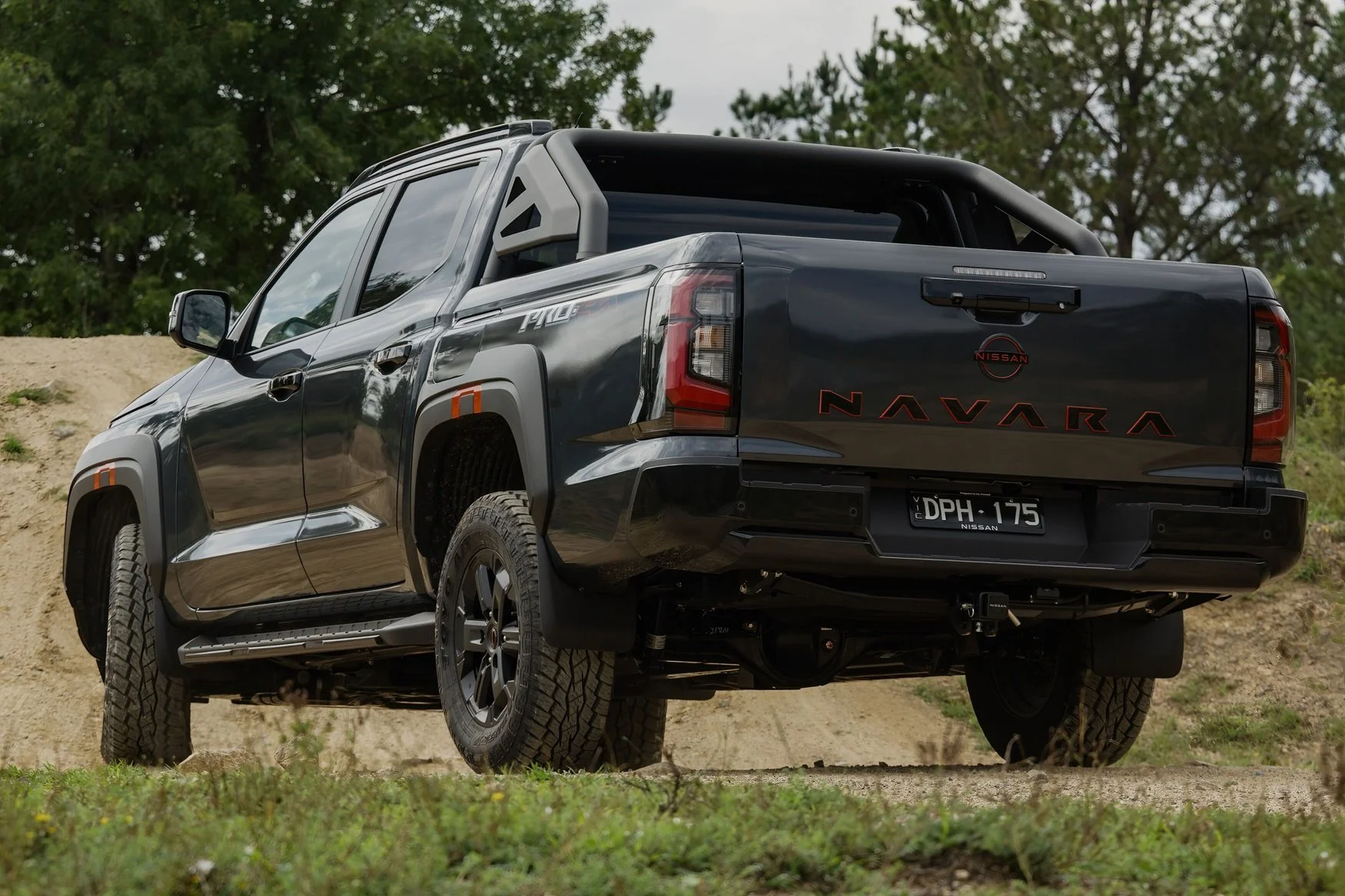
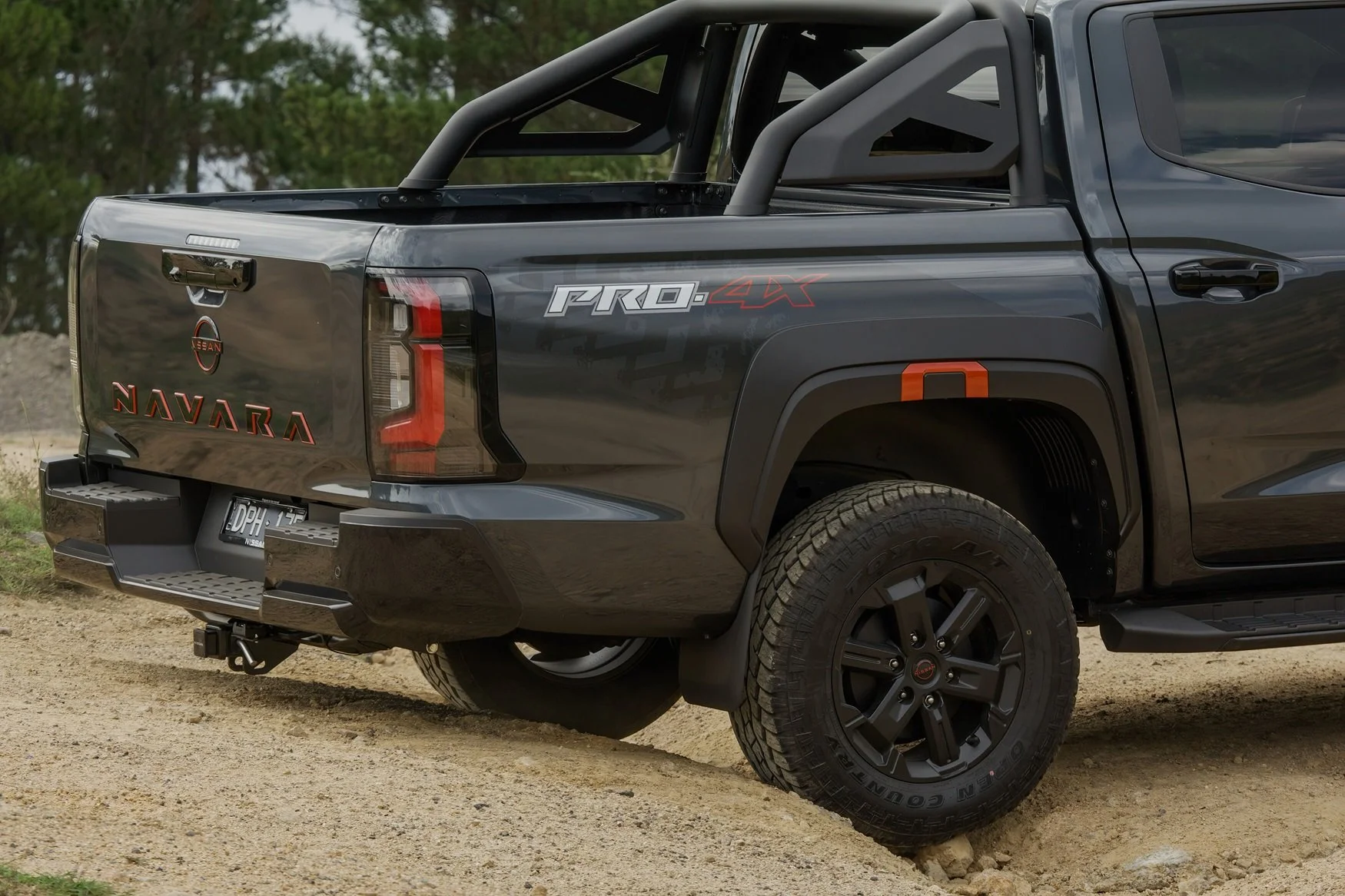
Navara sales were not great in recent years. It sells about 1 unit per 6 Ford Rangers, Hilux on 40,000, or about 1 per 2.8 D-Maxes. Even the Triton it’s based on sells about 2 units per Navara. Then there’s the notional newcomer, the BYD Shark 6 on about 2.5 per Navara. It’s hard to see the new Navara doing much damage to the likes of these more popular utes. But that doesn’t remove from its advantages.
The other less pertinent aspect that haunts the outgoing Navara is resale value and depreciation. Clearly, no ute is going to throw shade over the Hilux on resale value, but it’s interesting how it compares with the Triton, Ranger and D-Max.
A 2023 Navara Pro-4X auto, the top-spec model without going into the Warrior territory, is currently selling privately for $51,700 in excellent condition, and trading for $46,700 in excellent condition - according to Redbook.com.au data. Priced at (rounding up) $61,000 when new (excl. govt. charges). That’s a depreciation of about 15 per cent in two years, best case scenario.
For a 2023 Triton (the previous generation) selling today at $44,000 privavtely and $39,500 trade-in, you would think it’s going to be terrible for depreciation, but at $57K (before on-roads) to buy, that means it’s 22 per cent depreciation is worse - but you saved $4000 on the purchase. So it’s about level.
Ranger Wildrack, same age, selling privately for $68,500, sold for $75K, means 8 per cent depreciation, and for D-Max X-Terrain (selling at $70.5K new and selling privately today for $61K) means 13 per cent depreciation.
So overall, the Navara is techncially not the worst of these four on resale value; it actually depreciates better than a Ranger Wildtrak and it’s almost the same as a D-Max which was $9000 more expensive to buy outright.
There is some positive aspects to considering the new Triton-based Navara in 2026 now that it’s here.
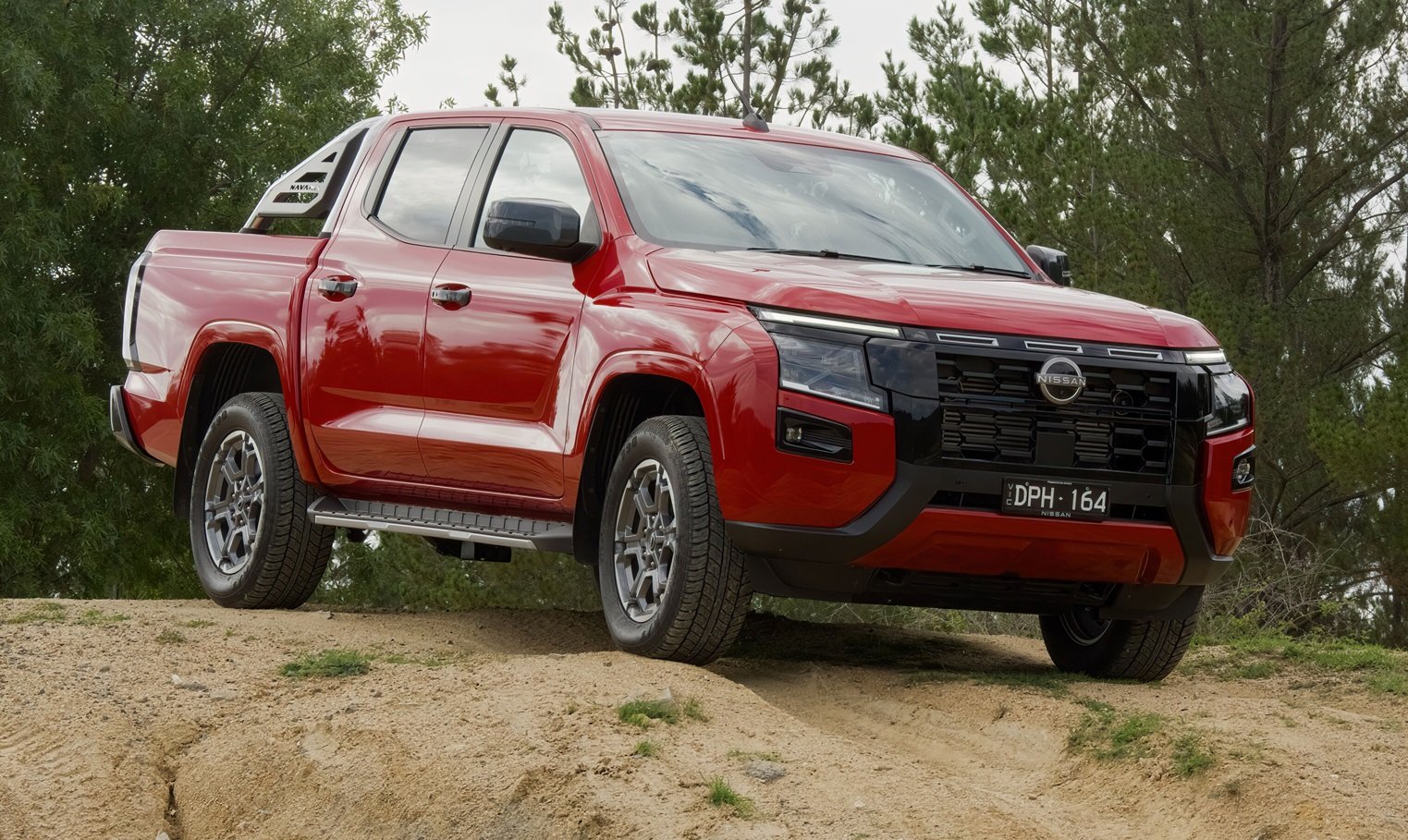
Until the Kia Tasman arrived, the Navara was one of the best mainstream dual-cab utes for lightly laden ride quality - the knock-on effect of having that coil-spring rear suspension. And because it hasn’t been priced like the Mercedes X-Class wank tractor Nissan compromised the Navara’s design to accommodate, the outgoing Pro-4X actually is/was pretty good value against the ridiculous pricing of Hilux Rogue, D-Max Blade and Ranger Wildtrak in the over-$75K class.
A Navara ST-X for $57,000 driveaway is pretty good value. It even gives the Mitsubishi Triton GSR at $65K a run for the title of best-value dual-cab ute from a mainstream brand. And you have to admit the Pro-4X does have presence that the Triton does not, but you can also argue the Triton is a bit more grown-up in terms of having no big stickers and colour blocking.
The underlying problem for Navara is Nissan’s reputation and the fact Triton has a superior drivetrain. This is the cause-and-effect of Nissan being in deep financial trouble globally, amidst the rise of an increasingly disperate market, particularly here in Australia.
A PLUG-IN HYBRID NAVARA IS COMING…
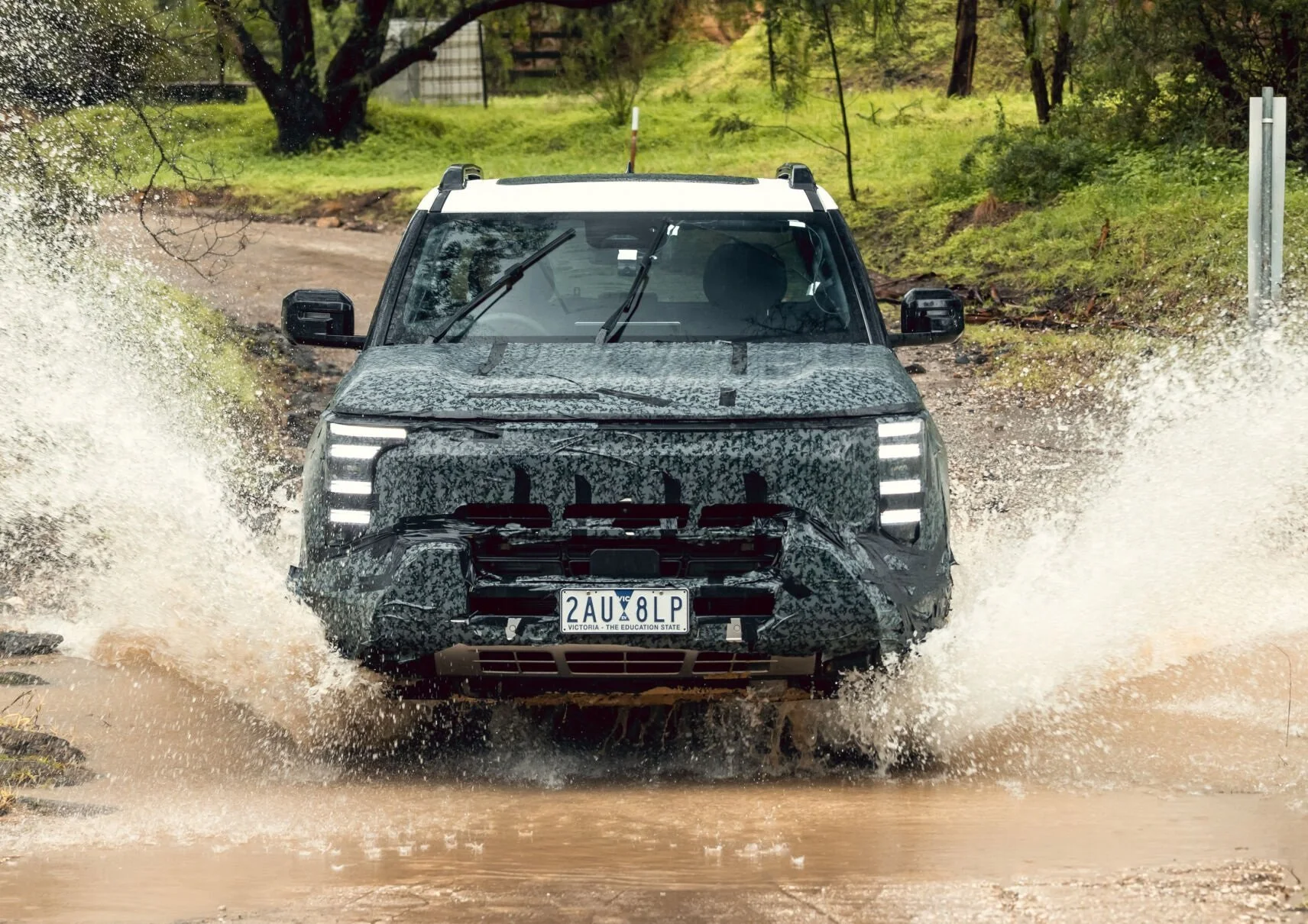
The Nissan Navara will get a plug-in hybrid variant in 2027, boasting China super-ute power outputs of 300kW and 800Nm with the combined grunt from a 2-litre turbo-petrol engine and a single electric motor.
An 8-speed automative transmission will be integrated with the plug-in hybrid system to utilise both sides of the powertrain in low-range and hardcore off-road conditions, including with lockable differentials.
Nissan Australia says up to 1000kg of payload will be possible on certain models, with the watermark 3500kg braked towing capacity, signalling no loss in towing and payload capability despite adding the plug-in hybrid system.
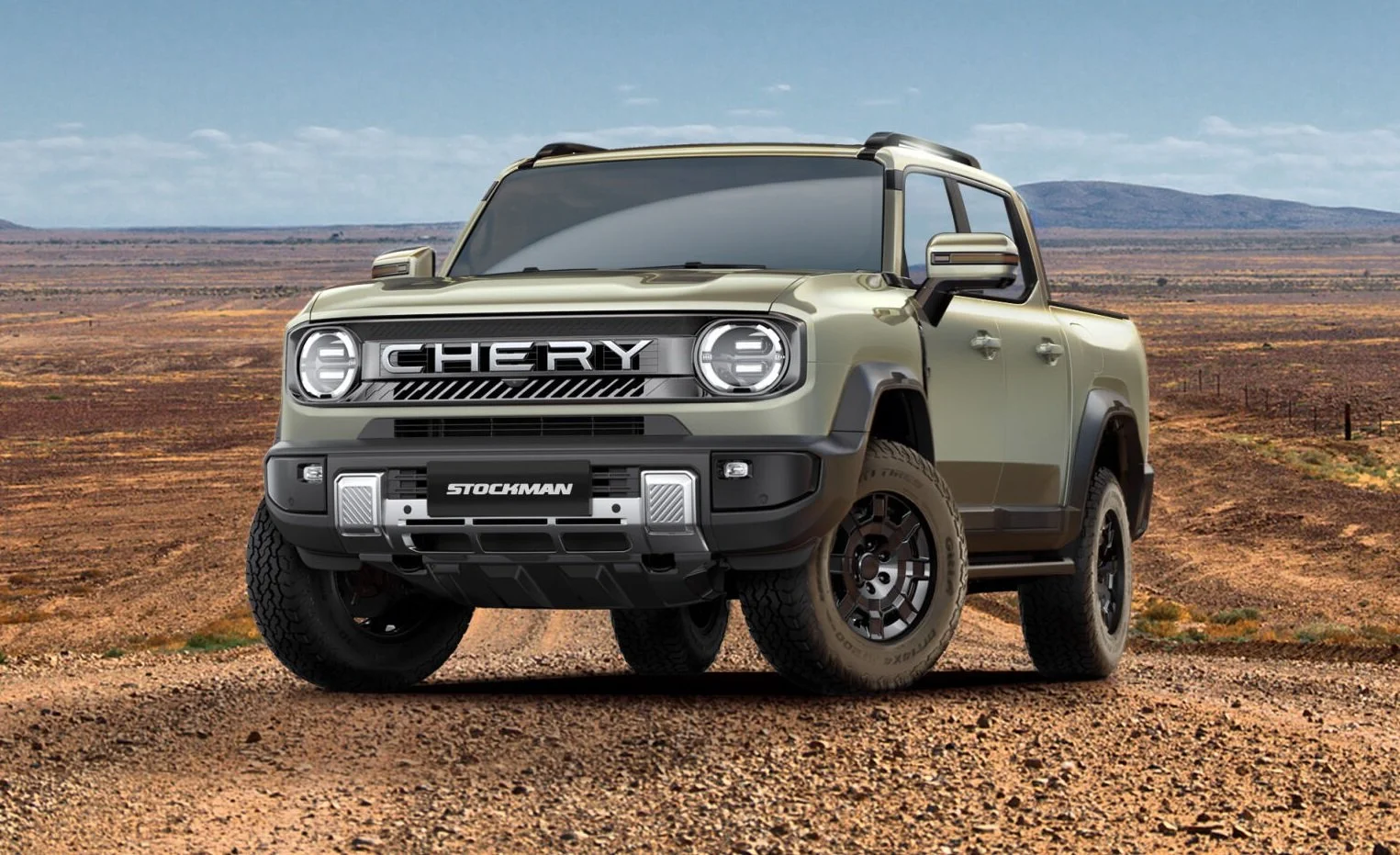
The Navara Pro will be the result of over 20,000km of local Australian ride and handling tuning as well as powertrain and driveline homologation, putting it on-par with the likes of GWM Cannon Alpha PHEV and the Chery Stockman.
Further details about the battery’s size, specific AC motor output and the varying compromises will be announced in 2027.
FEATURES & PRICING
NAVARA SL : Dual-cab 4X4 auto | 2.4L twin-turbo diesel 4-cyl | $47,900 driveaway approx.
includes:
Cloth seat trim
Vinyl floors, carpet floors (king cab)
7 Airbags (incl. driver knee & front-centre)
Power adjustable door mirrors
Tailgate assist (PU only)
Auto emergency braking, forward collision warning, driver alert
Reversing camera (Pickup only)
7-inch driver display
Electronic rear differential lock (4WD only)
Automatic headlights ∙
17-inch steel wheels , full-size spare wheel (steel), all-season (255/65/R17) tyres
8-inch touchscreen with Apple CarPlay and Android Auto, Bluetooth
Trailer Sway Control
Hill Descent Control (4WD only)
Rear Differential Lock
Steel underbody protector (below radiator)
Halogen: headlights (auto), taillights, daytime running lights
Black plastic door mirrors
Cruise control
Electrically adjustable door mirrors
Remote keyless entry
Air conditioning (manual)
Air conditioning - row 2 air vent
6-speaker stereo
2 x 12V outlet (console tray & centre console)
3 x USB charging: 1 x USB-A console tray, 1 x -A & -C centre console, 1 x USB-A (row 2, rear centre console)
Front seats: driver: 6-way electric adjustment | passenger: 4-way manual adjustment
ISOFIX (Outboard rear seats on DC only)
Flip up rear seats
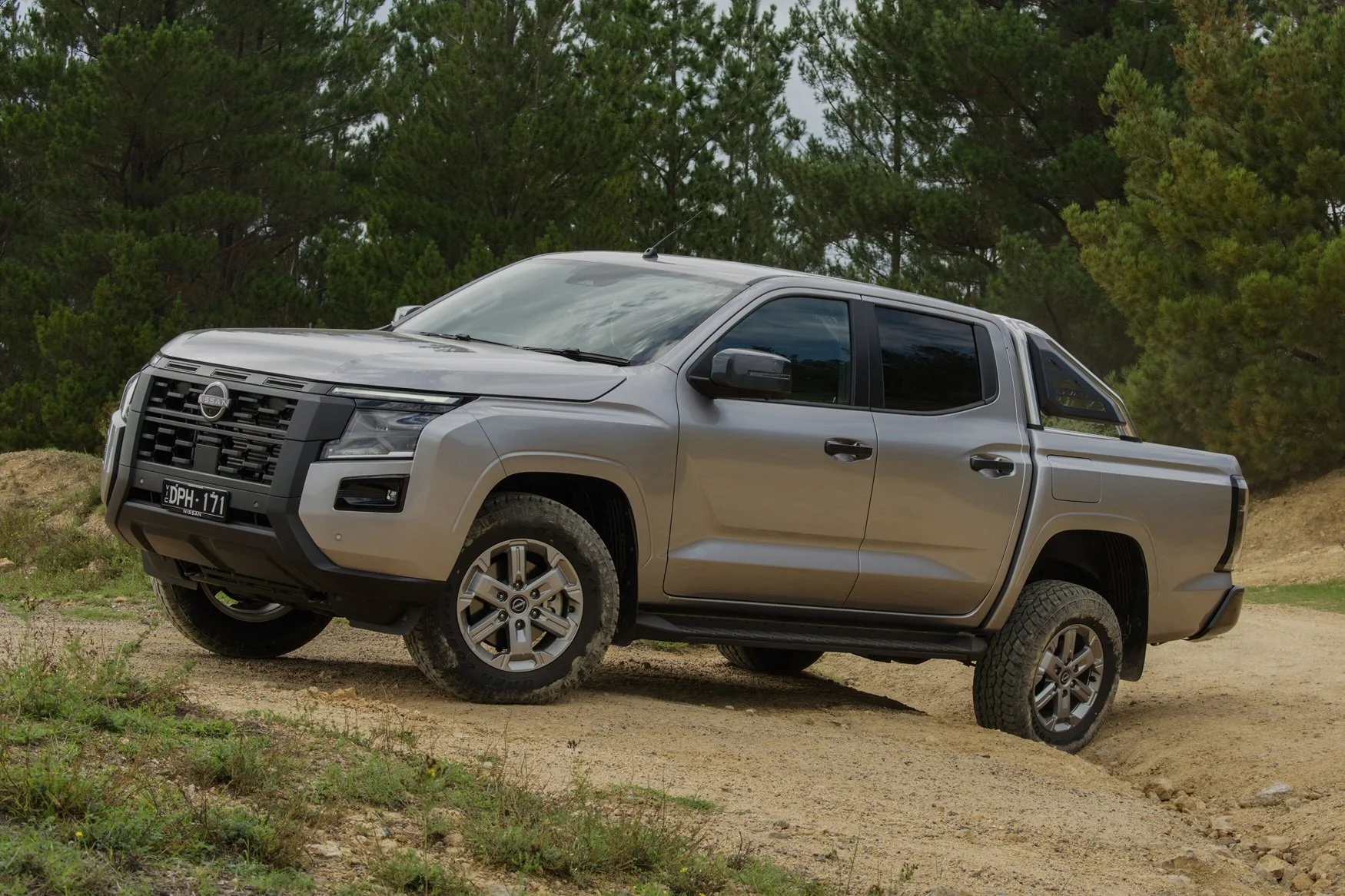
NAVARA ST: Dual-cab 4X4 auto | 2.4L twin-turbo diesel 4-cyl | $53,150 driveaway approx.
adds:
17-inch alloy wheels (fuell-size spare, steel)
Rear Differential Lock
Off Road Monitor
Drive Mode Selector (Sport/Off-Road/Tow/Normal)
LED: headlights, tail lamps, daytime running lamps, side indicators, front foglamps
High Beam Assist
Side Steps - Black Plastic
Door Mirrors - Body Colour
Rear power sliding window
Automatic Dimming Internal Rear View Mirror
Automatic Rain Sensing Wipers
Heated Door Mirrors
Digital Speedometer
Leather accented steering wheel, gearshift lever
carpet floor
360-degree camera
Rear parking sensors
Blindspot warning, blindspot intervention, rear cross-traffic alert
NAVARA ST-X: Dual-cab 4X4 auto | 2.4L twin-turbo diesel 4-cyl | $57,000 driveaway approx.
adds:
Leather accented seats
18-inch alloy wheels (full-size spare), all-season 255/60/R18 tyres
Towbar (excl. towball & D-shackles)
Adjustable 2-channel tie down points
Sports bar
Privacy glass
Tubliner
Auto electrically folding door mirrors
Proximity key, push-button ignition
Dual-zone climate control
Carpet floor mats
Tyre pressure monitoring
Heated Door Mirrors
Lane departure warning, keeping
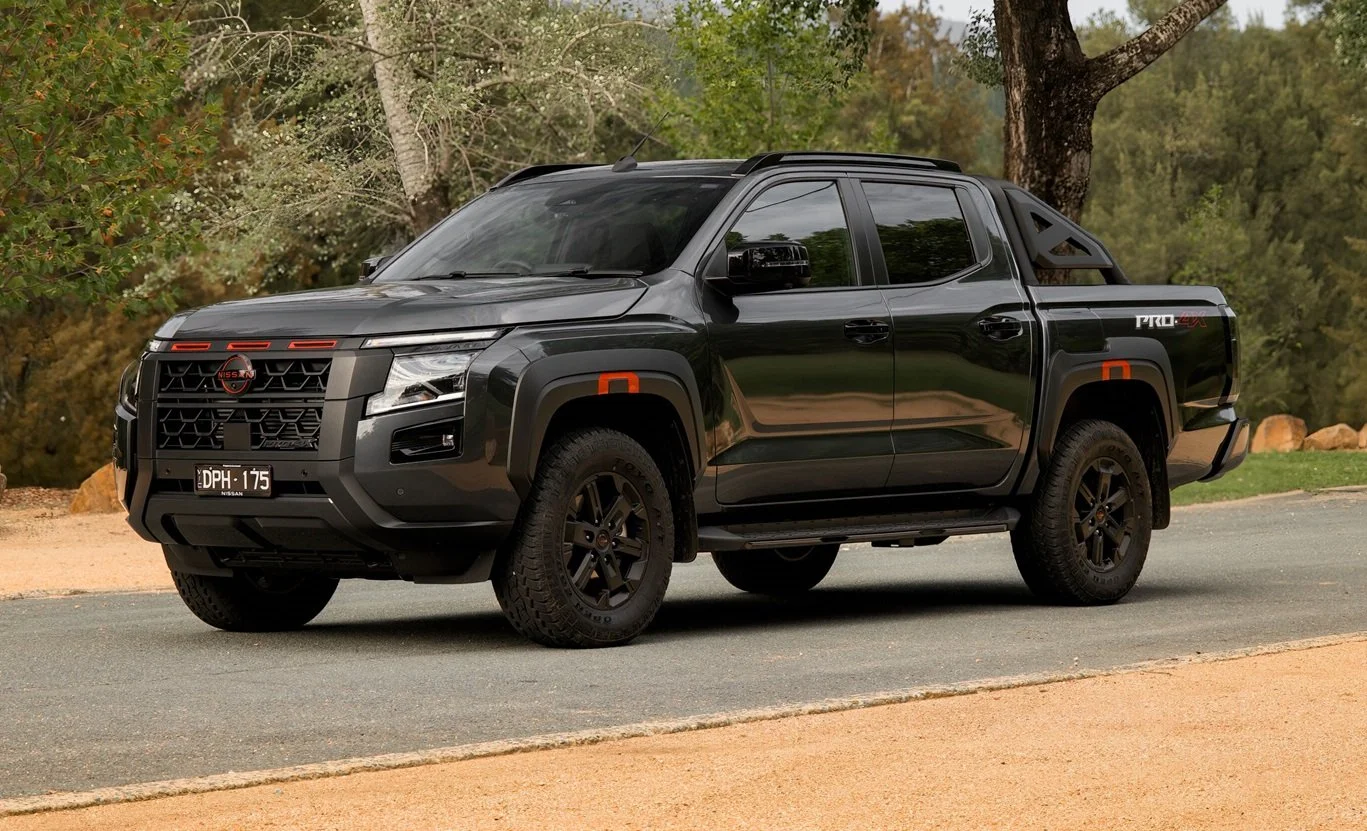
Explore the outer regions of your housing estate with the Pro-4X version
NAVARA Pro-4X:: Dual-cab 4X4 auto | 2.4L twin-turbo diesel 4-cyl | $60,000 driveaway approx.
adds:
Unique 17-inch black alloys (full-size spare, steel), 17x7-inch all-terrain 255/65/R17 tyres
Darkened styling theme with red accenting
All terrain tyres
Black fender flares
Black stainless steel double tube sports bar with sail panel
Leather-accented# seats with PRO-4X embroidery
Roof Rails - Black
Front seats: Driver:8-way electrically adjustable, Passenger: manual | Heated: driver & passenger
Specifications and price may change at any time: always check before signing any contract or paying a deposit.
ENGINE
What was good about the old D40 Navara, despite being an abject safety and quality failure, was that it had the ST-X 550 at the top of the range as the most powerful ute on the market (at the time). That meant you had bragging rights thanks to its V6 turbo-diesel with 550Nm - impressive in the 2010s.
When the NP300 Navara came along, that person buying the ST-X 550 went on to buying a Holden Colorado when the Narava’s higher end grades managed just 450 Newton-metres from a twin-turbo 2.3-litre 4-cylinder diesel. Not class-leading, but it was a pretty impressive engine.
But today we have the Ford Ranger at the top of the tree, Hilux right behind and lots of new competitors all offering similarly powerful engines, impressive payload and towing capability, big trays, generally good powertrain and driveline integration.
The so-called ‘new’ Navara uses exactly the same biturbo design as the 2024-launched Mitsubishi Triton. It offers 450Nm from the same 2.4-litre bi-turbo-diesel which allows a small turbo to spool up quickly at low revs, which delivers inspiring low-rpm performance.
At higher revs, boost is increased by a bigger turbo, with more rotational inertia, which takes longer to spool up. Each turbo compensates for the shortcomings in the other (the small turbo masks the bigger one's inability to come on-song fast, and the big one masks the smaller one's inability to deliver copious boost volumes at higher revs) and this is the basic methodology of improving overall performance and milking the smaller displacement for all it's worth.
Peak torque kicks in from just 1500rpm and keeps churning away until 2500rpm - and there’s a six-speed auto, so you’re pretty much going to be operating in the 450 Newton-metre rev zone in all conceivable driving conditions.
And, let's face it, in the real world there are not many jobs a healthy 450Nm will not accomplish with distinction.
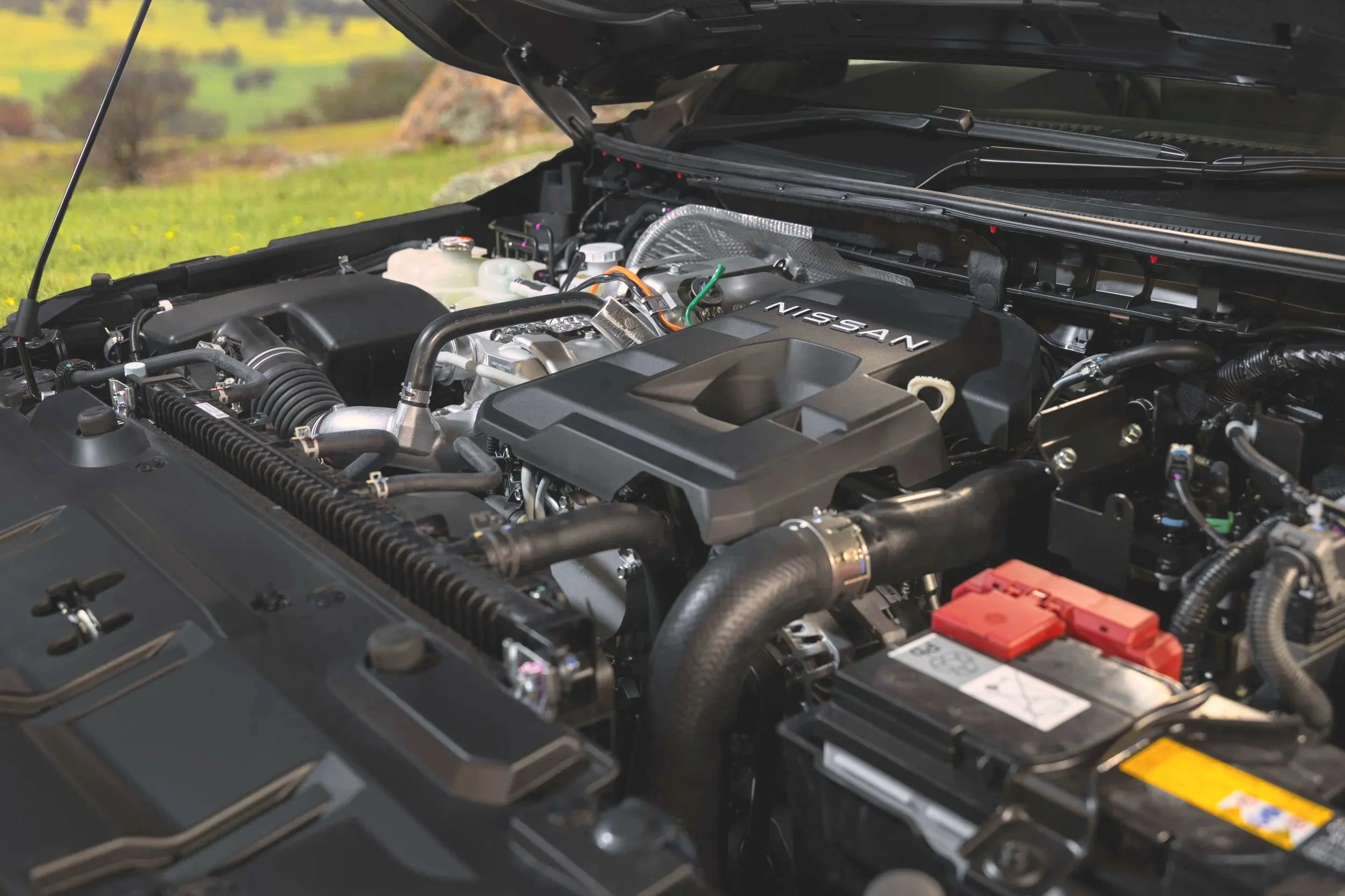
Nissan swallowing its pride and using Mitsubishi’s engine might be the smartest thing the company’s done since the GTR supercar
In terms of specific power output, which is what you get when you divide the peak power by the cubic capacity, the twin-turbo 2.4 is right up there with other leading, hi-tech diesels like Mazda’s stonking 3.3-litre unit, Hyundai-Kia’s 2.2L engine in the Kia Tasman and the new turbo 2.2 in the Isuzu D-Max and Mazda BT-50. These are all an impressive piece of contemporary turbo-diesel engineering that make older diesel engines look thirsty, unreliable and poorly designed.
What's really interesting here is the significant number of e-mails I get from prospective buyers of utes and also ute-based wagons (Pajero Sport, et. al.) who are disinclined to purchase the current generation of smaller-displacement diesels. (Such as the 2.3 in the case of outgoing Navara and the 2.4 in the case of new Navara, Triton and outgoing Pajero Sport.) These people often adopt this position because they believe the smaller engine is more highly stressed. (And intrinsically these smaller engines are doing a bigger job, per litre.)
Many such people use this reservation as a justification to purchase - in particular - a 3.2-litre five-cylinder Ranger or BT-50 instead. However, I really don't think there's any evidence that the smaller displacement - per se - is a reliability or longevity liability. That's all down to the engineering development work going on in the background.
An interesting twist here: this small displacement-driven reservation seems reserved for the hardcore four-wheel driver - focused upon serious off-roading and heavy towing. Look around. Small capacity diesel engines are everywhere, and they’re proving pretty good, performance wise, in plenty of new Chinese utes.
If a smaller engine can be made to do a bigger job reliably, you should embrace the advantages, such as lighter weight, faster throttle response, greater thermal efficiency - all of which are real, tangible advantages not to be sneezed at. At best these 'small capacity' consumer reservations are expressed in the complete absence of evidence and are purely speculative.
I'll help you save thousands on a new Nissan Navara here
Just fill in this form.
No more car dealership rip-offs.
Greater transparency.
Less stress.
TRANSMISSION
The 6-speed epicycle auto in the Navara is the same unit Mitsubishi has run in the Triton since its 2024 launch, which was itself a carryover from the previous MR Triton. Is this to be scoffed at or ridiculed? Well that depends.
Triton has proven itself one of the top four big-boy dual-cab utes in the Aussie market for years, despite being notionally ‘only’ being able to tow 3100kg in a field of 3500kg claimants. This was actually something praiseworthy of Mitsubishi Australia for keeping an air of sensibility with towing capacities and what it meant for inherent on-road safety among the public, reduced premature wear-and-tear on driveline components.
Considering this transmission and the Triton’s driveline generally has been so dependable for the last decade - and being sold at $20,000 less than a Ranger equivalent - should suggest it’s not all bad news for Navara becoming a Triton in new clothes. Just look at the relative sales success Triton has had (despite the downward trend), and compare that with the NP300 which has never managed better than 17,000 units.
Obviously that’s not entirely down to their respective transmissions - but there is a correlation here. Triton’s locking centre differential capability, which has offered on-road 4-high driveability in situations like heavy rain, snowy conditions or high quality gravel roads, is directly benefiting Navara here. The Navara has never had such capability; stuck with the same crude 4WD system as the Hilux, D-Max, BT-50 and previous generation Ranger.
You’ll see Nissan present this centre diff as a Torsen limited-slip centre differential on the ST-X and Pro-4X, with which you get the requisite seven-mode Drive Mode Selector: Normal, Eco, Gravel, Snow, Mud, Sand and Rock depending on what kind of terrain you’re going to encounter.
You get a 40:60 front-to-rear split of the drive in 4H mode, which changes to 50:50 when you lock the centre diff (4HLc).
So you have a simple decision to make here. Do you opt for the new Triton-based Navara which is marginally more expensive than the current one, but ultimately offers you substantially better capability both on-road and off-road?
Or do you haggle like your life depended on it and get an outrageously good deal on one of the last NP300 Navaras while they’re still available?
Just keep in mind the current Triton enjoys a greater value proposition than Ranger, Hilux, Tasman and Isuzu D-Max - value the new Navara will probably share as well given that they’re clones with different hair and make-up.
TOWING
Picture this: It’s Friday afternoon and you’ve just knocked off work for the weekend. You’ve got the tool trailer on the back, weighing about 2500 kilos, probably a bit more thanks to the leftover bags of concrete and the extra tools you’re carrying, because you’re giving the boys a lift home (after Apprentice 1 broke down this morning).
So you’ve got your own kids to get home to, and you’ve gotten get the young blokes home to their parents as well. You’re a good boss. You’ve packed up a bit early to try and get across town to beat the rain. But it was never going to happen. The rain starts pelting down as you’re heading through the twistier section of the road when something happens up ahead in the congaline of cars and trucks. You’re suddenly out of room and time.
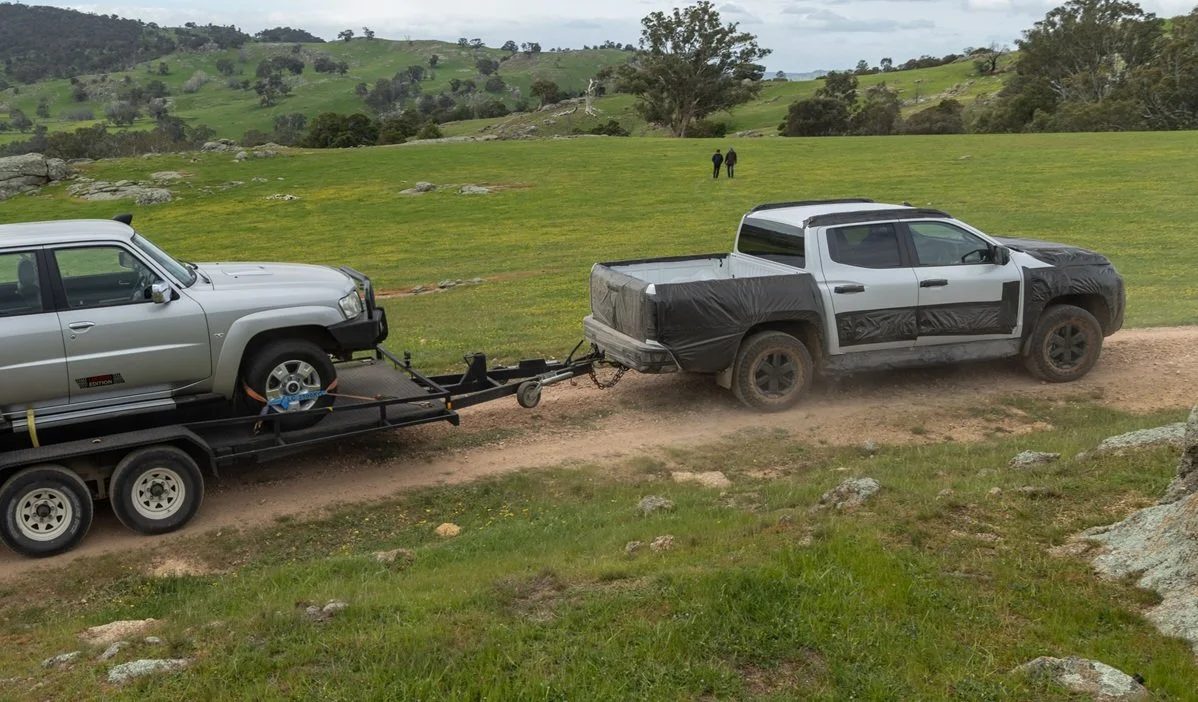
Having a Navara or Triton with 4-high engaged in these conditions, as you dart into a different lane to get out of the congaline means the drive is split between the front and the rear, while anybody in a BT-50/D-Max, Hilux, PXII series Ranger, or even the latest, overpriced model Hilux is going to be skidding down the road with the trailer shunting the rear end around.
The next Navara will have both the Super-Select 4WD system from Triton for high-traction surface driving in dodgy conditions, and it’ll also have the same leaf-sprung rear end that is better suited to load-carrying in the tray especially.
Nissan says it’ll be rated for 3500kg of braked towing capacity, with 350kg of towball download permitted. But that doesn’t mean it’s a good idea or inherently safe a limit to push.
The GVM of current Triton is 3200kg with a kerb weight of 2170kg (which includes a full tank of diesel). The GCM is 6250kg, and it’s hard to imagine the Navara would get rated for figures better than any of these - especially given that they’re basically the same figures for equivalent BT-50 and D-Max.
Towing performance is going to be virtually identical in Triton and Navara (when it gets here).
There will, no doubt, be an exception for the Warrior version with its modified suspension, tyres and added accessories which will cahnge its kerb weight and be more targeted to off-roading thatn outright towing prowess.
FUNCTIONALITY
If you’ve had a look in the back of a Triton, you pretty much know what’s going on in the back of new Navara’s tray.
So if you need an abundance of space in the tray, Triton/Navara is good, but not quite the segment benchmark, which is the Kia Tasman. Having said that, there are plenty of upsides to the rear end here, starting with the available space between those wheelarches.
You get 1135mm, which is not going to fit the 1165mm standard Australian sized pallet, but, providing that it’s restrained adequately, you can get the 1165mm pallet aft of the wheelarches with the tray tailgate open. The tailgate aperture is 1360mm wide.
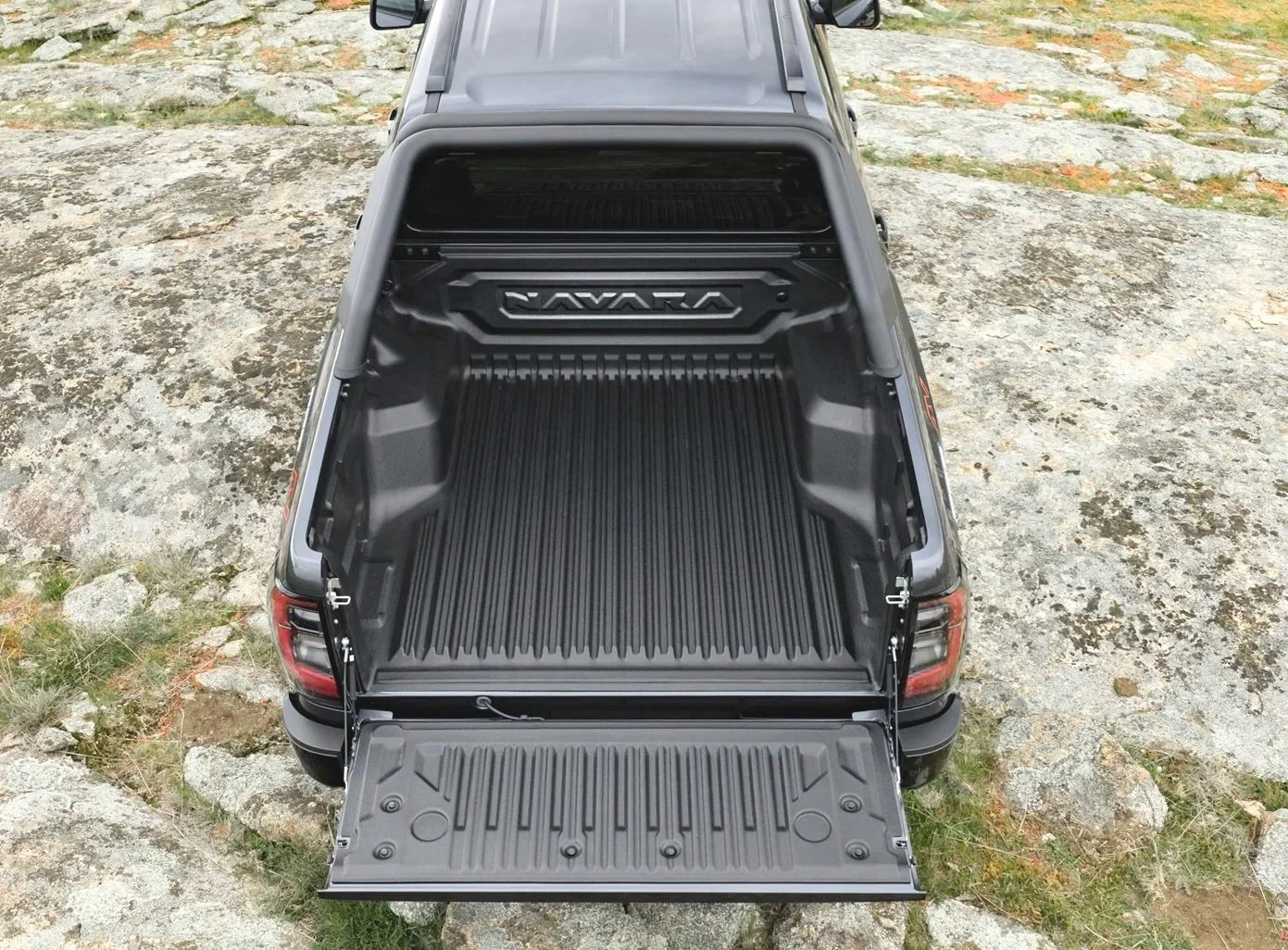
New Navara is exactly 5.32 metres long, the same as its Triton twin, which is just 9mm longer than the outgoing D23, so there’s no tangible difference in size. It’s 80mm wider than the D23, so there’s going to be better on-road cornering dynamics and greater shoulder room in the cabin.
A Ranger still has and extra 140mm of wheelbase, 70mm of length and 105mm of width over Navara, meaning the profile remains more conservative, on a technicality, but you’ll be hard-pressed to really notice.
But the tray is 90mm (5 per cent) longer than a Ranger, which is where it actually matters. So there’s that win for real-world carrying capability. And then we get to the wheelarches.
You need to be aware of two critical aspects: the rear axle limit of 2040kg; and the fact you’re adding weight behind the rear axle in the case of off-roading or loading up the tray. Anything heavy you’re loading behind the rear axle is going to have a levering affect on the front end while also inducing lateral sway in corners. So conservatism is warranted here, as well as robust measures of restraint.
Payload limits vary from 1064kg on the SL, down to 1047 on the ST, then 1019kg on the ST-X before being limited to 964kg on the Pro-4X.
With new Navara you get adjustable tie down points that slide up and down the walls of the tub, and the tailgate is damped, so any heavy-handed apprentices won’t be able to destroy the latch mechanism within the first six months of your ownership.
INTERIOR
The Navara’s interior is almost identical to the Triton - and Nissan knows it. The door handles are the same, the buttons and dials are the same, the 4WD rotary dial is the same part Mitsubishi makes, and the steering wheel is the same.
Nissan has done literally nothing to make Navara even look vaguely unique. But you need to ask yourself, yet again: Does it matter?
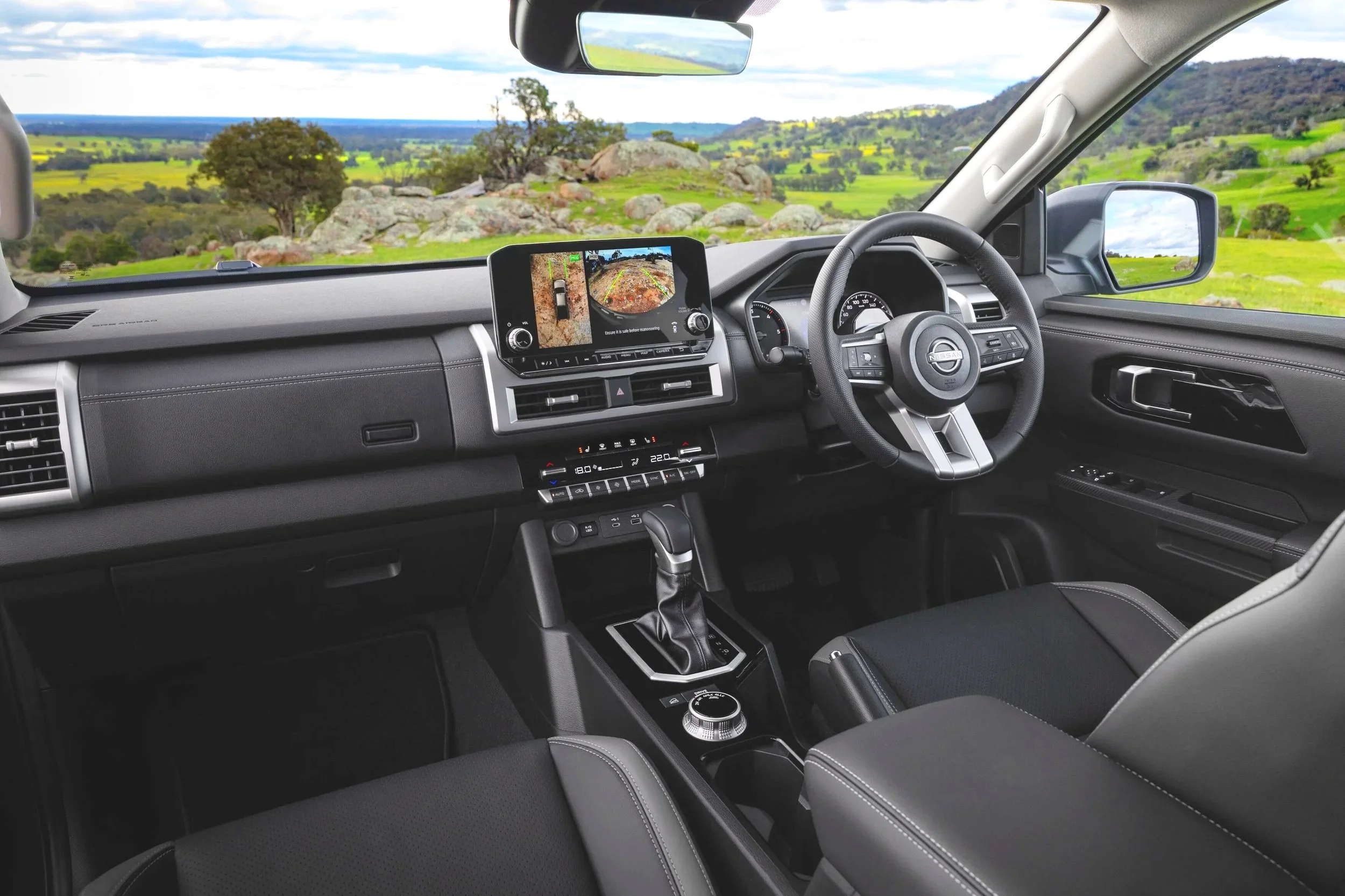
Save for the badge, it might be cosmetically identical to the Triton, but that’s hardly a downgrade for Navara…
You get the same double glove box, the same centre console storage and the reasonable door bin storage along with room for a couple of phones in the front and two cup holders. There’s a combination of USB-A and USB-C ports which means old cables aren’t a throwaway and can still serve a purpose.
The ergonomics are excellent, having been done by Mitsubishi and as a result, you do still get the same driver stalking camera system atop the steering column (which you can thank/blame ANCAP for). Tragically, for the 90 per cent of Navara which is actualy a fantastic vehicle both to drive and haul/tow with, it is probably going to be just as annoying and unergonomic as the Triton due to that badly develped driver attention monitoring system. (Again, blame ANCAP).
Happily, there is a solution: cloth tape.
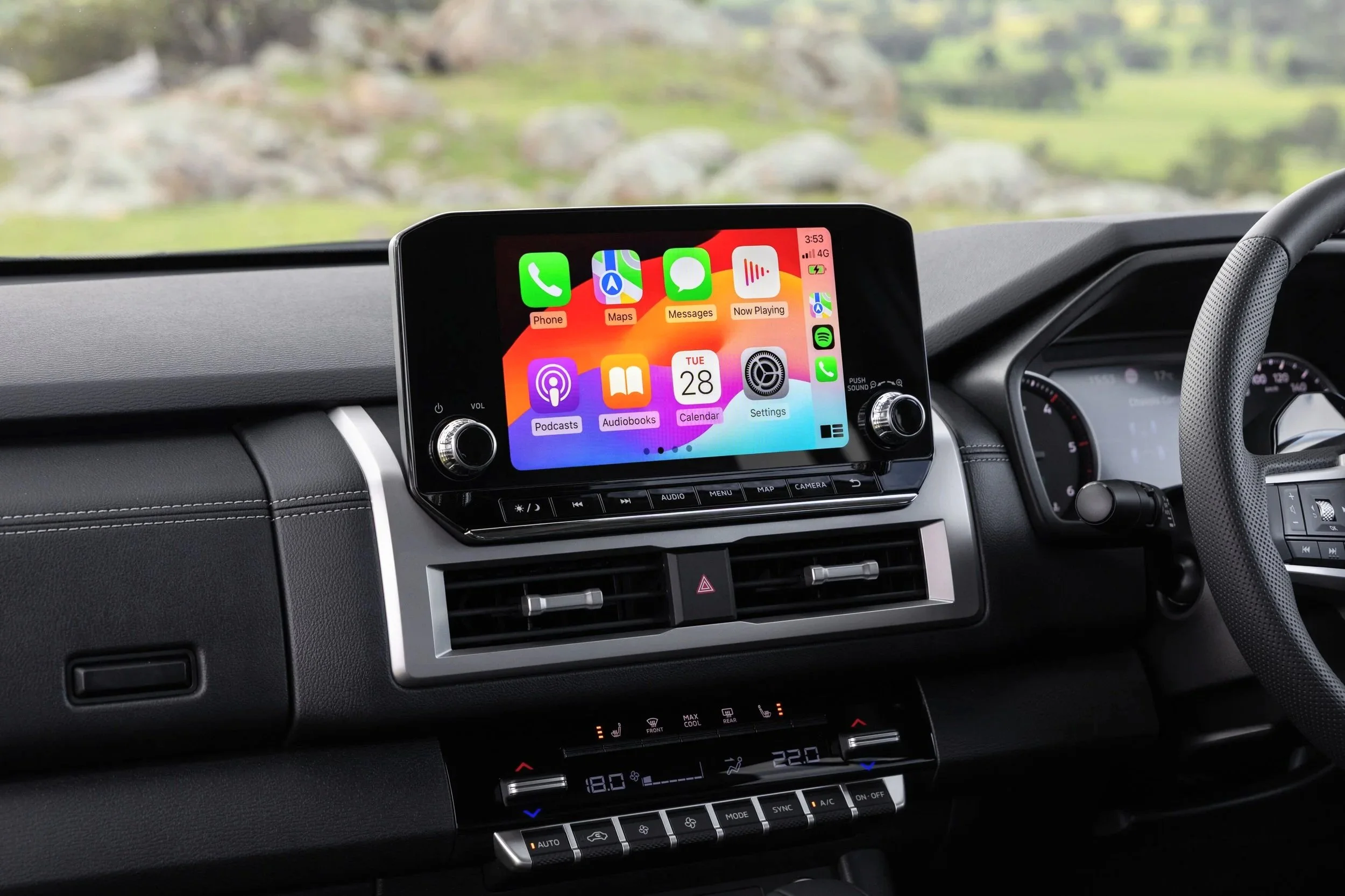
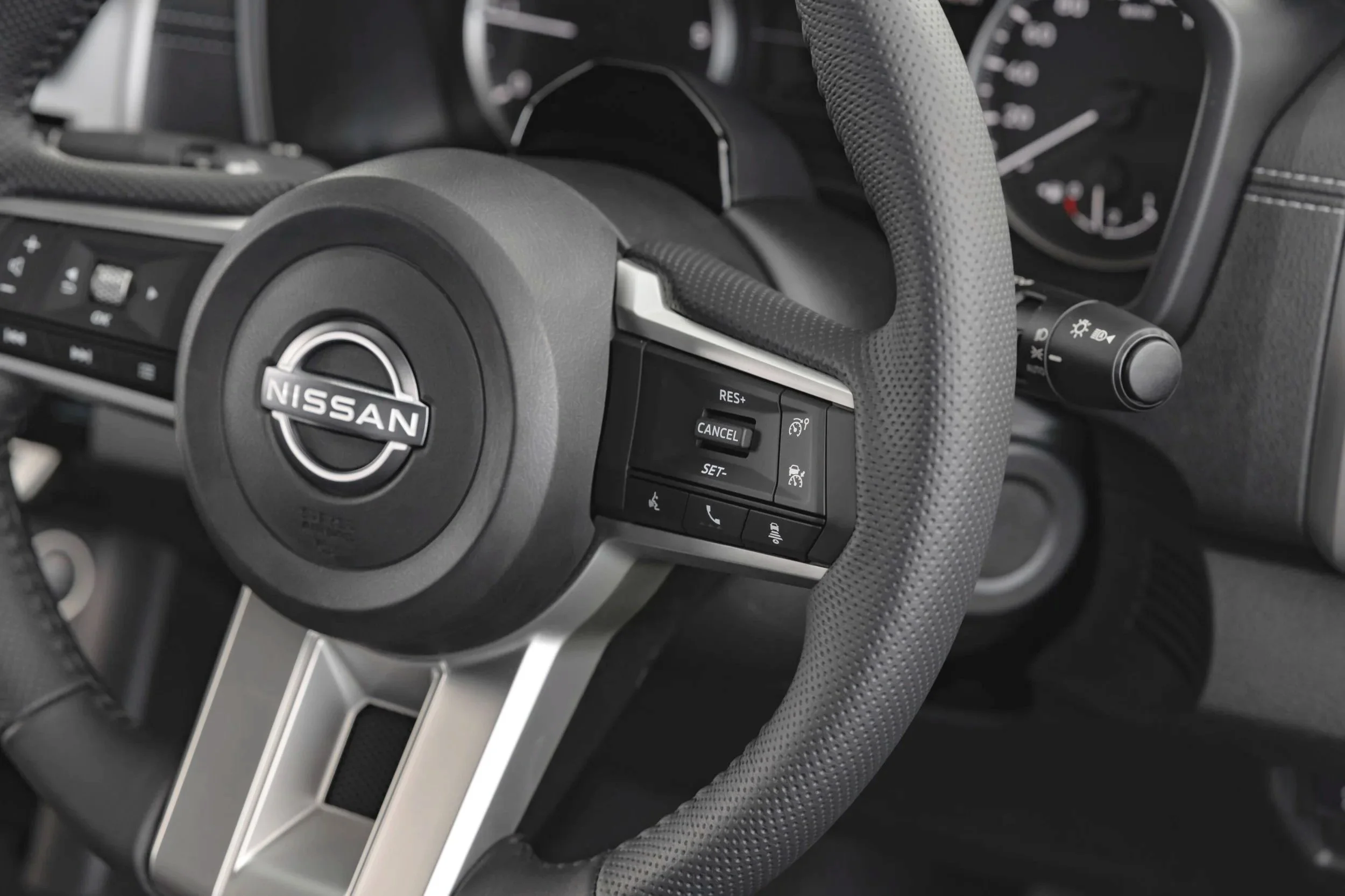
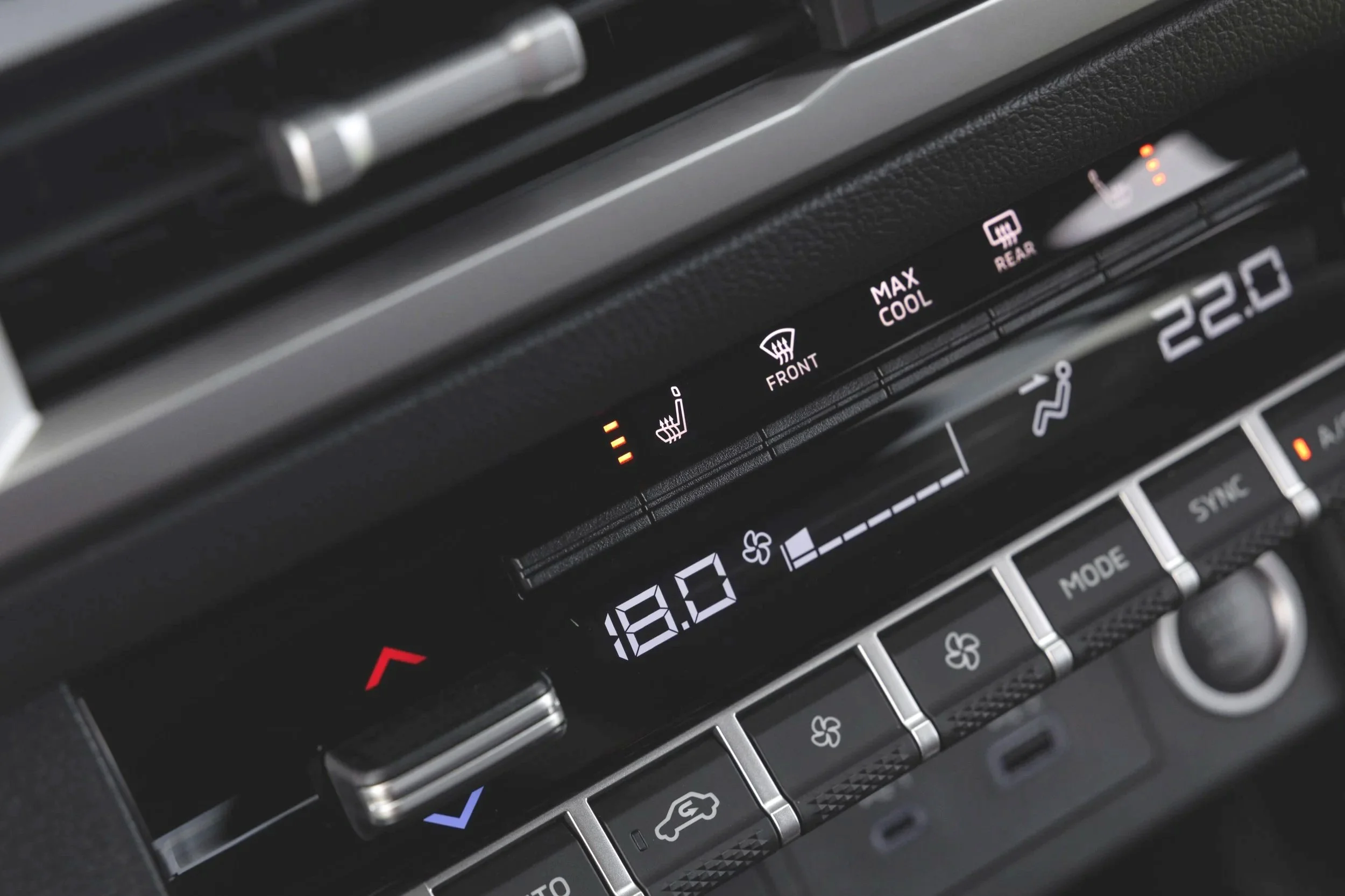
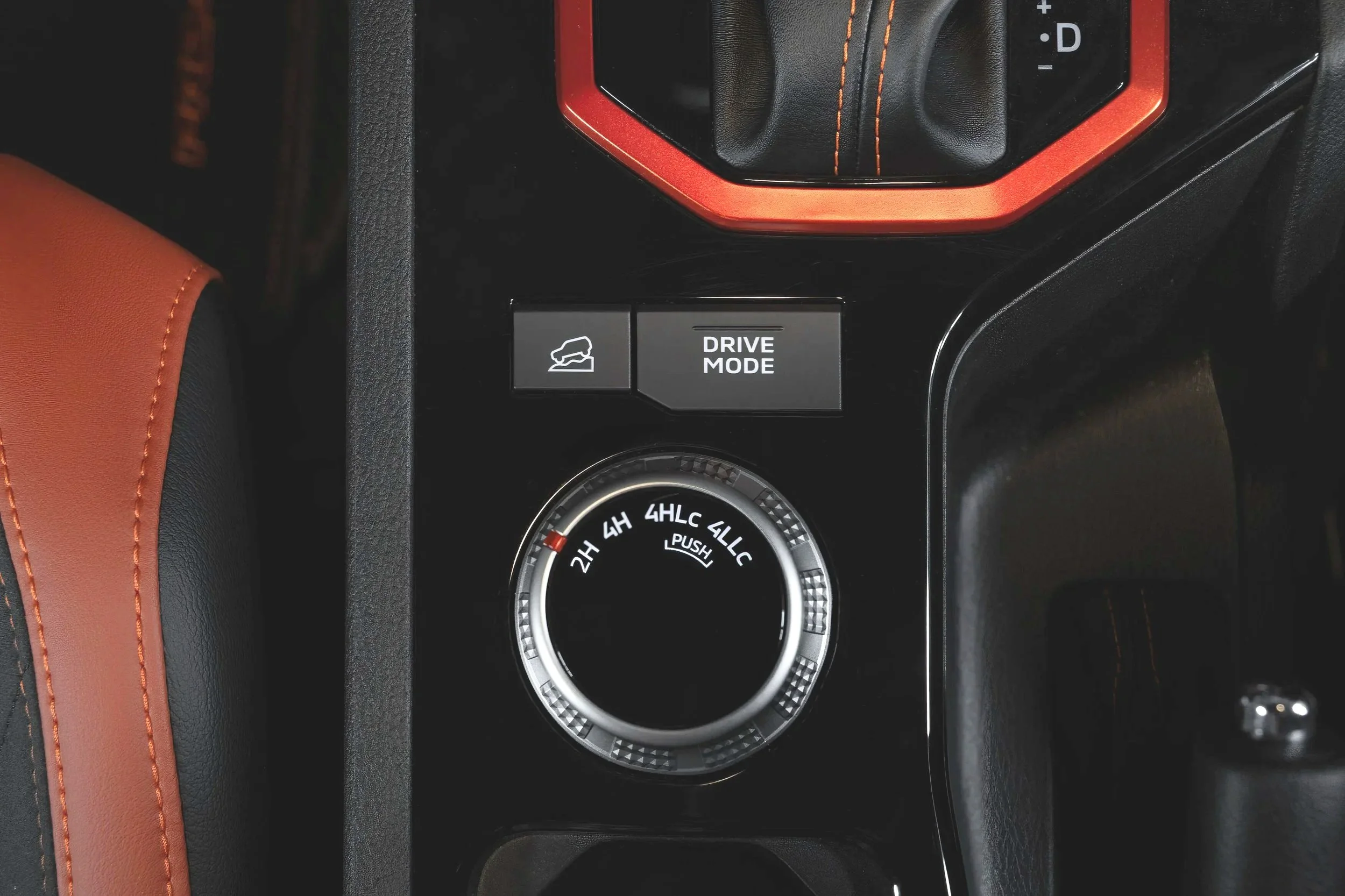
Nissan really hasn’t changed much in terms of the seating either, with exception of the Navara typeface embossed into the seat leather.
The rear seats remain the same, the back section folding down as a whole piece, with a single central top tether anchor point for the outboard child restraint positions with their corresponding ISOFix points.
Door bins in the back are okay without being great, and the fold-down armrest has a cupholder. But what’s also good about the rear seats is Nissan gets to use the Triton’s roof-mounted air vent system which is great at dispersing cool air into the hottest part of the cabin - the ceiling. So it’s quite efficient.
Their one drawback is that it’s harder for kids or shorter people to adjust the vent direction or to indeed close them entirely being on the roof. But they are within easy reach for the driver when safe to do so.
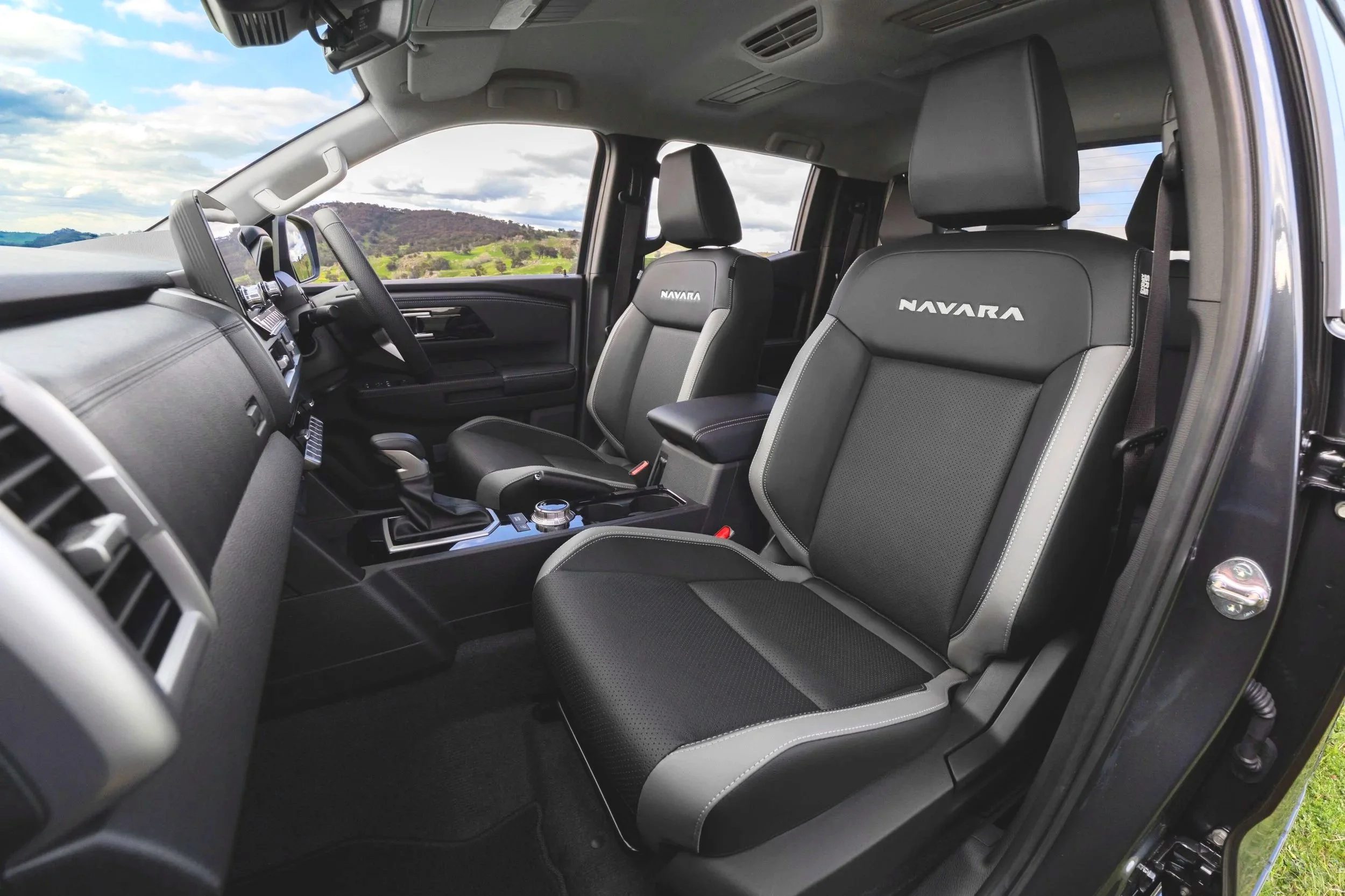
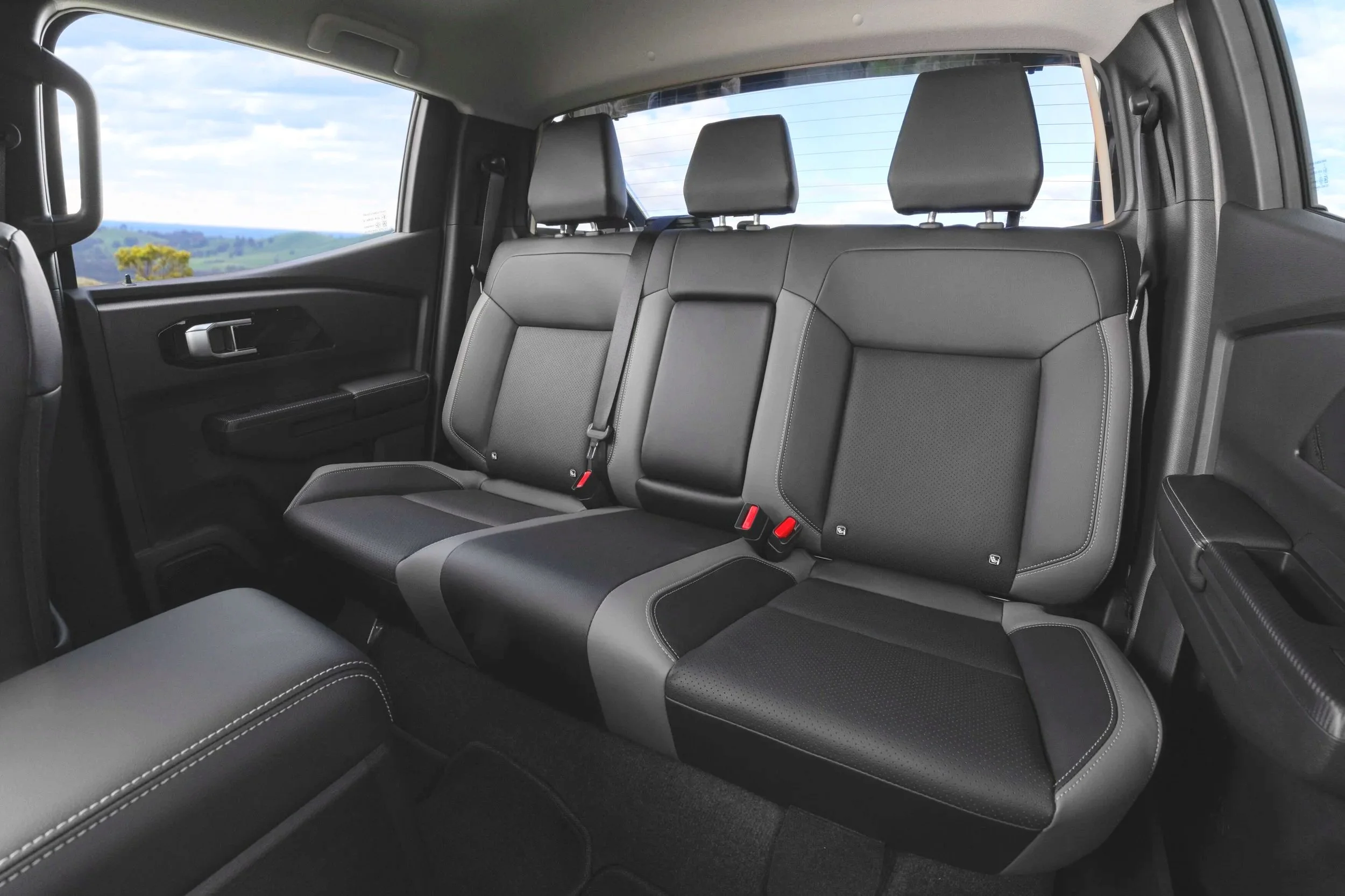
As for driver comfort, the seats are appropriately snug for bigger bodies and the driving position is spot-on. Legroom is generally very good for the vast majority of body sizes and headroom is very good.
Operating the infotainment screen is a breeze thanks to a well organised menu screen with big, clear icons and a simple layout. The rearview camera is pretty good without being extraordinary.
It’s also good to see the driver’s display retains the binnacle to protect it from incidental sunlight and glare while driving.
SAFETY
Navara uses the Triton’s ANCAP safety rating data to generate its own rating, and overall the Triton is very safe in all of the four key criteria.
You can download the 2026 Nissan Navara’s crash testing report here >>
Triton is among the safest utes your money can possibly buy, owing to the fact it is the only dual-cab 4X4 ute tested in 2024 to the latest protocols. But exactly what does that mean to you using this vehicle on a daily basis?
Prior to Triton’s arrival, the newest dual-cab ute on the market and to be rated by ANCAP was the Volkswagen Amarok tested in 2023, and before that it was the Isuzu D-Max and Mazda BT-50 tested in late 2022, and Ranger in mid-2022.
Triton scored 34.6 points out of 40 for a percentage of 86 per cent. But Ranger and Amarok were only marked 32.2 out of 38 points in total having not been assessed against ANCAPs recently adopted (but fairly absurd) ‘Vehicle Submergence’ criteria like Triton. But more importantly, Triton beats Ranger in a key destructive test that actually matters to passengers.
The ‘Oblique pole’ test is conducted at a 35-degree angle at 32km/h. Why that speed? Because that’s about as fast as the vehicle needs to be travelling for you to survive when hitting a power pole or gumtree. Any faster than that and there’s not much the engineers at Mitsubishi (or any other car company R&D facility) can do to save you.
This test is very severe not just from the violence such a crash inflects on the test dummy, but also because of how horrifically relevant it is to real crashes. See, these crash tests are conducted based on what’s survivable and how common those types of crashes are in data obtained from actual crashes that happen on Australian and international roads where such data is collected.
Triton scored 5.89 out of 6 for the oblique pole test, whereas Ranger managed 5.15. Australian roads are infamous for how many big, solid trees line the shoulders. As much as modern civil engineering tries to reduce risk factors like these (such as wire rope barriers and guardrails) close to our big population centres, the fact is lots of dual-cab 4X4 ute owners like to travel long distances during school holidays, long weekends and often during the week for work.


In the Ranger’s oblique pole test score, the driver’s chest score was 2.14 (out of 4) whereas the Triton scored a much better 3.72 (near-perfect). But Ranger was objectively better performing in the full width frontal crash, where the test sends the vehicle into a flat wall at 50km/h. Ranger was marked down to 3.29 for the neck and 2.15 (both out of 4 points) for the rear occupant.
However, Triton performed objectively worse at just 0.43 for the chest, did pretty good for the next at 3.66, but was marked down 4 whole points due to submarining, where the dummy’s posterior takes too much of an excursion underneath the lap section of the seatbelt. But there’s more we need to consider here.
You have to give yourself a reality check here by asking yourself what are the the chances you’re going to hit something as immovable as a concrete wall at 50km/h in your Triton. It is an important test and the data is interesting in the context of how these vehicles perform.
But when it comes to realistic scenarios you’re going to face out there on the road, crossing traffic and being hit side-on, or accidentally coming off the road into a solid, tall, narrow object at lower speed is probably the more pertinent crash type to be conscious of here.
Triton also scored well in ‘Whiplash protection’ getting a better score in front driver/passenger dummy results, but also scoring a full point in rear occupant whiplash protection where the Ranger got a big fat zero back in 2022. Even Amarok, which is essentially a re-skinned Ranger, only managed 0.75.
So not only has the Navara benefited from the performance and capability of the Triton’s underpinnings, safety has also taken a big step forward - which should be welcome news for you.
DRIVING
Now that Navara is a proper dual-cab ute with leaf springs at the rear, having not been hijacked in the R&D by Mercedes-Benz wanting a soft executive’s conveyance, it rides more harshly when unladen. But that does mean it’s far more comfortable with heavy payloads and towing.
One of the old Navara’s flaws in terms of its on-road load-carrying was that its coil springs tended to sag with weight in the tray or a moderately heavy trailer (around the 1.5-2+ tonne mark). The one upside was that this made Navara very comfortable in off-roading conditions owing to the greater articulation.
The other benefit of leaf springs on a Navara now is that, of course, the load is now transmitted through the chassis via two contact points on the chassis, rather than one, meaning less stress on that member. What was immediately apparent about the Triton’s design was that it has remarkable road-holding in the corners, particularly for a dual-cab ute.
But in typical Nissan form, they couldn’t help themselves but to modify the Triton platform with the outsourcing of that engineering work by Premcar.
If you don’t know, Premcar is a Melbourne-based engineering company that Nissan has comissioned to sex-up the Nissan Patrol and Navara to create the ‘Warrior’ package.
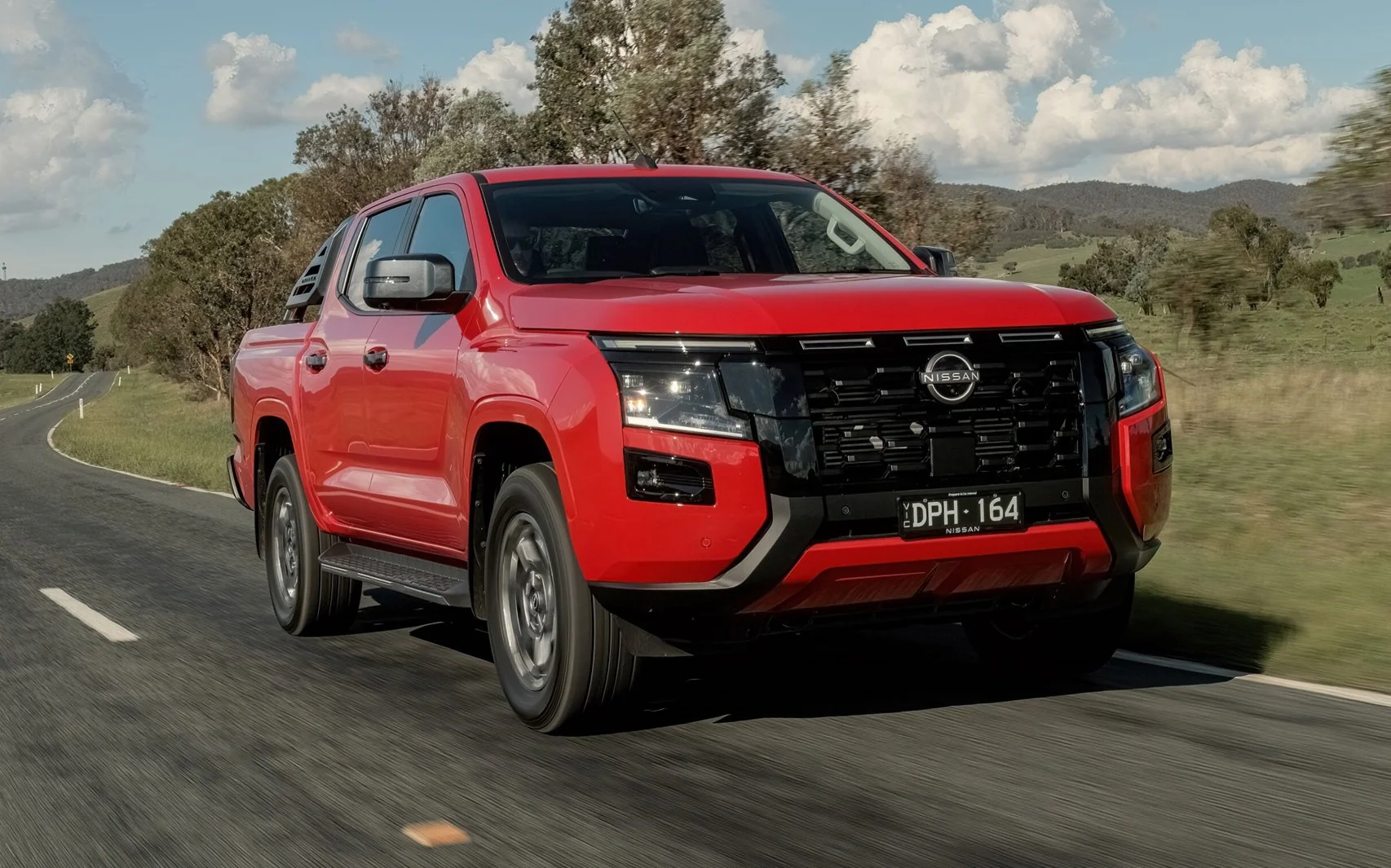
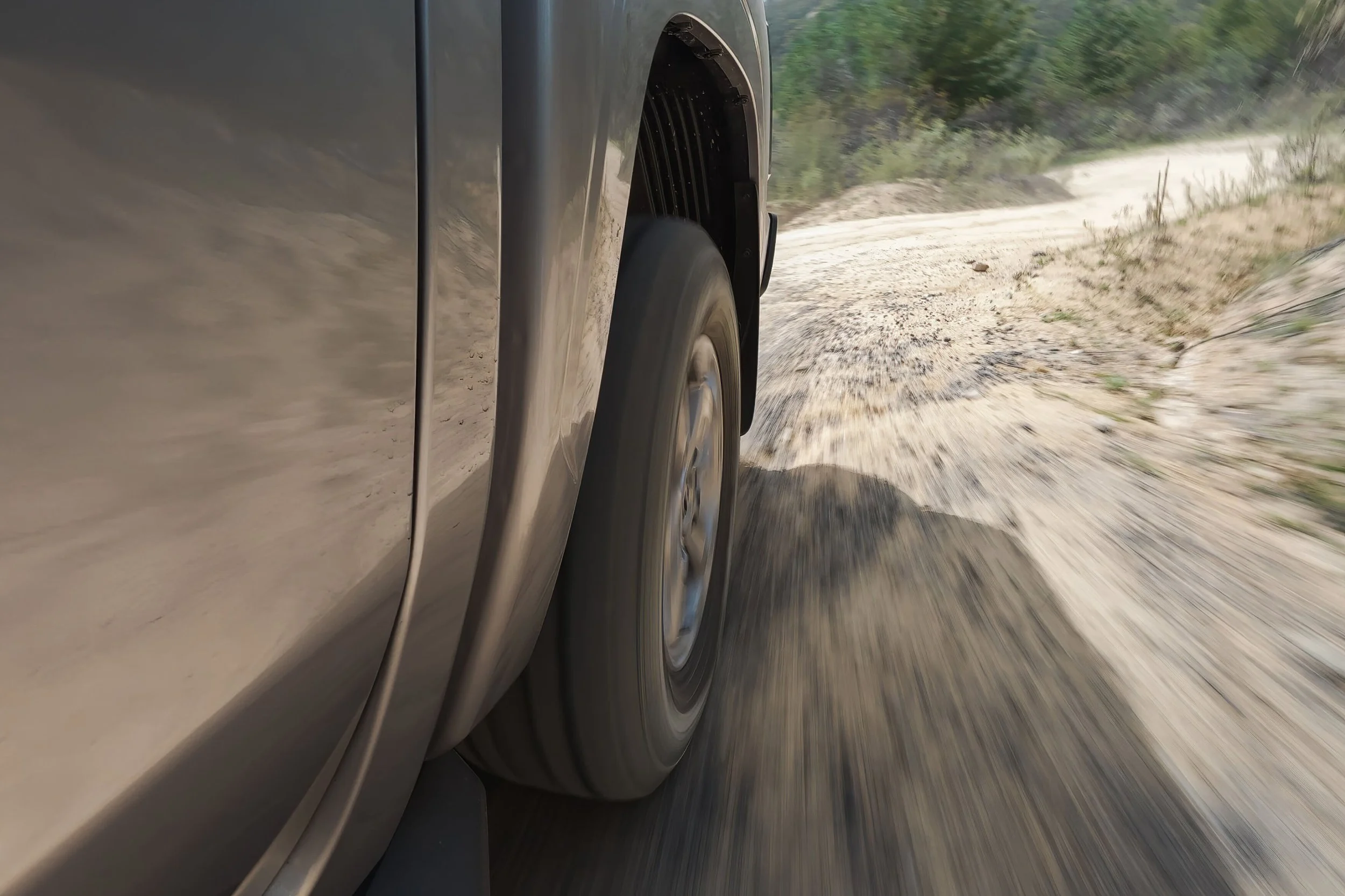
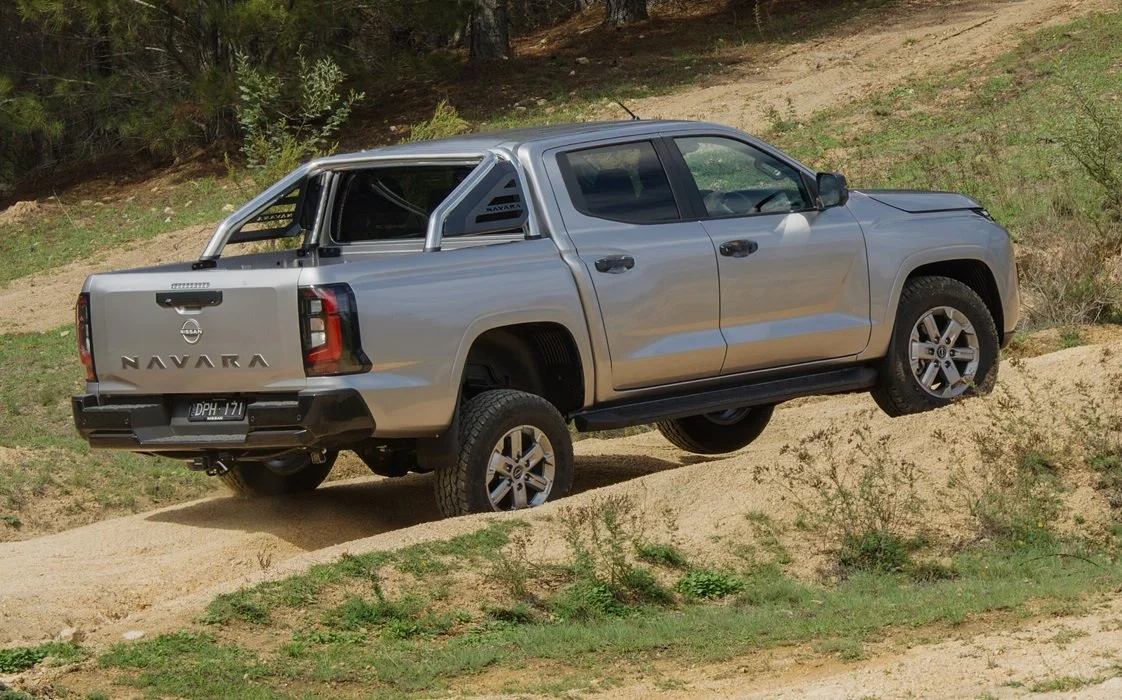
Premcar has been busy tweaking Navara’s ride and handling to ensure it:
performs confidently across the vast range of conditions
What they’ve done is develop three different states of tune for three different stages of the model range. You get the heavy-duty tune for the ST and ST-L, ideal for fleets and budget-conscious tradies, then there’s the half-half tune on the ST-X for a combination of heavy-duty and softer duties, or there’s the Pro-4X tune which is going to be the most compliant of the three.
The ST and ST-L offer 17-inch wheels with heavy-duty four-leaf rear spring pack.
The ST-X gets 18-inch wheels and a three-leaf rear suspension pack, with damper calibration to manage the reduced tyre sidewall compliance and the more family-conscious nature of that modela grade.
And the Pro-4X gets the most amount of compliance from the tuning, to extend the articulation ability on harsh terrain.
DRAWBACKS
Driver Stalking System
Navara uses the same ‘Driver Attention Monitoring’ as Triton, which received and early update and that was touted as a win for common sense and consumers in general. But all is not what it seems - and it applies to the new Nissan Navara as well.
The first iteration of Triton’s ‘Driver Monitoring System’ was truly representative of the conflict between carmakers adhering to the ANCAP protocols (that demand such a system both exist and default-on with every restart) and what the end consumer actually wants, which is to be left alone to focus on the task of driving.
But unfortunately, Mitsubishi having to do this in order to get 5 stars commercially is at odds with the needs of consumers in terms of actually driving the vehicle. And the first iteration of this driver monitoring system has been ubiquitously regarded as poorly executed.
In fact, it has been downright terrible because it constantly goes off, distracting the driver away from the core task of driving, with so-called warning messages that are irrelevant to the driver’s primary task of driving and paying attention to the traffic.
Case in point, if you’ve got afternoon sun coming in through the windscreen or sideglass, you’ll typically deploy the sunvisors and avert your eyes so you can actually see the road environment outside. But the stalking camera sees this as you not paying attention simply because you’re not bolt-upright staring directly ahead. Except that’s not how human eyes work. Our heads can swivel but our eyes can remain locked on a target.
So you’re driving along taking extra care to focus on the road despite this moderately challenging scenario of sun-in-your-eyes, but you’re doing okay. But then the car interrupts your focus to tell you it cannot detect your face or to alert you that you’re not paying attention. Except you are paying attention and the car has just distracted you!
But in what seems like good news, Mitsubishi Australia has, supposedly listened to:
dealers and media, but also – crucially – All-New Triton customers
with what Mitsubishi described as:
the updated software [that] further enhances the drive while remaining five-star ANCAP safe.
But unfortunately, what this suggests to us is that they are commercially hamstrung by ANCAP’s ability to restrict Triton’s five-star rating which would eliminate the ability to sell it to fleets - as AutoExpert understands it. That would potentially kill about half of all Triton and Navara sales.
Notionally, what Mitsubishi didn’t want to admit here was that they hadn’t actually fixed the problem of this driver stalking system - because they couldn’t fix it. Their latest press release even says:
calibration of DMS requires a fine balance, ensuring adherence to what are strict ANCAP safety protocols while not overly impacting the user experience.
Given the ANCAP rating for Nissan Navara is taken directly from the data obtained via Triton’s testing, this should tell you everything you need to know: Navara uses the same system and it will continue to do all the same annoying beeping and prompting about its inability to detect your face during sub-optimal lighting conditions.
In fact, the Nissan Australia press release doesn’t say a single thing about any of the safety equipment standard on the Navara - not even the usual stuff a carmaker’s big media announcement would typically espouse. There’s not even a sub-head saying this is ‘the safest Navara ever thanks to airbags, adaptive cruise, hill descent control and trailer sway control’. Nothing.
And this is not Mitsubishi Australia’s fault, and nor is it Nissan’s doing. They’re both makers of a very good ute on fundamentals and the value remains the best among mainstream utes. This is an ANCAP problem forced onto the consumer via carmakers that paints Mitsubishi and Nissan into a corner.
Navara now has to compete commercially against more ute models sold at a cheaper price (one hurdle less for consumers like you to jump over). Or models whose driver stalking systems aren’t as invasive because Ranger, Hilux, BT-50 and D-Max were all tested under older protocols, so their systems get to be slightly less-shit for consumers (another hurdle removed).
Triton and Navara get to compete with both of these hurdles in place, notionally. One hand tied behind their back, so to speak.
Congratulations, ANCAP. This is what happens when you don’t innovate, adapt and do things properly.
Mitsubishi Triton is a great ute handicapped by bureaucracy masquerading as ‘safety’, and Navara suffers because of it as well. But it’s not just Navara itself stifling sales.
NISSAN AUSTRALIA
The main reason you’re encouraged here to look at the Triton instead of the Navara is due to the brand’s reputation in Australia in years gone by.
Nissan Australia has, for years, dug their own reputational grave with a series of poor corporate decisions, such as the CVT transmission in Pathfinder that was garbage, failing to properly engineer the Leaf EV with active cooling, failing to adequately support customers in aftersales care with warranty claims, and letting their dealers behave like consumer law was optional.
Here is just the latest example":
MAIN COMPETITORS
FORD RANGER (Wildtrak)
Ranger V6 is one sexy ute, evidenced by toppling Hilux as Australia’s most popular dual-cab ute in 2023.
The V6 is the one you buy if maximum platform performance is needed because it’ll be worked hard from day 1. Stay below the 3.5-tonne towing limit for safety, but Ranger is inherently quite stable thanks to 2.3t kerb weight.
A V6 XLT is a solid multi-purpose work vehicle and family conveyance, whereas the 2-litre turbo four-cyl seems a bit highly strung. Try the XLS if a cheaper work-only second vehicle is needed and comfort is not top priority.
Ranger is a good workhorse and a great tow platform, plus its off-road credentials are awesome. It’s just let down by Ford’s reputation for average reliability, and lacklustre customer support. But at least Ranger resale value seems strong.
Click here for more on Ford Ranger >>
ENGINE: 3L bi-turbo-diesel V6 | POWER: 184kW @ 3250 RPM | TORQUE: 600Nm @ 1750-2250 RPM
Kerb wt: 2388kg (Wildtrak) | Power-weight ratio: 79kw/t
Max. potential payload: 962kg (Wildtrak)
GVM: 3350kg | GCM: 6400kg
Driveline: 10-spd epicyclic auto trans, electromechanical clutch pack (acts as front diff), rear differential, row-range transfer case, 4-high on-road use
Brakes: ventilated front discs, ventilated rear discs
Front / rear axle limit: 1490kg / 1959kg
Approach / breakover / departure angle: 30 / 21 / 23 degrees
Ground clearance / wading depth: 234mm / 800mm
Tray length: 1464mm | width (b/w w/arches) 1217mm | height: 525mm
Front / rear overhang: 865 mm | 1215 mm || Turning circle: 12.9m
Wheelbase: 3270mm | Total length: 5370mm | Width: 1918mm (excl. mirrors) | Height: 1886mm
PRO: V6 towing grunt (600Nm), all-wheel driveline system, heavy kerb weight makes heavy towing safer at speed
CON: Below-average customer support from Ford Australia, expensive range, 2L bi-turbo is a bit highly strung
MITSUBISHI TRITON (GSR)
You’ll save thousands on a Triton over and equivalent Ranger, and with a 3500kg maximum braked towing capacity the towing field is level.
Mitsubishi’s ‘Super Select II’ transmission is a master stroke, allowing 4WD activation below 100km/h and use of AWD (4H) on high-traction surfaces - thanks to a proper centre differential. This is great for use on tarmac in heavy rain, on gravel roads, steep driveways, wet sealed roads, icy conditions, and general bush tracks.
The 2.4 turbo-diesel is now more powerful thanks to now bi-turbo forced induction. Fuel economy improvements should follow as well as good load-carrying and family-friendly cabin. Triton remains the best value ute on sale.
For more on new Mitsubishi Triton, click here >>
ENGINE: 2.4L bi-turbo-diesel 4-cyl | POWER: 150kW @ 3500 RPM | TORQUE: 470Nm @ 1500-2750 RPM
Kerb wt: 2170kg | Power-weight ratio: 70kW/t
Max. potential payload: 910kg (GSR)
GVM: 3080kg | GCM: 6250kg
Driveline: 6-spd epicyclic auto trans., centre and rear differentials, row-range transfer case, 4-high on-road use
Brakes: ventilated front discs, rear drums
Front / rear axle limit: 1580kg / 2040kg
Approach / breakover / departure angle: 30/ 23 / 22 degrees
Ground clearance / wading depth: 228 mm / 800mm
Tray length: 1555mm | width (b/w w/arches) 1135mm | height: 525mm
Front / rear overhang: TBC | TBC || Turning circle: 12.7m
Wheelbase: 3130mm | Total length: 5320mm | Width: 1930mm (excl. mirrors) | Height: 1795mm
MAZDA BT-50 (ISUZU D-MAX )
BT-50 shares platform fundamentals with Isuzu D-Max, but the Mazda is the pick, not only for saving money on the same basic package, but also because the BT has the much nicer interior.
If your ute will be used as more of a personal transport vehicle, perhaps only occasionally roughing it in hard-to-access places or in unpredictable circumstances, a BT-50 will offer a decent place to sit in for hours on end with multiple people on board.
It’ll also double as a very comfy suburban-dwelling family transport for weekend adventuring. Good towing platform with a 3500kg braked limit.
Click here for more on Mazda BT-50 >>
Click here for more on Isuzu D-Max >>
ENGINE: 3L turbo-diesel 4-cyl | POWER: 140kW @ 3600 RPM | TORQUE: 450Nm @ 1600-2600 RPM
Kerb wt: 2170kg | Power-weight ratio: 66kW/t
Max. potential payload: 910kg (GSR)
GVM: 3080kg | GCM: 6250kg
Driveline: 6-spd epicyclic auto trans., centre and rear differentials, row-range transfer case, 4-high on-road use
Brakes: ventilated front discs, rear drums
Front / rear axle limit: 1450kg / 1910kg
Approach / breakover / departure angle: 27 / 22 / 19 degrees
Ground clearance / wading depth: 240 mm / 800mm
Tray length: 1570mm | width (b/w w/arches) 1122mm | height: 490mm
Front / rear overhang: 905 mm | 1255mm || Turning circle: 12.5m
Wheelbase: 3125mm | Total length: 5310mm | Width: 1880mm (excl. mirrors) | Height: 1810mm
KIA TASMAN (X-Line)
PRO: Premium interior, lots of modern equipment, 4A all-wheel drivetrain, affordable mid-spec variants, excellent customer support, factory-fitted brake controller, widest tray among rivals
CON: Lacks higher torque output of rivals for extreme towing, looks splay-eyed
Comment:
Tasman might have taken an eternity to finally arrive, but now that’s it’s here, it’s going to prove a compelling value proposition against the Mazda BT-50, Mitsubishi Triton and possibly even the Isuzu D-Max. Tasman might have a lot to prove to ute buyers like yourself, but the fact an SX+ costs $1000 less and already offers equipment on a BT-50 GT costing $66K.
Tasman does lots of clever little things like print the vehicle’s dimensions under the centre console lid, comes with a built-in electronic brake controller which means you not only have that function when towing, but you also don’t have to deal with a third-party in terms of warranty. Early examples seem to show it’s quite proficient off-road and decent for plenty of moderate and heavy towing situations; maybe not the fastest or noisiest, but good enough for most conservative drivers.
CLICK HERE FOR MORE ON KIA TASMAN >>
ENGINE: 2.2L turbo-diesel 4-cyl | POWER: 154kW @ 3800 RPM | TORQUE: 440Nm @ 1750-2750 RPM
Kerb wt: 2223kg (X-Line) | Power-weight ratio: 69kw/t
Max. potential payload: 1027kg (X-Line)
GVM: 3250kg | GCM: 6200kg
Driveline: 8-spd epicyclic auto trans, front differential, rear differential
Brakes: ventilated front & rear discs
Front / rear axle limit: 1450kg / 2040kg
Approach / breakover / departure angle: 28/ 23 / 25 degrees
Ground clearance / wading depth: 224mm / 800mm
Tray length: 1512mm | width (b/w w/arches) 1186mm | height: 540mm
Front / rear overhang: 855 mm | 1285 mm || Turning circle: 12.3m
Wheelbase: 3270mm | Total length: 5410mm | Width: 1930mm (excl. mirrors) | Height: 1890mm
TOYOTA HILUX (Rogue)
ENGINE: 2.8L turbo-diesel 4-cyl | POWER: 150kW @ 3000 RPM | TORQUE: 500Nm @ 1600-2800 RPM
Kerb wt: 2231kg (Rogue) | Power-weight ratio: 68kw/t
Max. potential payload: 854kg (Rogue)
GVM: 3050kg | GCM: 5850kg
Driveline: 6-spd epicyclic auto trans, front differential, rear differential
Brakes: ventilated front discs, rear drums
Front / rear axle limit: 1450kg / 1700kg
Approach / breakover* / departure angle: 31/ 39*/ 23 degrees (*based on old Rogue, before 265mm ground clearance gain of 20mm in current version which Toyota Aust. does not state breakover)
Ground clearance / wading depth: 265mm / 700mm
Tray length: 1570mm | width (b/w w/arches) 1105mm | height: 495mm
Front / rear overhang: 997 mm | 1245 mm || Turning circle: 11.8m
Wheelbase: 3085mm | Total length: 5320mm | Width: 2020mm (excl. mirrors) | Height: 1870mm
Comment:
Hilux is the oldest ute platform in this group - and by significant margin. The last time Hilux was given a substantive update was 2018, even though Toyota Australia has tried to sex it up with the ‘GR’ pack and now reskinned the old girl with this 2026 update.
Hilux has the best resale value, but that’s hinged on their religious brand presence in Australia. It’s a fairly bland ute with little to distinguish it from the rest, and in fact it relies on the same primitive design 4WD system as D-Max whereby 4H cannot be used on-road. The ute world has moved on from this and there are now much safer utes to drive in the wet while towing and heavily laden.
CONCLUSION
In the same way Mazda makes the Isuzu D-Max a better ute by way of not having to deal with Isuzu Ute Australia, the Mitsubishi Triton means you can have a Navara without dealing with Nissan Australia.
Navara is a great ute, primarily because it’s been badge-engineered to no longer be a Nissan product and instead means you get to deal with the much better brand, reputation-wise.
But here’s the thing. People will be cynical about making Navara a Triton, but in fact it’s the best possible outcome considering the economic disaster Nissan has become since they (and Renault) bought their stake in Mitsubishi back in 2016. This corporate alliance has finally gotten to the point where the best dual-cab ute is now the underpinning platform to base Nissan’s light commercial hopes on.
This means more opportunity for you to get your hands on a Triton, whether it wears a diamond badge or a Nissan badge. Ultimately you know it’s a Mitsubishi underneath, meaning it’s reliable, it performs, and you can get it at a bloody good price compared with the Ford Rangers, Toyota Hiluxes and Isuzu D-Maxes of the Aussie dual-cab ute world.
Hyundai Tucson looks futuristic and drives very nicely on Australian roads. It offers grunty, reliable engines, plenty of features and 5-seat practicality at a modest price that makes it an ideal, safe family SUV.