
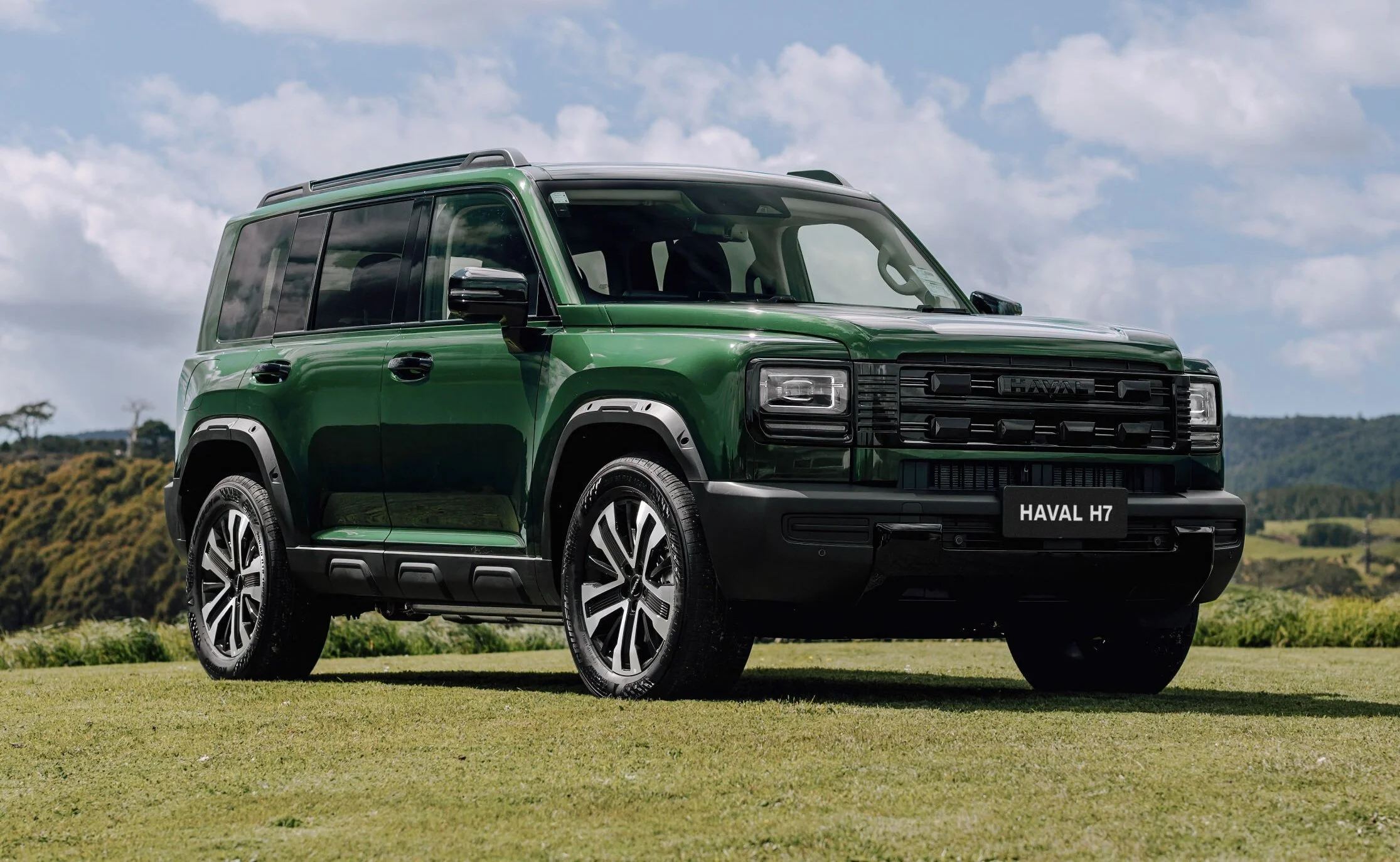
The medium SUV segment is heating up and the Haval H7 is a compelling option if you want a boxy suburban family vehicle capable of touring adventures. If going off-road isn’t your thing, but getting out of town is, the H7 fits the bill.
The Haval H7 is a hot option in the light-duty soft-roading SUV market in Australia, particularly when you look at it through the prism of value.
While it does not offer proper hardcore 4X4 capability like its Tank 300 sibling from the GWM Australia product range, it does bridge the gap between soft SUV and the Tank by offering AWD hybrid/plug-in hybrid remote touring.
Where plenty of suburb-dwelling people get more vehicle than they’re ever going to use by purchasing a 4X4 dual-cab ute or SUV and seldom ever actually getting it onto dirt roads, the Haval H7 metaphorically plants one big foot in Subaru’s territory.
We use the term ‘soft-roading’ in place of off-roading when you’re off bitumen but driving on well maintained gravel, clay or shale-type tracks that are far removed from needing some kind of secondary transfer gearset typical of a four-wheel drive. This has long been the space of Subaru and Mitsubishi, and in more recent years Hyundai with its HTRAC AWD system and the similar system featured in many Kia SUVs like Sorento and Sportage.
But in recent years, GWM has shown that it too can build a proper 4X4 and also a very plush, reasonably priced family SUV, and of course a zippy electric vehicle. They’ve also done a smashing job making a 4X4 plug-in hybrid powertrain that works in a dual-cab ute.
So it stands to reason that they would build a plug-in hybrid or conventional hybrid midsize SUV that delivers operational characteristics that borrow from the likes of Subaru’s all-wheel drive in the body of a Jeep Wrangler-sized SUV.
You can download the official Haval H7 brochure here >
FEATURES & PRICING
Haval H7 Lux | $46,000 driveaway approx.
includes:
19-inch black alloy wheels (255/60 R19)
Leatherette-accented seat trim
6-way electrically adjustable driver's seat
4-way manually adjustable front passenger seat
Manually dimming rear-view mirror
Manual rear window visor curtains
8-speaker audio system
12.3-inch instrument display
15.6-inch infotainment touchscreen
Wireless Apple CarPlay and wired/wireless Android Auto
Panoramic sunroof with electric shade
360-degree camera with transparent underbody view
15.6-inch infotainment screen
Wireless phone charging
Dual-zone climate control
Adaptive cruise control
Autonomous emergency braking
Lane keeping assist
Rear cross-traffic alert and braking
Traffic jam assist
7 airbags
LED headlights
Front and rear parking sensors
60:40 split-fold rear seats
586-litre luggage capacity (1,404 litres with rear seats folded)
Full-size 255/60 R19 spare wheel
Haval H7 Vanta hybrid | $50,000 driveaway approx.
adds:
8-way electrically adjustable driver's seat with memory and welcome function
4-way electrically adjustable front passenger seat
2-way electrically adjustable driver's lumbar support (upgraded to 4-way)
Heated front seats
Ventilated front seats
Heated steering wheel
Automatic-dimming rear-view mirror
Electric folding, adjustment and defrosting exterior mirrors with memory assist
Rear privacy glass
10-speaker premium audio system
8-inch independent amplifier
Ambient mood lighting
Head-up display
Electric steering wheel adjustment
Blacked-out front grille
Black badging and decals
19-inch black alloy wheels
Haval H7 Lux plug-in hybrid | $50,000 driveaway approx.
includes:
Panoramic sunroof with electric shade
360-degree camera with transparent underbody view
15.6-inch infotainment screen
Wireless phone charging
Dual-zone climate control
Adaptive cruise control
Autonomous emergency braking
Lane keeping assist
Rear cross-traffic alert and braking
Traffic jam assist
7 airbags
LED headlights
Front and rear parking sensors
60:40 split-fold rear seats
586-litre luggage capacity (1,404 litres with rear seats folded)
Full-size 255/60 R19 spare wheel
Haval H7 Lux plug-in hybrid | $54,000 driveaway approx.
adds:
8-way electrically adjustable driver's seat with memory and welcome function
4-way electrically adjustable front passenger seat
4-way electrically adjustable driver's lumbar support
Heated front seats
Ventilated front seats
Heated steering wheel
Automatic-dimming rear-view mirror
Exterior mirrors with memory assist
Rear privacy glass
10-speaker premium audio system
8-inch independent amplifier
Ambient mood lighting
Head-up display
Black exterior detailing
INTERIOR
There are plenty of familiar cabin appointments in the H7 that you may recognise from other GWM products, but it’s far from a copy-and-paste job. The transmission selector is a stalk on the steering wheel which has become something of a normal for most Chinese brands and the likes of Hyundai/Kia hybrids.
What’s immediately pleasing to see for anybody who appreciates ergonomic driver-centric design is that GWM has included a binacle around the driver’s display screen to obstruct it from glare. This has been a bad industry downward trend over the last decade where carmakers slap a screen in front of the driver and leave it there from a design point of view. So every afternoon, every bright sunny Australian day you’re left with horrific reflections and glare obscuring your view of the critical driving information.
The rest of the driver-first design is mostly small stuff like the location of the ‘Home’ and ‘Vehicle’ settings icons on the main infotainment screen being located in the bottom right-hand corner closest to the driver.
Unlike many of GWM’s other products, the H7 gets a chunkier steering wheel that actually fits in your hands in a reasonably comfortable, natural position. And pretty much all the normal controls from mirrors, air-con and media are where you’d expect them.
Having said that, GWM needs to makes its media screen icons much bigger for human fingers to touch while you’re moving, because they’ve got over 15 inches of screen and trying to touch one of those little squares (smaller than your fingertip) is a bit like playing ‘Operation’.
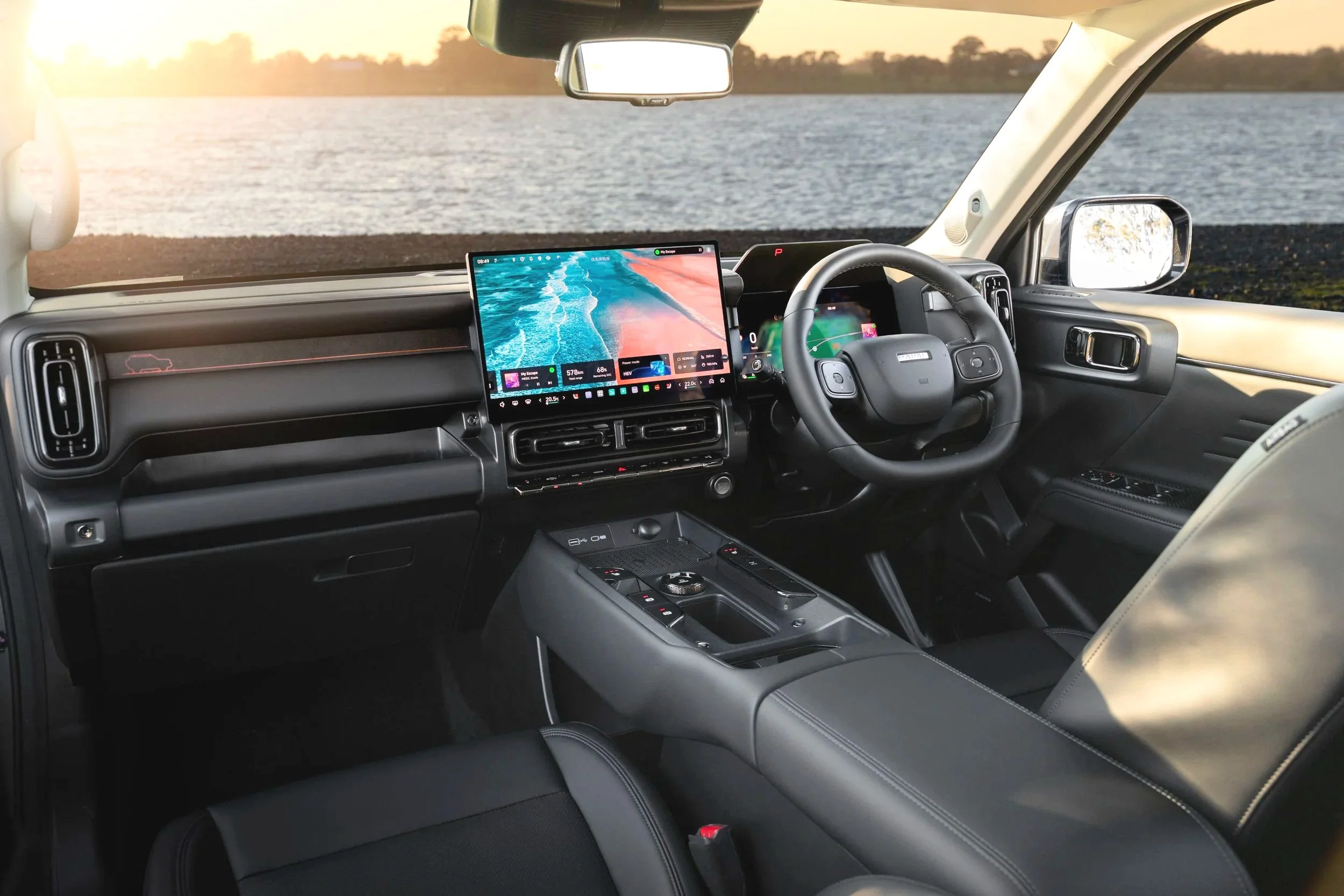
The cupholders are correctly placed behind the important electrical switchgear for the various drive modes and and seat-heating controls. The cupholders are also deep enough without being buried below the centre console making it impossible to get your cup out (a rookie design error carmakers still do today).
The seats are reasonbly comfortable and especially on hot days, having ventilated/cooled seats for just $50K is an absolute bargain in terms of how it’s equipped. Japanese and Korean carmakers have withheld cooled seats from Australian consumers for years, putting that feature high up in their respective model ranges so unless you were getting the top-spec grade, a sweaty back was guaranteed. Props to GWM for putting this highly desirable piece of equipment within financial grasp.
There’s generous under-console storage for whatever doesn’t fit in the mediocre sized door bins, and there’s even a little cubby recepticle for the keyfob right in the middle of the centre console for each reach getting into and out of the vehicle efficiently.
This is all nit-picky detailed observation but it matters in the context of how most people are going to want to use an H7 every day. In the suburbs, going to and from the office, shopping centres, multi-level carparks and school pick-up/drop-offs where you’re constantly getting in and out of the vehicle in short succession.
A vehicle like the Mazda CX-60, for example, is a bit poor for simple, easy, fuss-free ingress/egress related operation; a fantastic long-distance comfort machine, but a bit lacking in the ‘where to put stuff’ department. The H7 knocks it out of the park in terms of daily routine short-trip use and yet… it has some tricks up its sleeve in terms of how it drives.
I'll help you save thousands on a Haval H7
Just fill in this form.
No more car dealership rip-offs.
Greater transparency.
Less stress.
ENGINE
The Haval H7’s powertrain has two choices which means you’re either plugging the vehicle in at home or work in order to derive the maximum benefit from the plug-in hybrid system. Or you’re unable to charge in either of these places and the hybrid is going to be ideal in city traffic etc.
You can either go for the conventional series-parallel hybrid with 182kW from a 1.5L turbo-petrol 4-cylinder engine and 1.53Wh battery driving a pair of electric motors. The front electric motor makes 80kW while the rear-biased electric motor makes 130kW. The petrol engine alone is making 110kW.
Or there’s the plug-in hybrid (PHEV) which makes up to of 320kW of combined maximum power, with acceleration from 0–100km/h in just 4.9 seconds (if that’s relevant to you somehow).
The PHEV offers up to a claimed 137km of electric driving range which is going to be more like 100 in real-world driving, and a hypothetical 844km of combined driving range (meaning more like 600-700 in reality).
The PHEV has 6kW of vehicle-to-load capacity and all variants, regardless of powertrain, comes with a rear differential lock, 4x4 Expert Mode, eight drive modes, and a 1500kg braked towing capacity.
The fuel tank is a decent 55 litres for longer journeys where the electrical side is not doing much work at that 80-110km/h speed range, and you’ll only need to be filling up with 91 RON petrol.
FUNCTIONALITY
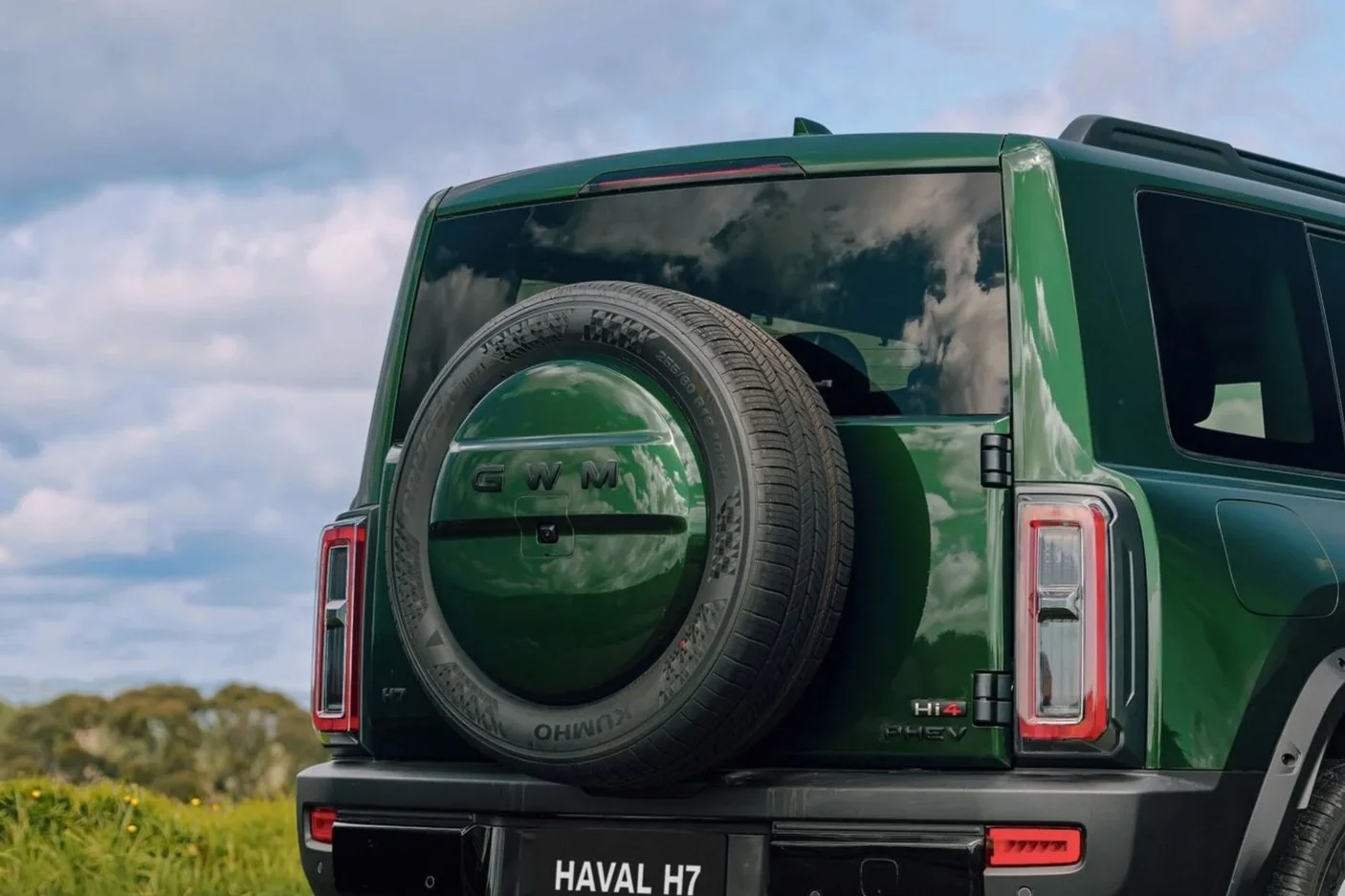
The first big tick for GWM Australia here is offering a plug-in hybrid or regular hybrid with a full-sized spare wheel. The added benefit is that being mounted on the rear tailgate means you’re lifting it up to and down from standing height, rather than having to crawl up under the car to attach it to the external underfloor, nor do you have to empty ¾ of the boot just to get the spare out and the flat in.
This might seem inconsequential to some, but not only does having a full-size spare buck a terrible trend here in Australia offering anything battery-motivated with either a barely-adequate space-saver, or a borderline useless tyre repair kit - it adds an ergonomic and driver safety element to the ownership experience.
Seldom does a hybrid or PHEV come with a full-size spare unless you’re getting something big like a Hyundai Palisade/Santa Fe, Toyota Kluger or Kia Sorento. The H7 in the medium SUV category offering a full-size spare is a huge and important point of difference and shows you that regional mobility is important to GWM Australia.
It certainly would’ve cut costs to offer a space-saver or a so-called repair kit which doesn’t work if you have a large gash or sidewall damage for the latter, or if you’re on a busy highway at 100km/h (or on gravel roads) with a fully-loaded car in the case of the space-saver.
This is not a salient point you’re going to find in the majority of car reviews on the Haval H7.
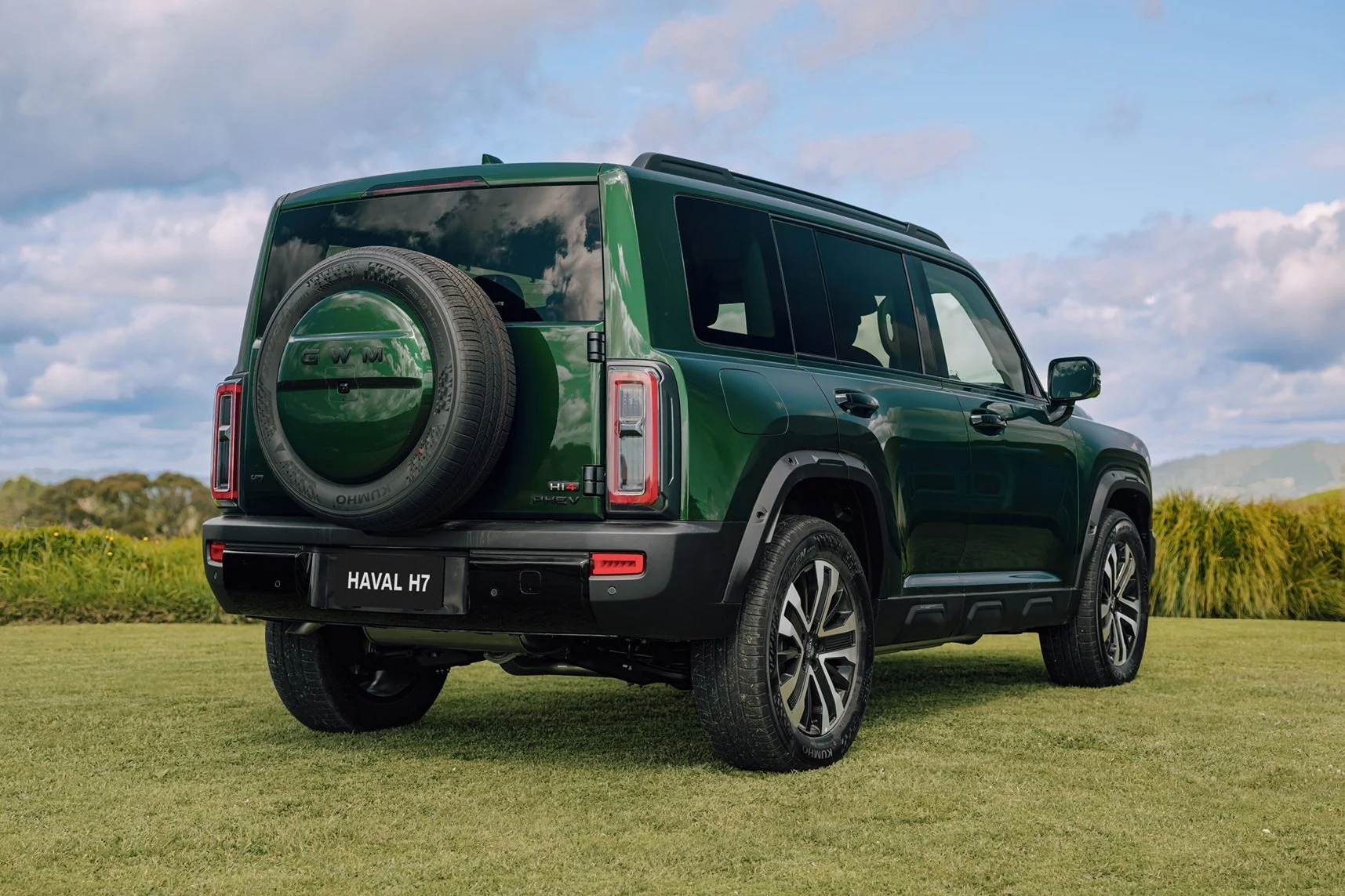
GWM’s proprietary Hi4 all-wheel drive is a game—changer in terms of a medium SUV offering proper four-wheel drive in low-traction surfaces like mud gravel roads, as well as steep inclines and sand.
The advantage of having electrically-sourced motive effort driving the wheels at extremely low speeds like 0-10 or 15km/h is that it is very manageable in terms of the traction control system feeding in just the Goldilocks amount of power to keep or get you moving, without overwhelming the tyres and creating wheelspin.
Common places this can be helpful include trying to get out of a soggy football ground or expanded parking at a regional cultural event where you might find yourself parked in a field for a festival of some kind and it drizzles. This is excluding the more obvious off-road driving you can do with a genuine 4X4 drivetrain with a locking rear differential.
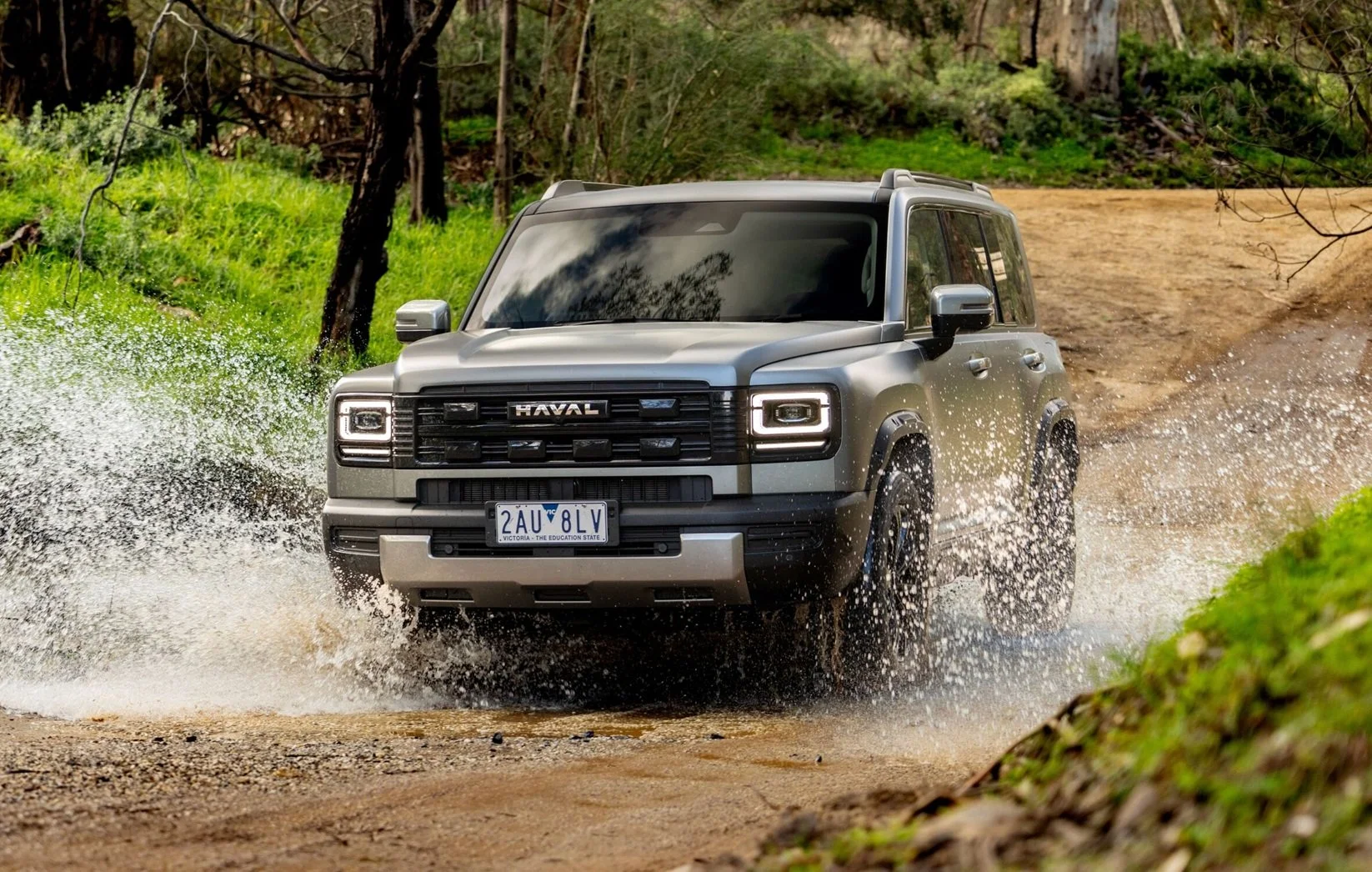
Braked towing capacity is 1500kg and the towball download limit is rated at 150kg. These numbers may appear a bit low, but it’s actually pretty decent for a hybrid/plug-in hybrid with such a breadth of practicality. For example, this is actually pretty close to what a Mitsubishi Outlander has been able to offer in recent iterations, and yet it’s more affordable, has the full-size spare, active AWD and gets the inner-city benefits of a hybrid in stop-start traffic.
Then we get to the rear end of the H7 and look at its operational window as far as raising kids, camping and light-duty adventuring goes. You’ve got a cargo space capable of 586 litres to 1404 litres with the second row of seats up or down respectively, and with close to a metre of space between the wheelarches.
What’s nice to see is GWM Australia actually telling you the wading dept is only 580mm which is wonderful knowledge for an owner to actually have, as opposed to other carmakers who tend to shy away from telling you their wading depth for fear of being compared with others, ignoring the fact its useful information for the potential consumer.
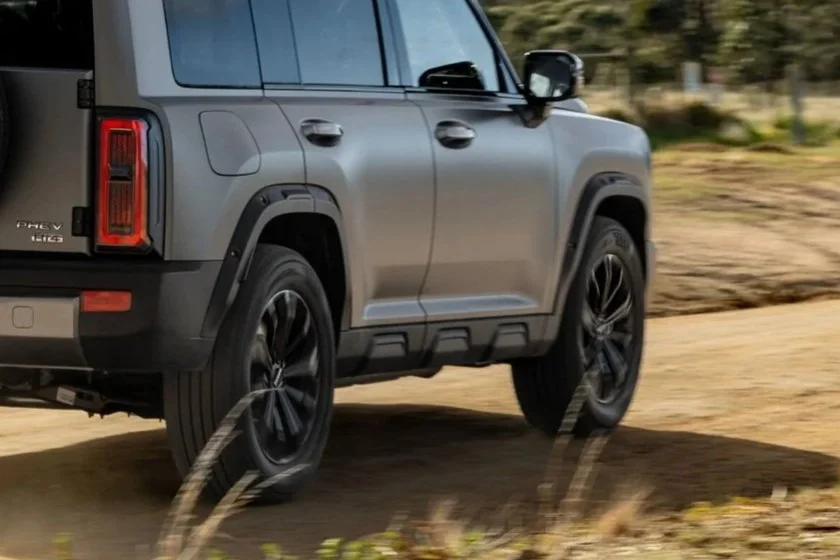
Ground clearance in an H7 is also pretty good at 210mm unladen. That’s up there with a Subaru Outback and not far off (a matter of millimetres) a typical 4WD wagon. So no, it’s not exactly a rock crawling arachnid, but this is hardly a soccer-mum SUV with no off-roading chops. An H7 will happily take the family camping for a weekend before being hosed off for the Monday morning office commute.
The broader context of the H7 is what matters here. It’s greater than the sum of its parts, so to speak. You get the
DRAWBACKS
19-inch alloy wheels typically aren’t the best wheel size for off-road capable vehicles but on this occasion GWM Australia has fitted it with appropriate tyres for such driving where low-profile sidewalls would be, typically, be at risk of pinching in the event of crawling over the wrong-shaped rock. Even worse is the likelihood if you do this with lowered tyre pressures.
You’re unlikely to get yourself in a situation where you would need to lower the pressures on these tyres, but you could (if you wanted to) because they’re 255 wide and 60mm in sidewall, which is about the same as a typical light truck or van tyre profile. Having said that, try to avoid the fixation with lowering your tyres at the first sign of a dirt road, as is often preached by the 4WD community because they think it offers some significant difference in ‘traction’ or ‘grip’ in slippery conditions. This is only true to a point. Meaning, it makes a little bit of difference.
What letting your pressures down fails to take into account is the chance you can’t re-inflate them (such as if your air compressor fails). Tyres are also more susceptible to damage when their pressures are low because the air inside cannot push against the tyre and prevent it from deforming over a rock or in a trench, so the tyre can end up being cut or pinched by its own wheel rim in the wrong situation. You can also damage the rim because again, the edge of the wheel is less protected by the resistance of the tyre on impact with an object.
A full-size spare mounted on the back is generally a benefit when you have to actually change the boot. But it does impinge somewhat on the ability for carmakers to offer a top-mounted tailgate, meaning you’re left with a barndoor setup which is more robust for not just holding that 20kg mass in all driving scenarios, but also when you open it and said 20kg weight needs to be supported by a big structural member like those barndoor hinges.
Barndoors are awesome for ergonomic loading of your weekend camping equipment etc., but they do demand a lot of space at the rear of the vehicle. This is not a reason to scrub the H7 off your shortlist, by any stretch. It’s just a consideration to make.
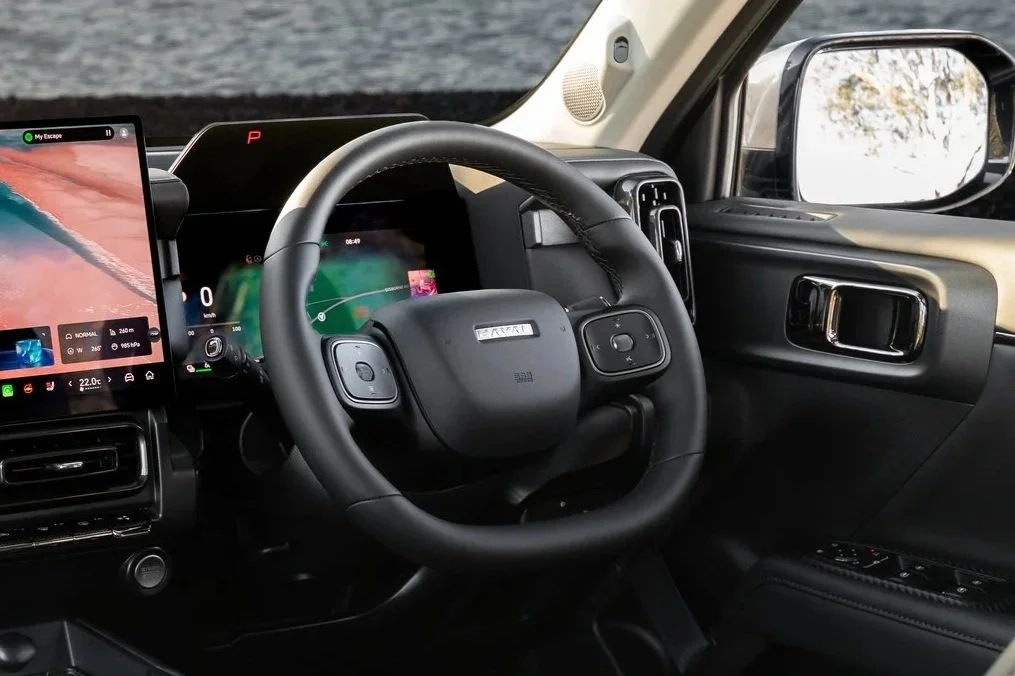
Steering wheel shape is something of a work-in-progress for the Haval brand which has, up to this point, shared the steering wheel design across several models whereby it is slightly dished, meaning the spokes slope ever-so-slightly inwards toward the centre.
This coupled with the wheel at 9-and-3 being a bit thinner than many other makes and models. What happens in this situation is the hands don’t sit entirely naturally around the wheel. SO on long journeys particularly, the palm of the hands wants to pull inwards, which is an extension and not neutral; and the fingers don’w wrap around the rim of the wheel and therefore don’t grip it fully.
This is a very nit-picking detail but it’s something you’re unlikely to notice on a typical 15-20 minute test drive via your local Haval dealership which tends to direct you around the block.
MAIN COMPETITORS
GWM TANK 300 ULTRA PHEV | $60,000 approx. driveaway
Length: 4760mm | Wheelbase: 2750mm | Kerb weight: 2615kg
Power: 300kW | Power-to-weight ratio: 114.7kW/t
Cargo capacity: ~400L (row 2 up), 1635L (row 2 down) | Spare wheel: Full-size, rear-mounted
DENZA B5 | $90,986 approx. driveaway
Length: 4888mm | Wheelbase: 2800mm | Kerb weight: 2897kg
Power: 400kW | Power-to-weight ratio: 138.1kW/t
Jeep Wrangler Unlimited Rubicon
Length: 4882mm | Wheelbase: 3008mm | Kerb weight: 2154kg
Power: 200kW | Power-to-weight: 92.8kW/t
Cargo capacity: ~470L (row 2 up), 1064L (row 2 down) | Spare wheel: Full-size, rear-mounted
KGM Rexton Ultimate | $64,200 approx. driveaway
Length: 4850mm | Wheelbase: 2865mm | Kerb weight: 2136kg
Power: 148kW | Power-to-weight: 69.3kW/t
Cargo capacity: ~640L (row 2 up), !1800L (row 2 down) | Spare wheel: Full-size, rear underside-mounted
CONCLUSION
The Haval H7 offers an ultra-wide breadth of capability in a way we’ve never really seen before in the Australian market with the verastility of a medium 4X4 wagon with light-towing ability and a decen-sized boot for weekend getaways.
There’s the inner-city stop-start nouse of the plug-in hybrid if you have the capacity to keep that battery charged, and the multi-role hybrid if you can’t charge.
Where the Tank 300 is tailored more for off-road use with a side-serving of subruban run-around utility, the H7 leans more toward the other way around, preferencing city commuting and school-drop offs with a split personality for the dirt roads and muddy, grassy paddock slopes - without becoming a big, heavy, cumbersome brute.
And it undercuts many rivals on price, which is another way to say more money left in your pocket.
More reports

Chinese utes are pinching Hilux, Ranger, Triton and D-Max sales. The Chery Stockman looks set to beat them all on value, power and capability. You need to pay attention to this important new dual-cab workhorse.