
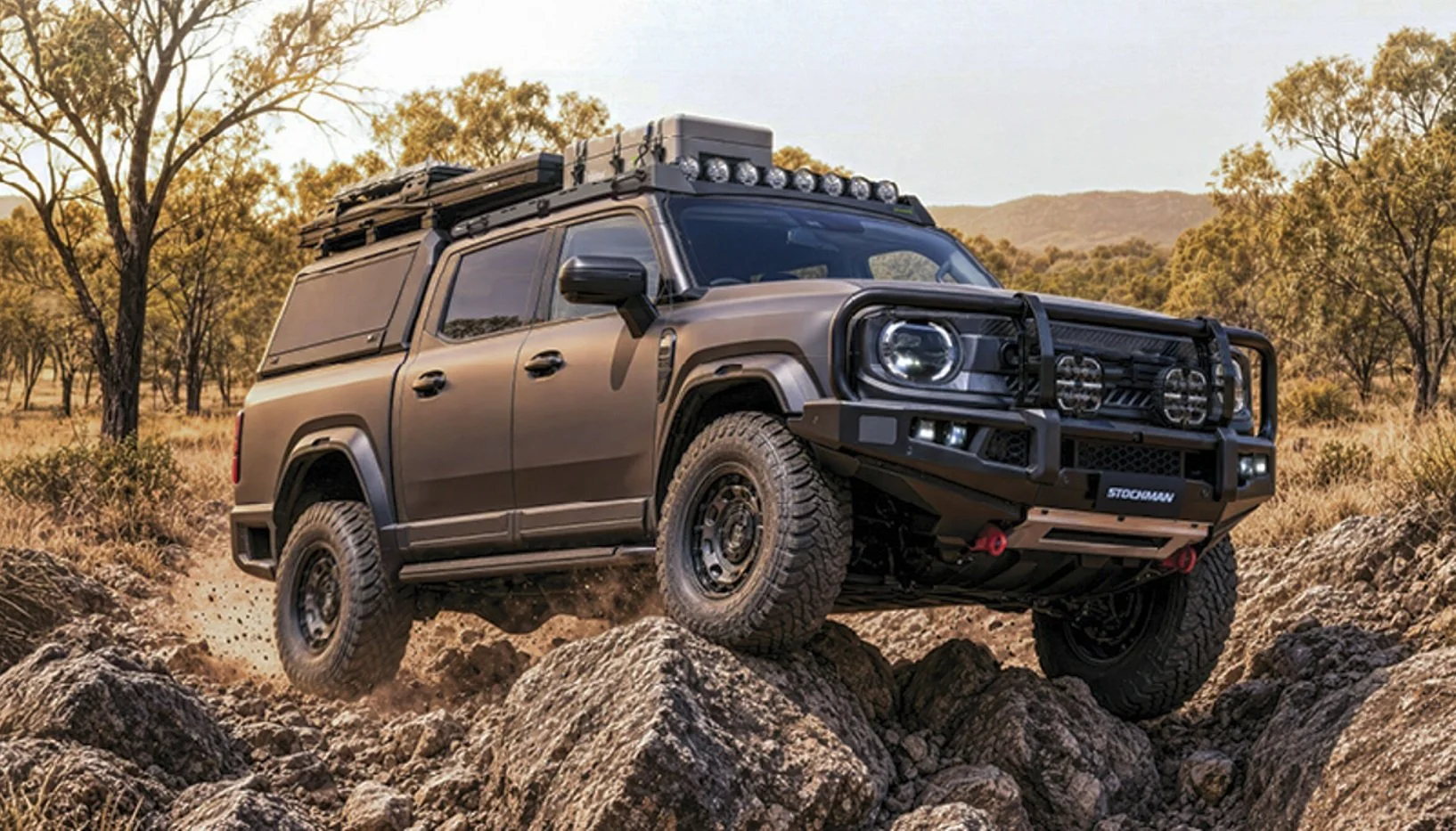
Chinese utes are pinching Hilux, Ranger, Triton and D-Max sales. The Chery Stockman looks set to beat them all on value, power and capability. You need to pay attention to this important new dual-cab workhorse.
The Chery Stockman ute is coming to Australia in 2026, giving buyers another plug-in hybrid option in the increasingly competitive dual-cab market - but with one critical point of difference.
With a diesel-electric powertrain, serious towing capability and likely a long list of standard equipment to go against the grain of conventional Japanese-brand utes, Stockman looks like it will upset the apple cart.
Here’s everything you need to know about the Chery Stockman price, specs, release date and features.
You can download the official Chery Stockman spec sheet here >
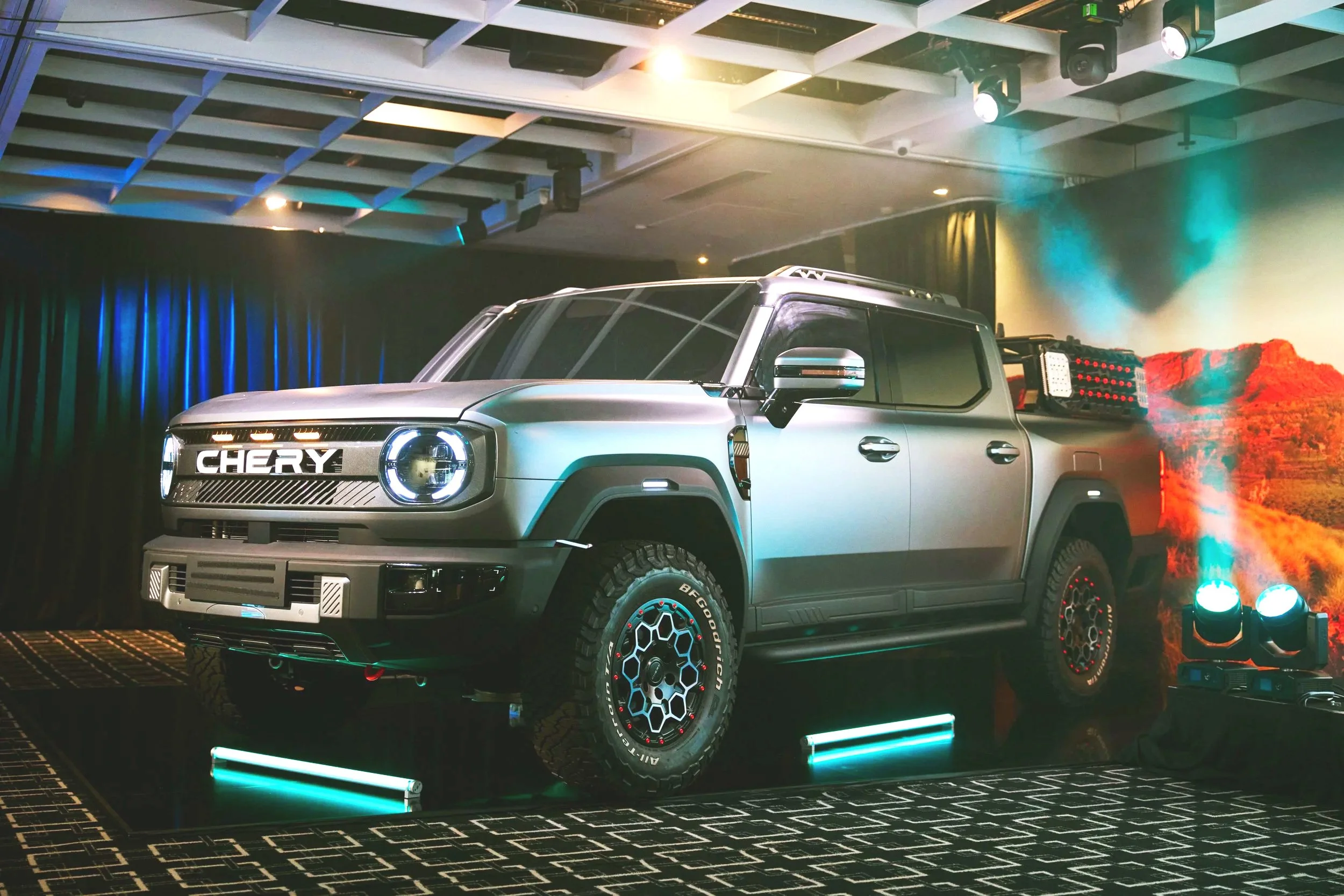
The GWM Cannon Alpha PHEV and BYD Shark 6 plug-in hybrids have both been proving that the Australian ute buyers want innovation and value they’re not getting from conventional Japanese brands (with Ford Ranger being the only exception).
The Kia Tasman has proved that sublime handling and smooth powertrain delivery are not enough to deliver sales and counteract a terrible captain’s call on bad aesthetic design. Tasman has also shown that being 10 years late to the ute party has dire consequences.
Then along comes the Chery Stockman. An exciting, interesting package that promises to tick all the right boxes: grunty 300kW powertrain, hardcore off-road performance, towing capability to match it with the big boys, and a face good enough to present on any building site or out the front of any regional Queensland pub.
If you’re still in the dark on just how monumental this new dual-cab ute is, and if you also want to alleviate any xena[phobia you might have for this revolutionary new technology and the fact it comes from China, you need to watch this exclusive in-depth behind-the-scenes look at the Chery Stockman production.
Powertrain: 2.5-litre Turbo Diesel Super Hybrid (Diesel PHEV)
Combined power and torque: 350kW / 800Nm
Drive: Four-wheel drive, incl. on-road all-wheel drive (high-4)
Electric driving range: Up to 100km (NEDC)
Braked towing capacity: 3,495kg
Unbraked towing capacity: 750kg
Ground clearance: 235mm
Off-road capability: Individually selectable centre and rear differential locks
Suspension: Double wishbone front / leaf spring rear
Wheels and tyres: 18-inch wheels with highway-terrain tyres
Dimensions (L x W x H): 5,450 x 2,010 x 1,890mm
Tray dimensions: 1560mm long / 1560mm wide (1220mm b/w wheelarches) / 505mm deep
Wheelbase: 3,250mm
Audio: Six speakers
Fuel: 80-litre fuel tank (diesel)
Approach angle: 30 degrees | Departure angle: 25 degrees
Towing: 3495kg (3.49 tonnes, braked) | Towball download: 350kg max.
Kerb wt.: 2735kg | GVM: 3500kg | GCM: 6500kg
Payload: 765kg | Payload @ max. braked towing: 415kg (with 350kg towball d/load)
Charging: Driver’s side rear charge port | AC charging (type 2) rate: 6.6kW (max) | DC charging (CCS) rate: 70kW (max)
FEATURES & PRICING
STOCKMAN URBAN | $58,000 approx. driveaway
2.5-litre Turbo Diesel Super Hybrid, 34kWh LFP batt. (lithium-iron phosphate), 350kW/800Nm, 4X4, dual-cab, auto
features:
6-way power-adjustable driver's seat
Six-speaker audio system
18-inch alloy wheels
265/65 R18 Highway Terrain tyres
Full-size steel spare wheel
235 mm ground clearance
4WD with 4H, 4L and Intelligent 4WD
Centre and rear differential locks
6.6 kW AC charging and 70 kW DC charging
LED: headlights (reflector type, auto), Daytime Running Lights, front & rear foglamps, taillights
Front and rear parking sensors
Adaptive cruise control and autonomous emergency braking
Blind-spot detection and rear cross-traffic assist
10.25-inch digital instrument display
15.6-inch infotainment touchscreen
Wireless Apple CarPlay and Android Auto
Dual-zone climate control
Synthetic leather upholstery
230V power outlets (two)
Side steps
STOCKMAN ULTIMATE | $63,000 approx. driveaway
adds:
Front differential lock
8-way power-adjustable driver's seat
Driver's seat memory function
Heated front seats
Ventilated front seats
Heated steering wheel
Head-up display
Digital interior rear-view mirror
14-speaker audio system
360-degree around-view monitor
Clear chassis view
Roof rails
Front fog lamps
Heated exterior mirrors
Power-folding exterior mirrors
Acoustic glass (windscreen, side and rear)
Rear privacy glass
Electronic tailgate release
Full-size alloy spare wheel
All-terrain tyre upgrade available (285/70 R17)
247 mm ground clearance with optional A/T tyres
INTERIOR
Plenty of macho design elements including the chunky grab handles, the robust square-ish transmission shifter, the thick indicator and wiper stalks, the wide door mirrors all make for a cockpit designed for tradespeople.
But what’s important here are the ergonomic details that probably go unnoticed to the untrained eye.
The steering wheel is actually majority round in an era where carmakers keep insisting on square-circle wheels. The transmission shifter’s not built into the steering wheel and instead rises from the centre receptacle in the console.
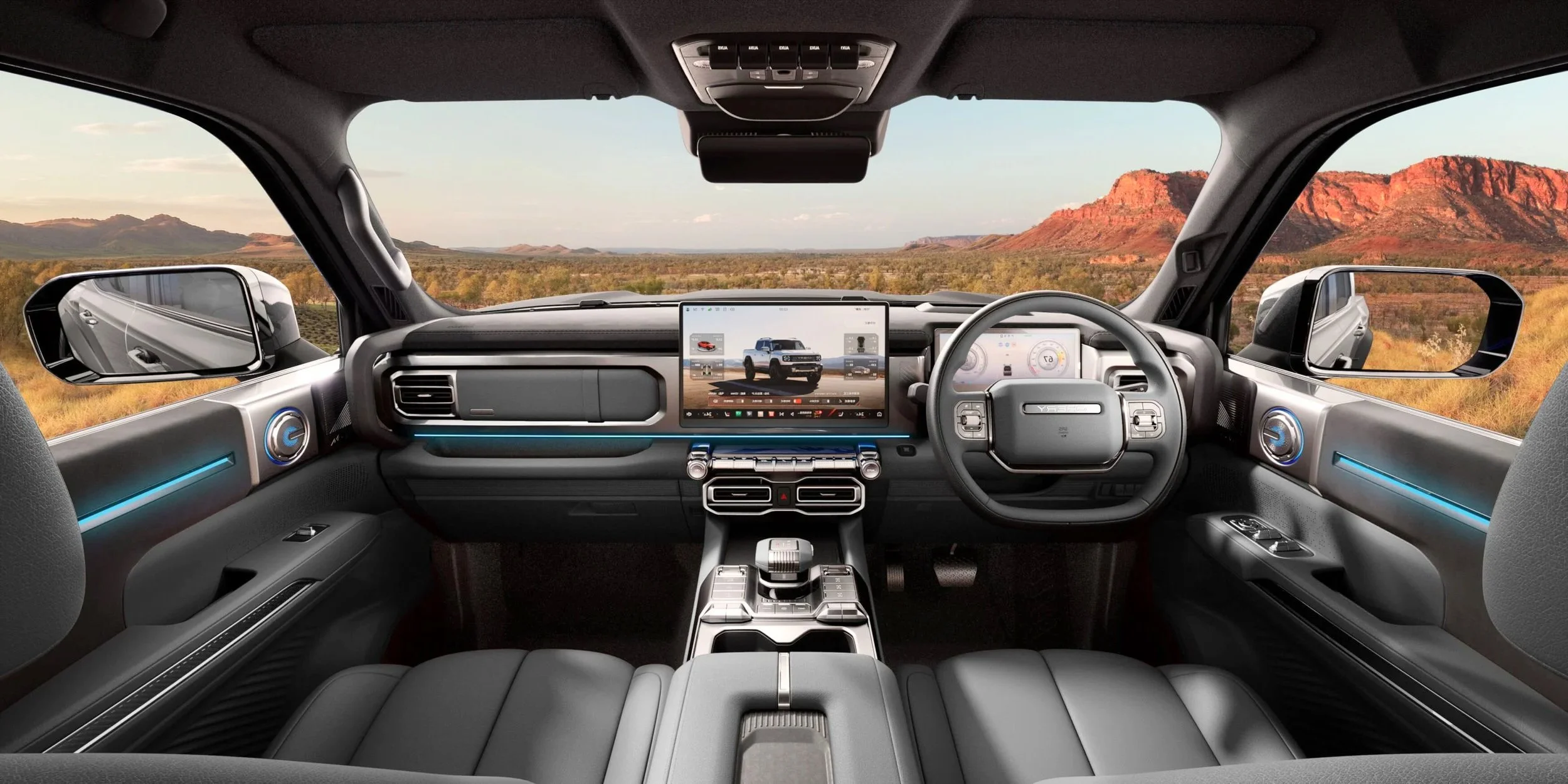
Those big wide mirrors will negate the need for towing mirrors (once correctly adjusted), the overhead flip-switches are excellent for making you feel like Rambo in a Huey, and it all looks very aesthetically pleasing.
But there are some ergonomic aspects that remain unchecked, which is why you shouldn’t put a deposit down on a vehicle you’ve never actually sat in or driven.
Those door handles look like someone has been unable to help themselves in the design department, it remains to be seen how poorly that driver’s display is going to handle glare and reflections in the harsh Aussie sun, and the same goes for the shiny silver textures of all the buttons and trims in that centre cluster surrounding the transmission selector.
That piece of shiny silver door trim on the sill on both sides which connects to the door handle also looks like it’s going to refract hideous glare and light either from the sun directly (into your eyes) and also from the door mirrors if the sun is behind you.
We also need to find out if Chery has done what XPeng did with their steering wheel by putting the various buttons and controls too close to the outboard area of the steering wheel where your palm rests when holding the wheel at 9-and-3 like you should.
SAFETY
Expect nothing less than a 5-star ANCAP safety rating, albeit with some minor point reductions for things like vehicle-to-vehicle compatibility due to its slab-fronted ute front end which are typically marked down for this reason.
The nature of a 2.7-tonne ute being impacted by a 1400kg mobile deformable sled won’t faze the Stockman much, and it will likely perform quite well in these destructive tests. But of course, don’t make your purchasing decision based on these unconfirmed speculations.
I'll help you save thousands on a Chery Stockman
Just fill in this form.
No more car dealership rip-offs.
Greater transparency.
Less stress.
ENGINE
The powertrain, for once on a new dual-cab ute launched in Australia, is unique, innovative and immensely powerful.
For the first time, a plug-in hybrid battery-motor powertrain has been mated to a turbo-diesel powertrain. The result is 350kW.
That makes is 94 per cent more powerful than a Ford Ranger Wildtrak with is illustrious 180kW bi-turbo V6. It’s 54 per cent more powerful than a twin-turbo V6 diesel LandCruiser 300 and even more grunty than the performance hybrid version wit its 341kW.
The transmission is Chery’s ‘Dedicated Hybrid Transmission’ which allows it to deliver power via the dual electric motors and the turbo-diesel engine.
This allows it to run in permanent all-wheel drive, as well as use both sides of the powertrain in hardcore off-road conditions, including low-range. This means you’ll get the advantage of low-down (in the ‘revs’) torque ideal for off-roading, but you’ll also get the long-distance fuel efficiency of a turbo-diesel for towing, regional touring and general highway use which will best any petrol equivalent due to the nature of diesel being more energy dense.
Again, this is the powertrain Australia has been desperately needing but which the notionally bigger, more established brands like Toyota, Ford, Mitsubishi, Isuzu, Nissan and Mercedes (remembering they do commercial vans en masse) have failed to innovate on.
TOWING
The specs say Stockman will be officially limited to a braked towing capacity of 3495kg, which is about two bags of sugar shy of the glorified 3500kg capacity in the main ute rivals.
Impressively, you do also get 350kg of towball download limit, which means that in its notionally maximised towing configuration, you’ve actually got more than 10 per cent of the trailer’s weight bourne by the Stockman. This is another first and althought we’re only talking about a difference of 5kg, what it show is maturity in Chery’s vehicle design and its specification.
We’ve never had a towball download positive weight bias with any dual-cab ute. It means that 10.01 per cent of the trailer is being restrained by the tow vehicle/prime mover. This is an inherently safe combination and again, while it’s a difference of 5kg, the notion of putting a 3.4-tonne trailer on the back of a ute weighing 2700kg is a much safer working load and overall combination than many of the other models that don’t weight more than 2.2 or 2.3 tonnes.
This relates tot he Stockman’s better ability to resist the trailer’s ability to make the combination unstable in pitch and yaw. It’s much harder for a Stockman to be influenced by the trailer because it weighs 2.7 tonnes - and extra 500kg - instead of the 2.2 tonnes with a Triton, or Hilux or D-Max.
If you plan to do a lot of heavy towing with a Stockman (or whatever ute you’re considering at this point), this is a very important aspect to get right.
FUNCTIONALITY
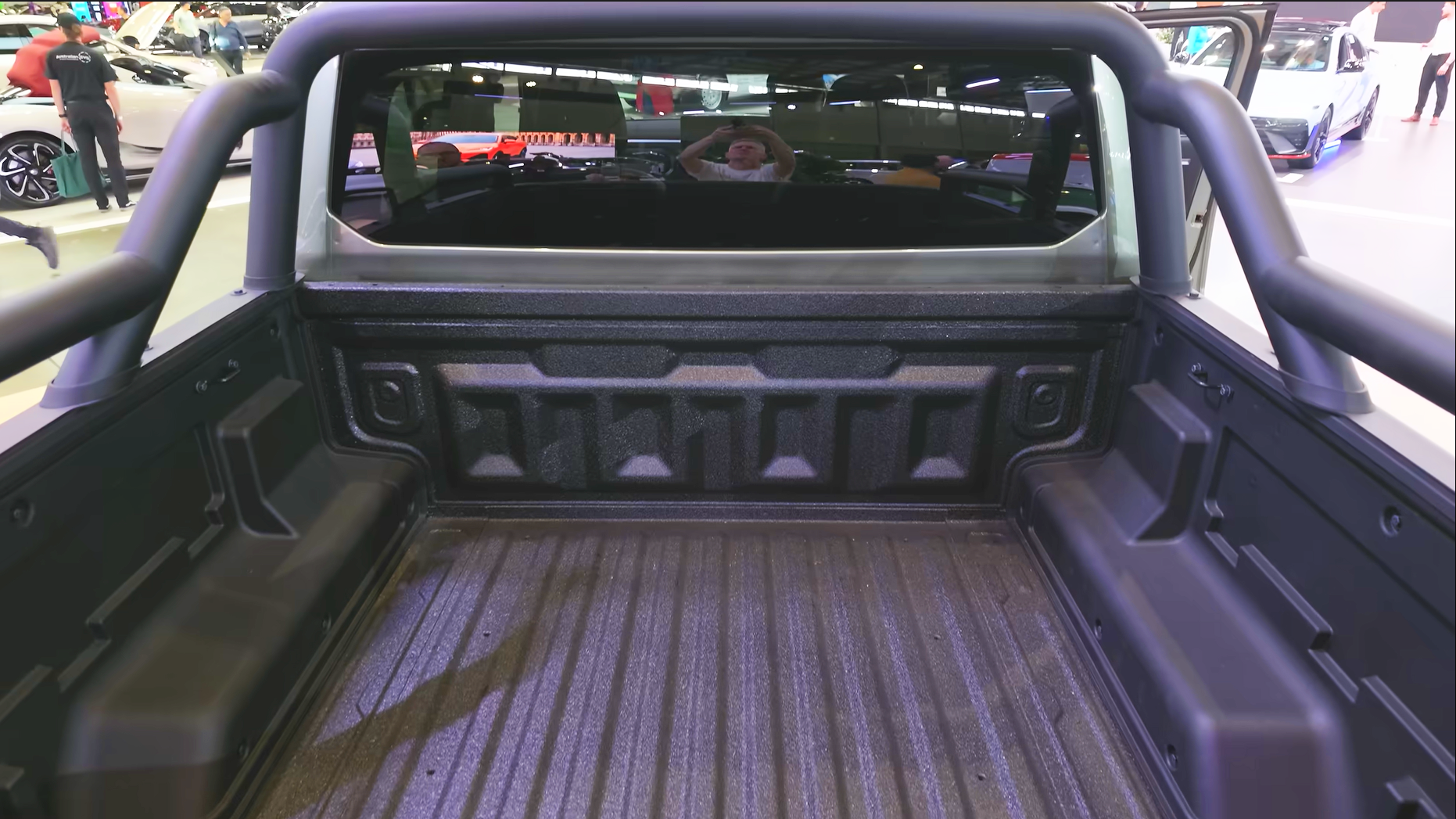
The biggest victory in the design of Chery Stockman’s functionality envelope is, without doubt, the lack of wheelarch intrusion in the tray.
The fact you don’t have the typical enormous polyurethane humps on either side of the of tray taking up precious cargo space is a huge win for you, the consumer, if you’re seriously considering one of these all-new utes when it arrives in early 2027.
You also get dual 3-pin 230-colt power outlets in the tray, meaning 18-volt tool batteries can be on charge while you’re working remotely.
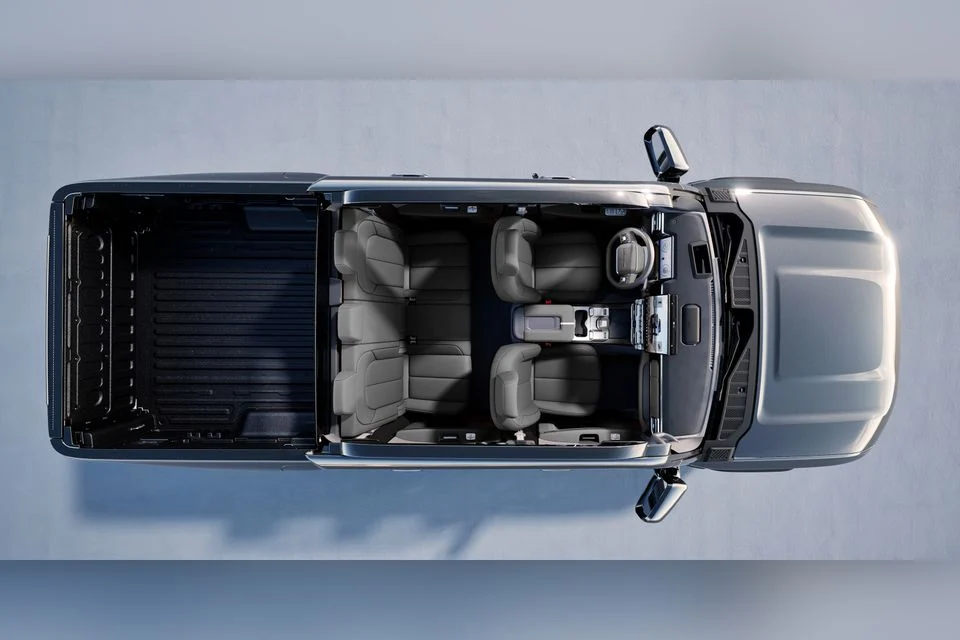
The tailgate is damped, there are partition slots built into the tray for partitioning panels, and you have multiple tie down points all set in logical positions relative to the potential load you might put in there.
That distance between the 20cm high wheelarch humps is 1220mm. This means you will get a full-size 1165mm x 1165mm pallet in there without being impeded by tie down points mounted in the floor. This is often the request from motoring media forgetting that a forklift will typically load a pallet by lifting it in most of the way and sliding it the final half-metre or so, making floor-mounted tie-down points an impediment.
According to specifications outlined by Chery Australia, maximum payload - when deducting kerb weight from the GVM - is 765kg, which puts it on-par with the likes of BYD Shark 6 Performance (725kg), Ford Ranger Raptor (717kg) and outs it very close to the likes of VW Amarok Adventura (858kg), Mazda BT-50 Thunder (887kg) and the Hilux Rugged X (~850kg).
It is, admittedly, about 25 per cent down on Kia Tasman (up to 100kg across the range), the Triton GSR (1030kg) and about 30 per cent down on the Navara Pro-4X (964kg).
Keeping in mind, of course, that if you maximise either the payload or the towing, you cannot also max-out the other respective assignment. If you’re pushing the towing limits, you cannot do the same with Payload. Pushing the payload means you must go light on the towing.
This is the same for every dual-cab ute on the market. If you need to maximise both towing and payload, buy a proper truck.
DRIVING
Nobody knows what the Stockman drives like because it won’t be launched (or given to the media for access) until early 2027, but that doesn’t mean you cannot still do your homework right now.
Have a go in a BYD Shark 6 or perhaps something bigger in the Chery range like a Tiggo 9 ‘Super Hybrid’ for a general impression of how Chery ‘does things’ in the cockpit and with powertrain efficiency in a big, heavy vehicle.
You should also have a drive of the GWM Cannon Alpha PHEV for an understanding of the basics in a plug-in hybrid dual-cab ute; feel the size, how the powertrain behaves and get an idea of how good the Cannon is already (at its price point), and then you could also consider the Cannon Alpha 3-litre diesel for the sake of being thorough.
DRAWBACKS
One potential drawback to the Stockman could be its weight, although we don’t know this for certain yet. With a battery big enough to power it for about 100km of range, and being a big, robust 4X4 dual-cab ute that includes a typically midsize capacity turbo-diesel engine, don’t be surprised if the Stockman comes in at close to 3 tonnes.
A GWM Cannon Alpha plug-in hybrid weighs in at 2.8 tonnes just for some context here, using a 2-litre engine.
Other aspects we’re yet to see include, of course, how it drives, the ergonomics, the ADAS integration and how the thing performs in extremis - situations like hardcore off-roading, heavy towing and powertrain reliability remain unknown factors until at least the first 6 months of the Stockman’s arrival in early 2027.
MAIN COMPETITORS
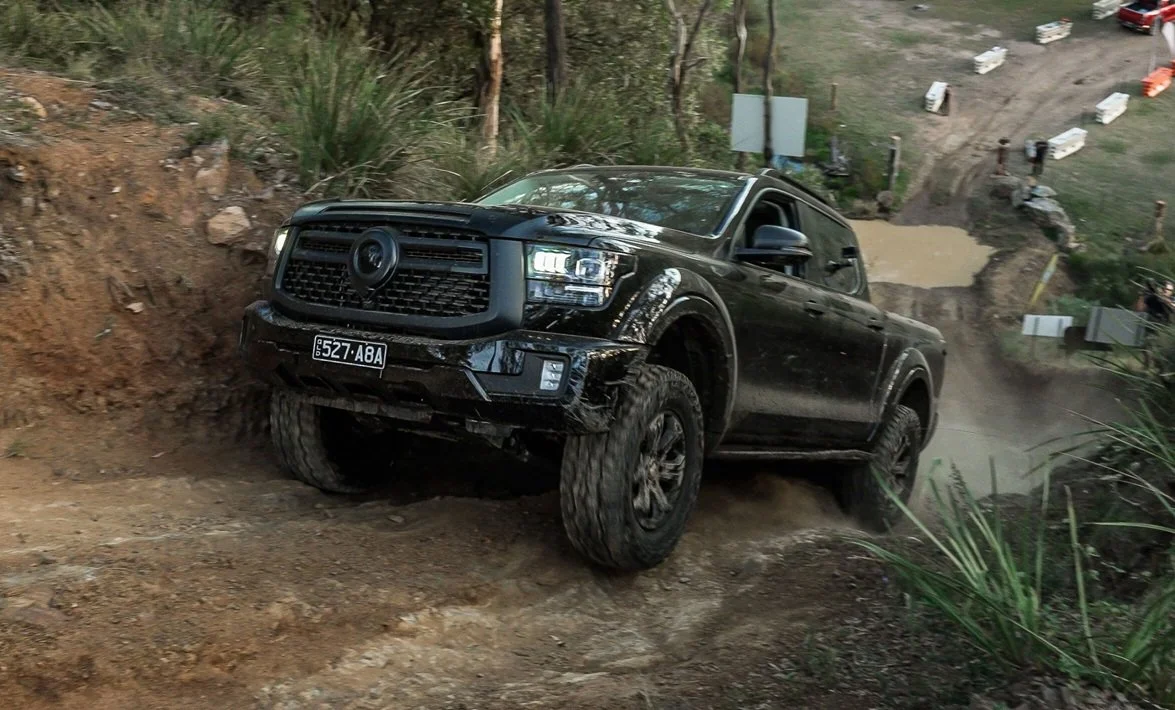
GWM Cannon Alpha PHEV
Engine: 2.0L turbo-petrol 4-cyl, electric motors
Power: 300 kW (combined)
Torque: 750 Nm (combined)
Drivetrain: 9-speed automatic, 4WD, low range
Kerb weight: 2810kg | Payload: 685 kg
GVM: 3495 kg | GCM: 6745 kg
Braked towing: 3500 kg | Unbraked towing: 750 kg | Max. towball download: 350 kg
For more on GWM Cannon Alpha PHEV, click here >

BYD Shark 6 Performance
Engine: 2.0L turbo-petrol 4-cyl, electric motors
Power: 300 kW (combined)
Torque: 700 Nm (combined)
Drivetrain: Single-speed hybrid (auto), AWD
Kerb weight: 2775kg | Payload: 725 kg
GVM: 3500 kg | GCM: 6650 kg
Braked towing: 3500 kg | Unbraked towing: 750 kg | Max. towball download: 350 kg
For more on BYD Shark 6, click here >
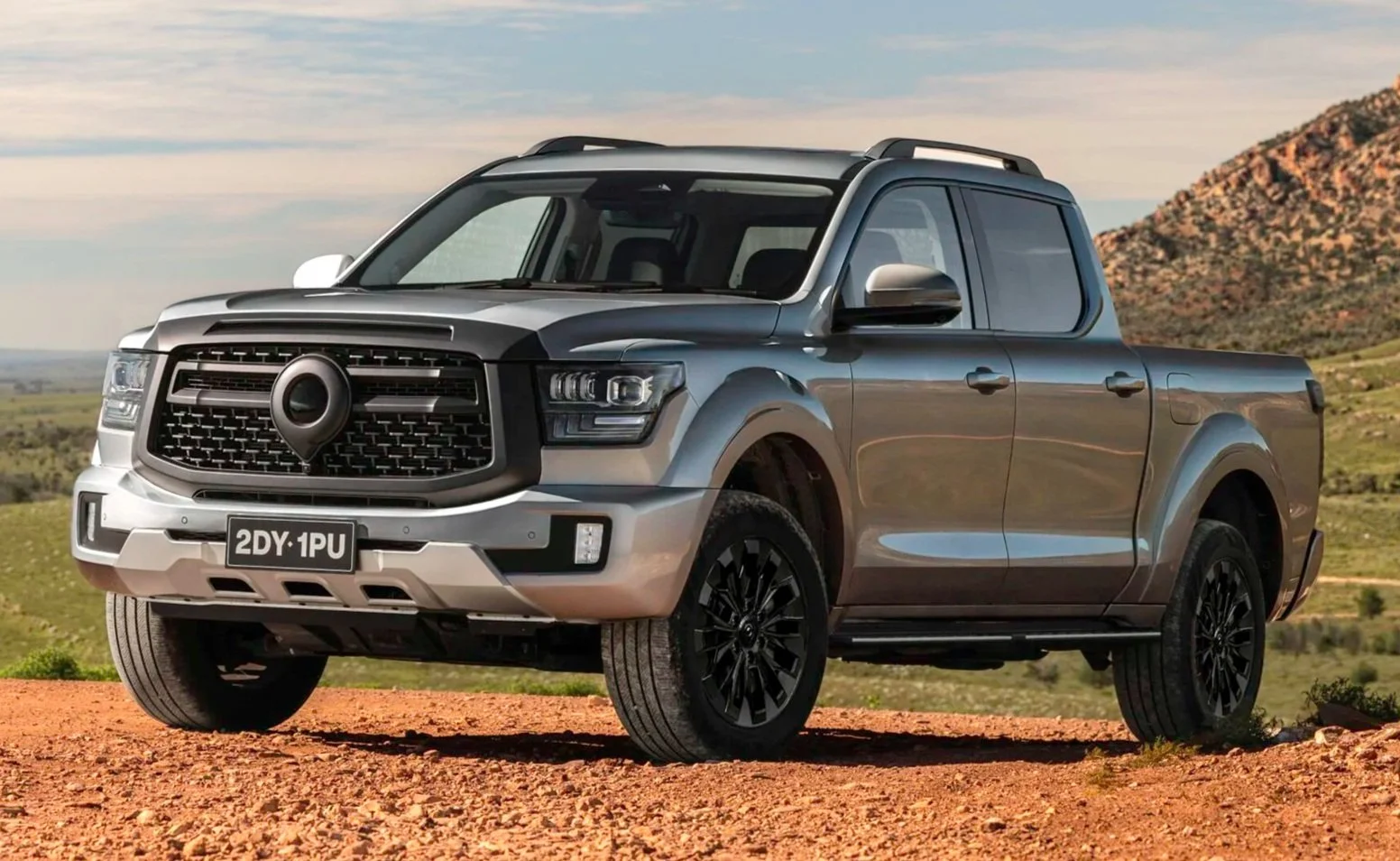
GWM Cannon Alpha 3L diesel
Engine: 3L turbo-diesel 4-cyl
Power: 170kW (combined)
Torque: 620Nm (combined)
Drivetrain: 9-speed automatic, 4WD, low range
Kerb weight: 2550kg | Payload: 945kg
GVM: 3495kg | GCM: 6555kg
Braked towing: 3500kg | Unbraked towing: 750kg | Max. towball download: 350kg
For more on GWM Cannon Alpha 3L diesel, click here >

Ford Ranger Wildtrak
Engine: 3L turbo-diesel V6
Power: 180kW
Torque: 600Nm
Drivetrain: 10-speed automatic, 4WD, low range
Kerb weight: 2384kg | Payload: 966kg
GVM: 3350kg | GCM: 6400kg
Braked towing: 3500kg | Unbraked towing: 750kg | Max. towball download: 350kg
For more on Ford Ranger, click here >

Toyota Hilux Rogue
Engine: 2.8L turbo-diesel 4-cyl
Power: 150kW
Torque: 500Nm
Drivetrain: 6-speed automatic, 4WD, low range
Kerb weight: 2342kg | Payload: 778kg
GVM: 3120kg | GCM: 6300kg
Braked towing: 3500kg | Unbraked towing: 750kg | Max. towball download: 350kg
For more on Toyota Hilux, click here >
CONCLUSION
Based purely on the specs we have available and the knowledge that Chinese brands are decimating Japanese brands on value right now, don’t be surprised if the driveaway price of a fully-loaded Stockman blows the Ford Ranger and Toyota Hilux completely out of the water, while the other mediocre utes from once dominant brands continue to flounder.
More reports
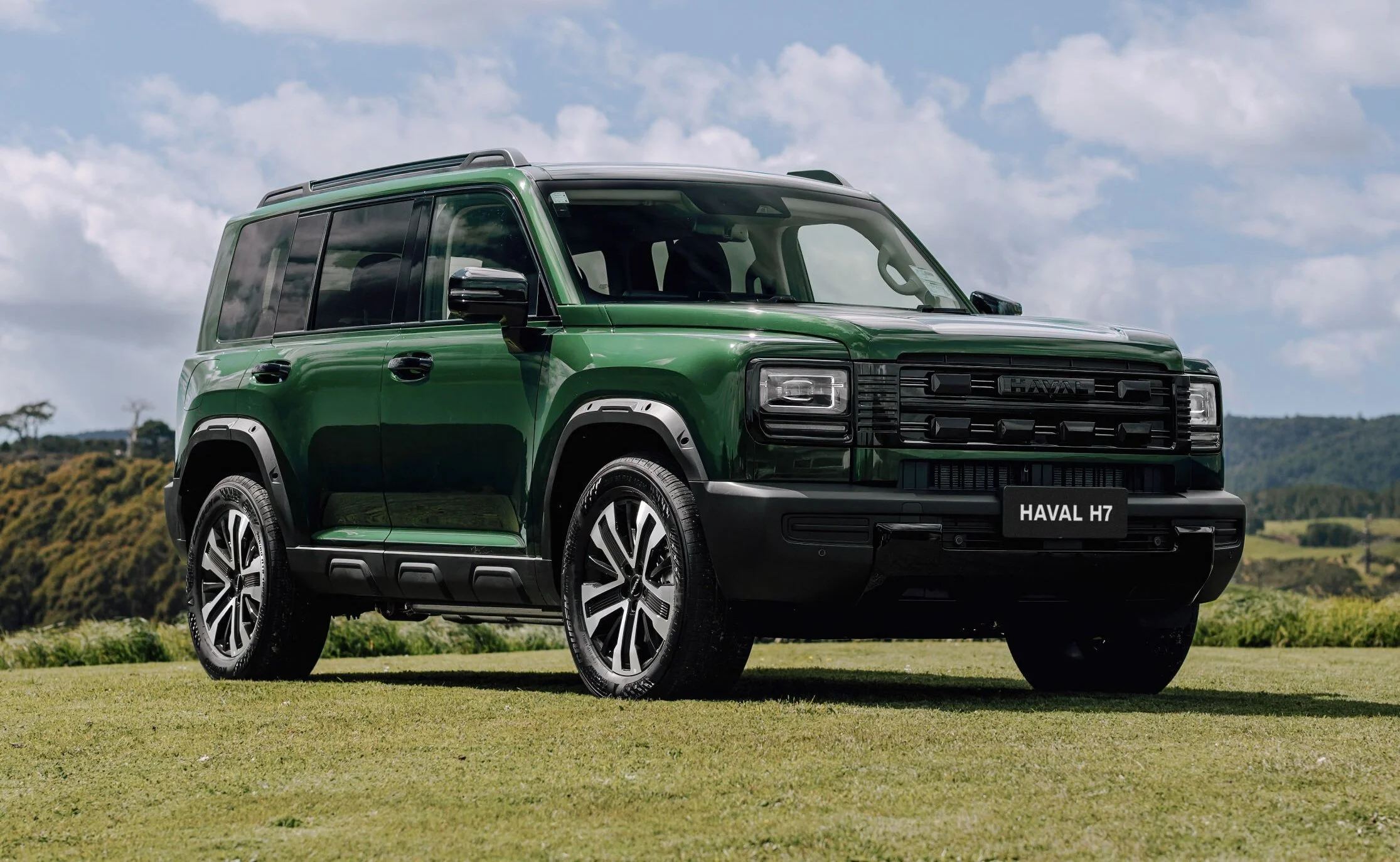
Chinese utes are pinching Hilux, Ranger, Triton and D-Max sales. The Chery Stockman looks set to beat them all on value, power and capability. You need to pay attention to this important new dual-cab workhorse.