
Mazda CX-5 review and buyer's guide
Mazda CX-5 has been one of the most popular, versatile and nicest-driving medium SUVs in Australia. But Mazda’s update has followed a tech trend not everyone wants. Whether CX-5 is now better or worse is entirely up to you…
Save thousands on a new CX-5
Fill in the form - we’ll get you a great price without the stress
The Mazda CX-5 is a refined, practical and timelessly elegant family SUV that drives beautifully and offers more than enough performance to make it highly appealing and an excellent value, upmarket daily drive.
Shopping for a CX-5 is a balancing act between features and price, with plenty of choice between model grades to find the sweet spot for both your budget and the equipment level you need.
But you can’t be expected to test drive and research a CX-5 against all of its main competitors, which is why in this report you’ll be given the facts on how Mazda’s medium SUV compares with its rivals, and an honest appraisal of why CX-5 will work for you, and why it might not.
There’s no hiding the fact Mazda’s engines are very good, the interiors are properly premium, and the build quality is higher than anything the Germans or Chinese can manage (for now). In that context, the pricing shouldn’t make your head spin because you get what you pay for, which is not something you can say about many retail products these days.
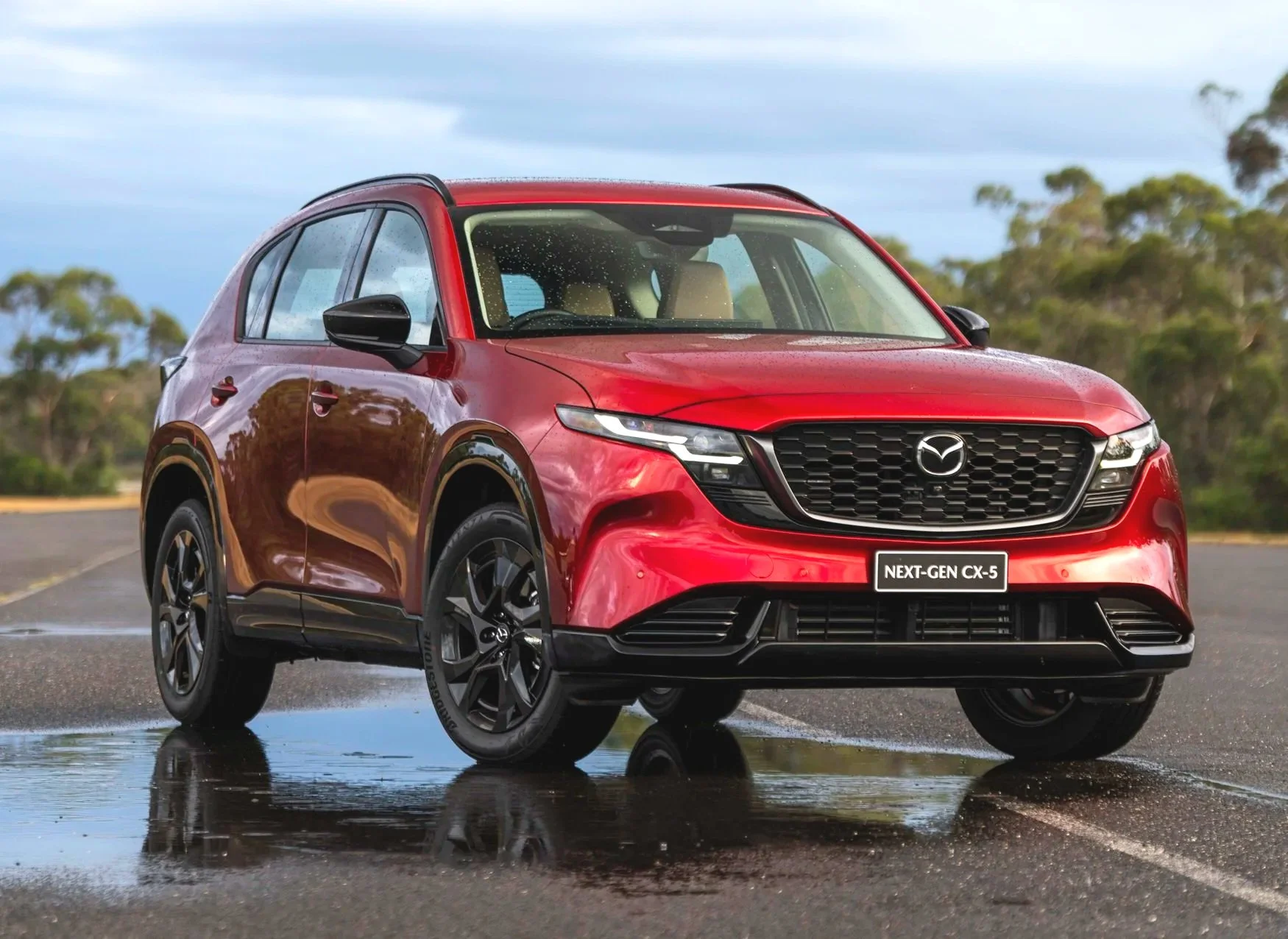
The styling that Mazda committed CX-5 to 10 years ago remains contemporary with the 2026 update, although you can make that judgement for yourself with your own eyes. Is it elegant? More than any of its rivals, sure, but it’s not a case of form over function.
CX-5 is the embodiment of what a midsize SUV needs to be, in the context of typical Australian family motoring: school drop-offs, weekday commutes, weekend sports and various familial/friend commitments, school holiday trips, even a little bit of light towing perhaps. It’s practical enough to carry the kids and their stuff to and from various commitments, and everyone in it will find it comfortable enough, even on long trips.
New CX-5 is capable, pretty economical, and reliable as proven over 10 years of this platform’s in-service performance as one of Australia’s most popular vehicles.
More than 23,000 Australians bought a CX-5 in 2023, and it was popular again in 2024 for a reason, to the tune of over 22,000 sales (beaten by Mitsubishi Outlander by just a handful of units and Toyota RAV4 by about double). 2025 was an almost identical story, selling another 22,700 units to finish third behind the Outlander and RAV4 yet again, despite this updated model waiting in the wings.
However, if you’re raising three kids who are all in that ‘child restraint’ window (from infancy to 7-8yo), consider the 7-seat Mazda CX-70, Kia Sorento or Hyundai Santa Fe (or possibly a Kia Carnival). They’ll provide more room and seating configuration options for prams, additional adults, bikes, luggage, shopping, etc.
But if your threew kids are aged in that spread from late primary school to kindergaten, a five-seat CX-5 is going to work perfectly without having to buy ‘too much car’. You’ll be able to fit a typical 10-12yo in the front seat or the centre of row 2, and the restrained kids int he outboard seats.
In terms of family ownership, both parents will find themselves driving it confidently, too, thanks to good engines that offer enough grunt but plenty of refinement in the powertrain as well, while also having very good driving dynamics which we’ll get into shortly.
You can download the Mazda CX-5 digital brochure here >>

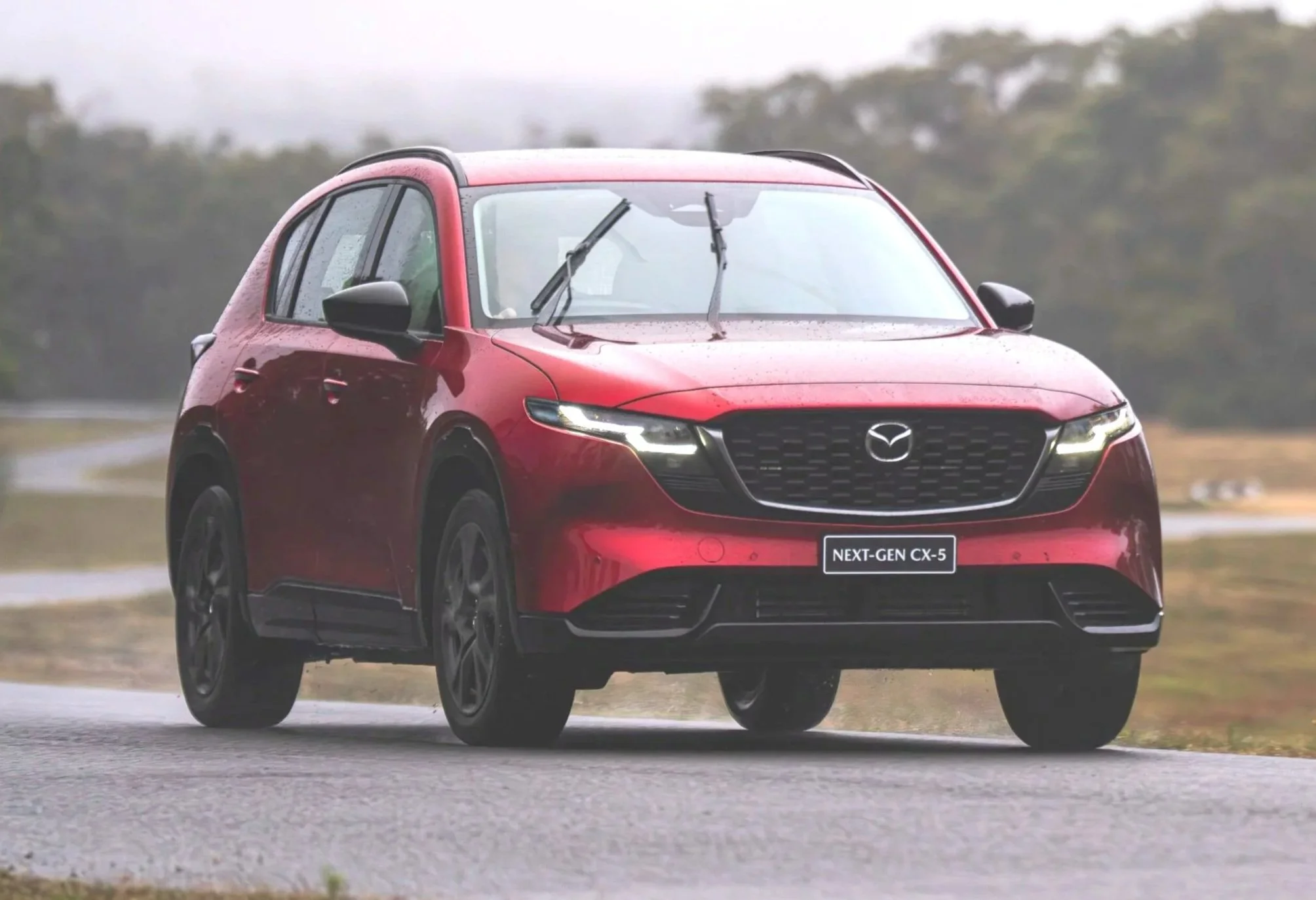
The new CX-5 is a touch heavier thanks to a 2 per cent increase in external dimensions, from 4575mm long to 4690mm in the new one. The wheelbase is 115mm longer which means more structural material (and more weight), while both height and width increase a tiny 15mm respectively. This physical dimension change is a strong indicator that weight has increased.
This probable weight increase means that in conjunction with the power reduction, the power-weight ratio will be worse, and in a heavier vehicle, this is a universal sign that the CX-5 will be slower, any towing aspiration will be reduced, and payload potential will be restricted.
Mazda has said nothing of interest about the 6-speed transmission, which means it’s the same unit in the outgoing model, so the idea of calling it “all-new” is misleading. It might be a new chassis with new sheetmetal and a new interior, but it’s not all-new.
What will be new is the promise of a hybrid powertrain, which (of course) has come very late to the party considering the RAV4, Hyundai Tucson and Kia Sportage, the Mitsubishi Outlander plug-in hybrid, the new Subaru Forester hybrid and of course the Haval H6 and the MG HS hybrid (along with a raft of additional Chinese hybrids from fledgling brands).
Other boxes the new CX-5 ticks is the massive infotainment touchscreen, a new steering wheel design to match the elegant, classy interior (Mazda’s forte these days), and the homerun exterior design.
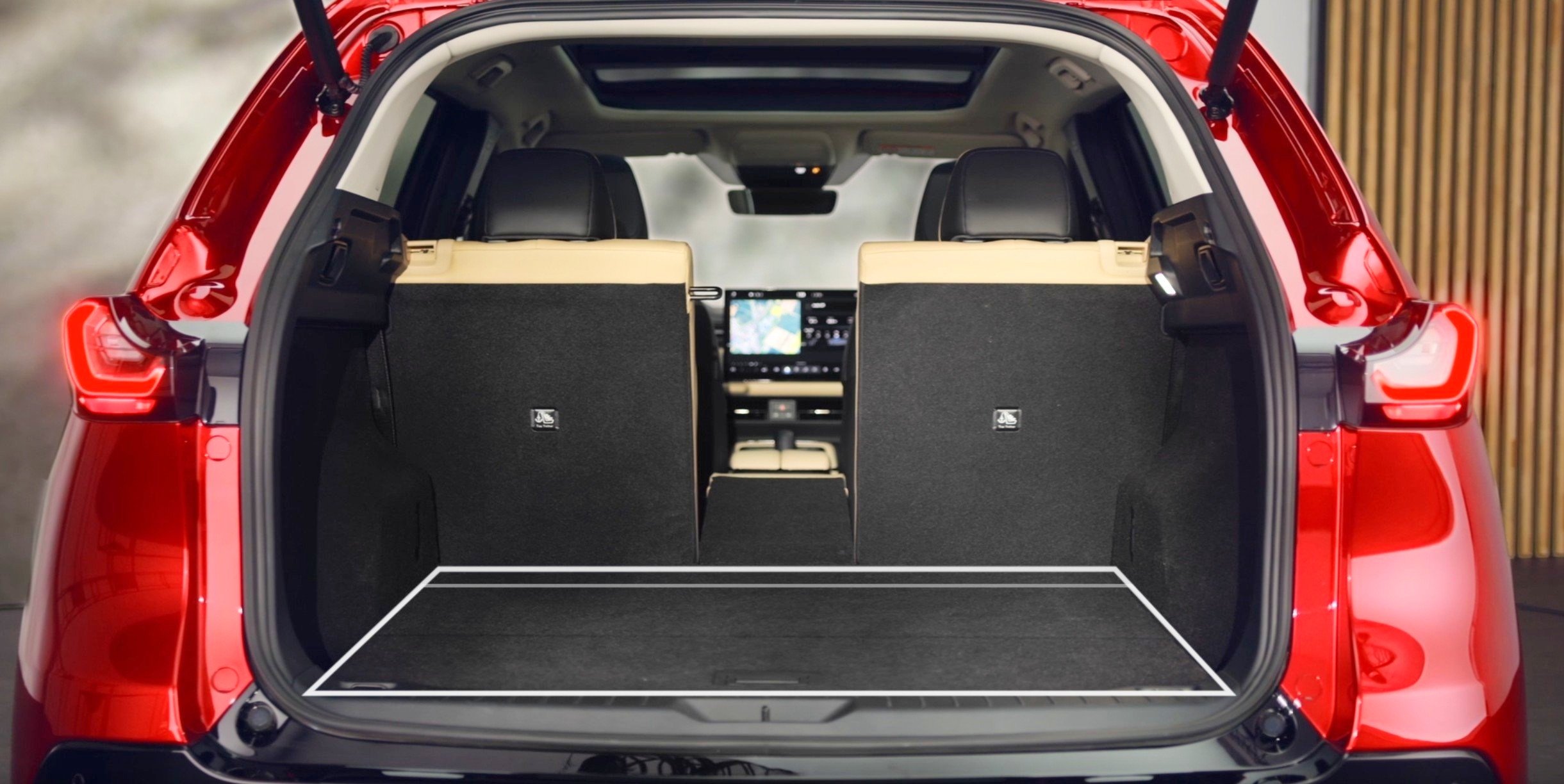
There is a win here for cargo capacity in the boot with the slight increase in dimensions, where the floor is 50mm longer and with about 25mm of extra height. The boot’s aperture itself has also been made slightly taller and wider.
Mazda says the height of the boot floor where the boot’s aperture begins is 18mm lower, which can be both a blessing or a curse depending on your perspective.
Blessing in terms of not having to lift things as high and it makes for a more accessible seat for shorter kids or parents to use wit the tailgate open. Curse if you have lower back issues and are fairly tall whereby you have to reach further to pack bulky, heavy objects into the space.
FEATURES & PRICING
CX-5 Pure - $44,600 (approx. driveaway) | petrol, non-turbo, AWD auto
features:
17-inch alloys, 225/65 tyres (space-saver spare)
Dual-zone air-conditioning
Apple CarPlay/Android Auto, DAB+ digital radio
12.9-inch infotainment touchscreen,wired Apple Carplay & Android Auto
8-speaker stereo, DAB+
Tyre pressure monitoring
Cloth seats (black), manual front seat adjustment
Leather steering wheel
Electrically adjusted and folding door mirrors
Rain-sensing wipers
Front & rear parking sensors, reversing camera
Blind spot monitoring, rear cross-traffic alert
LED auto headlights, taillights, daytime running lamps, auto high beam
Adaptive cruise control, auto emergency braking (urban, up to 30km/h) forward & reverse
10.25-inch digital driver’s display
Push-button ignition, auto stop-start
Driver attention alert, lane keeping and departure warning
Drive mode selection: Normal, Sport, Off-Road
‘i-stop’ engine ignition stop/start (defaults on at start-up)
CX-5 Evolve - $44,750 (approx. driveaway) | petrol, non-turbo, FWD auto
adds:
Frameless auto-dimming rearview mirror
Auto-folding and heated door mirrors
Heated front seats
Rear air vents
Wireless Apple Carplay and Android Auto
Wireless smartphone charger
Smart keyless entry
CX-5 Touring - $52,400 (approx. driveaway) | petrol, non-turbo, FWD auto
adds:
19-inch alloy wheels (black and machined) with 225/55 tyres
Black Maztex cloth seat trim with synthetic suede inserts
10-way powered driver’s seat with memory
Heated steering wheel
Remote operated power tailgate (open/close)
Active driving display (windscreen)
Roof rails
Heated windscreen
Heated door mirrors with memory function
White Maztex upholstery with black synthetic suede seat inserts (optional)
CX-5 GT SP - $57,100 (approx. driveaway) | petrol, non-turbo, FWD auto
adds:
19-inch alloy wheels (black) with 225/55 tyres
Adaptive LED headlights (ALH)
Headlight and taillight signature illumination
Ambient lighting
6-way electric front passenger seat adjustment
Black leather seat trim
Rear seats with heating function (outboard)
Rear USB-C points
Premium Bose audio system with
12 speakers
360° camera system with see-through view
Gloss black wheel arch mouldings
Gloss black front bumper lower finish, rear bumper lower finish
& door moulding lower finish
Sport tan leather (optional)
CX-5 Akera - $60,250 (approx. driveaway) | petrol, non-turbo, FWD auto
adds:
Ventilated (cooled) front seats
15.6-inch infotainment touchscreen
Panoramic sunroof
Electric tailgate w/ hands-free and remote operation
Steering wheel paddle shifters
Personalised system with easy entry & driving position guide
Optional: sport tan leather
Adaptive LED headlights
360-degree camera
Specifications and price may change at any time: always check before signing any contract or paying a deposit.
INTERIOR
The fact Mazda turned its most mass-produced vehicle into such a premium product is a bit like what JBL did for affordable miniature music speakers, or what Blackberry did to the mobile phone.
Mazda put features into a $40,000-50,000 five-seat SUV that people 15 or 20 years ago would’ve only associated with the specialist, premium brands. They added Bose speakers - lots of them - including an amplifier, into a car designed for soccer mums. They picked up the tired old trope of wood interior trim being only for Jaguars and put it on their higher-end managerial family commuter SUV. Subaru reckons they’re the family adventure car brand, except in a hot-climate like Australia they only put ventilated seats into the last updated Outback just a couple of years ago - Mazda did it with the CX-5 back in 2017.
CX-5’s interior is still as luxurious today (as it was when its predecessor evolved throughout the 2020s, In fact it’s luxurious enough that regular people who don’t live in CEO-land will feel like the brand cares about their comfort.
This continues today with what Mazda has done with the interior of the new CX-5.
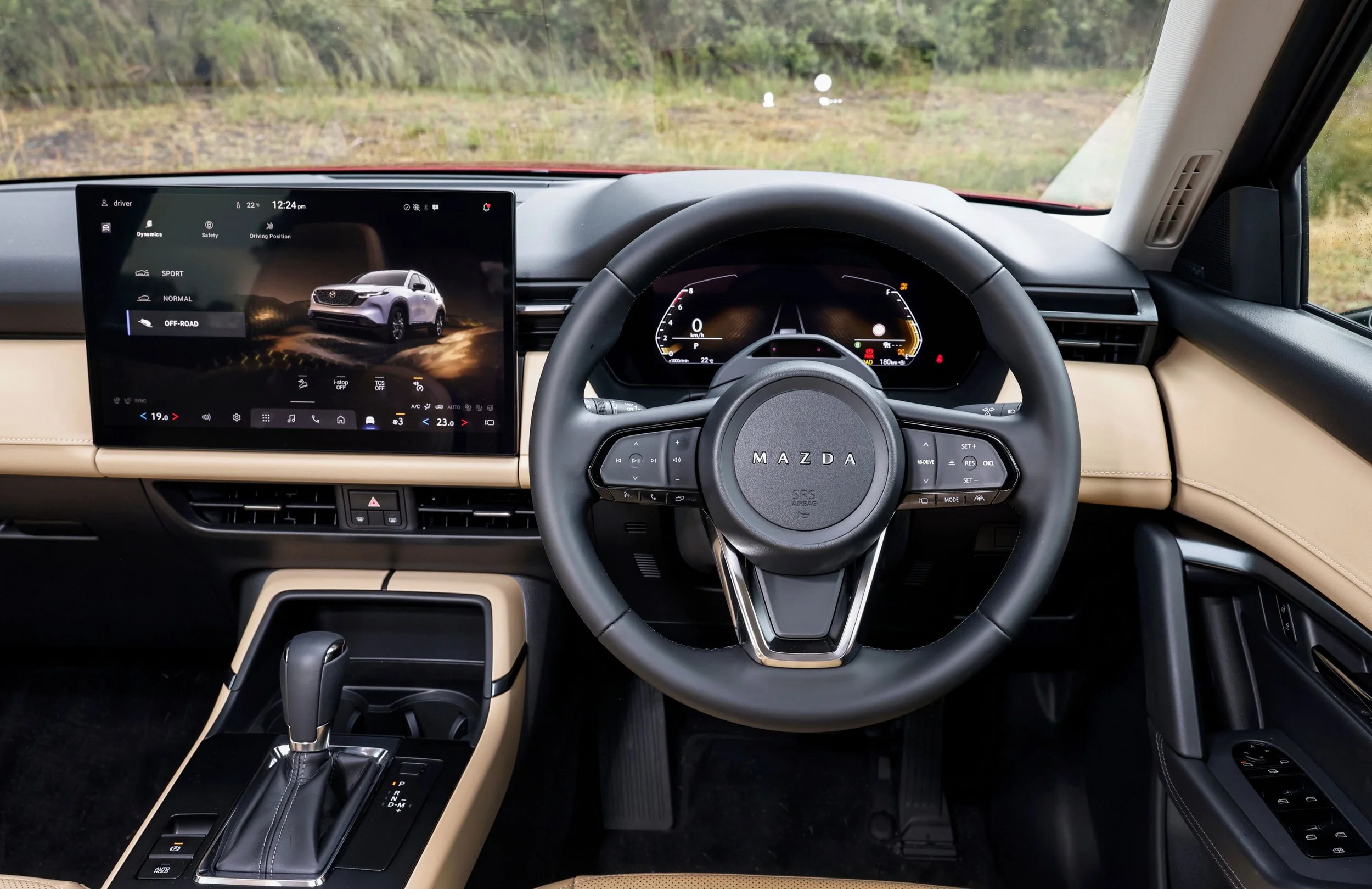
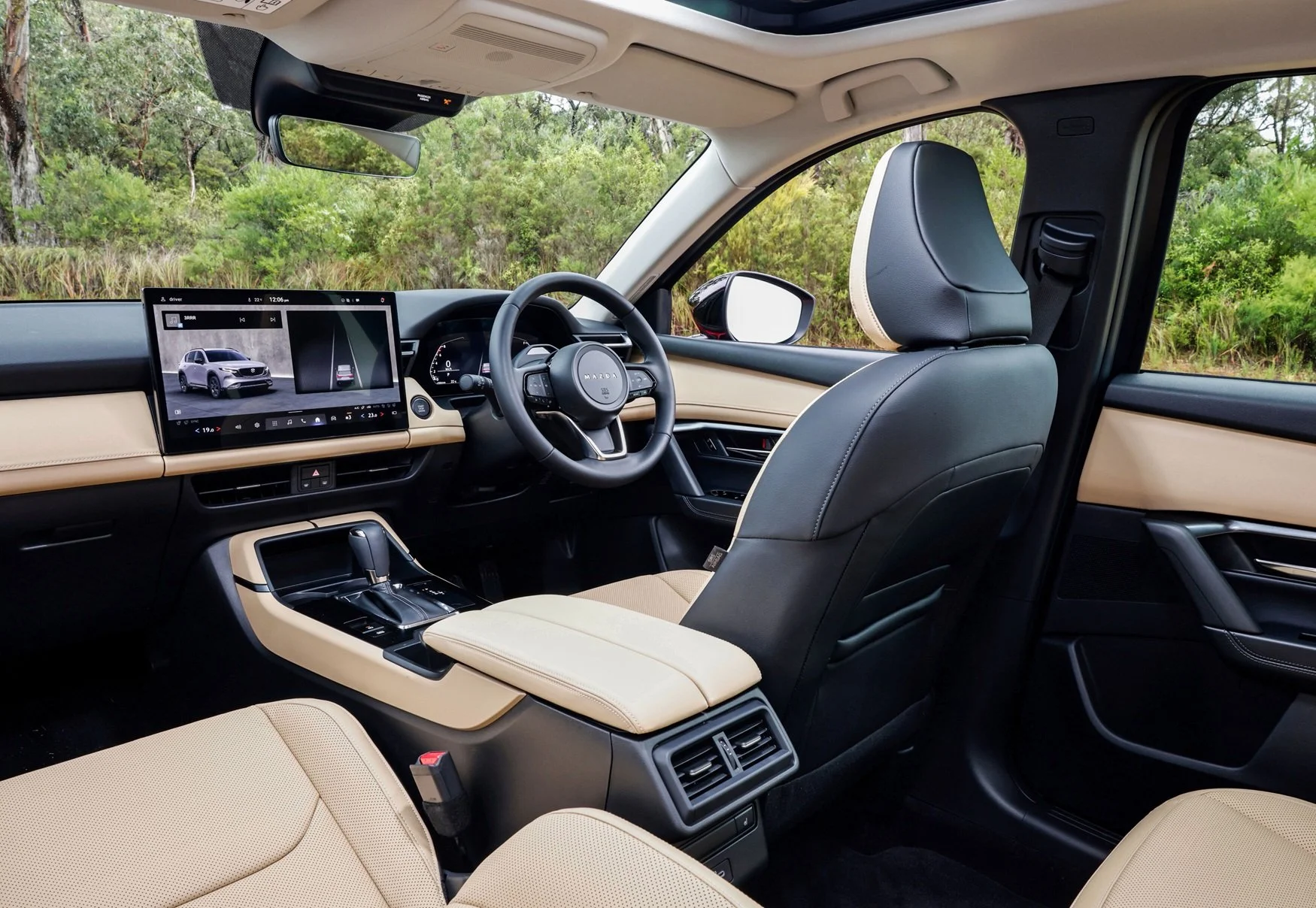
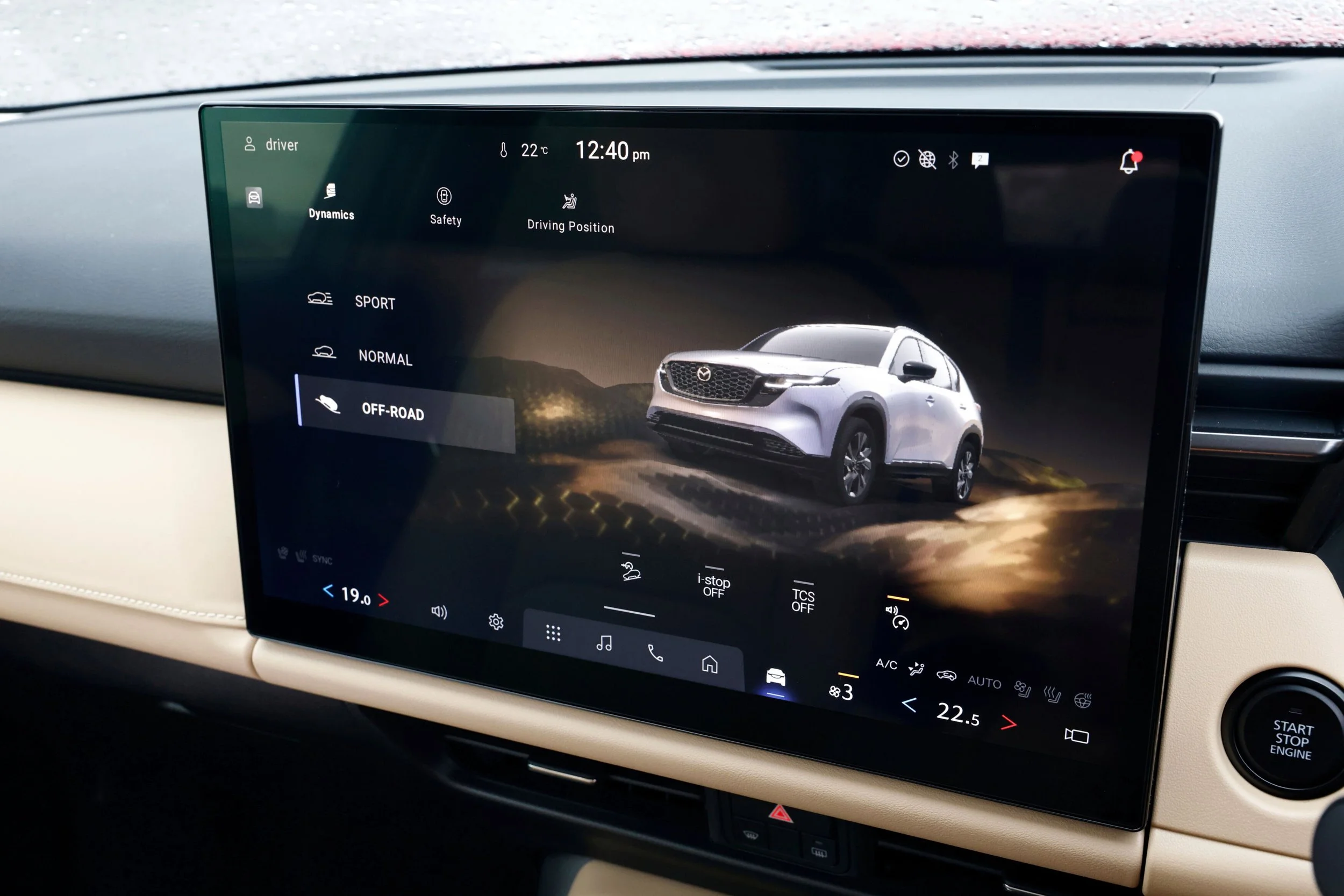
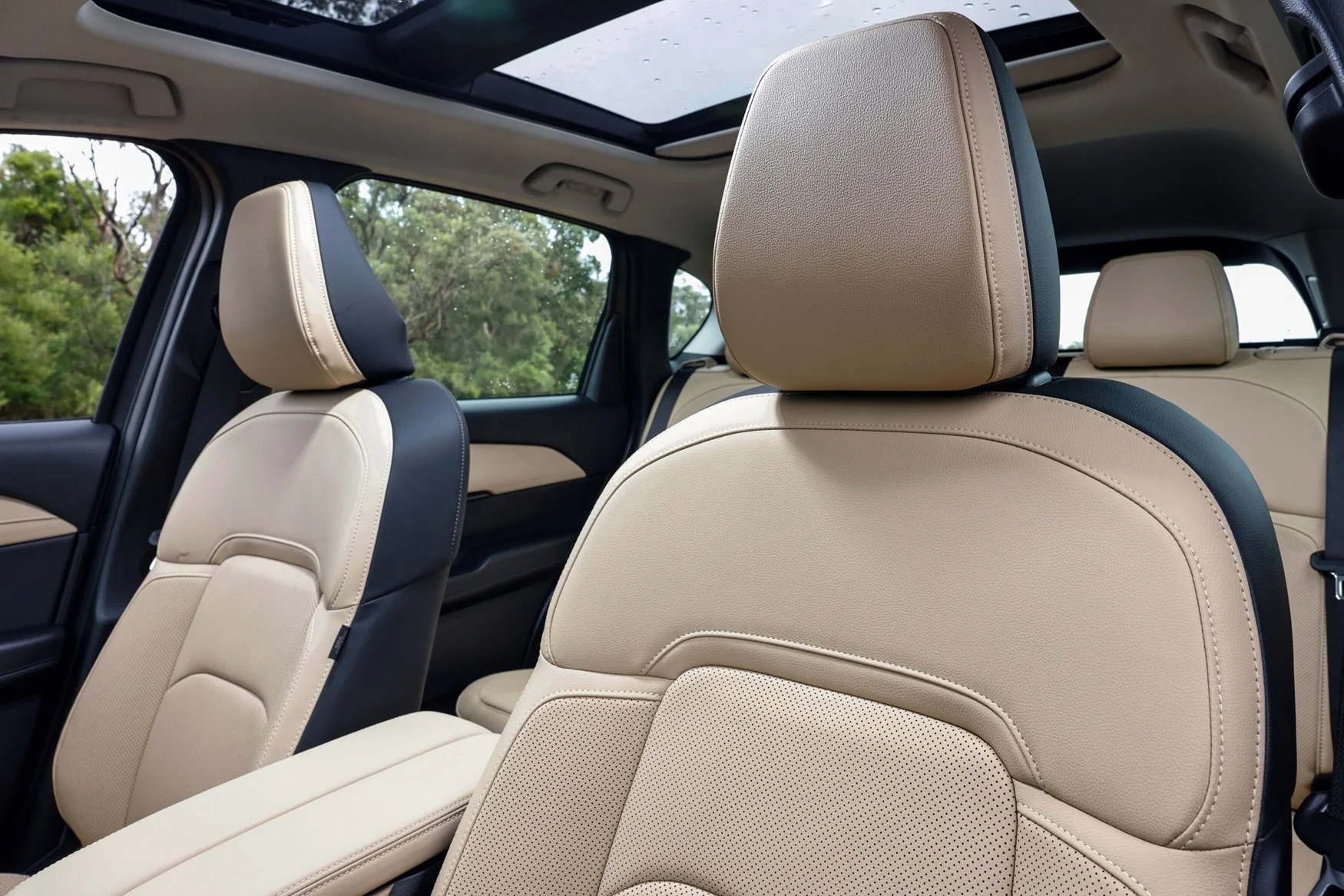
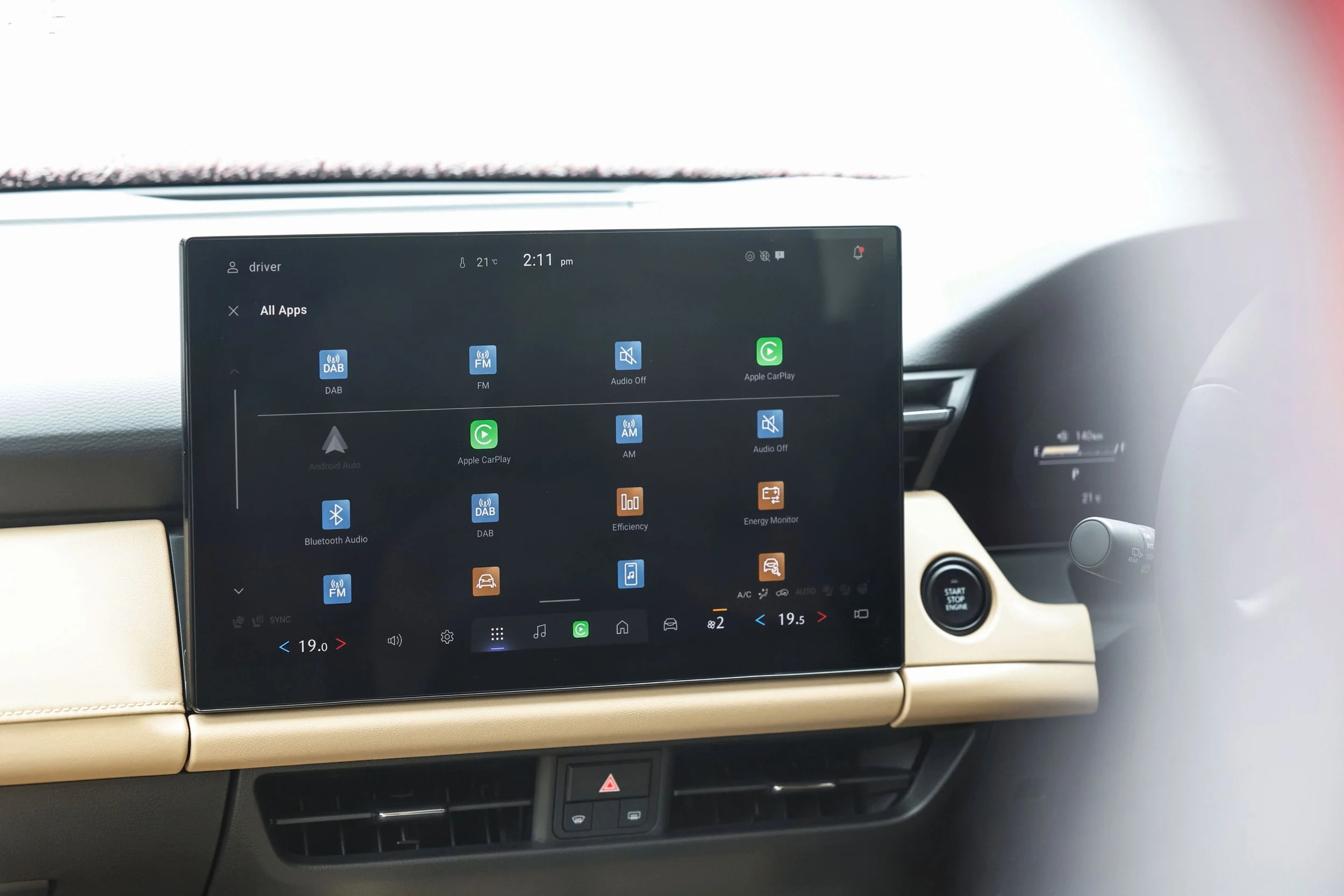
What’s going to be interesting to watch is how the median consumer takes to Mazda’s complete backflip on overall cabin ergonomics. They’ve ditched the button-focused user interface they had mastered with the previous CX-5 interior.
The MZD rotary selector dial for the central infotainment screen is gone - completely gone. This is something of a tragedy for anybody who understands human factors; that being the way humans interact with systems and their controls in a way that services the user, not the designer.
For example, all the buttons on the dashboard which used to toggle HVAC features (heating, ventilation & air-conditioning) are all operated via the touchscreen. This is completely at odds with the old rotary dial selector which allowed you to keep your eyes and attention focused forward at the traffic environment outside.
Why have they done this? For styling purposes, obviously, because nobody who appreciates those human factors would choose to ditch buttons entirely. This is a trend the car industry is actually in the process of quietly undoing, too. Just as buttons are coming back, Mazda deletes almost all of them - strange.
This may not be an issue for you, but it might be. One reason you might not have considered this to be a problem is in the unlikely situation that the screen fails. How do you defog the windscreen or maintain a comfortable cabin temperature if the screen dies? How do you, notionally, get the vehicle back to a dealer to fix it? You’re also in trouble if it’s a Saturday afternoon and you’re days away from getting the car to said dealer.
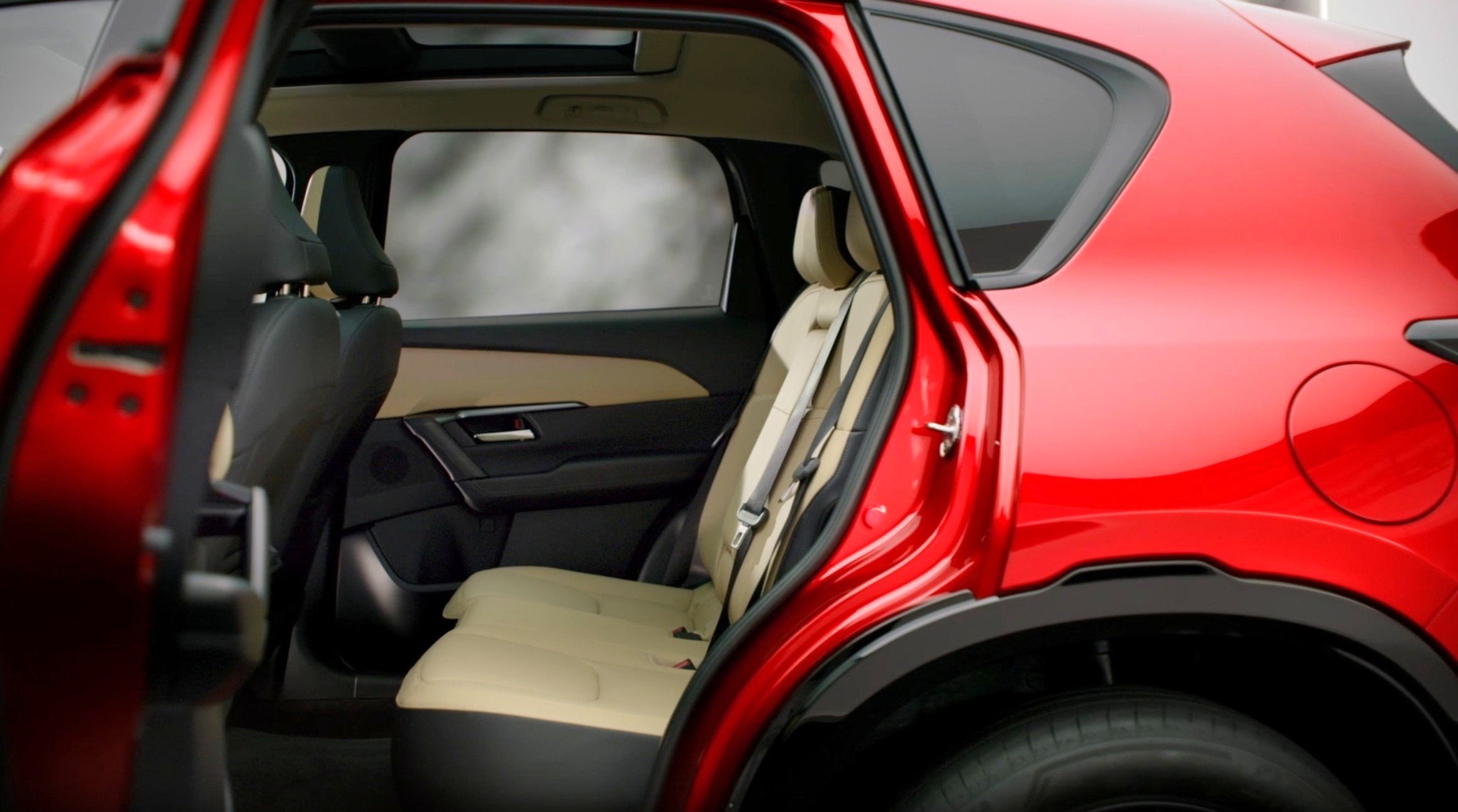
Fortunately, Mazda has widened the rear doors, making child seat installations a breeze and allowing kids and parents to better access row two. But you do have to watch those doors don’t get flung open into neighbouring cars in the carpark.
Legroom is increased thanks to the increase in wheelbase from 2700mm to 2815mm. That’s 4 per cent more cabin space, making the second row far more pro-adult for longer journeys.
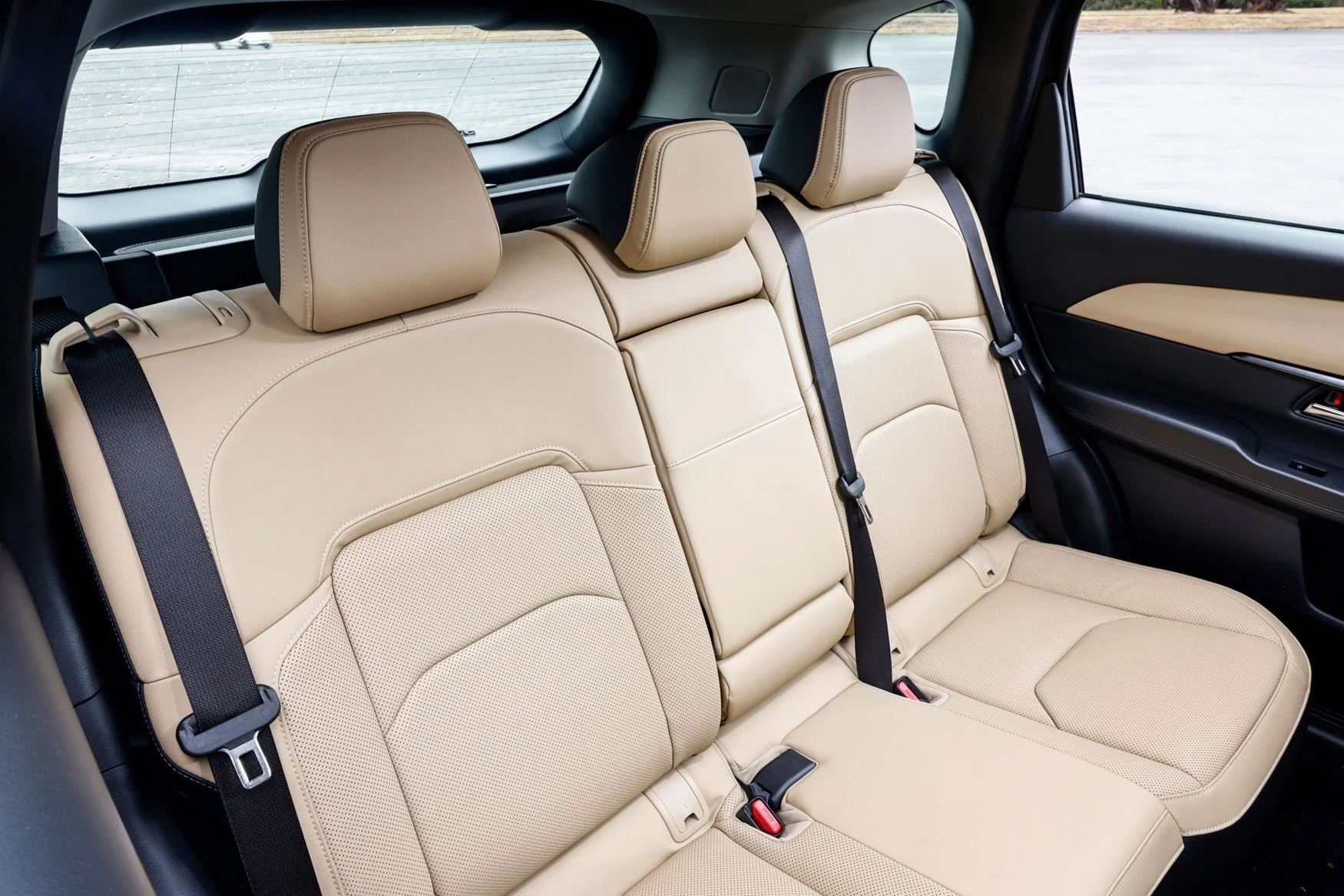
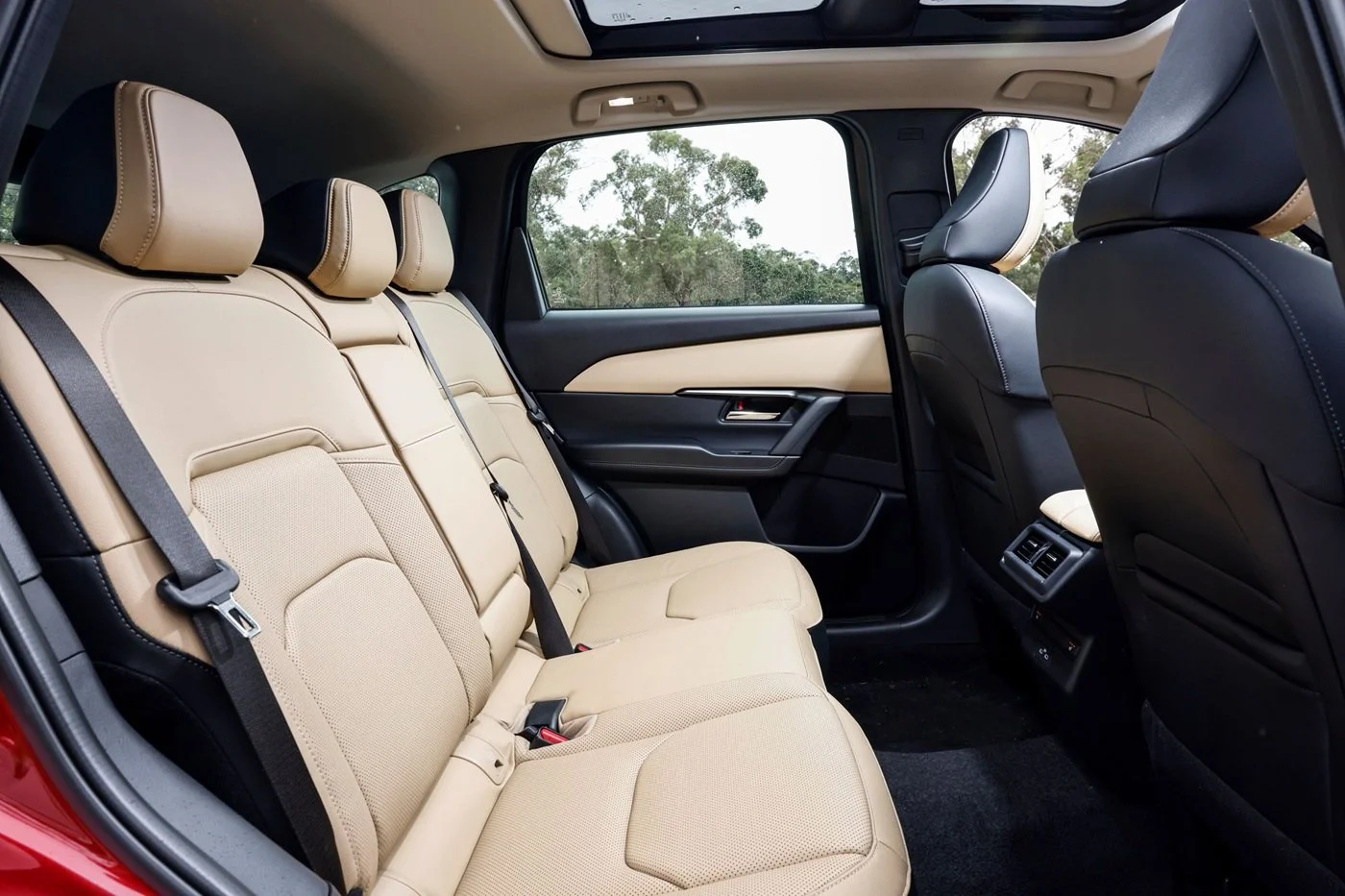
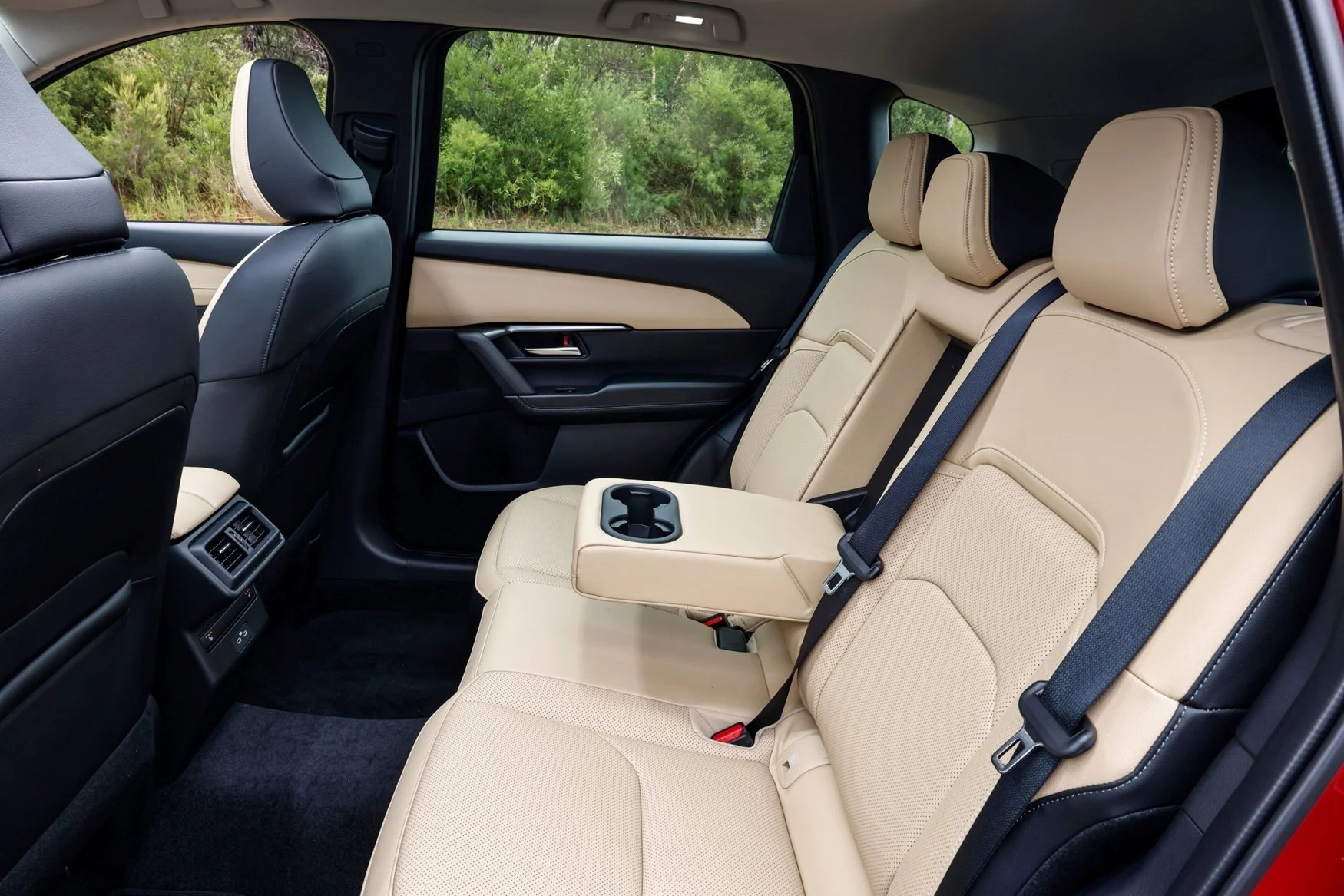
Don’t expect the lightness of this interior trick you into thinking the lower models grades (without the sunroof) will continue. The darker headlining, door cardsm carpets and seating does tend to make CX-5 a bit dark in the back, naturally, but that’s standard on most medium SUVs - and it’s not the sort of thing you’d cross it off the list for.
The fact you get dual-zone climate by default on the Pure is good considering the range starts at almost $45K, but it would be nice if the row 2 air vents were included as well. But the poverty pack is designed to keep costs down, so at least it’s achieved that for fleet buyers. The row 2 vents are available on the Evolve, so maybe that’s the ideal base model to start from as a private buyer.
As for the rest of CX-5 family-friendliness, it is a hit-and-miss kind of story. The seats are deceptively comfortable for the price, but yet the door bins are small in the back for kids drink bottles.
It’s nice to see rear heated seats for the outboard positions (on the Akera), with heated front seats standard as low as the Evolve model grade at $47.5K. That’s pretty good value considering you also get the posh frameless and auto-dimming rearview mirror, and the smart keyless entry along with wireless phone charging and (wireless) CarPlay/Android Auto.
What’s interesting about the Evolve is you still get the 17-inch alloy wheels which has significant appeal in terms of in-cabin refinement. See, because you have a taller sidewall on the tyres, it makes for a much quieter cockpit and you get a slightly softer, more compliant ride when you hit speed humps and potholes.
Whereas if you step up to the Touring, you’re getting 19-inch alloys which are not going to be quite as comfy in low-speed commuter-type traffic with speed humps and shopping centre carparks/school zones etc. Freeway driving is also where noise-vibration-harshness (NVH) can become slightly more invasive with bigger wheels and lower-profile tyres.
Having said that, if your family likes to take roadtrips, consider scrolling down to the ‘Functionality’ section where the Touring might start to make more sense.
Pro
It’s the classiest and most premium mid-size SUV in the ‘mainstream’ domain
2.5-litre petrol four-cylinder is reliable and delivers good performance (but you’ll have to wait to see if the turbo comes back; unlikely); same goes for the mild hybrid
Back seats are very comfortable
Tyre pressure monitoring standard across the range
1.8-tonne braked towing capacity, 11.2m turning circle
Finally Mazda catches up with the world and includes Apple CarPlay & Android Auto standard
Five-star ANCAP safety rating; strong crash performance
Decent boot space at 460L (rear seats up)
Nappa leather (Akera) is very classy
Con
It’s pricey. CX-5, like its bigger sister CX-60, is comparatively expensive in every model grade (but not unjustified)
Space saver spare wheel and tyre limits you to 80km/h when you get a flat. (Hardly luxurious, 200km from home)
Diesel engine not available anymore; turbo-petrol and mild-hybrid arriving later, TBC
I-stop stop/start ignition remains annoying on two levels: 1. It’s standard; 2. it defaults to on every time you start the car afresh, but it’s one of the least intrusive of the breed
I'll help you save thousands on a Mazda CX-5
Just fill in this form.
No more car dealership rip-offs
Greater transparency
Less stress
SAFETY
The new Mazda CX-5 has been rated by EuroNCAP and the data from the test is currently being used by ANCAP to produce a rating for Australian and New Zealand.
It is, however, reasonable to say that CX-5 remains a very safe vehicle, so don’t sweat it too much.
Some points to consider on CX-5 include the blind-spot detection system which picks up vehicles well out of the danger zone one would normally associate with being too close to merge, or change lanes. About 1.5 vehicle lengths in front of the car behind is a pretty safe margin, but the CX-5 seems to beep at about 2 to 2.5 car lengths, which seems a bit excessive.
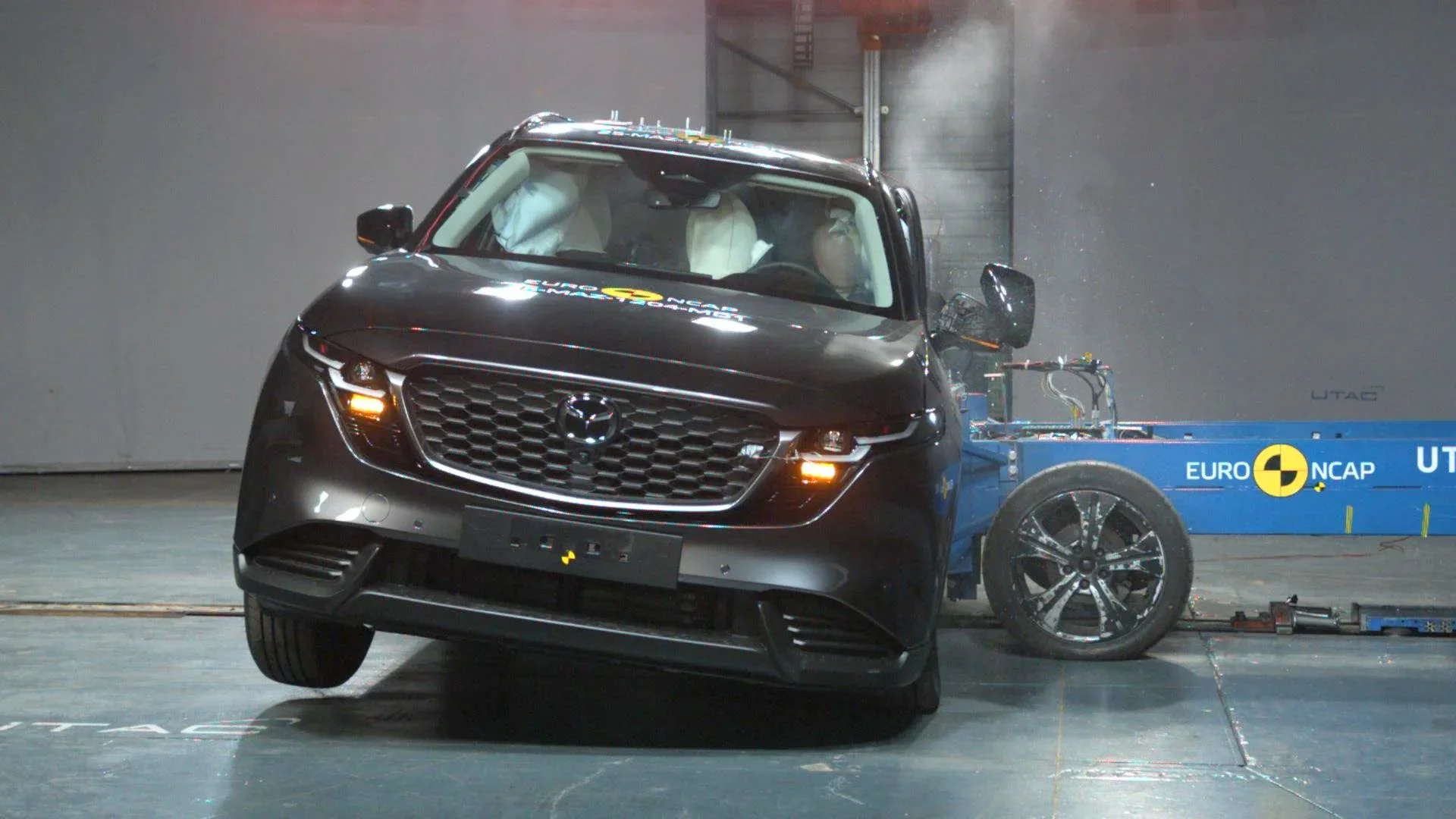
EuroNCAP scored the CX-5 90 per cent in adult occupant protection, and 89 per cent for child occupant protection, making it significantly safer in crash testing than its predecessor which has spent the last several years unrated by ANCAP here in Australia from 2024 to 2026.
Old CX-5 was tested way back in 2017, where it scored 95 per cent and 80 per cent in adult occupant and child occupant protection categories respectively.
New CX-5 is measurably safer than its predecessor thanks to things like the range-wide standardisation of auto emergency braking and adaptive cruise control, front-centre airbag and drive knee airbag.
We also need to consider the ergonomics of what Mazda’s done with the infotainment screen. The fundamental principle for designing the MZD Connect rotary selector dial back in 2015 when it debuted was to prevent you taking your eyes off the road to change the radio station or whatever.
Now they’re mandating that you force your eyes onto that massive screen. This is a downgrade in ergonomics, sure, but here’s the trick - the user interface hasn’t buried core functions like the HVAC controls behind a menu.
FUNCTIONALITY
If you just look at the CX-5 luggage space at 466 litres with the second row of seats up, you might see the 6 per cent increase compared with the old CX-5 and think that’s the whole story.
The 1594 litres of cargo space which improves by 18 per cent on the old CX-5 tells am even more profound tale of just how utilitarian the CX-5 has the potential to be.
But the fact Mazda’s managed to keep the 1800kg towing capacity (braked) with a 150kg towball download limit is actually the bigger story here. This is the bigger picture.
In an automotive landscape that is obsessed with forcing hybridisation down our throats and thereby restricting the breadth of towing and cargo-carrying capability of regular family vehicles, Mazda has bucked this trend.
When a vehicle gets a hybrid powertrain it typically loses basic towing and rear-end capacity for things like luggage bags, furniture, shopping bags, bikes and strollers and this is usually caused by either rear bumper structural design or the fact a battery and electric motor take up space under the boot floor.
This might still become the case when the hybrid version arrives in (at a guess) late 2026/early 2027, but for now, the default CX-5 gets a decent light-towing limit with a reasonable 8 per cent towball download limit.
Leaving you with plenty of working safety margin when it comes to picking up soil or gravvel from the garden centre, maybe some small loads of firewood or taking a light camper trailer to your favourite spot over Easter - this deserves praise. So well done, Mazda, for not making the CX-5 a gutless wonder.
As for the rest of the CX-5’s repertoire, it’s a good news/bad news story.
You do get roof rails, but they’re on the Touring model grade, which is what we were getting to earlier when discussing the Evolve with its emphasis on ordinary commuter use, rather than roadtrip long weekend type use. It depends on how you plan to use the vehicle.
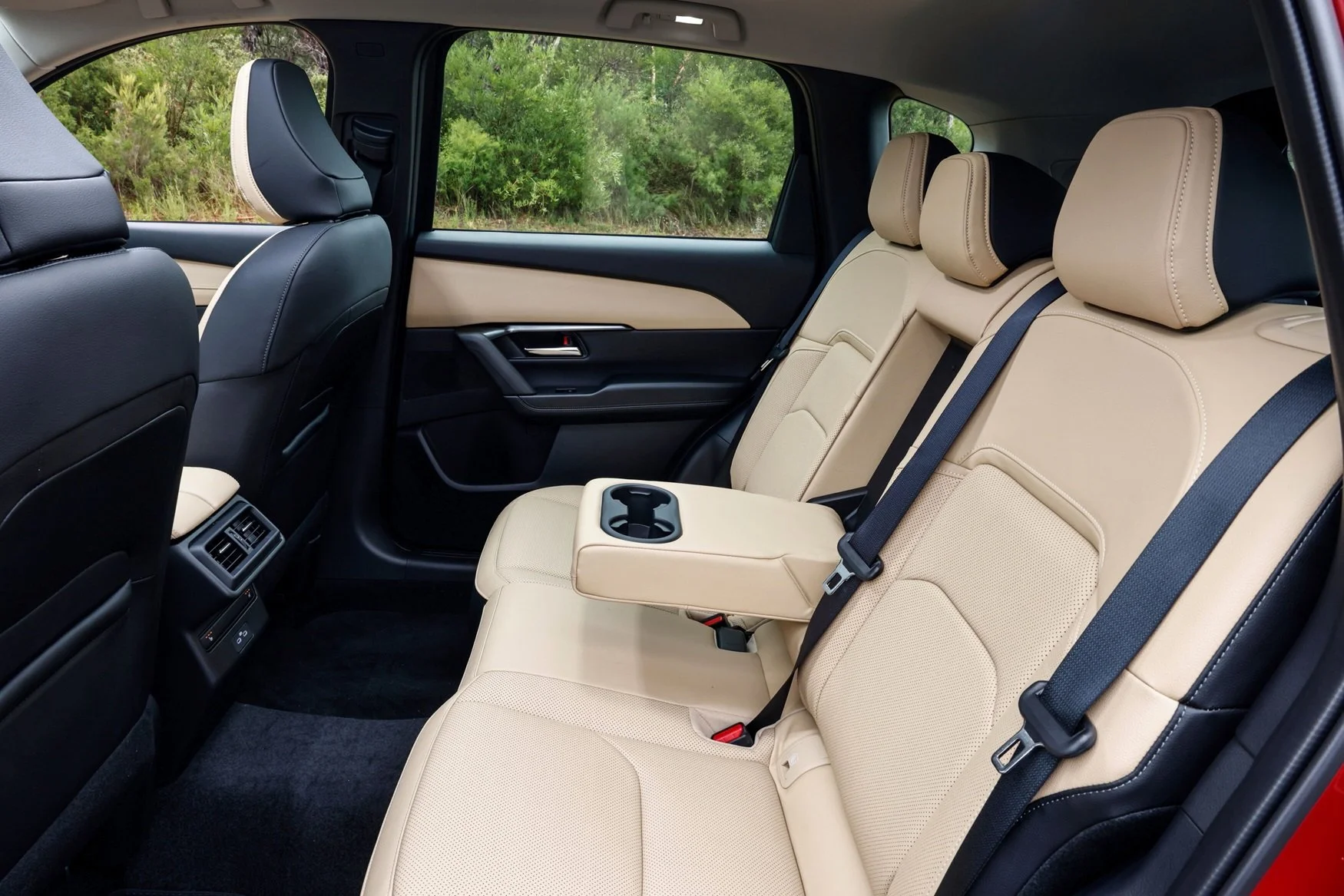
We also need to acknowledge that the 40:20:40 split-folding row 2 seats are an advantage over the conventional 60:40 seats in other SUVs because they offer multiple options. If you need to fit a moderately sized but bulky item, you can drop a 40: section while leaving the centre armrest cupholders available for toddlers in restraints to access.
Alternatively, if you need to drop both a 40: and a 20: portion of the seat, you don’t have to remove the child restraint in order to get the equivalent amount of space as a 60: portion. Whereas in regular SUVs, you’d have to remove a restraint, typically because the 20% cupholder armrest section is fixed to the left-hand side.
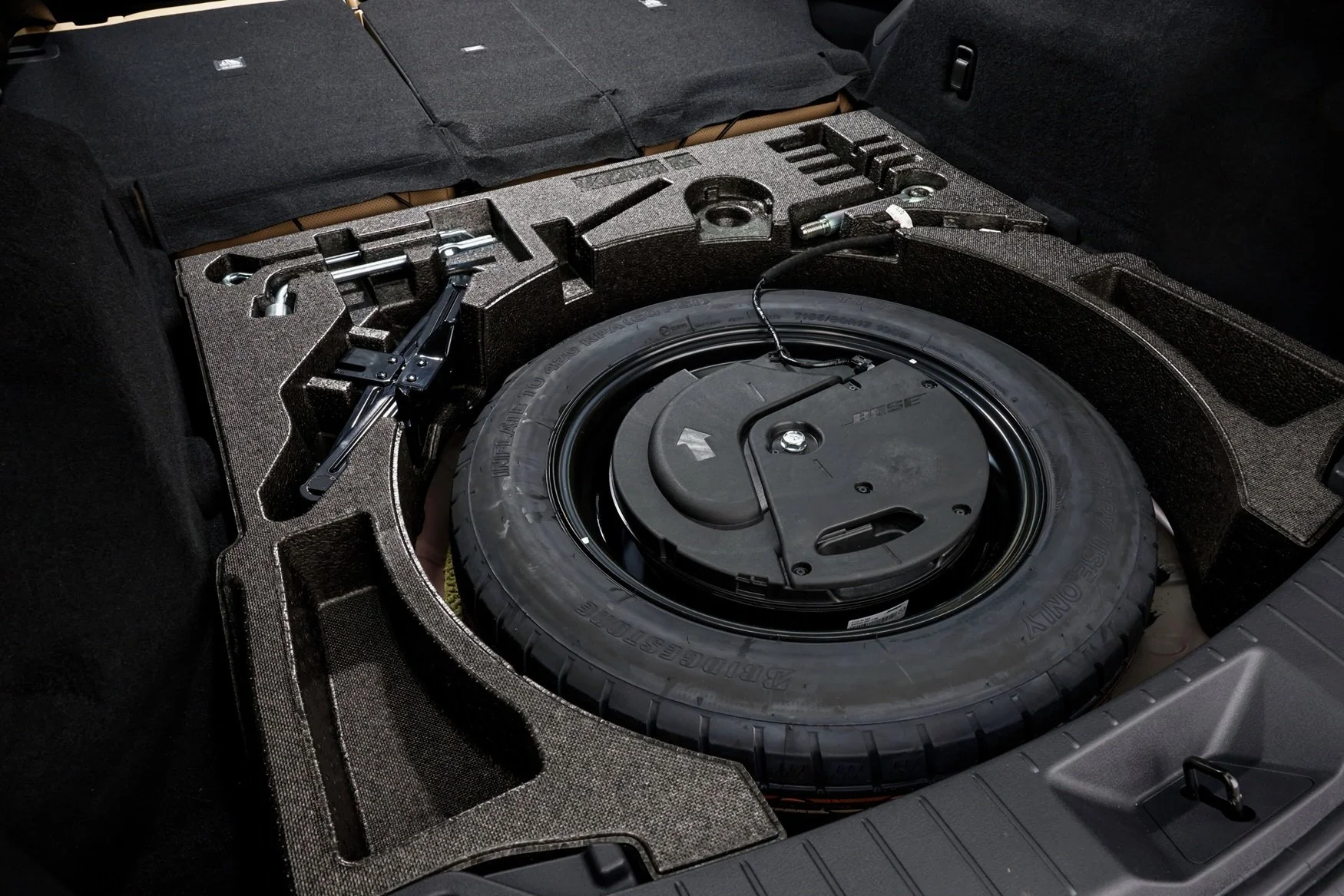
A space-saver spare under the boot floor might be less appealing than a full-size alloy, which is a legitimate drawback, but it’s not a complete game-over situation having to use it to get you home compared with a tyre repair kit.
The naturally wide door hinge on CX-5, much like the now defunct CX-9 and which is also on the new CX-60/90 range, makes child seat installation a breeze, especially for taller parents with broad shoulders. You get dedicated covers for the ISOFix anchor points which stops crumbs and rubbish getting into the annals of the seatbase, and top tether anchor point is generally reachable over the back for the seat without having to tilt the seat forward to reach.
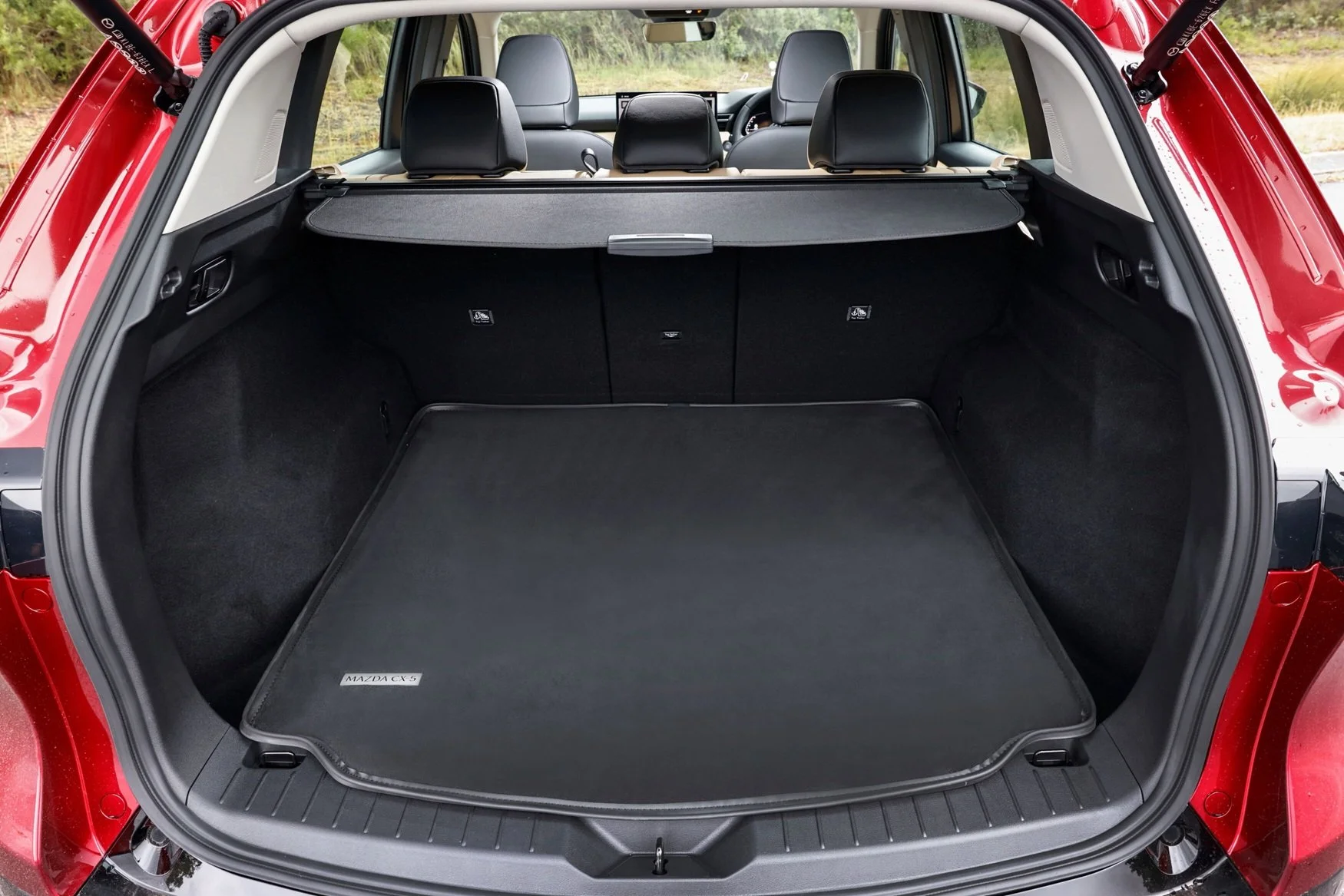
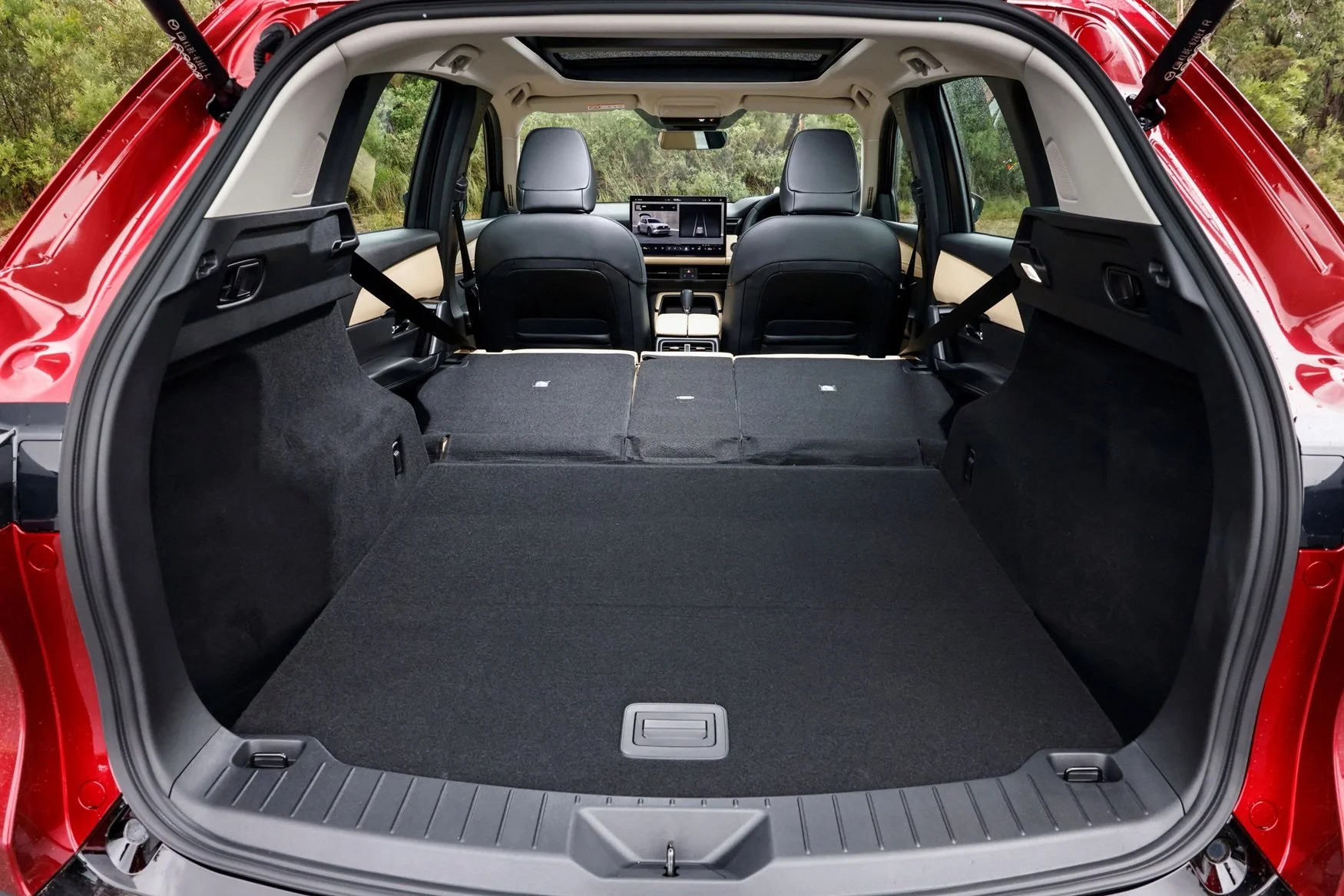
Minimal wheelarch intrusion into the cargo space makes for easy packing on school holidays, which is a win for anyone who likes to pack the car carefully (as opposed to those who like to just throw everything in).
The cargo blind is still a clunky thing to operate and/or remove, mostly because the increased length of the vehicle means it’s mounted even deeper into the cargo space, meaning you have to reach in even further to compress the spring-loaded end in order to slide it out.
This is hard to do if you’re not six feet tall and have your arm fully extended without having knealt on the cargo floor, which you really should try to avoid doing if you’re on the heavier side of 80-90kg. Thankfully the blind itself is at least lighter than the old one thanks to a lighter (aka thinner) roll of material.
ENGINE
Mazda Australia is calling this the “third generation” CX-5, but in fact it retains the same 2.5-litre naturally aspirated 4-cylinder petrol engine it’s been using since 2015, which is not a bad thing.
For the most part, it’s a good news story because this is a very popular powertrain, it’s been reliable, and all of the R&D has been done - there’s no in-service lab-rat testing to be done in 2026 and beyond.
But it might lead to a lack of innovation, potentially, but we’ll get to that also.
Mazda hasn’t yet confirmed if the turbocharged version of that engine will return, but it’s most likely going to due to the fact it too has been the most desirable powertrain in the current CX-5.
The CX-5 not only blazed a path for other rival brands to follow (or die trying) in terms of offering ‘premium-ness’ to ordinary consumers, it tore down the conventions established by the German prestige sideshow. Premium cars were expensive because they had all the toys, and they drove beautifully, and they were supremely comfortable, and they became animals when you put your foot down to have a proper go at the corners.
Now, even though the CX-5 has nothing on an M3 or AMG Merc, the point is that 2.5-litre turbo-petrol four-banger was a wolf in sheep’s clothing. It looks like a regular, swish family runabout, but Mazda’s engineering work under the bonnet made it a hoot to drive.
The one cause for concern in this regard is that the mainstream, established car industry has been in a race to cut costs and maximise profits in recent years (not that this is a new phenomenon). So reducing to a single powertrain would mean a significant reduction in ongoing overheads. It’s hard to predict anything confidently at this point, but there is a mild hybrid coming.
What Mazda’s had to do to the atmo 2.5 is de-tune it to make less power and therefore emit less CO2. This might seem like heresy, initially, but if you consider that this is the option they’ve taken instead of adding more weight like batteries and motors and inverters and high-voltage cabling to achieve the desired number, it might be the more rational choice.
Not turning CX-5 hybrid might have also been an engineering legacy of the platform not being designed back in 2015 to add all the electric gubbins to make it a hybrid.
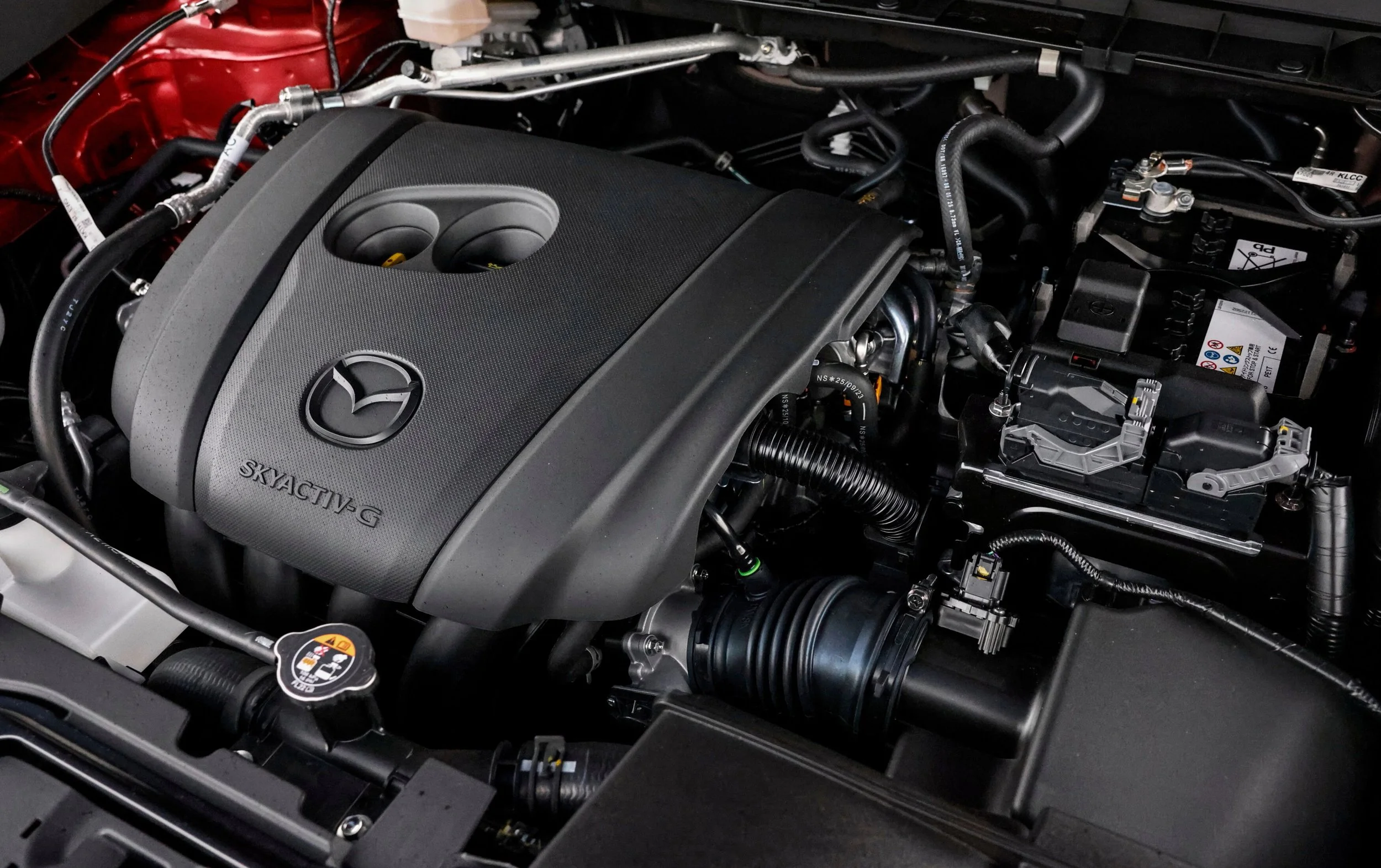
Apart from one small oil dilution issue fixed early, Mazda’s SkyActiv 2.5L 4-cylinder has been reliable and frugal (and punchy if you fill up with 98 to gain 2% power to make 138kW)
Power in the outgoing non-turbo model is 140kW of peak power at 6000 revs and a healthy 252 Newton-metres of torque at 4000 revs. But the new version has been de-tuned to just 132kW and the same amount of torque. The turbocharged 2.5 might return, but it could also get a power cut.
Mazda calls its engines ‘SkyActiv’, which is just marketing speak for: they’ve put a lot of engineering work into them.
There are two engine choices in the range, both of which are petrol.
If you want more performance, you’ll need to wait for the 2.5-litre four-cylinder turbocharged version. This is engine is particularly inspiring to drive, but it’s hard to say how long you’ll be waiting because the new CX-5 only actually arrives in showrooms in June 2026, so it could easily be another six or even 12 months before the 2.5 turbo arrives.
Considering you’ll likely get something in the vicinity of a 21 per cent increase in power (140kW), this is good motivation to wait if you like to get up to speed quickly on freeway on-ramps, or you want extra grunt to overtake quickly, or you simply have lots of stuff constantly filling up the boot because you’re always going places with the family on school holidays etc.
The 2.5 is good in the sense that it has also proven pretty reliable in service for several years now. But if you want the most potent performance in the range, you’ll most likely have to choose the turbocharged 2.5 version available in the GT SP and Akera model grades when the time comes. If it no longer makes 170kW at 5000rpm, don’t be surprised. Unfortunately, this also happened to the Kia K4 successor to the old Cerato; heavier, down on power, slower.
The CX-5 engines run on regular 91 octane petrol, which is excellent for the budget, long-term. However, Mazda says that if you run your 2.5 non-turbo CX-5 on 98 RON premium petrol, you’ll gain an additional 4kW, up to 138kW. It’s still perfectly okay to run it on 91, but if you feel like need to spend more on the good stuff to derive 2 per cent more peak power, you can run it on 98.
TRANSMISSION
This is probably the easiest part of the CX-5 range to understand, because there’s just one transmission available. Even the shifter is identical to the old CX-5.
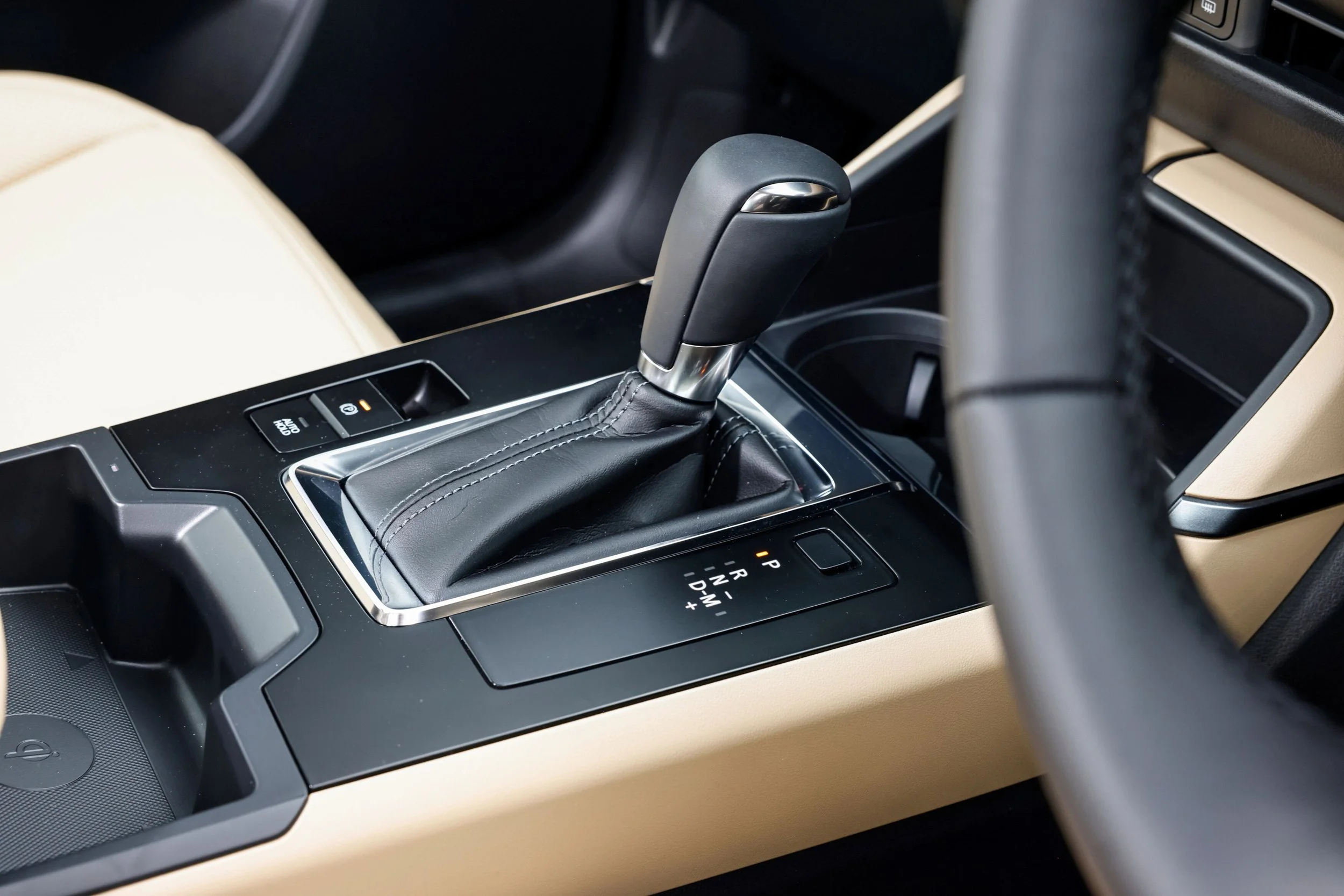
CX-5 is never in the wrong gear, never hunts around for the right one; nor does it hate stop-start commuter traffic or putting your foot down
You get a conventional six-speed auto transmission which is well calibrated to the sole engine in the range. Mazda has developed a very smooth-shifting, intuitive transmission. It’s helpful that Mazda doesn’t make you deliberate over FWD to AWD, or engine, or even when you pick the top-spec model. It’s the same transmission across the board.
Other brands have offered dual clutch transmissions (DCTs) and continuously variable transmissions (CVTs) at epicyle auto transmission, notionally asfuel-savers or sporty-shifting. But they all have strengths and weaknesses owing to the nature of their design.
What is noticeably unrefined is Mazda’s i-Stop engine stop/start system which, like virtually every other system of its kind historically, jolts the car upon restart at the lights or when turning out of an intersection. Mazda’s system does re-activate the engine pretty quickly, which is good, but it doesn’t spoil the whole otherwise refined drivetrain experience. They’ve really cracked the code on this love-hate feature.
While you can turn the stop-start off manually, it defaults to ‘active’ every single time you start the car, which remains tedious, but not worthy of ignoring the other 99 per cent of the CX-5 which is excellent.
DRIVING
If you need a more budget-conscious CX-5, the Pure, Evolve and Touring variants are going to be as far north as you’ll want to go in price.
That is the main drawback with CX-5: it does lots of great things, but it does get somewhat expensive the further up in the range you go, compared with competing vehicles in this segment. However, none of its silky driving behaviour is lost the further up or down the range you go (either getting heavier or cheaper).
The Pure, Evolve and Touring are adequate for most families in ordinary driving - just don’t expect it to be something thrilling to drive out on the highway or on the backroads. It goes okay, returns good fuel economy and does the job.
That said, punting the range-topping 2.5 turbo engine along any kind of twisty road is a fairly inspiring experience - again, when it eventually gets here - especially for a family SUV. But just remember that the fundamental mechanical components underneath a Pure, Evolve or the Touring are going to be the same as a top-spec Akera.
It steers nicely in higher-speed corners while retaining a good amount of feel at lower speeds without ever becoming tedious or tiresome thanks to a beautifully calibrated steering rack that is quick and precise. Mazdas can feel a little on the lighter side when you’re making quick turns at low speed but it’s unlikely you’ll ever notice.
In fact, the lower model grades might actually be nicer to drive (if you’re something of a driving enthusiast) because they are physically lighter. Having less equipment means the car will turn-in, corner and brake with greater ease than the heavier GT SP or Akera. But if you’re not a driving nut, you’ll probably never notice. Less weight also reduces fuel consumption too (all other things being equal), so there’s that.
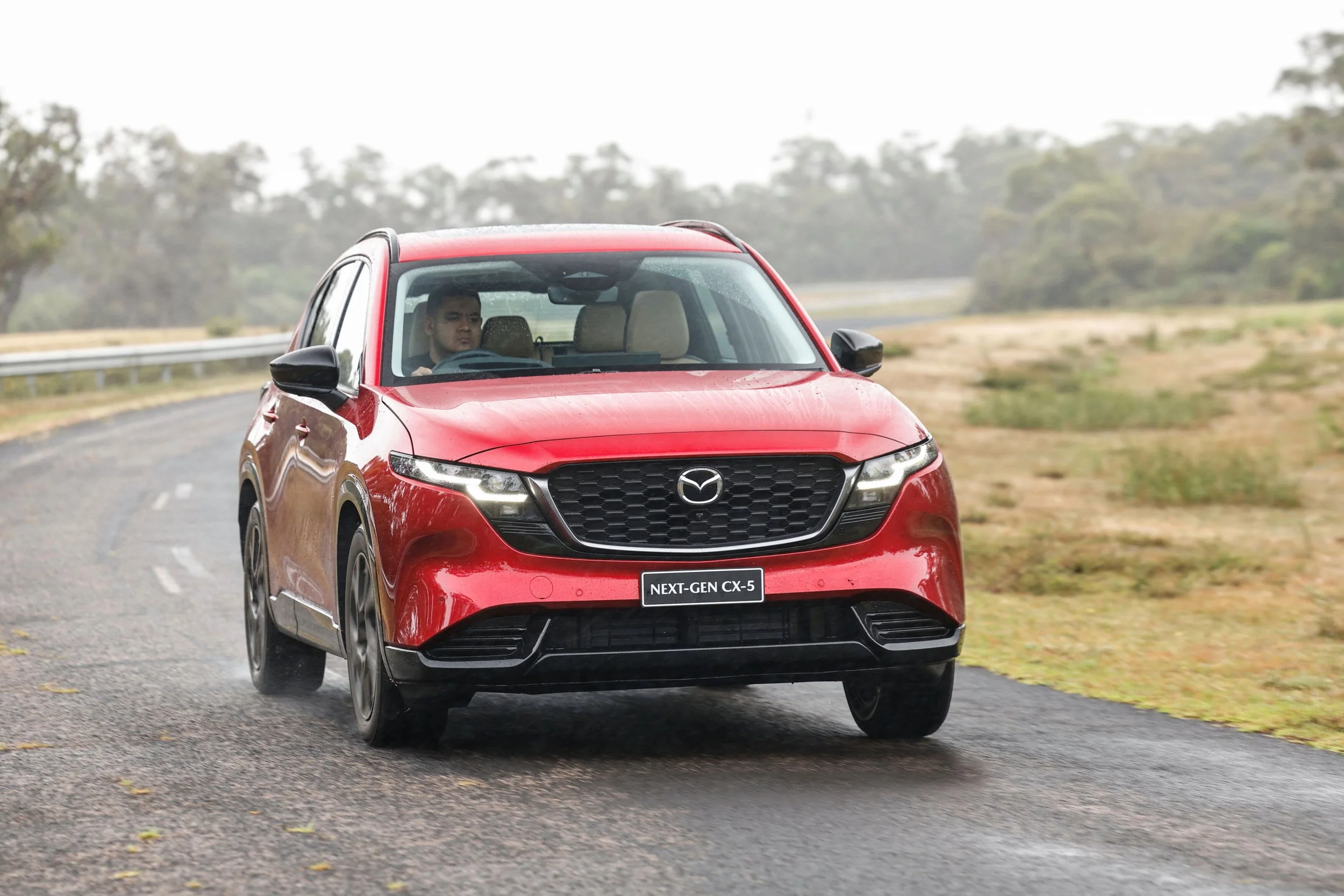
CX-5 is definitely one of the best-driving five-seat SUVs on sale, even today
The 2.5 turbo is the best engine in the CX-5 range, but we’re going to have to wait until Mazda Australia confirms that powertrain is returning on the new, updated version. It probably will, it was a fire cracker of an engine, but there is a chance CX-5 goes fully hybrid in future with unknown results apart from the known qualities of how hybrids drive.
They’re quiet at low speeds, offering dependable amounts of torque to get you going before the petrol engine kicks in to keep you going. This is the ideal hybrid combination, but given Toyota owns a small piece of Mazda, it’s hard to see Toyota allowing Mazda to best their RAV4. Certainly the CX-5 is already a nicer vehicle to drive than the RAV4.
The 2.5 non-turbo 4-cylinder is the more affordable engine choice, but it is punchy enough for most owners.
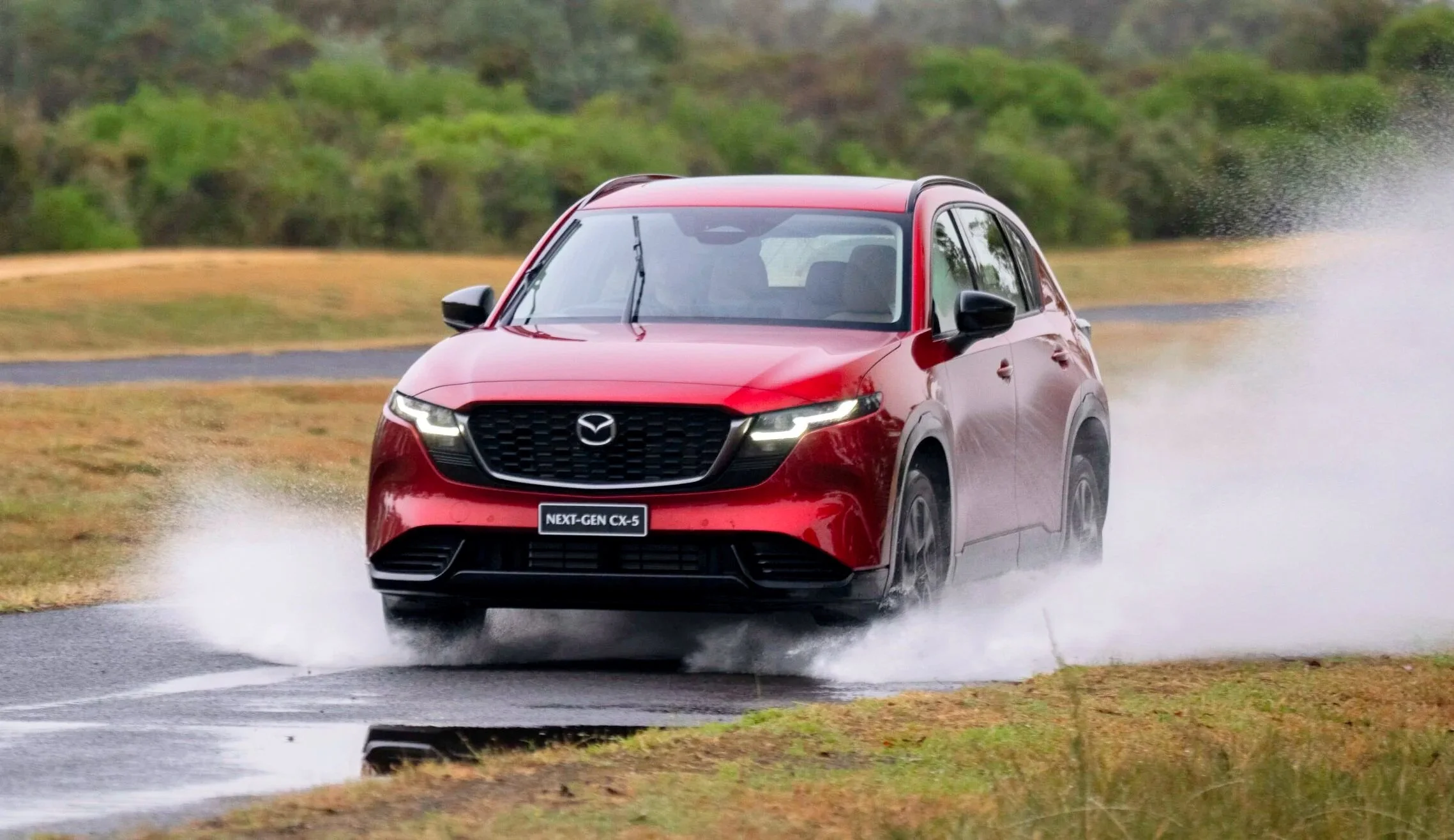
CX-5 has the longest wheelbase of the main competitors at exactly 2.7m, which makes it quite large inside (because wheelbase generally dictates cabin space). This is also excellent for ride quality (longer wheelbases ride better) and high-speed stability. In fact, the rear wheels almost look like they’re right under the rear bumper - so Mazda’s engineers have made a real effort to jam as much wheelbase in as possible. This makes it slot nicely into most carparks with relative ease.
In traffic, both 2.5-litre versions of the CX-5 are quite quick off the line (for a family SUV). Freeway on-ramps, where you have a chance of giving the throttle a good squeeze, are actually fun when you feel it kick down, snarl and shoot you up to the ambient traffic speed, for merging.
Overtaking with the turbo petrol engine is quick. You can actually drive the CX-5 turbo with some conviction.
In general terms, the 2.5 turbo might still be ahead of most competitors when it arrives in 2027 (most likely), while the 2.5 atmo engine is line ball with (for example) the 1.6 turbo-petrol engine in Hyundai Tucson and Kia Sportage, and it’s a more refined drive than the Mitsubishi Outlander (much you’ll struggle to beat Outlander’s value proposition). Of course, the Mitubishi has a continuously variable transmission, which is not as nice or refined in traffic as Mazda’s conventional epicycle auto.
Bottom line: the CX-5 is a much nicer vehicle to drive, it rides better, it turns corners better, the brakes are better and the 2.5-turbo brains a RAV4 under acceleration.
DRAWBACKS
The MZD Connect and rotary dial might have seemed fiddly to some people in years gone by, but it actually made operating the CX-5’s infotainment screen SAFE. Much safer than the litany of big, distracting, attention-sapping touchscreens that have dominated most new cars today.
Once you adapted to it, it did actually reduce your temptation to take your eyes off the road by having to get your finger on the right spot on some laggy touchscreen.
For years Mazda was a martyr for their rotary dial system and the retention of buttons to operate their HVAC system. It also gave the CX-5 a point of difference in the market. It was unique - and still sold in unbelievably good numbers. The expression ‘if it ain’t broke, don’t fix it’ applies here.
But unfortunately, just as it seemed like the car industry might’ve been turning a corner and returning to the land of haptic feedback by returning to buttons, Mazda has gone completely off its meds and chosen an enormous 12.9-inch distraction screen - and they’ve removed ALL buttons.
Nobody asked for this. It’s purely a cost-cutting measure so they don’t have to manufacture buttons and it’s simultaneously made the CX-5 very unappealing as a mainstream medium SUV for ordinary families who have to actually use this thing every single day.
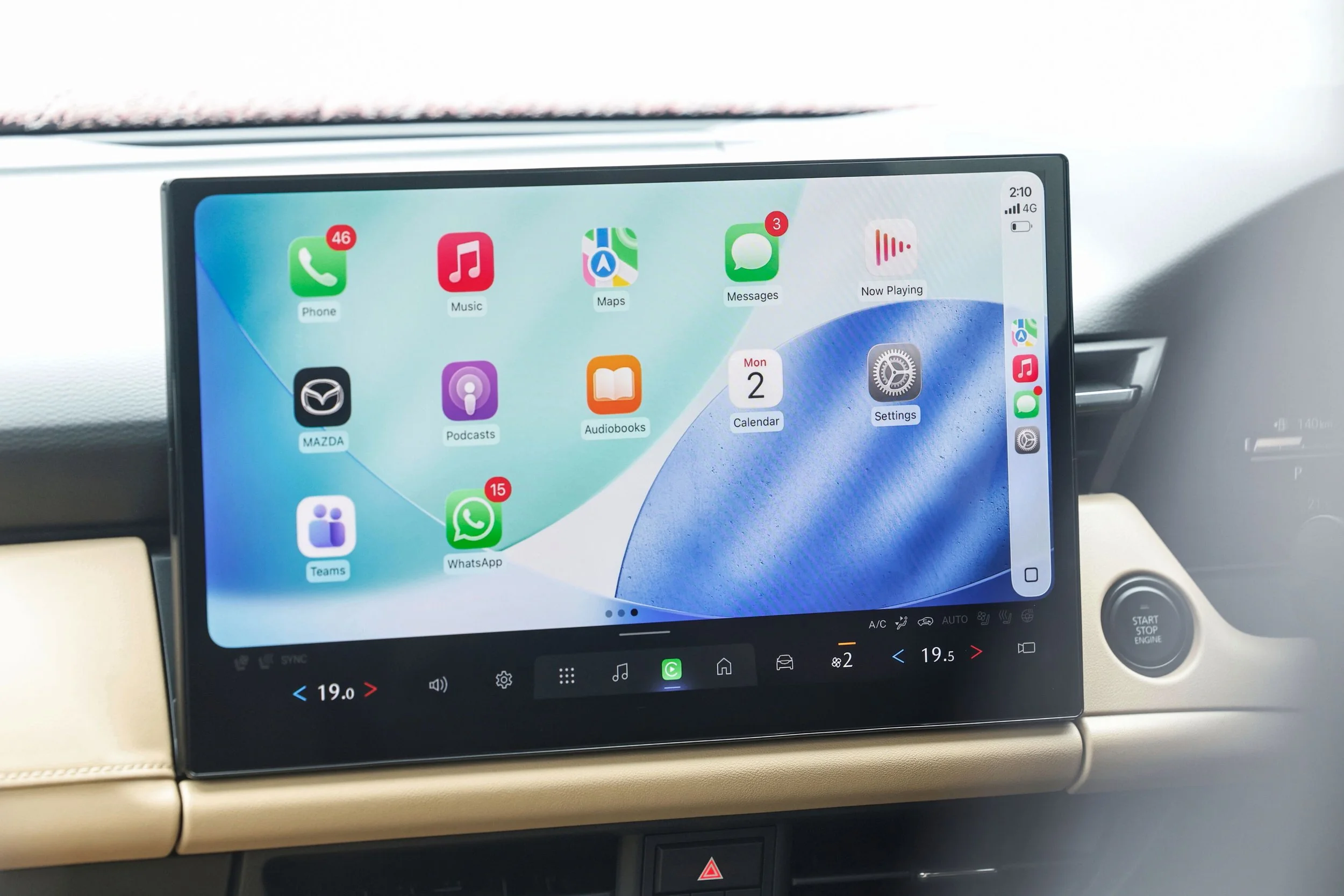
Look how tiny those AC icons are to try and aim your finger for while doing 80km/h on a dual carriageway with two bickering kids in the back and your mother-in-law on the phone… and all you want is some cold air
Sure, they’ve at least prioritised designing the user interface to favour our right-hand drive market with the home and navigation icons on the right of the screen.
But the fact they’ve ditched even mechnical-electrical buttons for the HVAC system to put them on the bottom of the enormous screen creates a safety issue if the screen ever fails and you need to defog the windows or adjust the temperature.
Tolerating a space saver spare wheel with its 80km/h speed limitation is painful, especially if you are a long way from home when you get a flat tyre.

Some kind of doughnut under the boot floor is better than a can of compressed goop that doesn’t work for sidewall punctures
The 360 degree camera monitor needs work because it obscures vehicle’s corners (the most important bit of visual information you need when reversing).
One could also argue five model grades is too many; four at most would suffice considering they’ve dropped the 2.2 diesel engine now. CX-5 is only available as an AWD from second-tier Maxx Sport up and with only the 2-litre or 2.5 atmo/turbo to choose from. So, on these fundamentals, they could perhaps make the range simpler.
The i-stop stop/start ignition system is annoying on two levels: 1. It’s unrefined and doesn’t save much fuel, and 2. it defaults to on every time you start the car afresh. You have to disable it manually every time.
MAIN COMPETITORS
Not convinced about a CX-5? Here’s an executive summary of the main competitors.
Toyota RAV4 Edge: $66,000 d/away approx. TBC
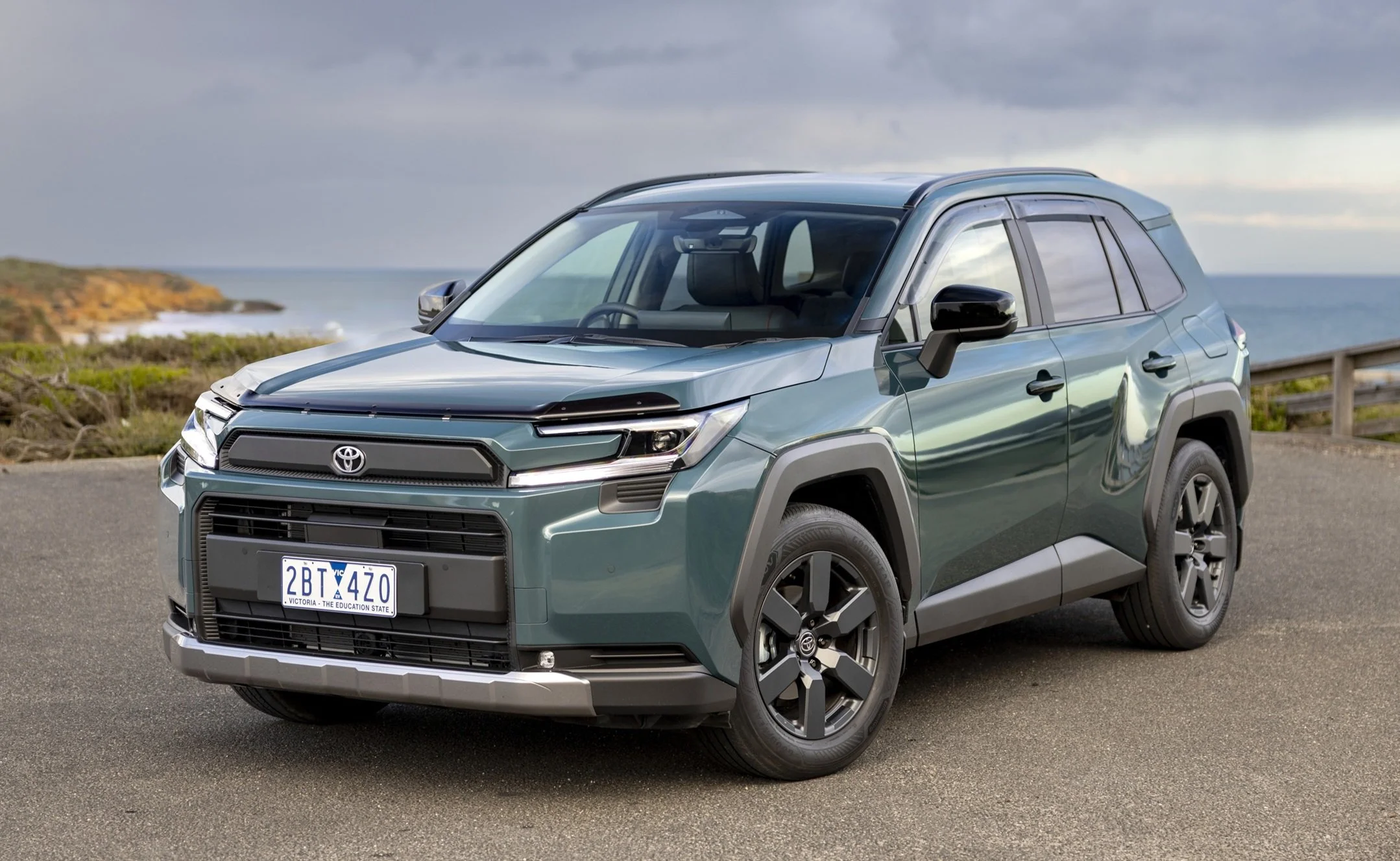
Toyota Australia still hasn’t launched the updated 2026 RAV4 yet…
A popular all-rounder from the country’s top-selling car brand. A lot of people worship Toyota in Australia: they’re reliable, the dealer network is huge and the resale value is excellent.
RAV4s are good enough (just). As market leader, Toyota does the minimum required to stay on top, and this is reflected in the vehicles. They are, however, typically reliable, and the resale value is high.
If you’re looking for a general-purpose, straight-forward SUV, the RAV4 is one of those vehicles that does a good job at not offending you with styling or getting in your face with tech or innovation.
A large portion of buyers don’t care about flashy screens or indulgent styling; they just want an affordable SUV that goes OK. It does.
Hyundai Tuscon Highlander: from $65,000 driveaway approx.:
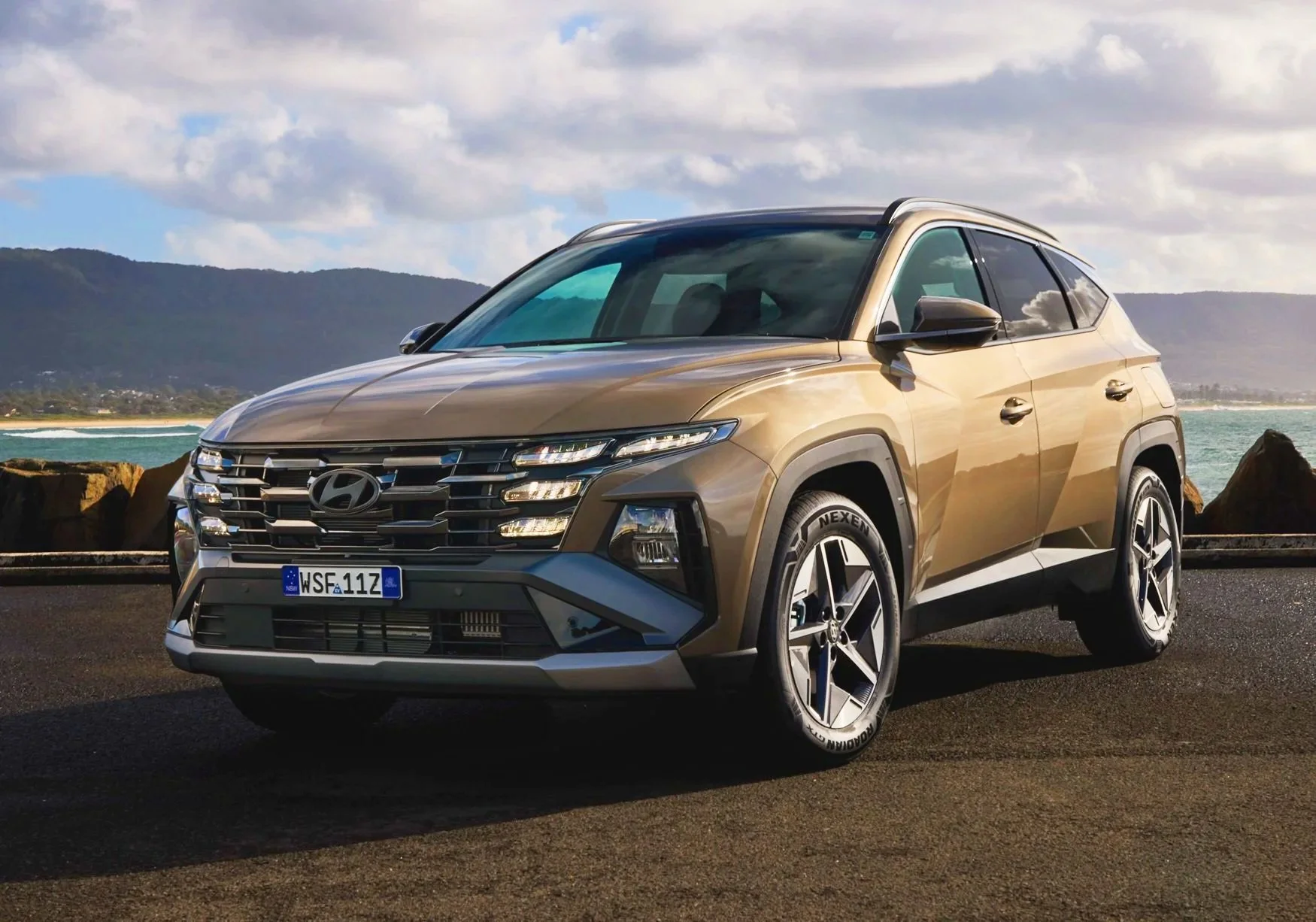
Possibly the best value mainstream mid-size SUV. It is basically the same vehicle as a Sportage underneath, with different styling.
The Hyundai hybrid is unbelievably good for light towing and general family use. You get great electric-derived acceleration up to about 30km/h before the 1.6 turbo-petrol engine smoothly steps in. Very good fuel economy for its size, weight and price.
Tucson offers superb long-distance comfort thanks to local steering and suspension tuning while also offering a decent fuel tank at 58L, good payload, and a full-size spare wheel on non-hybrids (which beats CX-5 for regional use in particular).
Hyundai’s customer care is slightly better than Mazda’s, if something goes wrong.
Kia Sportage GT-Line: $66,000 driveaway approx.:
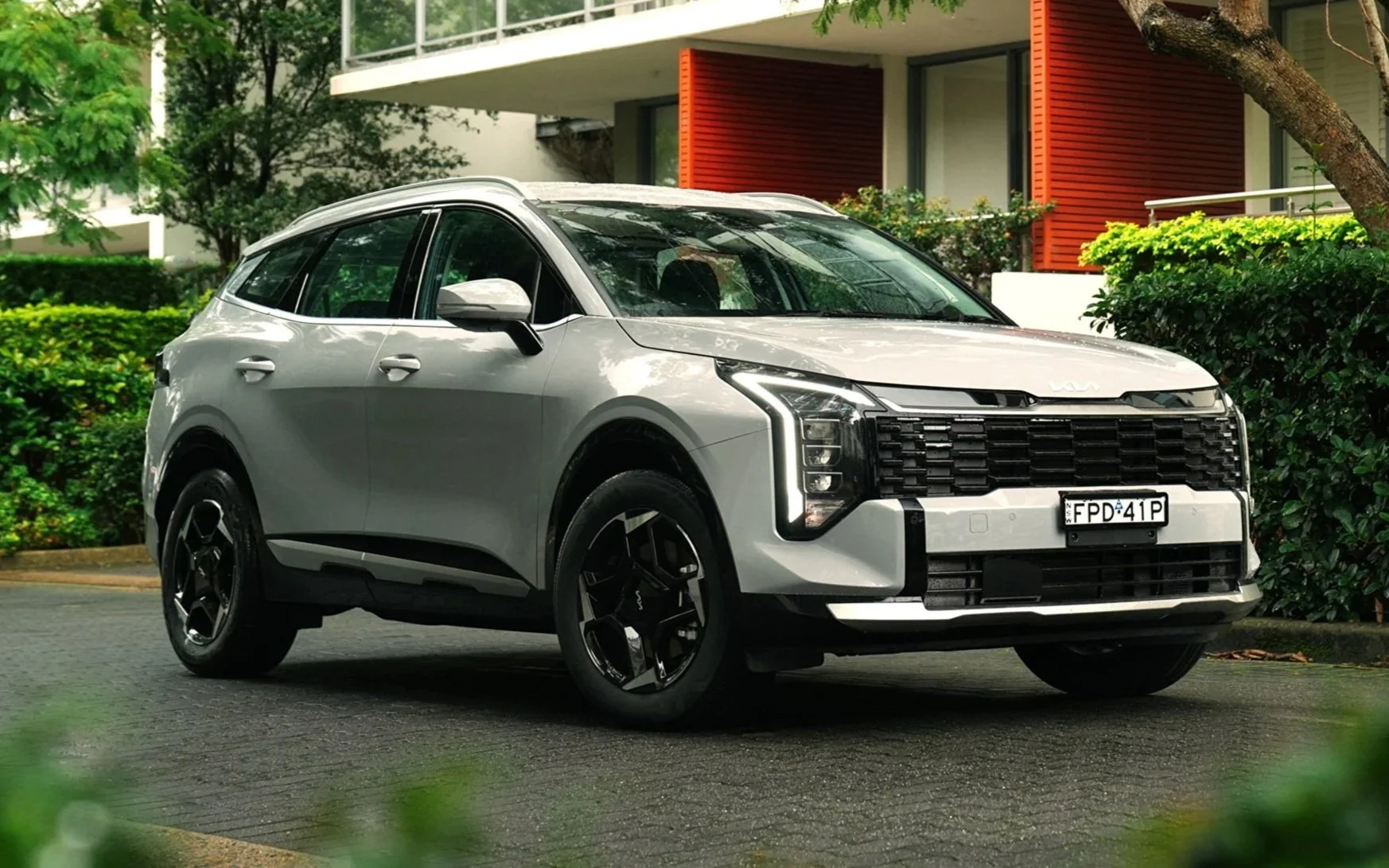
Not quite as smooth as the CX-5 in petrol form, but the diesel is. (Everything above for Tucson, pertains to Sportage as they’re essentially the same platform.)
Kia’s 2.0-litre turbocharged diesel is a masterpiece in urban environments, especially compared with the 1.6 turbo-petrol hybrid where you don’t get the benefit of the electrical side when cruising at 100km/h.
Diesel comes with lockable all-wheel-drive, 1900kg towing capacity (1.6 petrol - 1500kg) and a full-size spare. On the road it’s really well sorted out, dynamically, it’s well damped and agile when you’re on the move without feeling bulky and cumbersome. That’s the local suspension tuning that Kia does - it’s a real point of difference versus Tucson.
Sportage GT Line is expensive, compared with its more affordable sub-variants, but you get loads of trimmings. The hybrid is also a great option if you simply don’t need the grunt of the diesel but the excellent fuel economy for city commuting and school runs. Kia offers excellent customer service, too.
Mitsubishi Outlander Exceed: from $62,000 driveaway:
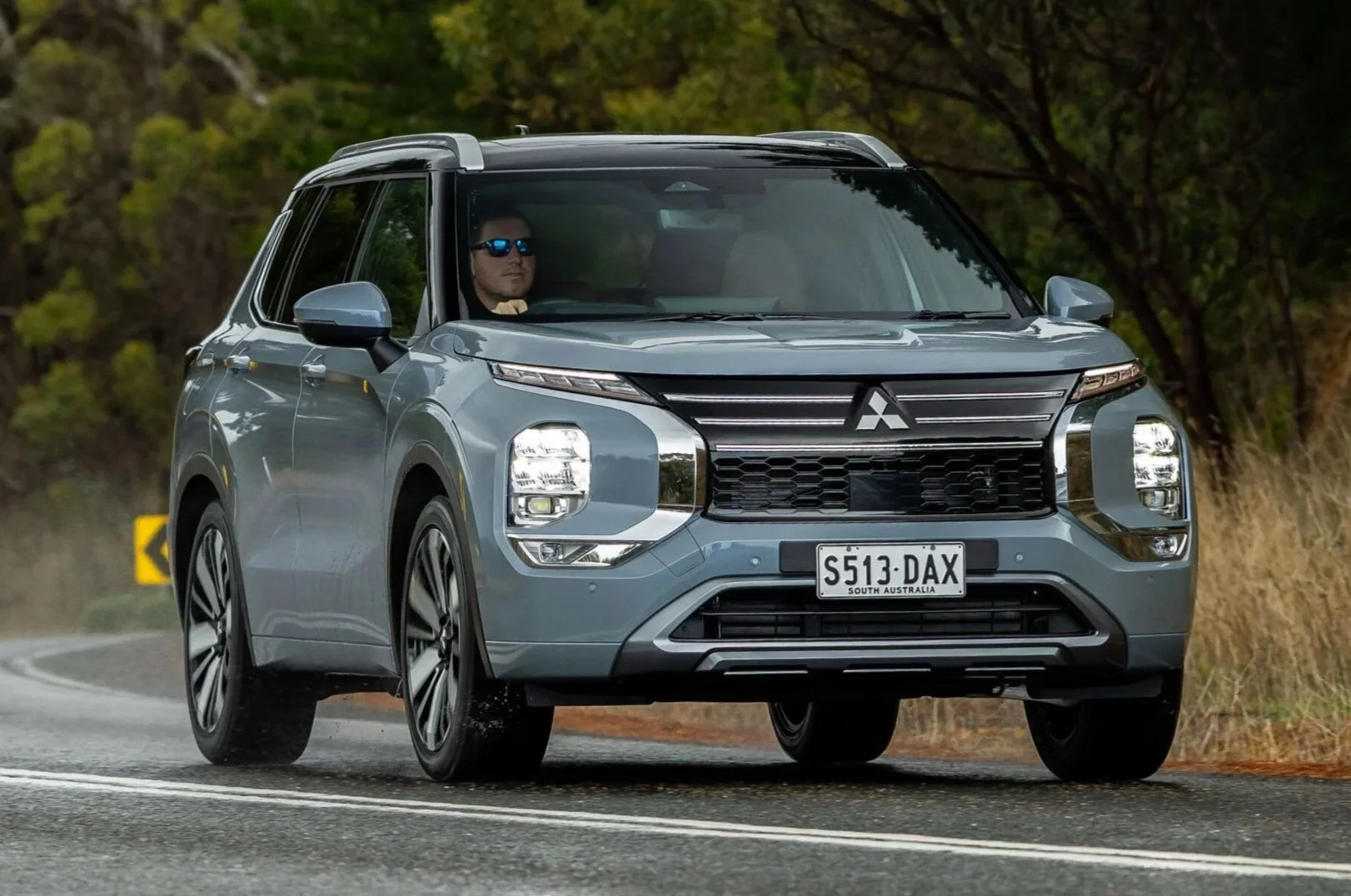
Respectable in almost every sense, except where aesthetics are concerned. That face... Still, you can’t see it when you drive.
If you want practicality in spades, the only seven-seater in this group is the Outlander. (It is pretty cramped back there, however.)
If you can’t stomach (nor afford) to push $60k for a bigger seven-seat SUV like Santa Fe, Sorento, or CX-9 (or you’re having kid #4 where a Kia Carnival is more appropriate) then Outlander Exceed with an occasional-use third row is a clever choice.
You get a 2.5L atmo petrol engine, 8sp CVT with paddle-shift, good equipment levels including entertainment and safety systems, adaptive cruise, auto emergency braking and the rest, plus pretty good boot space at 477L (third row down).
Plus there’s five extra years of warranty (total of 10) if you get the car serviced on time at a Mitsubishi dealer.
Subaru Forester 2.5i-S: from $62,000 driveaway:
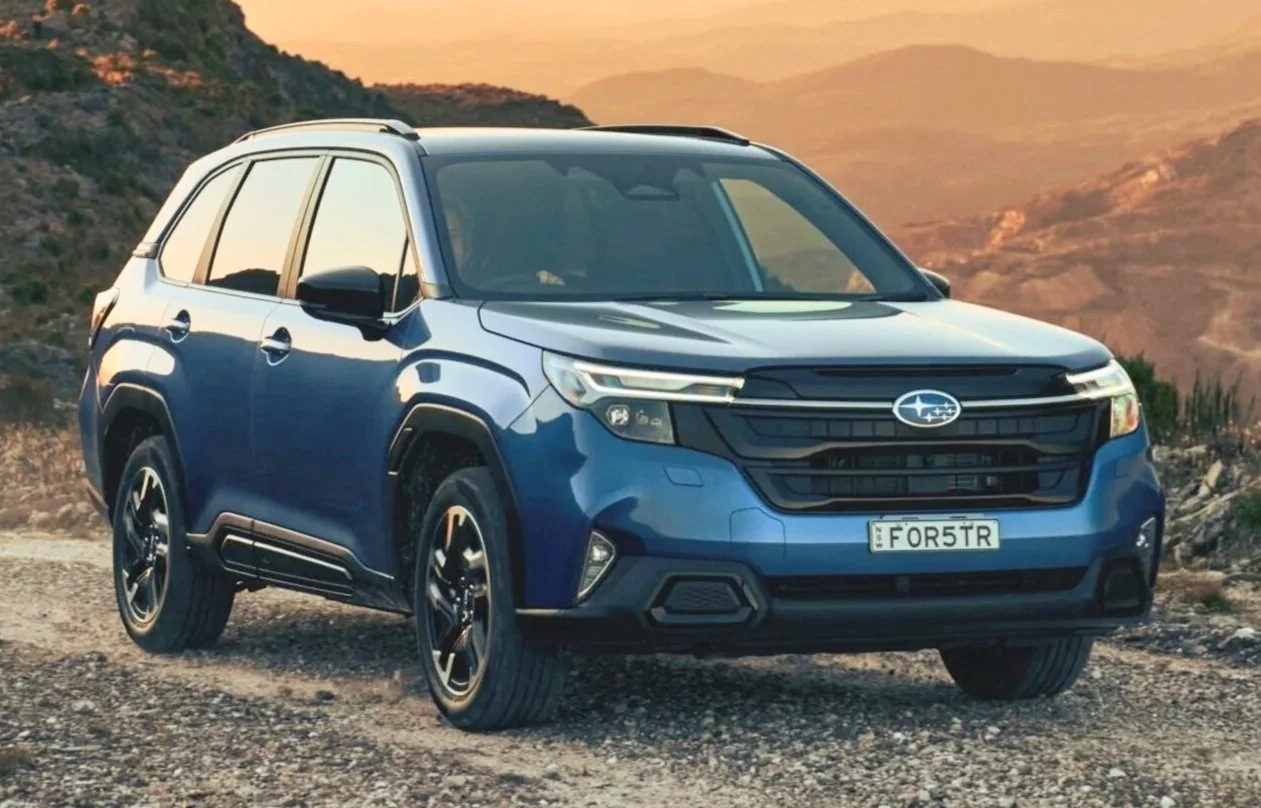
Undoubtedly Forester is the most capable soft-roading SUV, but Subaru sales are slipping fast in 2026 having taken so long to get its act together with a proper hybrid - at a great price, too.
Forester’s X-Mode combined with Subaru’s renowned symmetrical all-wheel drive is excellent for light to moderate conditions like wet compacted sand, dirt and gravel tracks, traipsing up and down slippery slopes and heading up to the snow without chains aboard.
Forester also offers the best ride height at 220mm, plus, superb ergonomics, and 496 litres of luggage space (484, hybrid). A full-size spare (non-hybrid) keeps you mobile in the boonies and while Subaru’s CVT drones a bit, it is one of the best-implemented CVTs around saving fuel over epicycle auto transmissions. If you’re the regular camping type, Forester is a hot contender.
The new hybrid is available, too, and it’s actually quite good - if late to the party. Good for families who like to go low-intensity camping, exploring tracks or visiting relatives in rural areas (where a ute/4X4 would be overkill).
CONCLUSION
The Mazda CX-5 does so many things right it’s hard to justify the existence of actual “luxury” brands - except if you want to spend more than $120k. In other words, I’m saying a cheap prestige SUV isn’t going to be as good as the most expensive CX-5.
CX-5 puts all the comforts of modern motoring within conceivable reach of mainstream mortals like us, basically. (A BMW badge still looks better than Mazda’s seagull in a chrome hoop.)

CX-5 certainly puts style and plushness before ruggedness and dirt-road prowess, but for the majority of the car-buying public, that’s exactly what you need - and the sales results prove that. These things aren’t mainly soft-roaders, they’re de facto family wagons.
CX-5 isn’t perfect and certainly things like the enormous touchscreen with no physical buttons is a letdown for some, and the space-saver spare need rethinking for regional touring. But that top-spec Akera remains a very compelling proposition - if you have the cash.
In the middle of the range, with the 2.5 atmo engine, is where you’ll find the real mainstream value. The Touring is a sweet spot, but the really just a price-leader.)
With CX-5, you’re getting a brand with historically good customer support at the dealership level too, and Mazda definitely takes pride in the design and engineering of its vehicles.
When it’s all said and done, you can stand back and think, “Yeah, it is better-looking than the RAV4, and I didn’t have to spend BMW money”. So that’s nice.
More reports

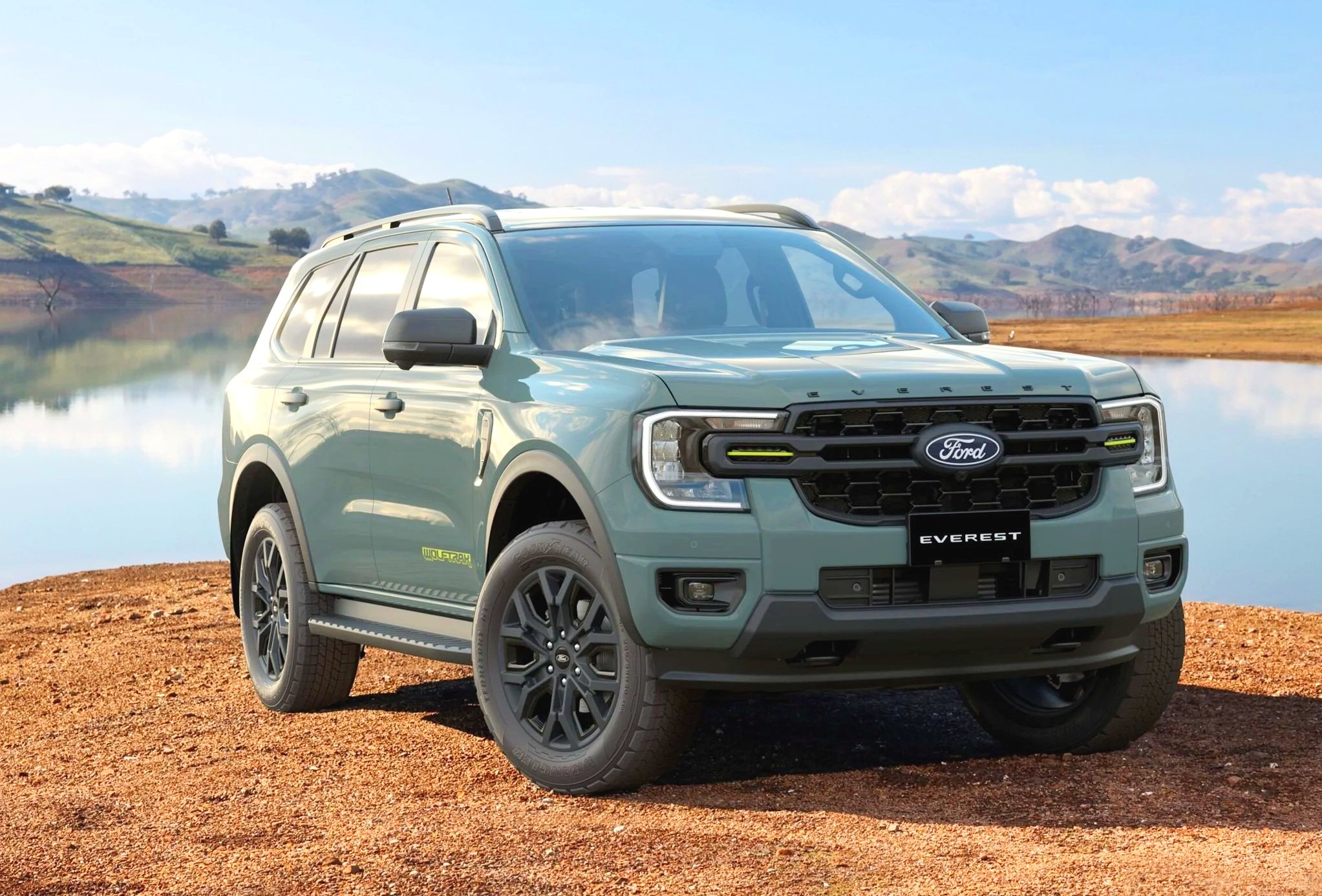



Buying a small SUV should always include the Kia Seltos. It’s a well-built, reliable vehicle, with a perky hybrid engine ideal for ordinary daily commuting or sportier driving. See how well the affordable, frugal Seltos suits you.