
Kia EV3 review and buyer's guide
The Kia EV3 is the brand’s entry-level fully electric model and when you take into account its price and the level of equipment, the astounding build quality and segment-leading refinement it offers compelling value. If you want affordable luxury with the daily dependability of an EV, you might be on a winner here…
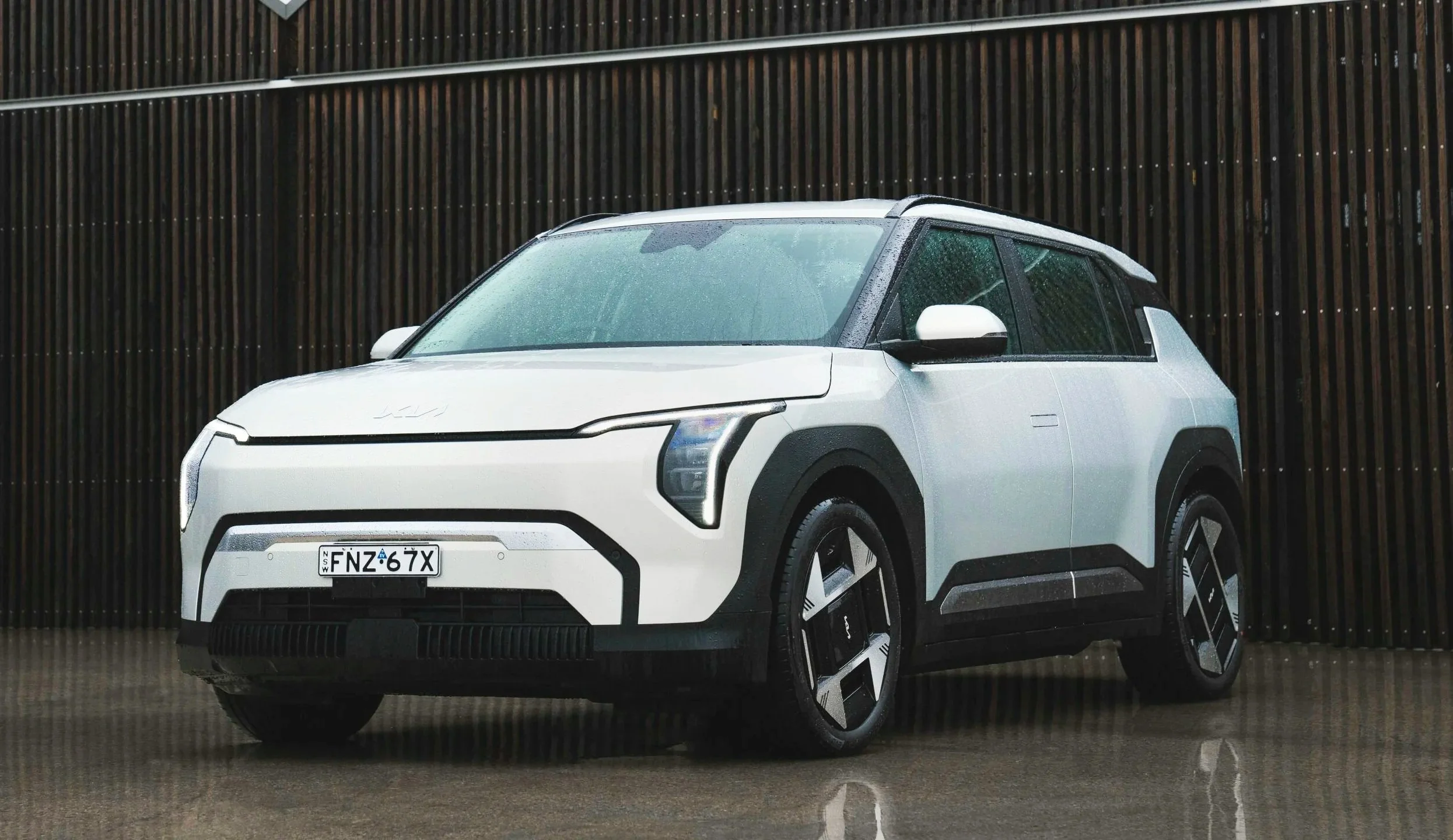
The Kia EV3 is an all-electric small SUV that offers a strong economic case for anybody wanting a luxurious, solidly built and practical family runabout that bristles with a mild performance streak.
With a starting price of under $50K in a market of historically unknown brands selling cheap EVs, the Kia EV3 has all the components that should make it a Tesla killer and bring the commercial fight to the Chinese brands.
On balance here, the EV3 is the electric vehicle Kia should have started this whole electric-car campaign with - not the grotesquely overpriced and irrelevant EV9. This is the electric car people actually want and will use - and can afford.
This website and the YouTube channel from which is derives said it about 6 years ago - getting electric vehicles going, as a commercially viable pathway - needs to appeal to the masses, not the affluent. Especially when you’re staring at an incoming tsunami of Chinese EVs that are A) similarly well-made, B) just as well equipped, and C) cheaper.
In fact, we dedicated an entire AutoExpert deep dive video to the notion of how critical it is to make EVs appeal to the people most likely to adopt them - ordinary people who want to get out of their petrol runarounds and into an EV made by one of the leading brands in Australia, Kia.
The point here is that every carmaker not hailing from China has essentially kicked off their electric vehicle campaign by bringing lardy-arsed medium- and large-SUVs to the market, as well as equally tubby performance sedans, before making anything to appeal to ordinary people with ordinarily-sized wallets.
The Kia EV3 changes that by offering a more compact size that is easy to manoeuvre through shopping centre underground parking bays while also being small enough in battery terms to recharge overnight while simulteneously having enough boot space for the weekly shopping. We’ll get to all of this shortly.
Sales for EV3 have been steady in its first year on sale here in Australia, proving that the need to smaller, more compact EVs is what the market has wanted all along.
Since it launched in March 2025 the EV3 has sold roughly 250-260 units per month, which doesn’t sound like much compared with a regular Seltos selling 800-900 per month. Let’s call it four times a many. But if you consider how new the EV3 is compared with the Seltos model which has been selling here since 2017, with about 9 years of lead time, the small electric SUV is already doing decent numbers to the point where it should crack 3000 units in 2026.
The next built-in benefit to buying (or at least considering an EV3 here) is that the thing is being sold by a brand with an excellent reputation for customer support post-purchase, which is not something many of the newer Chinese brands have had a track history of due to their fledgling nature.
Click here to download the official Kia EV3 spec sheet here >
FEATURES & PRICING
EV3 AIR 2WD (Standard Range) | $47,000 approx. driveaway
EV3 AIR AWD (Long Range) | $53,000 approx. driveaway
17-inch alloy wheels, 215/60 R17 tyres, tyre repair kit, tyre pressure monitoring system
Driver assist: Auto Emergency Braking (incl. car, pedestrian, cyclist, junction turning/crossing, direct/oncoming lane change detection/side lane change detection/steering assist/auto evasive steering assist), Lane keeping & lane following assist, blindspot & rear cross traffic collision avoidance, safe exit warning, driver attention & monitoring warning,
Haptic Steering Wheel Feedback
Parking Sensors with Dash Display (Front & Rear)
Rear View Camera with Dynamic Parking Guidelines
Electrochromic Rear View Mirror (Auto Dimming)
ROA (Rear Occupant Alert) with Door Open Memory
HBA (High Beam Assist, Dusk-Sensing Automatic Head Lights
Auto Rain Sensing Wipers
Smart Key with Remote Front Window Control
Child Restraint Anchorage Points (3 x Top Tether Anchors + 2 x ISOFIX positions)
Dual-zone Climate Control Air-Conditioning (Front), Auto Windscreen Defog, 2nd Row Air Vents
6 Speaker Sound System (4 Speakers, 2 Tweeters), DAB Digital Radio
Wireless Android Auto & Apple CarPlay
Integrated Panoramic Display (12.3" Digital Driver Cluster + 5" Climate Monitor + 12.3" Touch Screen Infotainment)
Kia Connect Telematics (eCall, Remote Control, Vehicle Status Monitoring etc.)
OTA (Over the Air) Updates
Satellite Navigation
Personalised Profile (Radio Favourites, Bluetooth Priority etc), Sounds of Nature
EV3 EARTH 2WD | $59,000 approx. driveaway
19-inch alloy wheels, 215/60 R17 tyres, tyre repair kit, tyre pressure monitoring system
Heated Front Seats
Ventilated Front Seats
Keyfob Boot Release
10-Way Power Drivers Seat (Includes 2-Way Lumbar Adjustment)
Height Adjustable Smart Power Tailgate
Heated Steering Wheel Function
EV3 GT-LINE 2WD | $68,500 approx. driveaway
Head-up display (HUD)
8 Speaker Harman Kardon premium sound system (5 Speakers, 2 Tweeters, 1 Subwoofer)
10-Way Power Passenger Seat (Includes 2-Way Power Lumbar), Premium Relaxation Seats (Driver & Front Passenger), Integrated Memory System Driver's Seat with 2 Seating Position Memory
Door Mirrors (Gloss Black)
LED headlights (cubes, projection type)
Full LED taillights (), LED indicators, dynamic sequential front & rear welcome lights
Wide sunroof with Safety Function
Privacy Glass (Rear Windows & Tailgate
3 Spoke Premium Sports Steering Wheel
Ambient Mood Lighting
Extendable Table Top (Centre Console)
Specifications and price may change at any time: always check before signing any contract or paying a deposit.
INTERIOR
Inside a Kia EV3 it’s a similar design we’ve seen in the latest run of vehicles such as Tasman ute, the EV5 and Niro (the EV3’s predecessor. You get plenty of that minimalist styling without going to the extreme to the point it becomes impractical or downright dangerous, and they’ve done something clever with the mix of screen, buttons and toggles.
You can toggle the fan speed and temperature which makes for quick, ergonomically smooth inputs to change the temp and ferocity of the HVAC system, which is nice. But then, on the mini screen forward of your left hand at the wheel, you can also quickly tap the mode include recirculating cabin air, front or rear screen, or regular vents (face, feet or a combo).
It’s nice how Kia has designed the dashboard facia to allow a solid lip edge where you can rest and stabalise your hand in order to hit the correct icon on the 12-inch panoramic infotainment screen, so props for that.
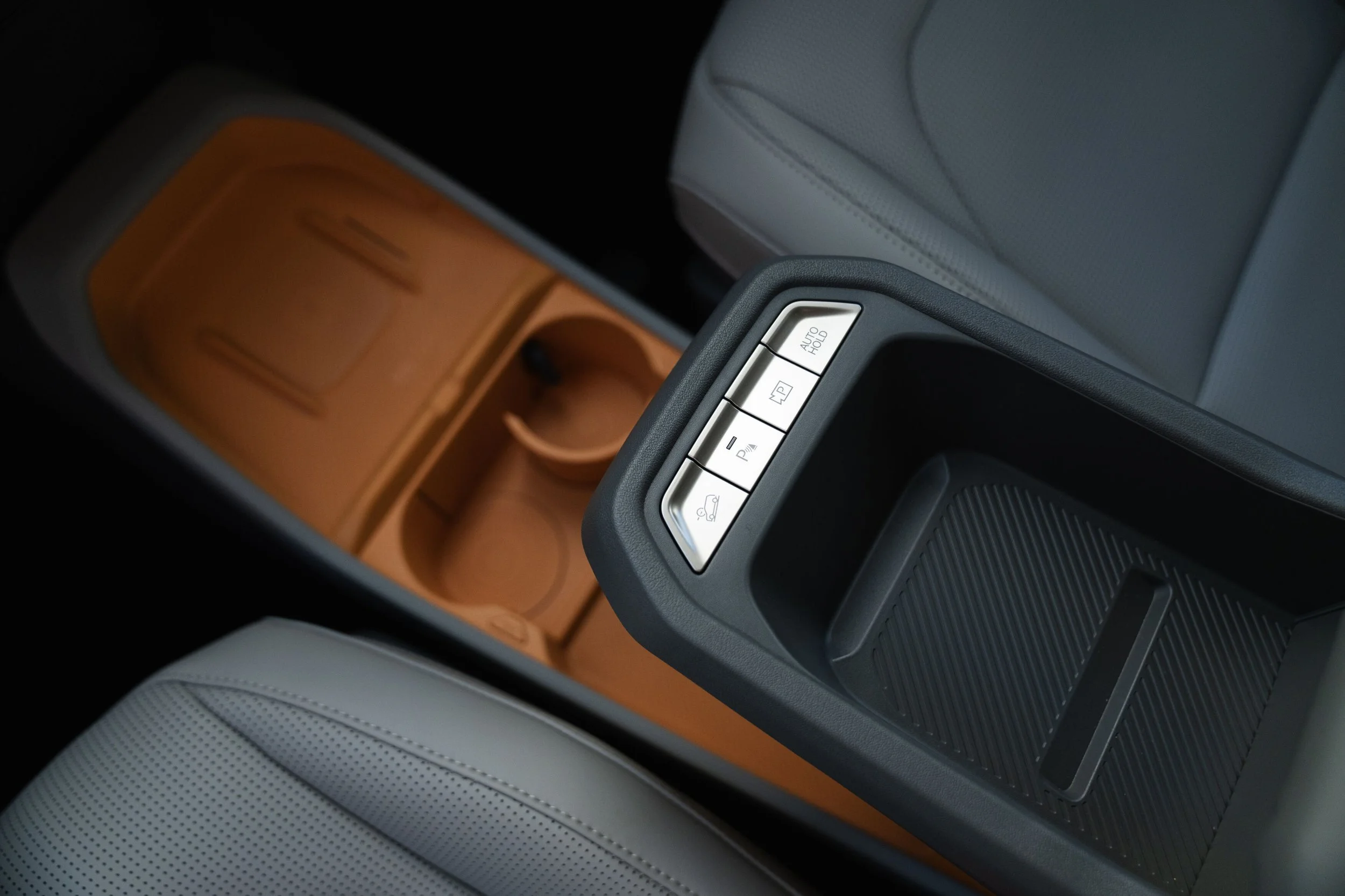
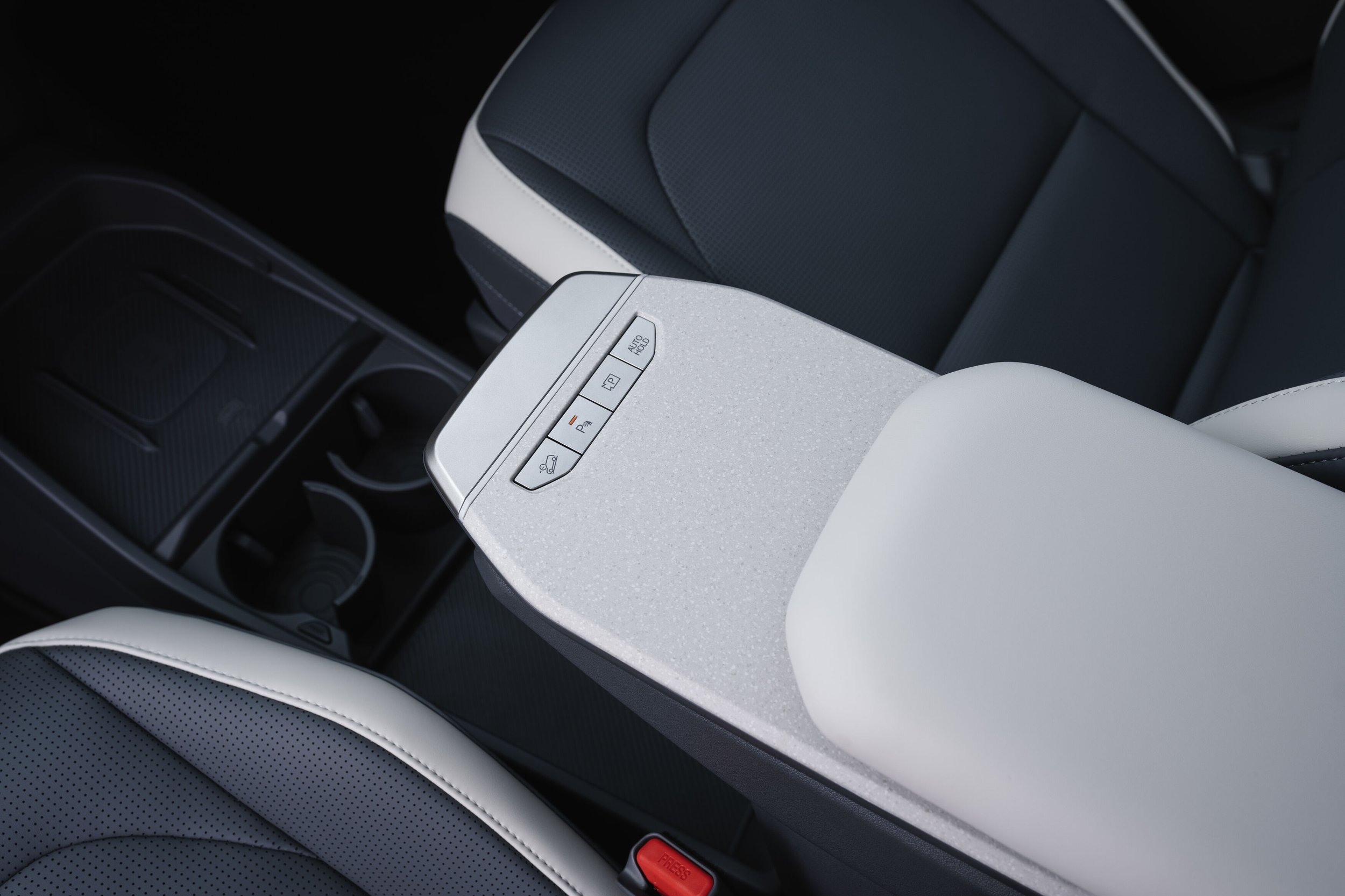
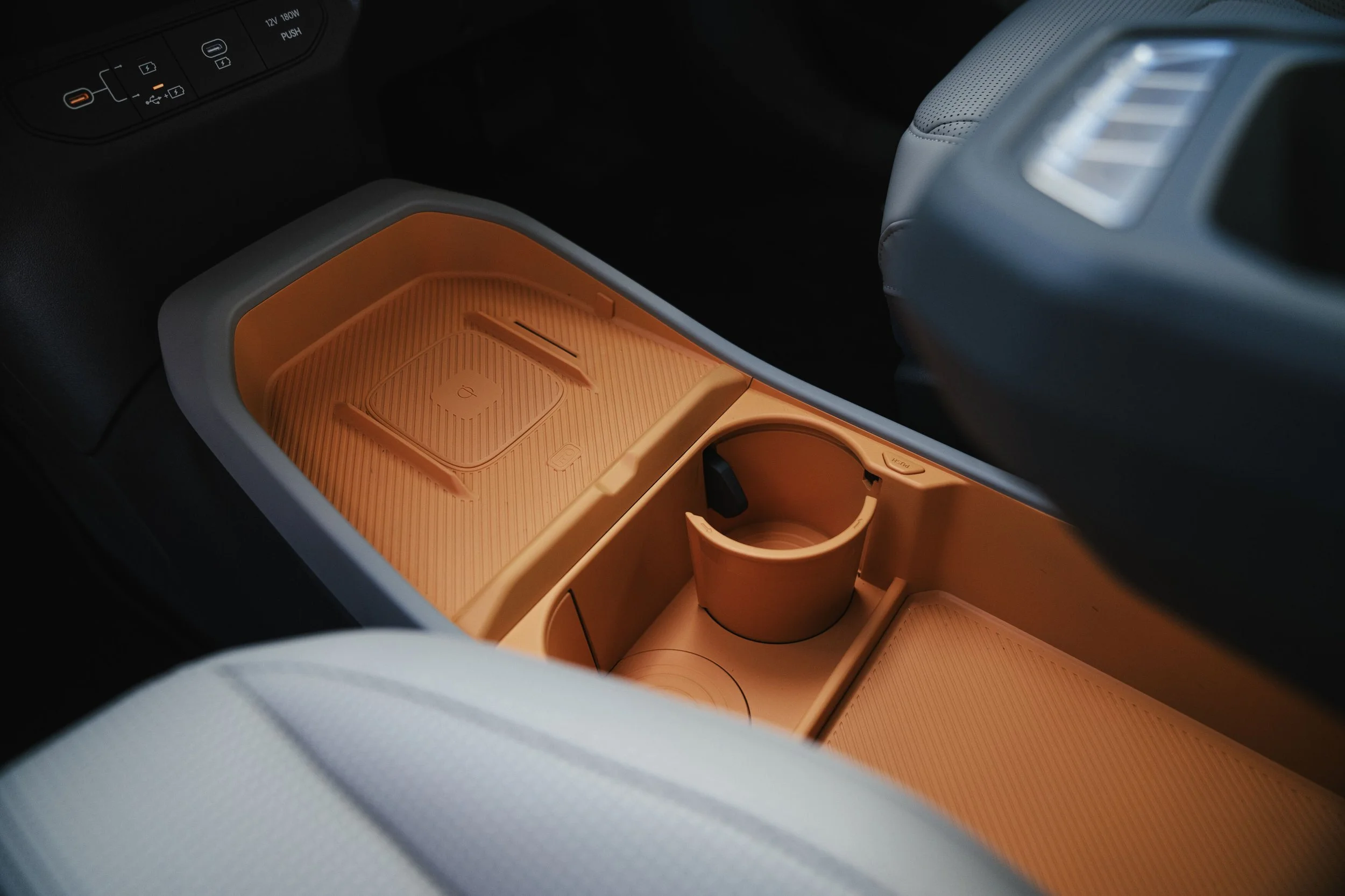
Then we get to the central storage and controls which are only possible thanks to the flat floor configuration on an EV.
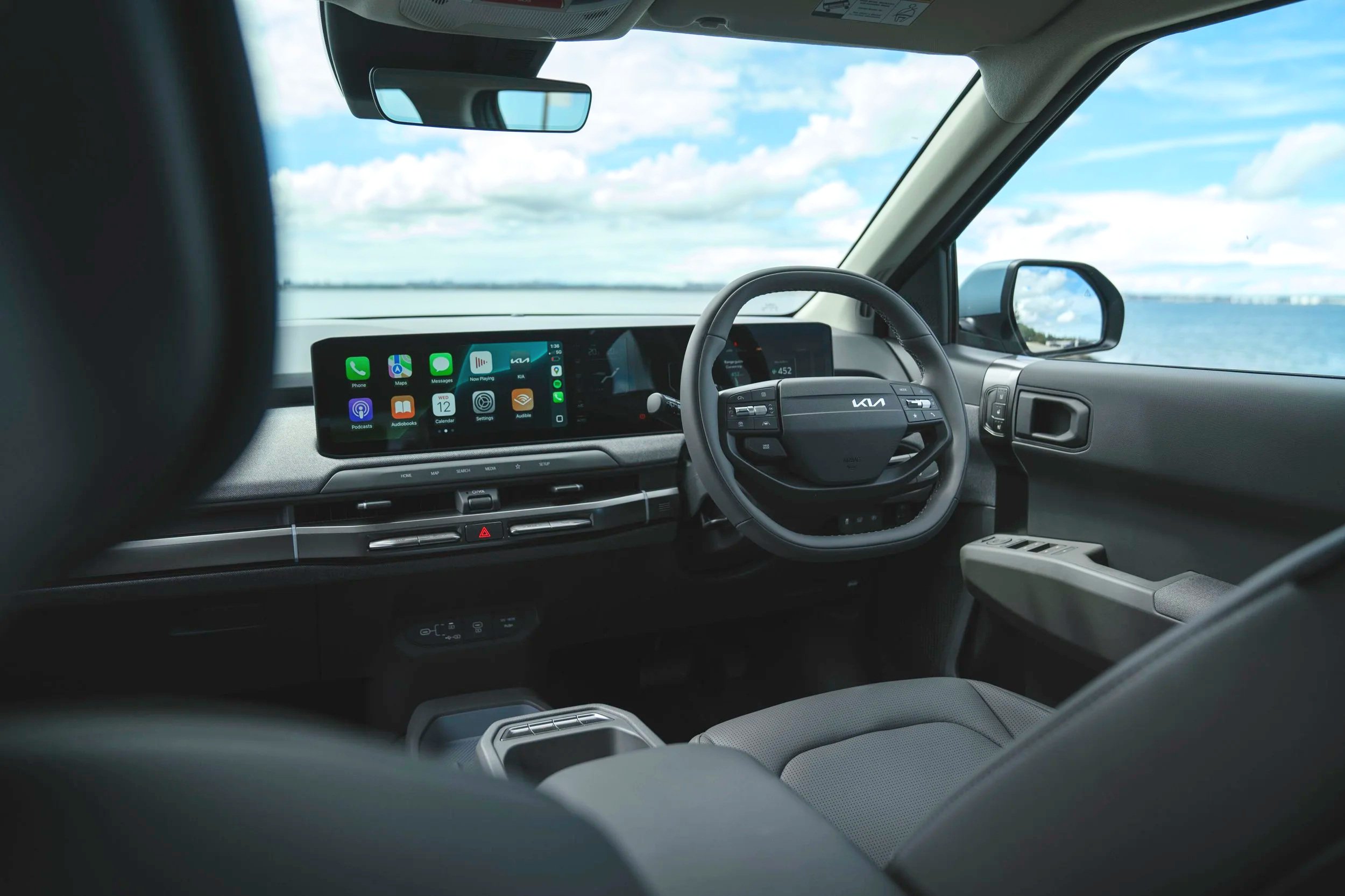
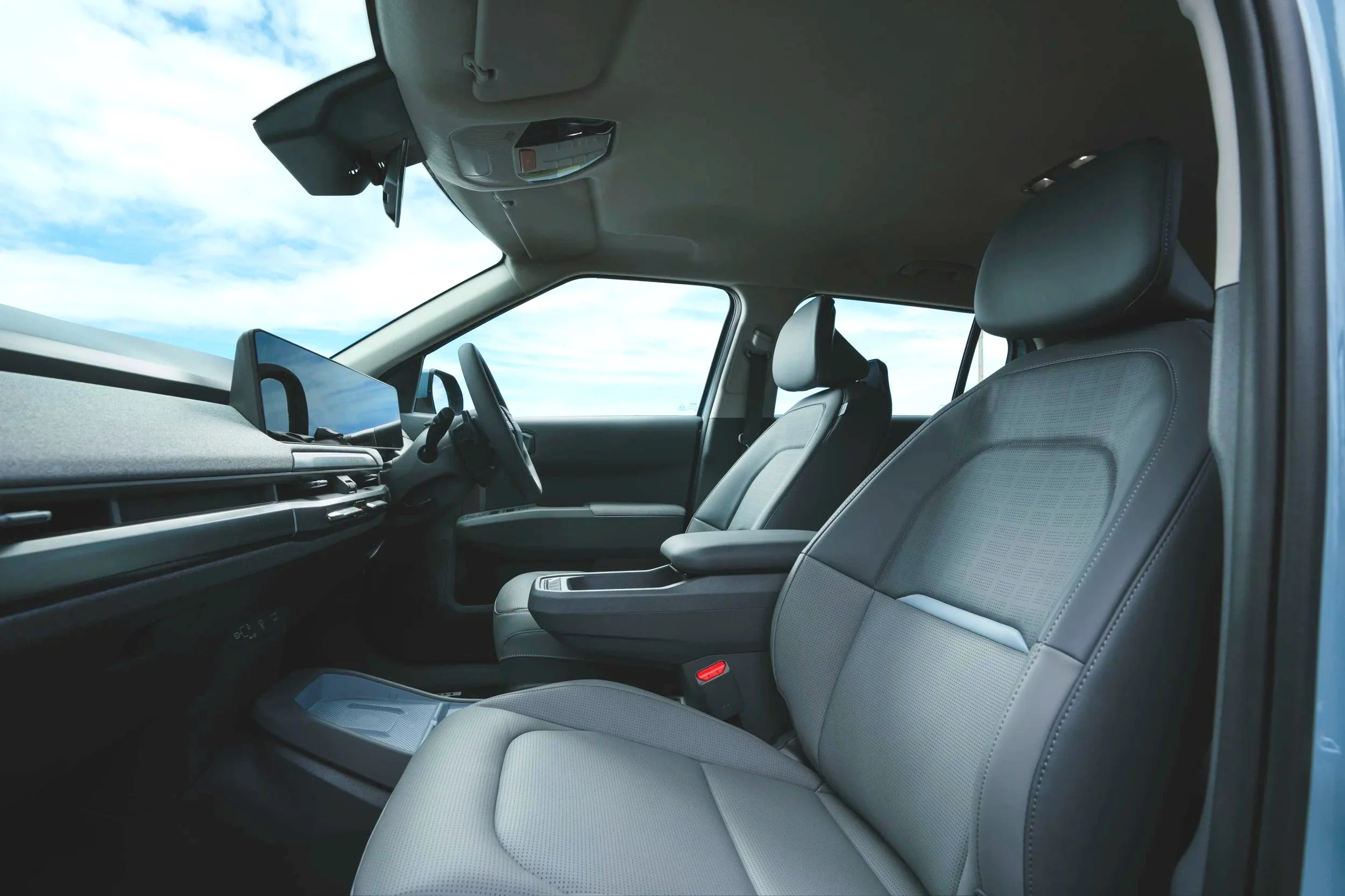
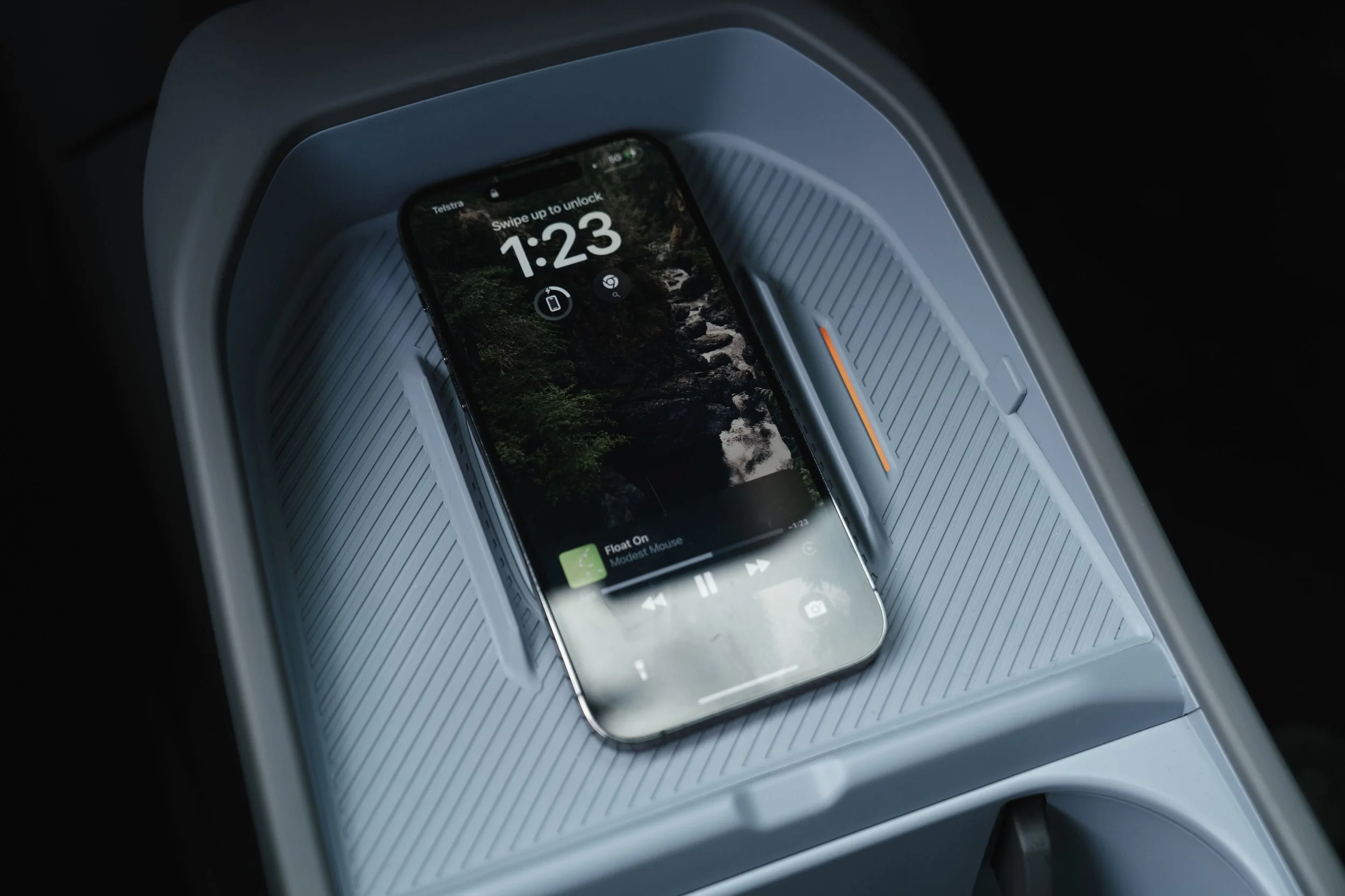
There are two levels in front of you. A top tier space with a perfectly designed indentation that allows you to stow your phone but allow it to be propped up for visibility as you need it during driving, such as if you (for whatever reason) don’t want to connect to Apple CarPlay or Android Auto via the main screen. This is also a great alternative spot for a wallet, keys, nick knacks etc.
But the bottom tier is also more than capable of holding at least two phones, or simply whatever small item you might’ve bought from the shops. The stowage tray then continues under the top tier centre armrest section (rear of the retractable spring-loaded cupholders), which means anything you do actually need to leave in the vehicle is, more or less, obscured by the console.
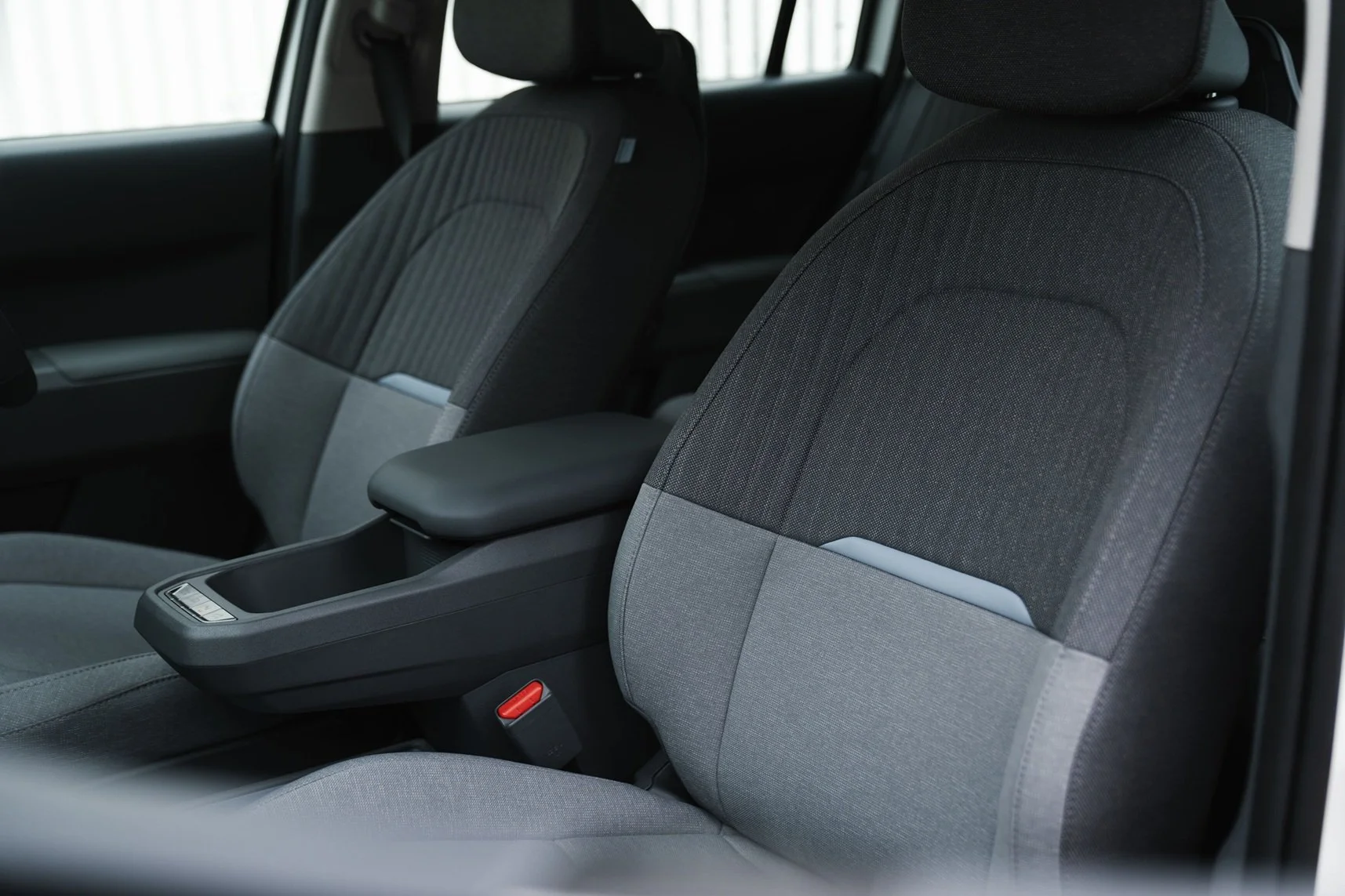
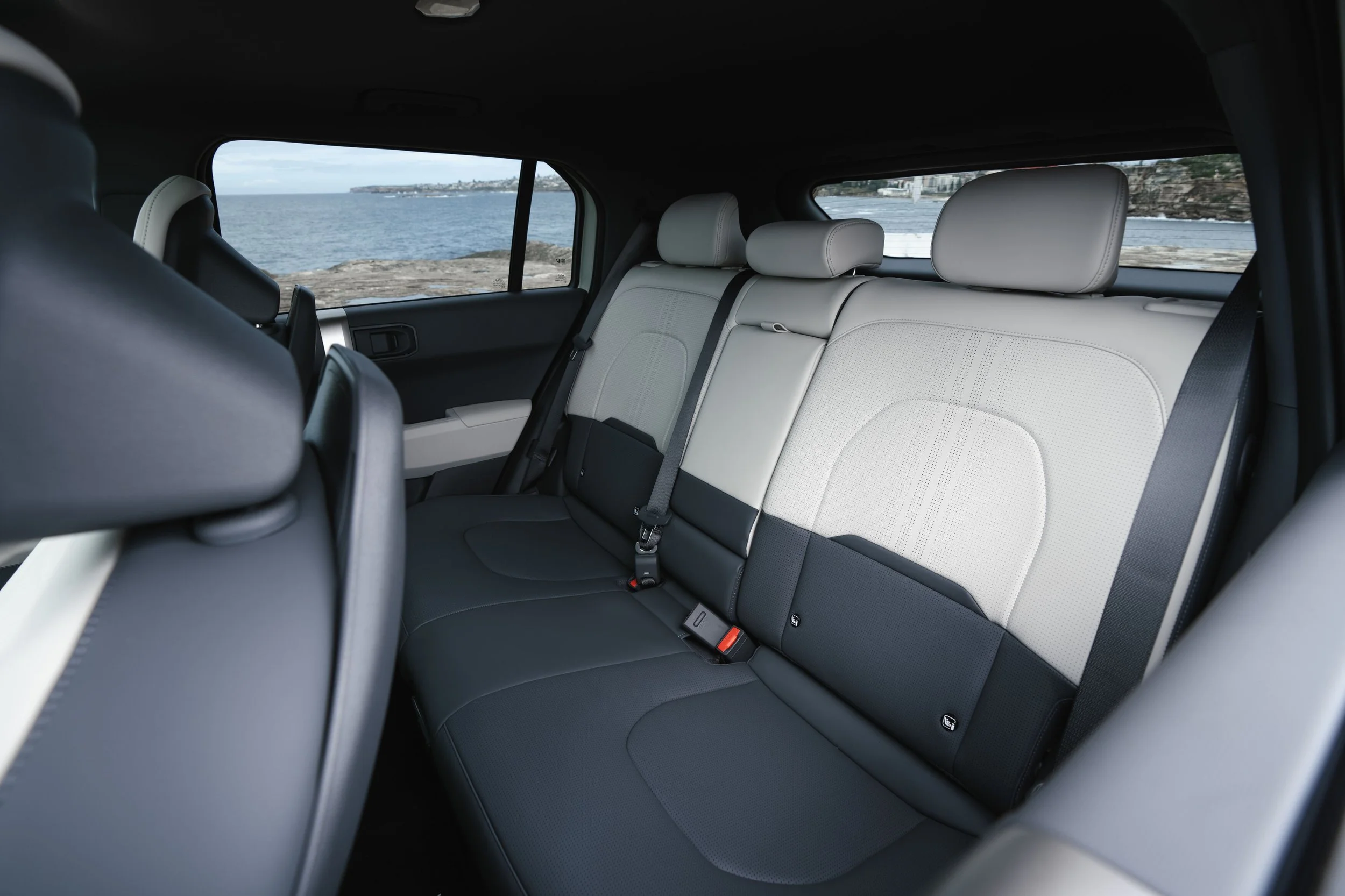
The seats are very comfortable in all trim types and it’s very easy to find an ideal driving position no mater how tall or short you are. Bolstering is okay but not excellent in terms of being especially hugging laterally, especially if you’re particularly tall. But it’s far from being worthy of a write-off.
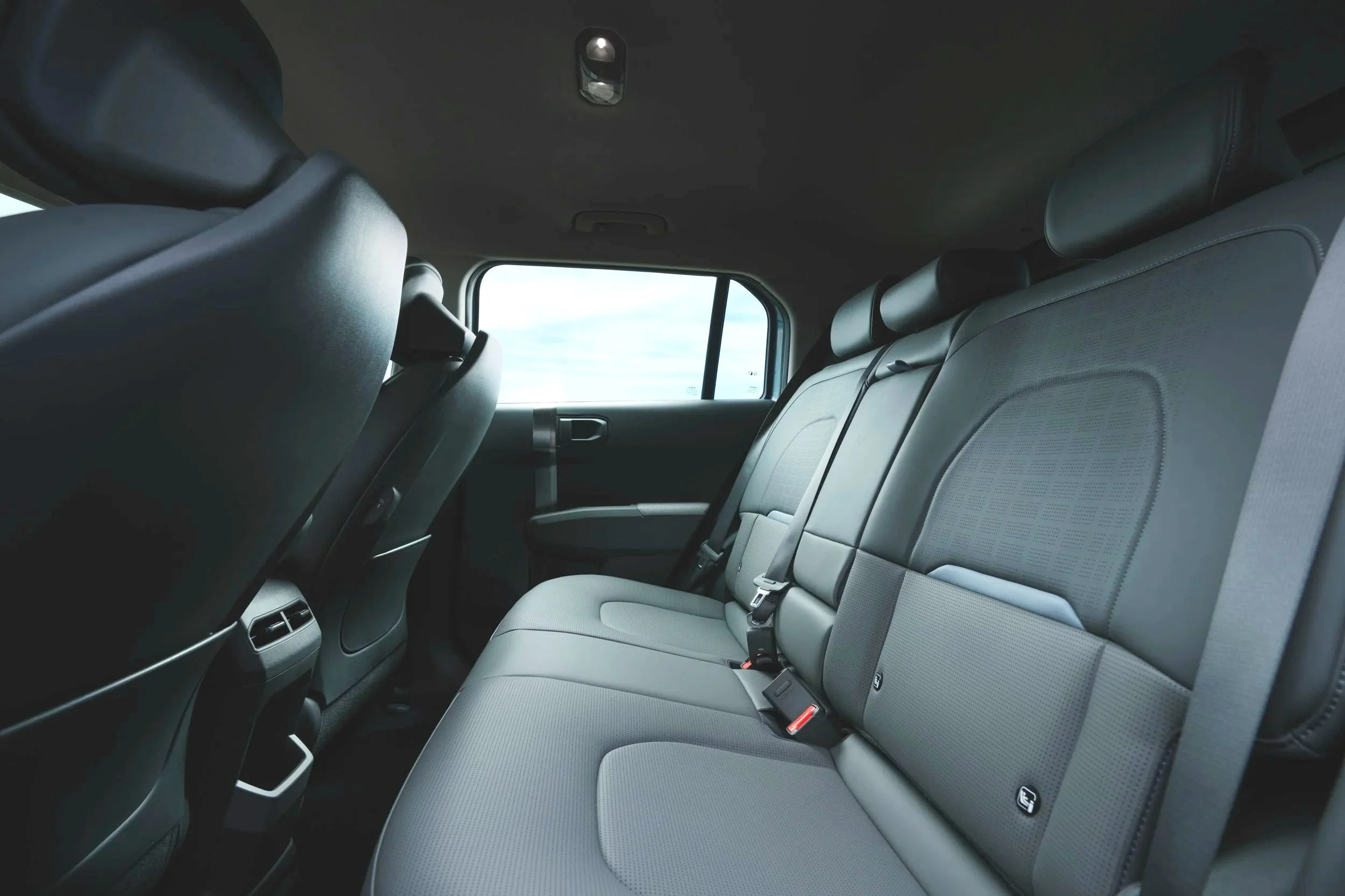
The back seats offer the usual array of minimal features. You get cupholders in the centre armrest, vents for the air-con and the rear of the front seat headrests are sculpted to hang bags from or to cradle a tablet for in-flight entertainment.
The roofline, despite being kinda chunky and boxy, struggles to deliver much light into the second row of seats, caused mostly by the lack of rear window in the tailgate. It’s fairly narrow and because the boot is actually quite generous for a small SUV, the light source is further back from the passenger compartment. Add this to the reasonably high (and smart-looking) beltline of the doors (where the door panel finishes and the windows start), this adds to the mild claustraphopic inkling you get in the back.
You might also think it’s cozy by equal measure and certainly the ability to fit child restraints back there is worth scratching back some points because b pairs of ISOFix anchors are a cinch to access, and the top tethers are so wonderfully easy to reach either when you tip the seatback forward or if you simply put your arm over the top of the seat. They’re right at the top; eve shorter people will find them first go.
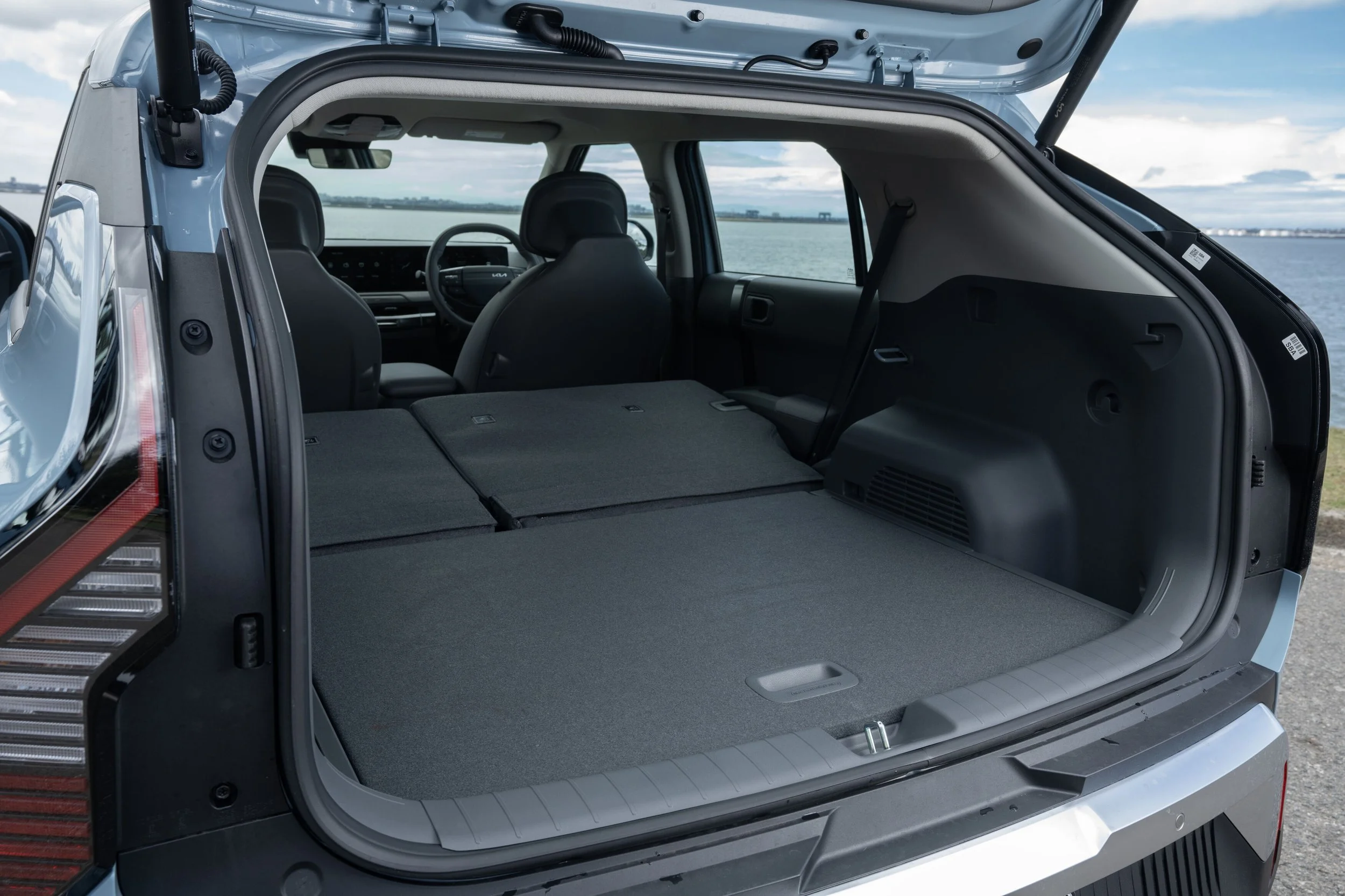
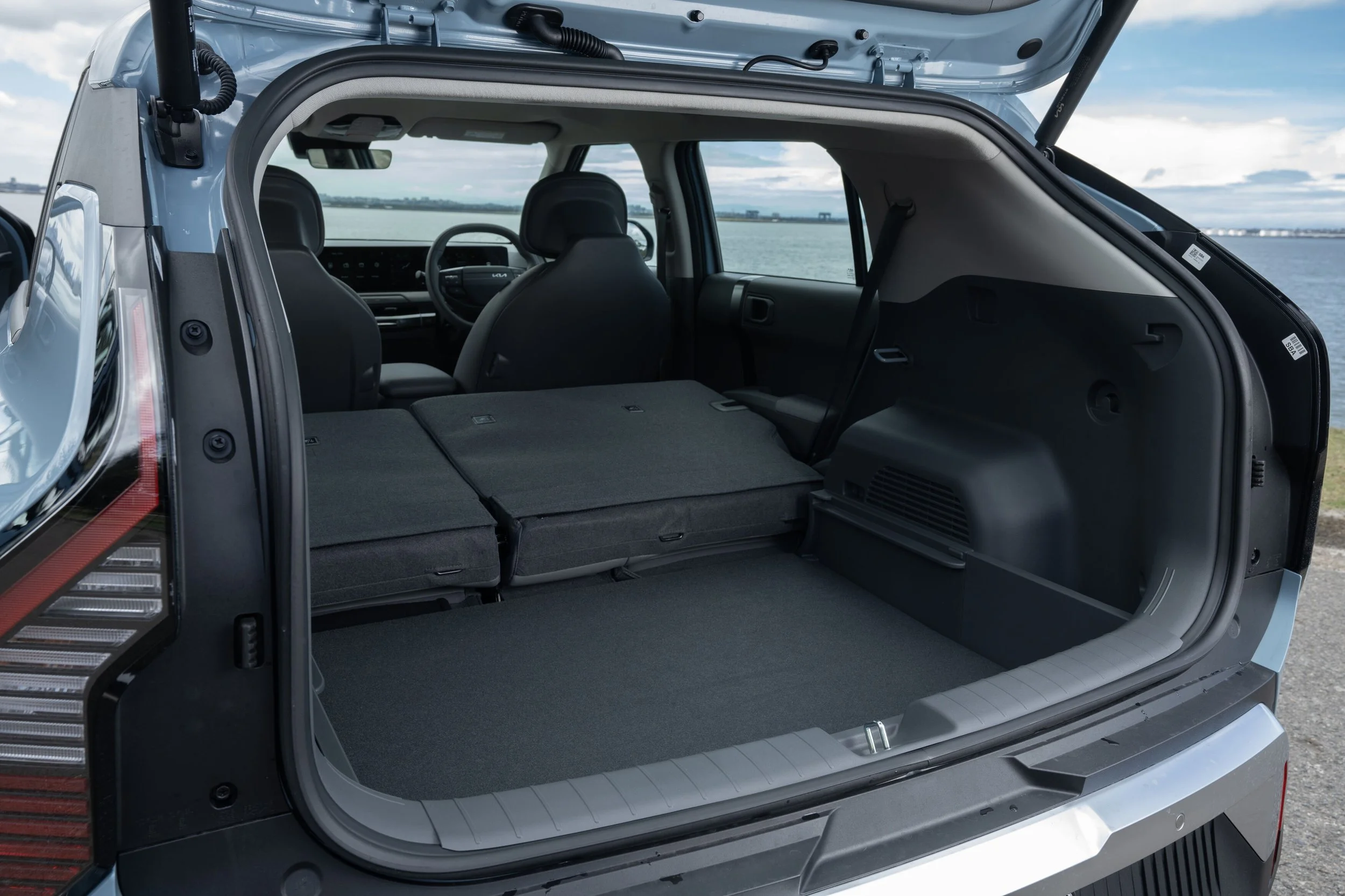
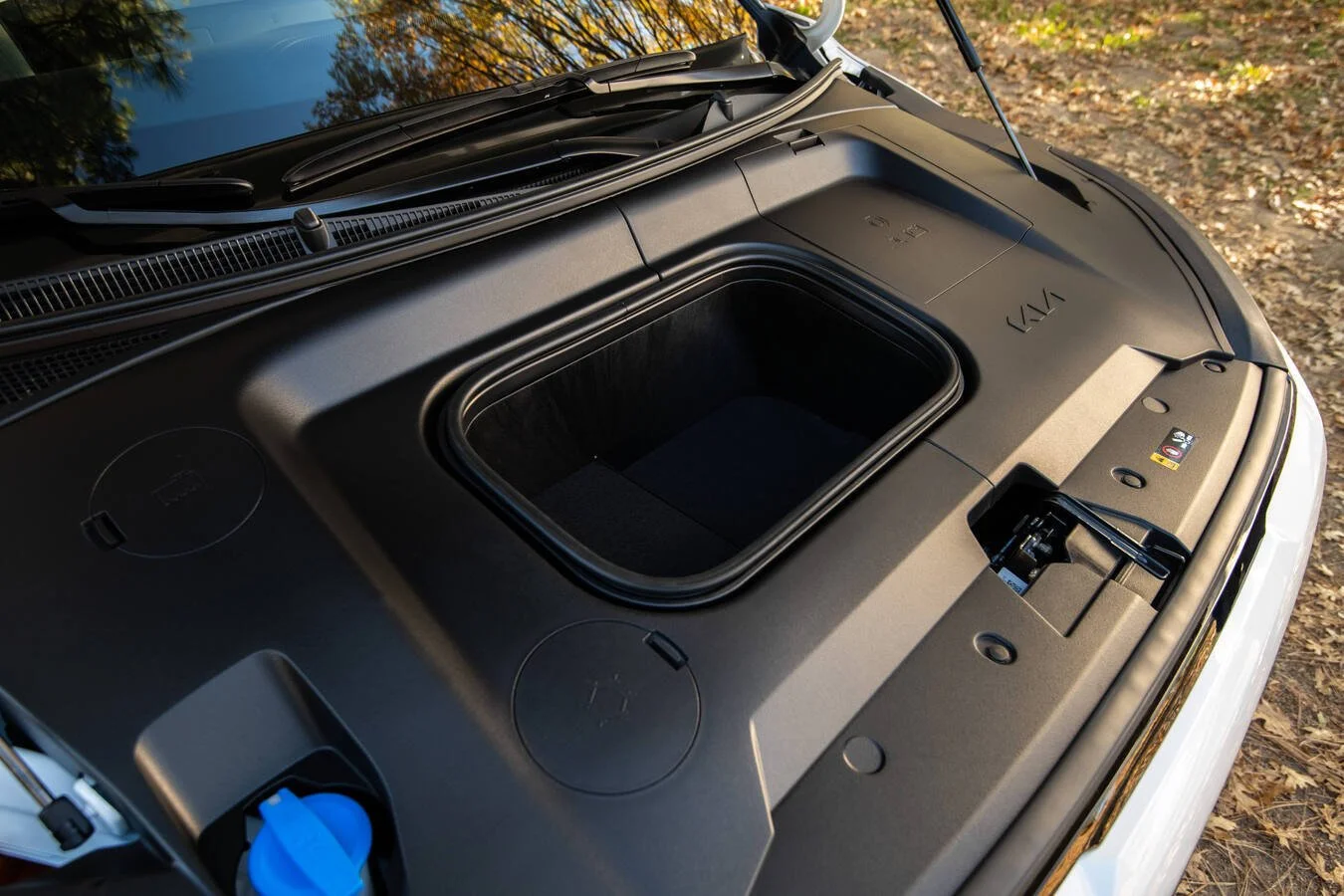
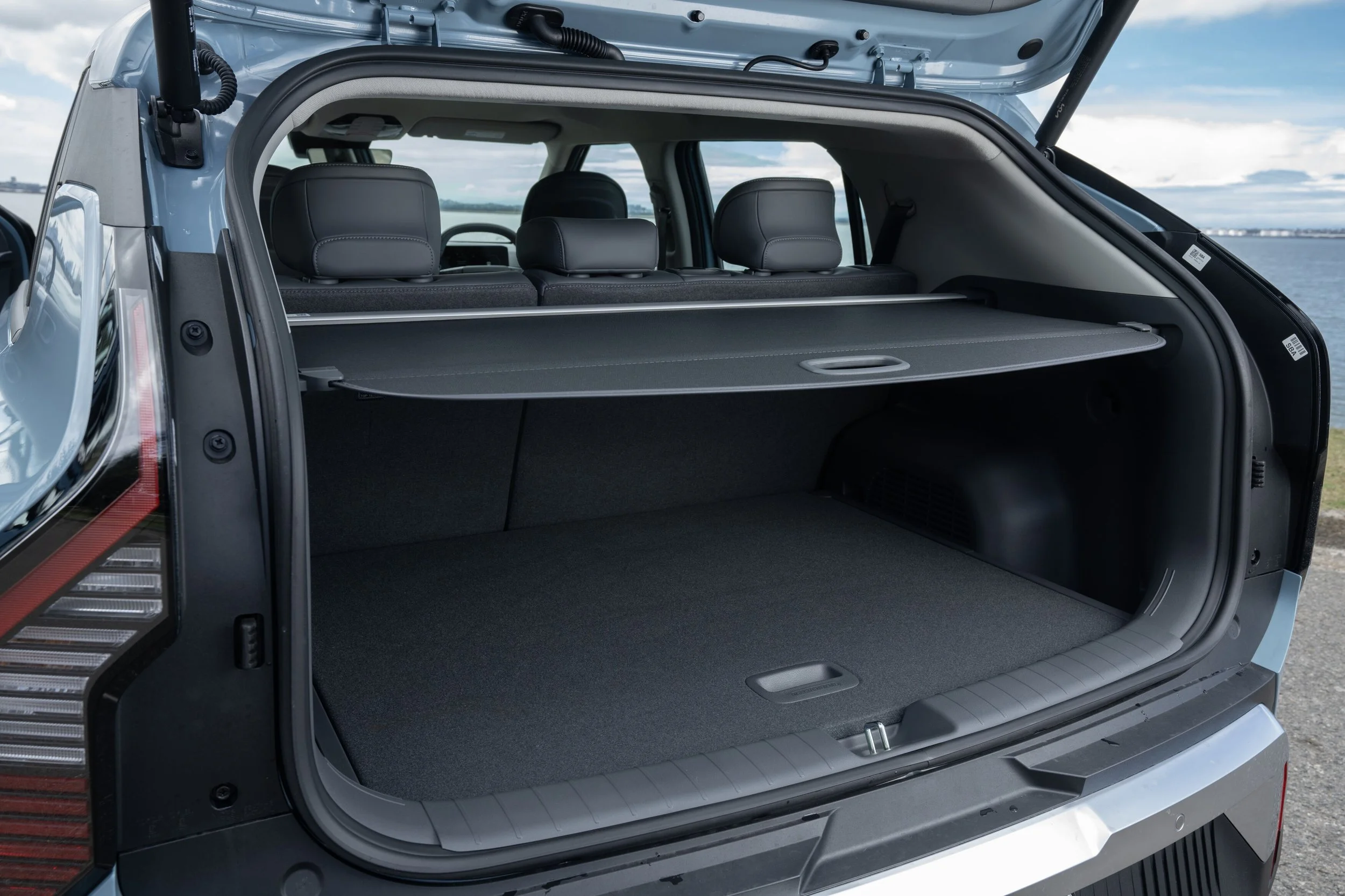
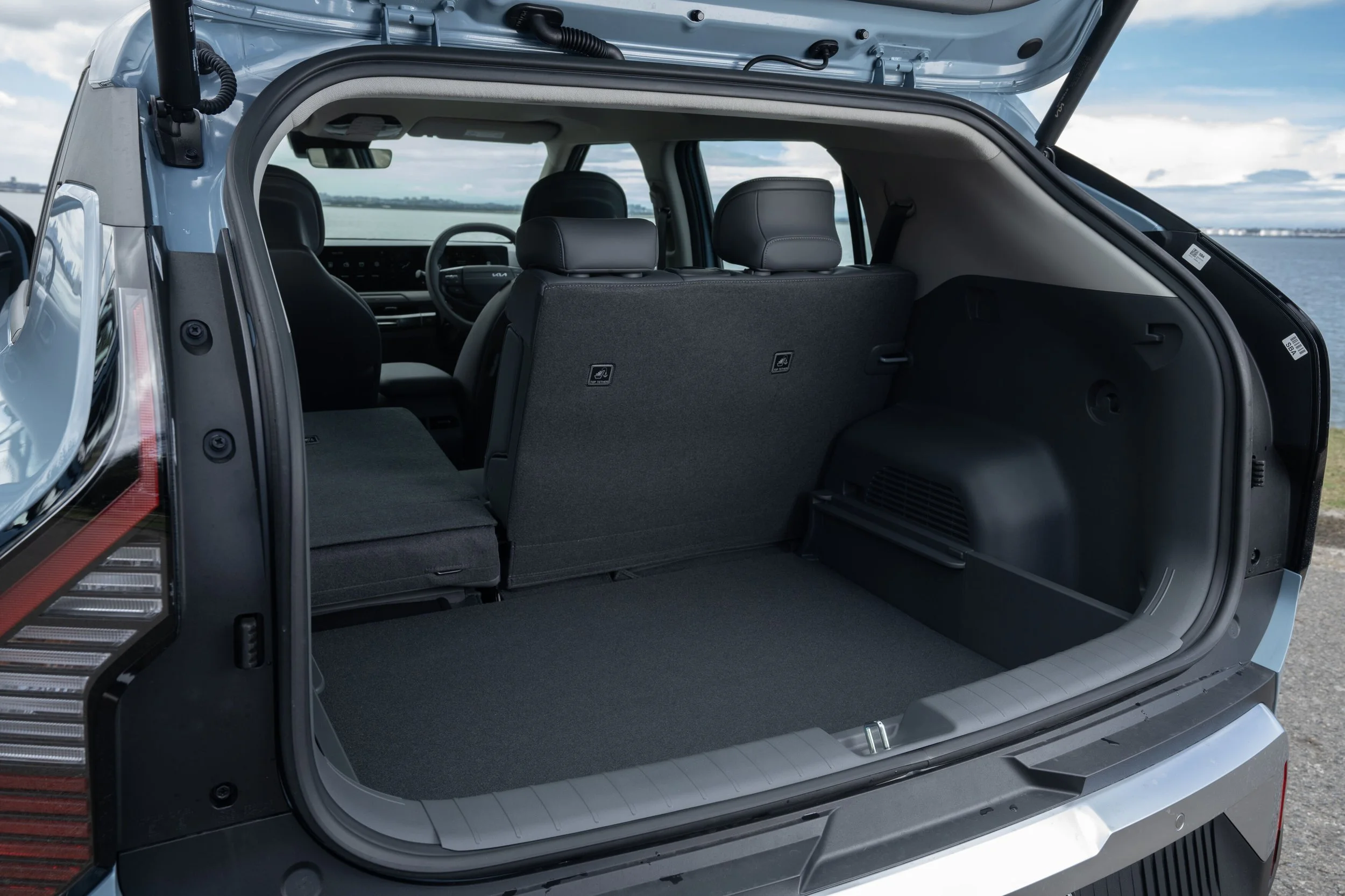
Luggage space in the EV3 is surprisingly generous thanks to a clever boot floor design that gives you the option of either a flat floor when row 2 is collapsed, or a sub-floor offer additional volume for large suitcase or holiday roadtrips. This is thanks to the removable floor panel and the front-wheel drive design that means no rear motor has to fill that floor space.
In the front trunk you won’t get more than 25 litres of volume in there, but in the regular boot you get 460 litres. That’s 11 per cent more luggage space than a Kona Electric, it’s 21 per cent more than an MG4 Urban and it’s 25 per cent more luggage than a BYD Dolphin. It;s even 4 per cent better than the BYD Atto 3.
SAFETY
The Kia EV3 was crash tested by EuroNCAP and awarded a five-star safety rating by ANCAP in 2025, but remains untested by the Insurance Institue for Highway Safety (IIHS) in the US.
ANCAP rated the EV3 at 83 per cent for Adult Occupant Protection, 86 per cent for Child Occupant Protection, 78 per cent for Vulnerable Road User Protection, and 81 per cent for Safety Assist. These are all rpetty good scores, but it’s the first three of greatest importance to you.
You can watch the crash testing here:
While the EV3 does get good results overall, it is imperfect in some aspects. It was marked down several points, one for driver airbag bottoming (where the dummy briefly touches the steering wheel through the airbag due to ‘insufficient inflation’) and multiple for driver and passenger load concentrations from the seatbelt (doing what it’s supposed to do), as well as ‘invariable contact’ with various hardpoints in the vehicle. This isn’t uncommon in crash tests, but obviously it’s less than ideal - but nor is it fatal.
EV3 does lack a driver’s knee airbag and as a result lower leg injury readings were recorded in the frontal offset test as well, conducted at 60km/h, which might seem like a benign speed but is actually quite severe in the context of the vehicle’s equipment trying to save your life during a crash. This is an important distinction crash testing doesn’t highlight, just how incredible it is to walk away from crashes at speeds as ordinary as 60km/h; a speed we all drive every day.
The assessment highlighted the effectiveness of the EV3’s extensive suite of standard safety technologies, including autonomous emergency braking with car, pedestrian, cyclist and junction detection, lane-keeping and emergency lane support systems, speed assistance functions, and a centre airbag designed to reduce occupant-to-occupant injuries in side impacts.
In crash testing, the EV3 demonstrated particularly strong protection in side-impact scenarios and delivered good levels of occupant protection in frontal crashes, contributing to its overall five-star rating. ANCAP noted that these results apply to all Australian and New Zealand variants tested from 2025 onwards.
While the EV3 has not yet received a dedicated IIHS crash-test rating or Top Safety Pick award in the United States, its closely aligned Euro NCAP assessment recorded similar results, with 83 per cent for adult occupants and 84 per cent for child occupants. These outcomes indicate that the EV3 offers a high level of crash protection and advanced active-safety performance, placing it among the safer small electric SUVs currently available.
I'll help you save thousands on a Kia EV3
Just fill in this form.
No more car dealership rip-offs.
Greater transparency.
Less stress.
ENGINE
You get two powertrains in the Kia EV3, a 58kWh battery which is only available in the short-range Air base model, and the 81kWh battery in the Air, Earth and GT-Line model grades.
The 58kWh battery itself weighs 375kg alone, which is 25 per cent less weight than the 470kg mass of the 81kWh battery. Meaning, despite the base model Air weighing 1845kg (1.84 tonnes) compared with 1930kg in the Air, Earth and GT-Line with the big battery, there is an advantage to choosing the more affordable variant.
What’s interesting here is that the amount of usable power you get, regardless of the battery size, is 150kW. This means that the power-to-weight ratio for the base model Air and the small battery is 81kW per tonne, whereas the big battery drops that slightly to 77kW/t.
The on-board charger’s maximum capacity on single-phase electricity from a typical wallbox charger is 6.9kW, recharging the small battery in about 8-9 hours from flat, which is pretty good assuming that 6.9kW is maintained. The bigger 81kW battery will take about 11-12 hours approximately, but even that is going to be quite possible for an overnight charge between about 6pm (getting home) and 6am (leaving for work the next day).
Charging features you get include:
Exterior Charge Status Indicator
V2L - Vehicle to Load Interior Socket (AUS/NZ Type Socket)
V2L - Vehicle to Load Exterior Adaptor (Type 2 to AUS/NZ Type Socket)
Regenerative Braking Control via Paddle Shifters (3 levels of intensity)
Smart Regenerative Braking
i-Pedal 3.0 - One Pedal Driving Function
Charge Management (Scheduled Charging)
Utility Mode Function
DRIVING
The first thing you notice driving an EV3 is the smoothness of the powertrain, and not just compared to a combustion vehicle with all its vibrations and reciprocating mass, but also compared with other EVs in general.
The whole car’s innards feel properly solid. Bank vault door solid. Hermetically sealed room solid. Anechoic chamber soild. The level of sound attenuation inside an EV3, while stationary, feels like you’re in vehicle of the (notionally) premium German kind of prestige. But you’re in a sub-$50K small SUV from Kia.
And then you get going and hit the road, where (depending on your personal experience with EVs) surprises continue in ways you may not expect, such as dynamic handling and straight line performance.
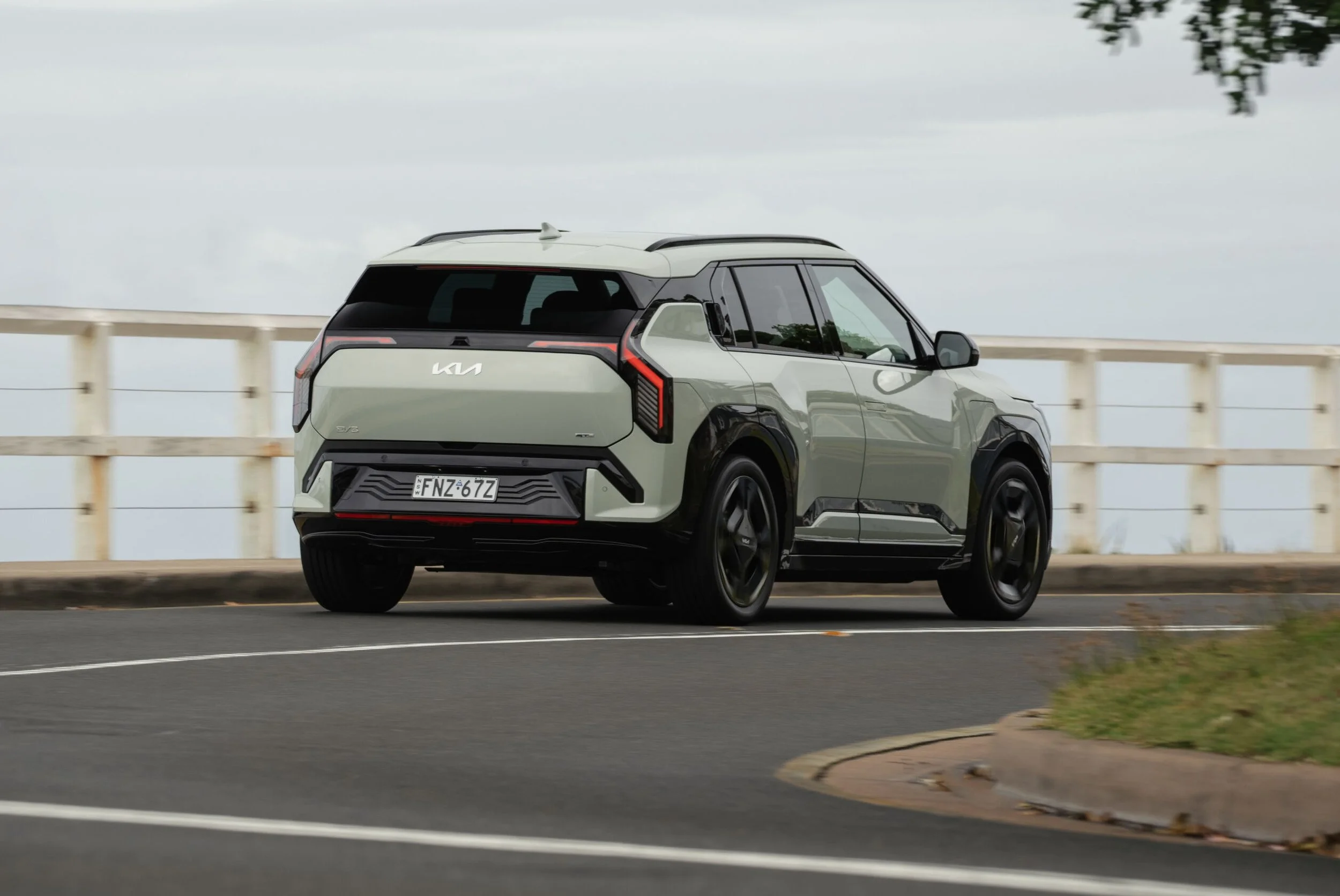
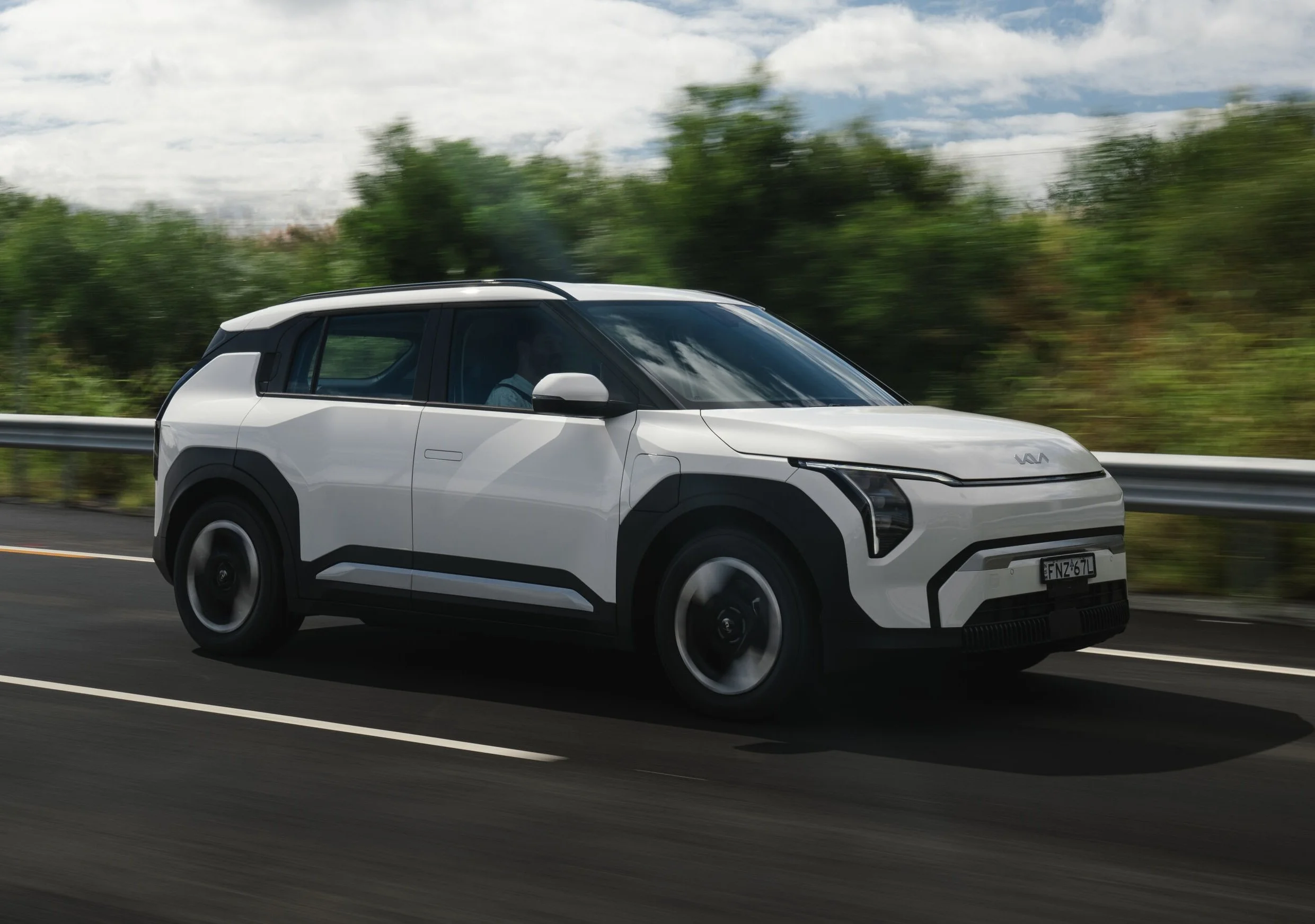
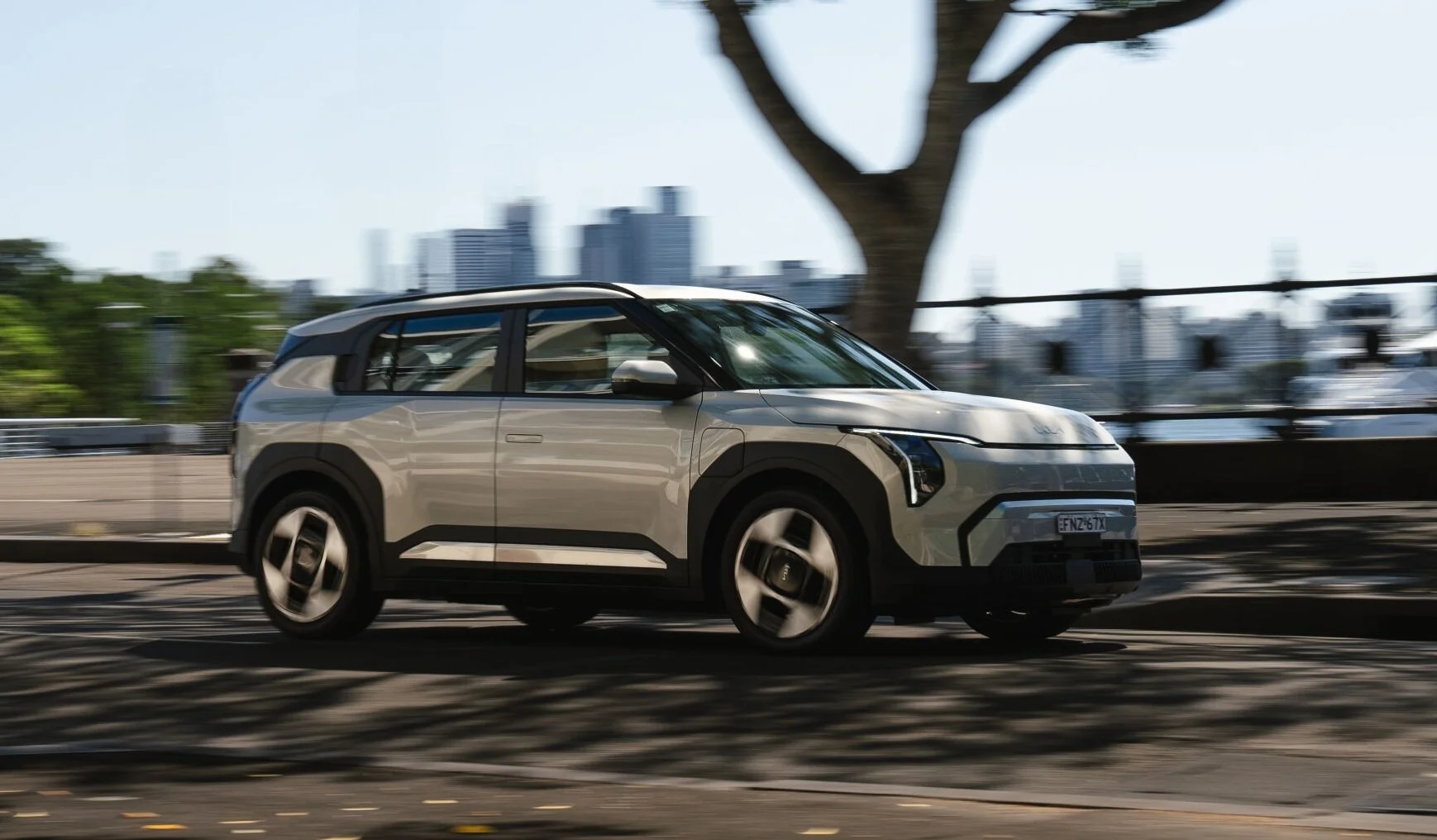
Pretty much every EV feels good off the line. This is the inherent nature of these vehicles and their fundamental hardware. They feel instananeous because there is no waiting for the revs to rise and the peak power to come in like with a combustion engine.
But what the EV3 does quite uniquely, except for perhaps its Kona Electric dyzygotic twin, is a tightness, compactness and an agility inherent in the package being smaller and its mass more centrally located within the chassis compared with bigger, heavier EVs with their enormous motors and batteries literally weighing them down.
EV3 strikes a beautiful balance between size, mass and dynamic efficiency, whether you’re carving through corners or cruising on the freeway - or even just negotiating suburban traffic. Its ability to change direction in a split second is impressive and quite pertinent to anybody spending their lives driving in metropolitan traffic.
Among the lightest model grades of its main competitors, the EV3 has the best pwoer to weight ratio, but also isn’t the heaviest - but also isn’t the lightest. So it gets good traction off the line, but is restricted by the eco tyres it comes with from the factory. Yet it’s light enough that those unexpected direction changes are a piece of cake.
Being front-wheel drive it has that squirrelling effect if you absolutely hammer it flat-to-the-floor, but that’s the nature of putting all the grunt through the fronts which become unloaded as you accelerate.
Yet for ordinary driving in daily traffic, this probably seems like an unnecessary level of dynamic performance, because the vast majority of the driving you ever do, is in mundane suburbs and city streets.
The three levels of regenerative braking intensity are actually very well calibrated, offering you good feel to control your speed and regen with impressive accuracy. Many EVs get this balance wrong by making the ‘most intense’ level too aggressive, meaning the vehicle is basically doing an emergency stop in the middle of flowing traffic, which becomes heat attack inducing for the unsuspecting driver behind.
Kia gets this balance absolutely Goldilocks for extracting optimum regenerative juices into the battery while also maintaining realistic driving expectations for both you and other road users.
DRAWBACKS
For all the niceties within the EV3’s cabin, and this extends to the EV4 sedan/hatch and the EV5 SUV as well, there are some ergonomic missteps.
It would be really nice if they had put some more care into the central volume scroll wheel. It’s great that it allows easy access for both driver or passenger, but the wheel itself is smooth and offer no grip for your finger, so it doesn’t scroll properly. What you end up doing is push it too hard to get traction and switch the stereo off entirely.
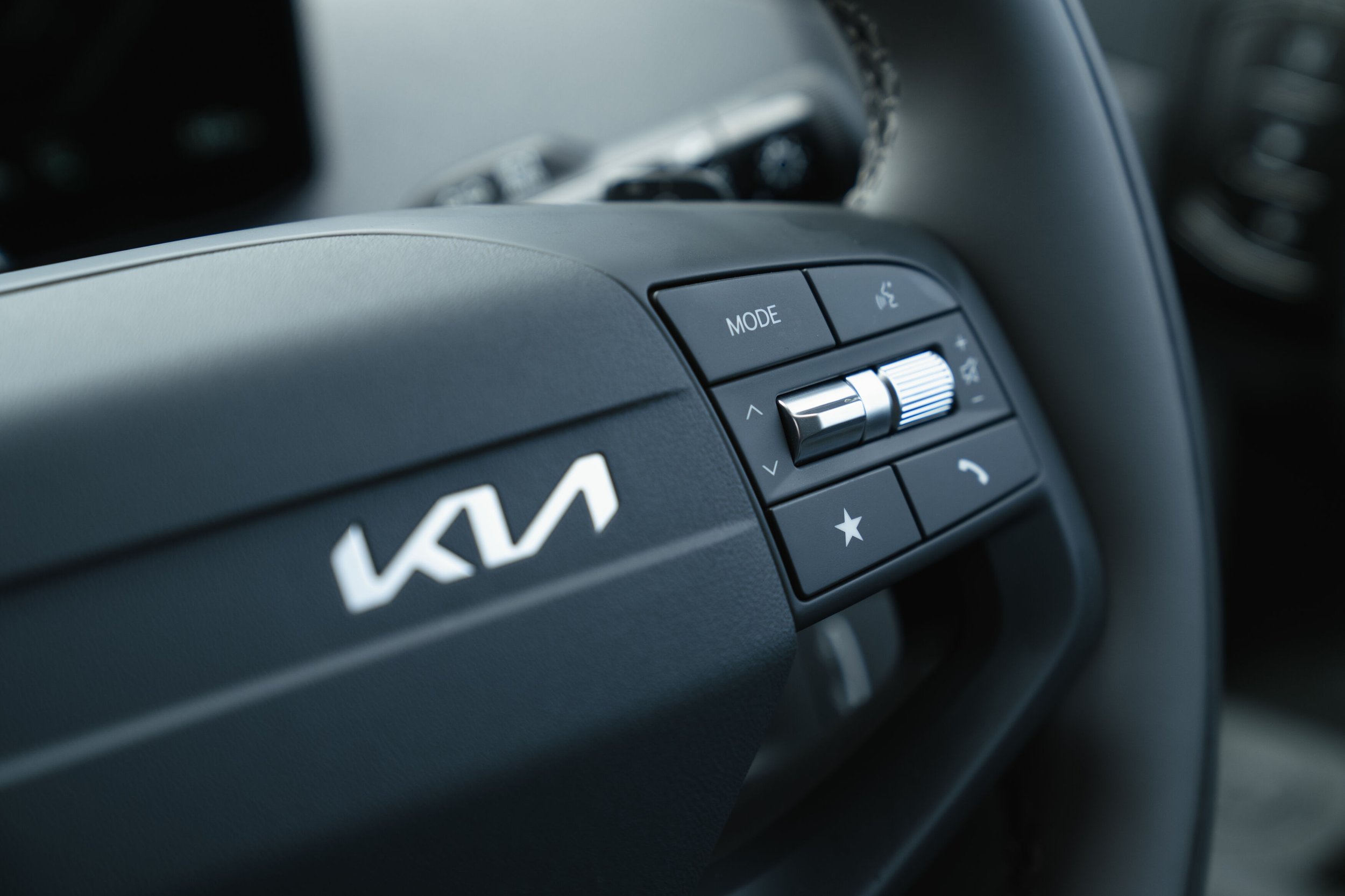
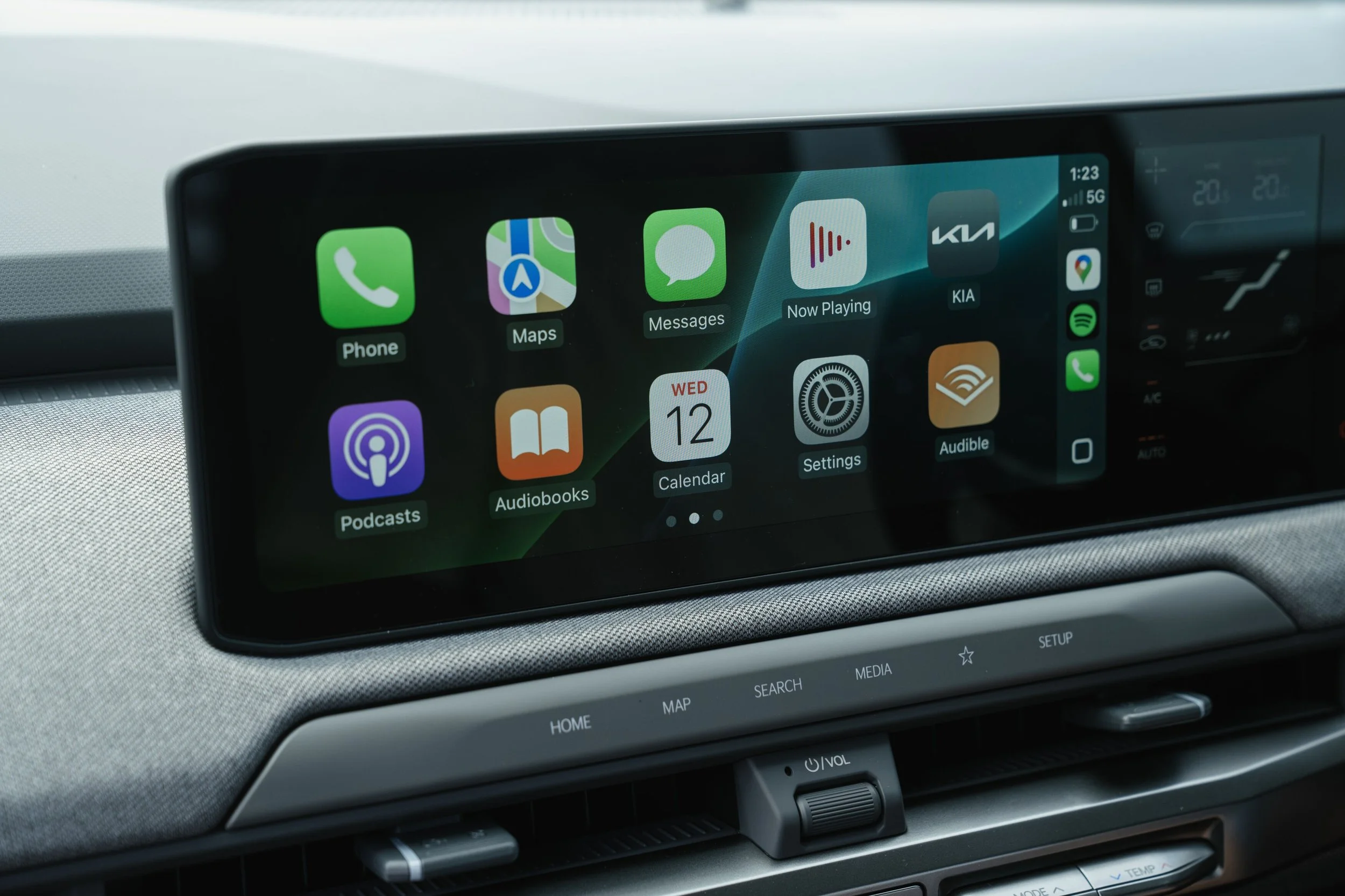
More finger purchase on the scroll would have been ideal and the same goes for the scroller on the steering wheel doing the same job. It’s too small and because the steering wheel is convex, when you’re performing full-lock low-speed manouvres it’s easy for the palm to brush it at you’re adding the lock. So you crank the volume right up and distract yourself from smoothly completing the 3-point turn or whatever.
It’s been said before and applies again here with Kia’s speed alert system. It’s awful. Bonging at you even 1km/h over the posted speed limit, even though speedometres are legally permitted to be up to 10 per cent out. Once you piece together the sequence for shuitting the car’s pervasive driver distraction systems, it’s a fantastic thing to drive. Such is technology, and it’s not just Kia.
So here’s what you do when first getting in and turning on the car:
Hold the steering wheel’s lane icon button for 3 seconds: the icon on the driver’s display goes orange meaning: it’s off.
Tap ‘SETUP’ on the dashboard. Top-left push ‘Vehicle’, in the same spot push ‘Driver assistance’, you’ll get a diagram with various driver annoyance sub-systems and on the far right push ‘Speed’. At the bottom of the list, push ‘Off’. Then push the back-arrow.
Go to below the ‘Speed’ icon and push ‘Driver attantion’, and on the list, uncheck the bottom two green-checked items. You have now turned off the driver stalking camera that bings at you for looking in your rearview mirror or door mirrors or out the side windows (anywhere but dead-ahead); you’ve also turned off the speed warning alert for doing 61 in a 60 zone, and you’ve made driving an EV3 a superb experience - the way it should be - otherwise ruined by so-called safety agencies foring this crap on consumers with no evidence it’s needed or indeed even works.
Rememer: don’t discard the Kia EV3 because of these terrible features the car companies are forced to thurst upon you. Just adapt, because the other 95 per cent of this car is fantastic to use.
MAIN COMPETITORS
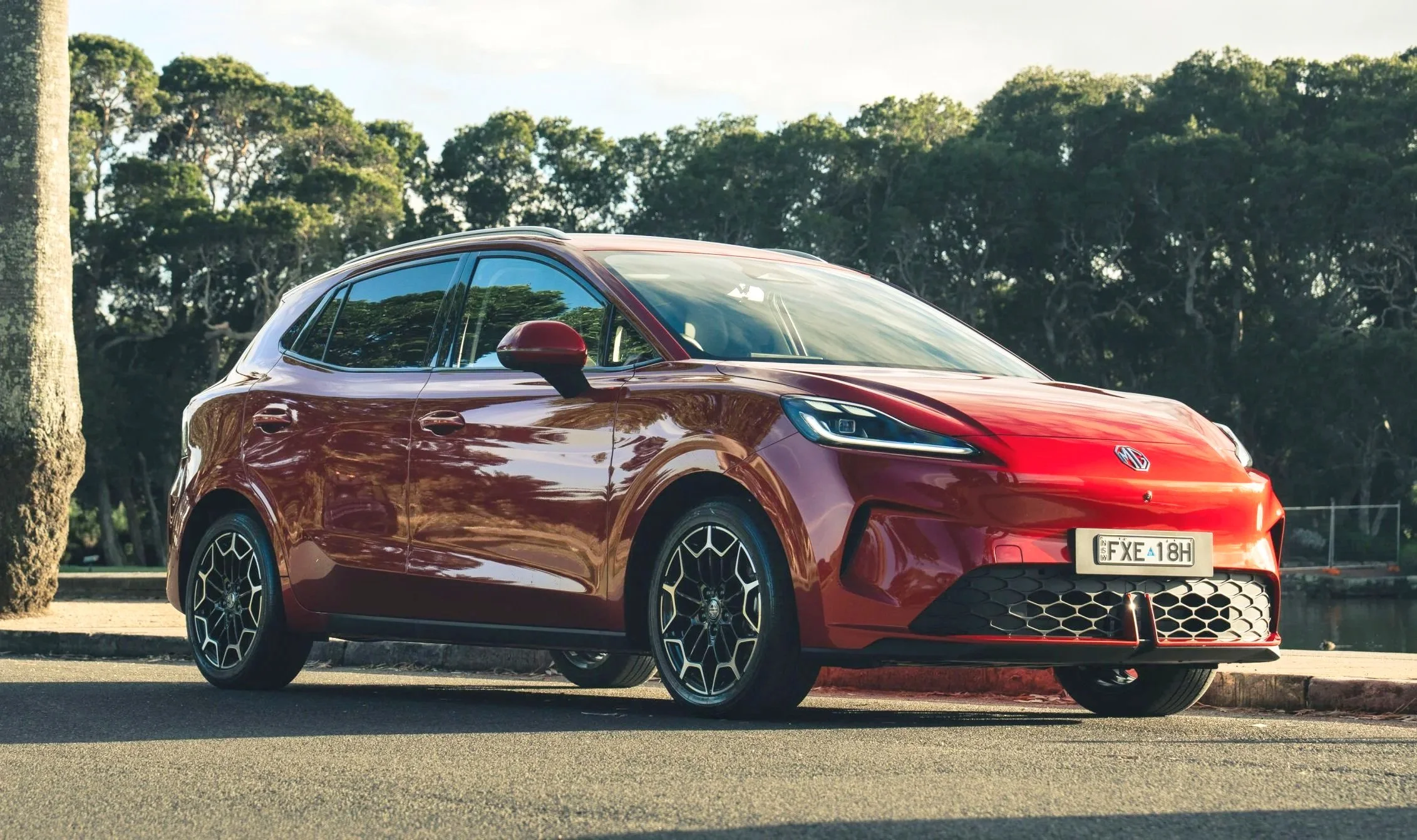
MG4 Urban
Max power: 125 kW
Kerb weight: 1485
Power-to-weight: 84 kW/t
Drive type: FWD
Luggage capacity: 480 L incl. underfloor
Spare wheel: tyre repair kit
Price range: $30,000–$33,000 approx. driveaway
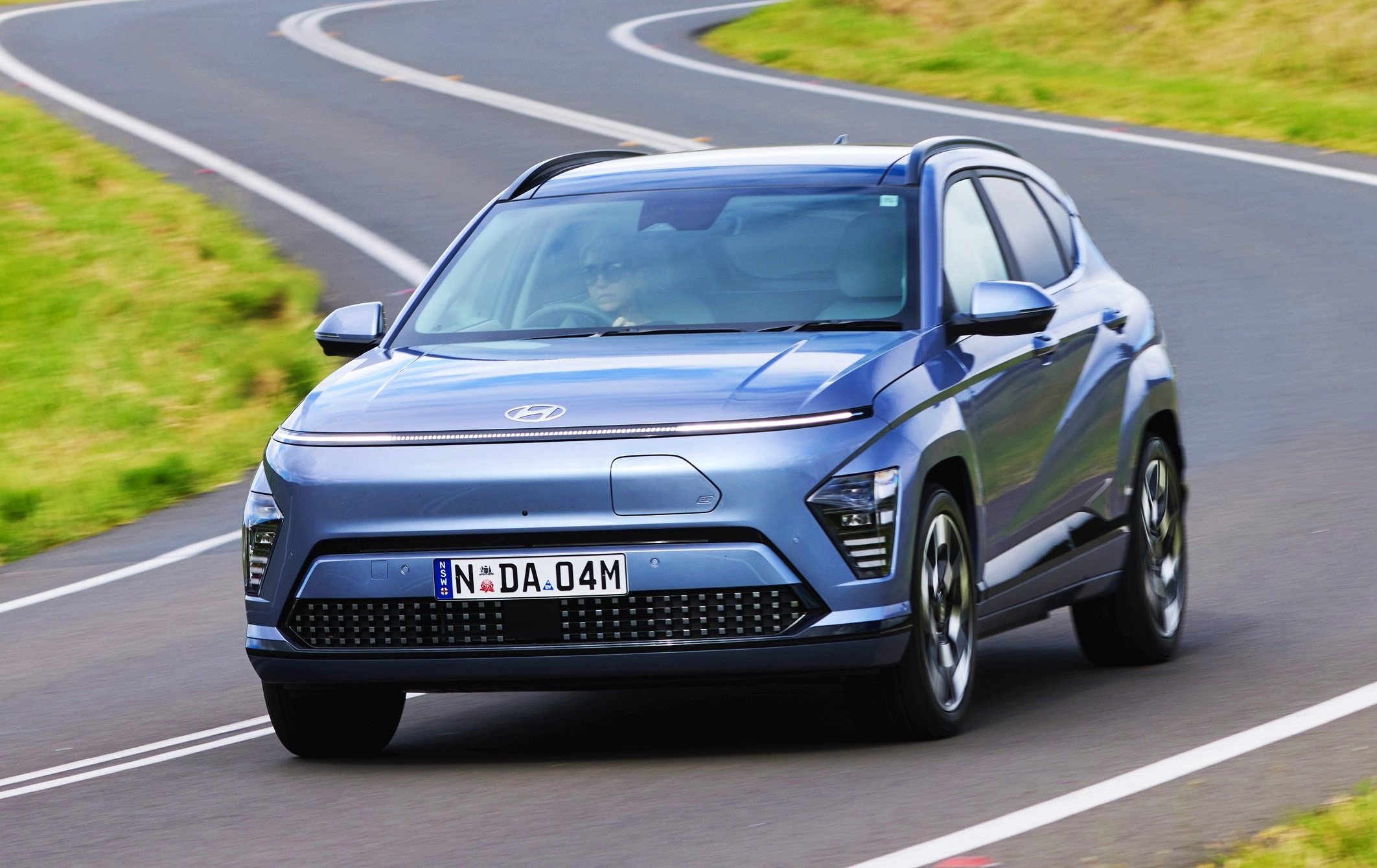
Hyundai Kona Electric
Max power: 150 (extended range)
Kerb weight: 1698kg
Power-to-weight: 88 kW/t
Drive type: FWD
Luggage capacity: 407L
Spare wheel: space-saver spare (the only one in this group)
Price range: $54,000–$72,000 approx. driveaway
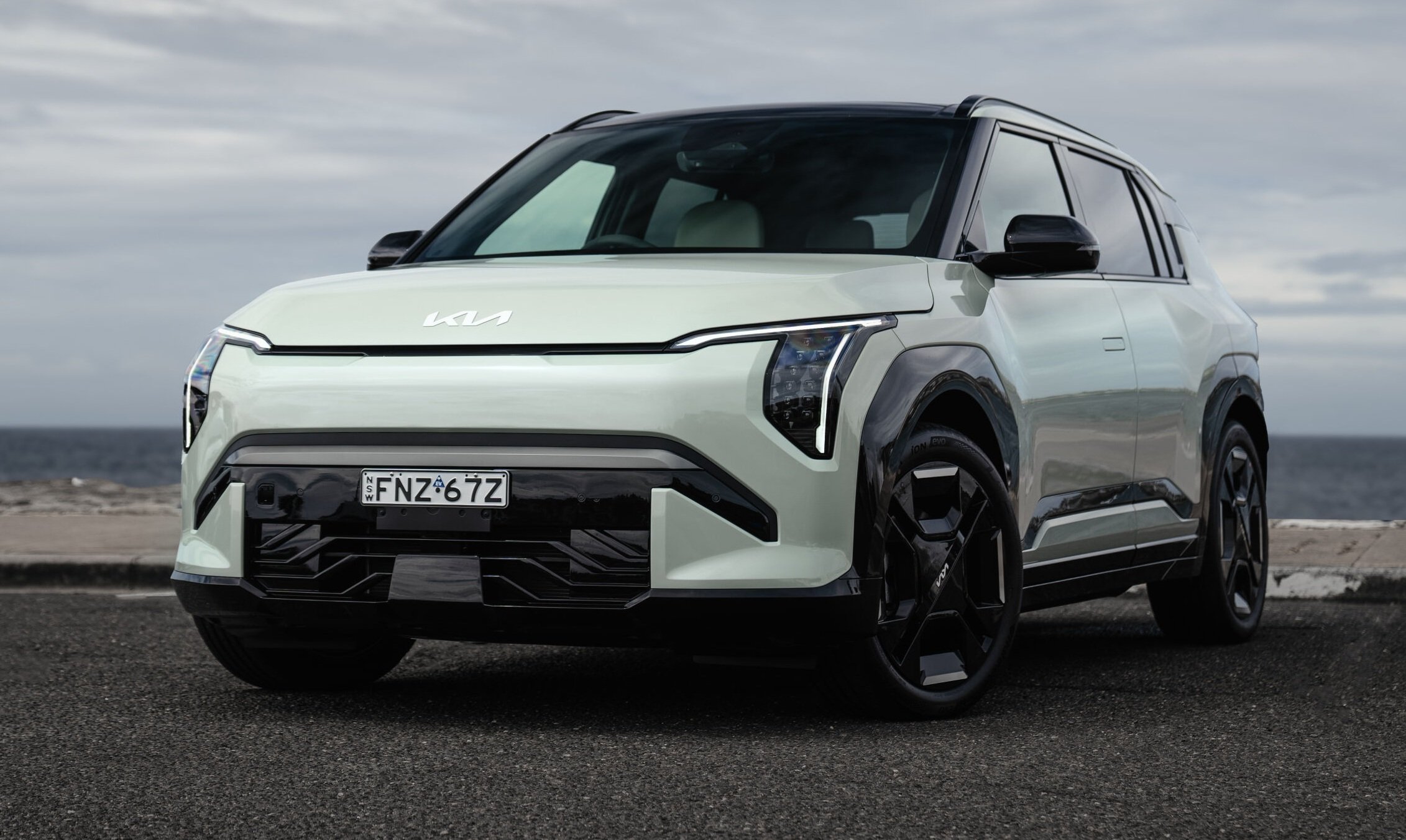
Kia EV3
Max power: 150 kW
Kerb weight: 1850
Power-to-weight: 81 kW/t (std. range, 51kWh batt.)
Drive type: FWD
Luggage capacity: 480 L incl. underfloor
Spare wheel: tyre repair kit
Price range: $49,000–$70,500 approx. driveaway
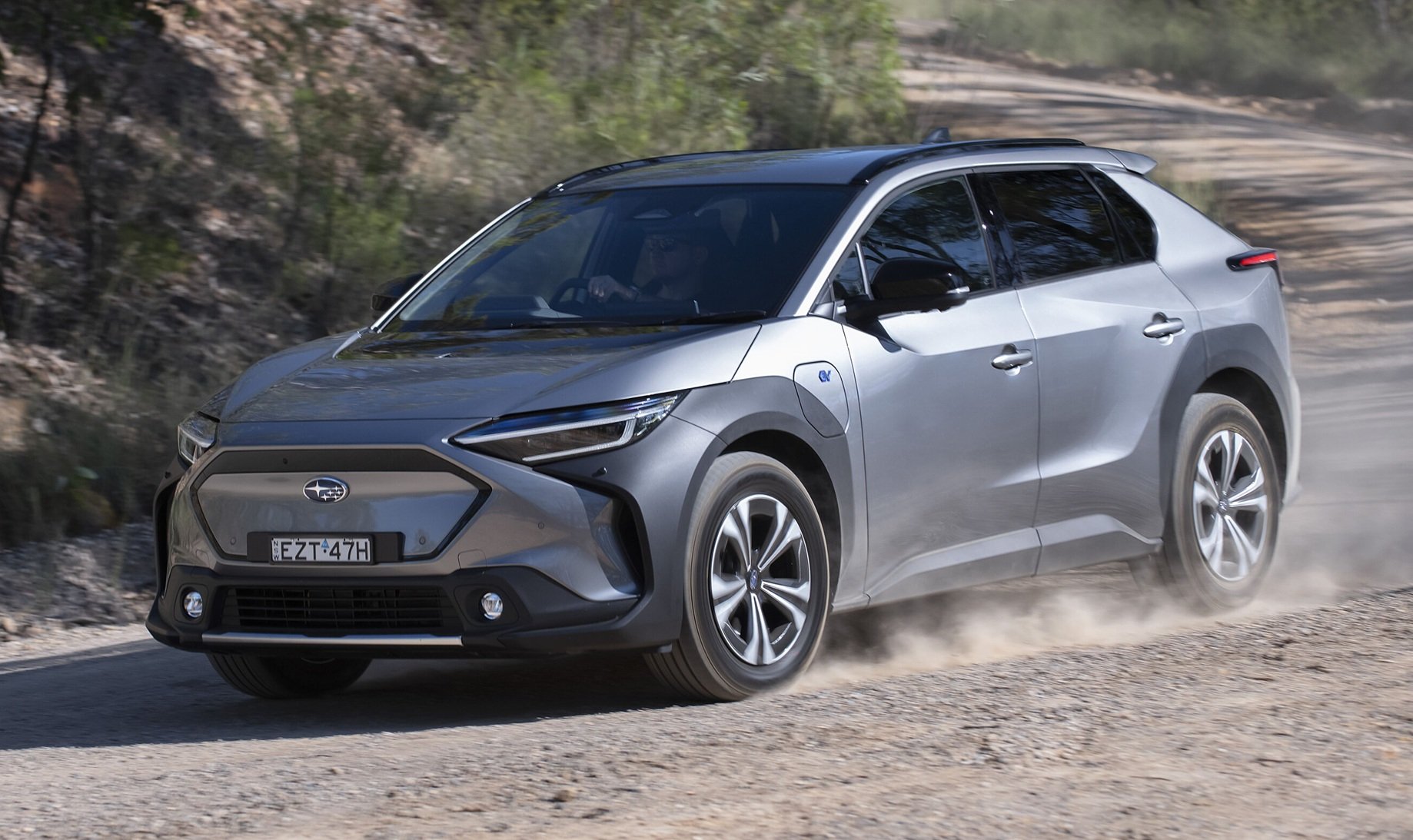
Subaru Solterra
Max power: 252kW
Kerb weight: 2000/2035kg
Power-to-weight: 124/126 kW/t
Drive type: AWD (the only one in this group)
Luggage capacity: 421L
Spare wheel: tyre repair kit
Price range: $67,500–$73,800 approx. driveaway
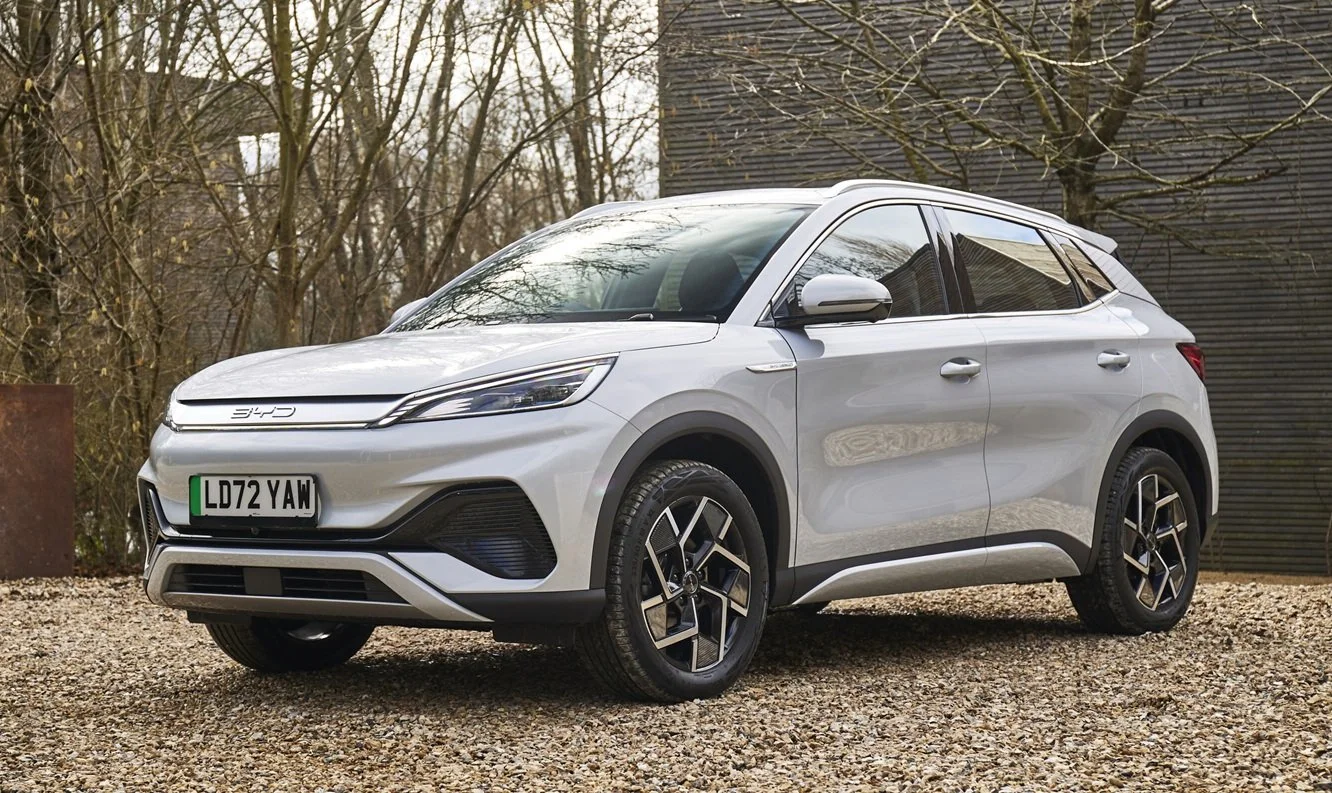
BYD Atto 3
Max power: 150 kW
Kerb weight: 1750kg
Power-to-weight: 86 kW/t
Drive type: FWD
Luggage capacity: 440 L
Spare wheel: tyre repair kit
Price range: $39,000–$48,000 approx. driveaway
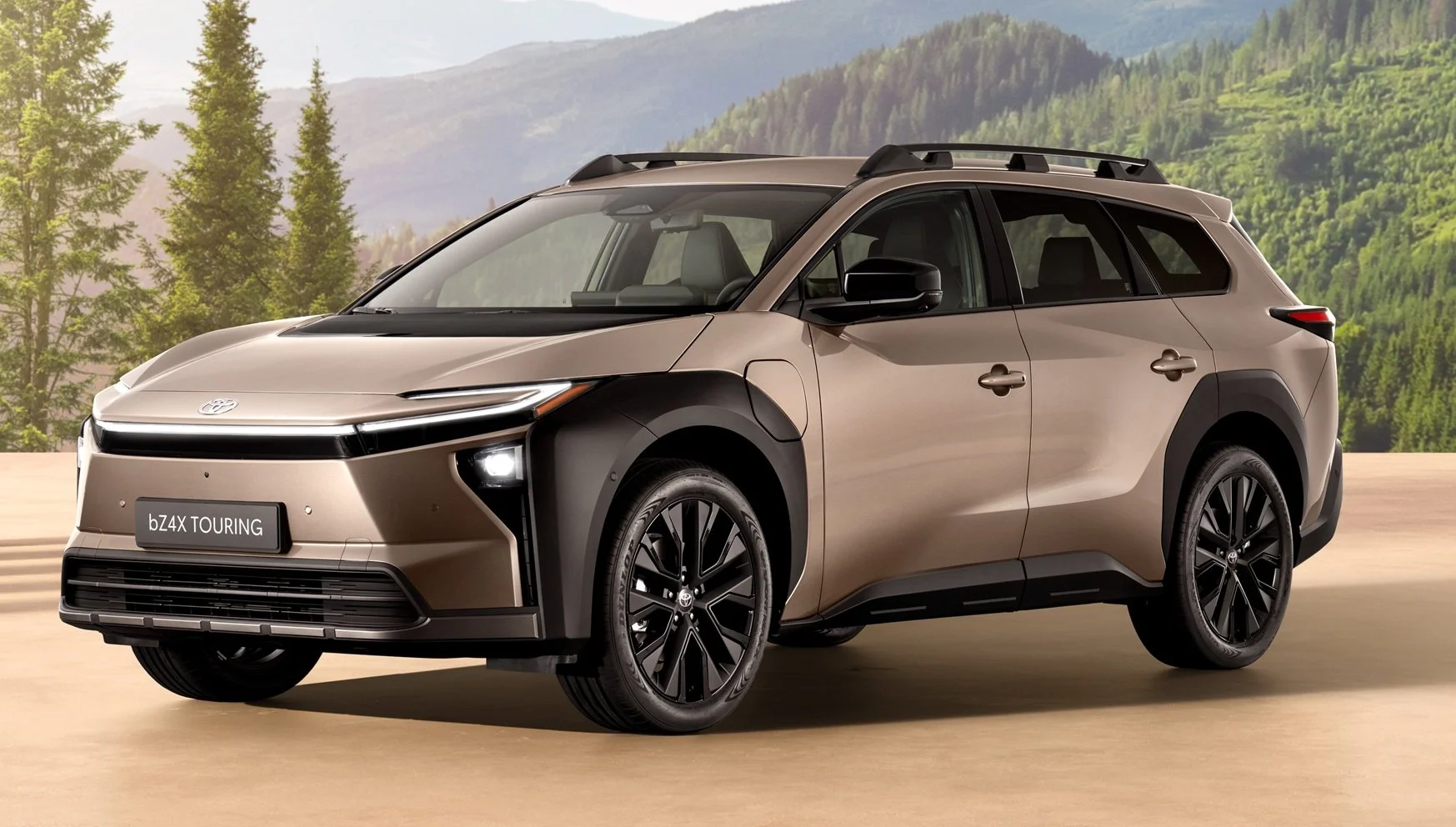
Toyota BZ4X
Max power: 165/252 kW
Kerb weight: 1930-2050kg
Power-to-weight: 86/123 kW/t
Drive type: FWD/AWD
Luggage capacity: 452 L
Spare wheel: tyre repair kit
Price range: $50,000–$75,000 approx. driveaway
CONCLUSION
Kia might be late to the party getting such an affordable, useable and well-built small EV to the Australian market, but that isn’t always a bad thing. The certainty that EVs would become a legitimate part of the general car parc mix was not a certainty and even today it isn’t a guarantee.
Biding their time might have in fact helped make it an even more compelling option if you need a well-equipped, beautifully designed and superbly driving family runabout for all the daily commuting and school runs typically assigned to the status of workhorse.
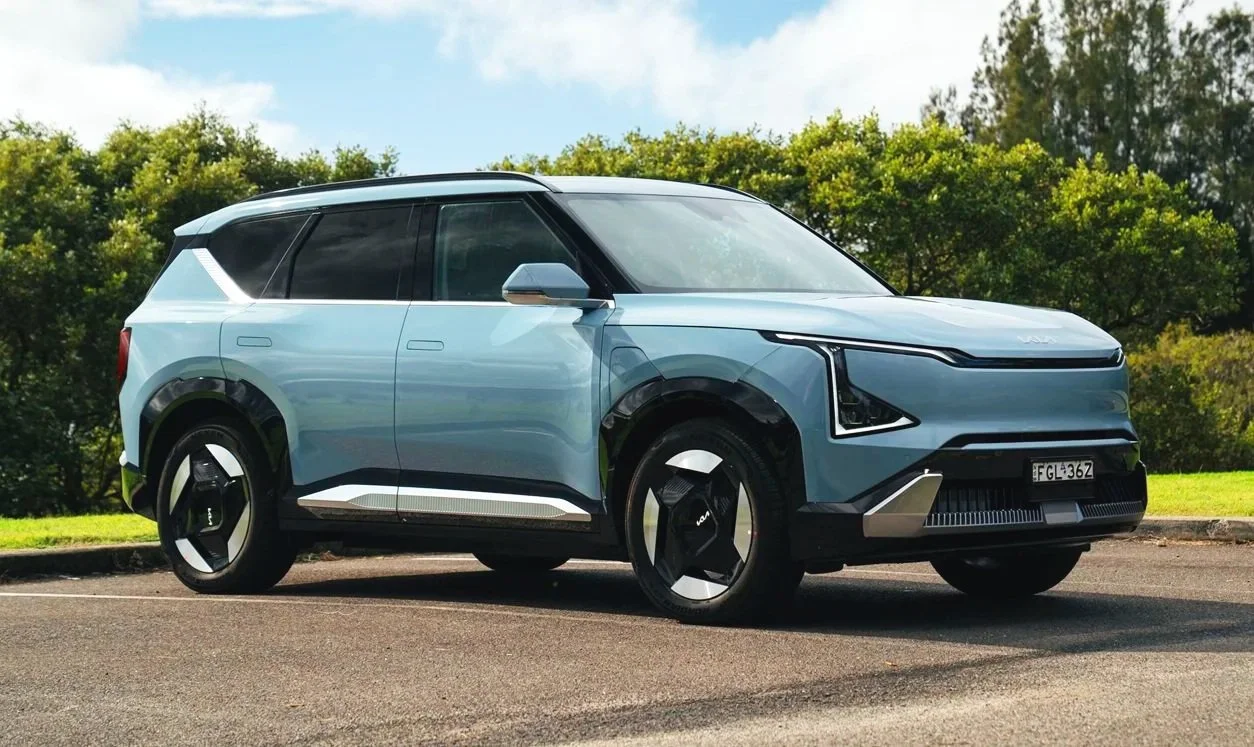
The EV3 is an ideal size, a good price, offers loads of equipment, it’s solidly built and backed by a brand with one of the best customer support reputations in Australia.
If you intend on using it for a bit more than just the city commuter and possibly intend to visit your outer metro or regional areas a lot, or perhaps for work-related medium0distance trips as well, definitely consider the longer range battery.