JIS vs Phillips: You’re Probably Using the Wrong Screwdriver
There’s a fair chance you’ve been using the wrong screwdriver for years. Not because you’re an idiot. Because the screw in front of you looks exactly like a Phillips screw. It has a cross-shaped recess. You grab a Phillips screwdriver. It fits—sort of. You lean on it. The driver starts climbing out of the screw. You lean harder. Then it slips.
Now the screw head looks like it’s been attacked by the apprentice.
This is particularly common on Japanese cars, motorcycles, machinery, electronics and other Japanese-made equipment, because many of those fasteners are—or historically were—what we commonly call JIS screws.
A JIS-type cross-head screw is not quite the same thing as a conventional Phillips screw. If you put a Phillips driver in a JIS screw, you invite epic screw head-munting catastrophe.
Here’s the easiest way to tool up to solve this problem:
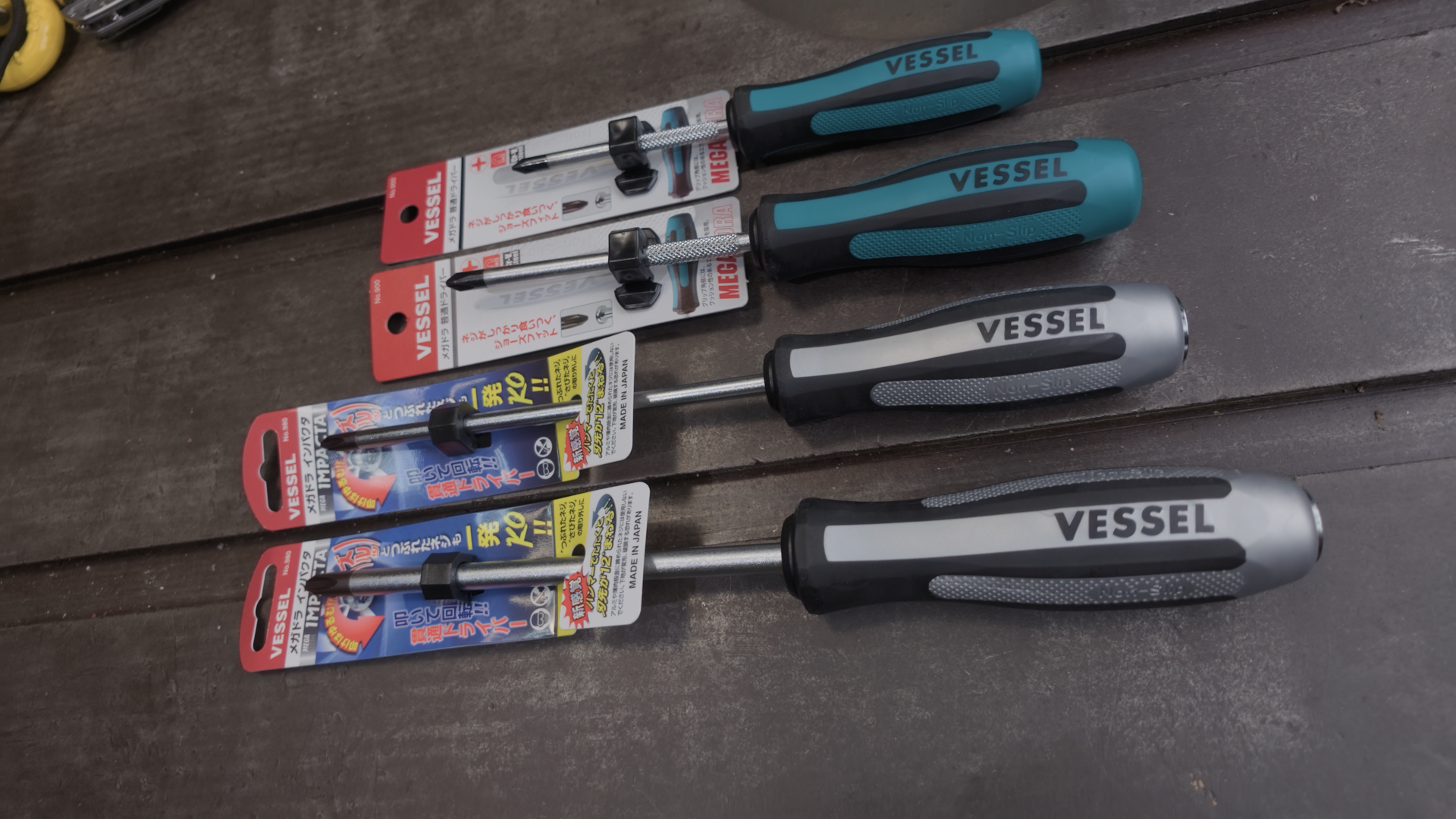
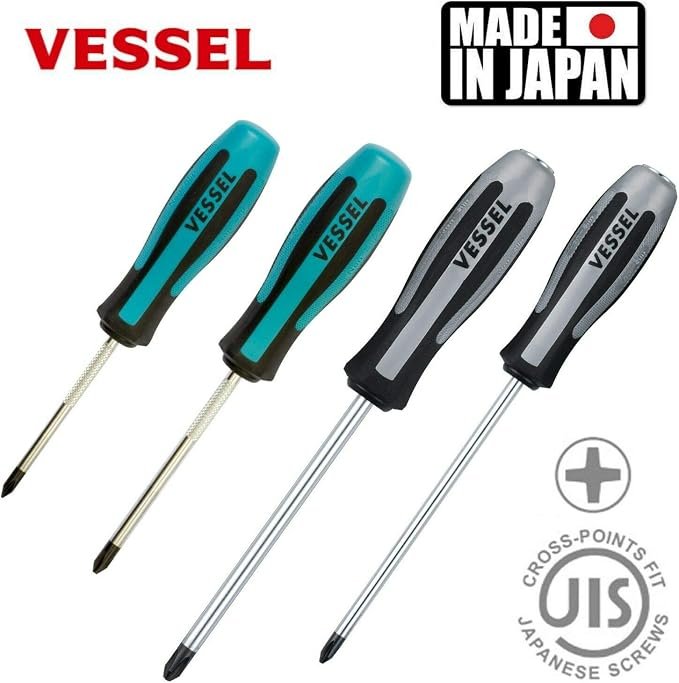
Three-driver set from Japanese screwdriver specialists, Vessel: https://link.amazon/B08Y4xsqN
#2 JIS impact screwdriver from Vessel: https://link.amazon/B0iYWUwQ1 (These are really clever)
Easiest way to get Vessel’s brilliant modular impact driving technology for any impact bit in your kit of drivers: https://link.amazon/B0e36YAGN
Basic #2 JIS screwdriver from Vessel: https://link.amazon/B03D0vhcN
Assorted JIS impact driver bits (JIS #1, #2 and #3) for your battery driver: https://link.amazon/B09dyYy4m
What is a JIS screw?
JIS stands for Japanese Industrial Standards. For decades, Japanese manufacturers used cross-head screws manufactured to Japanese standards that differed subtly from the familiar Phillips design.
To the eye, they look almost identical. That’s the problem.
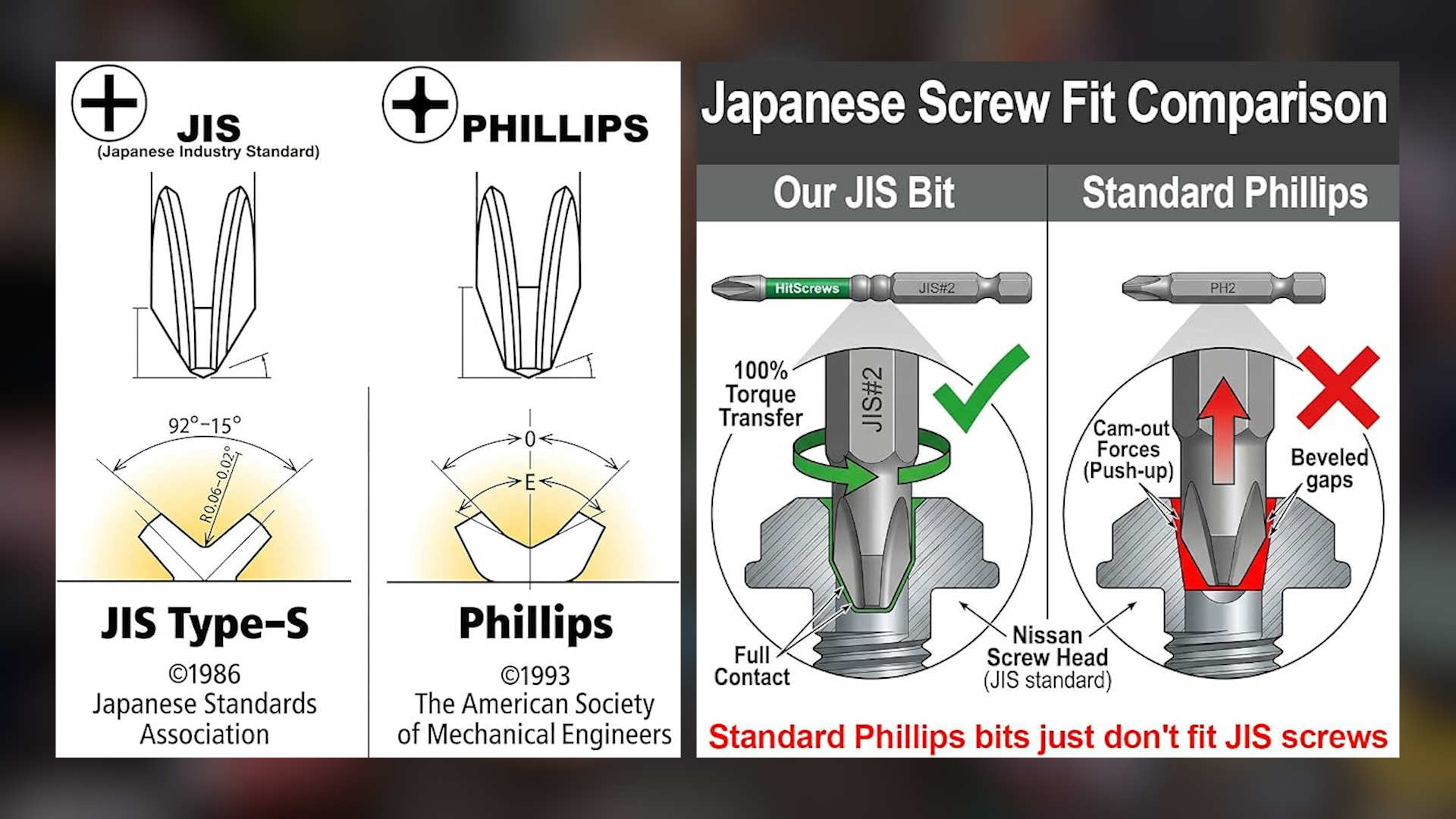
A Phillips screwdriver will usually go into one. It might even remove it successfully if the screw isn’t especially tight. But under substantial torque, the mismatch between the driver and the recess can become very obvious.
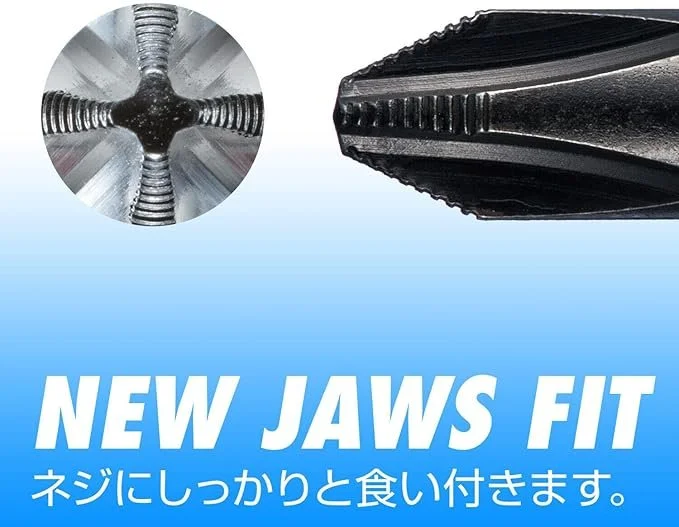
The Phillips driver tends to make poorer contact with the screw and is more inclined to rise—or cam out—of the recess. That damages the screw head and makes the next attempt even harder.
A correctly fitting Japanese-pattern driver sits more positively in the fastener and generally transmits torque with much less drama.:
Why Phillips screws cam out
The Phillips screw was deliberately designed around a tapered cross-shaped recess. The driver and screw geometry tends to generate an axial force as torque rises. In practical terms, the screwdriver wants to climb out of the screw.
That characteristic had advantages in the era of early industrial screw-driving equipment because it helped limit excessive tightening torque. Unfortunately, it’s not quite so appealing when you’re trying to remove a stubborn screw from a 30-year-old Japanese motorcycle.
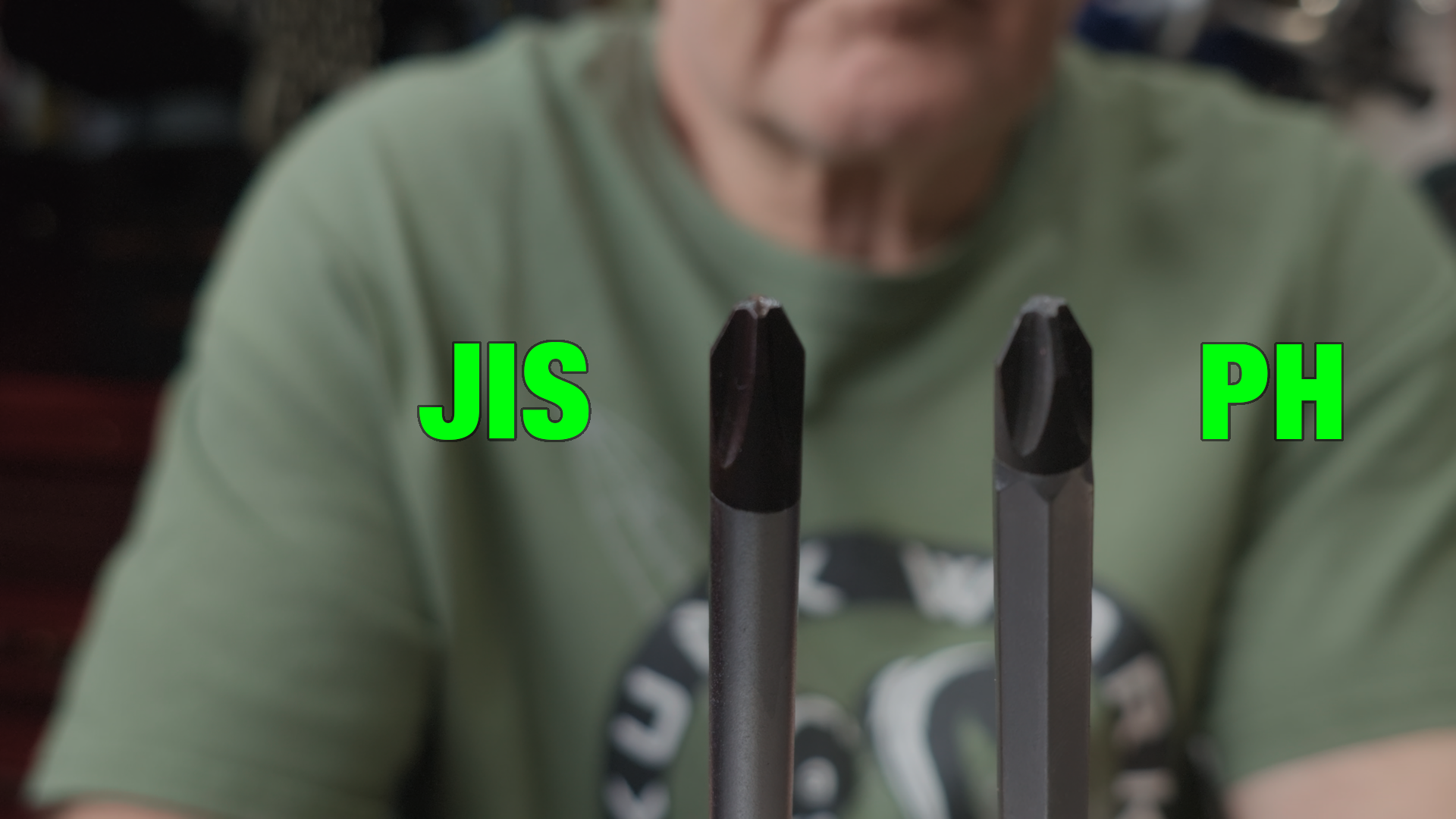
Japanese cross-head fasteners evolved with somewhat different geometry, giving the driver better engagement and reducing that tendency to cam out. The difference is small enough to overlook visually.
Mechanically, however, small differences matter.
How do you identify a JIS screw?
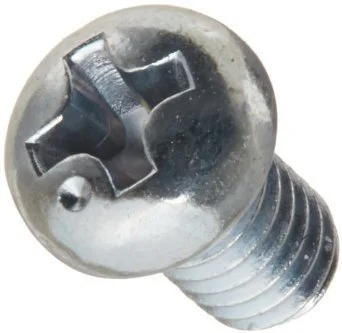
You may have heard that JIS screws have a small dot punched into the head beside the cross. Sometimes they do.
But don’t rely on it.
Not every Japanese cross-head screw carries the identifying mark, and the absence of the dot certainly doesn’t prove that the screw is Phillips.
Context is often more useful. If you’re working on Japanese machinery—particularly older Japanese motorcycles, cars, carburettors, electrical components and similar equipment—and a Phillips driver seems to fit badly, there’s a good chance the fastener deserves a Japanese-pattern screwdriver.
This is one of those situations where having the correct tool available is much easier than trying to diagnose the geometry after you’ve already destroyed the screw.
Why this matters particularly on Japanese vehicles
Imagine you’re dismantling a carburettor. The screws have been sitting there for decades. They’re tight. You insert your ordinary Phillips screwdriver. It engages perhaps 80 or 90 per cent properly.
You apply torque. The screwdriver cams out. You try again, naturally pushing harder. It slips again.
Pretty soon you’re reaching for locking pliers, an impact driver, penetrating oil, heat, a drill or possibly language unsuitable for children. The original problem might not have been that the screw was impossibly tight. The first problem may simply have been that you were using the wrong screwdriver.
Motorcycles are probably the classic example, particularly Honda, Yamaha, Suzuki and Kawasaki machinery.
But the same principle applies throughout Japanese manufacturing - from Sony to Kubota.
JIS isn't quite as simple as it used to be
There is one important technical wrinkle.
People generally use the term “JIS screwdriver” to describe Japanese cross-head drivers of this type, but the standards themselves have evolved.
Modern Japanese fastener standards have moved closer to international ISO specifications, so the neat historical distinction between “Phillips” and “JIS” isn't quite as absolute today as internet folklore sometimes suggests.
That does not make the practical issue disappear.
Japanese manufacturers such as Vessel still produce drivers specifically designed to fit Japanese cross-head fasteners extremely well, including both older JIS-style screws and modern equivalents.
So I’m less interested in having an argument about standards nomenclature than I am in whether the screwdriver fits the bloody screw.
That’s the useful test.
Enter Vessel
This is where Japanese toolmaker Vessel comes in.
Three-driver set from Japanese screwdriver specialists, Vessel: https://link.amazon/B08Y4xsqN
#2 JIS impact screwdriver from Vessel: https://link.amazon/B0iYWUwQ1 (These are really clever)
Easiest way to get Vessel’s brilliant modular impact driving technology for any impact bit in your kit of drivers: https://link.amazon/B0e36YAGN
Basic #2 JIS screwdriver from Vessel: https://link.amazon/B03D0vhcN
Assorted JIS impact driver bits (JIS #1, #2 and #3) for your battery driver: https://link.amazon/B09dyYy4m
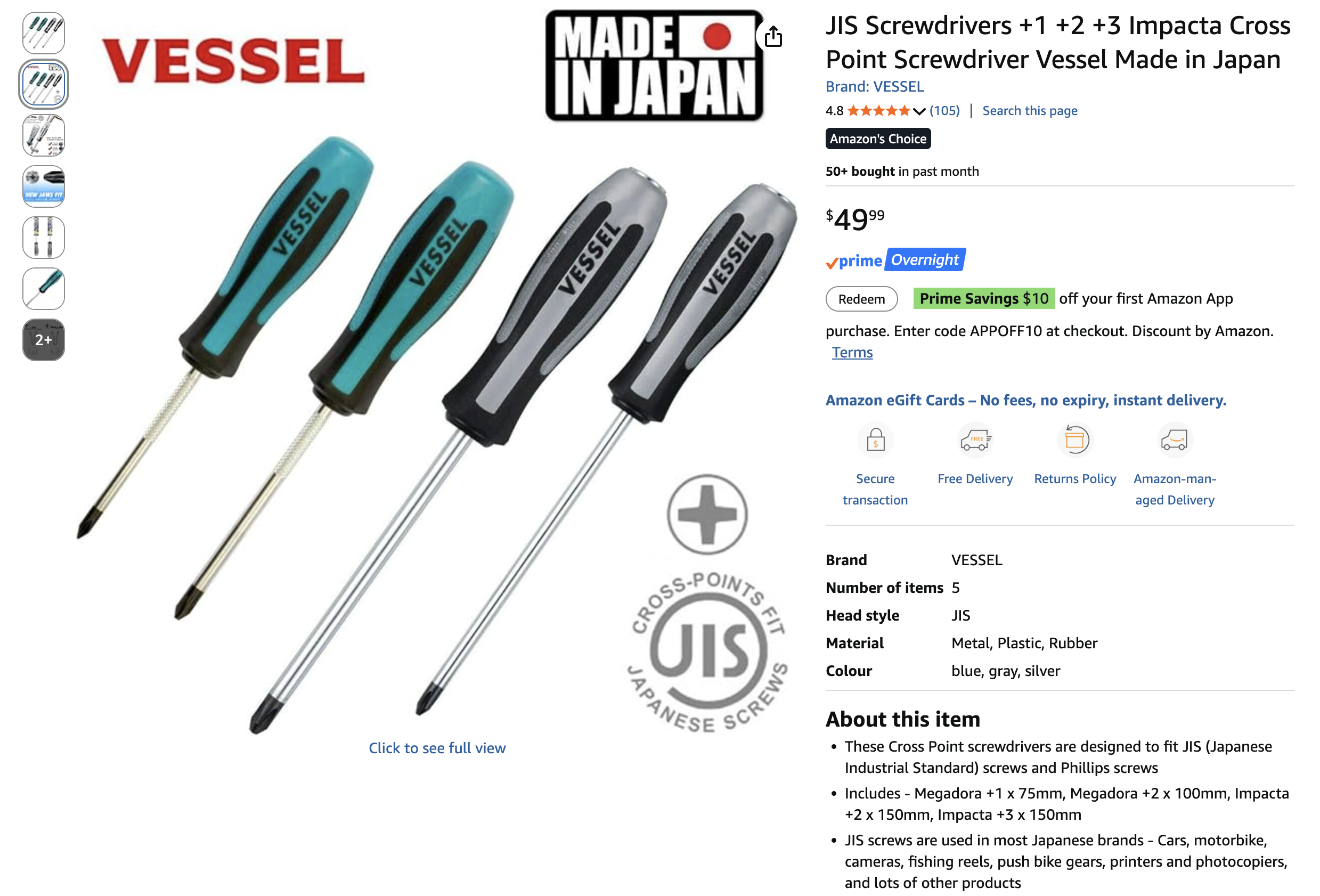
Vessel has been making screwdrivers in Japan for a very long time, and its drivers are extremely common in Japanese industry.
The useful thing for Australian DIYers, mechanics and motorcycle owners is that you don't have to spend much money to find out whether all of this matters.
A Vessel Japanese-pattern screwdriver is hardly some exotic $200 specialist tool. They’re inexpensive. And the first time you put one into the appropriate screw, the difference can be surprisingly obvious.
The driver feels properly located. There’s less rotational slop. You can apply substantial axial pressure. And when the screw is tight, considerably more of your effort seems to go into turning the fastener rather than destroying it.
You can feel the difference
This is probably the easiest way to understand the whole issue. Take an appropriate Japanese cross-head screw. Insert an ordinary Phillips driver and gently rotate it backwards and forwards without actually undoing the fastener. Notice the clearance.
Then insert a quality Japanese-pattern driver. It can feel like somebody quietly changed the screw while you weren't looking. The engagement is simply better.
This is one of those subtle tool differences that sounds like obsessive workshop nerdism until you actually try it. Then it becomes painfully obvious.
What size do you need?
For automotive and motorcycle work, No. 2 is the size you’re most likely to encounter. That makes a No. 2 Japanese-pattern driver the obvious place to start.
There are smaller and larger sizes, of course, and anyone regularly working on Japanese machinery may eventually justify buying a set. But you don't need to turn this into a major investment. One decent No. 2 driver will cover an enormous number of common cross-head fasteners.
And compared with the inconvenience of drilling out one mangled screw, the economics are fairly compelling.
What about impact screwdrivers?
This distinction becomes even more important when you use an impact screwdriver.
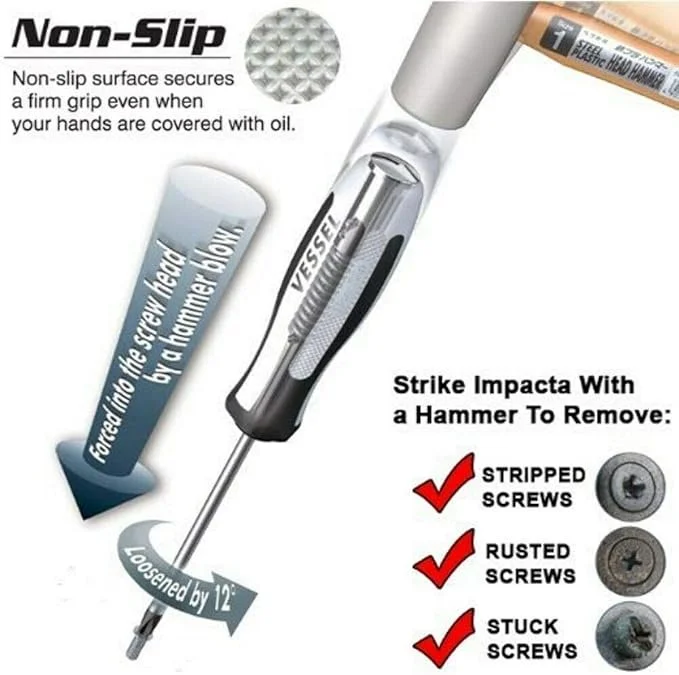
A manual impact driver is a superb tool for stubborn screws because a hammer blow simultaneously:
forces the bit hard into the recess; and
applies rotational torque.
But the bit still needs to fit. An impact tool does not magically correct incorrect geometry.
If anything, applying considerably greater torque through a poorly fitting bit gives you an exceptionally efficient way of destroying the screw.
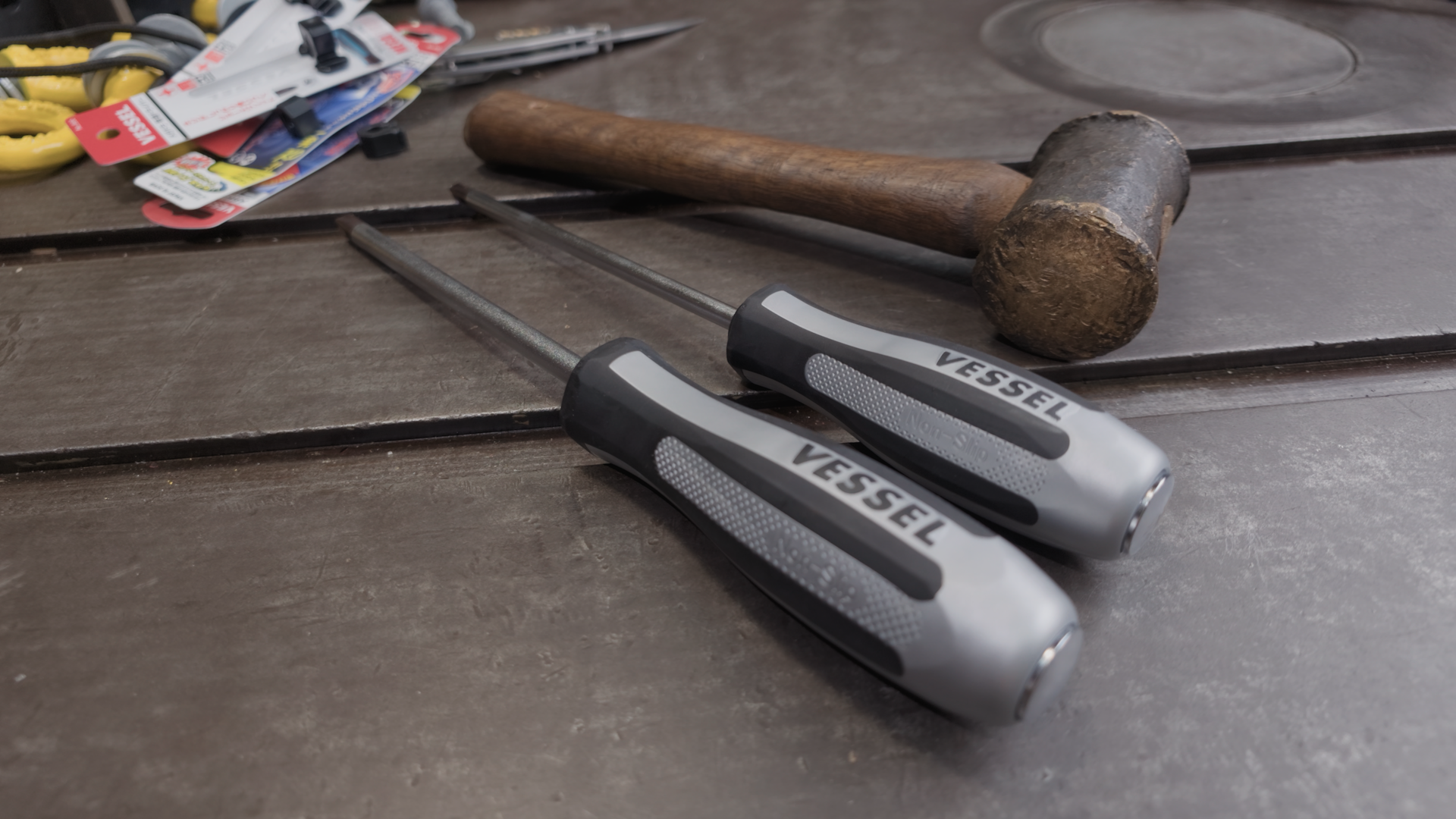
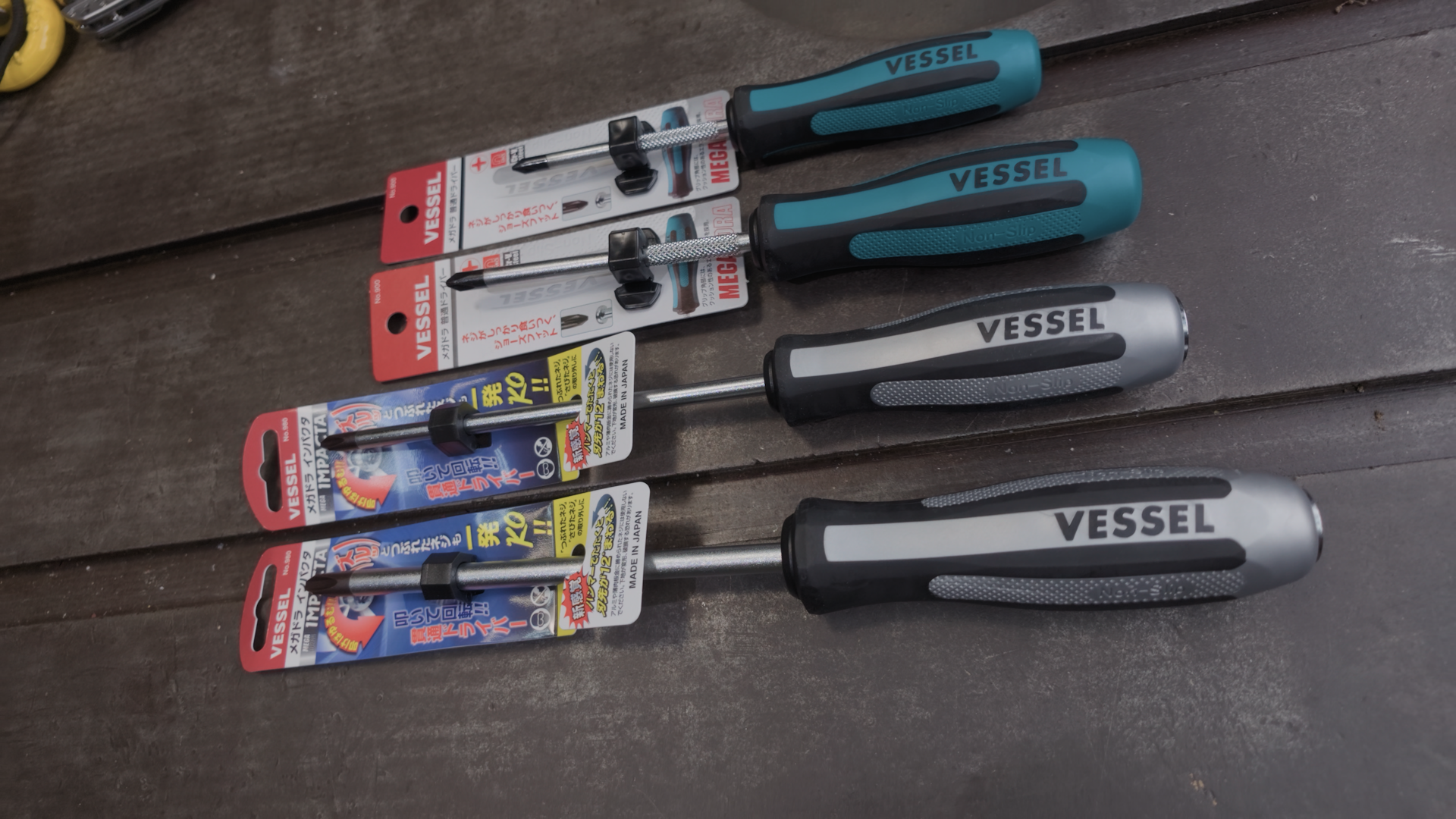
A properly fitting Japanese cross-head bit plus a manual impact driver can be an excellent combination for stubborn Japanese fasteners. The silver-handled ones below are Vessel’s ‘Impacta’ JIS drivers. There’s an anvil on the top of the handle. You hit it with a hammer and it rotaes the spring loaded cam-drive mechanism inside. Result? Axial thrust and left-hand rotational torque (12-degrees of rotation per strike) and the spring resets the mechanism.
Brilliant.
Why I like the Vessel approach
Vessel makes particularly good sense because the tools manage to combine three useful characteristics:
They’re good. They’re inexpensive. And they solve an actual problem.
I’m increasingly interested in tools like this. Not enormous prestige-tool collections purchased mainly to impress people on Instagram. Just inexpensive pieces of engineering that make a particular job noticeably easier.
Vessel's Japanese screwdrivers sit squarely in that category.
The company also makes its distinctive Ball Grip drivers, including versions accepting standard 6.35mm—or quarter-inch—hex bits.
That opens another useful path because one compact handle can accept an enormous range of driver bits.
But if you regularly work on Japanese machinery, I’d still want proper Japanese cross-head capability somewhere in the kit.
Three-driver set from Japanese screwdriver specialists, Vessel: https://link.amazon/B08Y4xsqN
#2 JIS impact screwdriver from Vessel: https://link.amazon/B0iYWUwQ1 (These are really clever)
Easiest way to get Vessel’s brilliant modular impact driving technology for any impact bit in your kit of drivers: https://link.amazon/B0e36YAGN
Basic #2 JIS screwdriver from Vessel: https://link.amazon/B03D0vhcN
Assorted JIS impact driver bits (JIS #1, #2 and #3) for your battery driver: https://link.amazon/B09dyYy4m
The cheapest screw is the one you don't destroy
There is also a broader workshop lesson here. Most stripped screws are not spontaneous acts of God.
They are generally the result of some combination of:
the wrong driver;
a worn driver;
insufficient axial force;
poor tool alignment;
corrosion;
excessive torque; or
somebody having damaged the fastener previously.
Before attacking a stubborn screw, spend five seconds checking the fit. The screwdriver should engage deeply and positively. If it rocks noticeably in the recess, stop.
Changing tools at that point is easy. Removing a drilled-out screw 20 minutes later is not.
The takeaway
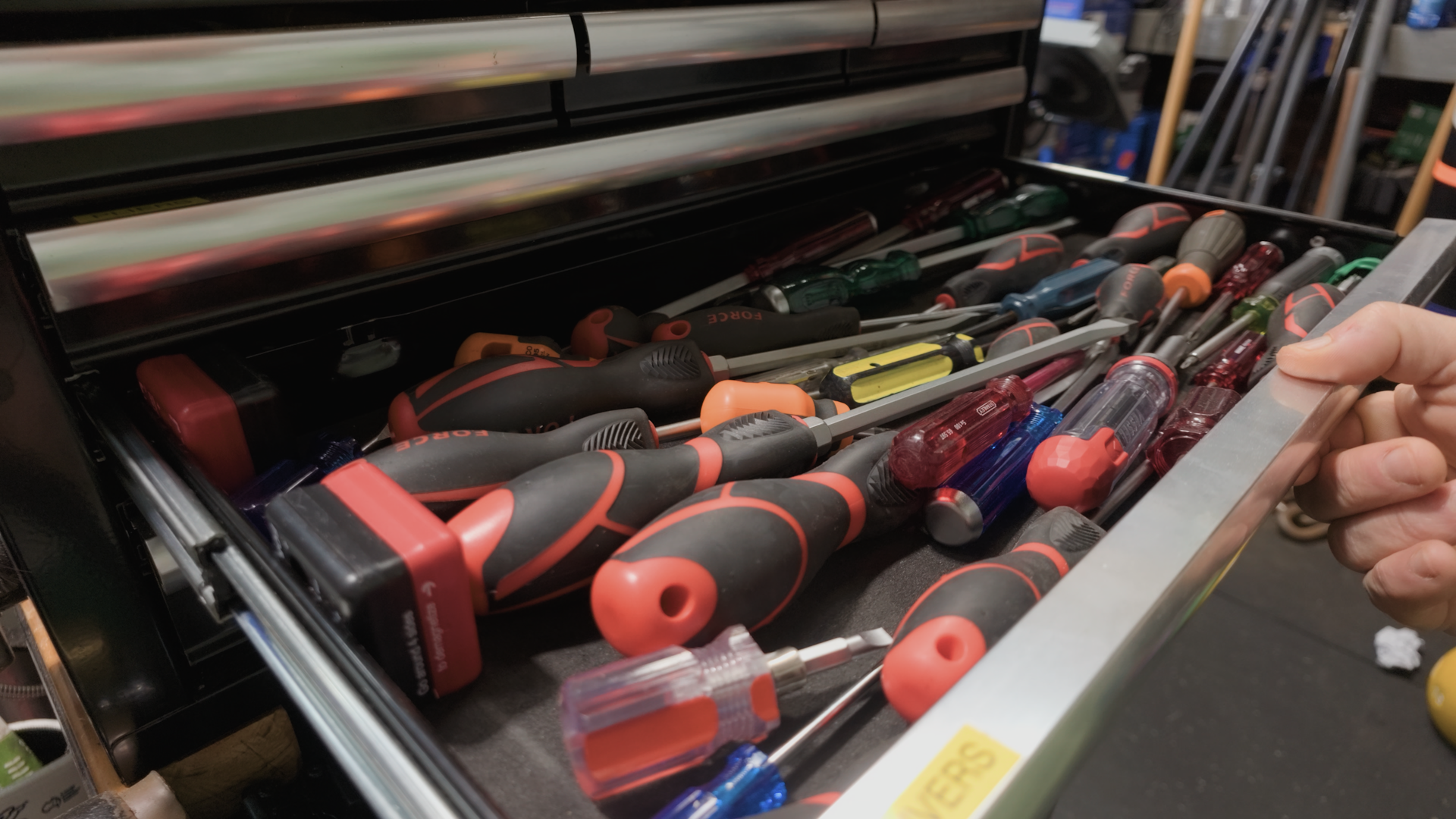
If you work on Japanese cars, motorcycles, machinery or electronics, buy at least one decent Japanese-pattern cross-head screwdriver.
This is not a major financial commitment. Keep your Phillips drivers. You still need them.
Keep your Pozidriv drivers if you encounter Pozidriv screws. But don't assume every screw with a cross in its head is Phillips. Because sometimes the screw isn’t the problem.
You’re just using the wrong screwdriver.
Three-driver set from Japanese screwdriver specialists, Vessel: https://link.amazon/B08Y4xsqN
#2 JIS impact screwdriver from Vessel: https://link.amazon/B0iYWUwQ1 (These are really clever)
Easiest way to get Vessel’s brilliant modular impact driving technology for any impact bit in your kit of drivers: https://link.amazon/B0e36YAGN
Basic #2 JIS screwdriver from Vessel: https://link.amazon/B03D0vhcN
Assorted JIS impact driver bits (JIS #1, #2 and #3) for your battery driver: https://link.amazon/B09dyYy4m
Disclosure: Some product links on AutoExpert may be affiliate links. If you buy through one of those links, AutoExpert may earn a commission at no additional cost to you.