
Toyota Yaris Cross review and buyer's guide
The smallest SUV in Toyota’s line-up offers good value, affordability and compactness. So let’s see if it’s worth your time and money in the context of its nearest competitors.
Save thousands on a new Yaris Cross
Fill in the form - we’ll get you a great price without the stress
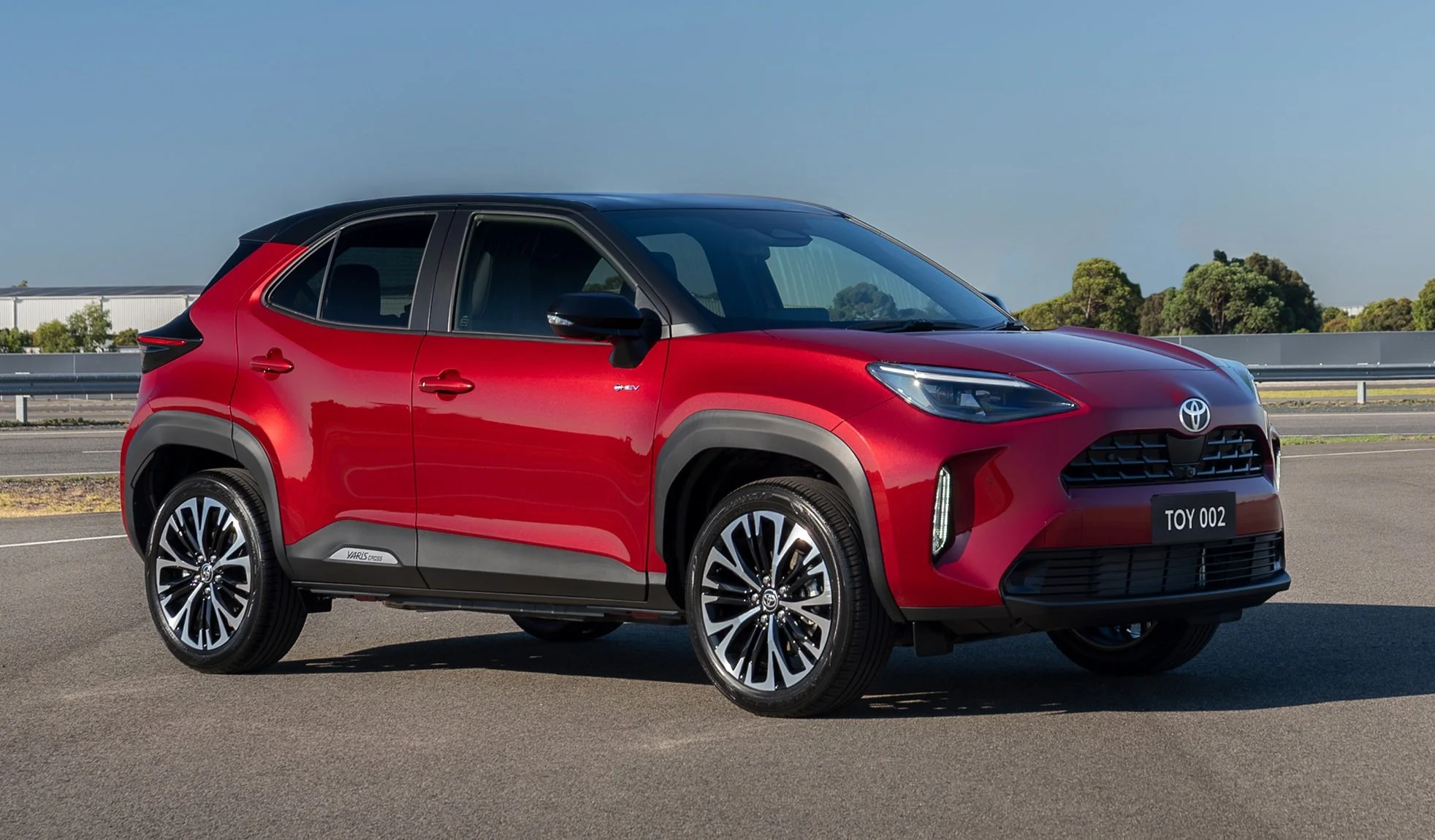
The Toyota Yaris Cross is one of the most popular ‘light’ SUVs in Australia, representing the most affordable Toyota you can buy that isn’t the conventional hatch.
But despite having the word Yaris in its name, it does offer a tangible benefit over the micro hatch on which is also shares a chassis platform.
Yaris Cross is smaller and less practical than some of the bigger competitors in the small-SUV category, and in fact outsells the likes of Subaru Crosstrek, Nissan Qashqai, Mitsubishi ASX and Eclipse Cross, and the Honda HR-V by thousands of units.
This phenomenon is caused by a $36,000 entry price for the GX and a GR Sport range-topper that comes in under $42,000 driveaway (approximately). Compare that with, say the Subaru Crosstrek with all-wheel drive, 315 litres of luggage space and 220mm of ground clearance, which is priced between $38K and $49K.
Despite being the superior vehicle in measurable ways, the Yaris Cross outsells Crosstrek, and the dwindling brands of Nissan and Honda in this space without it even being a fair fight. Nissan and Honda are both in economical dire straits.
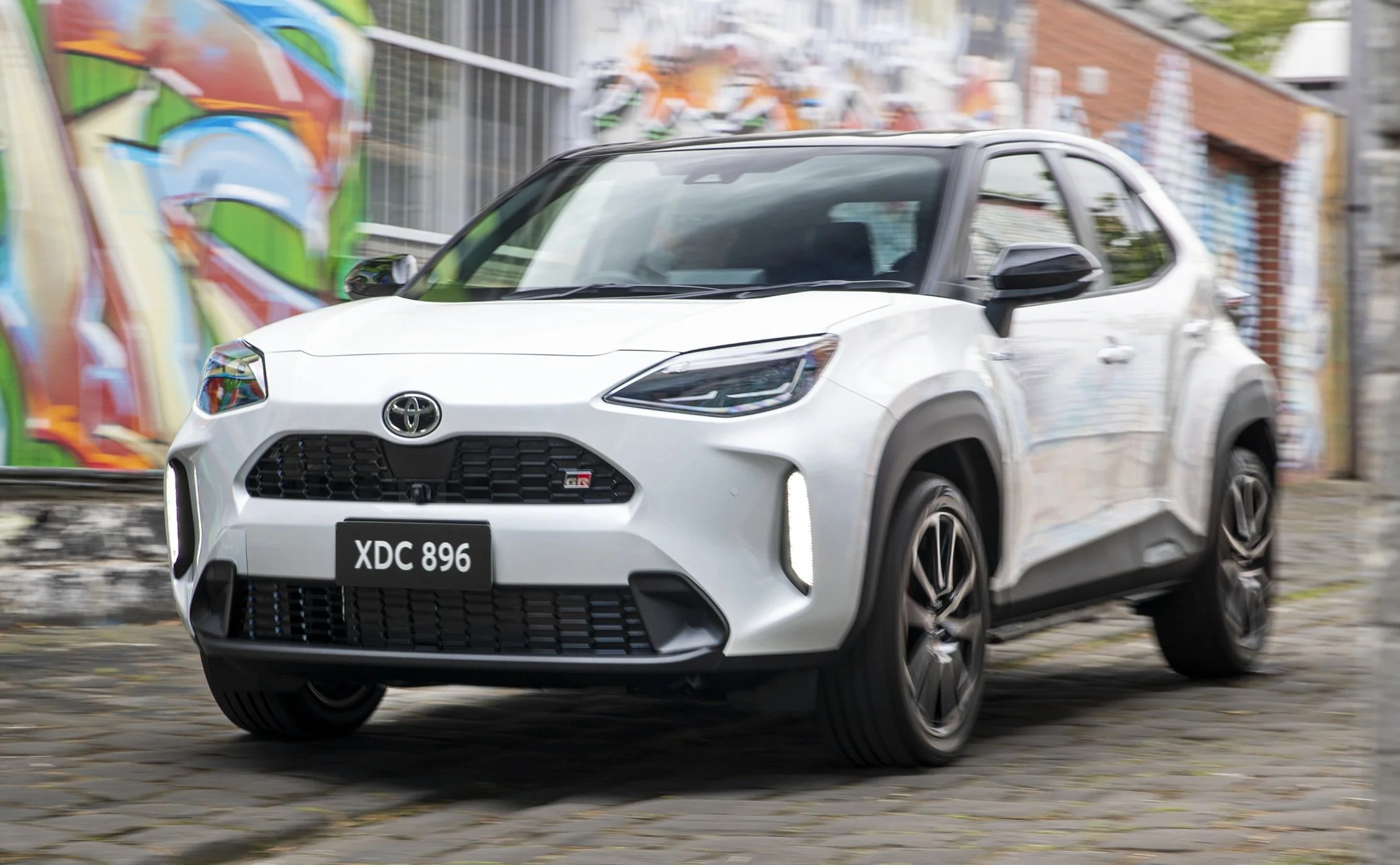
The Yaris Cross offers compelling value because it ticks enough boxes at a decent-enough price that it also lumps build quality, fuel economy and reliability into the list of compelling reasons to buy one - even in the face of the Chinese brand onslaught currently gripping the market.
The only model that stopped Yaris Cross from winning the light SUV sweepstakes was the Mazda CX-3 which finished 2025 with over 15,000 units sold/registered. That’s about 4000 more than the Yaris Cross on about 11,000. Hyundai Venue comes in third with roughly 8000 units.
Click here to download the official Toyota Yaris Cross specifcations >
FEATURES & PRICING
GX || 1.5L petrol-hybrid, 2WD | $36,100 driveaway approx. || AWD | $39,250 driveaway approx.
includes:
16-inch alloy wheels (space-sdaver spare wheel)
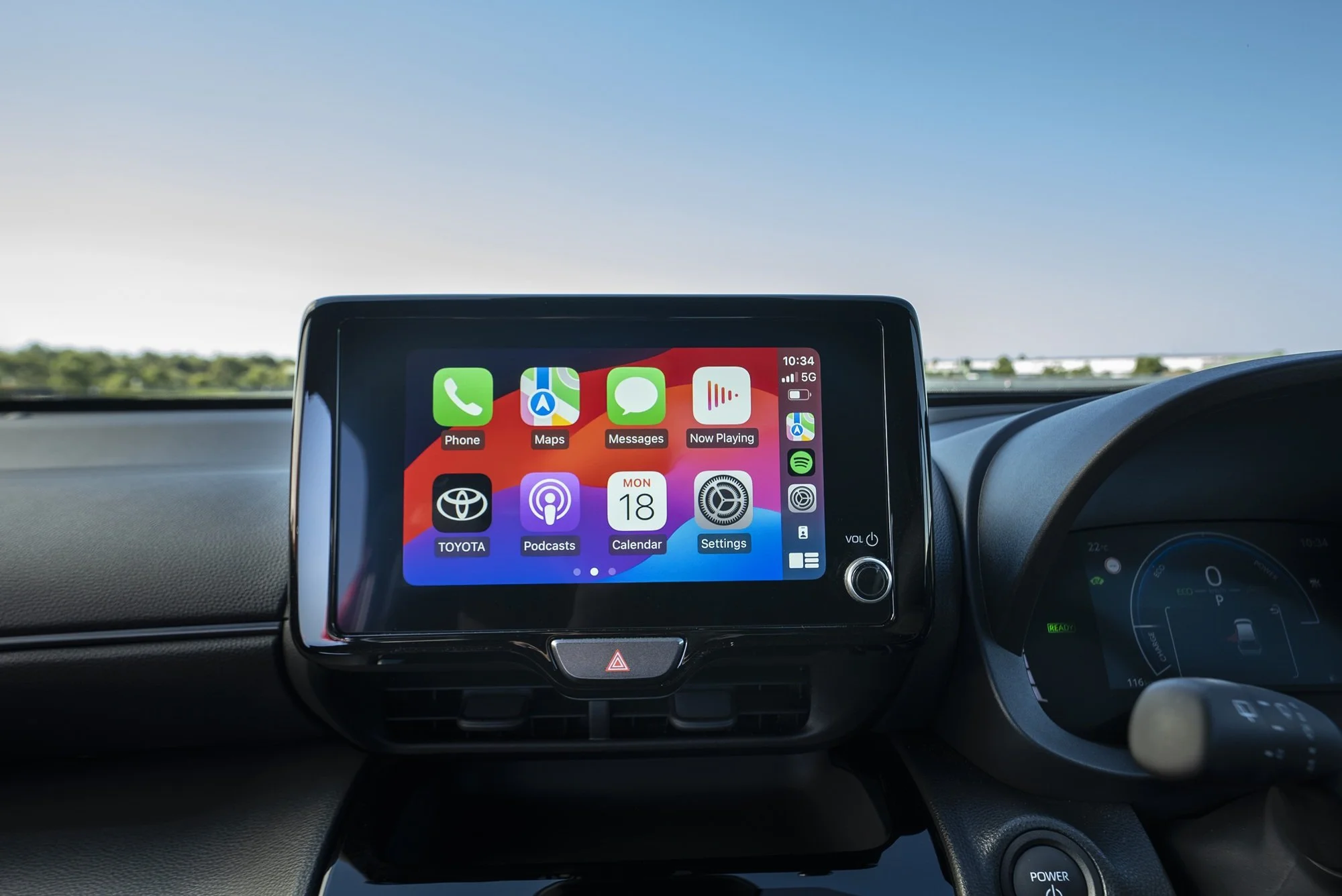
Wireless: CarPlay and Android Auto | Bluetooth
8-inch infotainment touchscreen
6 speaker stereo system
Embedded Satellite Navigation (GX AWD and above)
Driver assist features:
Road Sign Assist
Lane Trace Assist
Active Cruise Control
Reversing camera
Blind Spot Monitor
Safe Exit Assist
Intersection Turn AssistanceAutomatic air conditioning
Smart Entry and Start
8 SRS airbags
Smart Entry and Start
Front and rear parking sensors with PKSB (Object and Vehicle Detection)
LED Daytime Running Lamps
Rear LED fog lamps
Auto-electronically retractable and heated door mirrors
Leather accented steering wheel
Fabric seats
Front and rear electric windows
40:20:40 split fold rear seats
7-inch Multi Information Display
Dual LCD digital dashboard display
Drive mode select
2x centre console cup holders
GXL || 1.5L petrol-hybrid, 2WD | $38,400 driveaway approx. || AWD | $41,550 driveaway approx.
adds:
Panoramic View Monitor
Rear and Rear Side Privacy Glass
Satellite navigation
URBAN || 1.5L petrol-hybrid, 2WD | $41,500 driveaway approx. || AWD | $44,600 driveaway approx.
adds:
18-inch alloy wheels
Nanoe-X Air Conditioning
Power tailgate with kick sensor
Head-Up Display
GR SPORT || 1.5L petrol-hybrid, 2WD | $41,550 driveaway approx.
adds:
Front & rear GR Sport suspension
Front & rear red brake calipers
Front & rear GR Sport unique bumpers
GR logo on front seats, steering wheel and smart key
Aluminium pedals
Deleted: Head-Up Display
Specifications and price may change at any time: always check before signing any contract or paying a deposit.
INTERIOR
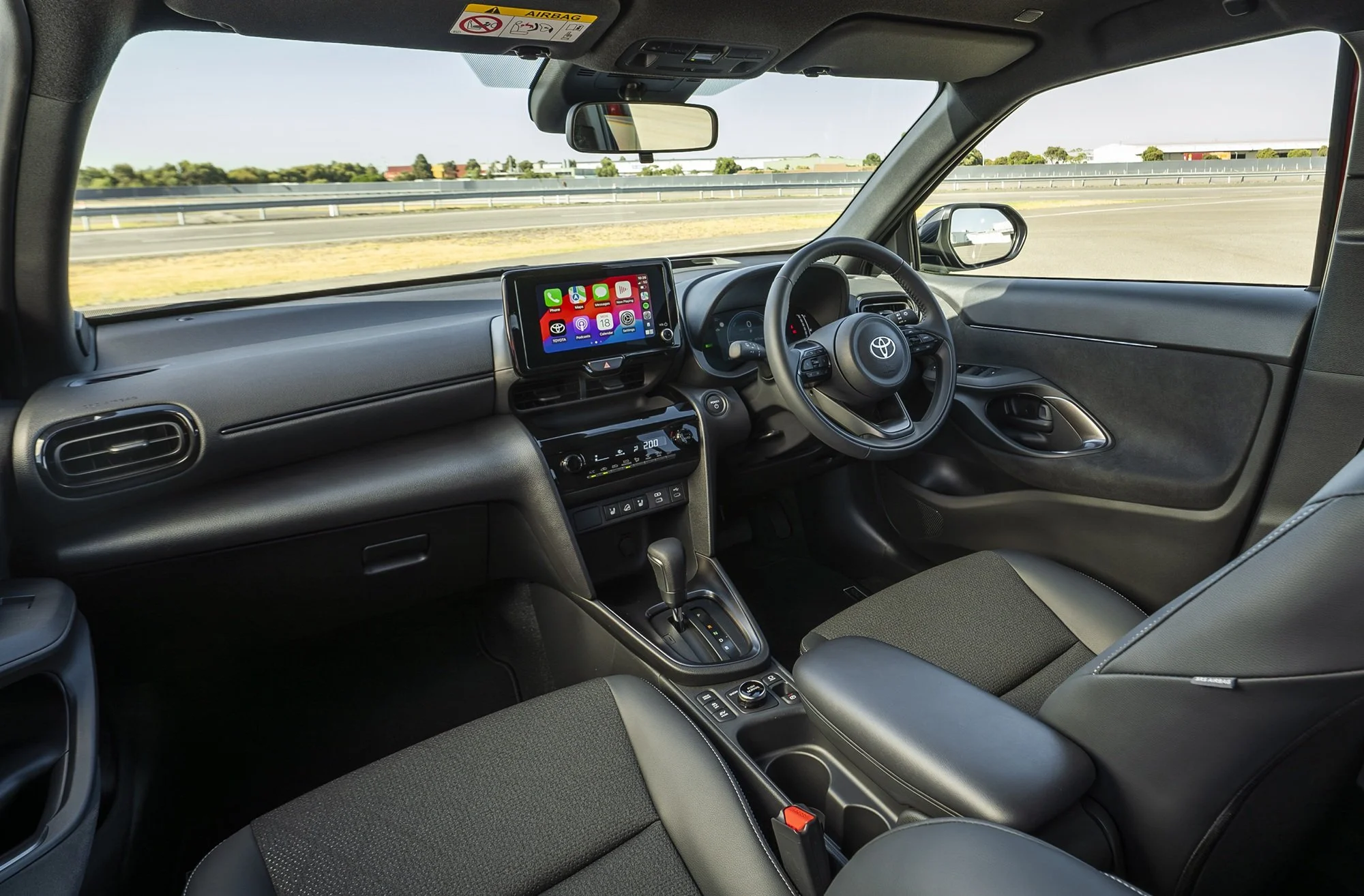
What Toyota does best with its interiors is make them inoffensive. They work well enough, they’re comfy enough and they’re fairly ergonomic spaces. But they won’t blow your socks off.
Toyota doesn’t do bold and exciting interiors and for a decent chunk of the car buying public, probably yourself included, that’s quite okay. Because not everyone wants to go to work in the car equivalent of a modern minimalist art gallery.
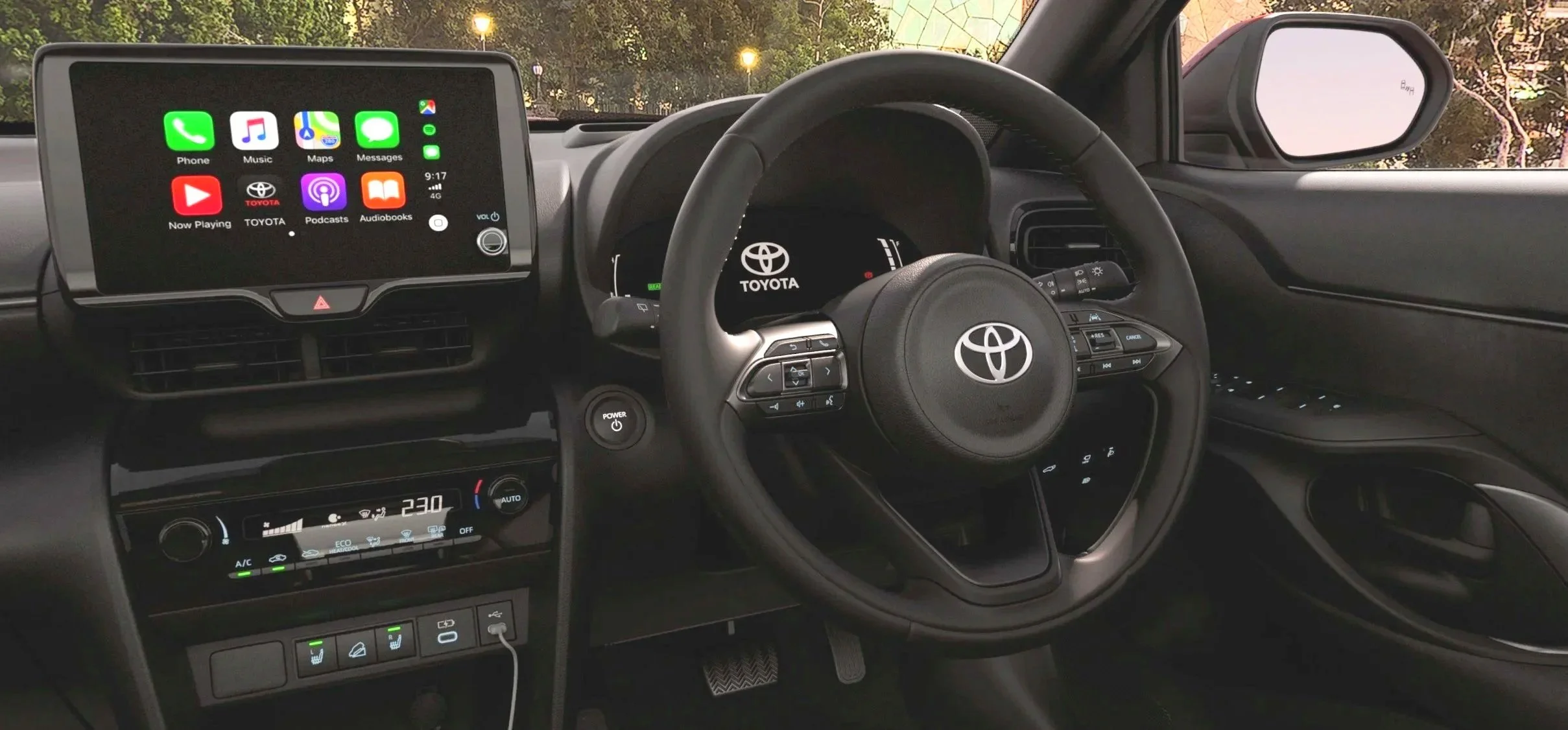
So in the domain of the Yaris Cross, the interior is quite good, as far as being adequate is concerned. The seats are comfy, the visibility is okay, all the diabls and controls are where you would expect them to be, and you should be able to adapt to this cockpit pretty quickly.
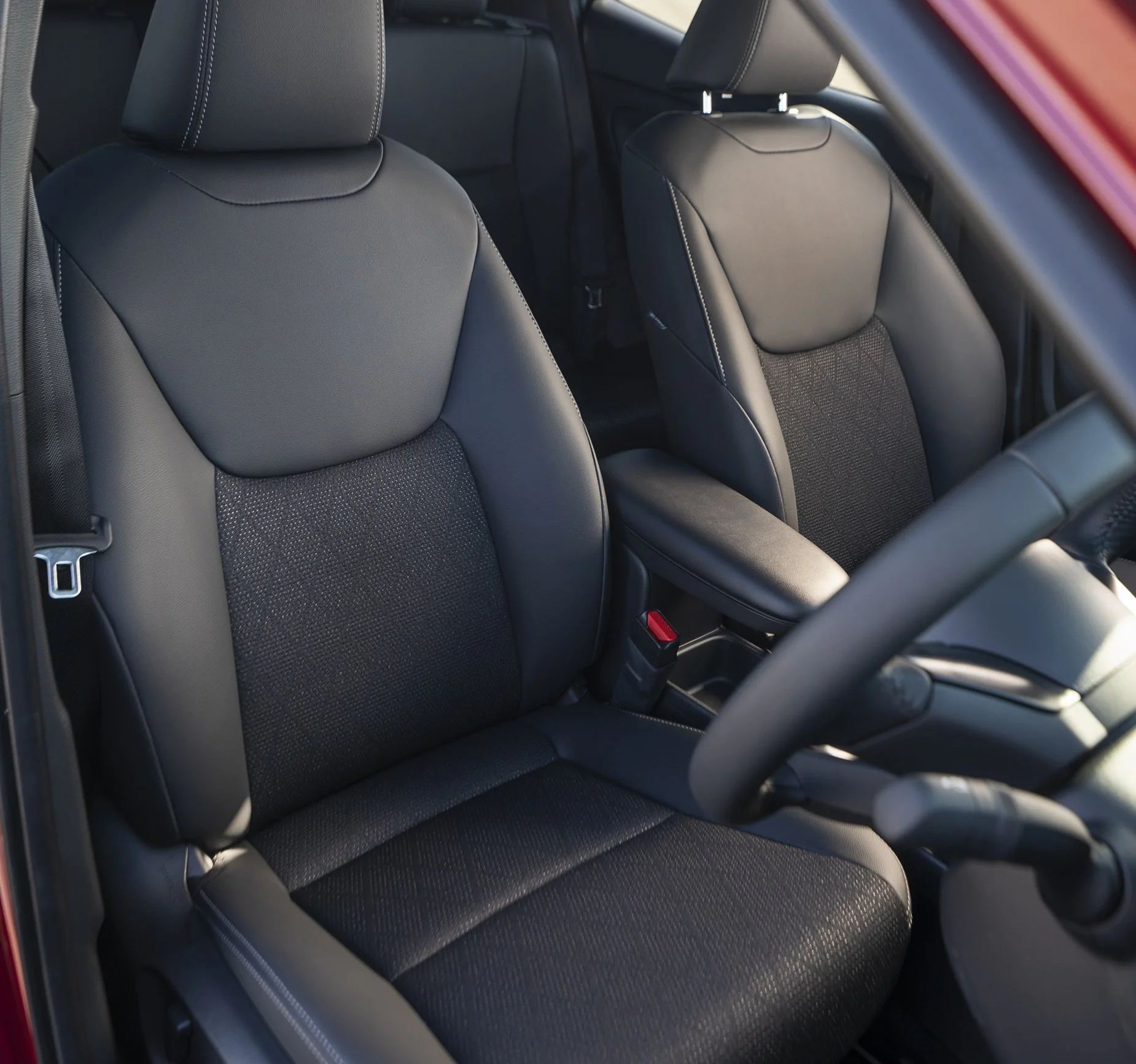
While it’s common for people to want the best ‘bang for their buck’, so to speak, it’s also quite rational to expect to ‘get what you pay for’. Again, Yaris Cross emobodies the latter.
You’re buying at a pricepoint less than $42K and the interior reflects that. You get faux leather accents, soft-touch dashboard and other tactile areas, and everything from the centre screen to the transmission tunnel and centre console are all well built, and functional.
The centre console itself is not the conventional plastic bin with a fancy lid on it, it’s effectively an armrest with a shelf fitted underneath to stach your nick nacks. The cupholders are located behind the drive mode selector and the various buttons so liquids are less likely to drip onto electrical systems, which is nice (although may not have been deliberate).
The rear seats are good enough, offering two pairs of ISOFix anchor points outboard, which also get plastic cap covers and guides for jamming the tethers in place with one easy jab.
Unfortunately, the back seats don’t offer my lateral support for adults, which is typical of most rear seatbacks in these small and ‘micro’ SUVs. There are also no row 2 air vents for the air-conditioning.
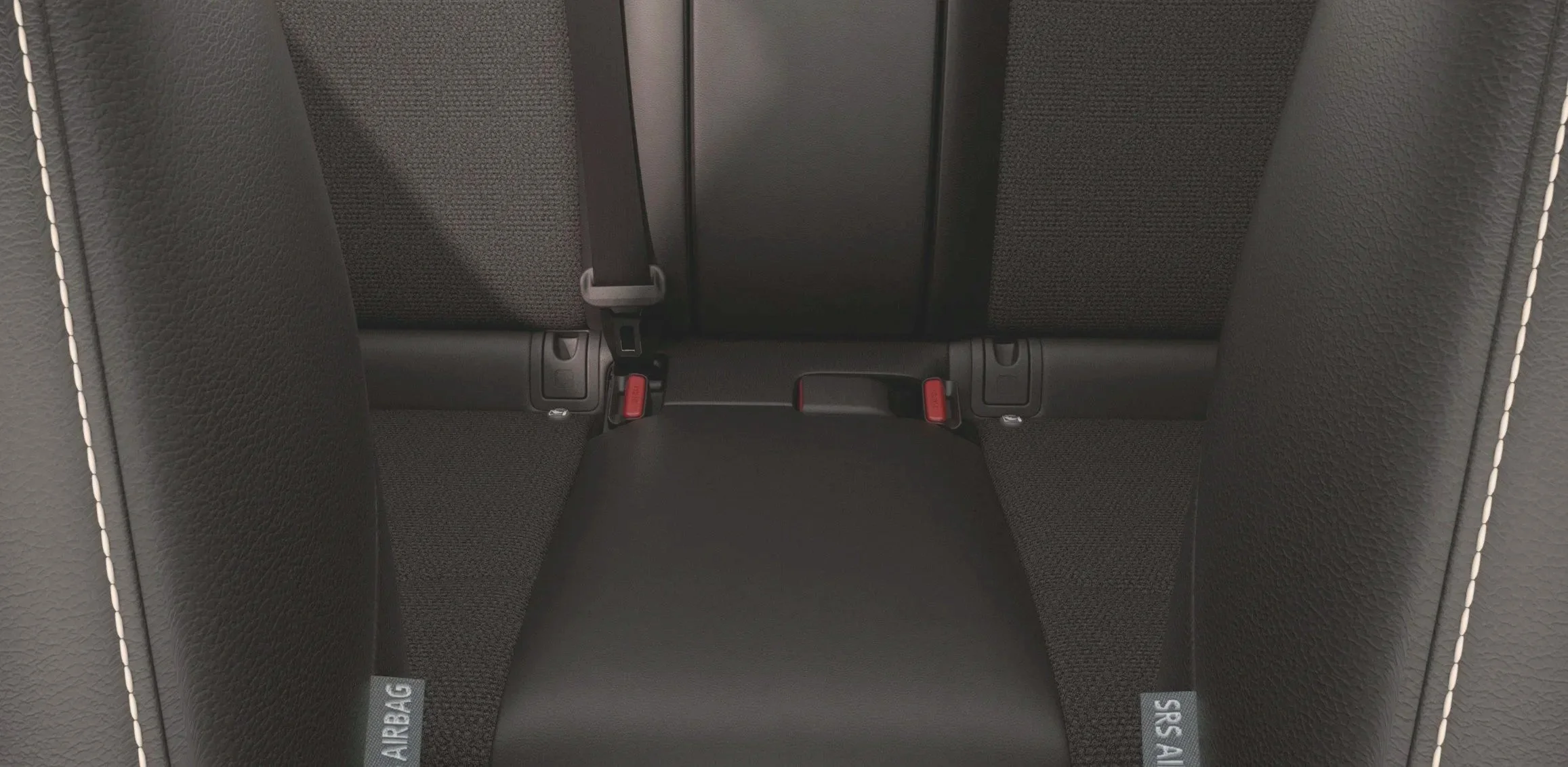
One redeeming feature of the backseat is that the seatback itself actually splits in a 40:20:40 configuration, meaning that if you remove or instal a seat on either side, and you need to make some big thing fit, like a telly or new curtain rods, you can drop either side of the 40% seatback and keep the centre armrest in place.
Some might find it oddly satisfying having the basic daily operations you like to do, such as plug in your phone, adjust the air-con and put the radio on, are all remarkably easy to do - in this age of over-designed, over-styled and therefore bamboozling cabin layouts.
SAFETY
The Yaris Cross is generally a very safe little car by modern standards. It’s obviously a 5-star car in terms of its ANCAP rating here in Australia and it rates quite well in all the main pillars of assessment.
The performance in physical crash tests is quite good for a vehicle weighing only about 1300kg, and being as small as it is. Generally smaller, lighter vehicles tend to underperform in crash tests owing to their reduced mass having less resistance in a crash compared with bigger, heavier vehicles.
So in the exact same crash scenario, with exactly the same inputs, the bigger, heavier vehicle will do better due to its inherent ability to better absorb and redirect the kinetic energy of an impact.
Let’s look at how Yaris Cross did at protecting occupants.
Chest and leg loads imposed on the driver and front passenger were marginal, according to ANCAP, but that doesn’t necessarily make it a deathtrap at this point (just to be clear). But lots of small mark-downs has left it with about half of the possible 8 points on offer in the frontal offset test.
One 1-point markdown was for variable head contact with the steering wheel through the airbag, which means even though the airbag slowed down the dummy’s head, it was insufficient enough to avoid it contacting the wheel entirely.
There was also a ‘concentrated load’ point deduction with each dummy for the lower legs contacting the underside of the dashboard. This could’ve been partly avoided had Toyota fitted a knee airbag for the driver, but it’s the nature of such a small vehicle that a sever frontal impact is going to cause lower leg injury, unfortunately.
That being said, the rest of the Yaris actually performed quite well, particularly in child occupant protection, but there is a good point to be demonstrated here about making sure your young children do not leave their restraints too early.
In the same frontal offset crash text, the 10yo dummy received good results, but the 6yo dummy an ‘adequate’ score for the head, resulting in a smidge over a 1 point deduction. It did also miss out on features (and therefore points), such as blindspot monitoring being standard (which it is now from 2025 onwards).
But it needs to be said that the lane-keeping as tested was ‘adequate’ overall, and the auto emergency braking, while functional, appeared less than confidence-inspiring.
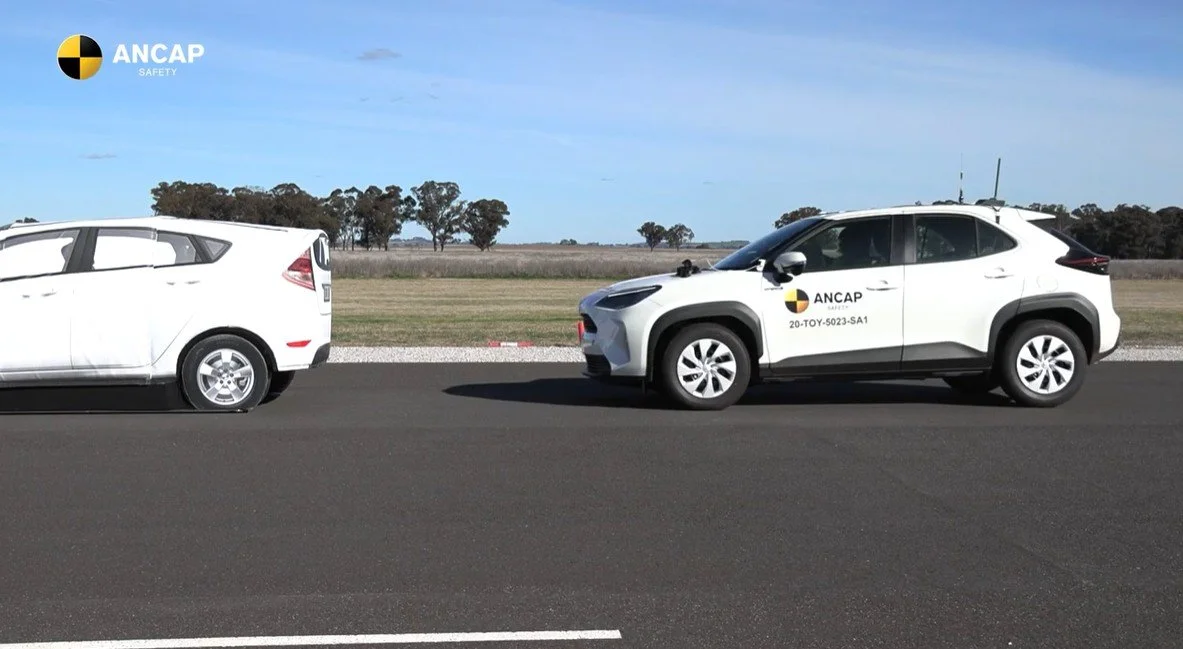
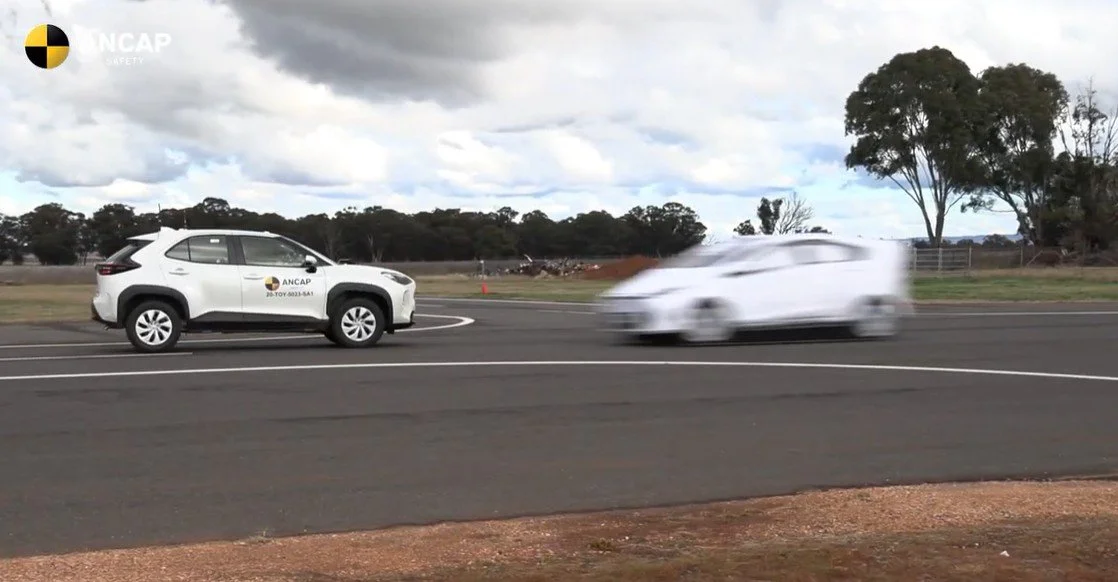
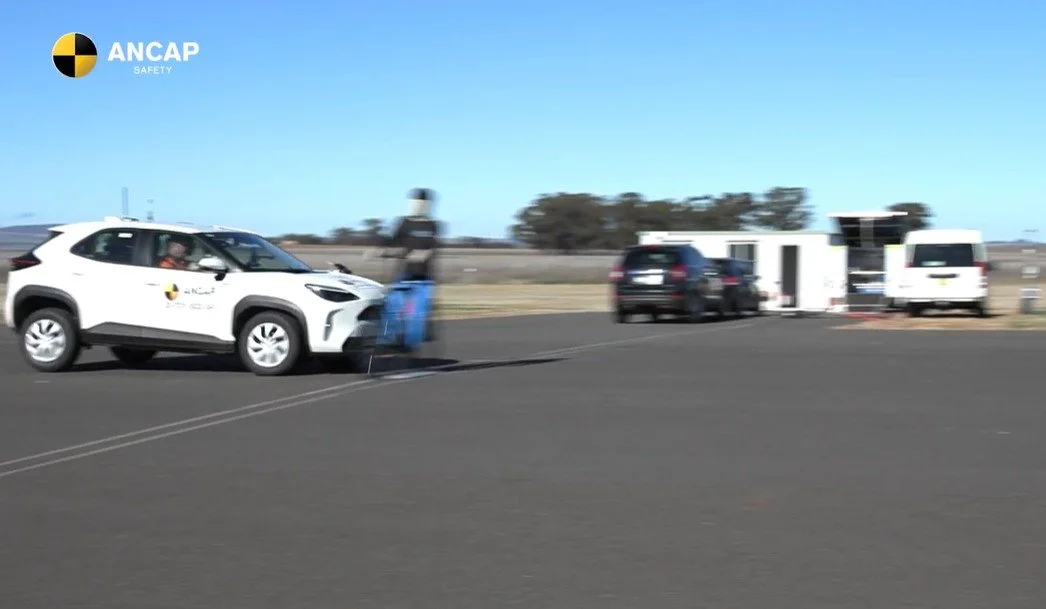
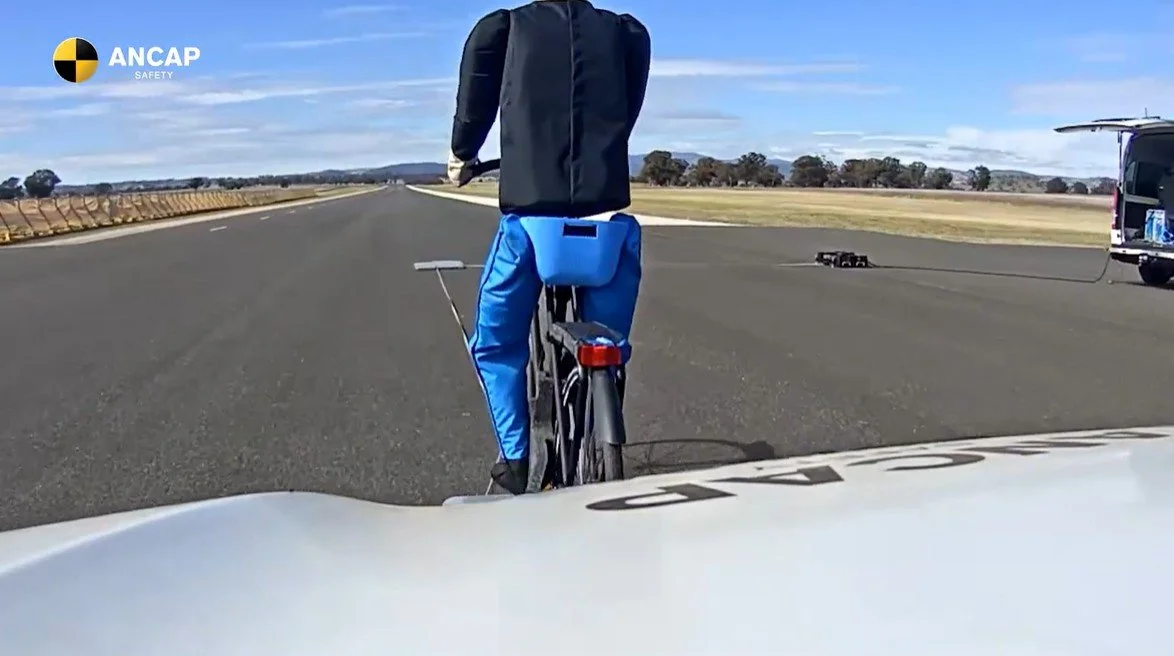
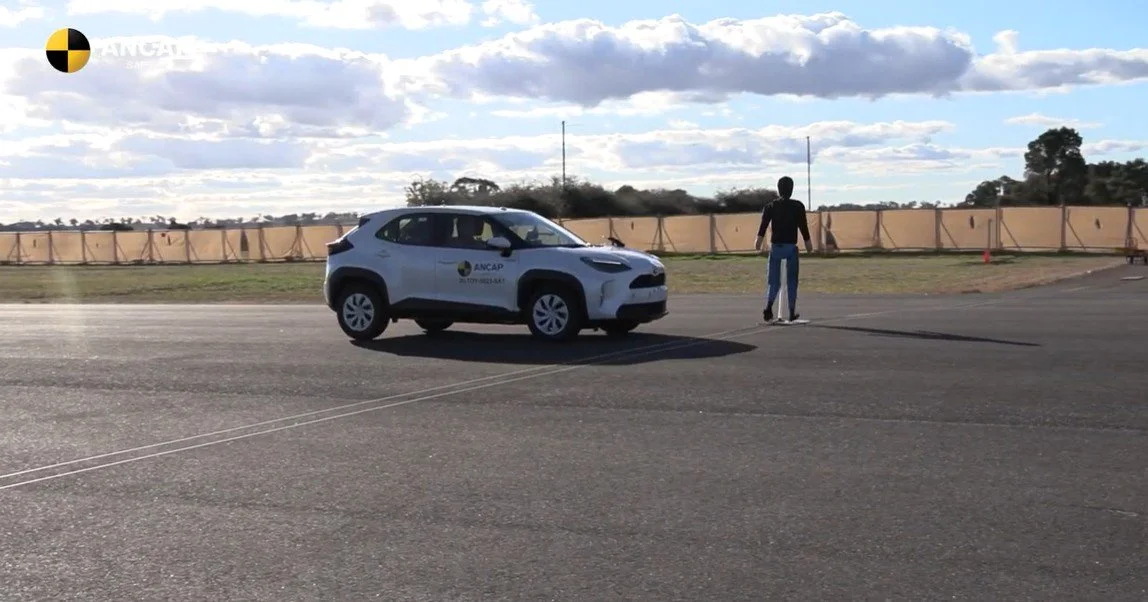
In the cyclist detection test in particular, the AEB system seems to modulate the braking pressure it was applying, as if it couldn’t calculate how much was required to stop at the measured rate. It does the same thing with the crossing pedestrian. The system also gets very close to hitting the pedestrian walking straight, directly ahead of the vehicle.
The fact is, it passes these tests and does overall perform quite well in the majority of scenarios, offering good elevels of all-round protection for the occupants and bystanders. But of course, none of these systems can compensate for the driver’s skills and abilities in paying attention and operating the vehicle safely.
I'll help you save thousands on a Toyota Yaris Cross
Just fill in this form.
No more car dealership rip-offs.
Greater transparency.
Less stress.
ENGINE
If you’re shopping for a performance version of the Yaris Cross, you’re going to be disappointed, becuase the only thing ‘GR Sport’ about that titular model grade is the badging and the red stitching. There is no GR Sport upgrade from a mechnical or performance point of view.
If, on the other hand, you’re looking for an ordinary family car, the rest of the Yaris Cross range has the same engine as the GR Sport, which is a 1.5-litre turbocharged 3-cylinder petrol engine that makes some power. It’s actually got a small hybrid side to the powertrain as well, but the whole thing only makes 85 kilowatts.
Put very simply, the best usage case for a Yaris Cross hybrid is city use. This will mean you get lots of opportunity to recharge the tiny 0.76kWh battery via braking, coasting and downhill driving, where you’ll derive the most efficiency from this system.
But don’t be under any illusions here, the Yaris Cross is going to perform average at best in terms of acceleration. The hybrid system will kick in for the first 0-20km/h take-off, before reverting to the combustion engine.
Yaris Cross’s one redeeming feature here is fuel economy.
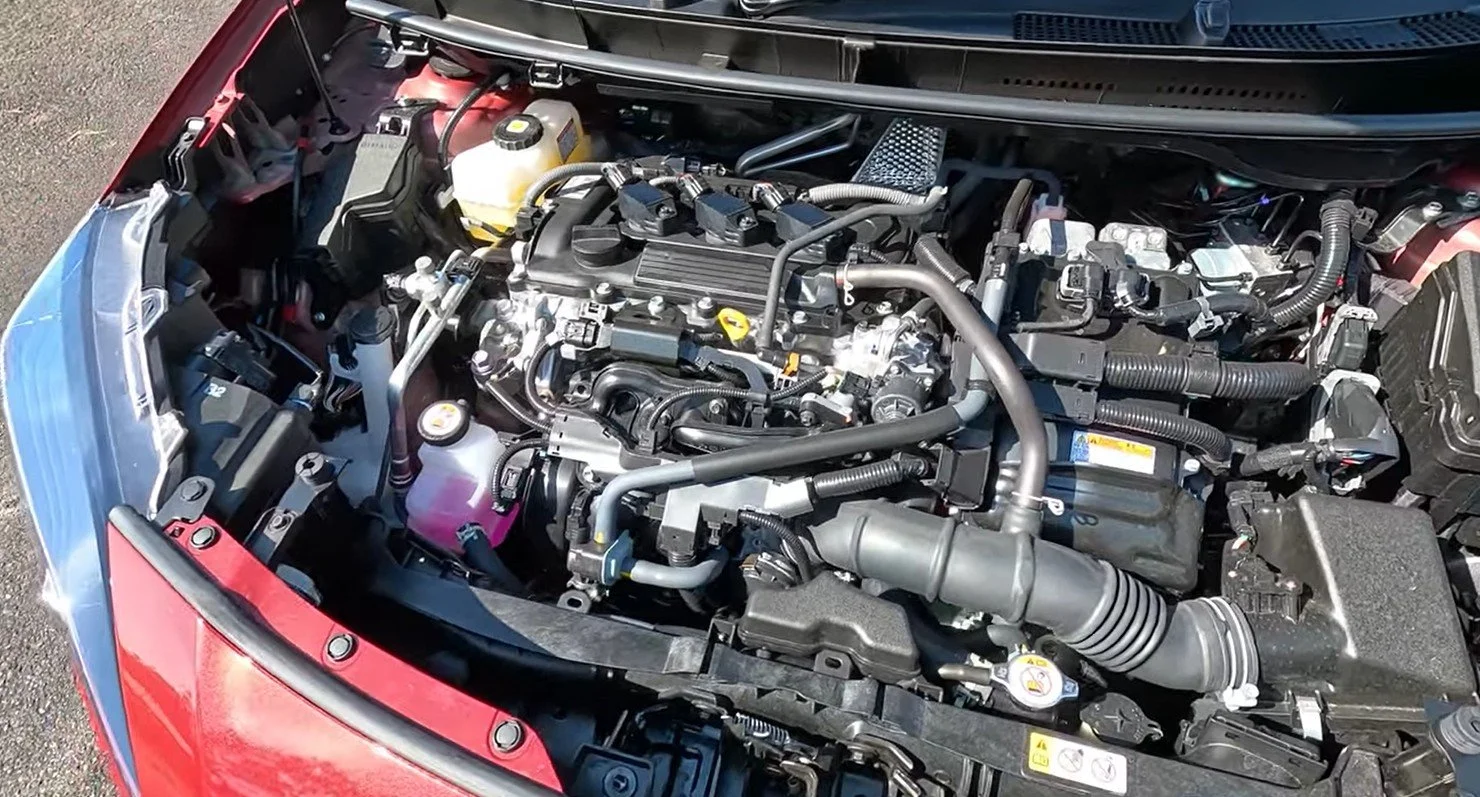
Image: DrivingEnthusiast.com.au
The Yaris Cross weighs 1305kg, which is about 175kg more than the equivalent Yaris hatch. Meaning the same 85kW powertrain has to move an additional 175kg of mass, so naturally the Yaris Cross as a worse power-to-weight ratio of 66kW per tonne, down from 76kW per tonne.
But this also affects fuel economy, because the laws of physics says it must. You get a claimed combined fuel economy figure of 4 litres per 100km, and initially that seems astoundingly good. In terms of comparing it with bigger, heavier SUVs, it is quite good. In fact it’s marginally better (by 0.2L/100km) than a Corolla Cross GXL for the same price.
Compared with the Yaris hatch hwoever, the Yaris Cross is chugging an additional 0.7 litres per 100km. That’s 21 per cent worse fuel economy from the Yaris Cross.
So yes, fuel consumption in a Yaris Cross is good compared with it’s rivals and its bigger, heavier stablemates in Toyota’s range, but it’s always going to be more economical to run a plain old Yaris instead and sacrifice the 20mm of ground clearance.
Is 2cm going to make or break your purchasing decision considering 20 per cent better fuel consumption?
FUNCTIONALITY
Like the Yaris hatch it’s based on, the Cross gets a modest boot with soft parcel shelf because that’s just how carmakers are cutting costs these days.
You can drop the seats in a 40:20:40 configuration with is good for when you have a child restraint installed but you need that centre seat partition to fold as well to make room for something bulky. Two cupholders can be found in the centre fold-down armrest.
If you choose the 2WD Yaris Cross, you’ll at least get a temporary space-saver spare under the floor, which means you can actually get home if you have a sidewall puncture.
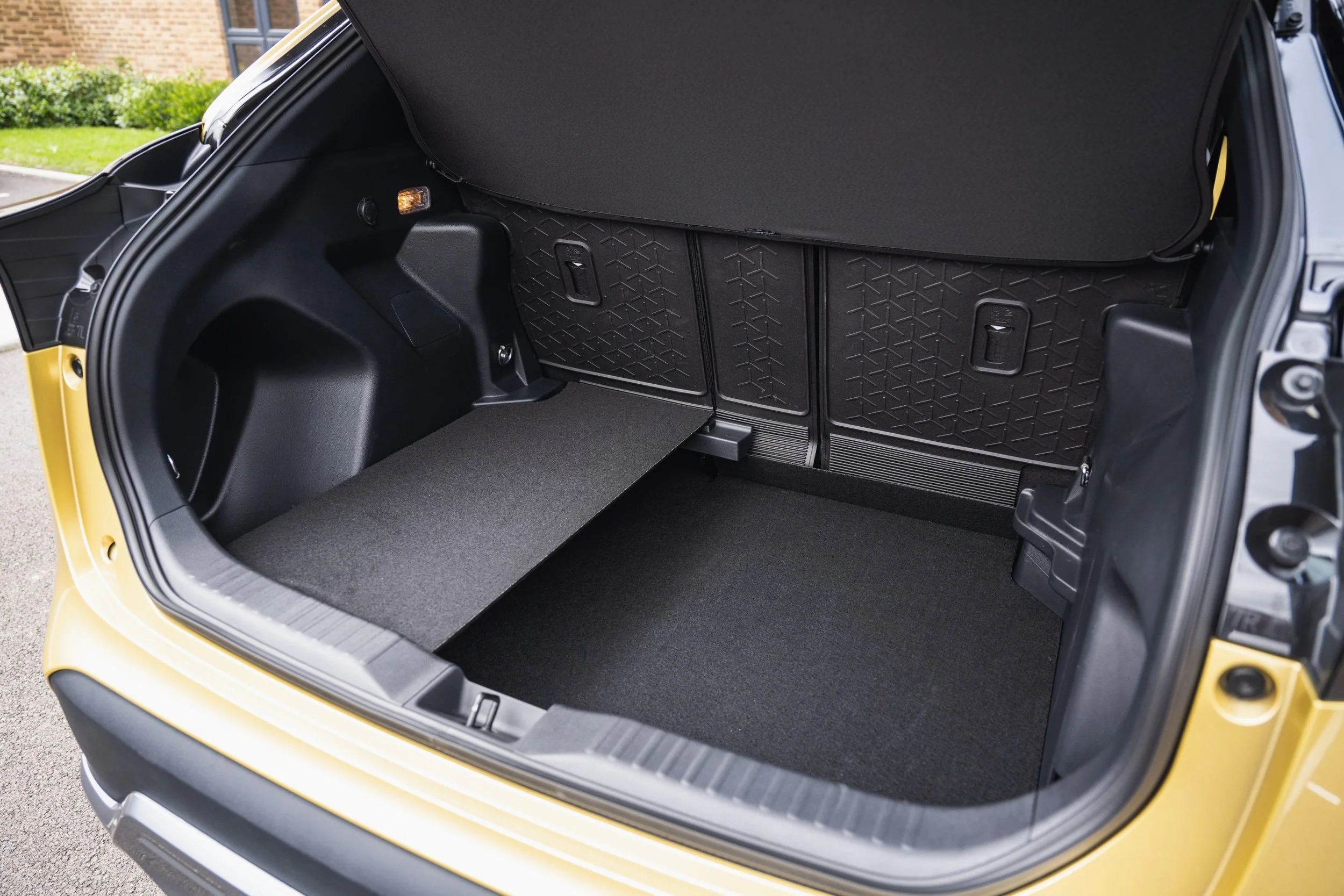
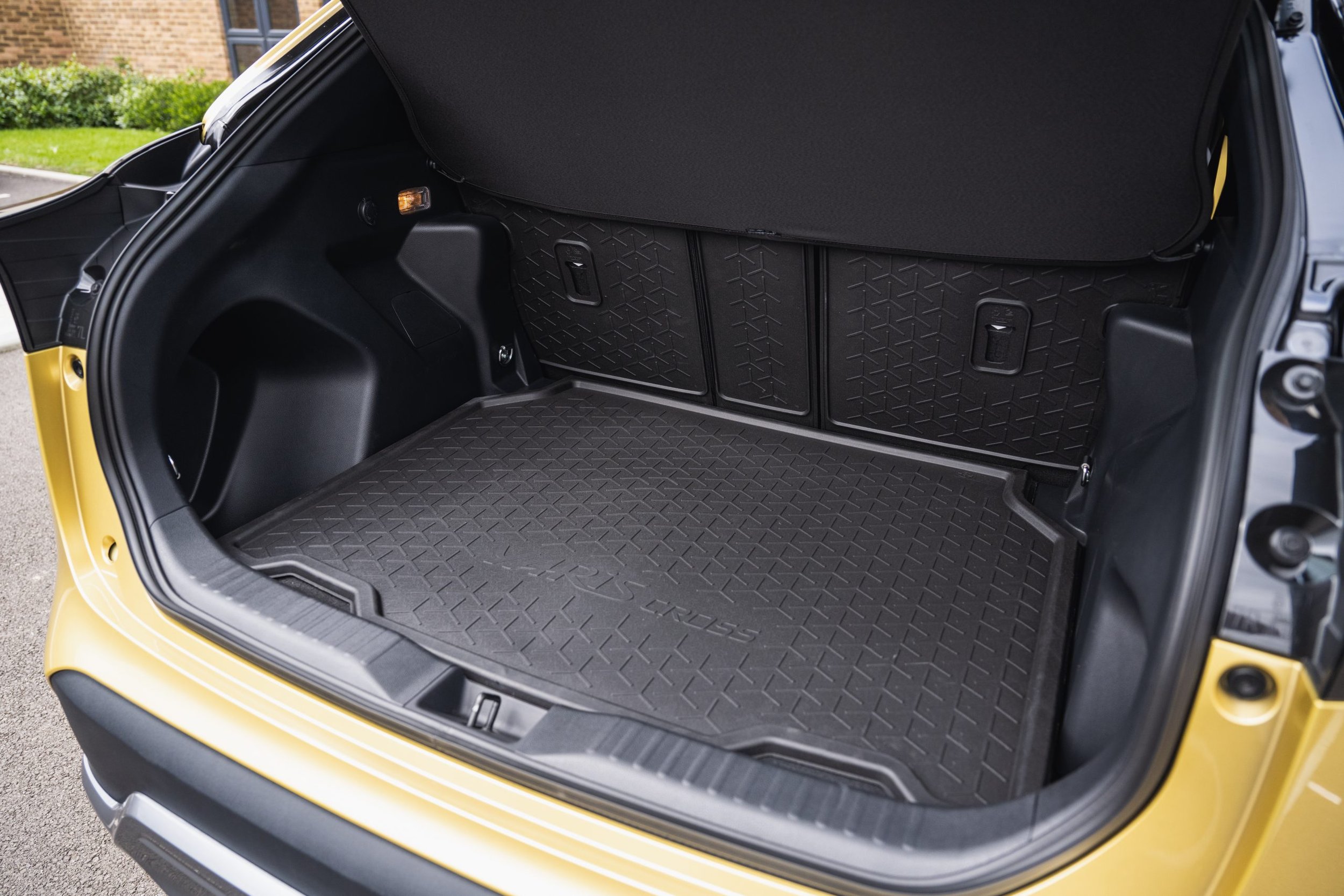
With the second row of seats up, you get 315 litres of luggage space in the AWD variants, or 390 litres in the 2WD variants, on account of the hybrids taking up that space with the battery and electric motor.
That 315L in the hybrids is 16 per cent more than in the Yaris hatch, and it’s 44 per cent more in the 2WDs without the hybrid hardware.
You also get a sub-floor with 40:60 split cover that allows you to stow away valuable items.
DRAWBACKS
Getting a puncture in a Yaris Cross is just as problematic as it is in its bigger sister, the Corolla Cross, it’s potentially dangerous, and always gut wrenching, especially considering you have to use this vehicle in real life.
So you’re left with the same two options: a tyre repair kit (compressed sealant in a can) if you get the hybrid, or a space-saver spare in the petrol-only versions.
If you don’t know, the tyre repair kit is a container of compressed tyre sealant gel that you connect to the tyre valve and which sprays out into the tyre to seal it from the inside in the event of a puncture.
The problem is this simply doesn’t work if you get a puncture on the sidewall of the tyre (the rubber you actually see facing you when you look at the wheel directly from the outside). This is because centrifugal force sends the goop to the tread-face of the tyre (but on the inside, obviously). The sealant cannot reach the sidewalls.
Now, Toyota Australia knows this, and they also know what the driving conditions are like here. We have long distances between major towns, lots of people live in regional areas, and even in metro cities like Melbourne or Sydney, the nearest tyre shop can be a long way from where you might be stranded - and they’re always shut in the evenings and on Sundays. So you’re probbaly going to be calling a tow truck.
We also have a lot of rubbish on our roads, lots of tradies, rocks and nails and screws and debris on the roads, on the roadside shoulders (because every time there’s a crash, lots of plastic and junk just gets swept to the emergency lane), and so on. Having a can of compressed sludge that may not work is an inferior option for getting you mobile again - especially on hot days with elderly passengers or kids in the back.
For this reason, the hybrid is could be a poor choice if you live in regional or rural areas, because calling a towtruck in these scenarios might be impractical in the literal heat of the moment during a bushfire, or simply for lack of reception.
Especially if you live outside a major metro area, the two-wheel drive Yaris Cross is probably best, because at least having a temporary space-saver spare actually gets you going again (and getting you out of harm’s way at the roadside). And it means you can replace the flat as soon as possible.
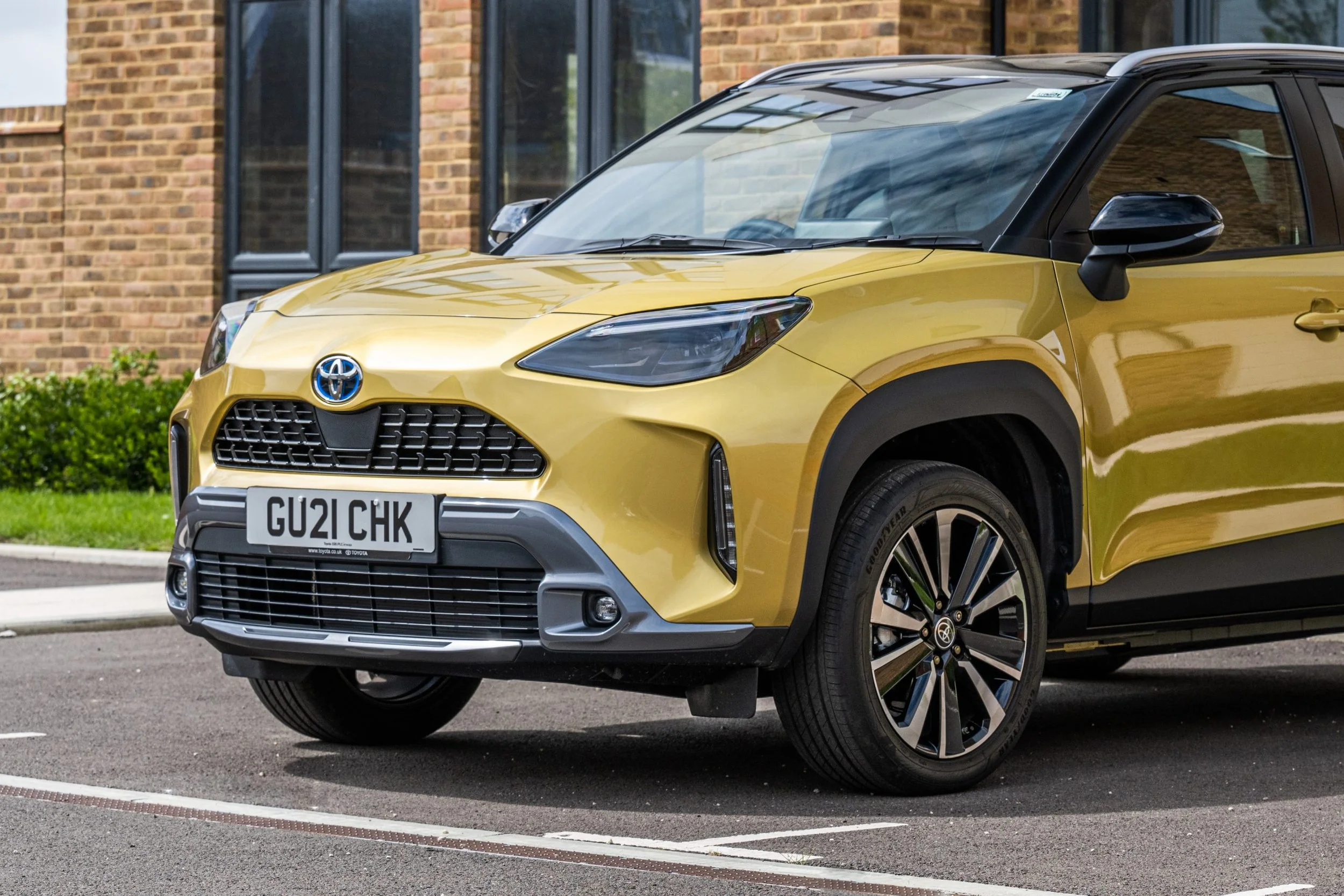
The last main drawback with the Yaris Cross is its fundamental lack of performance. It’s just not enough grunt and sometimes, even for regular city drivers who need to commute or use a freeway or overtake a truck, having enough power isn’t always about performance. It’s just for practicality’s sake.
Yaris Cross is pretty slow. It’s got the same power-to-weight ratio as a Suzuki Jimny, which has often been criticised for lacking power on regular roads in normal traffic.
MAIN COMPETITORS
HYUNDAI VENUE
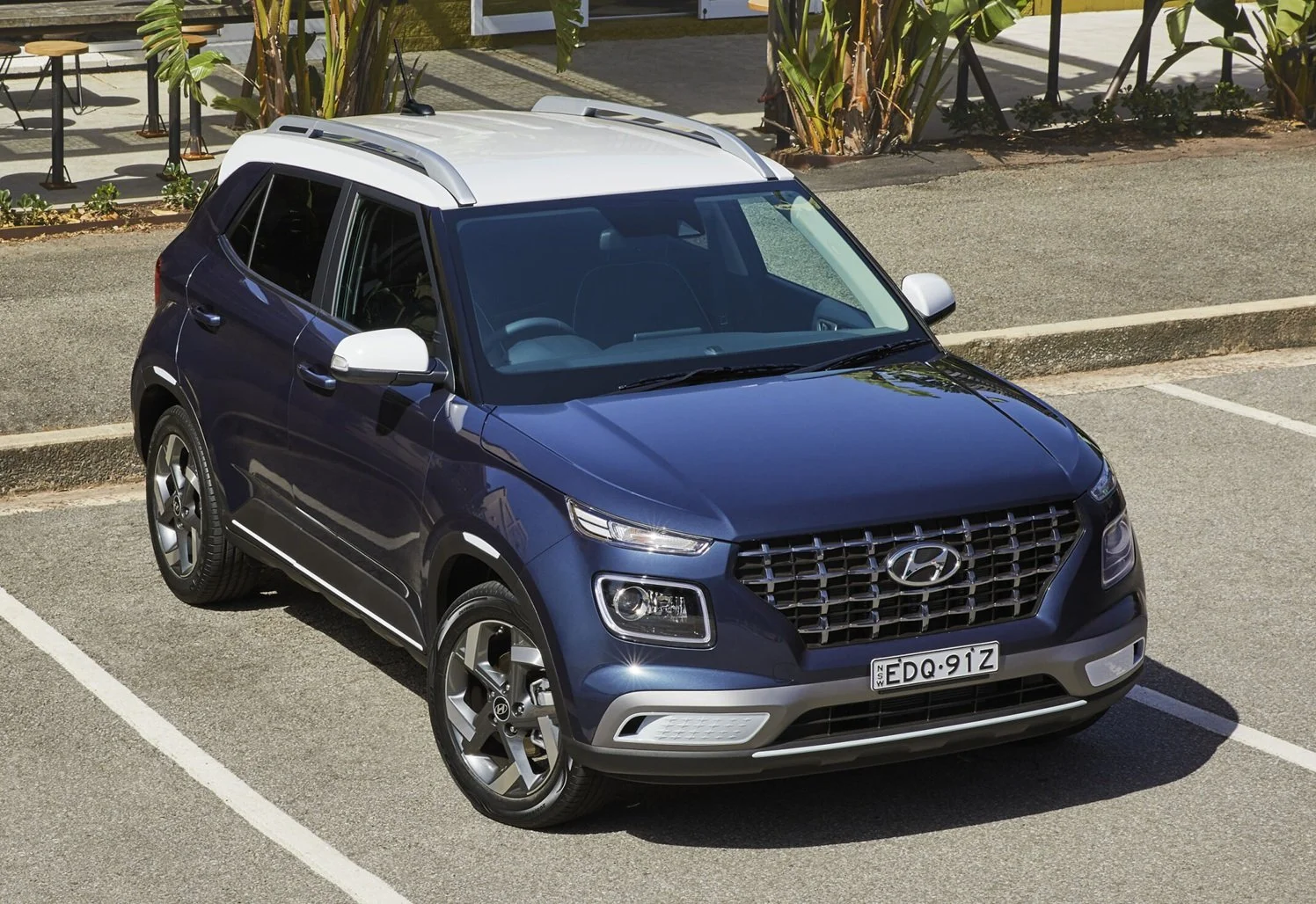
Venue was one of the last arrivals in this ‘Light SUV’ category for a mainstream brand, and it stands out as being the most affordable Hyundai in the company’s range.
It comes in funky colours, it’s got decent ground clearance (for the segment) and it’s very well equipped. And unlike the CX-3, it’s been recently crash tested, meaning it’s also quite safe. But it too is a somewhat ageing platform, debuting back in the late 2010s.
And thanks to the relative age of the model, it hasn’t been given the full hybrid treatment whereby you pay extra for little to no performance or fuel economy benefit. This means ths price is $34,000 for the top-spec version and for that price, you can pick the 1.5L petrol 4-cylinder engine and maybe even consider the premium paint.
Click here for more on Hyundai Venue >
MAZDA CX-3

The Mazda CX-3 combines elegant styling with smooth powertrains and quality interiors.
It’s quite compac, at just 4.2 metres long, but its platform is shared with the now very old Mazda2. So its safety cred is outdated.
This compact SUV is possibly the perfect fit for getting around town in comfort and style, especially for young drivers who can’t be seen in anything ugly; and let’s face it, Mazda’s styling is timeless.
The CX-3 is a conservative all-rounder,with just a little more prestige and polish all round. CX-3 is a sensible choice for affordable, elegant and spritely city commuting.
Click here for more on Mazda CX-3 >
KIA STONIC
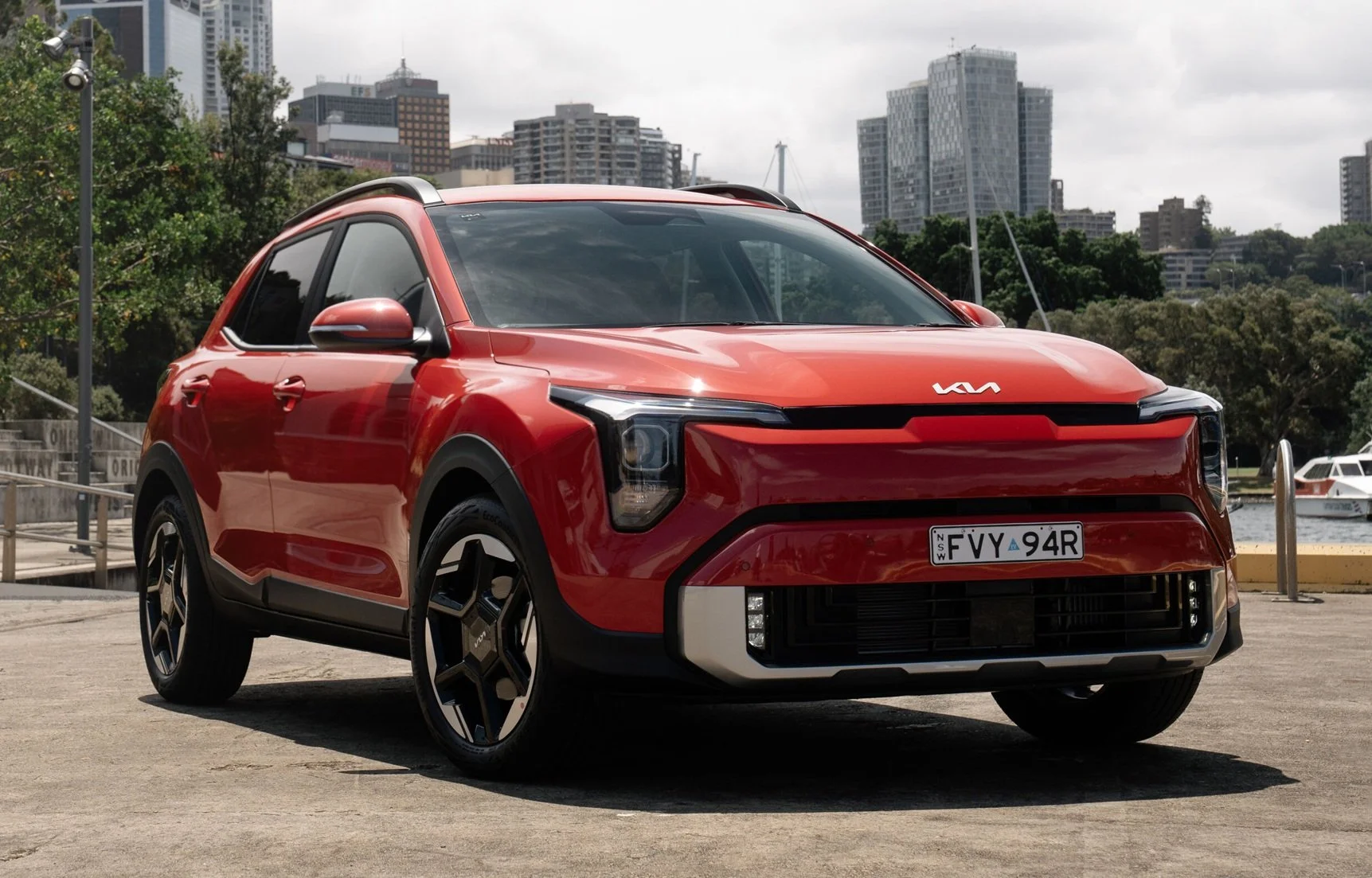
The Kia Stonic has recently been updateed to make it more in-line with the brand’s recent designs and it’s fractionally bigger as well, but still smaller than the Seltos.
It’s frugal, it’s agile and it’s affordable while also being just as reliable and practical as any other small SUV, only with its own unique user interface.
It’ has a 1-litre turbocharge 3-cylinder engine with ‘mild hybrid’ assistance, making it a spritely little runaround that it worth putting on your shortlist.
Click here for more on Kia Stonic >
MG ZS

A similarly priced, similarly high-value small SUV that has broken the mould of affordable slightly-raised family runabouts.
Like the Jolion, the ZS is remarkably popular against the notionally bigger brands fighting to hold onto market share.
THe ZS is also available in hybrid and offers a compelling, smooth inner-city partly electric take-off at the lights.
And like the Haval brand, the MG is also wholly factory-run, meaning you’re dealing with the authorised dealer, not an importer. The warranty is as competitive as any other brand, too.
Click here for more on MG ZS >
CONCLUSION
If you need a frugal, affordable and modestly practical ‘SUV’ to get around the city in, the the Yaris Cross is not going to be the exemplar of the breed, but it certainly is a contender.
If you need legroom and sporty handling, then you’re probably buying in the wrong category unless you are prepared to also compromise on things like luggage space and features.
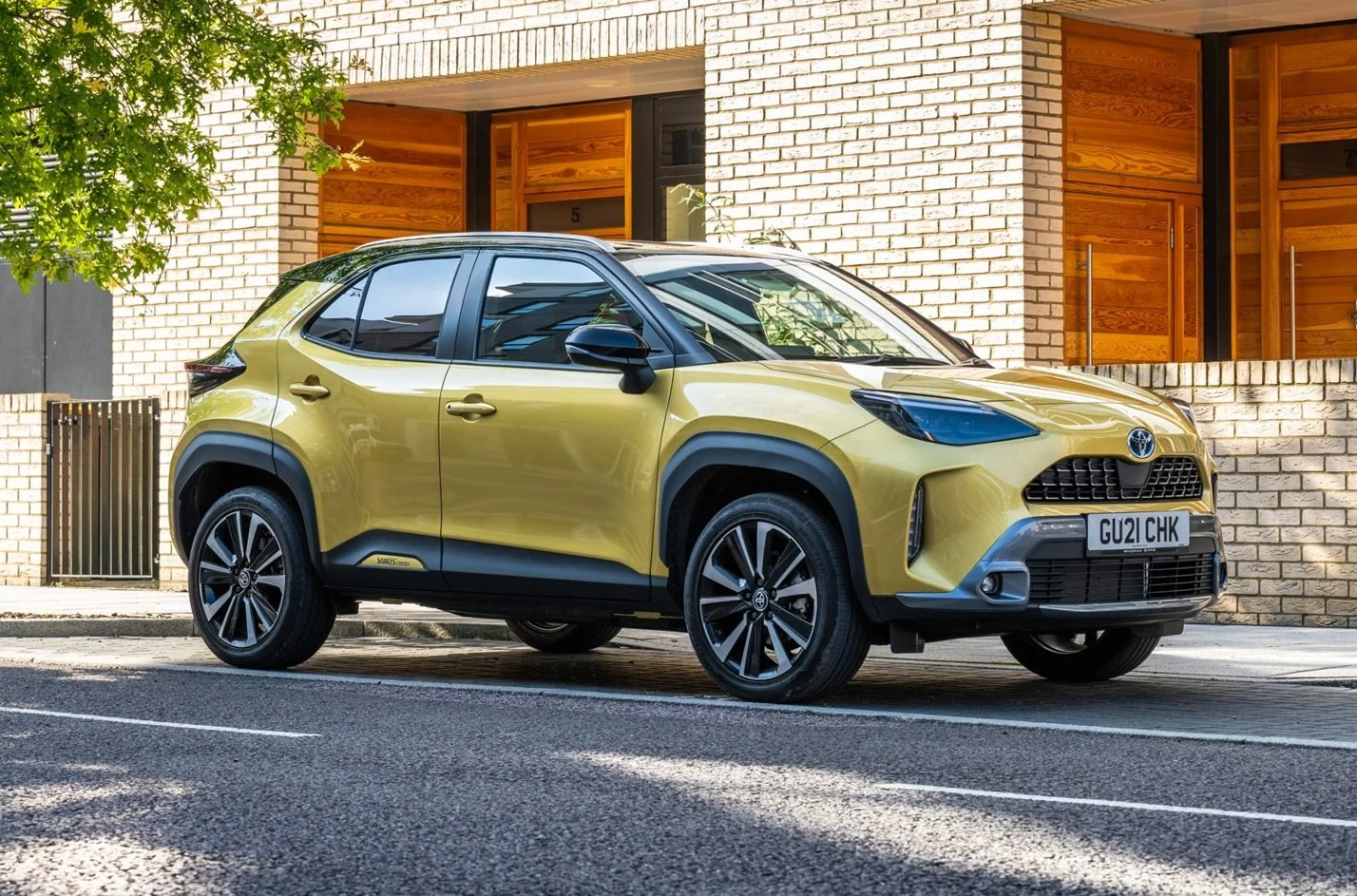
That’s just the nature of buying a ‘light SUV’, which should probably be called ‘poverty’ SUVs instead, because you’re paying a little bit more for what is effectively just a raised hatchback, albeit it heavier and slower as a result.
The hybrid Yaris Cross does offer better fuel economy than the slightly bigger ‘small SUVs’ like Corolla Cross and Hyundai Kona, but again, you need to make sure it’s going to be enough for you: enough space, enough performance and enough real-world practicality. This extends to things like the spare wheel situation if you want the hybrid.
Yaris Cross isn’t a great vehicle in the modern context of small families (which become big ones quicker than you may appreciate right now), but it will have excellent resale value because everything Toyota does.
Certainly if you have elderly parents needing a slightly higher-up runabout to do the shopping and go to bowls in, it’s ideal. And for any parent wanting to put their teen-to-young-adult kids into something easy to park and that lacks the performance to get into trouble with, it’s ideal for that too.
Just make sure you give it a thorough going-over before committing to what is an affordable, if not the best value, light SUV ideal for the suburbs and city traffic.
More reports



The GWM Cannon Alpha plug-in hybrid is the ute catching every other ute brand napping in the Australian market. It’s innovative, full of clever design and has bucketloads of grunt for towing, load-carrying, touring and off-roading. It’ll leave a turbo-diesel Hilux for dead, and leave you with change, unlike Ford Ranger.