
If you’re shopping for a sporty hatch or sedan, the Hyundai i30 is the benchmark for high-value performance and quality. For small families needing boot space and 5 comfortable seats, but not an big SUV, the i30 N-line and hybrid offer bang for your buck in tough economic times.

Save thousands on a new i30
Fill in the form - we’ll get you a great price without the stress
The Hyundai i30 the definitive small hatch or sedan for the budget-conscious and offers enthusiasts an affordable Porsche-like driving thrill for the price of a Japanese sports car - but that’s all changed.
Essentially, you get the choice of two body configurations - hatch or sedan - and with two distinct flavours of driving. There’s the i30 sedan mild-hybrid full of the features you need and those you want for modern driving, such as commuting, city traffic and suburban running around.
But the second flavour of i30 is the N-Line versions, available in both hatchback or sedan, which is like a more civilised version of the driving enthusiast’s i30 N with its hardcore performance streak. We’ll get to the details shortly.
The range has been through several substantial updates over the years, while holding its place as one of the best-selling cars in Australia, but the market has changed and consumers aren’t buying cars like they used to. So Hyundai, it seems, is adapting.
The sedan mild-hybrid is a safe, frugal and spacious potential first car for family duties, including teaching your young-adult kids how to drive, or there’s the performance masterstroke for the enthusiasts. But it will no longer be available as a hatchback in the more sedate, mainstream variants like ‘Active’, ‘Elite’ or ‘Premium’.
If you are shopping around for a small, affordable hatch specifically, there’s the Kia Cerato, Subaru Impreza, the Mazda 3 or the Toyota Corolla still to choose from - and they are all very decent hatchbacks in their own right. But none of them is anything like the i30 N-Line to drive, save for perhaps Cerato GT which gets very close.
The i30 is in the Venn diagram crossover area where one is the brutal performance car, territory once dominated by the Honda Civic Type R, and the other being an ordinary, suburban family hatch that can take your ageing parents out to lunch.
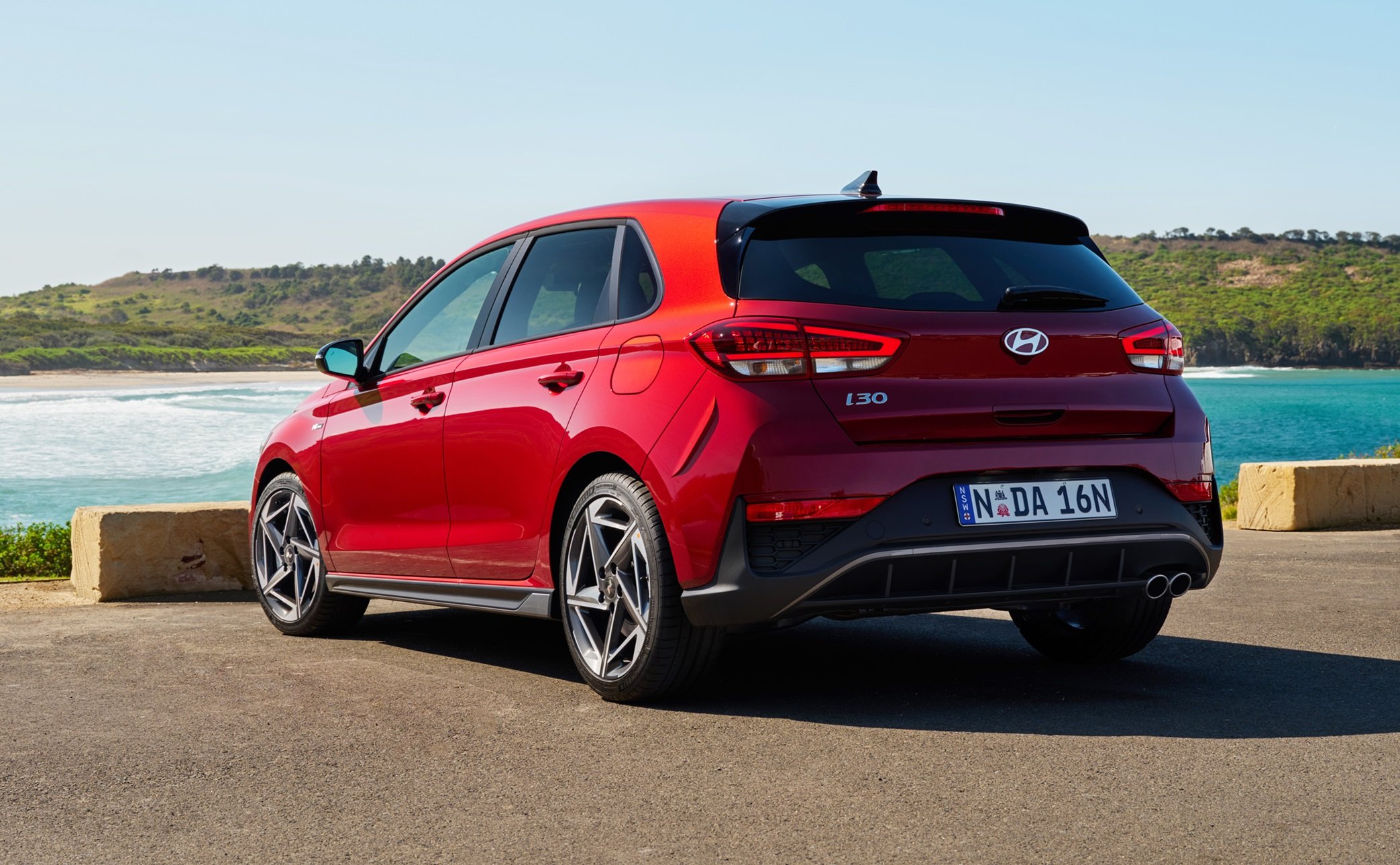
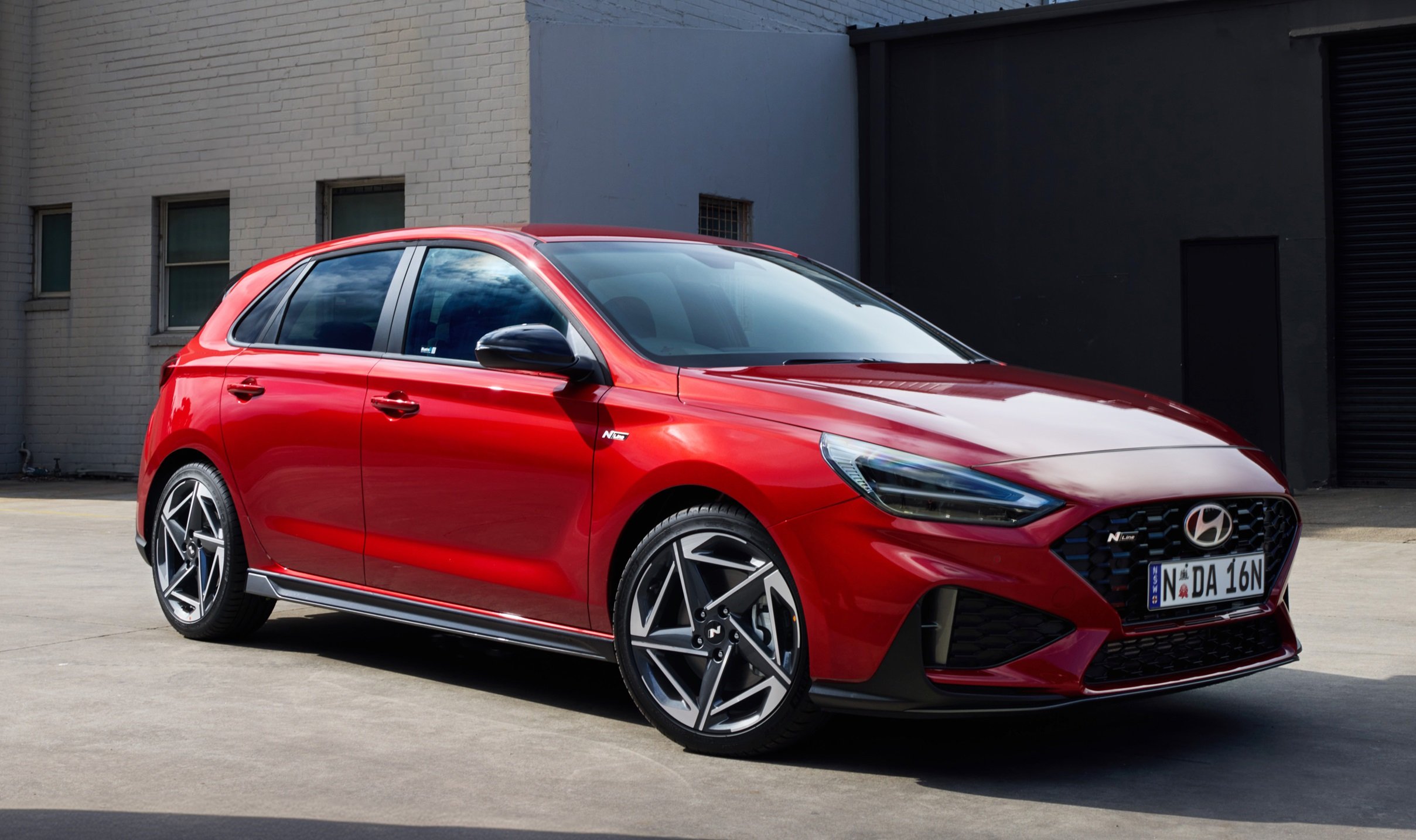
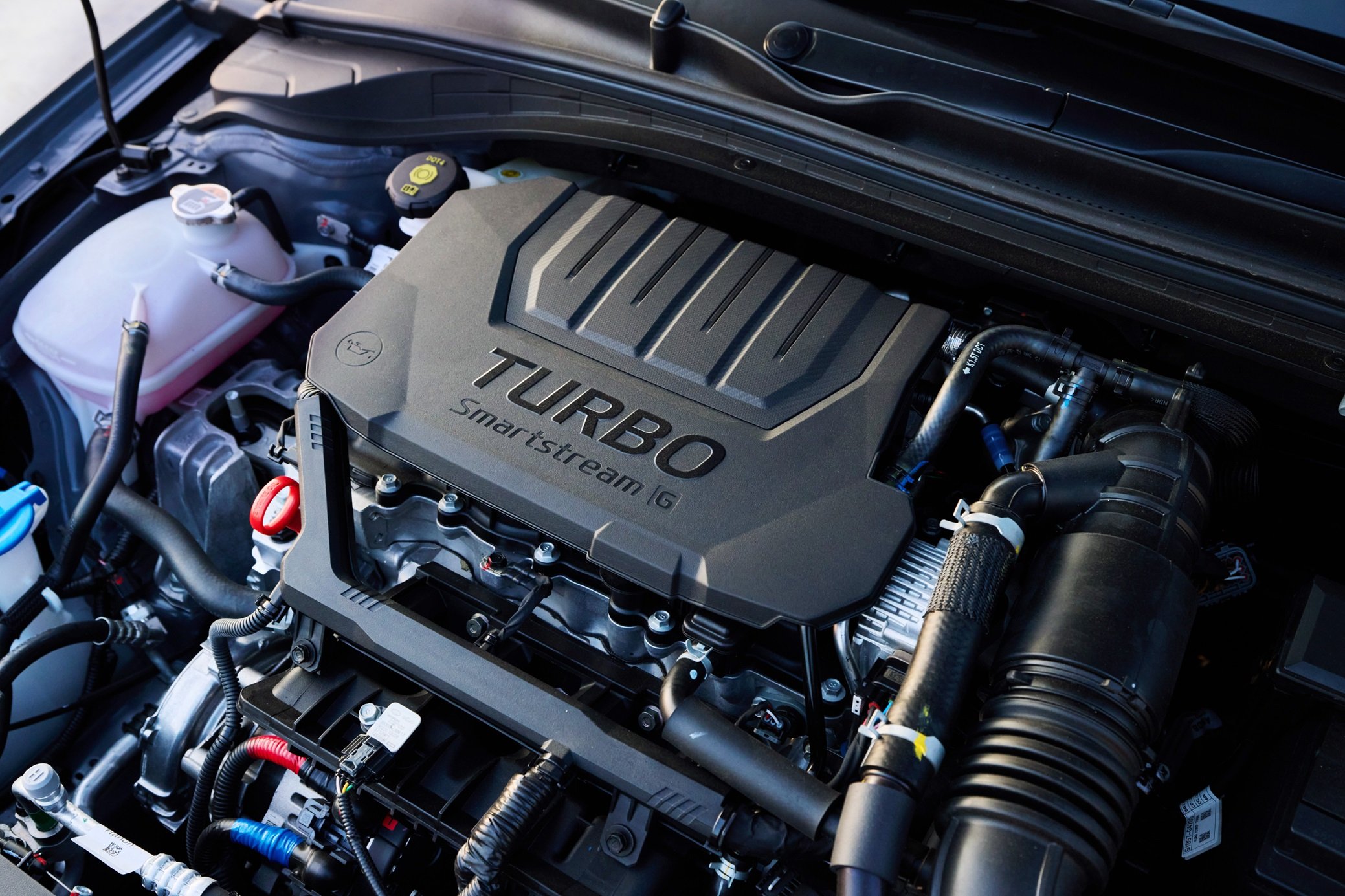
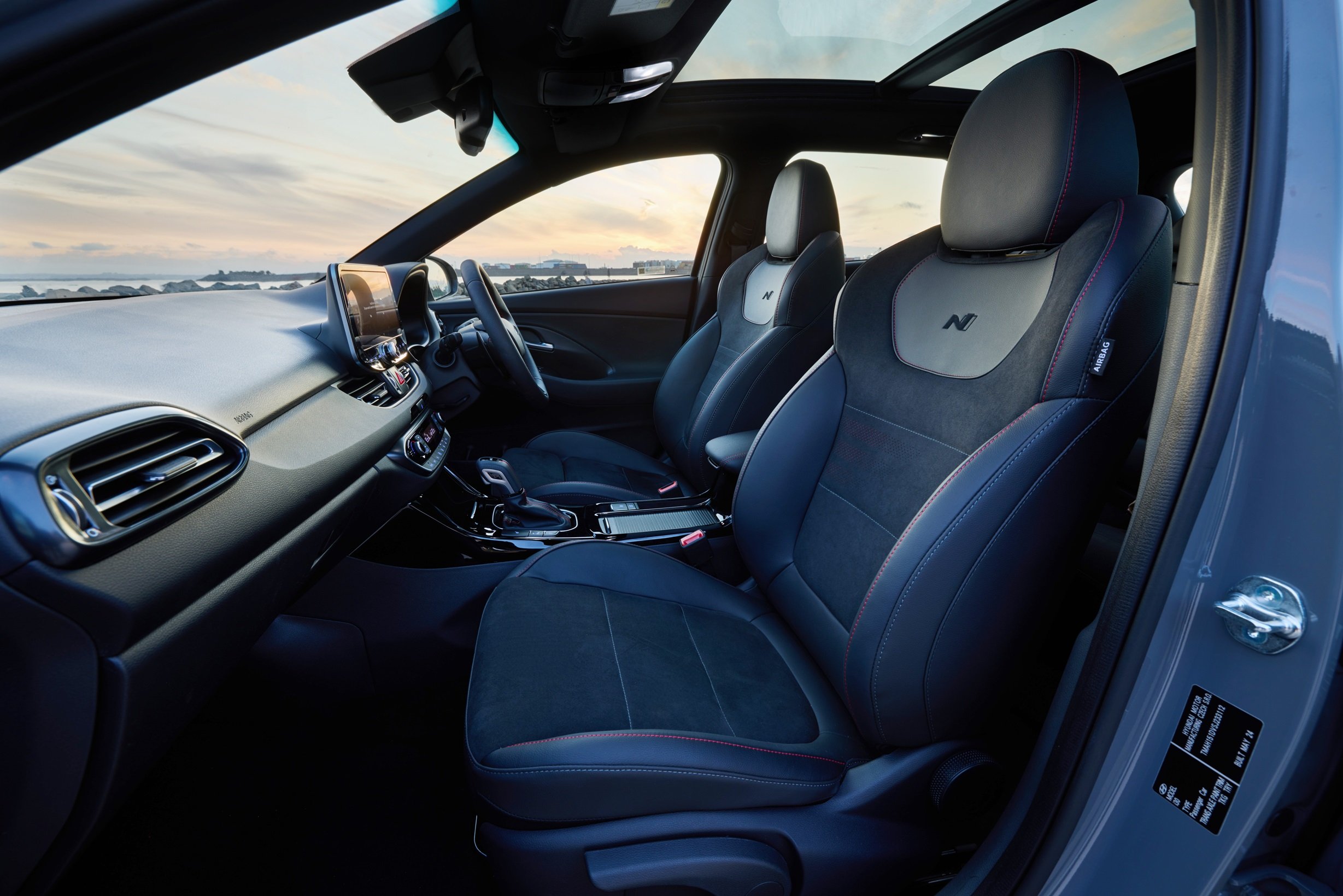

The i30 N-Line and N Performance variants truly have fractured the reputations of the Golf GTI, which has always been seen as the haloed hot hatch, and the Type R was the affordable performance car for true enthusiasts. Neither is the case anymore.
If you do want the cornering Jedi known as the i30 N Performance, click here >>
The i30 range has seen the i30 hatch left with only the N-Line performance versions now available, leaving the regular variants for the non-performance focussed among you in the sedan. This, the brand amalgamated the Elantra into the range, calling it the i30 Sedan.
The rest of the range is pretty impressive too, with that second foot firmly planted in the ‘value’ camp. This means it competes (some might say ‘cannibalises’) with Kia Cerato for the best value option, and then there’s the ubiquitous Toyota Corolla that holds steady atop the podium for reputational mass market fleet-buyer appeal.
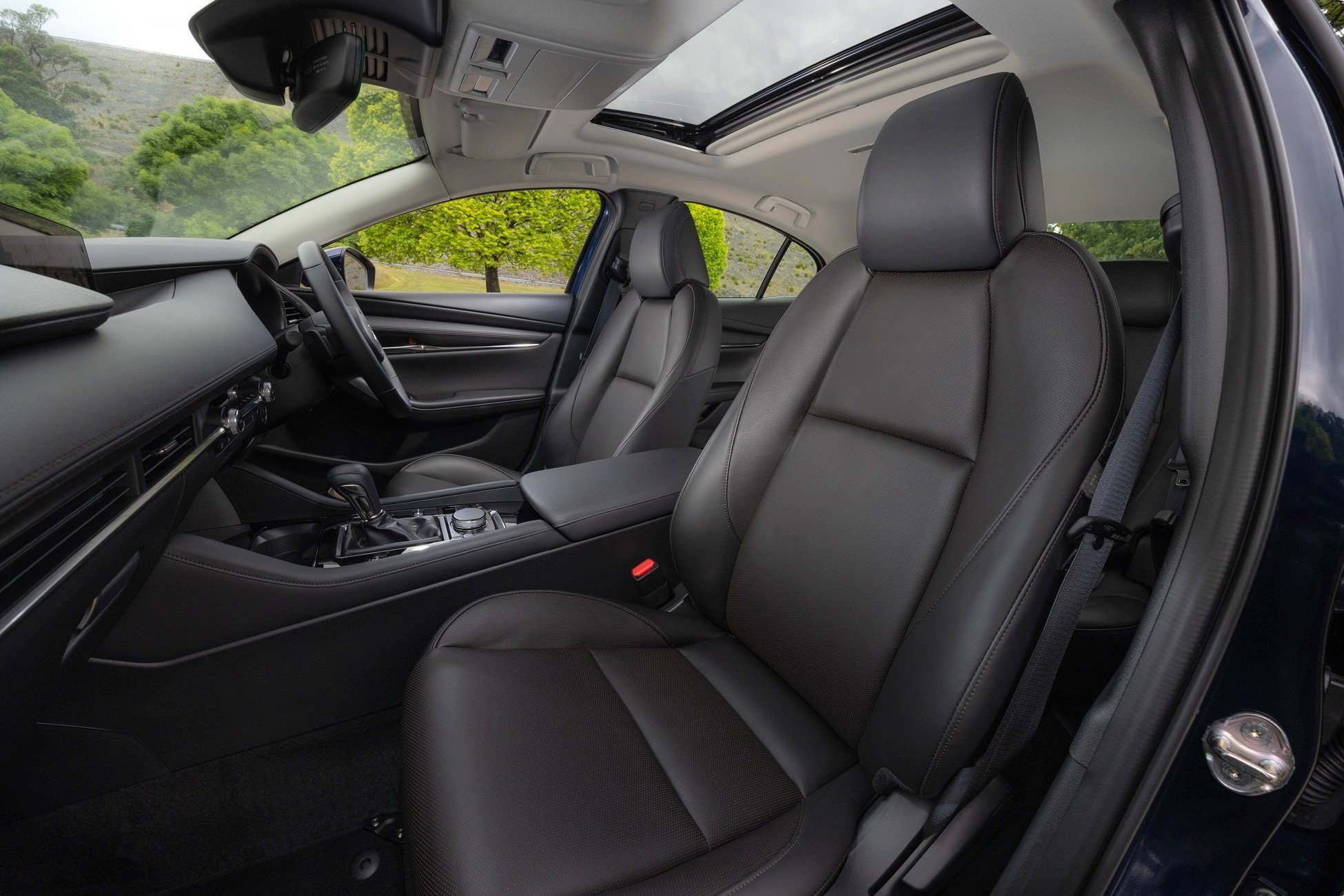
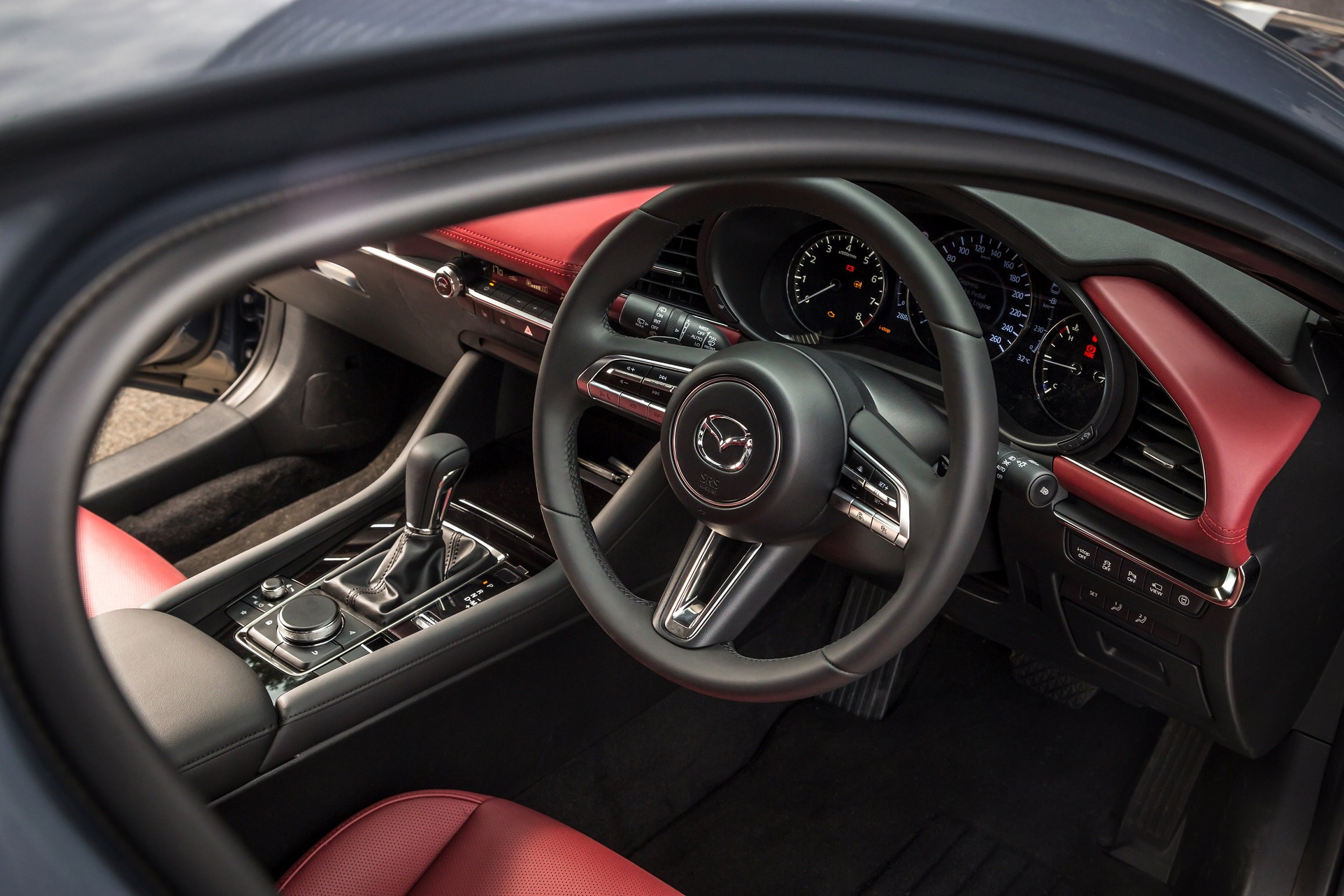
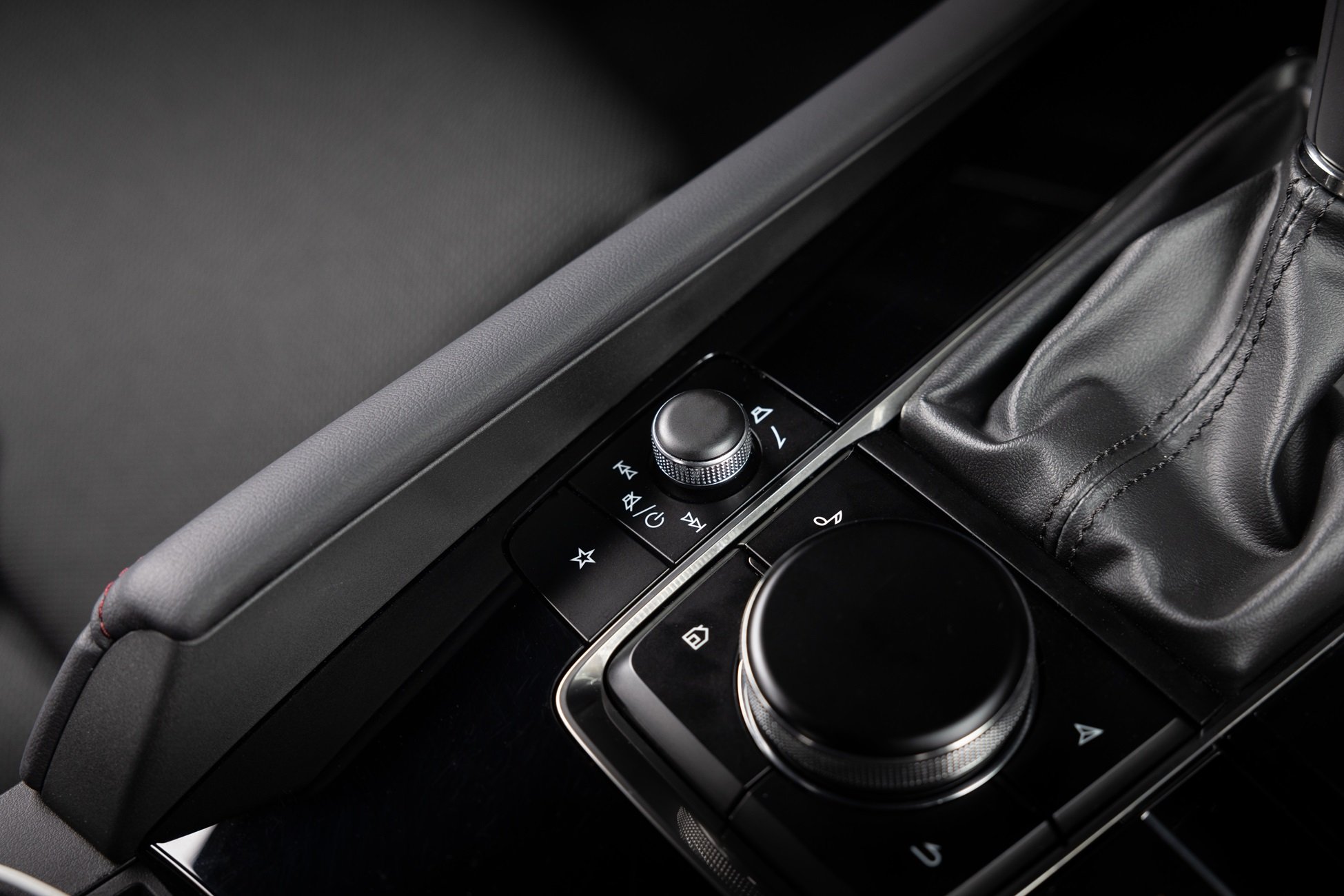
If that wasn’t already enough competition, the i30 also has to fend off the Mazda 3 in terms of prestige. Without doubt the small hatch or sedan with the nicest cabin to occupy for four hours a day, five days a week, sitting in traffic, wondering what you’re doing with your life - it’s the Mazda 3. If you need a car that can double as a pseudo therapist’s leather couch, to ease your troubled mind, the i30 struggles against the Mazda 3 which takes a leaf out of the European carmakers’ book on design.
There’s a great deal the Hyundai i30 can do for you, so let’s figure out which one suits you, and see how it compares with the rest of the pack.
FEATURES & PRICING
The i30 range is not as complicated as it once was, meaning it’s still relatively easy for you to find your way around the model grades. You just need to start with choosing sedan or hatch. The primary advantage is a boot space that’s separated and partitioned away from prying eyes, or the hatch with its marginally shorter profile and parcel shelf.
You’ve got the entry-level accountant-friendly i30 sedan base model, simply called ‘i30 Sedan’. It’s the equivalent of starting with a blank piece of paper. There’s then the ‘Elite’ before a a ‘Premium’ grade.
But there are two distinct directions making like a fork in the i30 road, where you can elect to go for the economical, suburban transport choice in the i30 sedan combustion-only variants or a mild hybrid, or you can go for the outright performance route instead, with the N-Line or N-Line Premium (again, both in the sedan).
You can’t have the plain combustion-only or mild hybrid i30 in hatch form - only the N-Line version, which makes for a moderately sporty ride and engine performance, with a premium interior to match.
HATCH
i30 N-Line $40,100 | N-Line Premium $45,800
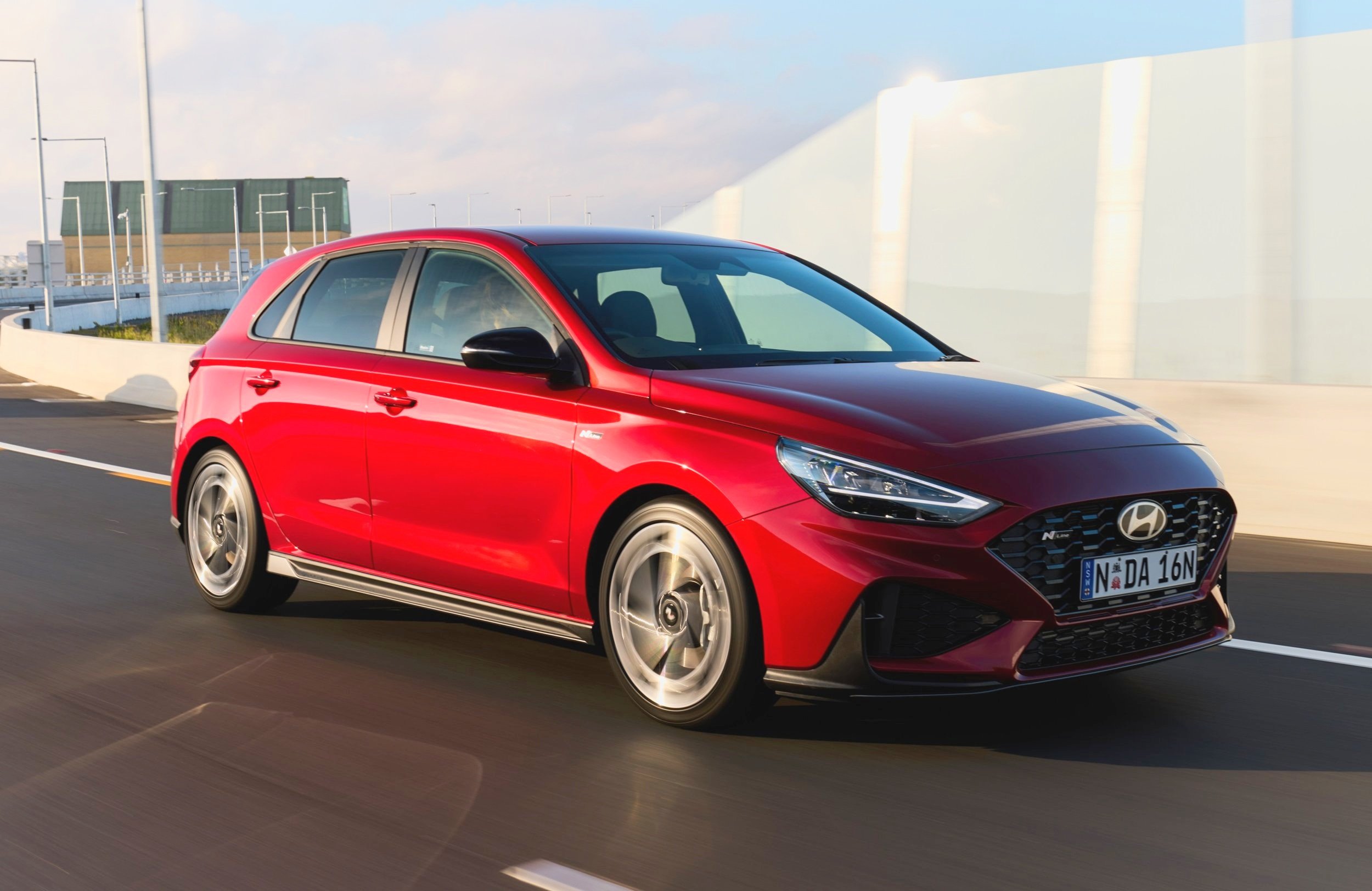
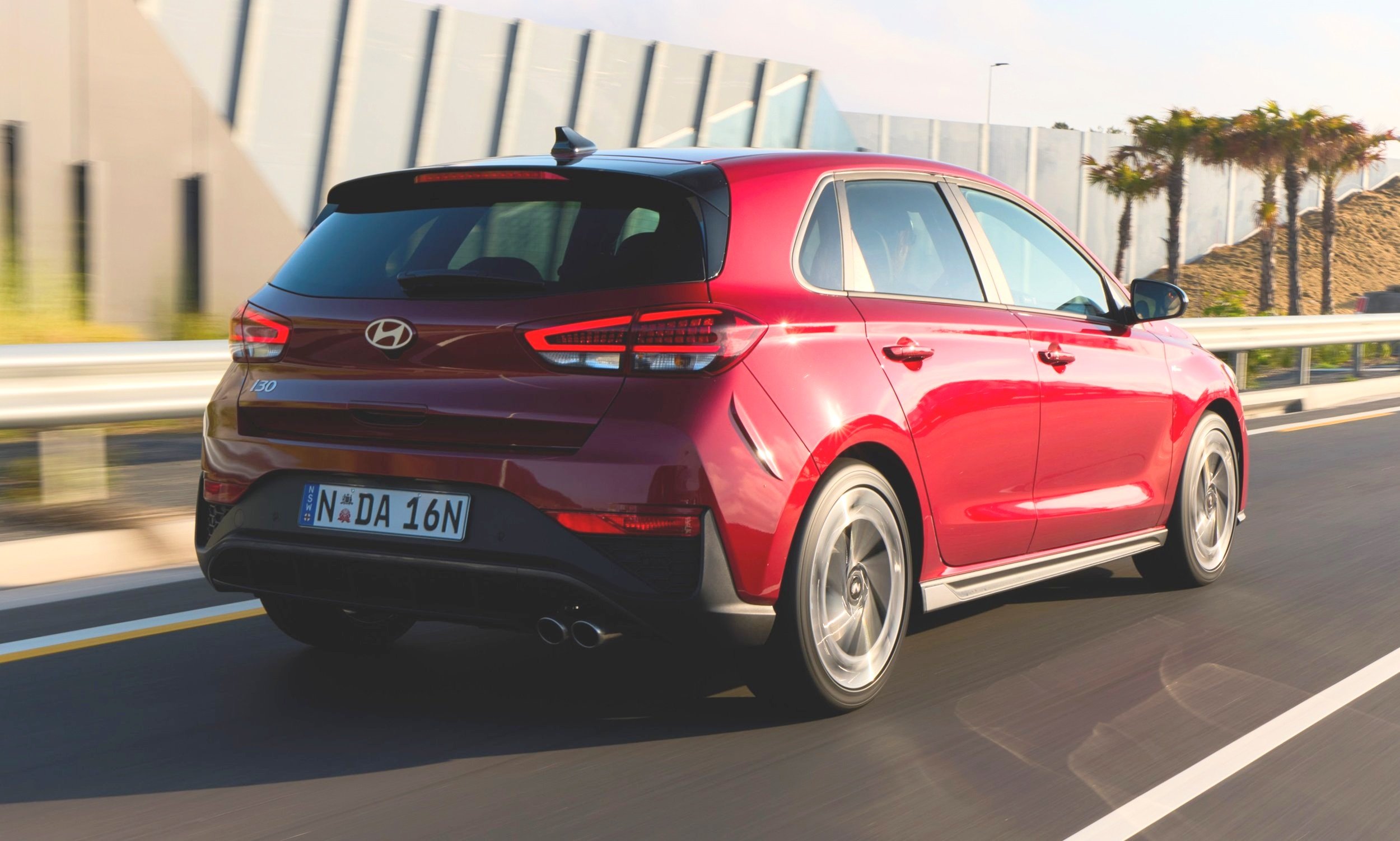
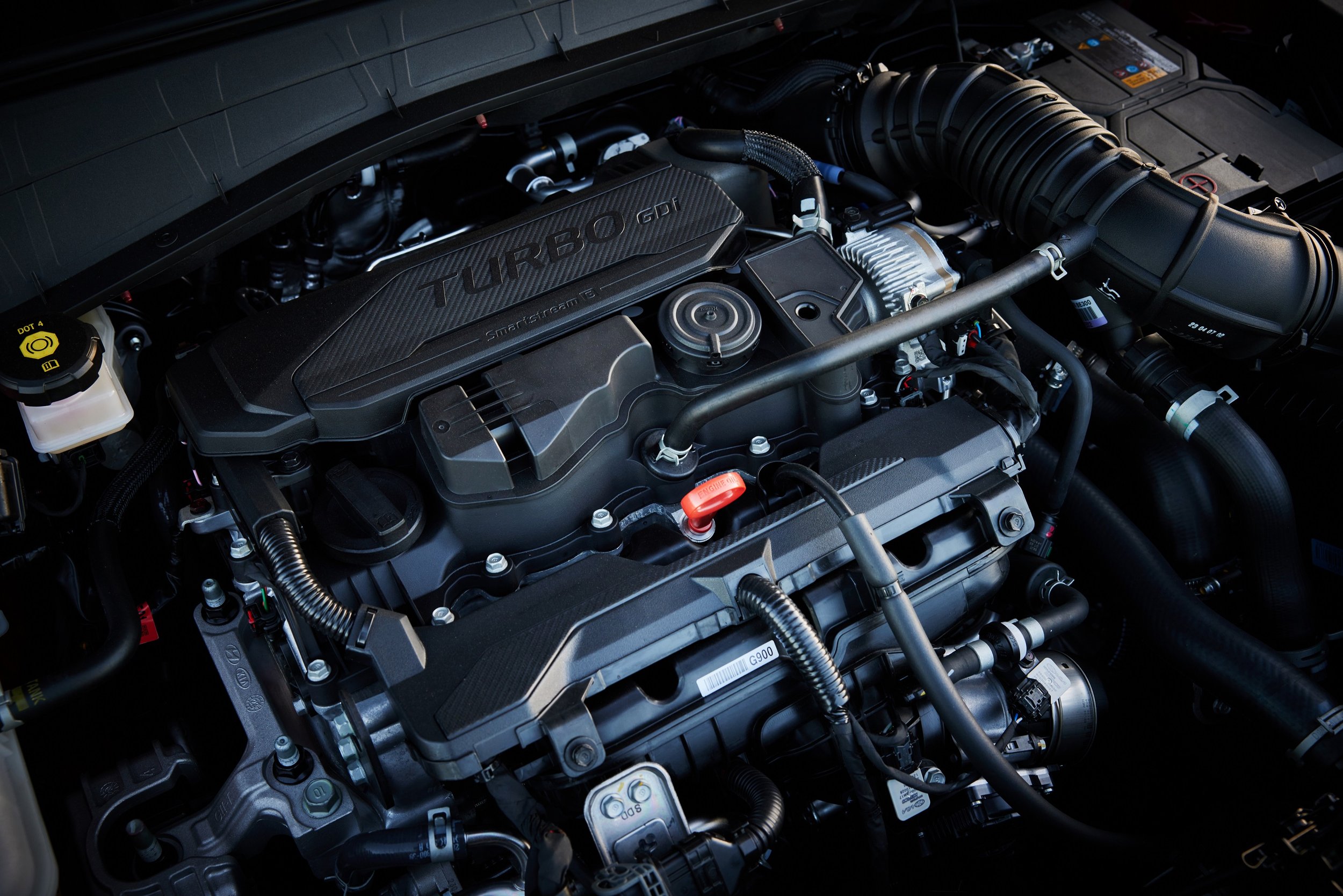
The N-Line models have a 1.5-litre turbo petrol engine, and a choice of six-speed manual or seven-speed dual-clutch automatic transmission.
This car really delivers on the 'affordable performance' front with 150kW of peak power. Power delivery blows many competitors out of the water, and there's no need for expensive premium unleaded, either. From 1500-4500 RPM the engine is making 59kW to 139kW, which is impressive, especially for the price.
Extensive local suspension tuning also means the ride and handling more than keeps up with the powertrain and the terrain. And the multi-link rear suspension always feels planted.
Transmission is done via the seven-speed dual-clutch which has proven robust, slick and ideally suited to this vehicle. It’s eager to drive you forward, and it’s quite good as predicting the next gear you’re going to need, especially when you change your mind or traffic changes suddenly.


But you need to be mechanically sensitive to not treat it like an epicyclic torque converter automatic, so when you reach a red light, stay stopped and wait. Don’t inch forward, and avoid creeping along at 2km/h in slow traffic. This will reduce excessive wear, internally. Just don’t mistake this is as some engineering design deficiency - it’s not deficient - it just requires basic driver respect.
The N-Line Premium is seven-speed dual-clutch transmission or you can still have a six-speed manual if you want to do it yourself and can’t handle the self-restraint required of a dry dual-clutch.
Don’t panic about the DCT, it’s really only Ford, Volkswagen and Nissan who botched their R&D. Hyundai’s DCT has for many years been behind this 1.6-litre turbo petrol engine, in particular, and the deleted diesel as well, and it’s proven quite reliable in service so there's no cause for concern whatsoever.
SEDAN
Base i30 $32,000 | Elite $38,00 | Premium $43,200
Mild hybrid $36,000 | Mild hybrid Elite $42,200
N-Line $40,600 | N-Line Premium $46,300
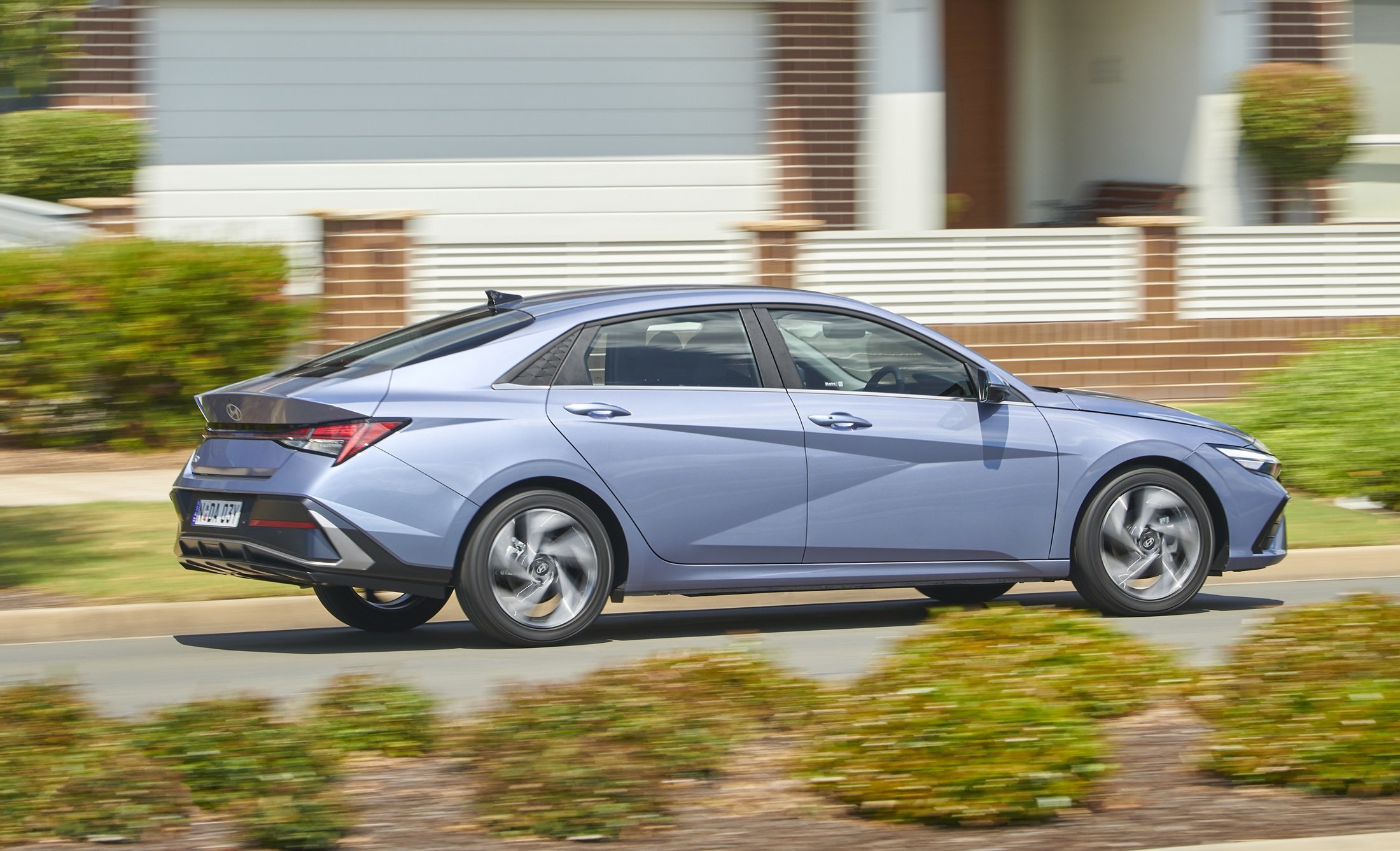
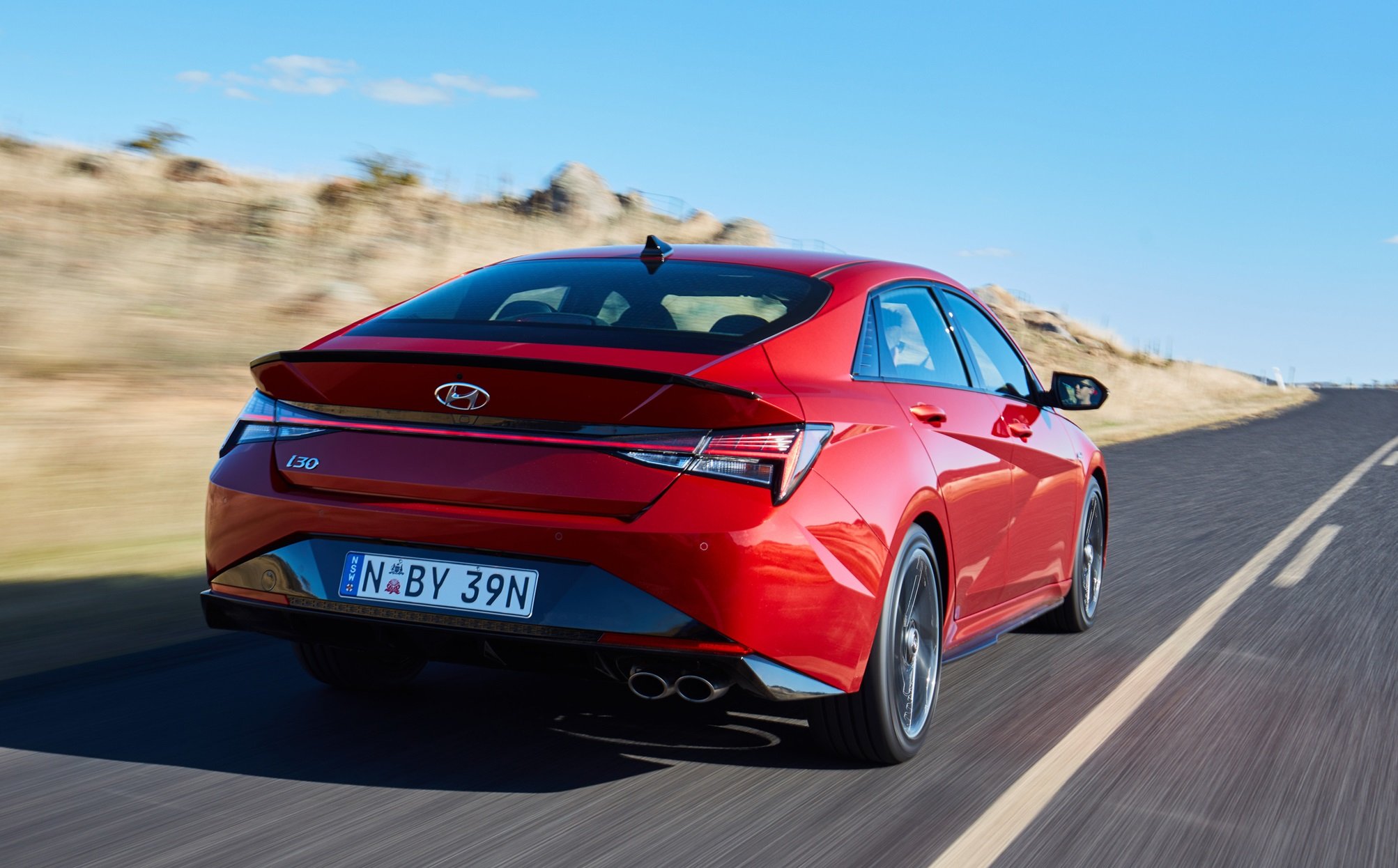
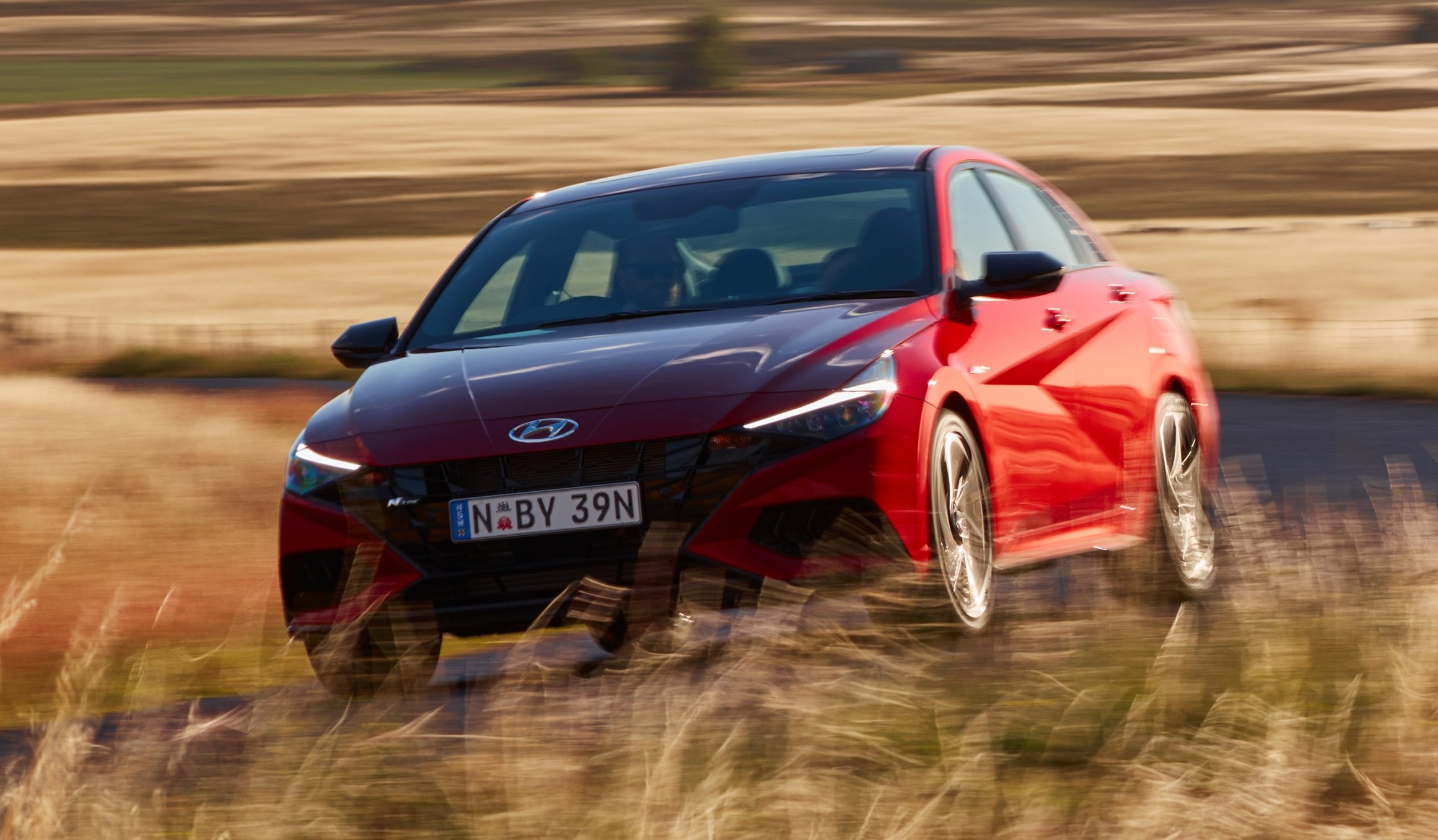
The i30 Sedan starts at $32,000 driveaway, but it’s also got a mild hybrid powertrain available for another $4000 (or $2000 cheaper than the Elite, is one way to look at it).
This gets you the 8-inch touchscreen, and the uninteresting 2-litre petrol engine that uses the ‘Atkinson’ cycle to drive the front wheels only. It’s not the performance engine and shouldn’t be expected to perform like one. It’s smooth enough, refined enough and has enough power without being particularly exciting to drive - and that’s perfectly okay for such a car.
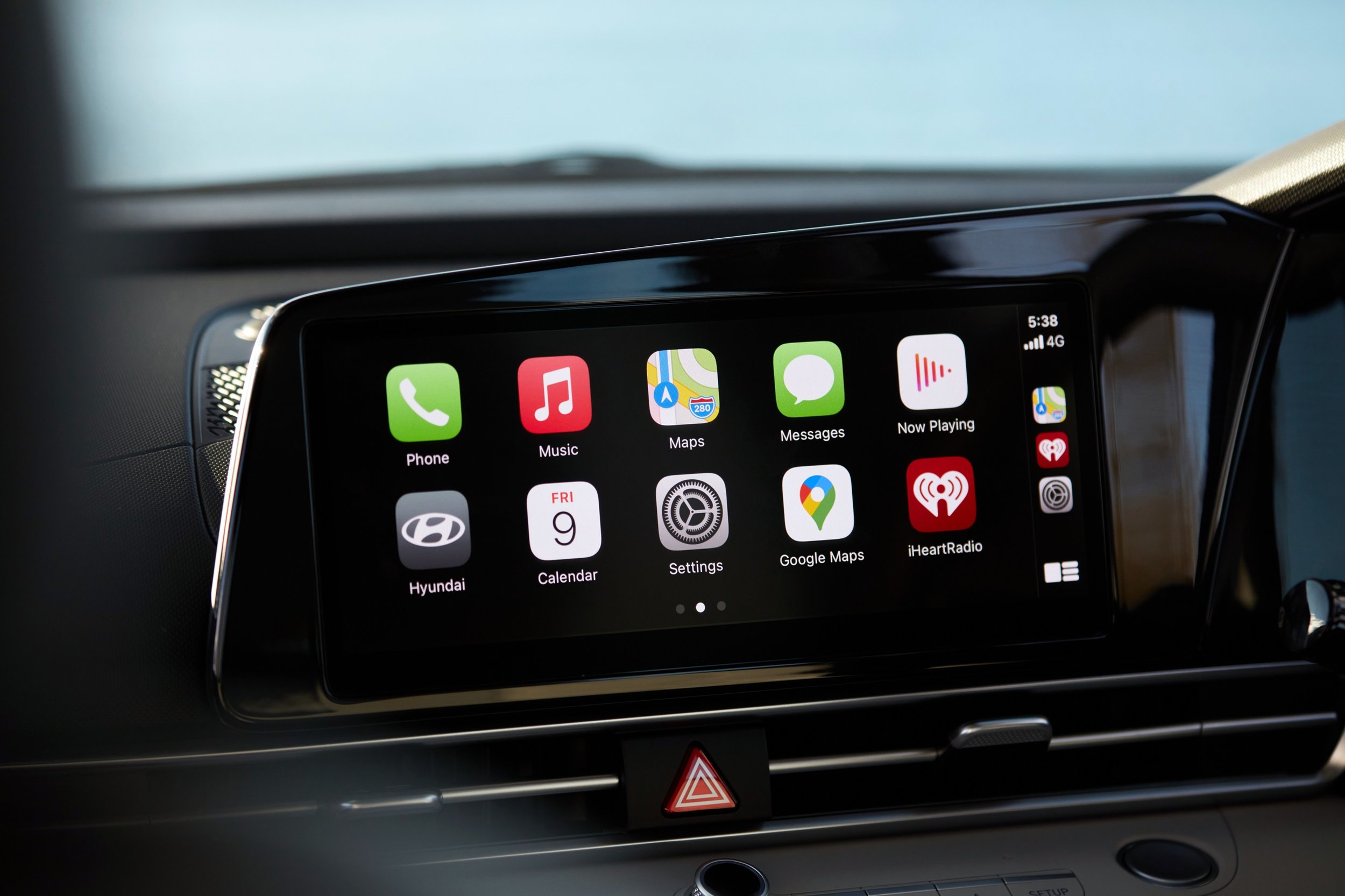
They all get CarPlay/Android Auto, of course, but the base i30 starts with 16-inch alloy wheels which make it quiet and comfy around town, 6 speakers, rearview camera, and it does get front and rear parking sensors - normally reserved for the mid-tier variants of cars these days. A leather-trimmed steering wheel, and keyless entry add a little bit of polish to what you can’t really call the poverty pack.
That of course means cloth seats and plenty of blanking spots in the centre instrument tunnel for features you don’t get in the Elite. But that’s to be expected of a vehicle whose top model grade goes all the way up to $46,000 for the ‘N-Line Premium’.
The i30 Sedan gets the same 2.0-litre petrol engine in all three variants. It’s only when you step into the N-Line versions that you get the 1.6-litre turbo-petrol engine with the 7-speed dual-clutch transmission.
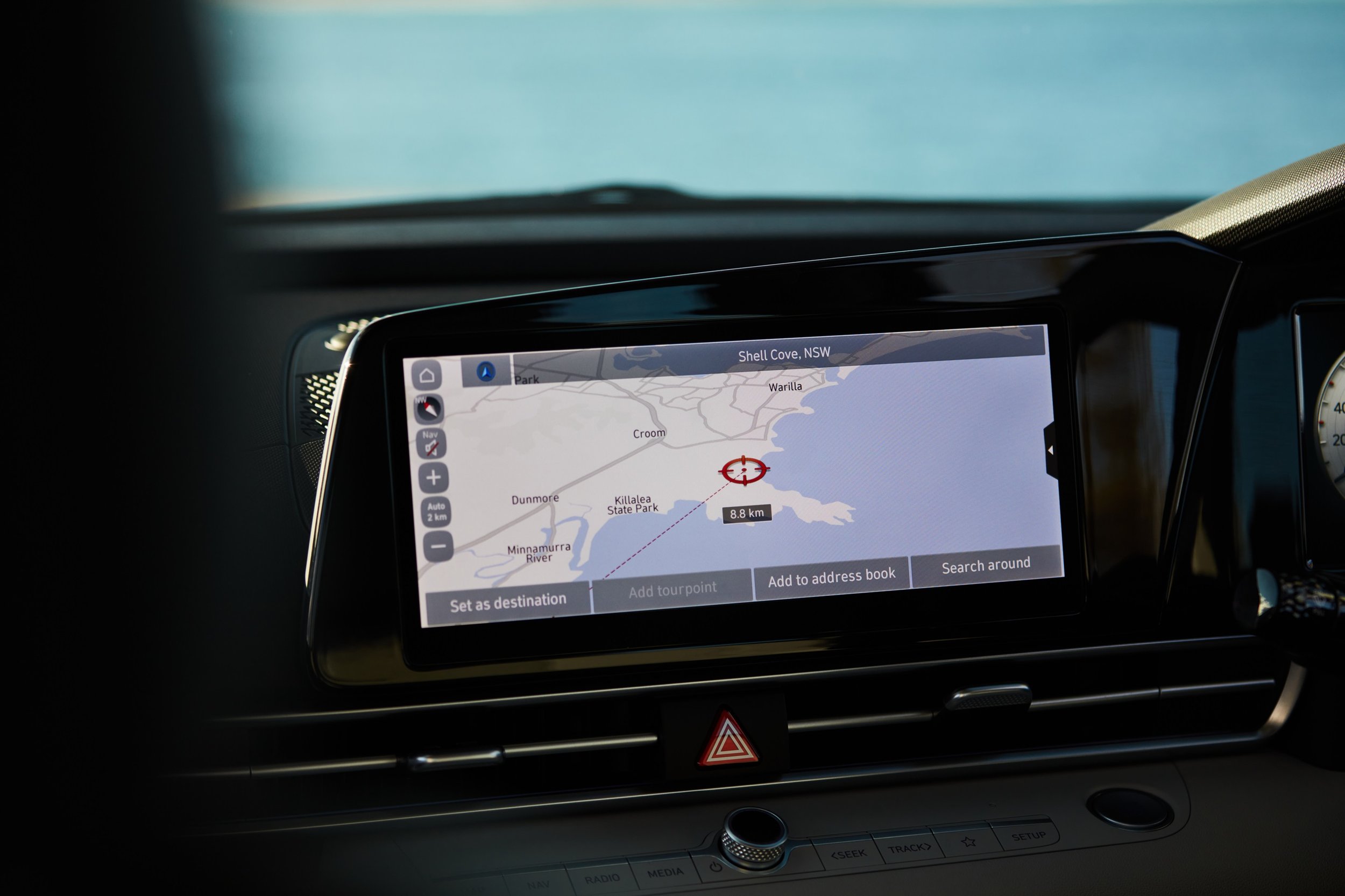
Going from the base model to Elite, you get the big 10-inch touchscreen, satnav (if you ever leave your phone at home), a smartkey and push-button start, plus you get a smart blindspot monitoring added to the safety tech. It rides on 17-inch alloys, you ride on leather seats and can enjoy dual-zone climate control, with auto rain-sensing wipers, wireless phone charging and electric bootlid.
Sedan Elite and Premium get the standard 6-speed regular epicyclic auto transmission, too. So no sharp-shifting dual-clutch transmission for you unless you opt for the N-Line.
Happily, and quite counterintuitively, this could save you a grand or two because the N-Line sedan gives you a bunch of sporty trims like stitching, logos on the steering wheel and gearknob, and LED taillamps etc., but you lose the Bose stereo. Bummer.
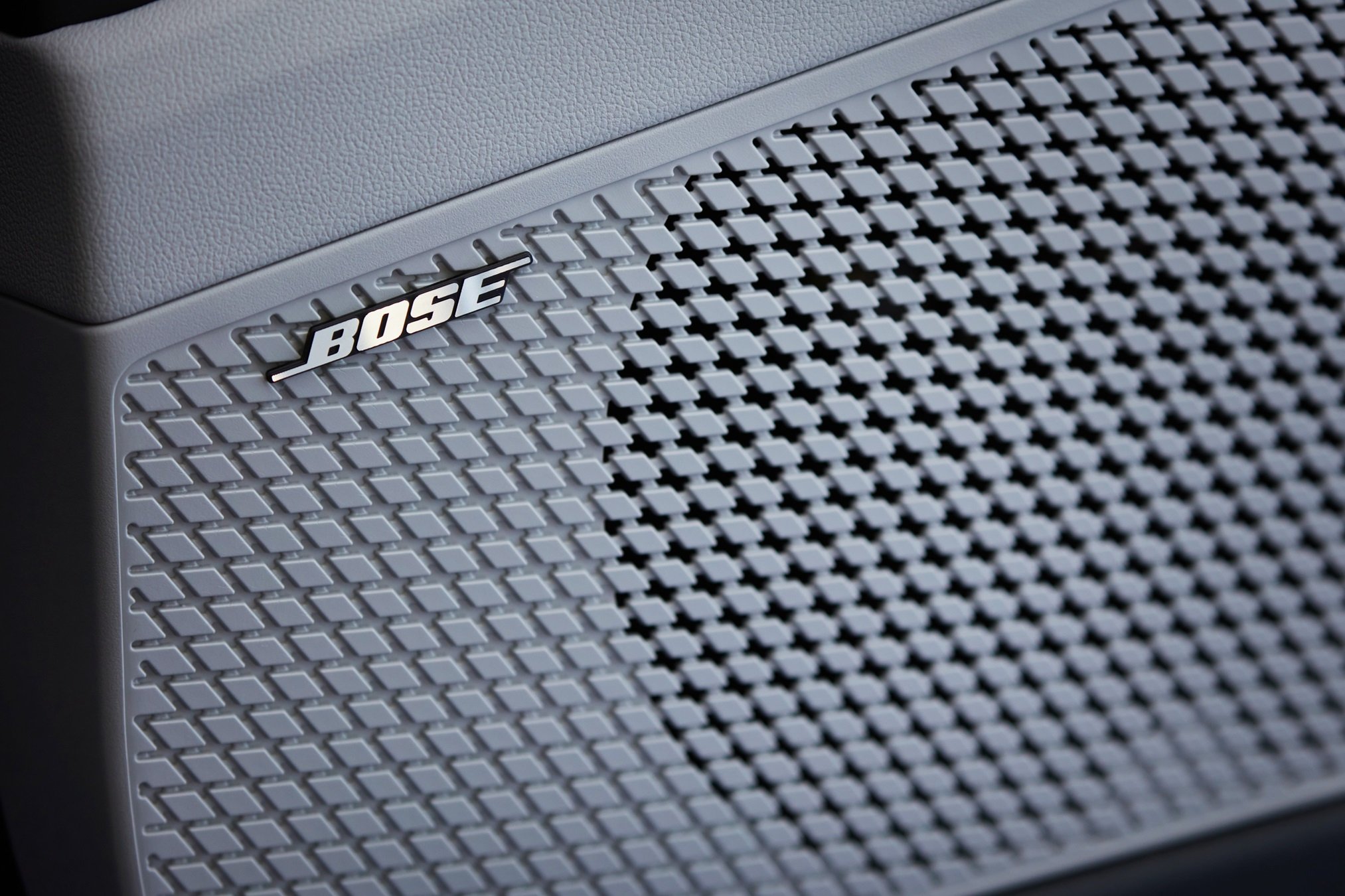
The ‘Premium’ gets heated and cooled front seats, glass sunroof and the 8-speaker Bose premium stereo system.
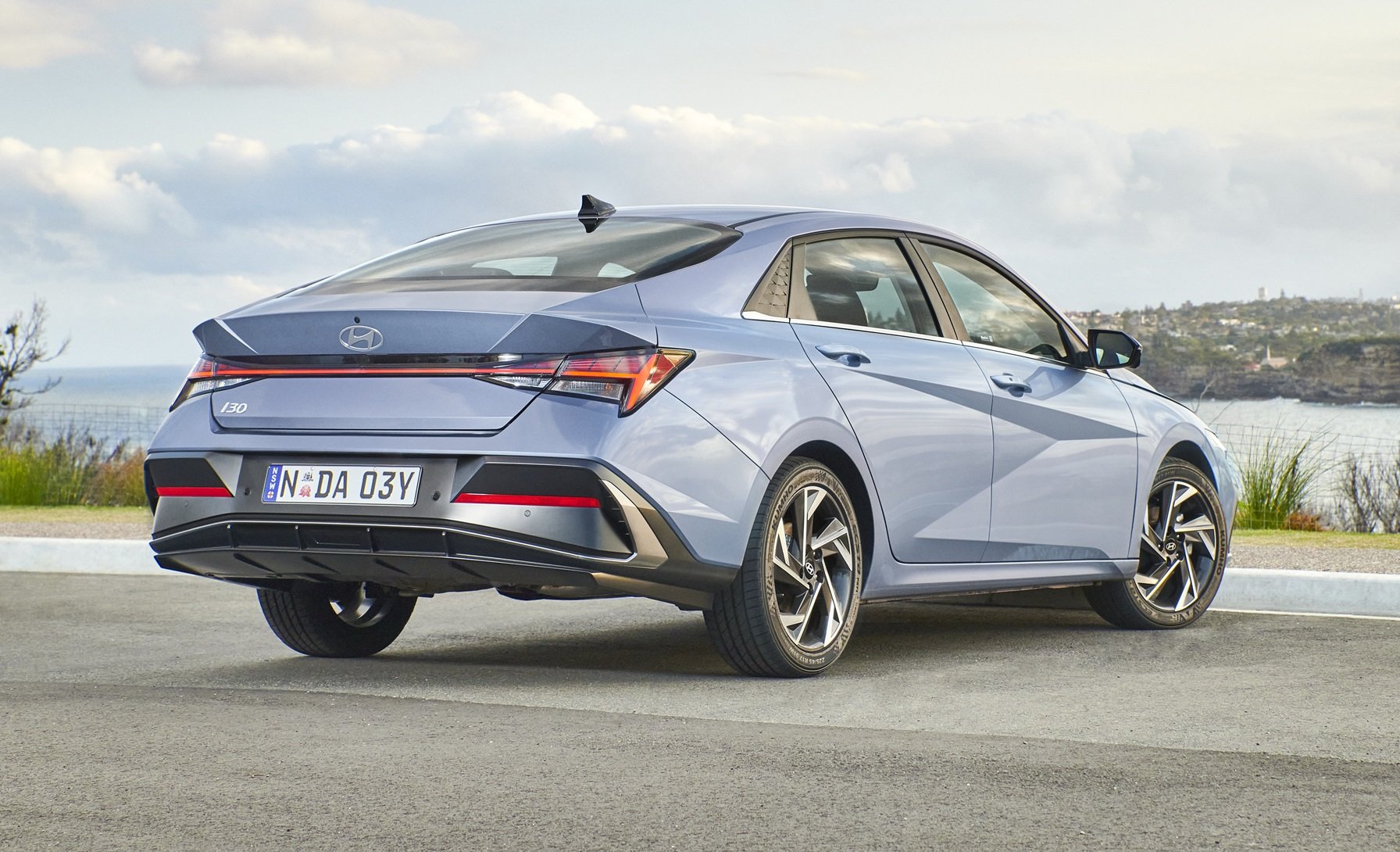
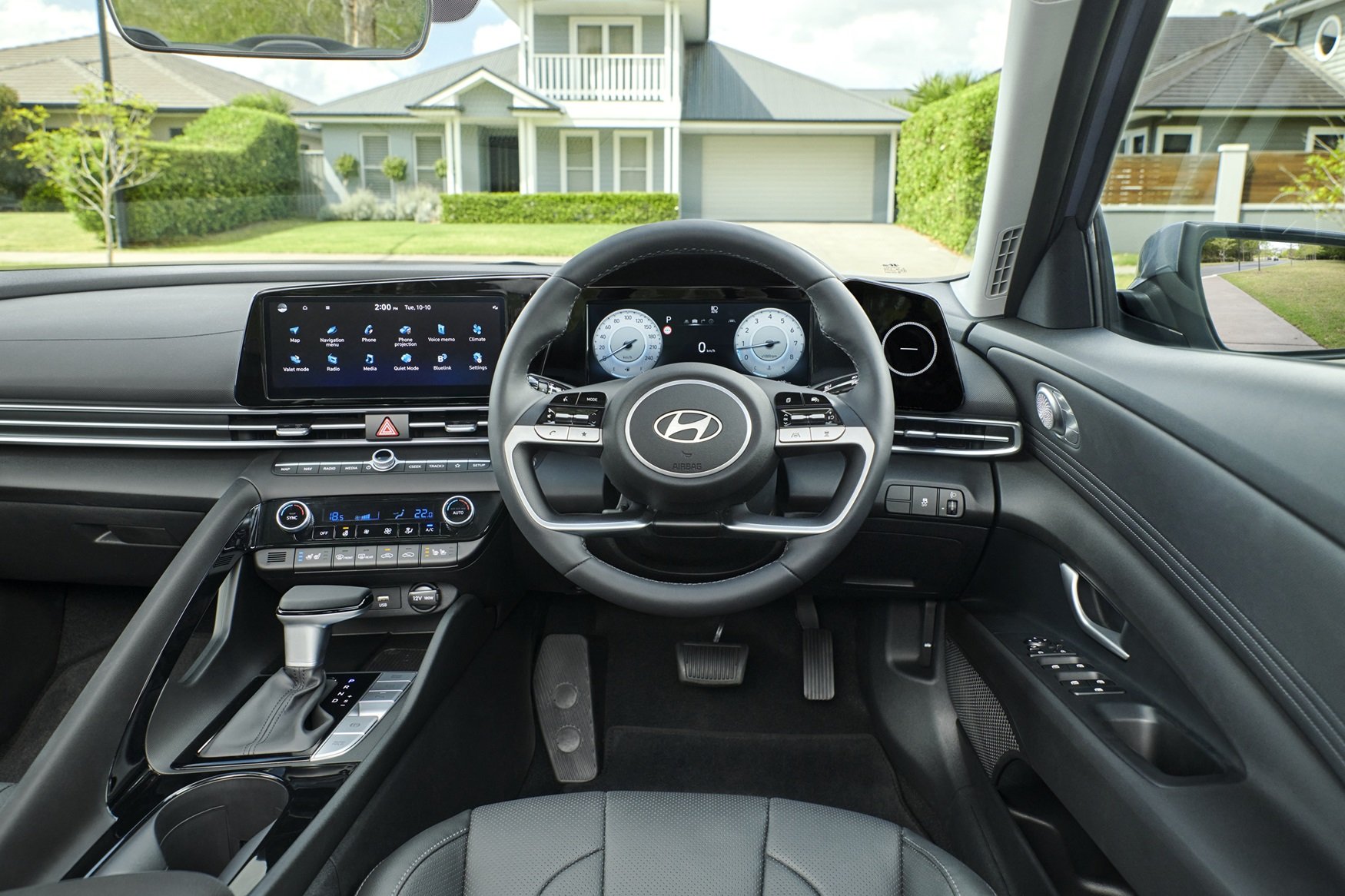
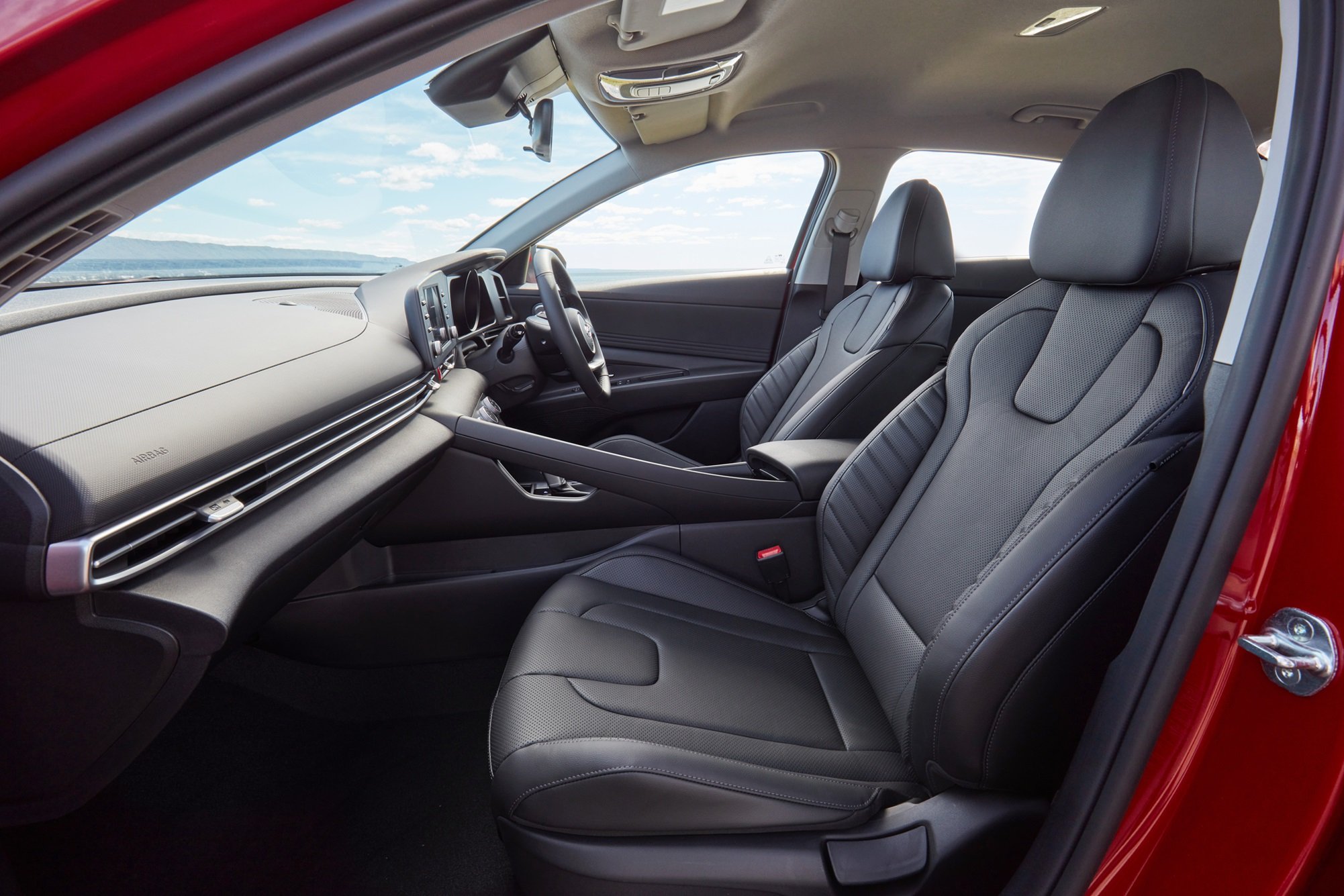
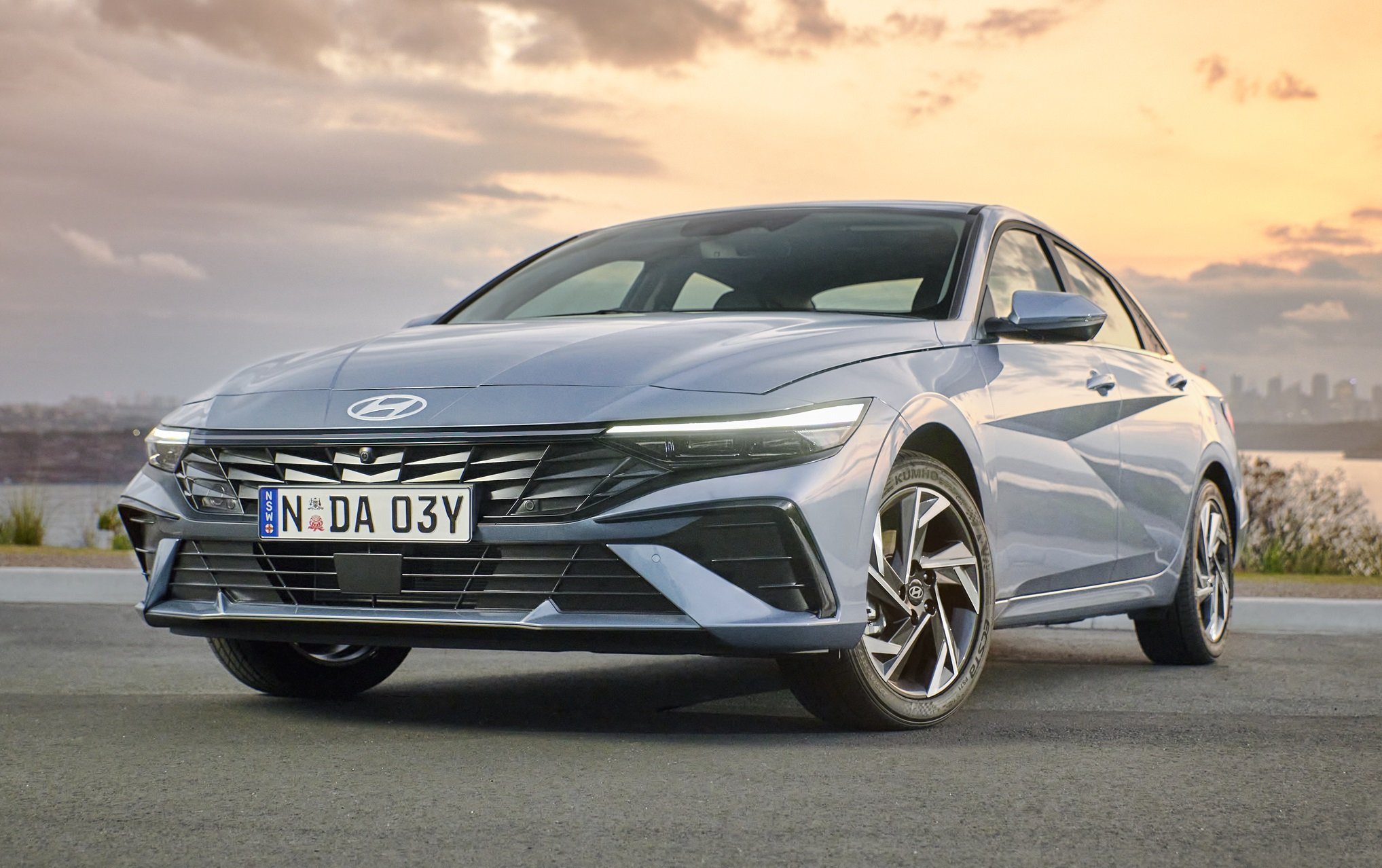
Overall, the sedan is a very nicely executed small-medium family vehicle capable of ample legroom for the tall, a big boot for the enthusiastic hoarders among you, and there’s all the usually space and attachment points for two ISOFIX child anchorages on the outboard seats with corresponding top tethers. Same as hatch.
It rides a little bit harsher than the hatch, owing to the lack of bespoke Australian tuning, but it’s far from being unable to live with. It’s going to be a very dependable and comfortable mid-size move.
And just think of the money you’ll save over an SUV which is heavier, more expensive and harder to park. However, if you have mobility issues, granted, an SUV like Kia Sportage will allow entry/exit much easier than a lower-slung sedan/hatch.
Of course, i30 sedan is front-wheel drive only, so no dodgy camping backroads for you. If you do need an AWD sedan/hatch, consider the Subaru Impreza. Other compact vehicle alternatives could include the Kia Stonic ‘SUV’ the Mazda CX-3 which is nice, the Hyundai Kona or Kia Seltos are also very good and offer that AWD advantage and an N-Line or GT-Line performance option.
I'll help you save thousands on a new Hyundai i30 here
Just fill in this form.
No more car dealership rip-offs
Greater transparency
Less stress
MAIN COMPETITORS
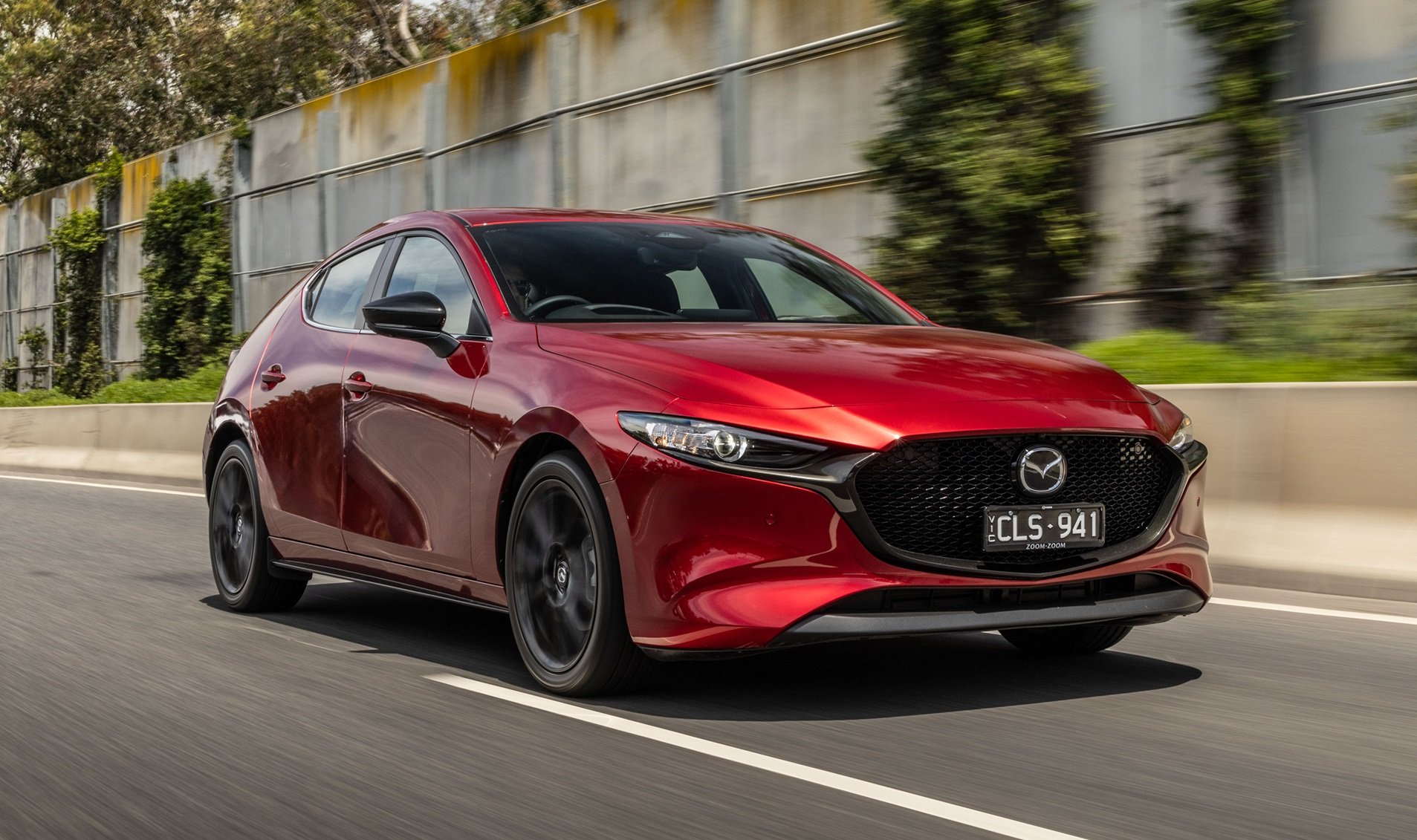
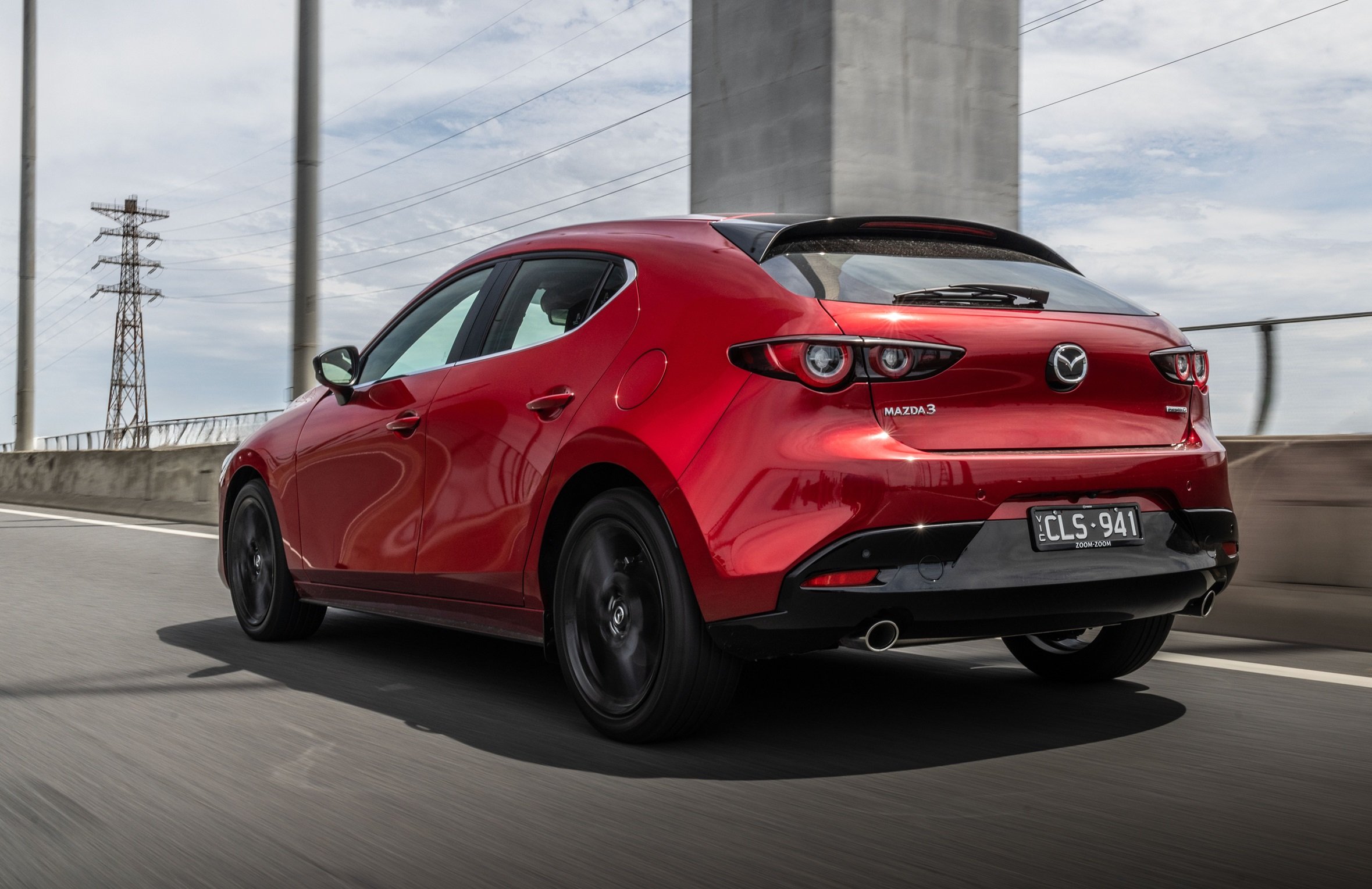
Mazda 3 Astina - hatch or sedan
The fresh-looking Mazda3 does throw some shade over the i30’s sharper, more aggressive angular design - so choosing between them on looks will be purely aesthetical preference.
But the N-Line is still firmly the better performance car. The N-Line Premium doesn’t humiliate the G25 Astina, however, you certainly save some coin opting for the Mazda.
The N-Line powertrain in the 1.6 GDI Turbo, is superior in absolute terms. It makes 11 kilowatts more and offers a quick-shifting dual-clutch transmission designed for spirited driving. However, you can have the i30 in manual if you’re truly keen to DIY.
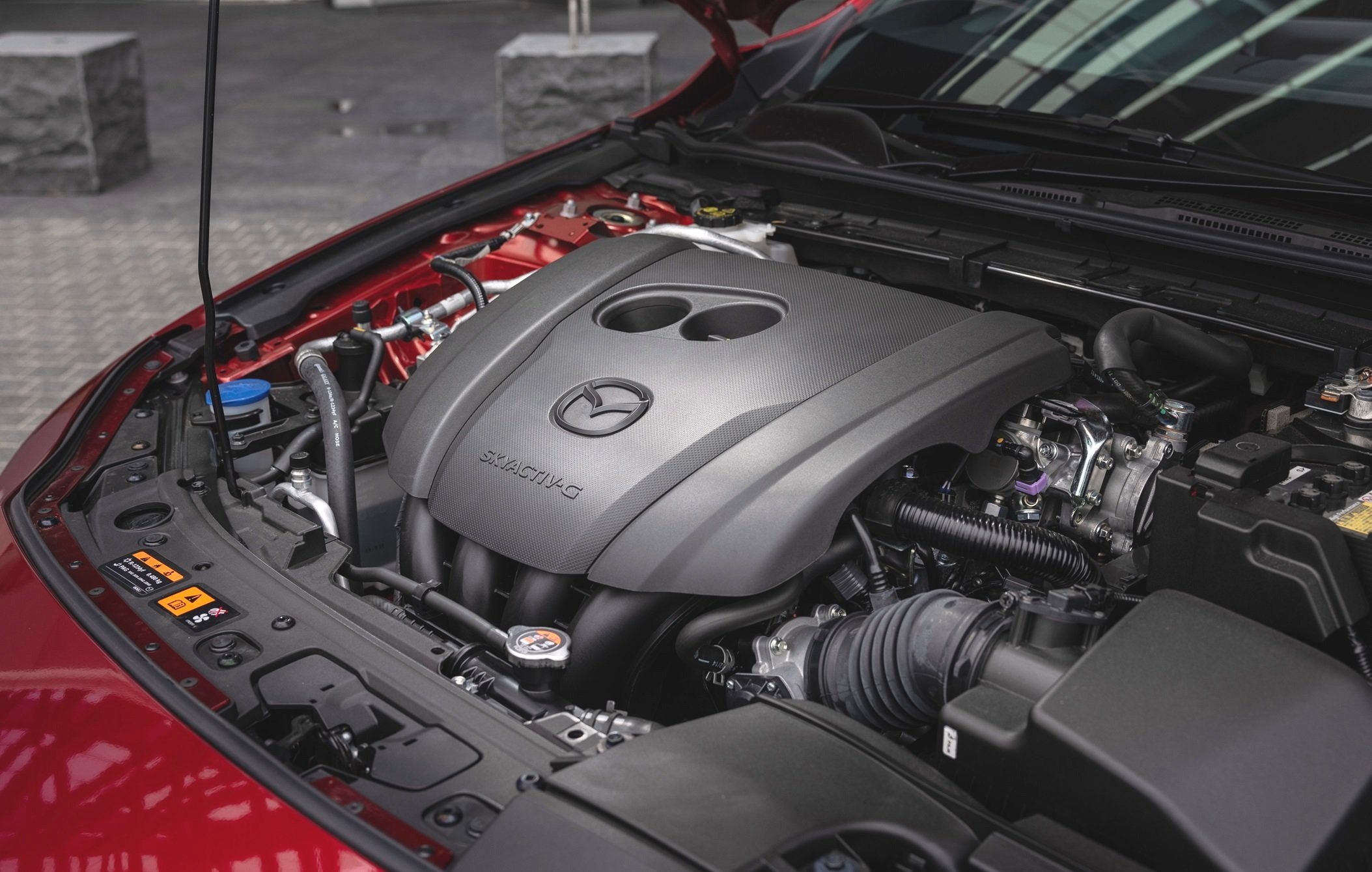
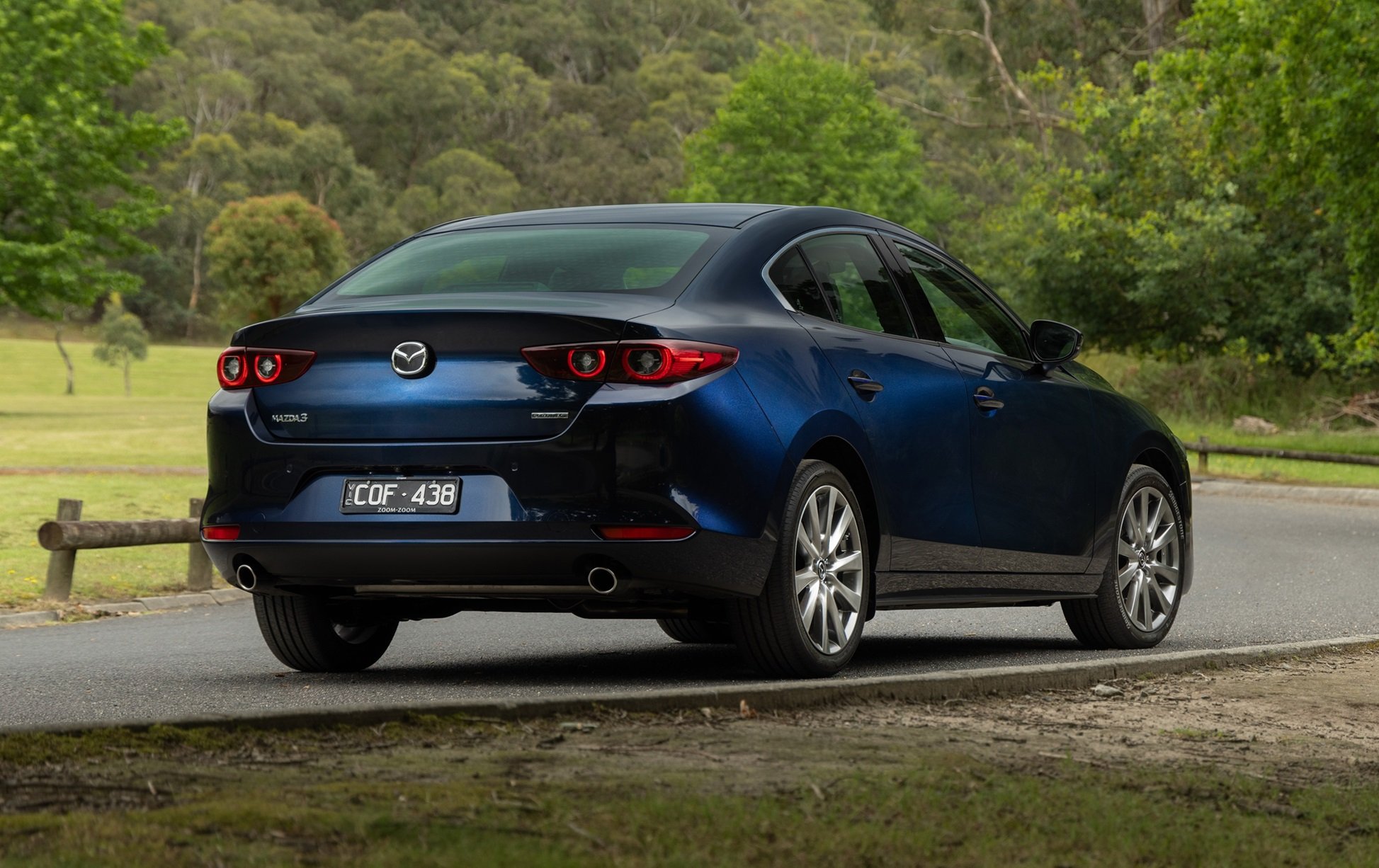
But what’s really going here is, because of the i30’s turbocharger, the delivery of peak torque which comes on in the N-Line at 1500 rpm and it keeps coming on until 4500. So you get your 265 Nm of torque all the way between those extremes.
In the Mazda GT and G25 Astina, what you're getting is a little bit less torque but it’s not coming on-song until 4000 rpm and that just makes this car, the N-Line, incredibly potent at low and middle revs. The i30 might be slightly heavier, but makes up for it with outright performance.
This 1.6-litre turbo petrol powertrain absolutely eclipses the delivery from the G25 at all revs from 1500 rpm all the way up to 6000.
Hyundai i30 (hatch) N-Line Premium
$45,400 drive-away approx.
1.5-litre turbo petrol
117kW @ 5500rpm (down from 150kW @ 6000)
253 Nm @ 1500-4500 rpm (down from 265Nm)
Power-weight ratio: 82 kW/t
7-speed dual-clutch
Luggage: 395 L (rear seats up)
Fuel usage: 5.6 L/100km (combined, DCT)
Kerb weight: 1439kg; 3kg heavier (1503kg sedan)
Fuel type: 91 RON unleaded | Tank: 50L
Wheels: 18-inch alloys, (space-saver spare)
Mazda3 G25 Astina
$46,900 drive-away approx.
2.5-litre atmo petrol
139kW @ 6000 rpm
252 Nm @ 4000 rpm
Power-weight ratio: 103 kW/t
6-spd manual or 6-spd auto
Luggage: 295L (rear seats up)
Fuel usage: 6.6L/100km (combined, auto)
Kerb weight: 1383kg (1388kg sedan)
Fuel type: 91 RON unleaded | Tank: 51L
Wheels: 18-inch alloys, (space-saver spare)
If you intend to do mostly commuter traffic and suburban running about, both cars are going to satisfy. The Mazda 3 is no slouch, but leans toward luxury over outright grunt.
Kia K4 - hatch or sedan
The K4 isn’t quite a hot hatch (or sedan) but for most people that’s perfectly fine. Because power isn’t everything when it comes to small cars. You get the same 1.6L turbo petrol 4-cylinder as the i30 N-Line if you do want grunt, or you can have the 2-litre multi-point injection 4-cylinder engine for fuel economy and sensible family driving.
It makes a reasonably punchy 142kW although won’t feel as sporty as the i30 N-Line. But that’s okay, because keep in mind that about 10 years ago, outright hot hatches were struggling to make that kind of power, let alone do it reliably. The K4 is absolutely a step forward.
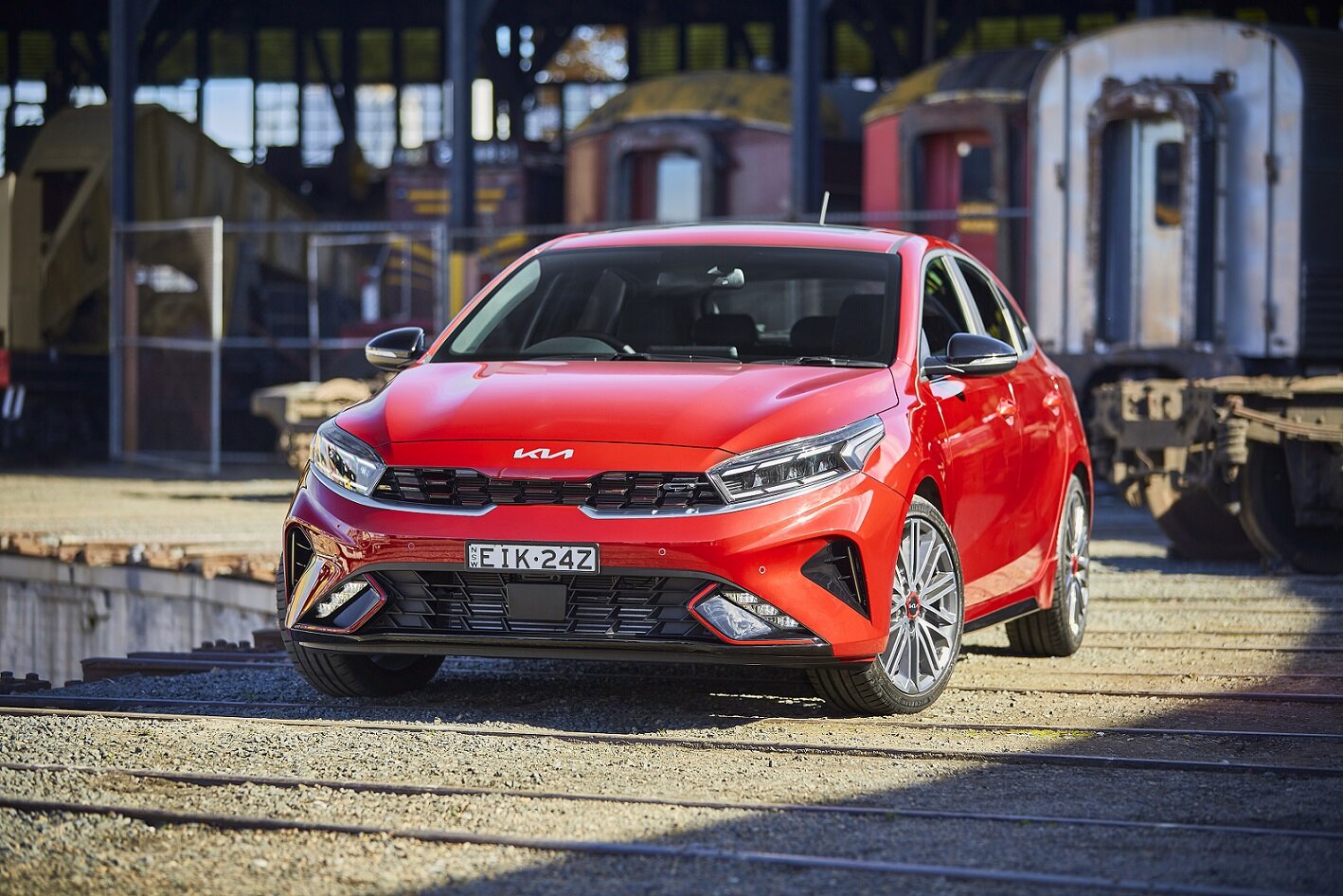
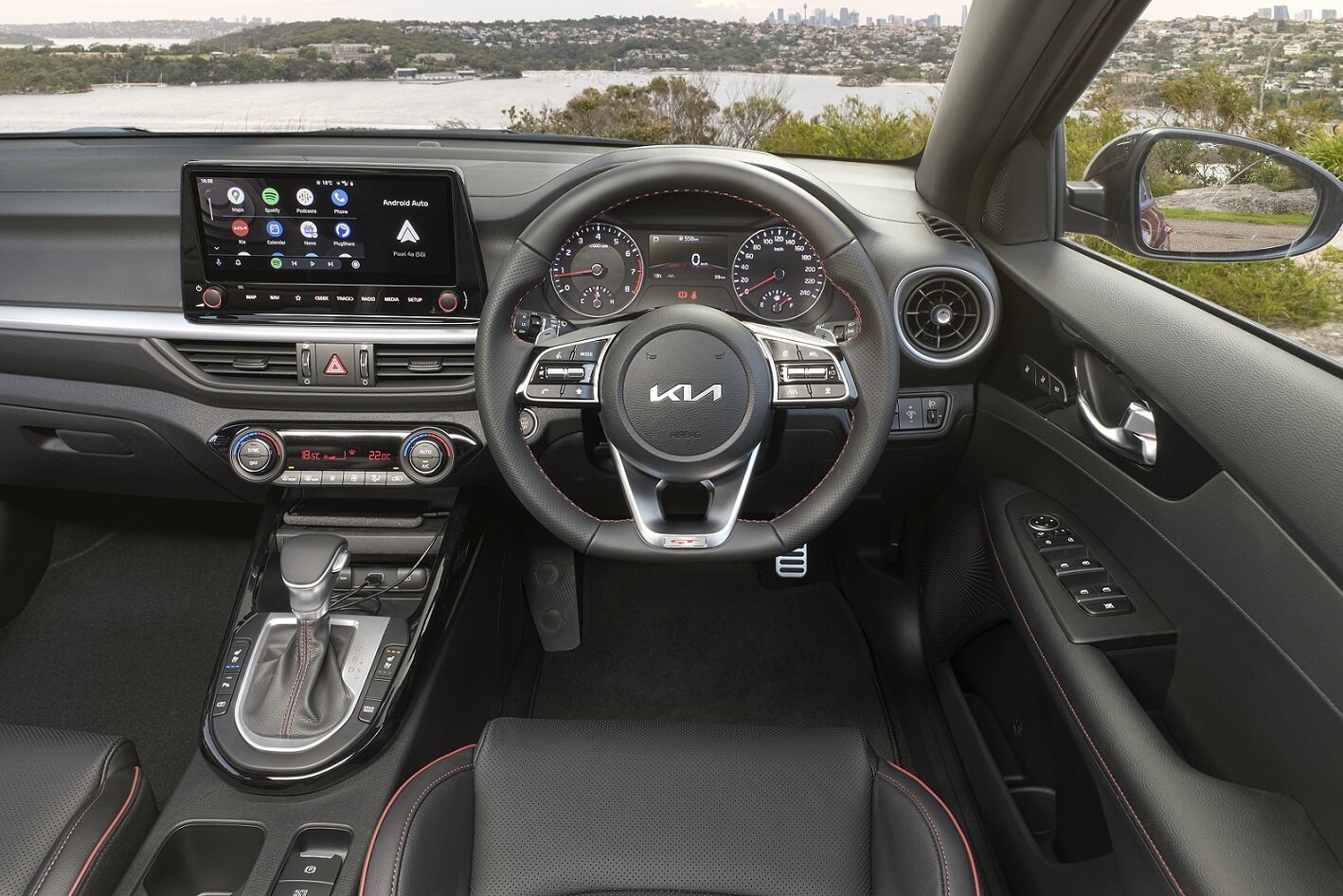
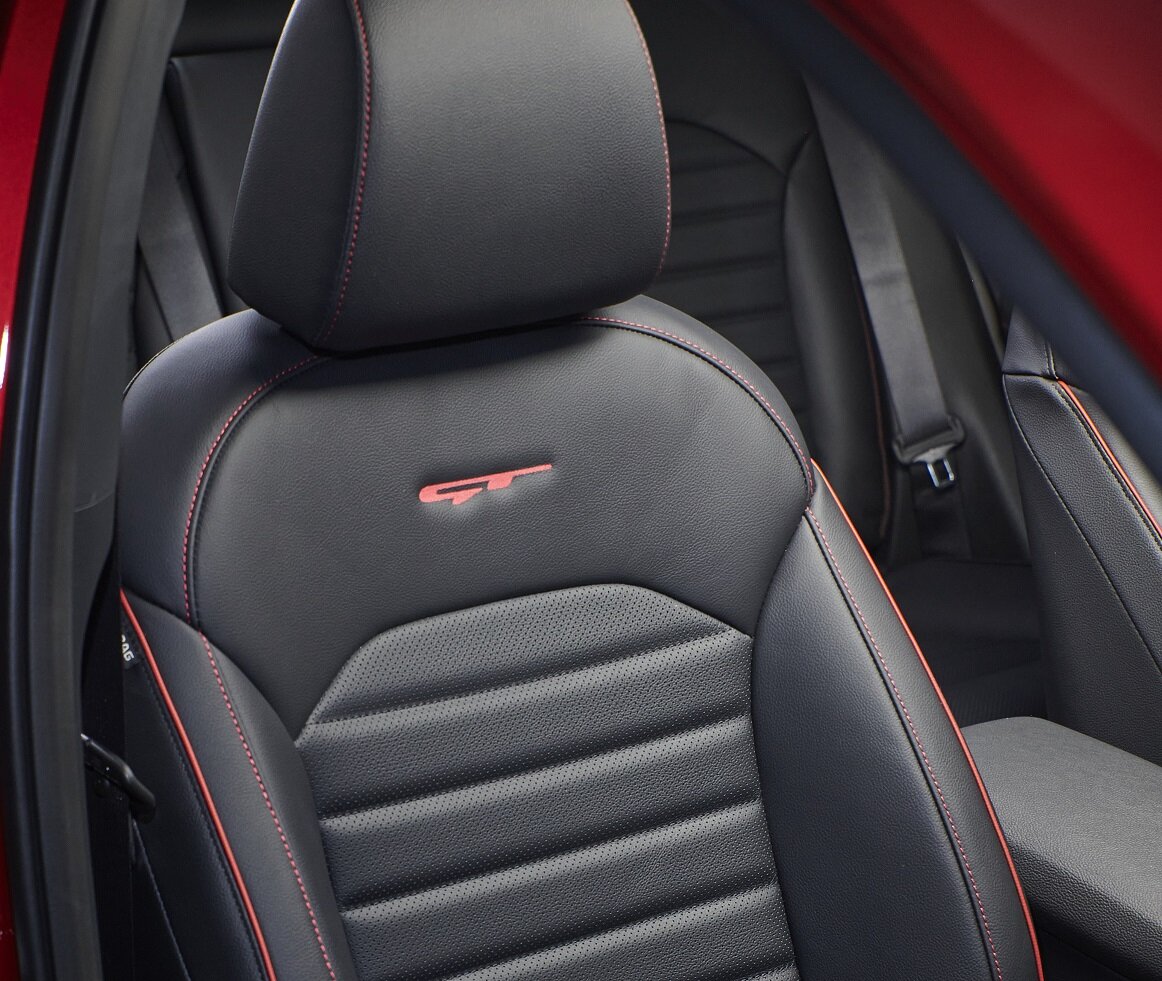
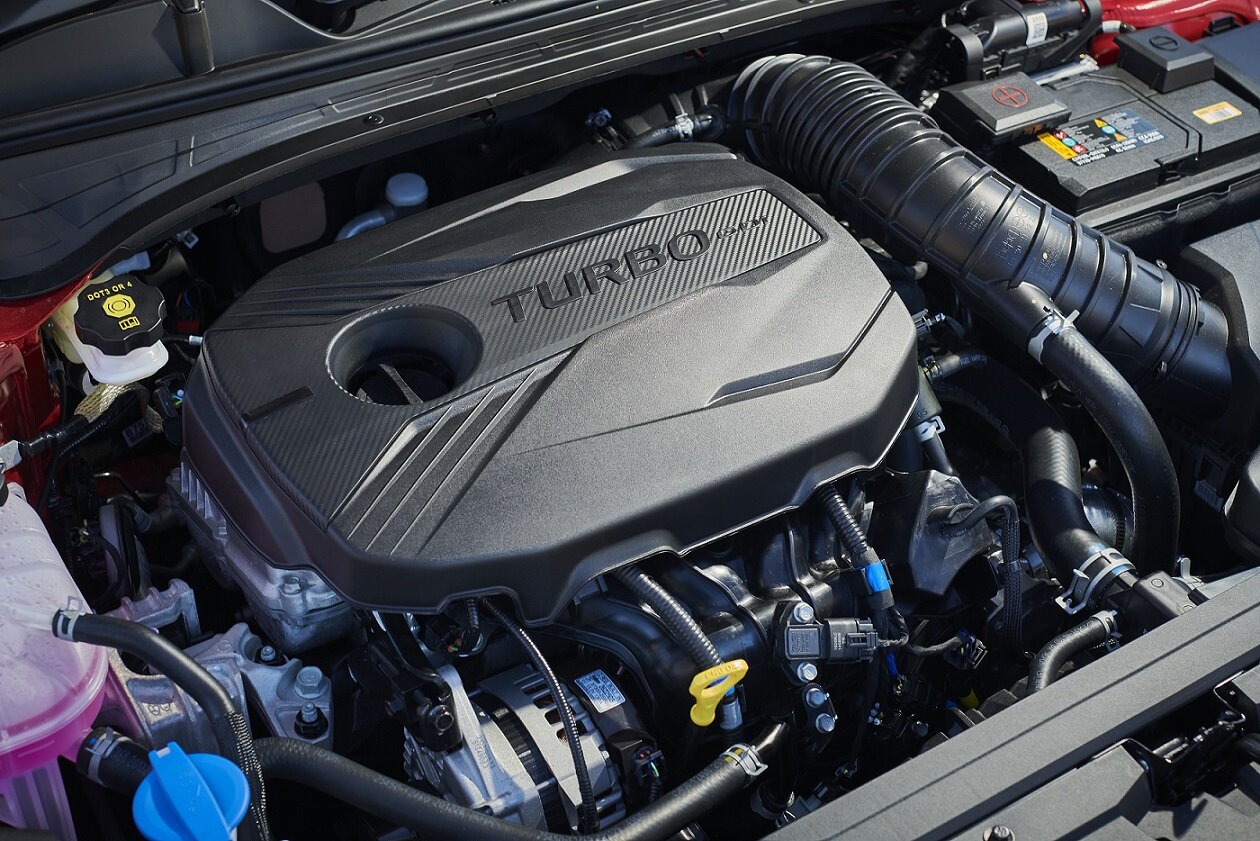
The others model grades of K4 using the pretty basic but durable 2.0-litre petrol 4-cylinder generating 11kW is fine. Sure, it’s less tahn the 120kW in old i30 hatches. But do you really need the extra power? Probably not.
The K4, like i30, is all about value, but favouring features and comfort over the more outright performance-driven state of affairs with the i30. You have to figure out which you prefer.
Here are the hatch Cerato GT’s stats to compare (because it’s the best value in the range). But keep in mind weight, engine and power change with the lighter lower-tier Cerato model grades:
Boot size: 508 litres (back seats up) (sedan only: 508 litres)
Ground clearance: 140mm
Wheelbase: 2.72m
Transmission: CVT (2.0-litre) | 8-speed automatic (1.6 turbo)
Engine: 2.0-litre naturally aspirated inline 4 OR 1.6-litre turbo | Fuel: 91 RON petrol (Tank: 47 litres)
Power: 110 kW / 180 Nm (2.0) | 142 kW / 265 Nm (1.6 turbo) | Weight: 1342 (sedan/2L) | 1419 kg (sedan/1.6L) | Power-weight ratio: 82 kW/t (2L) / 100 kW/t (1.6L)
Economy (claimed): 6.7 L/100 km (2.0) / 6.7 L/100 km (1.6 turbo)
Subaru Impreza - hatch only
This is the only small hatchback you can have with all-wheel drive, which is great for anybody who visits or lives in regional areas with dirt roads or mountainous areas with snow or ‘black ice’ on corners after frosty nights.
Metro-city consumers with steep and potentially slippery driveways, or who regularly drive in hilly areas and take off from awkwardly positioned traffic lights or intersections - you will also benefit from all-wheel drive.
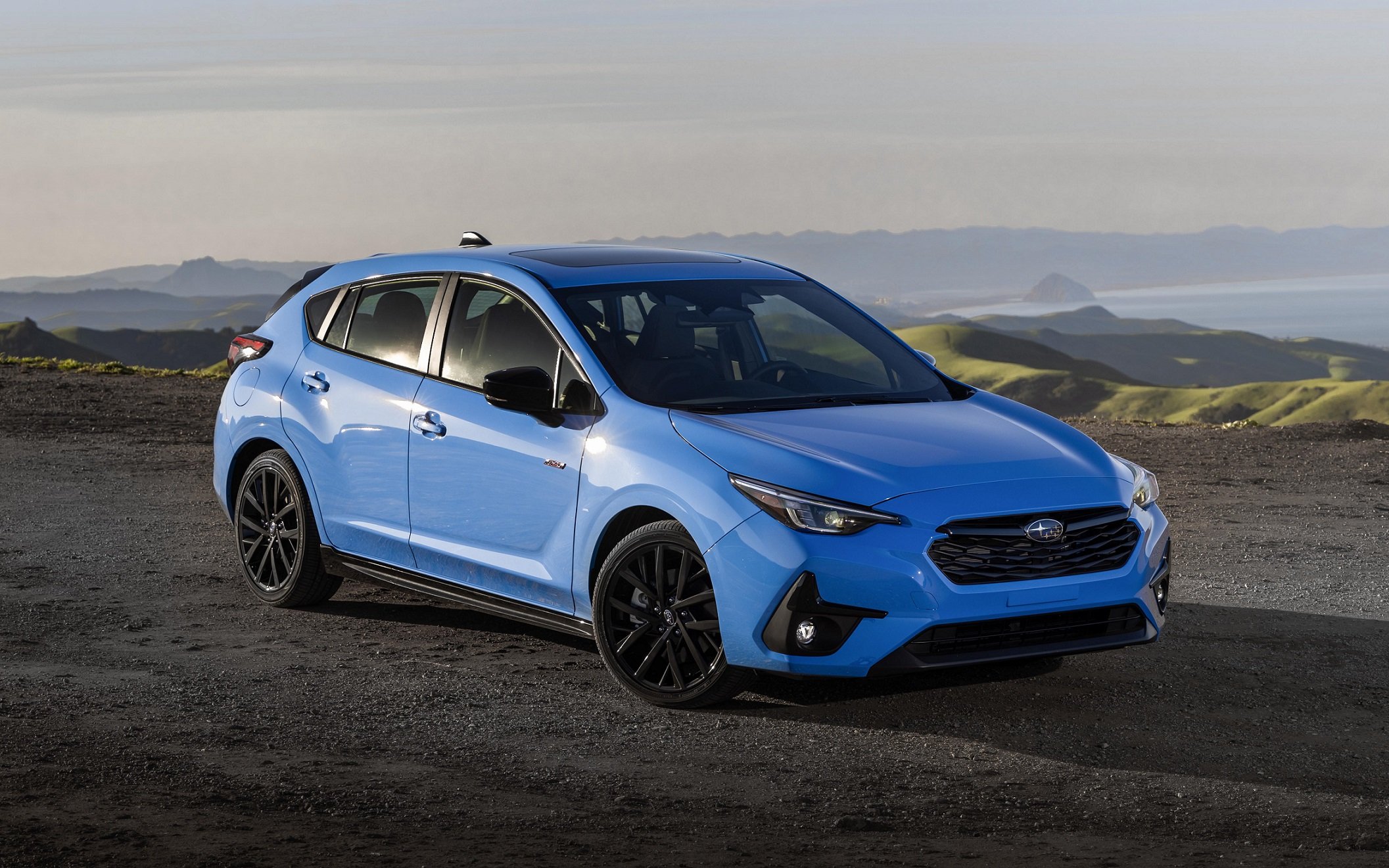
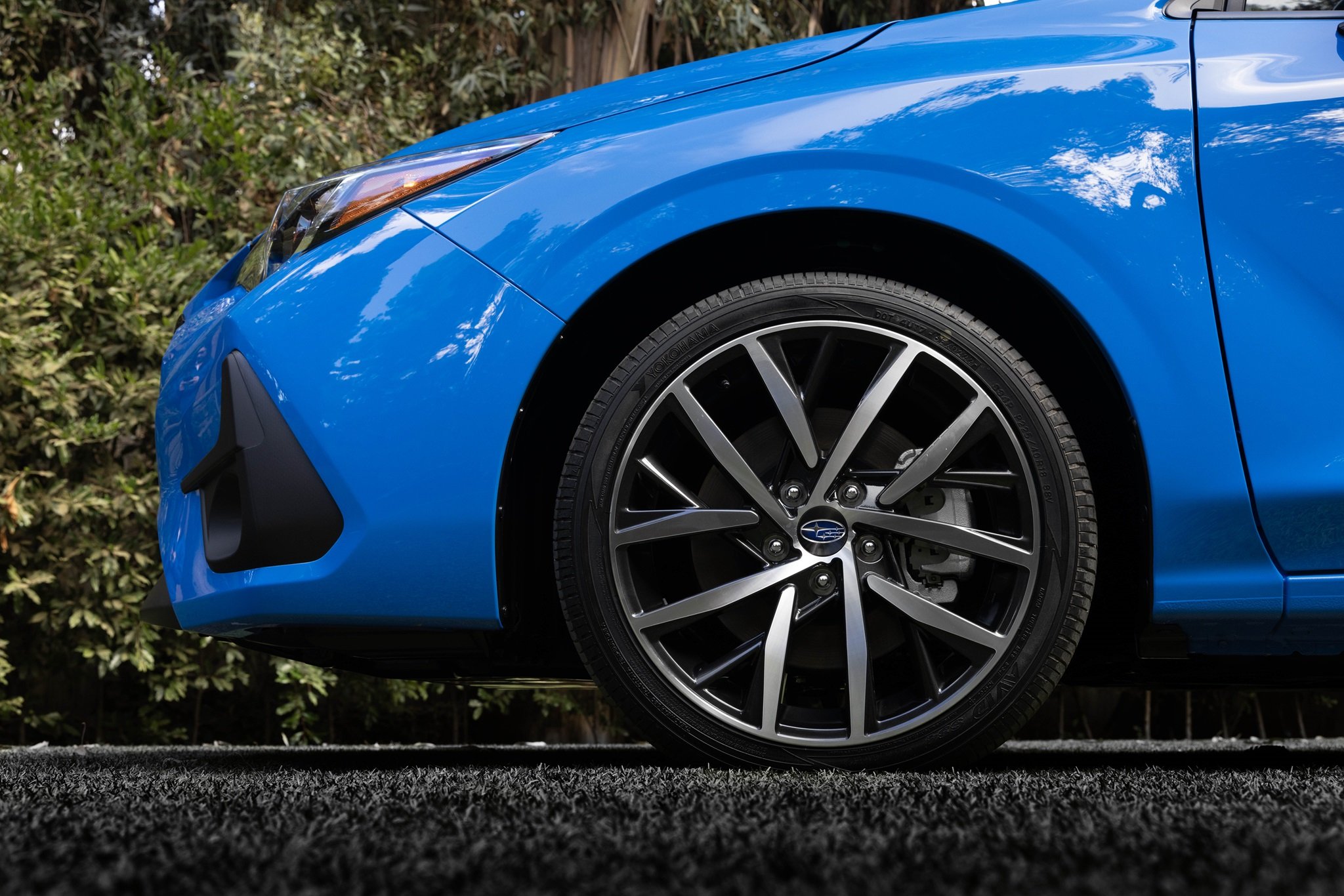
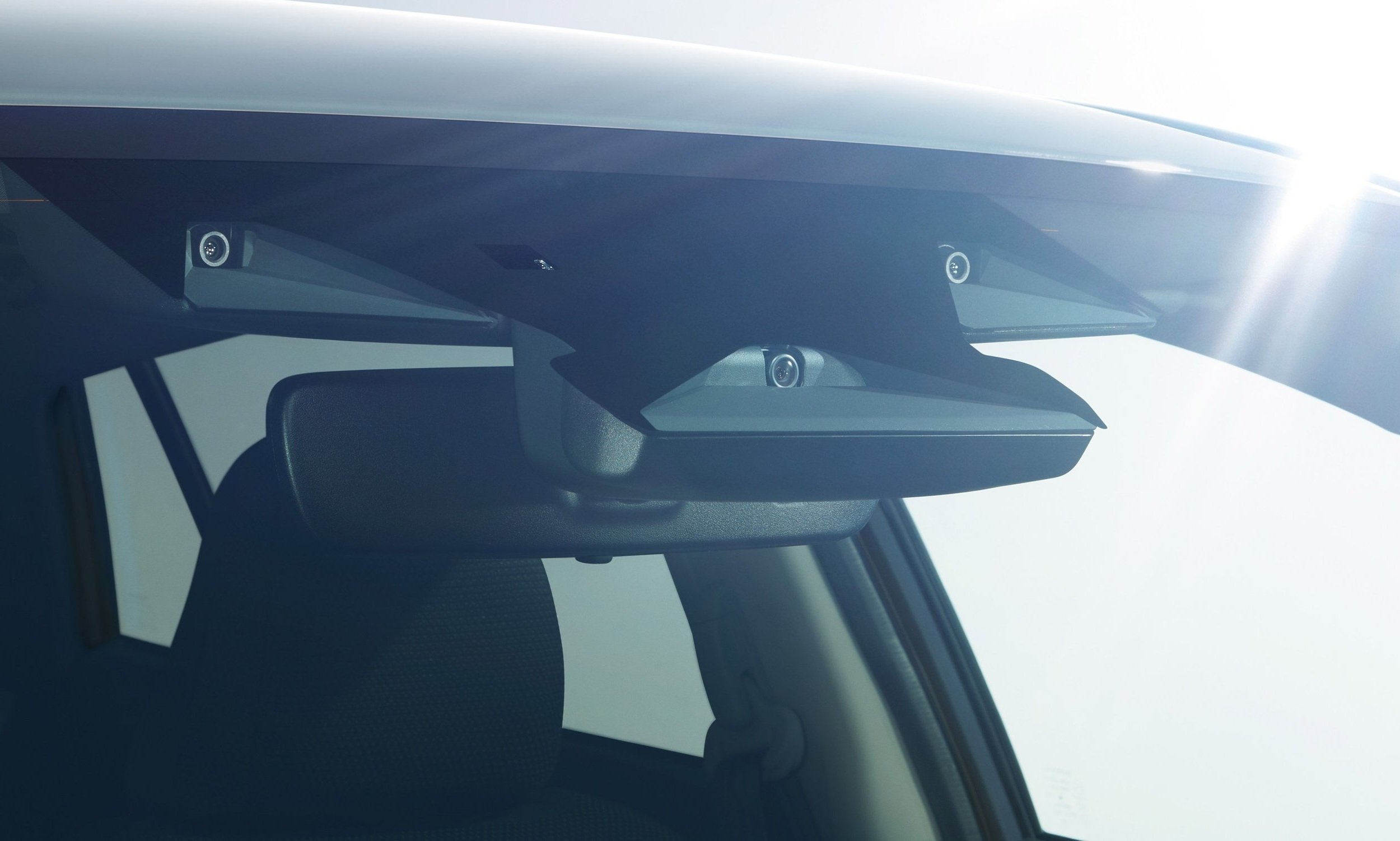
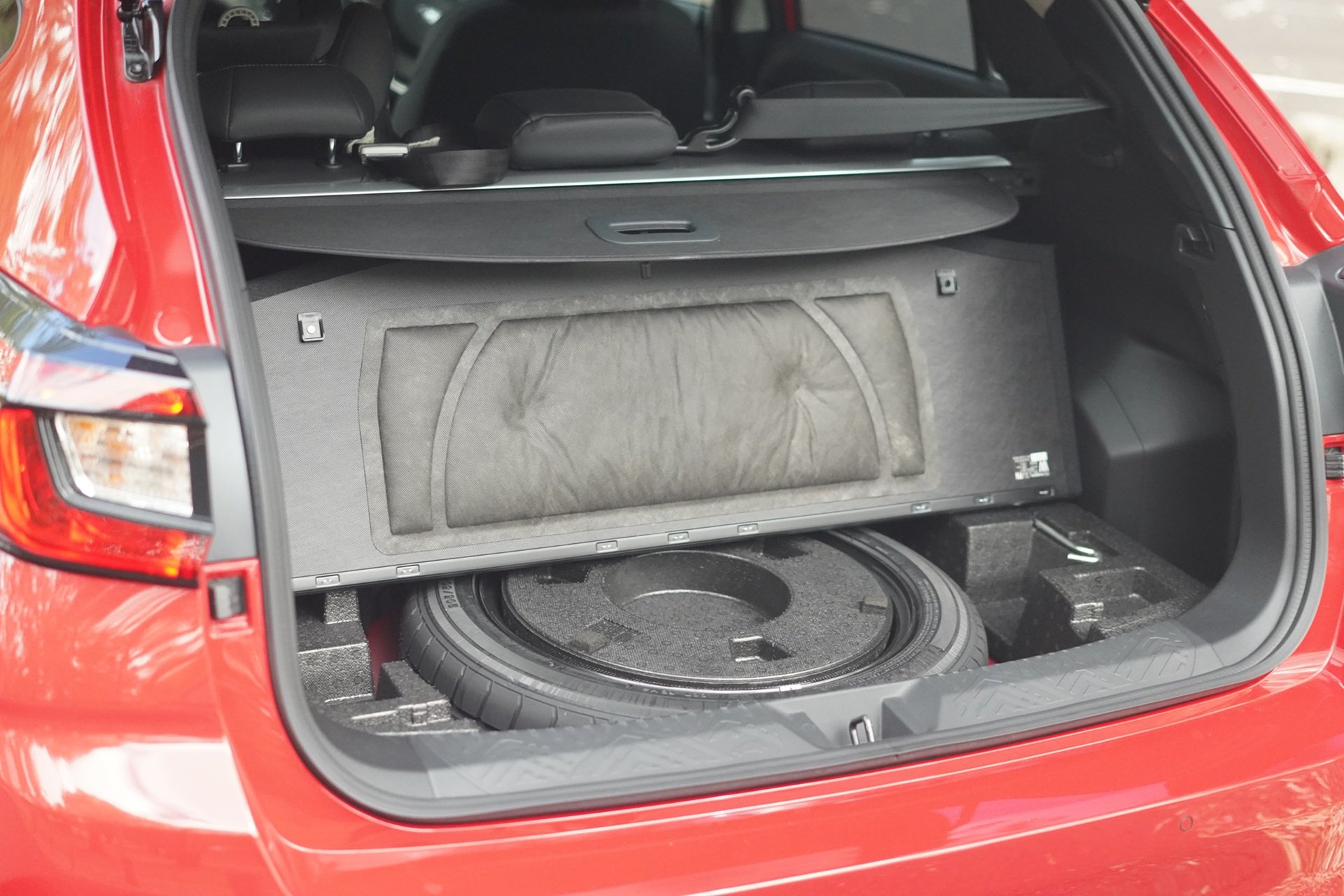
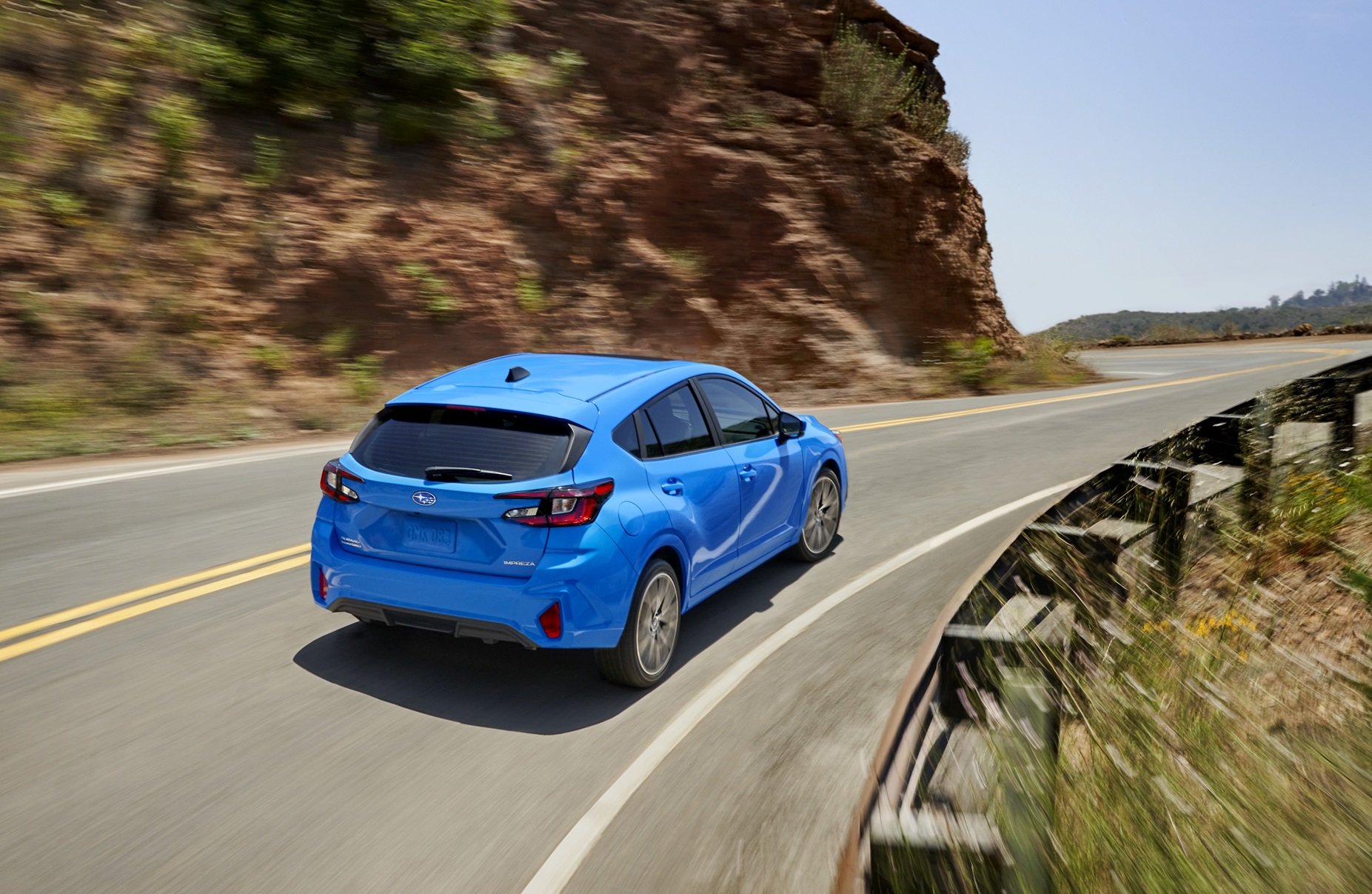
Even just taking off from the lights in the pouring rain, and cornering on wet roads, it’s a significantly safer undertaking with AWD compared with a front-wheel drive. Subaru has developed a very smooth CVT that saves fuel (even if it does drone on a little bit), and the Boxer engine (pistons that move horizontally, not vertically) offers low centre of gravity, which is why it sits nice and flat in corners.
Some quick stats to compare:
Boot size: 291 litre (back seats up), 883L (back seats down)
Ground clearance: 130mm
Wheelbase: 2.67m
Transmission: Continuously variable transmission, 8-speed
Engine: 2-litre Boxer | Fuel: 91 RON petrol (Tank: 50 litres)
Power: 115kW @ 6000 revs | Weight: 1472kg | Power-weight ratio: 80.1 kW/t
Economy: claimed combined fuel 7.5L per 100km
Impreza doesn’t have the performance of a Cerato GT or i30 N-Line - not even close. But that’s not the point of that vehicle in the same way the point of the Toyota Corolla is not to be as capable as the AWD Impreza or as exciting to drive as the i30 N-Line.
Toyota Corolla - hatch or sedan
A Corolla hatch or sedan is the one you buy if you can’t be bothered overthinking which one to buy - and that’s not a criticism of you. It’s perfectly normal to not give a crap about cars; you’re allowed to treat them purely as a tool for a job. But surely you want the right tool, yes?
Offered in front-wheel drive only, Corolla goes and steers okay, even if a bit dull and the cabin is bit meek, but again - that’s allowed.
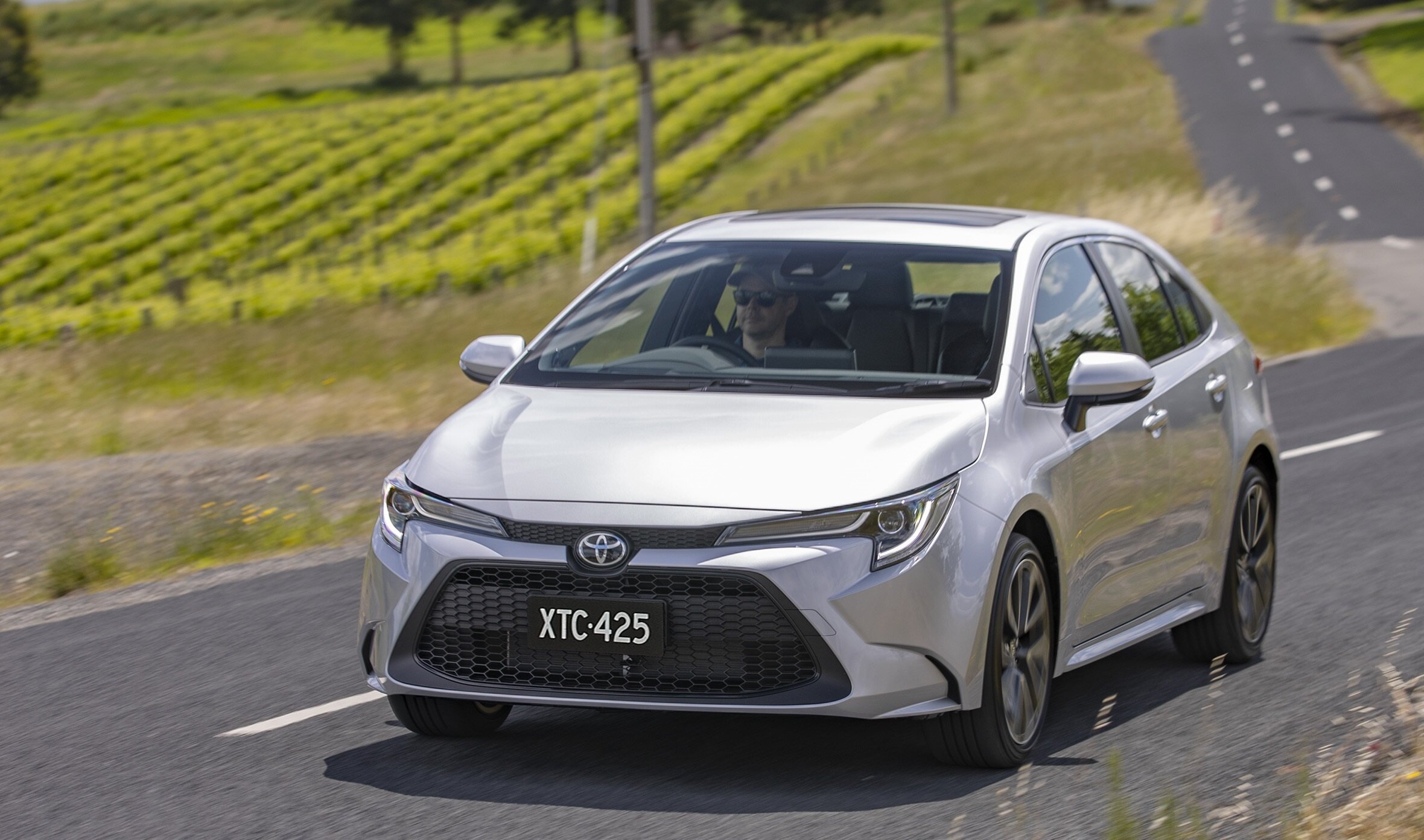
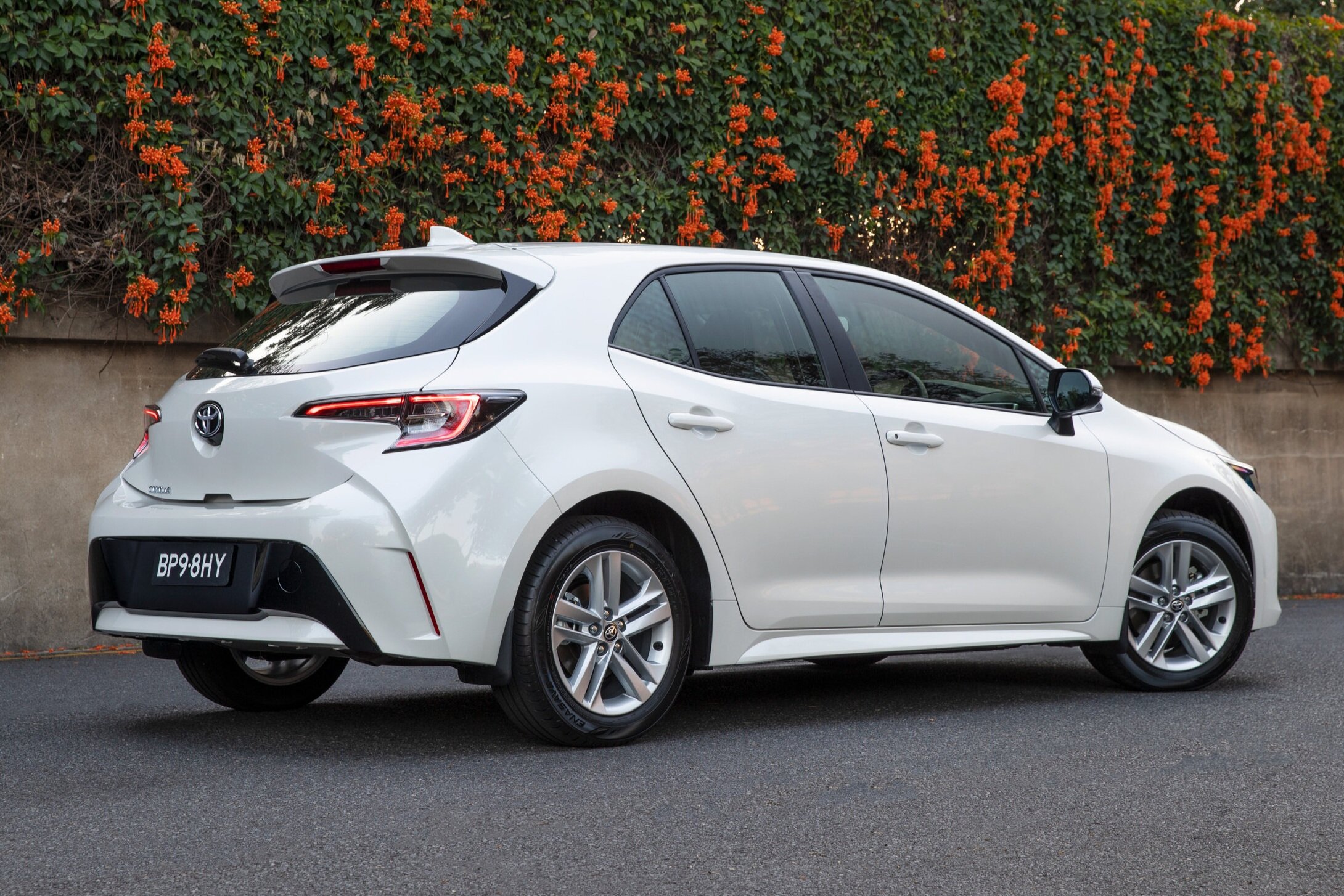
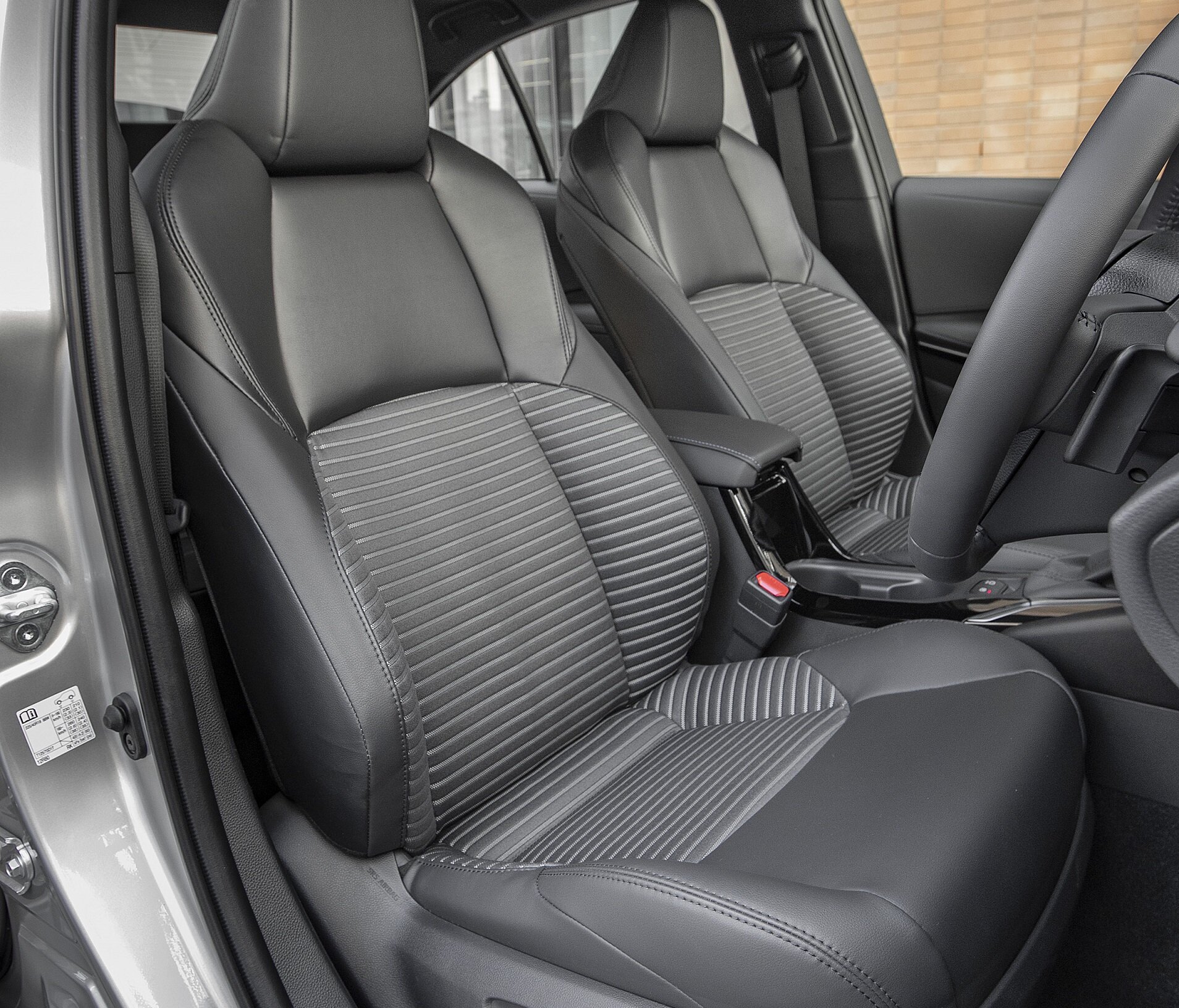
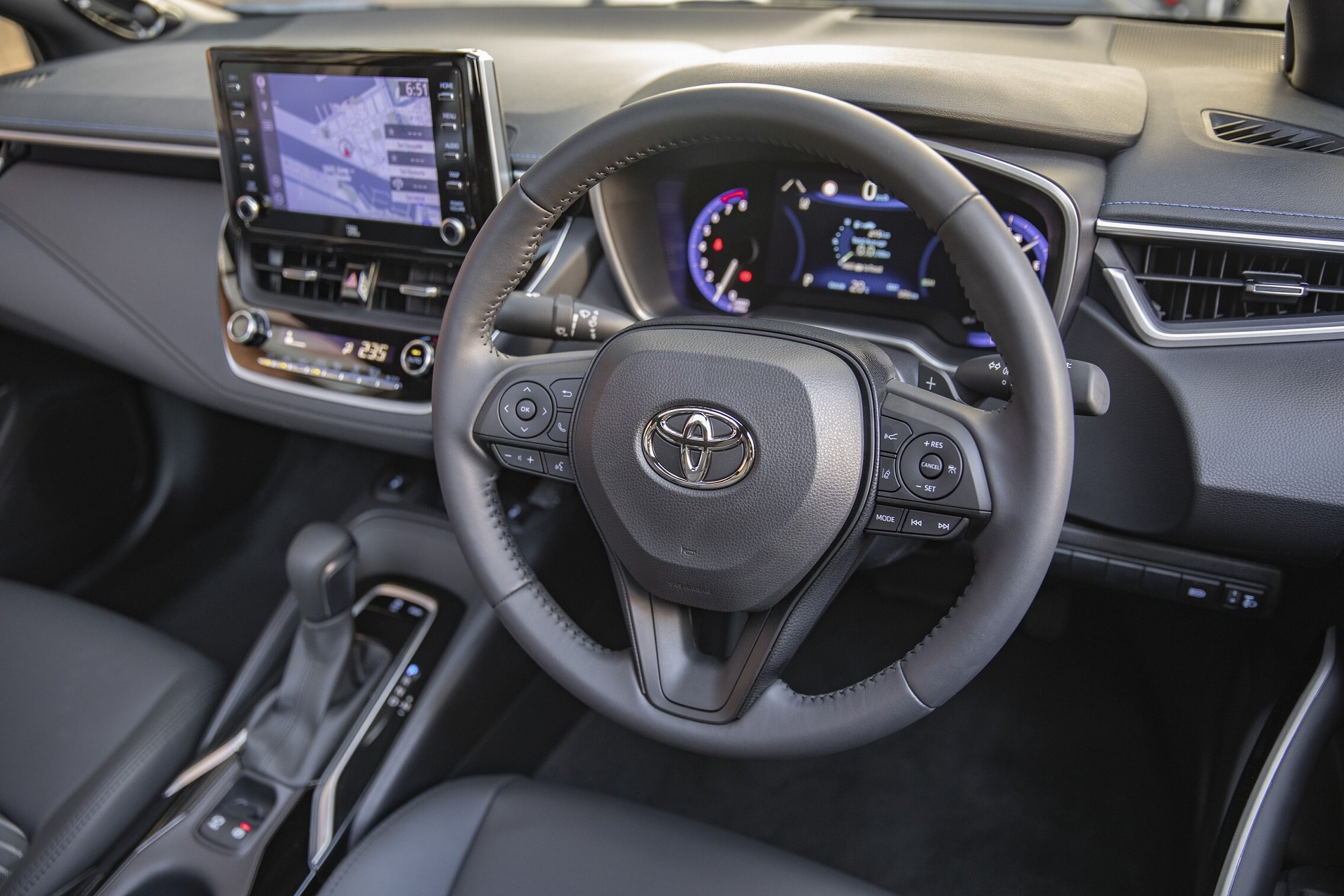
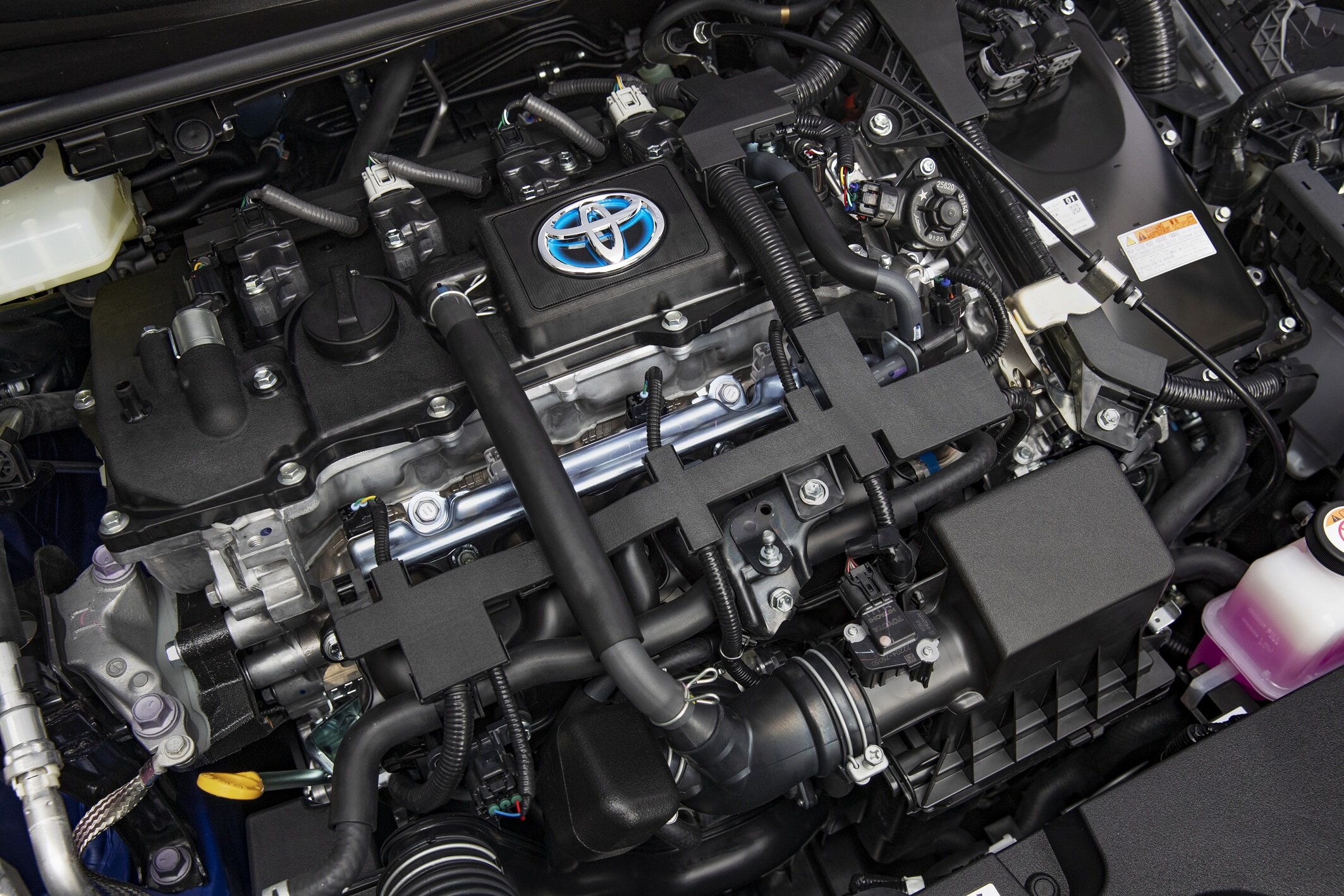
Corolla is a ‘good-enough’ notionally ‘small’ car and has more than proven its reliability over the years. Paint peeling, not so much, but that’s for you to decide. Toyota’s multi-point engine (tuned for fuel economy, not performance) and CVT transmission aren’t particularly exciting to drive, and that’s okay because you don’t have to buy an interesting car.
Boot size: 333 litres (back seats up)/ 470L (sedan)
Ground clearance: 130mm
Wheelbase: 2.64m
Transmission: Epicyclic auto 6-speed
Engine: 1.8L hybrid 4-cyl OR 2.0L 4-cyl | Fuel: 91 RON (Tank: 43L (hybrid), 50 litres (combustion-only))
Power: 103kW OR 126kW | Weight: 1430kg (hybrid), 1410kg (combustion)
Power-weight ratio: 75 kW/t (ZR hybrid hatch), 72 kW/t (ZR hybrid hatch)
Economy: claimed combined fuel 3.9L (hybrid), 5.9L (combustion) per 100km
The hybrid has sold to a wide consumer base and while it struggles to save you money on fuel long-term (higher overall retail cost), it does reduce emissions during take-off by using the kinetic energy captured during braking and coasting that would’ve otherwise been wasted.
i30 vs Kona
Do you really need an SUV? Probably not and here’s why. Despite small SUV’s being more popular in the sales race, a small car is still better value.
Having kids should not automatically force you to buy a heavier, thirstier, more costly SUV to own and maintain than a convention car. This is especially true if you do actually need a new car and ongoing costs are a concern for you.
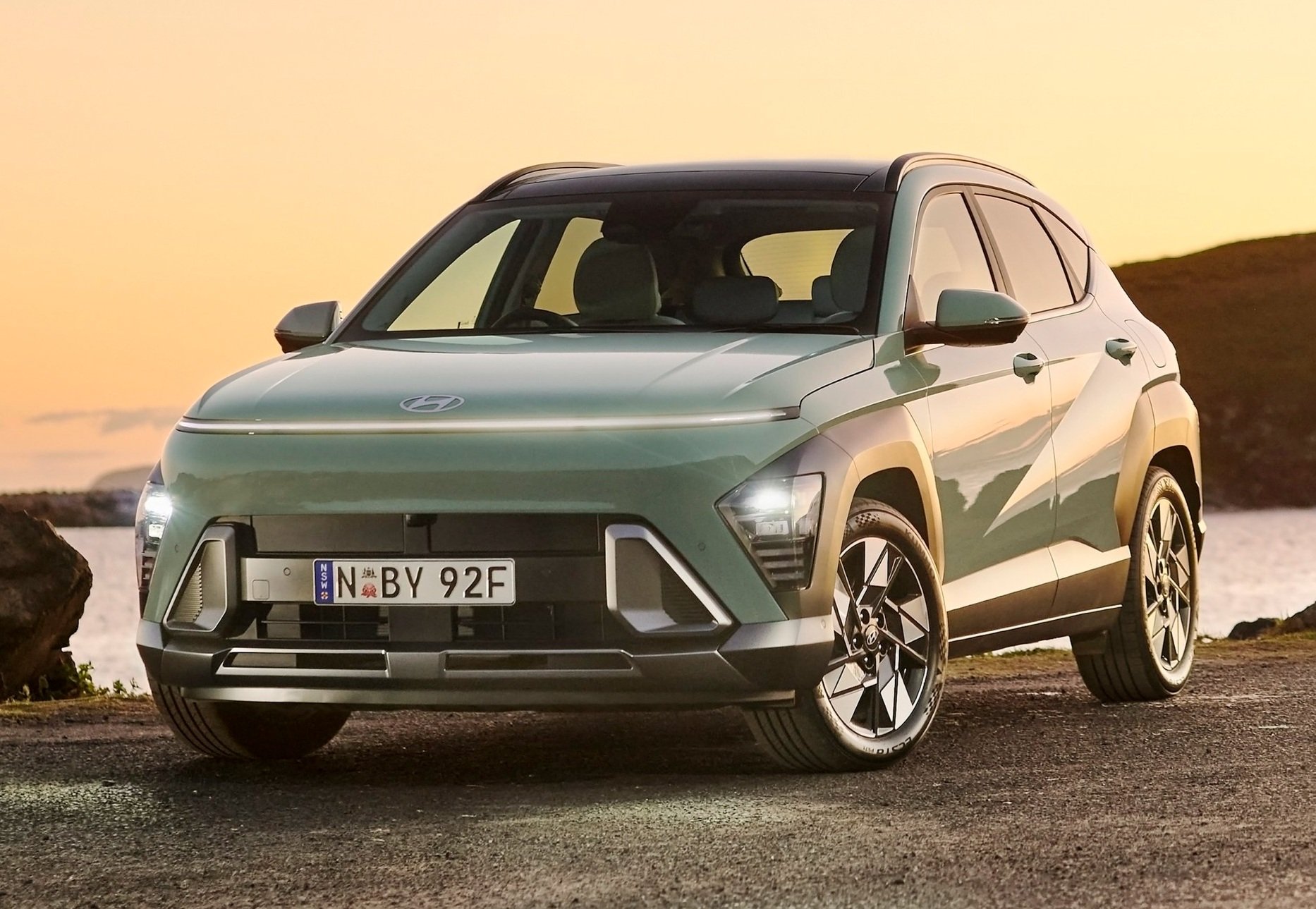
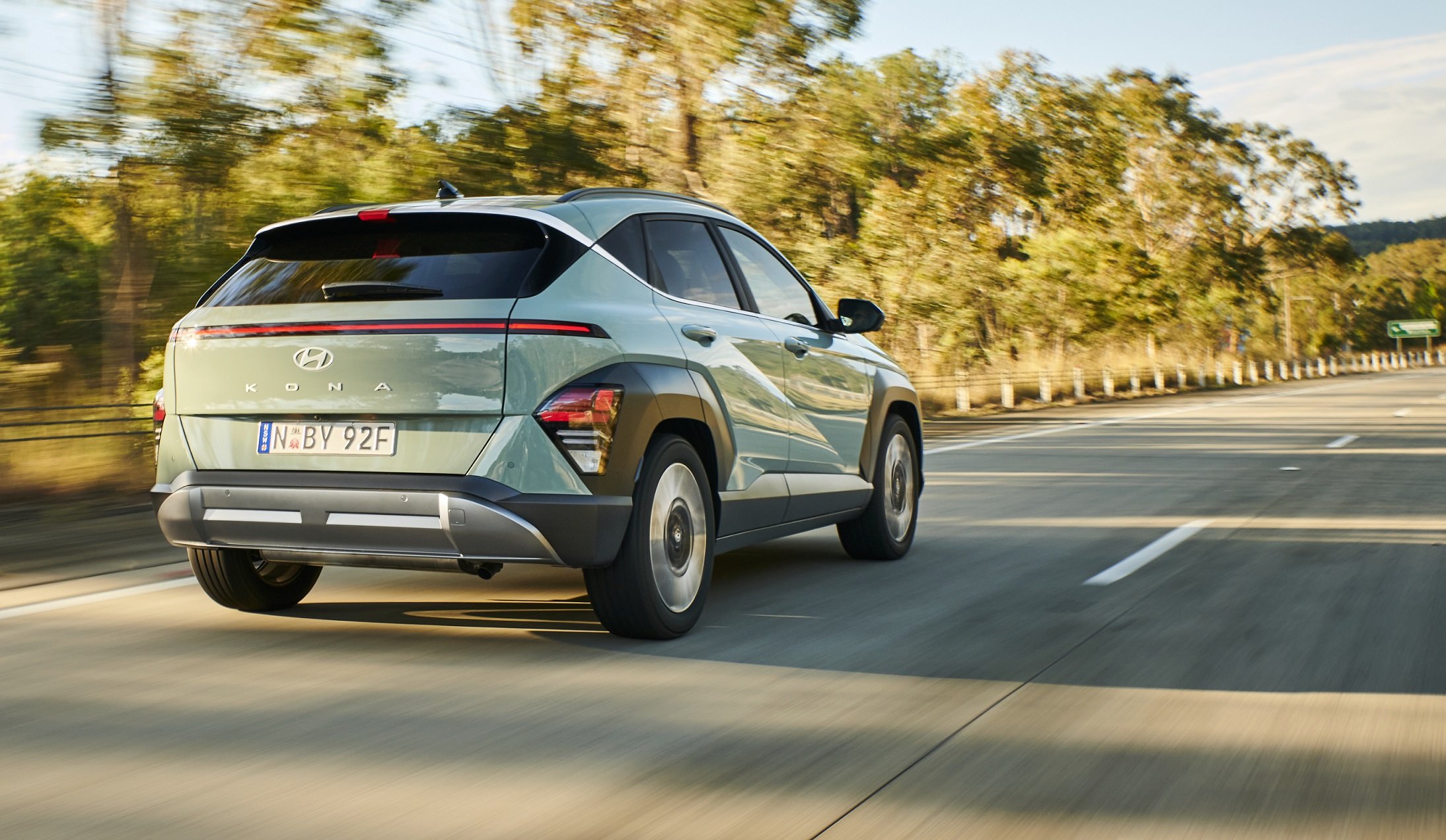
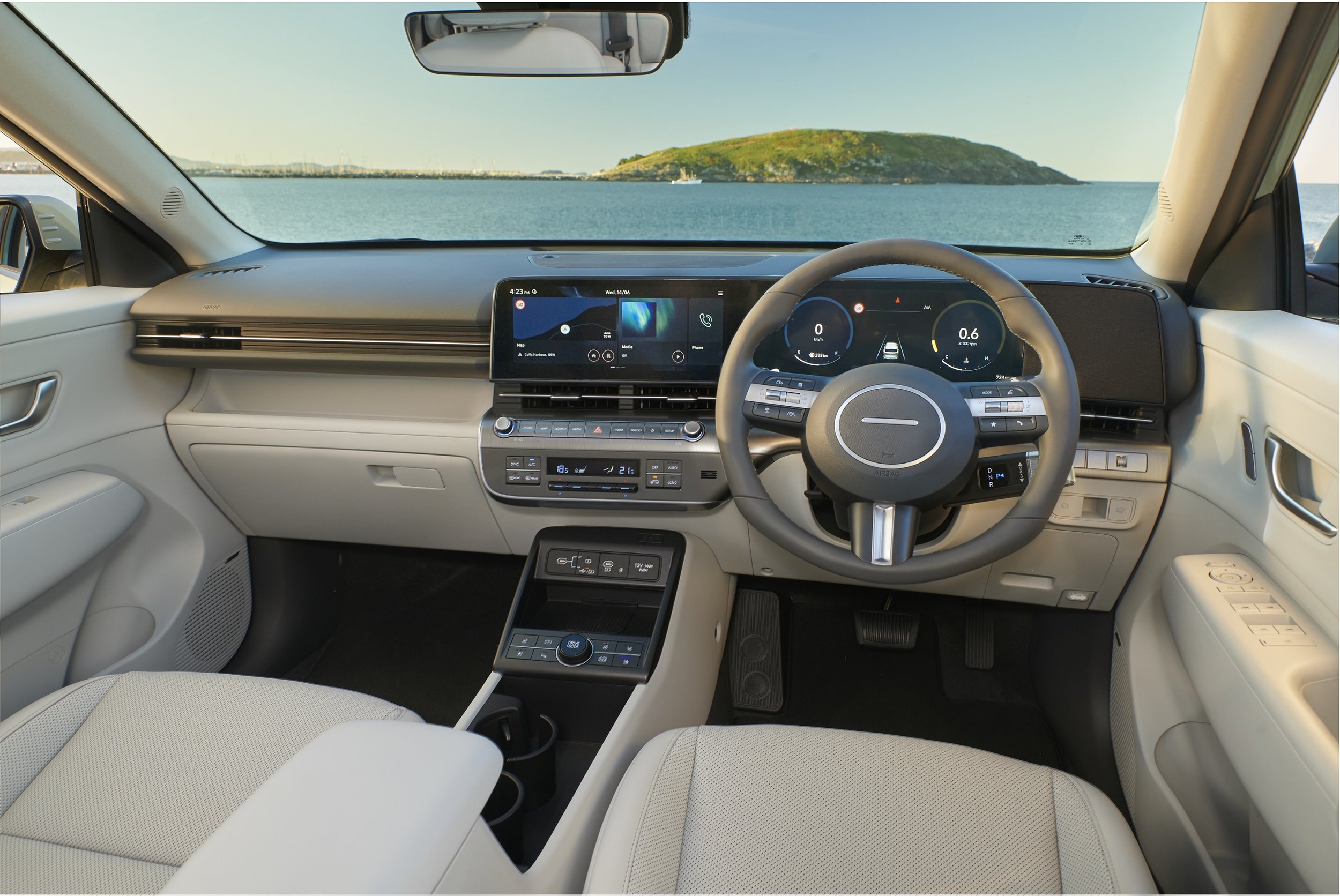
When you add size, you add weight, consume more fuel and the preconception that bigger equals more storage is not always true. In fact, the numbers don’t lie: if practicality is the game, the i30 has a full house.
KONA Premium
$44,250 drive-away (approx.)
2L non-turbo petrol (1.6 turbo-petrol engine optional with N-Line pack)
110kW @ 6200rpm
6-spd manual / 7-spd DCT
Luggage: 395 L (rear seats up) / 1301 L (rear seats down)
Fuel usage: 7.1L/100km (combined, DCT)
Kerb weight: 1436kg
Fuel type: 91 RON unleaded
Towing: 1300kg braked
Given that you’re getting the same engine, same transmission and, notionally doing exactly the same task with a Kona as you would be with an i30, the fact you’re consuming more fuel (because it weighs more: powered by the same engine) but the luggage capacity is only 30 litres more than the hatch - why do you want higher ongoing costs to run it?
If you went for the sedan you’d actually get more luggage space than a Kona and you’d pay $5000 less to still have the N-Line Premium with all the ‘bells ‘n’ whistles’, as they say.
i30 N-Line Premium
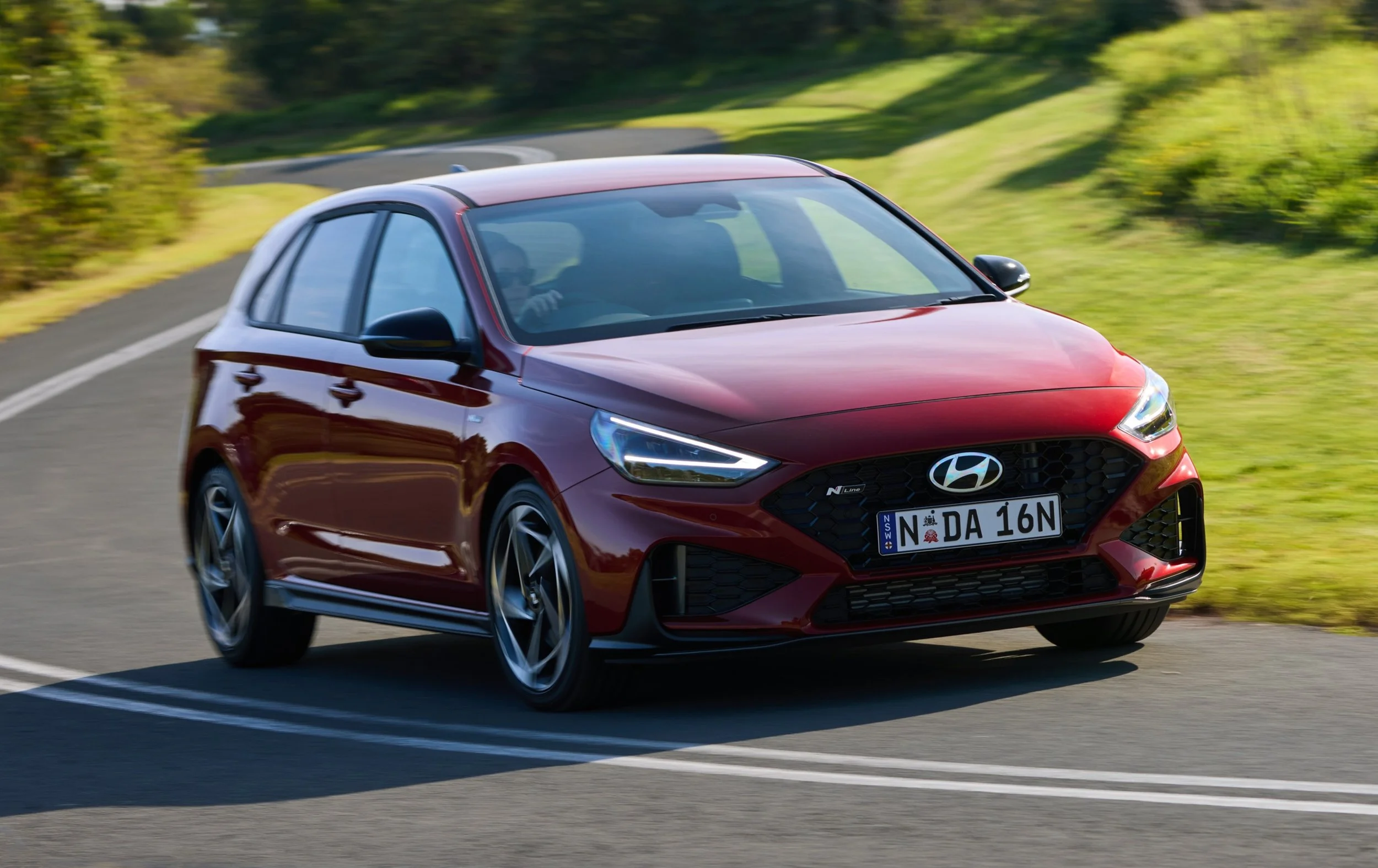
$45,400 drive-away (approx.)
1.5L turbo petrol
117kW @ 6000rpm
7-spd DCT (6spd manual saves you $2000)
Luggage: 361 L (rear seats up) / 1143 L (rear seats down)
Fuel usage: 6.7L/100km (combined, DCT)
Kerb weight: 1507kg
Fuel type: 91 RON unleaded (50L tank)
Towing: 1250kg braked
18-inch alloys
GPS, wireless charging, wireless Android Auto/Apple CarPlay
LED headlights, taillights, daytime running lights, foglamps
Adaptive cruise control, sunroof, heated power-folding door mirrors
Luggage capacity: 395 litres
i30 VS The Germans
What you might notice here is that for the sake of having a Mercedes, you’re adding about $20,000 onto the price of an N-Line, but you get 25 per cent less power, and the boot is smaller, the fuel tank is smaller, it consumes more expensive fuel and the premium features aren’t even included. You have to pay more again for stuff that’s already available on the Hyundai, more or less.
The A200 might be lighter, but it’s only a margin of 4 per cent and the performance from the N-Line’s 1.6 turbo destroys the Merc in power-to-weight. Fuel economy’s the same too, but you don’t get foglamps like on the N-Line.
Exactly what do you get for the extra $20K?
Mercedes-Benz A200

Add $2000 for AMG sport package? Or just buy an i30 N-Line.
$62,000 + on-roads (approx.)
1.3-litre turbo petrol
120kW @ 5500 rpm
270Nm @ 1250-4000 rpm
7-speed dual-clutch
0-100km/h: 8.2 seconds
Kerb weight: 1444kg (approx.)
Fuel tank: 43 litres
Combined economy: 6.6L per 100km
Premium 95 unleaded
Basic cruise control, sunroof
GPS, wireless charging, wireless Android Auto/Apple CarPlay
18-inch alloys (no spare: runflat tyres)
LED headlights, taillights, daytime running lights
Luggage capacity: 370 litres
OPTIONAL EXTRAS:
Plus package $4400: Premium stereo, front cross-traffic alert & active blindspot assist, dual-zone climate control, adaptive cruise control, head-up display
AMG wheel pack: 19-inch alloys + tyre repair kit
Black premium leather: $1900
Audi A3 35 TSI

$50,600 (hatch) - $53,000 (sedan) + on-road costs (approx.)
1.5-litre 4cyl turbo petrol | 2L turbo-petrol 4cyl
110kW @ 5000 rpm | 140kW @ 6000RPM,
7-speed dual-clutch
0-100km/h: 9.9 seconds
Kerb weight: 1600kg + (approx.)
Premium 95 unleaded
Basic cruise control
GPS
18-inch alloys (no spare: repair kit)
Bi-xenon headlamps
OPTIONAL EXTRAS:
360-degree camera $750
Comfort pack $2000: heated seats, power folding door mirrors, electric front seats
Panoramic sunroof: $2000
Auto hands-free bootlid: $650
The same applies here with the Audi equivalent. You can’t comparatively shop an i30 N-Line Premium - the top-of-the-range - against the Audi A3 because the latter’s price doesn’t start until you’re already between $8,000 or $11,500 in the red (depending on body type).
Audi doesn’t even give you an actual spare tyre of any description - the notionally prestige car buyer is left with a bottle of goo to drive home on.
Hyundai i30 N-Line Premium (sedan)
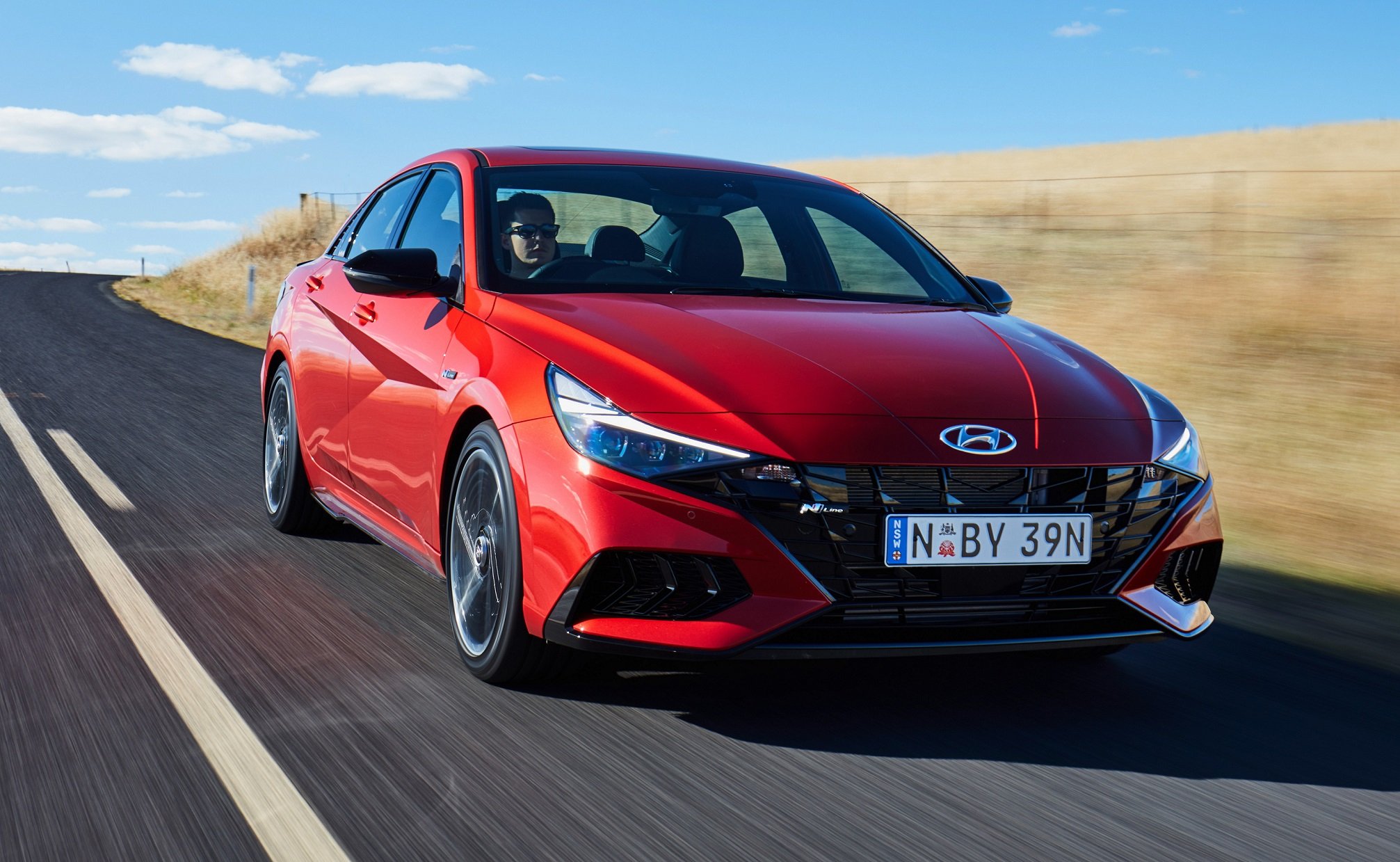
$46,300 drive-away
1.6-litre turbo petrol
150kW @ 6000 rpm
7-speed dual-clutch
0-100km/h: 7.5 seconds (approx)
Kerb weight: 1385kg
Standard 91 unleaded
Panoramic sunroof
Electric seats (heated/cooled)
Adaptive cruise control
GPS, heat insulated windscreen, proximity key
Apple CarPlay + Android Auto, premium 8-speaker stereo (with amplifier)
18-inch alloys (space-saver spare)
LED headlights, taillights, foglamps
Even if you did opt for the notionally superior and premium Audi with its alleged engineering pedigree (based on rumour and hype rather than actual evidence), the humble Hyundai smokes it thanks to 10 additional kilowatts and 10kg less weight. We know this because the power-to-weight ratio on the N-Line Premium is 113 kW per tonne, but only 76 on the Audi.
Again, exactly what are you paying for here? Because it’s not features (the premium ones on the Hyundai are extra on the Audi), nor performance because clearly the A3 is murdered by the N-Line.
It’s hardly styling, either - although this is a subjective topic - because Audi has been doing that same front-end grille thing for the last 15 years. At least the i30 sedan’s looks match the way it drives.
DRIVING
Here in Australia, Hyundai spent quite a lot of time and money calibrating suspension settings uniquely for our crap roads and they do a great job, to this day, in i30. That was about 8 years ago.
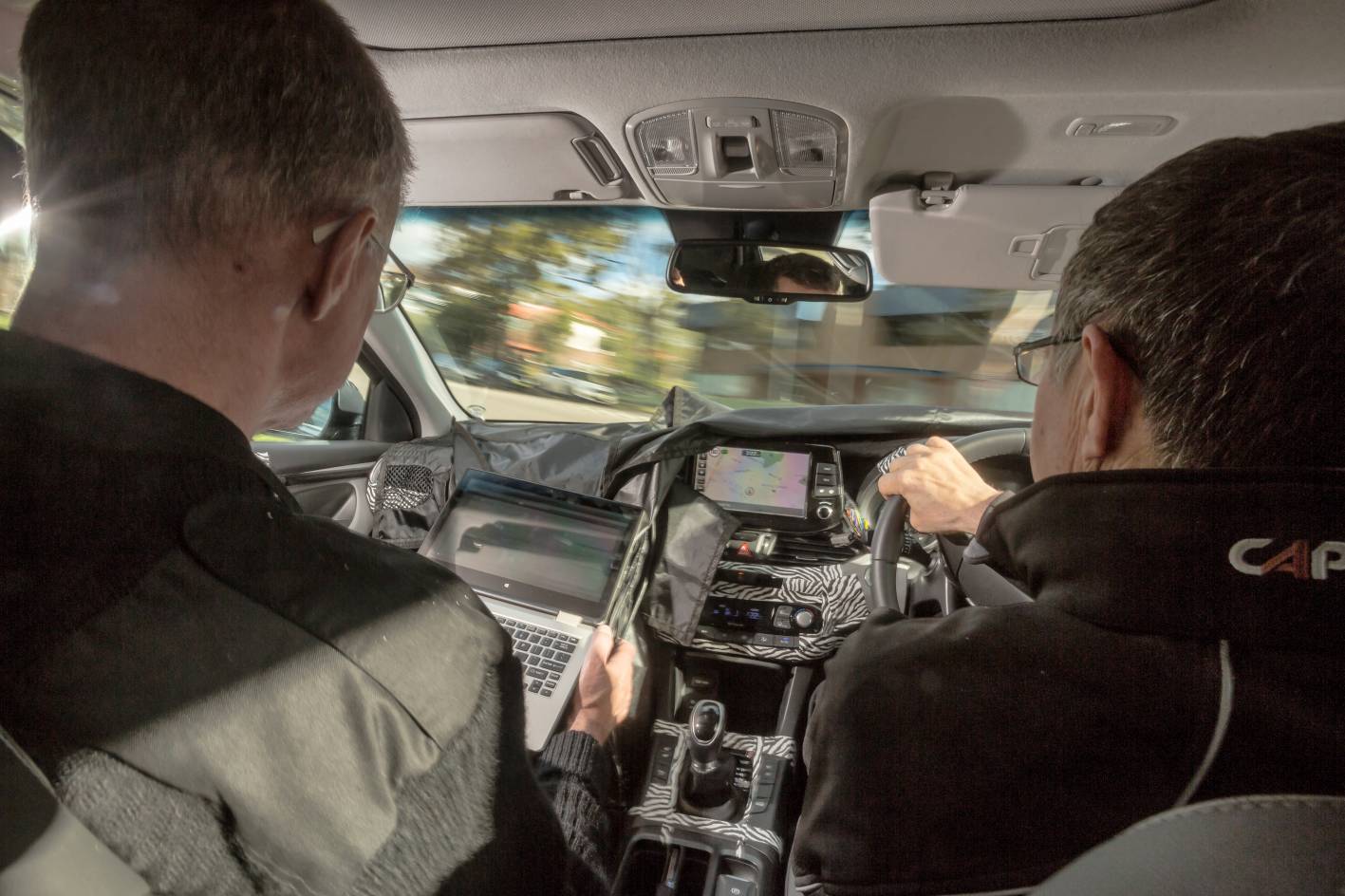
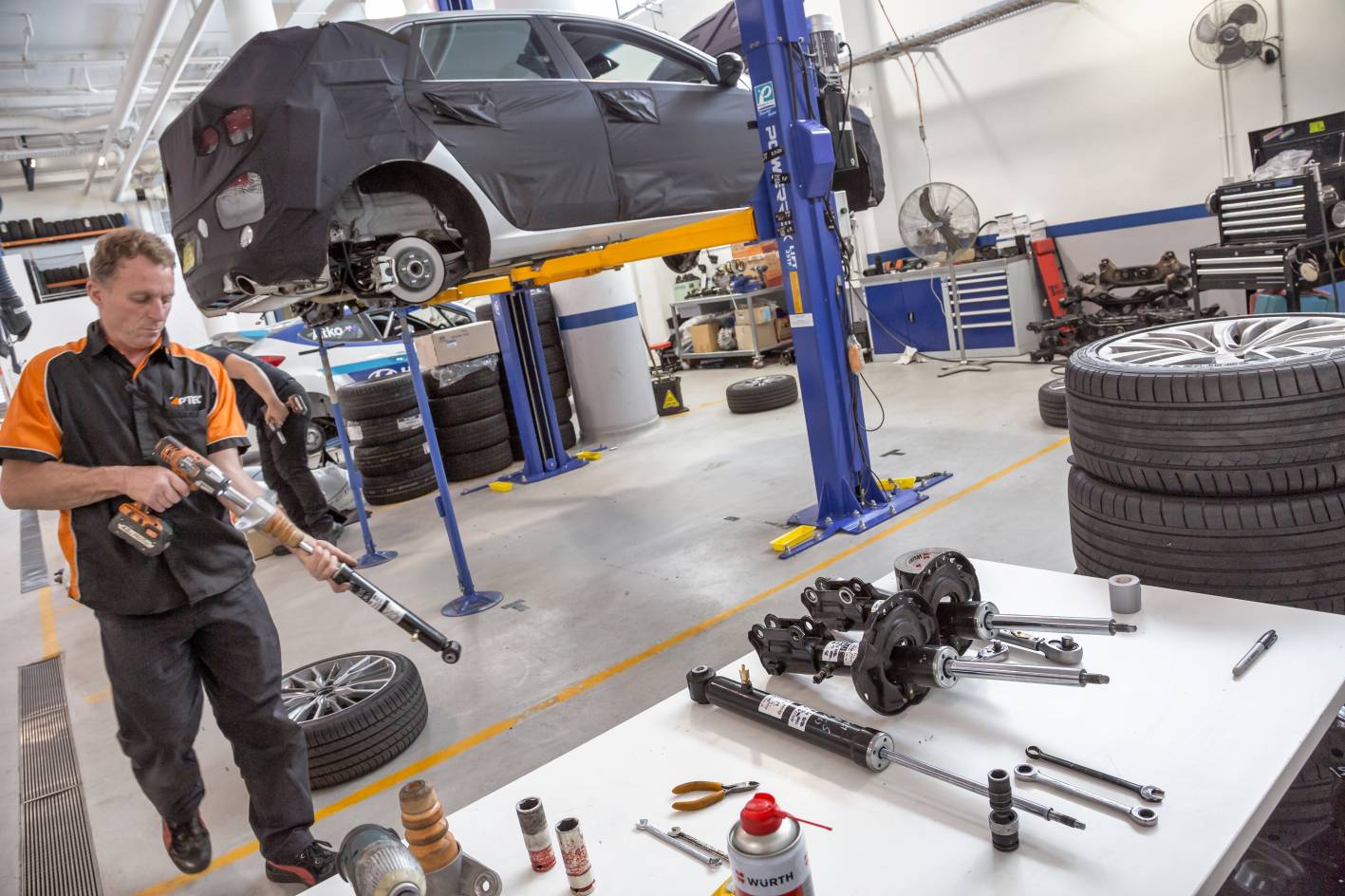
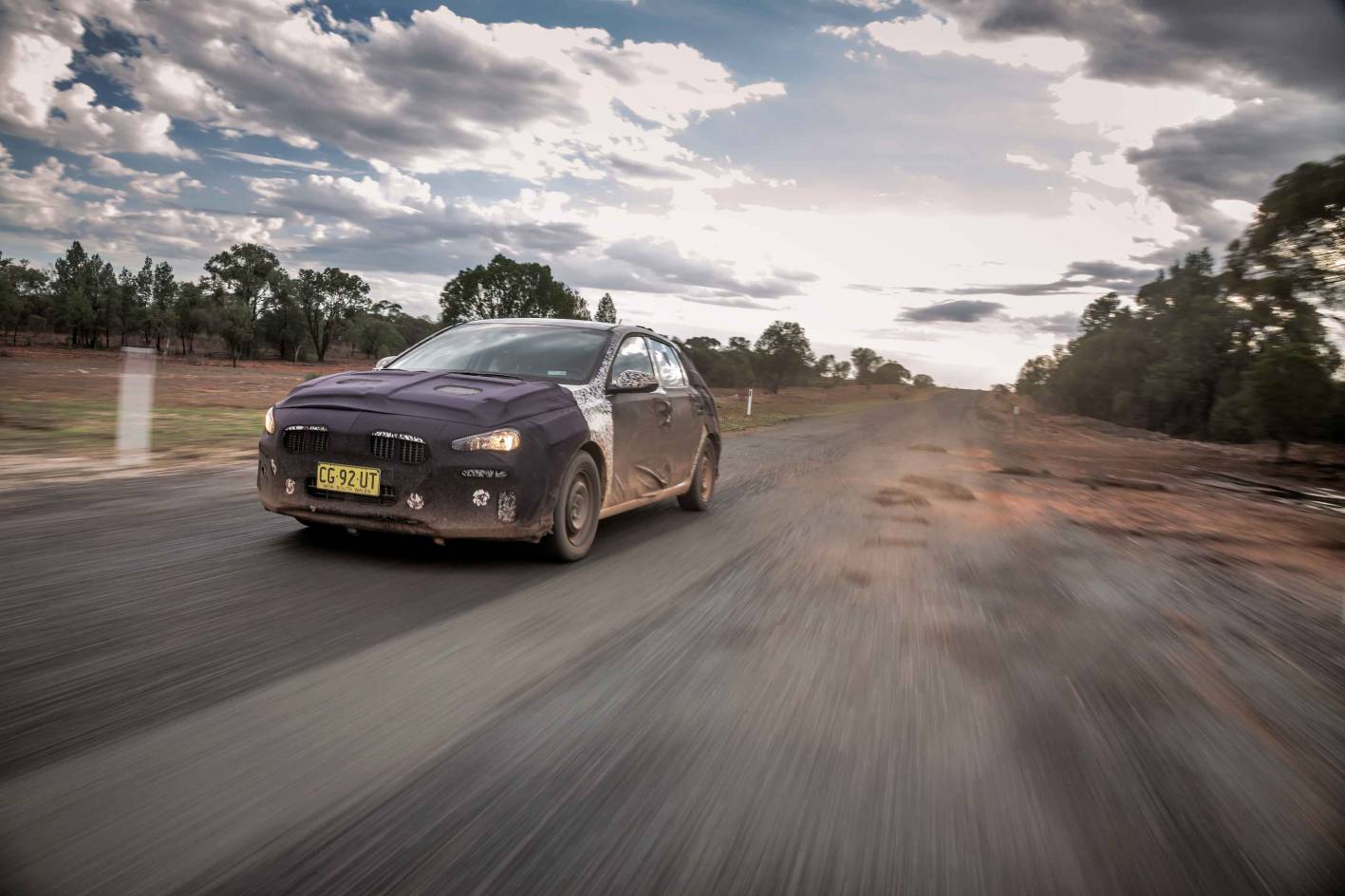
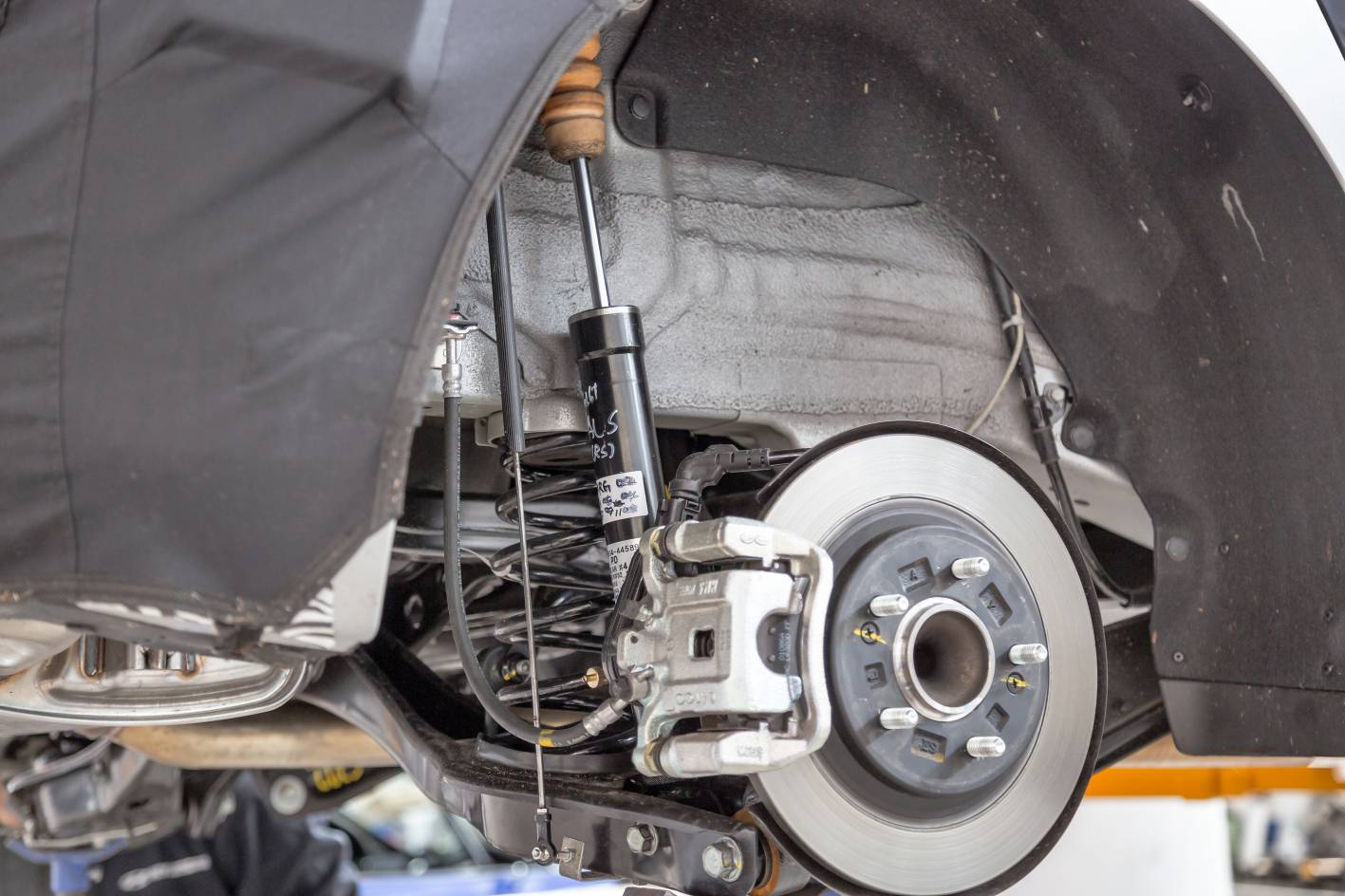
They’ve got a team of wizard engineers who went through more than 200 different calibration permutations of the dampers, (springs, bushes, etc), for this car. More than 200 permutations. Can you imagine the complexity of just keeping track of the feedback on all of those different settings and arriving at, ultimately, the best one? It’s so much data. Anyway, they’ve done a great job.
What is essentially the case here is, you’ve got three distinctly different characters.
The base model Active is quite relaxed to drive. It’s just does what you tell it to. It’s your typical family car, it does a good job in that context. Doesn’t do anything particularly poorly.
When you step up into the i30 N-Line range, you get a more advanced rear suspension set up and that car has a really lively sort of character. The ride is not excessively harsh but it’s certainly not soft either. This is a hot hatch. It’s not warm, it’s not lukewarm, it’s not tepid… it’s hot. You can get from A to B very quickly if you press on in the N-Line.
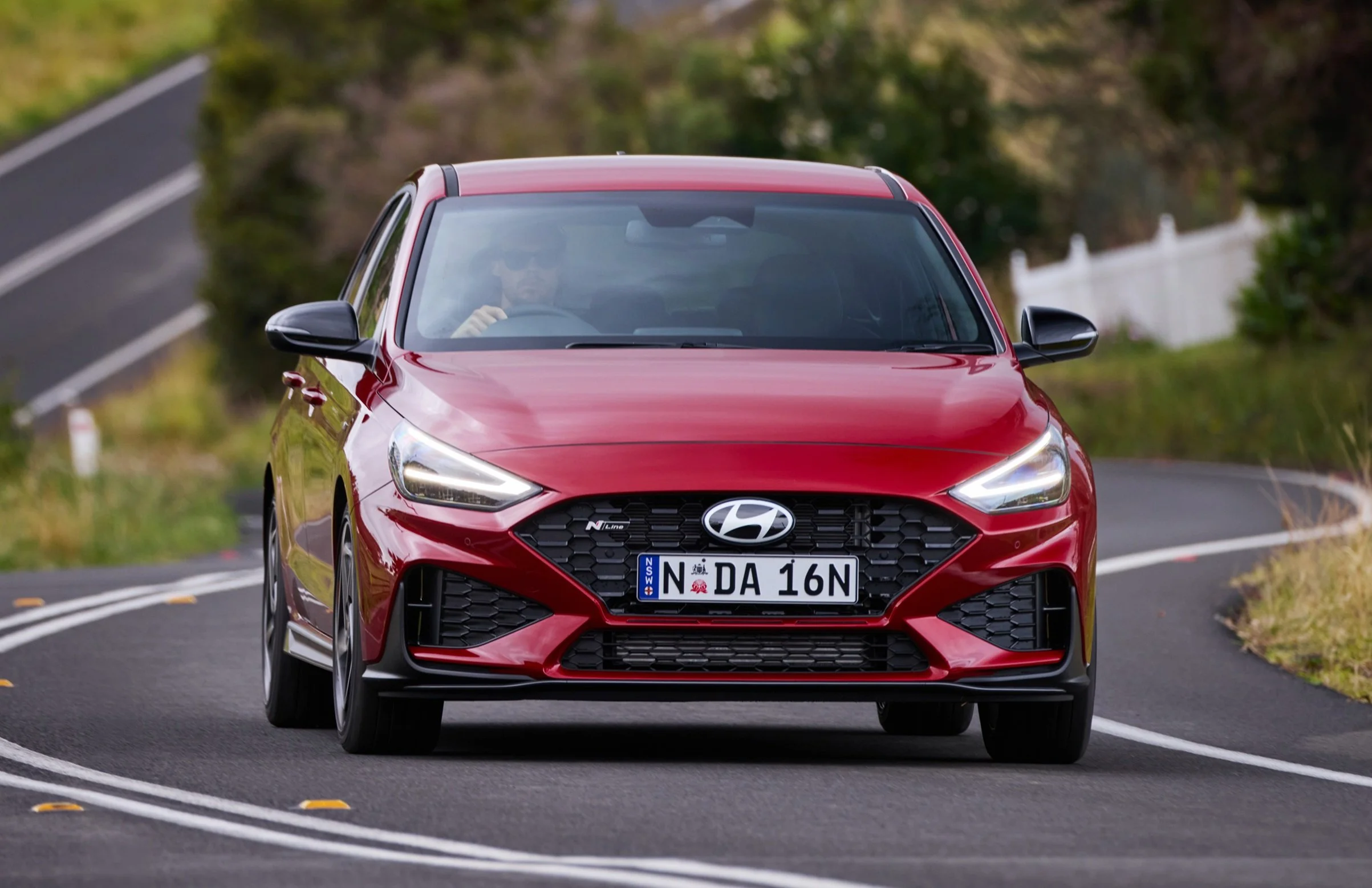
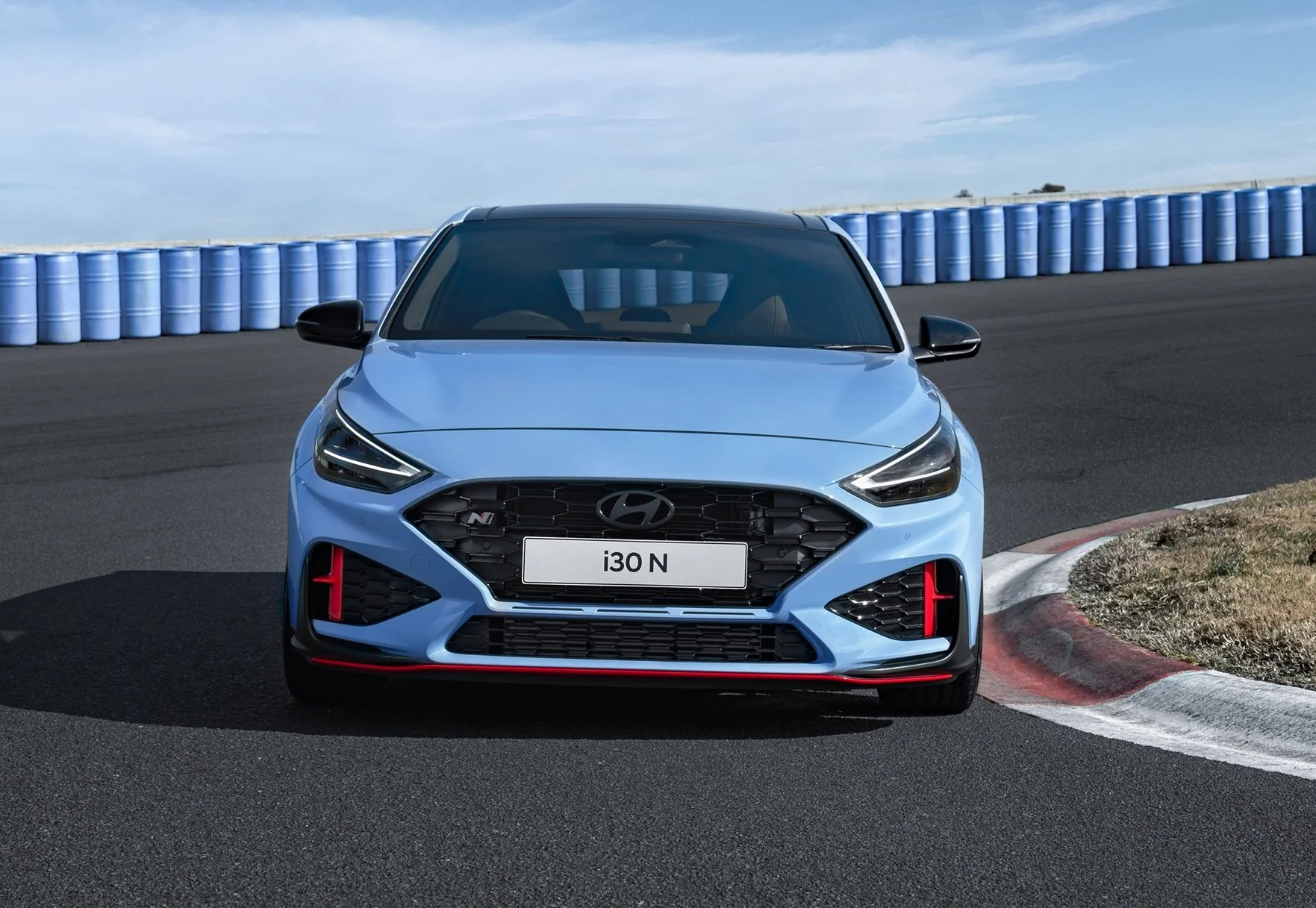
Then on the comfort side of things with the 2.0-litre engine, if you're looking at the Elite, that’s fairly relaxed but a little bit more taut, I think, than the base model Active set-up. So you're kind of progressing through those different characters and you can actually pick and choose the one that’s right for you and there’s a substantial difference between them.
Across the board, i30 is very comfortable. And there are countless hours over the years in which all flavours of Hyundai’s bulletproof little i30 have proven reliable. They extremely rarely go wrong, and in that blue moon instance, Hyundai has an excellent reputation for great customer support if something does fail prematurely.
Not only has each model grade been very popular in the sales figures, but even the performance driving enthusiasts have developed a cult sub-brand for the ‘N’ cars like N-Line, the N Fastback and of course, the original N Performance (the one which killed the Golf GTI).
No N buyers have ever needed a chiropractor. The other thing, of course, is the ergonomic integration, which remains very good. The seats feel like they’ve been designed bespoke to your body without being too big or small, they’ve found some much nicer materials to wrap the base model steering wheel in, and everything in an N-Line especially, feels tight and good quality, nothing rattles or squeaks.
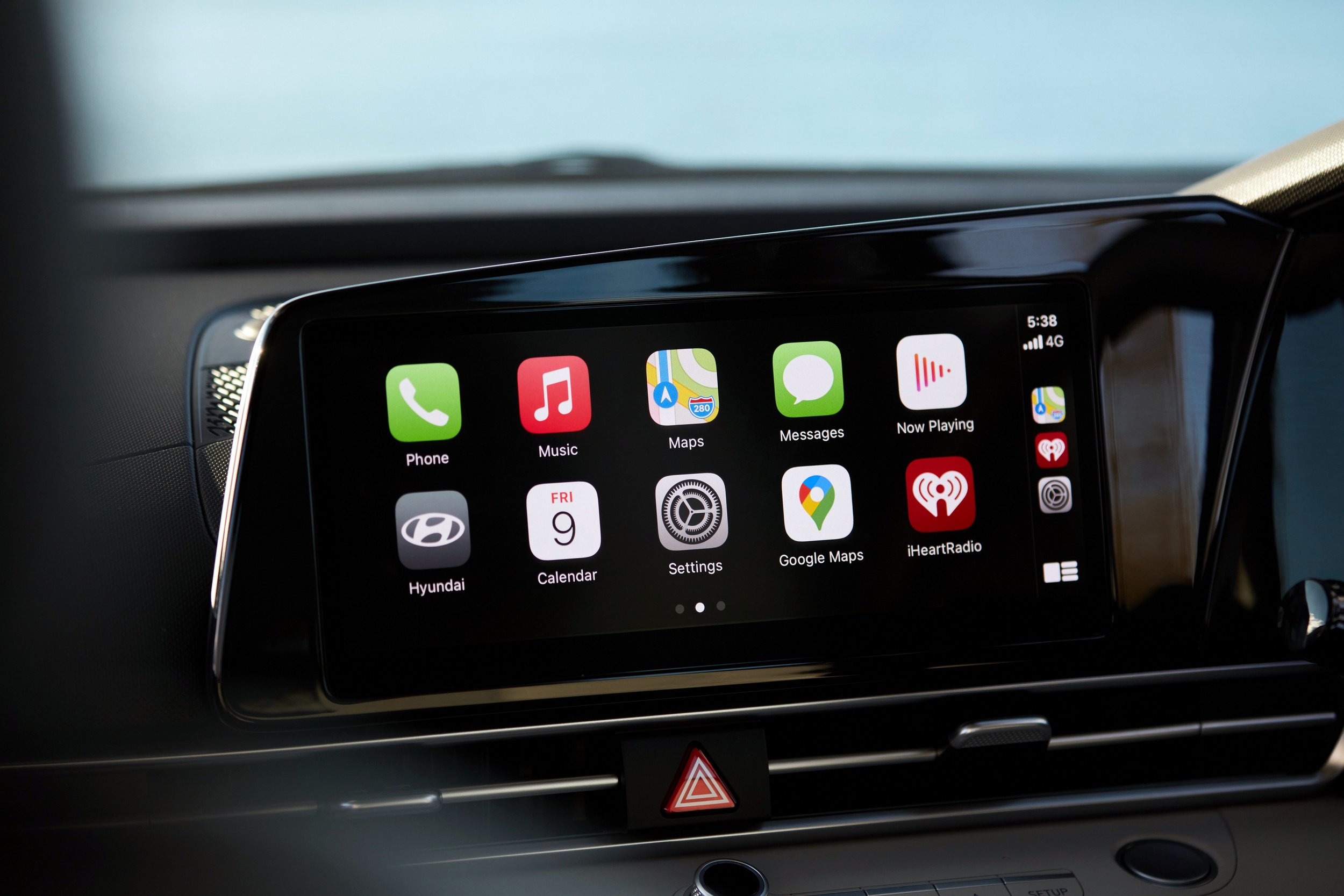
The central touchscreen evolution has carried on through the various other Hyundai SUVs and does so in i30, thankfully, because it is extremely clear and easy to use. Although the ‘Home’ icon remains on the wrong side.
You can split screen it to get sat nav on one side and AV Information on the others. You’ve got good phone integration with the Apple and Android integration systems. So that’s all really good news.


SAFETY
The Hyundai i30 hasn’t been tested by ANCAP since 2017 - which means it is officially unrated by ANCAP as of December 2024. But we might expect to see a new model by then.
Back then, six long years ago, i30 got a decent 5-star rating and you can check the full i30 ANCAP technical report here >>. And you can learn about the details of the Insurance Institute for Highway Safety (IIHS) Top Safety Pick award for Hyundai Elantra (i30 sedan) here >>
Aside from the ‘marginal’ score for the moderate overlap (frontal offset) crash test, Elantra gets an even more impressive score than the old hatch rating from ANCAP that is six years stale.
Here’s what the Elantra looked like crashing first, then we’ll looks at the highlights:
Keeping in mind this is a four year old vehicle being put through must more stringent testing protocols than the ANCAP i30 hatch test from donkey’s years ago, the IIHS reckons Elantra nails adult occupant protection here.
Rear passenger dummy injury values indicate a low risk of injury to the head or neck and chest
and the
rear passenger dummy's head remained a safe distance from the front seatback.
However, it wasn’t perfect in how the seatbelt changed position by sliding up onto the abdomen during the crash - although, keep in context that this is fairly common in these crash tests at 64km/h. The IIHS report says that during the crash:
the shoulder belt moved too far upward toward the dummy’s neck, compromising the effectiveness of the rear restraint system
This is not a guarantee of death or serious injury, but it is not a certainty of walking away either. many vehicles do not get perfect scores in the rear occupant protection of the back seats, including Toyota Camry and Kia Cerato, for example.
For the most part, Elantra scores ‘good’ and ‘acceptable’ results for most of the important crash tests. Many of which have been conducted using very recent protocols (which are also the hardest to pass).
This analysis also applies to the i30 sedan in Australia, but while less can be said of the hatch due to its platform’s age, it actually did a pretty decent job in the original frontal offset crash test at 64km/h. It earned 14 out of 16 points in that specific test which is today conducted at just 50km/h. More speed means more kinetic energy and greater inertial loads on the occupants.

Despite being such a notionally ‘old’ vehicle, the i30’s crash prevention systems also held up pretty well in the pedestrian protection tests at night, as conducted by the IIHS.
In the ‘Parallel adult — night, 25 mph’ test, i30’s auto emergency braking pulled the vehicle up and avoided a collision from 40km/h, whereby the dummy pedestrian is walking parallel to the vehicle. This is a particularly tricky test for these systems that have to accurately just spatial distance in low light conditions, relying heavily on the LiDar to accurately measure the distance to the object.
At 60km/h, the i30 managed to wipe off 43km/h and hit the pedestrian - at night using only low beams - at just 16km/h or about the average human’s jogging pace. That’s survivable for most people, however painful it would be.
ENGINES
Entirely new to the i30 range is the mild hybrid 1.5-litre turbo-petrol engine - this has been a long time coming for the i30 considering the market presence Toyota has with the Corolla hybrid.
We’ve not seen this before, but we have seen Hyundai combine its 1.6-litre turbo-petrol engine with a hybrid battery and electric motor in various forms. The new Santa Fe hybrid is a prime example which is in its second model iteration now with no reliability concerns whatsoever.
In one form or another, all Hyundai’s engines in i30 are reliable, grunty, cheap to service and good enough on the fuel economy front.
There’s no nasty little surprises in the petrol range, nor in the 1.6-litre turbo engine which has been going strong in the N cars since they first arrived back in 2016 - that’s eight years of engines and the platform.
And the 2-litre Atkinson cycle 4-cylinder atmo petrol engine is the same laid back mediocre engine with multi-point injection we’ve seen in Hyundai/Kia models like Cerato and Seltos for years and it’s ideal for those vehicles with no performance driving aspirations.
The dual-clutch transmission (DCT) is not something you need to worry about either. It’s been around for a long time and apparently it is quite robust in service as well - even in the stop-start traffic environments in which it’s not quite as ideal as the more conventional CVT or epicyclic auto transmissions.
Comparative fuel economy and emissions data at the Federal Government's Green Vehicle Guide >>
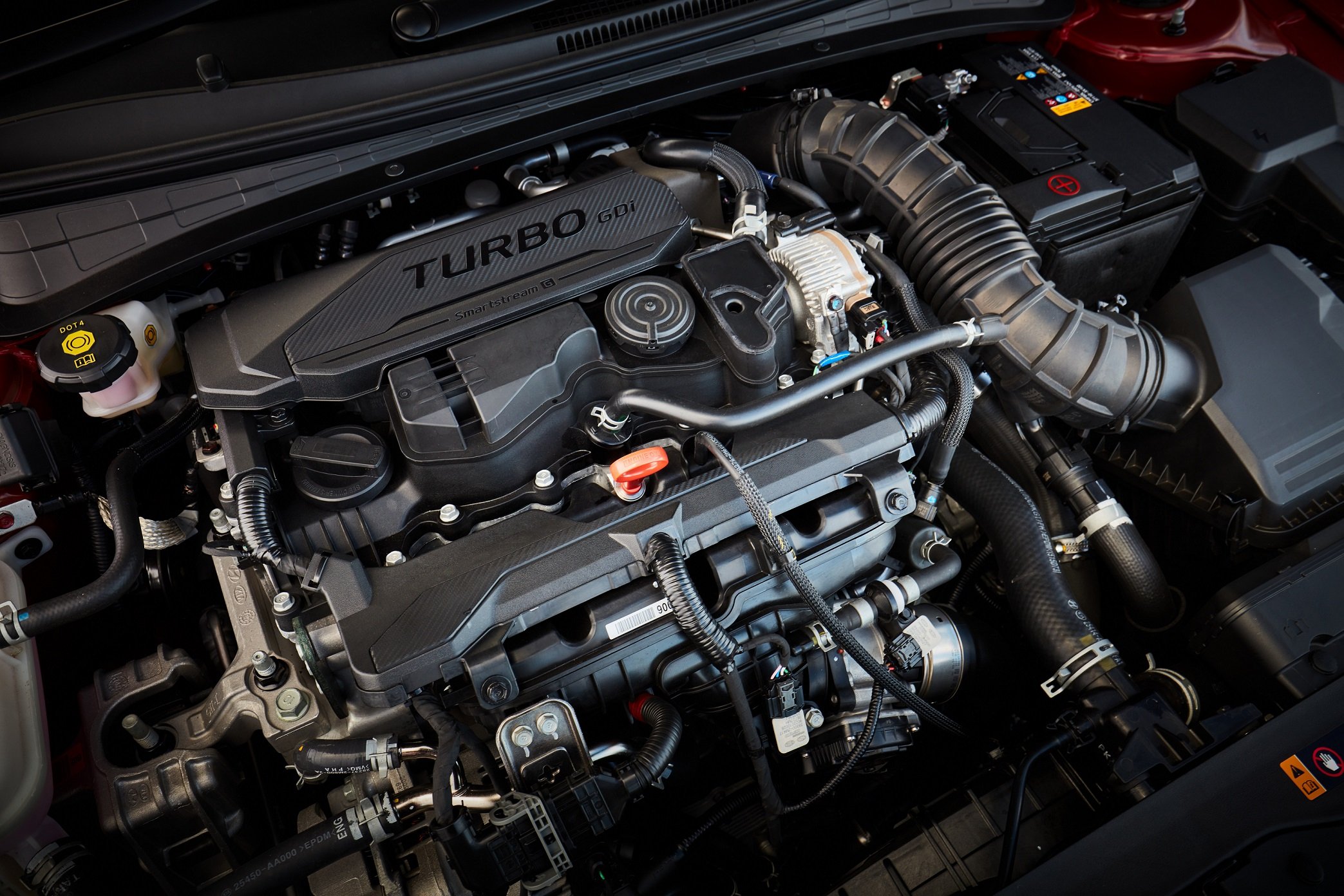
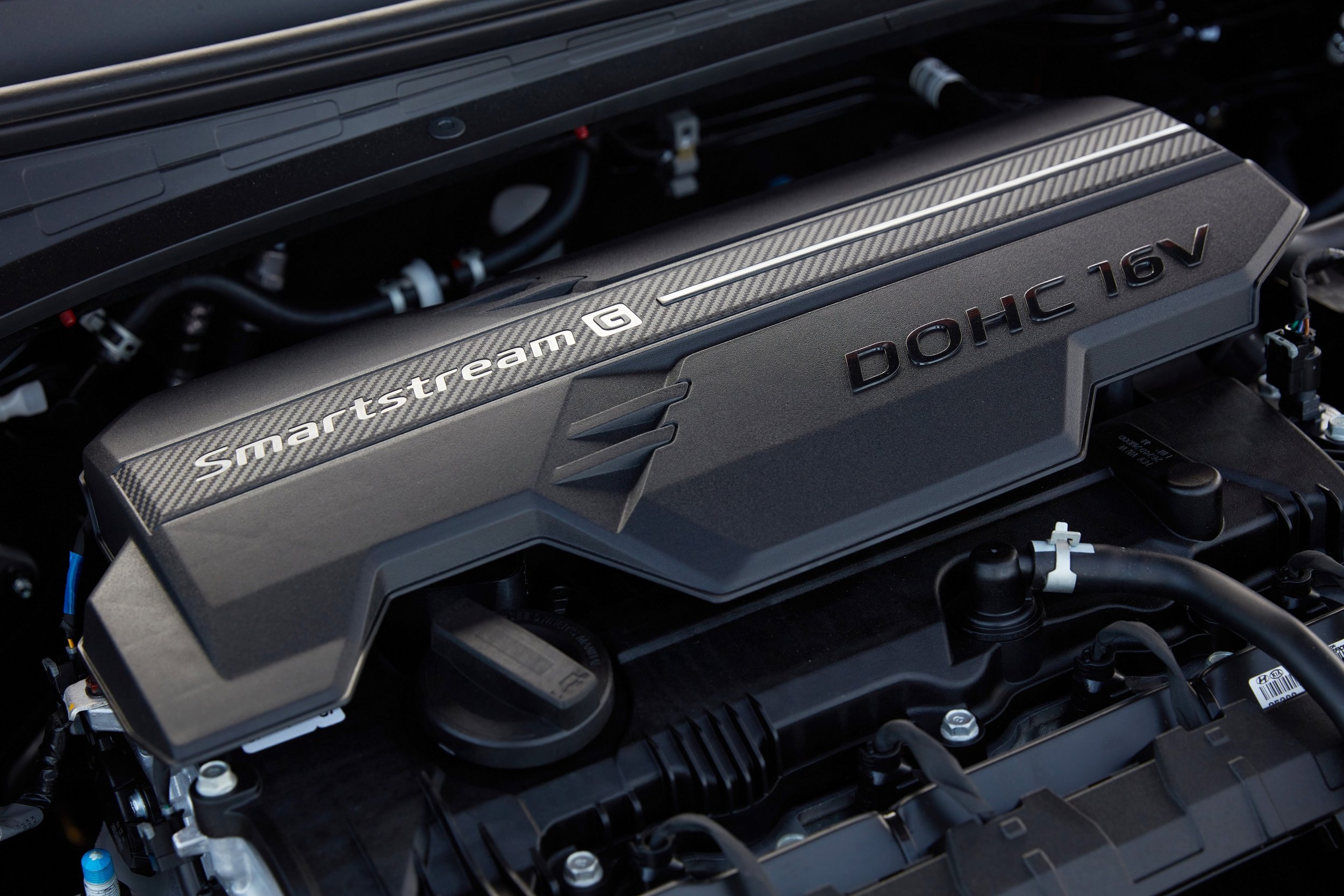
There’s plenty of petrol options though, you get 2.0-litre GDI engine in the sedan base, elite or Premium, or the 1.6-litre turbo petrol engine in N-Line and N-Line Premium, that’s on sedan only. Then there’s the mild hybrid 1.5 turbo-petrol on the hatch N-Line and N-Line Premium.
If you have got a young driver in your life and the state that you live in, such as NSW for example, has power-to-weight pre-requisites for young drivers with P1 and P2 licences, thankfully, with the N-Line and N-Line Premium, the 1.5-litre turbo-petrol mild hybrid is well within the parameters of that 130kW per tonne limit for P1 and P2 drivers.
This means if you buy the N-Line or the N-Line Premium, it’s not going to be a problem for teaching a young person to drive or letting them borrow your car. (Although, not sure I’d lend my brand new i30 N-Line or N-Line Premium to any probationary driver. Mainly because we know what used to happen to our parents’ car when we borrowed them...)
INTERIOR
If you buy an i30 Active, Elite or Premium, you will get a full-sized spare wheel and tyre with the hatch. That’s not something we’ve come to expect from the vast majority of hatches in Australia, which usually tend to have space-saver tyres across the range. Mazda 3, Toyota Corolla, Subaru Impreza, for example, all space-savers.
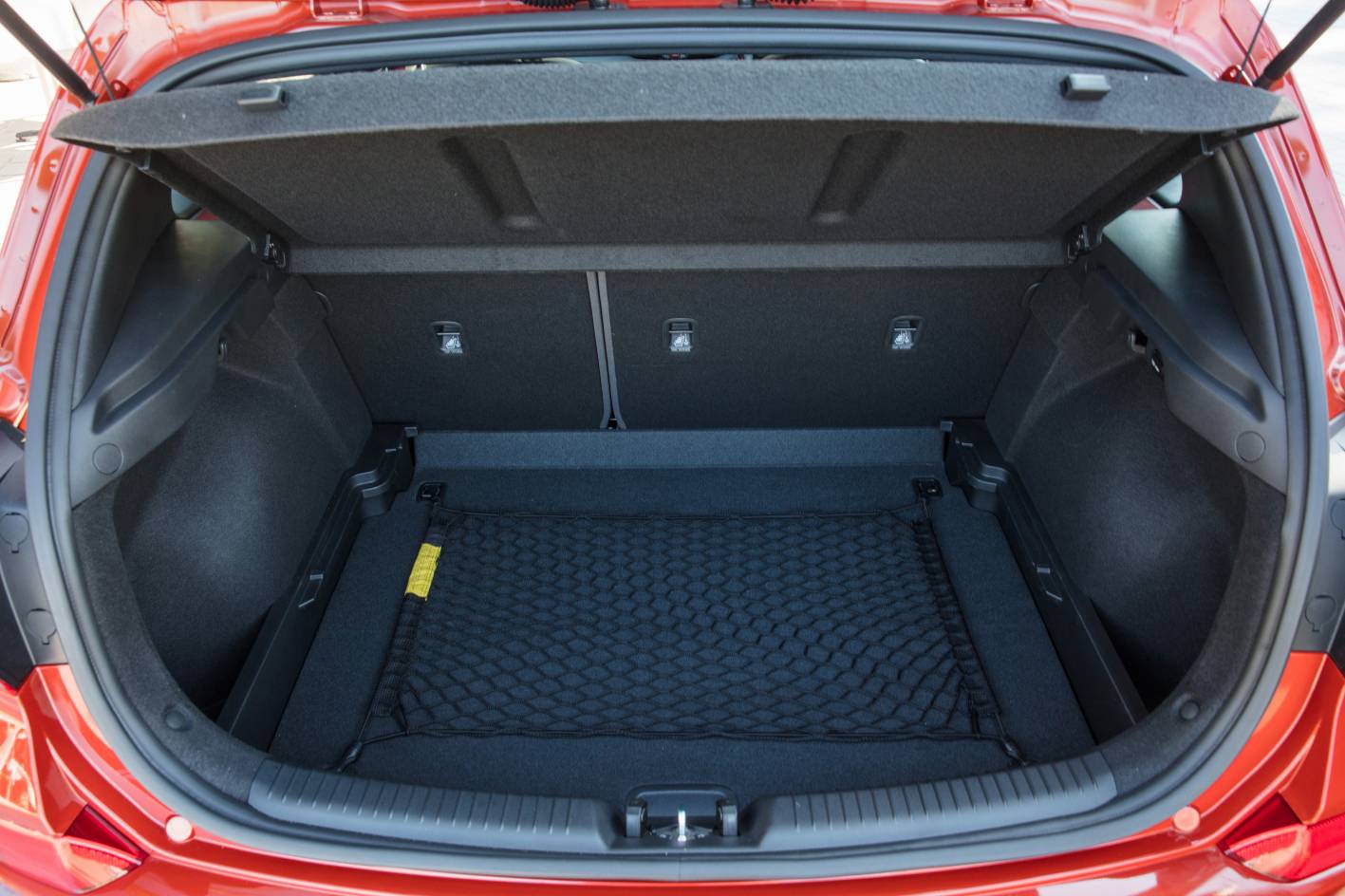

However, if you go down the sports track and you buy an N-Line or N-Line Premium, those cars will come with a space-saver spare. Thew i30 base model, the Elite and premium (all with the 16-inch wheels) get a full-size spare.
If you live in the bush or if you just drive on freeways regularly, that might be seen as a bit of a disadvantage and certainly space-saver spare tyres are a compromise. Fortunately, if you do insist on a full-size spare, the construction of the floor above the spare wheel enclosure is more than compatible with a full-sized spare wheel. So you could just buy a non-genuine full-size spare and stick it in there.
Alternatively, just keep in mind if you live in a major metro city or large provincial town that there is probably a tyre shop not far away, especially in the suburbs. So on the rare occasion you do get a flat, getting it fixed isn’t going to be the same as if you live in rural areas and you’re restricted to 80km/h on main roads where other traffic is doing 100.
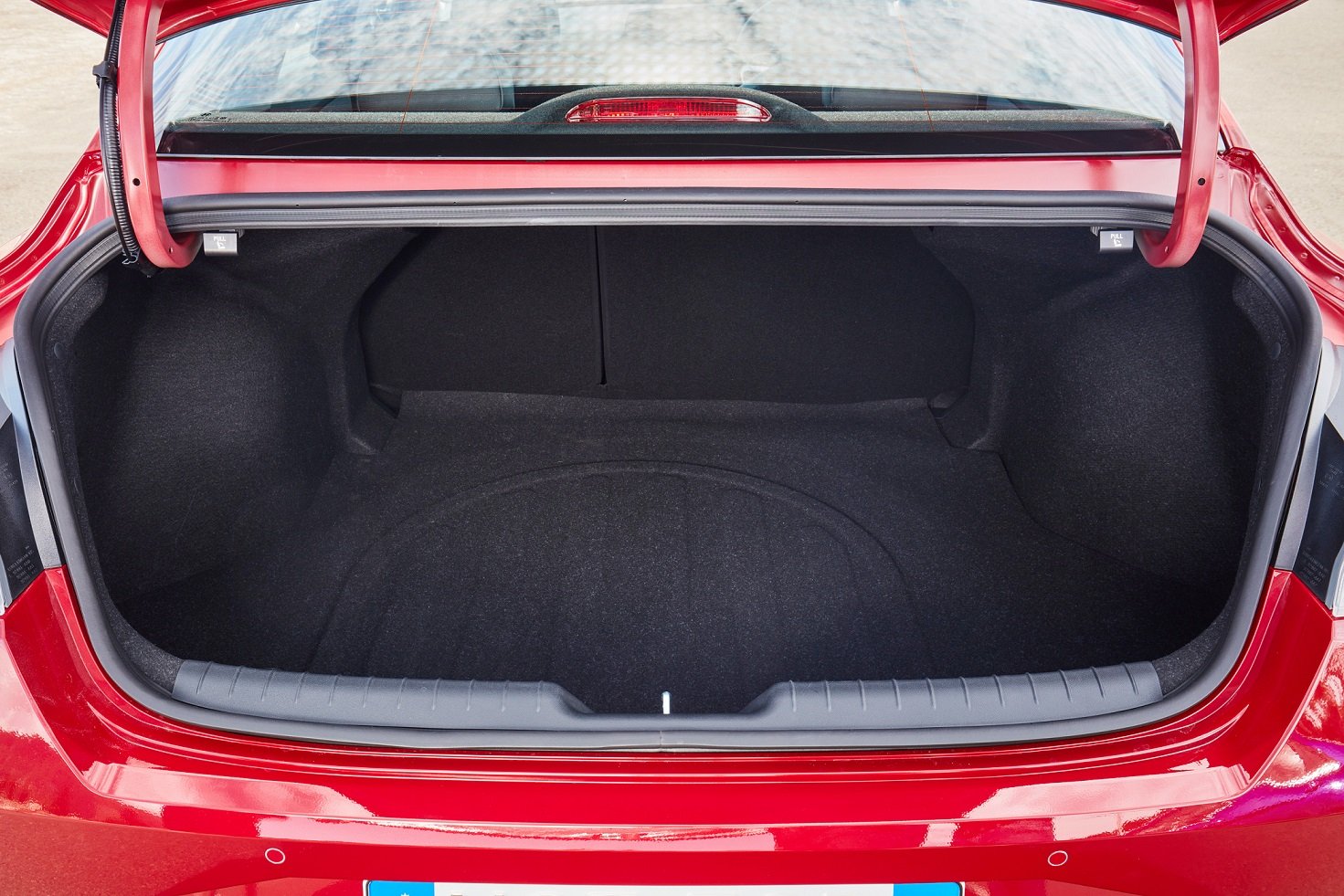
The sedan adds another level of protection for your belongings with a solid boot to keep prying eyes out of your stuff.
It’s a good size, too. It’s exactly a metre wide at its narrowest point and there’s 1.06m between the wheelarches which is great for big bags, double prams - and the aperture is the same, one full metre at the bootlip. Just watch the round hinges don’t close on your stuff inside.
There’s also a full-size spare under the floor.
TRANSMISSION
Many new Hyundai i30 buyers are going to be purchasing a car with a dual clutch transmission (DCT) and many of those will be owning a DCT for the first time. It’s easy to assume that you're buying another automatic because, you reach down, you take it out of ‘park’, you put it in ‘drive’.
It feels like an automatic and it smells like an automatic, but you do need to be aware of one small aspect of your driving that might need to change.
If you drive it like an automatic, that could be a mistake if you like to inch forward at the traffic lights under load in traffic. This is because, unlike a ‘normal’ epicyclic automatic which has a torque converter, a dual clutch transmission relies on a centrifugal clutch mechanism, of sorts, in between the engine and the transmission. That allows disengagement when you're stopped at the lights, so the engine doesn’t stall. Always good.
The biggest mistake you can make with a DCT, is to inch forward under load at very low speed. So if you're reversing routinely up a very steep complex driveway, if you’ve got the whole family in the back and a bunch of luggage in the boot (for example) and you're trying to do that, or even if you're in traffic all the time and you're used to an automatic which will inch forward all day long up hill, don’t do that in the DCT.
The clutch will not be receptive to that mode of use and the repair bill for having it replaced is quite high so, you’ve got to understand, to some extent, what’s 'down there' under the hood and adjust your driving style accordingly. Just sit still at the lights and wait for the traffic to move forward, keep a decent gap and just be patient.
There’s no problem, intrinsically, with this dual clutch transmission but you’ll want to be driving it like a dual clutch (respectfully) and not like a standard automatic.
The i30 sedan base model the Elite and the Premium all get a CVT transmission which is going to save you about 6-10 per cent of the fuel you’d waste if it were a typical automatic.
The i30 hatch N-Line and Premiums with their mild hybrid powerplant get the 8-speed dual-clutch transmission while the sedan N-Lines with the 1.6 turbo engine get a 7-speed DCT.
CONCLUSION

Remember that dual-clutch transmissions are not as refined at low-speed manoeuvring as conventional auto transmissions. They are, however. Better at spirited, engaging driving. They’re designed to handle stop-start traffic - just be mindful of not inching forward under load. Don’t do that.
The i30 is such a well-rounded vehicle which gets so much right, in all the areas which matter to most consumers - especially consumers who think they need an SUV.
Save yourself 10 or 20 grand and get a hatch or sedan of i30. And if you’re a bit of a performance freak, the N-Line strikes a sweet balance between daily commuter machine and weekend driving nutjob satisfier. It can do both with remarkable confidence.
But if you’re not interested in rev limits and crisp gear changes, then stick with an Elite which is stunning value for money.
Hopefully this report helps you decide whether or not the new i30 is the right new car for you.
Make sure you check out Hyundai's i30 resources >> for regular updates and offers too.

More reports



Hyundai Tucson looks futuristic and drives very nicely on Australian roads. It offers grunty, reliable engines, plenty of features and 5-seat practicality at a modest price that makes it an ideal, safe family SUV.