MG won't replace my rusting ZS under warranty because: second owner. Is that right?
In this Q&A: If MG Australia declares your vehicle beyond repair but offers a refund instead of a replacement because you bought it second-hand, does that align with the warranty and Australian Consumer Law?
Short version: A transferable manufacturer's warranty doesn't automatically entitle you to a replacement vehicle. Before seeking legal advice, ask the carmaker/dealer to explain—in writing—the warranty provisions supporting its proposed remedy and keep all communications documented.
QUESTION
Hi John,
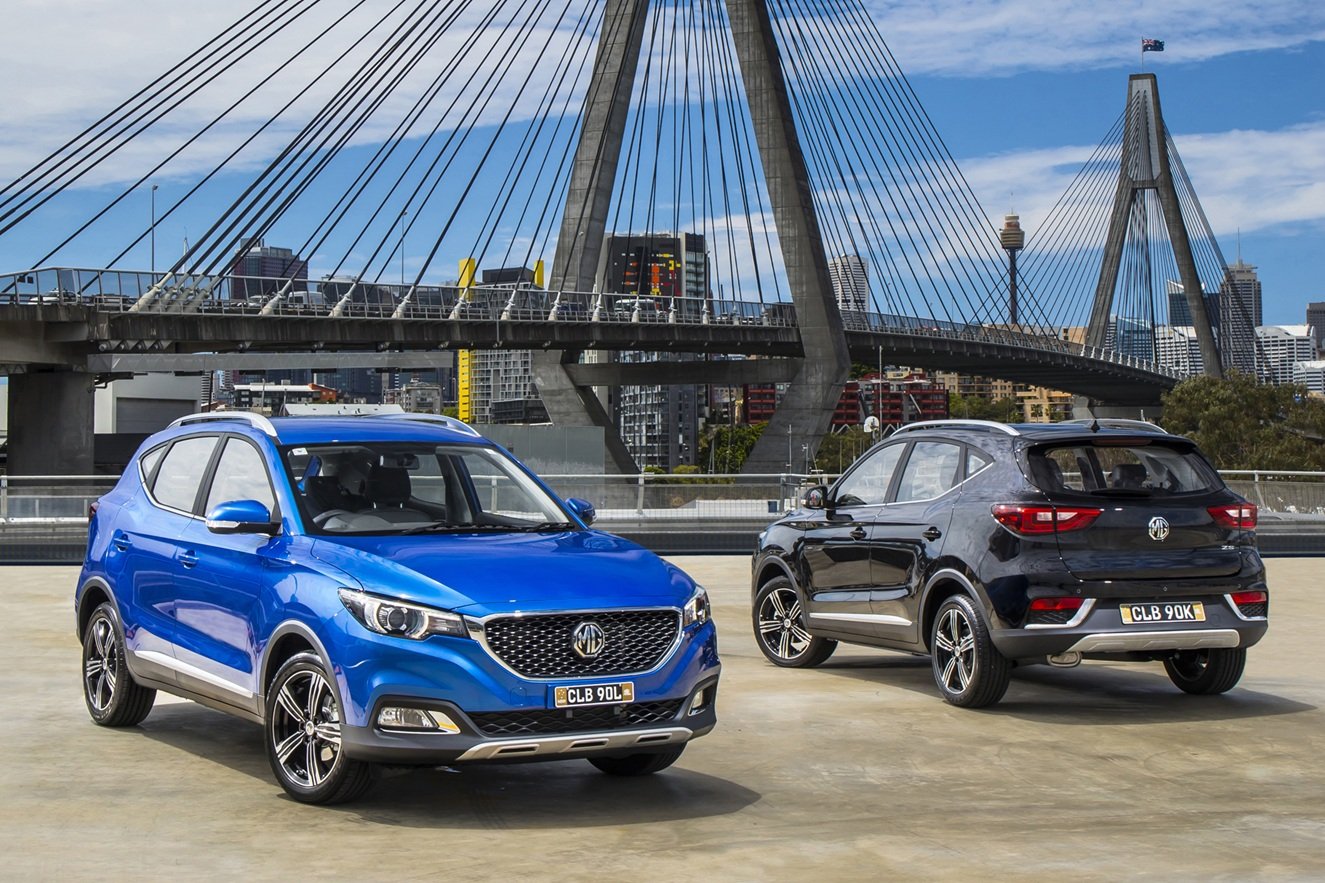
I own a 2021 MG ZS that's still covered by MG Australia's seven-year manufacturer's warranty and seven-year anti-perforation warranty.
I bought the vehicle second-hand through a private sale. However, MG's warranty states that it applies irrespective of any change of ownership.
In May this year, an MG dealer told me the vehicle had extensive corrosion, wasn't repairable and was no longer considered roadworthy. MG Australia then supplied me with a hire car, which I've now been driving for almost two months.
Initially, MG offered me just over $11,000 to surrender the vehicle for destruction. After I rejected that offer, they increased it to refund the $14,200 I paid when I bought the car privately.
What they won't do is replace the vehicle. They've told me that's because I purchased it second-hand, even though the warranty says it transfers to subsequent owners.
I'm not asking you to fight my battle. I'm simply trying to understand whether that position seems consistent with MG's warranty and whether there are any practical steps I should take before spending money on legal advice.
Thanks for everything you do for Australian consumers.
ANSWER
This is certainly an unusual situation.
The first thing I'd point out is that there are two completely separate legal concepts at work here.
The first is MG's voluntary manufacturer's warranty. That's a contractual promise made by MG, and its terms are whatever the warranty document says they are.
The second is your rights under the Australian Consumer Law. Those rights exist independently of any manufacturer's warranty and operate under different legal principles.
It's important not to confuse one with the other.
From what you've described, MG appears to have accepted that the corrosion problem is serious. If the company has declared the vehicle unroadworthy, concluded it cannot reasonably be repaired and supplied a hire car for almost two months, those are significant actions.
What I would want to understand is the reasoning behind the proposed remedy.
If MG's warranty genuinely states that it applies irrespective of changes in ownership, it's entirely reasonable to ask MG to explain, in writing, exactly which clause of the warranty allows it to offer a different remedy because you bought the vehicle second-hand.
That's not an accusation that MG is necessarily wrong. It's simply asking them to identify the contractual basis for the position they've taken.
I'd also want everything else in writing, including:
why the vehicle has been deemed beyond repair;
the engineering or technical basis for that conclusion;
which warranty provisions MG says apply;
why a refund of your private purchase price is the appropriate remedy; and
why MG believes a replacement vehicle is not required under the warranty.
Once you have those answers, you'll be in a much stronger position to assess whether MG's position is consistent with its written warranty and whether further legal advice is justified.
Unfortunately, I can't say from the information available whether MG's proposed remedy is legally correct. That would require reviewing the warranty booklet, the inspection reports and the correspondence between the parties.
My practical advice is straightforward:
Keep all communication polite and in writing. Ask MG to identify the specific contractual provisions supporting its position. If those explanations don't stack up, or if the matter remains unresolved, that's the point at which I'd consider obtaining advice from a solicitor experienced in Australian Consumer Law and warranty disputes.
As always, remember that every case turns on its own facts. The details matter, and there are limits to what anyone can reliably conclude from one side of the story alone.
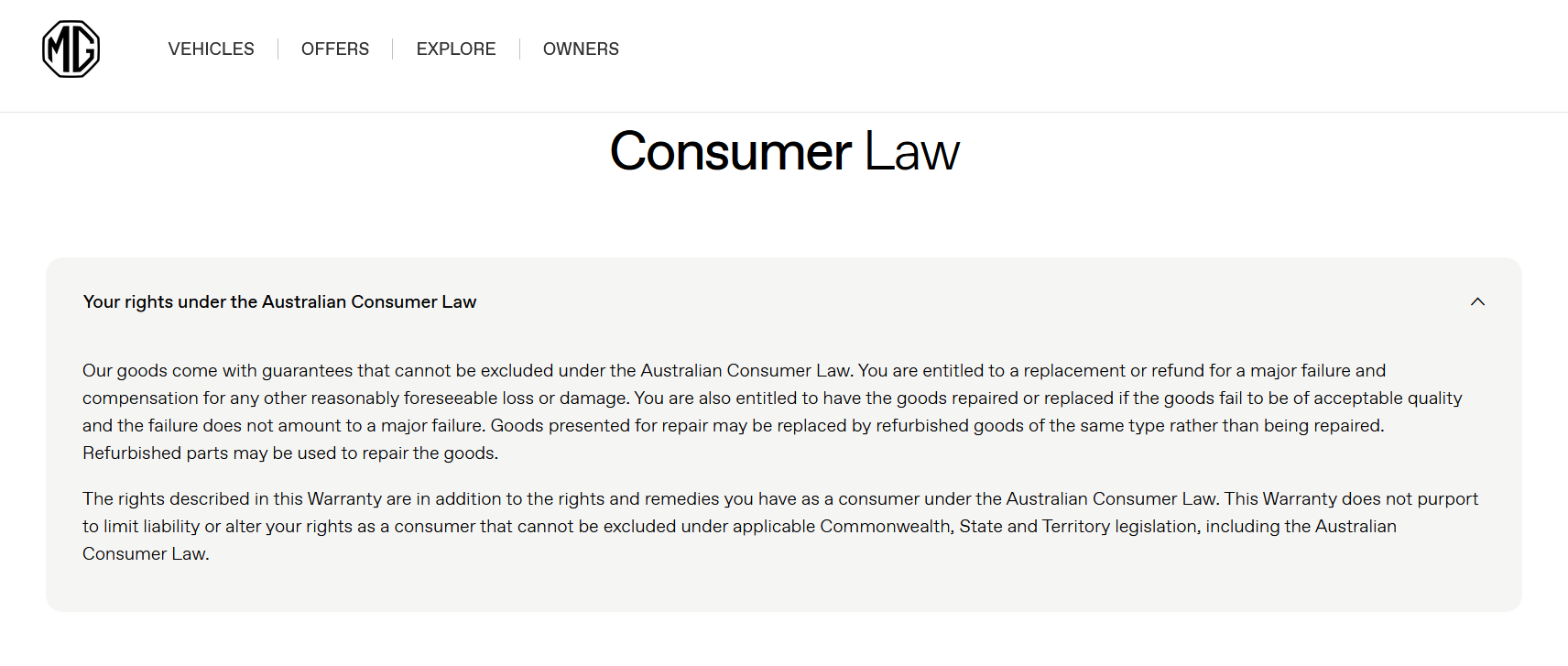
You can read MG Australia’s official warranty terms & conditions here >
The Bigger Lesson
Whether the dispute involves Hyundai, MG, Toyota, Ford, Mitsubishi or any other brand, the biggest mistake consumers make is assuming the outcome will depend on who's "right".
It rarely does.
Manufacturers and dealers work within systems. They have processes, documentation, policies and legal obligations. If you want the best chance of a successful outcome, you need a system too.
That means keeping good records, communicating in writing, understanding the difference between a manufacturer's warranty and your rights under Australian Consumer Law, and knowing how to present your case professionally.
Most consumers don't lose because they have a weak case.
They lose because they have a weak process.
That's exactly why I created my Consumer Rights course.
It walks you through the record-keeping system I recommend, explains how manufacturers, dealers and Australian Consumer Law actually fit together, and shows you how to maximise your chances of achieving a practical, commercial outcome—without unnecessary conflict or expensive legal action.
If you're currently dealing with a warranty dispute, or simply want to be properly prepared before one ever happens, it's well worth a look.
Learn more about my Consumer Rights course here.