
Vessel 220W-3 Review: The $20 Japanese Screwdriver That Expands Into a Brilliant Compact Tool Kit
Some tools are good because they do one job exceptionally well.
Others are good because they quietly replace half a toolbox full of screwdrivers.
The Vessel 220W-3 Ball Grip screwdriver set belongs in the second category.
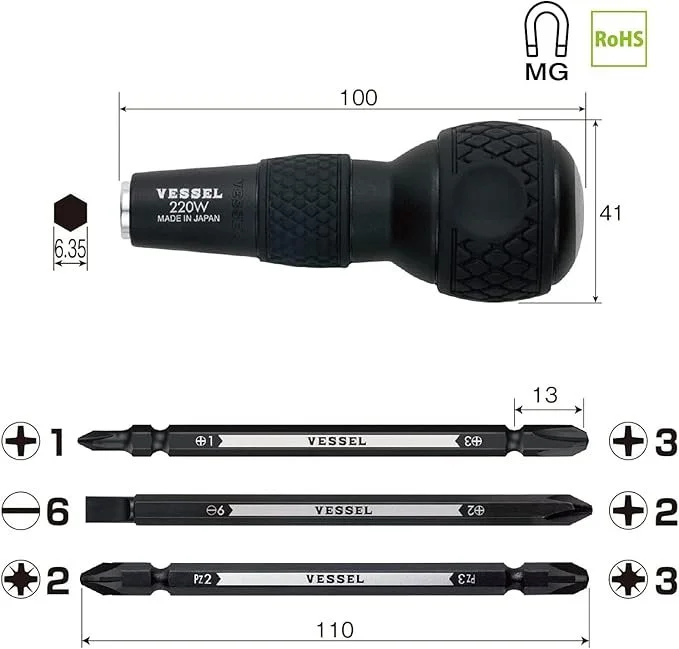
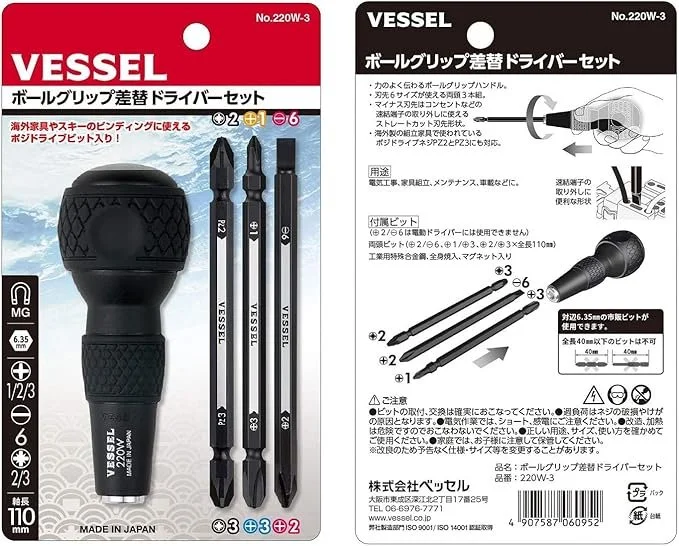
It costs about twenty bucks, it’s made by a long-established Japanese tool manufacturer, the handle feels absurdly good in the hand, the fit between the handle and interchangeable bits is excellent — and because it accepts standard 1/4-inch hex bits, it can become the centrepiece of an extremely capable compact tool kit. Vessel lists the 220W-3 as a six-in-one ball-grip driver with interchangeable bits.
My preferred combination is:
Three compact tools. Huge mechanical capability. And unlike many premium EDC systems, you don't have to spend hundreds of dollars just to get through the front door.
Vessel 220W-3: why this cheap Japanese screwdriver is so good
The Vessel looks slightly ridiculous if you're accustomed to conventional Western screwdriver handles.
The handle is short, fat and approximately ball-shaped.
There is, however, considerable method behind the weirdness.
Vessel's ball-grip design is intended to transmit substantial tightening force while remaining comfortable to use. The company's 220-series documentation specifically describes the design as transmitting ample tightening force to the screw.
In practice, the shape gives you two distinctly useful modes.
Grip the larger part of the handle with the palm and you've got excellent leverage and axial pressure.
Move your fingers towards the narrower section and you can spin the screwdriver rapidly when running screws in or out.
It's one of those designs that looks strange until you actually use it.
Then it becomes obvious.
The fit and finish are ridiculously good for the money
This is perhaps the most surprising thing about the 220W-3.
The bits don't feel as though they've been casually thrown into a cheap plastic handle to meet a price point.
The fit between bit and handle is precise, positive and confidence-inspiring.
For something selling at roughly impulse-purchase money, it feels like a proper tool rather than disposable Amazon fodder.
The standard kit gives you six useful driver profiles via reversible bits, and Vessel identifies the 220W-3 as a six-in-one interchangeable ball-grip tool.
But the supplied bits are really only the beginning.
The killer feature: standard 1/4-inch hex compatibility
This is where the Vessel becomes substantially more useful.
The interchangeable-bit system uses the ubiquitous 6.35mm — or 1/4-inch — hex format.
That means you're not restricted to Vessel's supplied bits.
You can plug in a huge ecosystem of standard driver bits.
Torx.
Hex.
Phillips.
Pozidriv.
Slotted.
Security fasteners.
Whatever other obscure fastener some manufacturer decided would improve your afternoon.
And it’s under $20. Check it out here.
Add a compact bit kit and the Vessel becomes a system
The Vessel 220W-3 is excellent on its own, but the standard 1/4-inch hex interface is what really unlocks its potential.
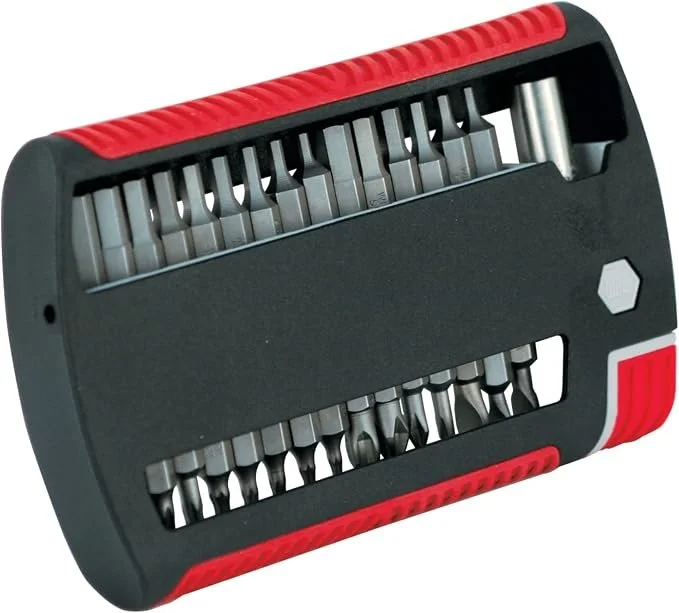
Instead of treating the supplied reversible bits as the whole package, you can pair the handle with a compact 1/4-inch bit kit and suddenly cover a much broader range of fasteners.
Two good options are the Wiha 79495 31-piece bit selector and the Klein 32787S 20-piece micro-ratchet set.
Wiha 79495: the cleaner EDC option
The Wiha is the neater choice if your priority is compactness and broad bit coverage.
It includes Phillips, slotted, Torx, metric hex and imperial hex bits in a compact selector, along with a magnetic bit holder.
That makes it an excellent companion to the Vessel because there is very little redundancy: the Vessel provides the excellent hand interface, while the Wiha provides the fastener compatibility.
For an EDC or ultra-compact vehicle kit, this is probably the combination I prefer.
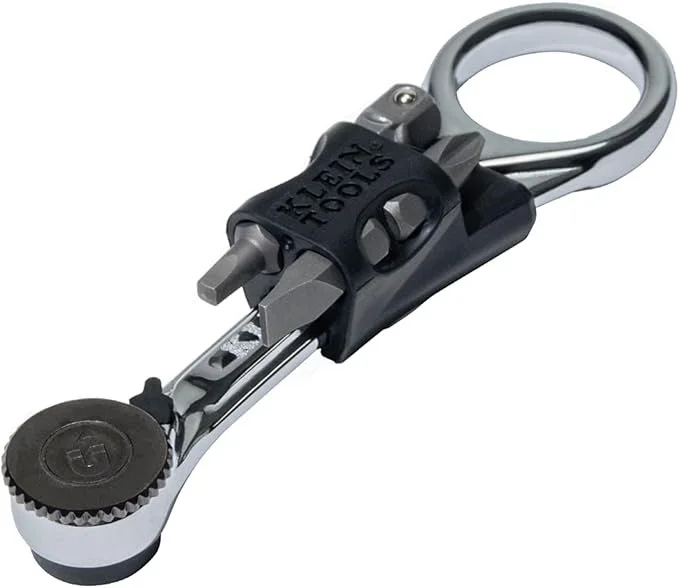
Want a decent ratchet for the Wiha bits?
If you like the Wiha bit selection but also want the low-profile ratchet capability of the Klein kit (below), there's no reason you can't combine the two.
The Klein Tools slim-profile magnetic ratchet is a neat companion to the Wiha set because it gives those same 1/4-inch bits a second driving option.
The Vessel remains the tool I'd reach for when I want speed, feel, axial pressure and comfortable hand torque.
The Klein ratchet comes into its own when access gets tight.
A ratchet requires far less angular movement than turning the Vessel handle through repeated partial rotations, so it can be extremely useful around engines, dashboards, motorcycles and other places where manufacturers have thoughtfully installed a fastener approximately three millimetres away from something immovable.
It also gives you another way to apply controlled torque to stubborn Torx or hex fasteners without simply leaning harder on the screwdriver handle.
That makes the combination particularly versatile:
Klein Tools slim-profile magnetic ratchet
You certainly don't need the Klein ratchet to make the Vessel/Wiha combination useful.
But for a vehicle or motorcycle kit in particular, I'd regard it as a very worthwhile capability upgrade.
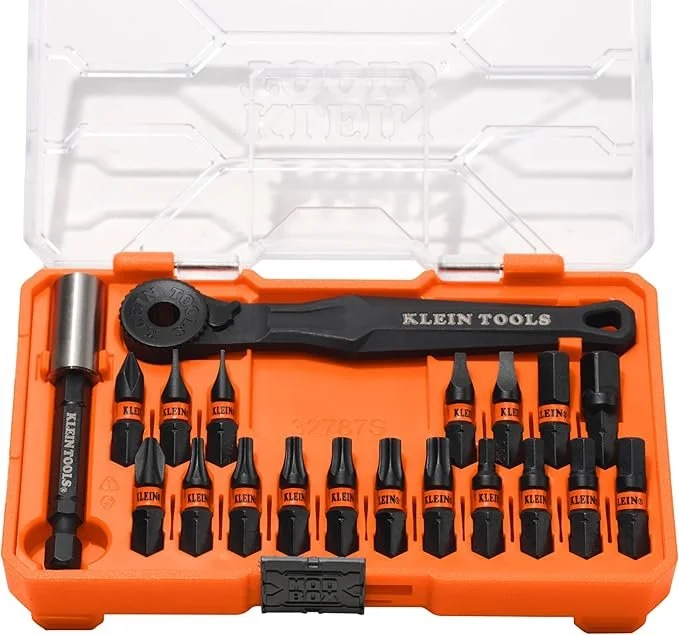
Klein 32787S: better if you also want a micro-ratchet
This kit takes a slightly different approach.
Along with the bit selection, you get a compact ratchet, which gives you another way of driving the same 1/4-inch bits when clearance is limited or you need more leverage than the Vessel handle comfortably provides.
That makes the Klein particularly appealing for a vehicle tool kit.
The one caveat for Australian automotive use is the hex-bit selection. If the set you buy is weighted toward imperial sizes, I would simply replace the least useful imperial hex bits with metric equivalents.
A small spread such as 3, 4, 5, 6 and 8mm would make far more sense for most modern automotive and general mechanical work here.
Do that, and the Klein becomes a very capable little roadside fastener kit:
Vessel for speed, control and axial pressure.
Micro-ratchet for restricted access and extra torque.
A curated metric/impact bit selection for broad compatibility.
Klein 32787S micro-ratchet and bit set
Which one should you buy?
If I were building the smallest possible EDC kit, I would lean toward the Wiha.
If I were building a compact kit for the car, motorcycle, caravan or workshop bag, I would lean toward the Klein, mainly because the micro-ratchet adds a genuinely different capability.
Either way, the important point is the same:
The Vessel isn't just a six-tip screwdriver.
It is an exceptionally good 1/4-inch hand driver that can plug into a much larger ecosystem of bits.
And once you add the Fujiya 180mm pliers wrench, you've covered an enormous range of internal and external fasteners with a remarkably small collection of tools.
Then add the Fujiya 180mm pliers wrench
The screwdriver system still leaves one major capability gap:
nuts, bolts and things that need gripping.
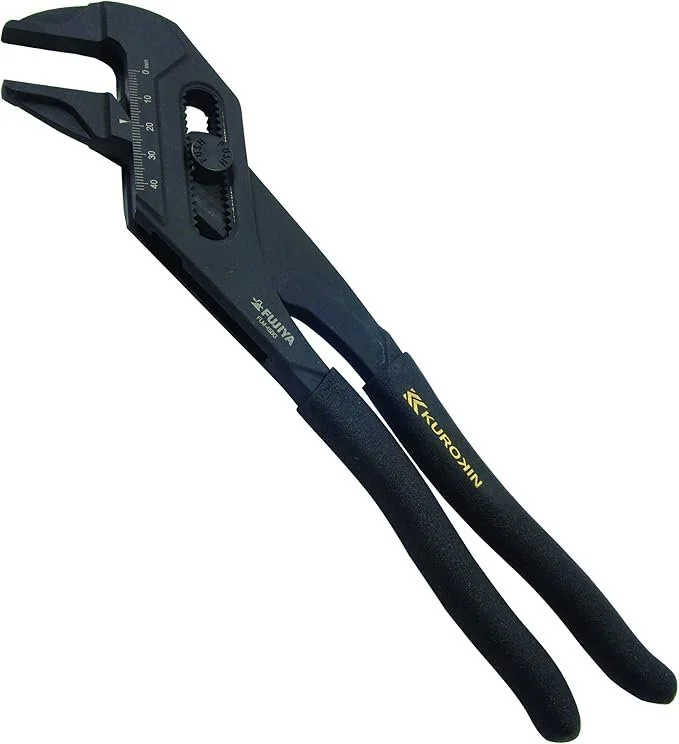
That's where the Fujiya 180mm pliers wrench comes in.
A pliers wrench uses smooth, approximately parallel jaws and a compound mechanism rather than the serrated pivoting jaws of ordinary multigrips.
That means it can function as an extremely broad-range adjustable wrench while also being useful for gripping fittings and other components without aggressively marking them.
Fujiya has been manufacturing hand tools since 1923 and describes its philosophy as quality-first rather than pursuing mass production.
At 180mm, the Fujiya is small enough to make sense in a compact kit while still providing useful leverage.
And because it's adjustable across a wide range of fastener sizes, it contributes far more capability than its physical dimensions would suggest.
Fujiya 180mm pliers wrench
Why the combination works
These three tools complement each other extremely well.
The Vessel provides the handle.
The bit kits provides fastener compatibility.
The Fujiya provides gripping and adjustable-wrench capability.
Together they cover a surprisingly large proportion of the little mechanical problems you're likely to encounter around a car, motorcycle, bicycle, caravan, workshop or home.
You're not replacing a proper workshop tool chest.
That's not the objective.
You're creating a compact problem-solving kit.
It's also surprisingly good for EDC
There's another reason I like the Vessel as an everyday-carry tool.
Think about what people frequently use an EDC knife for.
Opening cardboard boxes.
Cutting packing tape.
Scraping something.
Poking through plastic packaging.
Piercing a hole in something.
Light prying.
A screwdriver can perform many of those mundane tasks without requiring you to abuse the blade on an expensive multitool.
Obviously, a screwdriver is not a knife.
It won't replace one when you genuinely need to cut rope, fabric or other material.
But if much of your everyday knife use consists of bullying packaging and levering against things that shouldn't be levered with a knife blade anyway, a compact screwdriver is remarkably useful.
And I'd much rather sacrifice a replaceable slotted bit to a dirty scraping or prying job than damage a good knife blade.
Better than carrying an enormous multitool?
Not universally.
A Leatherman-style multitool offers capabilities this three-piece package doesn't: knife blade, cutters, file, saw and potentially several other implements.
But multitools achieve broad capability by packaging many individual tools into one body.
The Vessel/Wiha approach achieves broad fastener compatibility in another way:
one very good handle + interchangeable working ends.
Add the Fujiya and you now have serious gripping capability as well.
For automotive use, I actually prefer that emphasis.
Most roadside mechanical problems aren't solved by a tiny saw or miniature file.
They're solved by being able to:
remove a screw;
undo a Torx fastener;
turn a hex socket;
hold a nut;
grip a fitting;
tighten something that's coming loose;
or improvise when the correct dedicated tool isn't available.
That's precisely where this combination is strongest.
The Fujiya can also provide additional controlled leverage
There's another useful interaction between the tools.
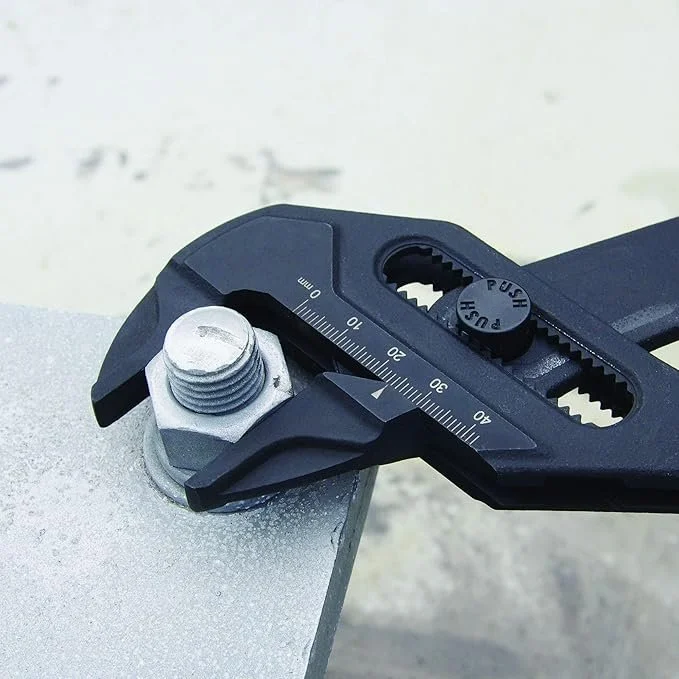
Some 1/4-inch hex bits or extensions leave enough hex exposed to grip with another tool.
Where appropriate, the smooth parallel jaws of the Fujiya can therefore provide supplementary torque.
I'm not suggesting attacking tiny screwdriver bits with maximum force.
Ultimately the bit, fastener recess or 1/4-inch interface becomes the limiting component.
But for controlled additional leverage on suitable hex or Torx applications, having an adjustable gripping tool available gives you another option.
That's the whole point of a good compact kit:
options.
Where I'd use this kit
I can see this combination making sense in several places.
In the car: probably the most obvious application. Combine it with a few vehicle-specific sockets, a torch and some basic emergency equipment and you've got a seriously capable little roadside kit.
EDC: especially if your everyday activities involve workshop, technical or maintenance jobs.
Motorcycle: storage space is precious, which makes capability density particularly important.
Caravan or camper: plenty of screws, fittings and minor mechanical problems, but limited justification for carrying an entire workshop.
Home toolbox: for someone who doesn't want or need a comprehensive professional tool collection.
Travel: compact enough to take without surrendering half your luggage allowance to tools.
Is the Vessel 220W-3 worth buying?
Yes.
In fact, I think that's the easiest recommendation of the three.
Even if you never add the Wiha GoBox or Fujiya, the Vessel is an unusually useful screwdriver for very little money.
The broader kit simply exploits what is already its greatest strength: modularity.
At approximately twenty bucks, you're not making a major purchasing decision.
You're buying an excellent screwdriver.
Then, if you discover you like it as much as I do, you can turn it into something considerably more capable.
Disclosure: I purchased these products myself with my own money. The manufacturers and sellers had no involvement in this review and did not pay me, supply the products, approve the content or have any editorial control over what I say.
Some links in this article are Amazon affiliate links. If you purchase through one of these links, I may receive a commission at no additional cost to you.
As an Amazon Associate I earn from qualifying purchases.