
Jackery Explorer 1500 Ultra Review: Toughest Portable Power Bank I’ve Ever Tested
This is the Jackery Explorer 1500 Ultra: a rugged, portable power bank for adventurers, tradies, campers, overlanders, and people who prefer not to sit in complete darkness waiting for the grid-repair dudes to restore civilisation.
It is also the toughest portable power bank I’ve ever used.
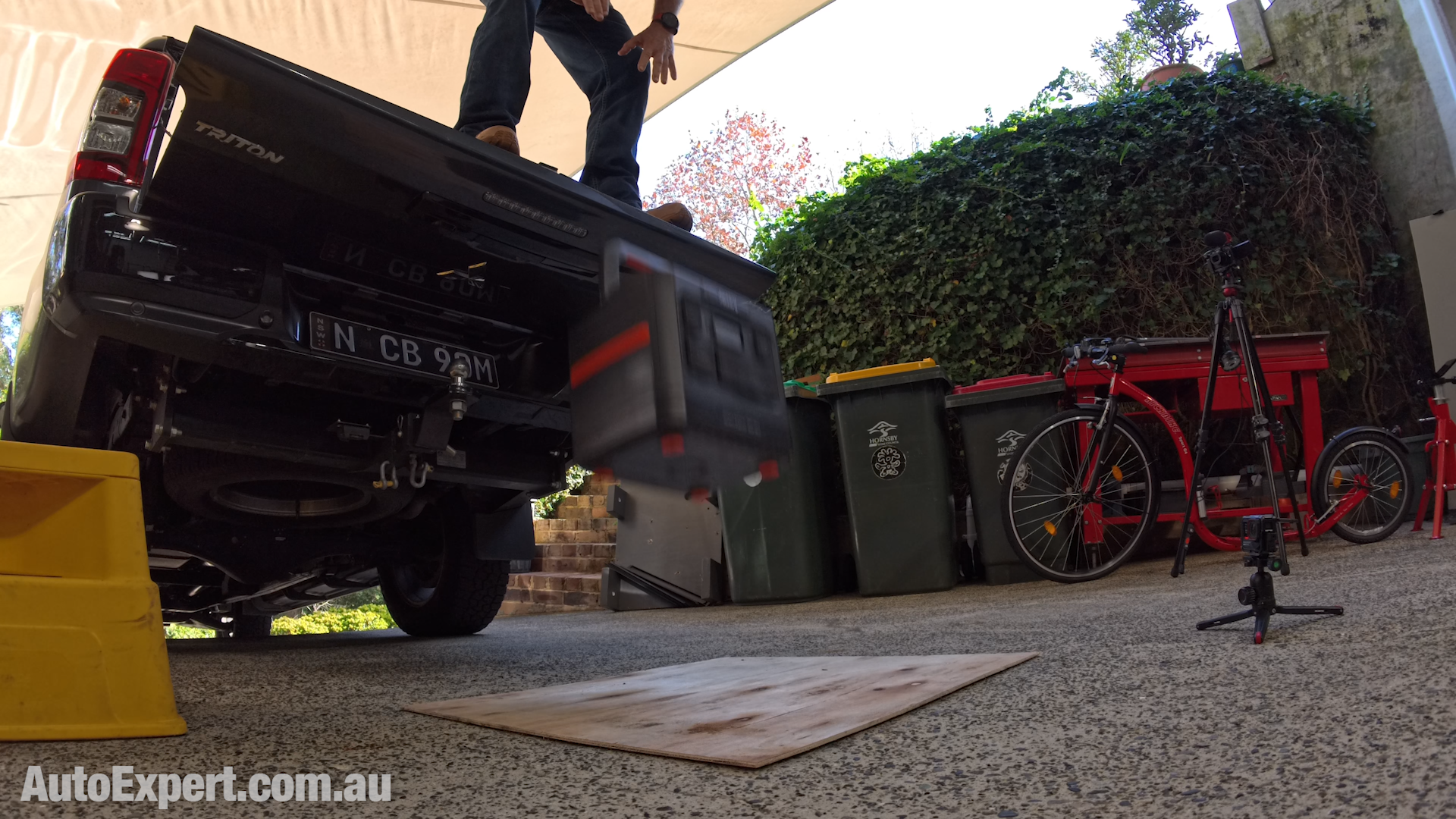
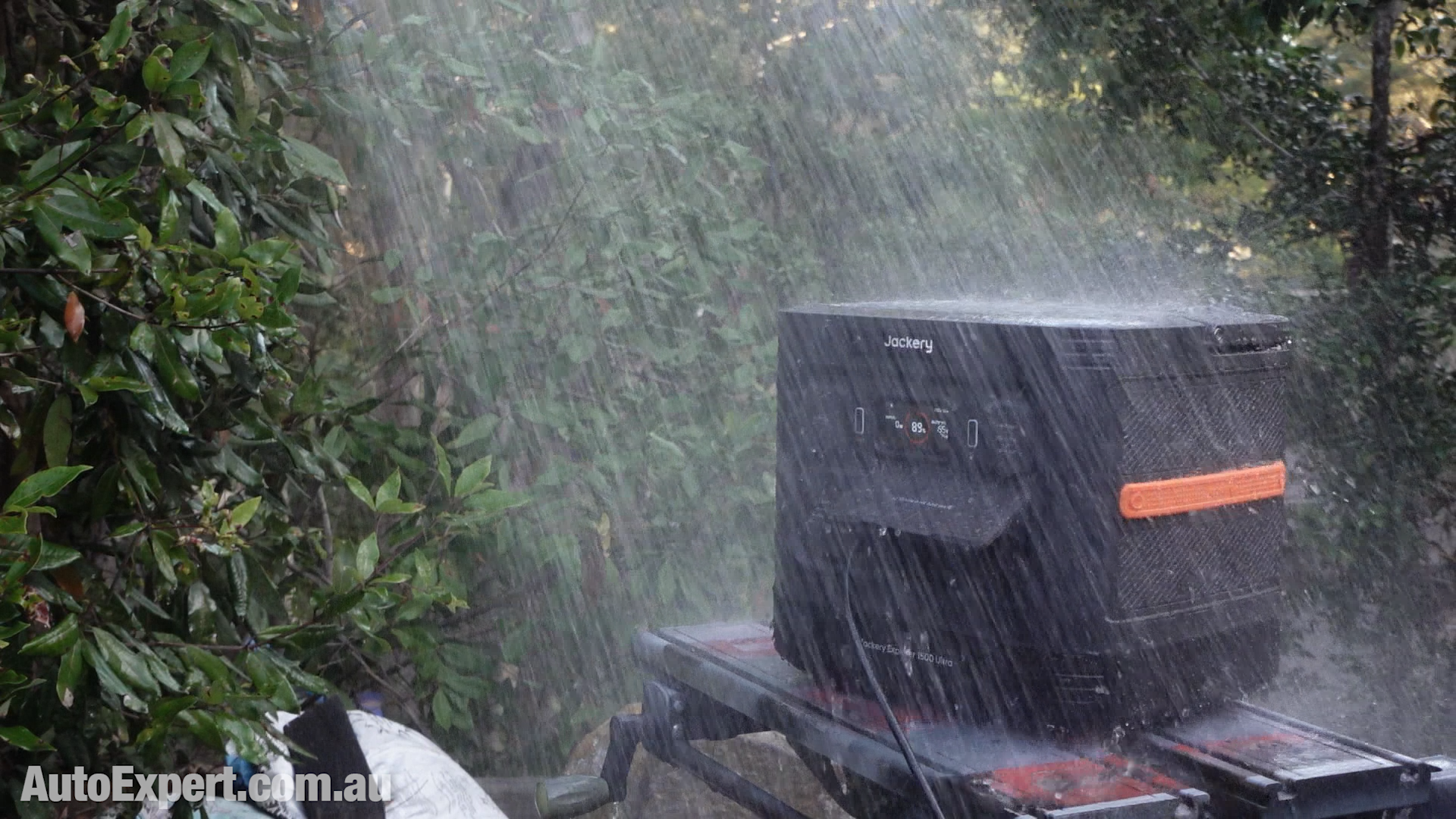
I hosed it. While it was operating. I dropped it 1m off the back of the ute onto concrete. Twice. I ran workshop gear off it. I charged it while using it. I powered domestic appliances with it. I used it in the shed running hardcore metalworking tools, and I simulated a blackout. I took it beyond the edge of its envelope - in both ‘surge’ and ‘steady-state’ operating conditions.
It survived all of that without complaint.
It’s the toughest portable power bank I’ve ever used. Not the most powerful - the toughest.
Learn more. (And use code AUTOEXPERTJC for an extra 5% off.)
Jackery sent me the unit to test, but they did not pay me for the review, and they do not control what I say about it. They supplied the Explorer 1500 Ultra, and I supplied the abuse. Watch the full review below.
What is the Jackery Explorer 1500 Ultra?
The Explorer 1500 Ultra is a ruggedised LiFePO4 portable power station with three obvious jobs:
Off-grid power for tools and job sites
Camping and overlanding support
Backup power during blackouts
It has 1536Wh of stored energy. In 12-volt language, that is about 125Ah on Planet 12V.
Think of battery capacity like water in a tank. The bigger the tank, the longer you can keep drawing from it. The Explorer 1500 Ultra is not some tiny phone-charging brick. It is a serious portable energy source.
Power comes out of it three ways:
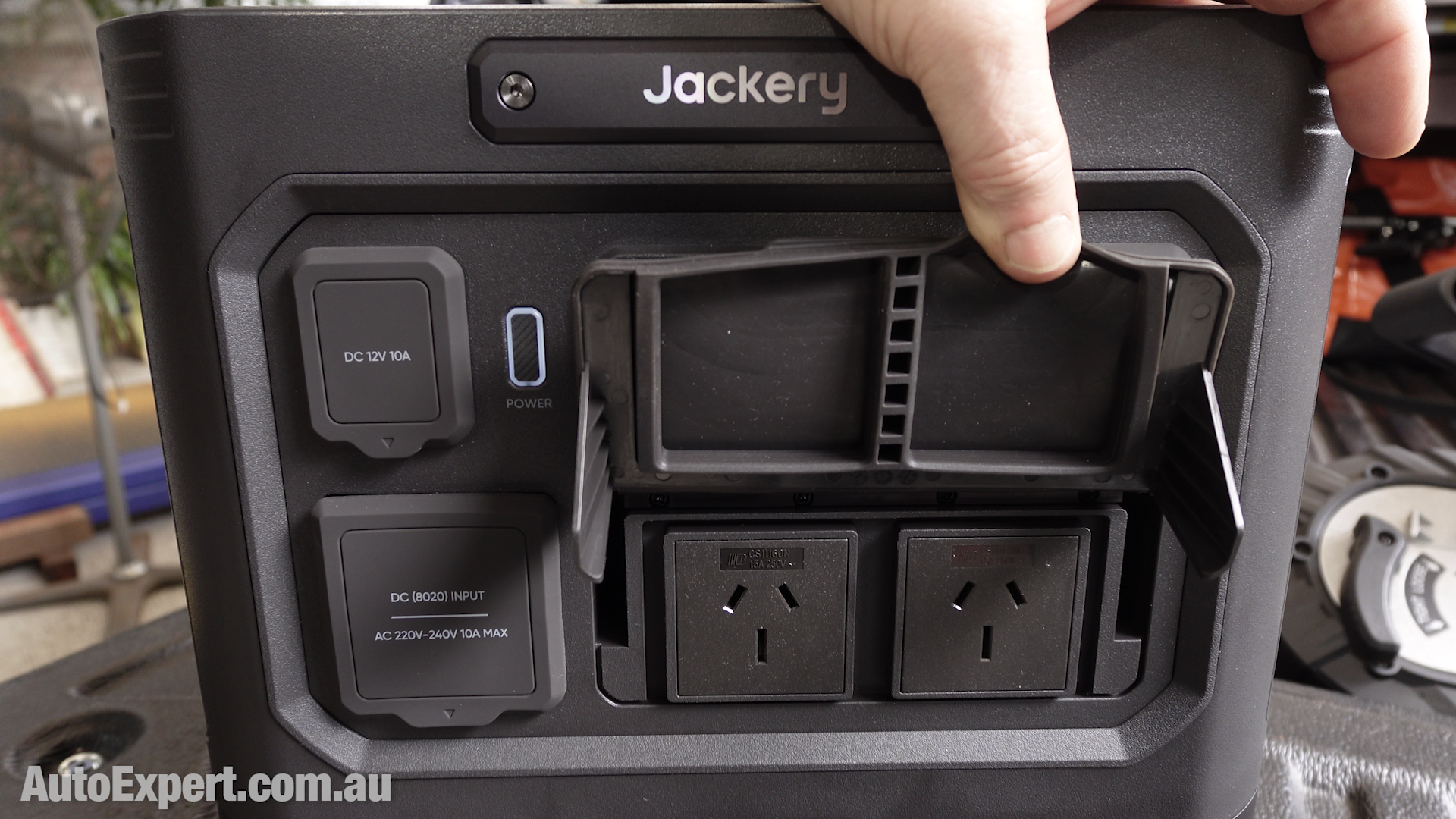
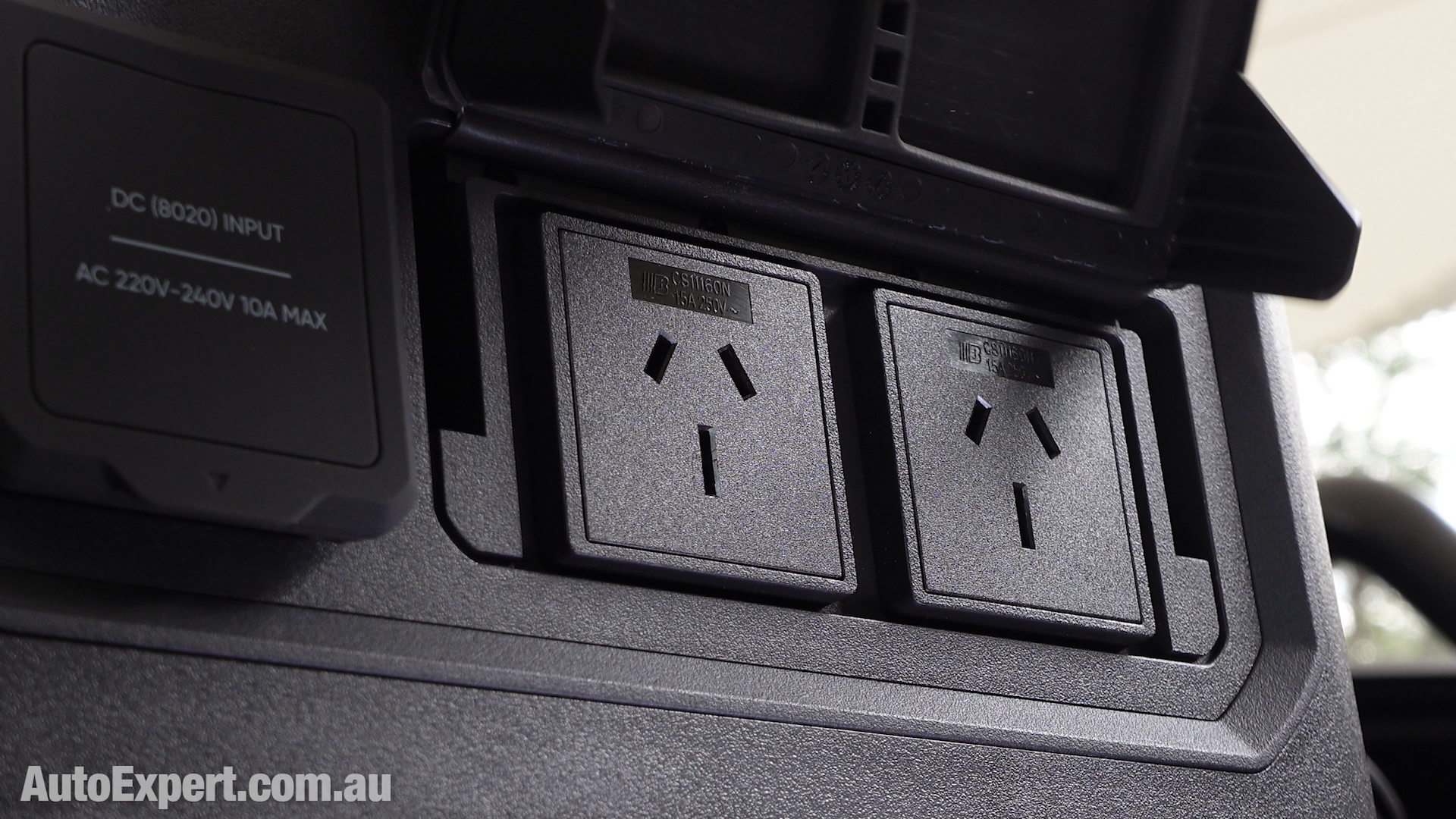
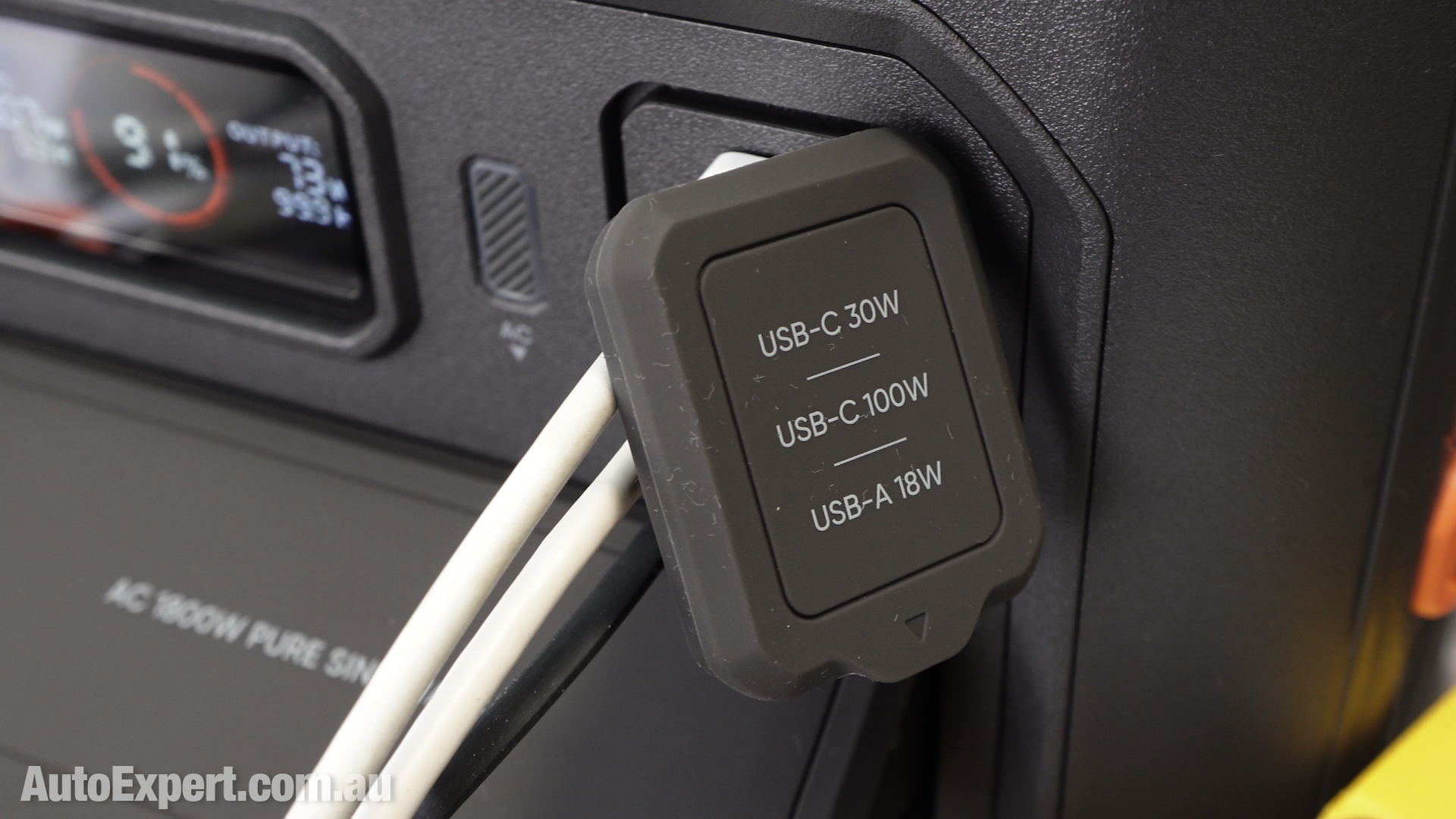
230V AC at 50Hz, via a pure sine wave inverter
USB, including USB-C up to 100W
12V DC through the cigarette-lighter-style outlet
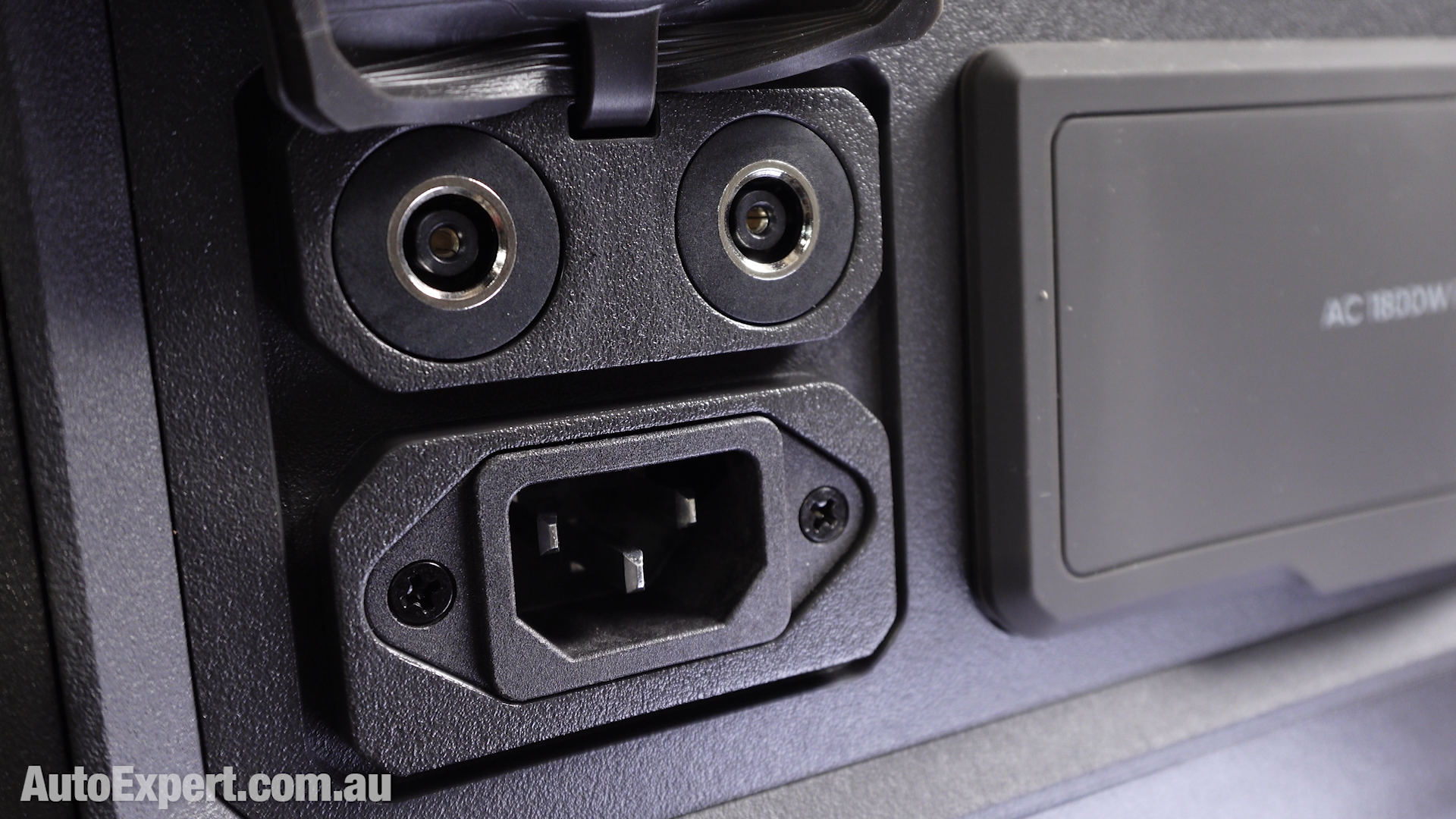
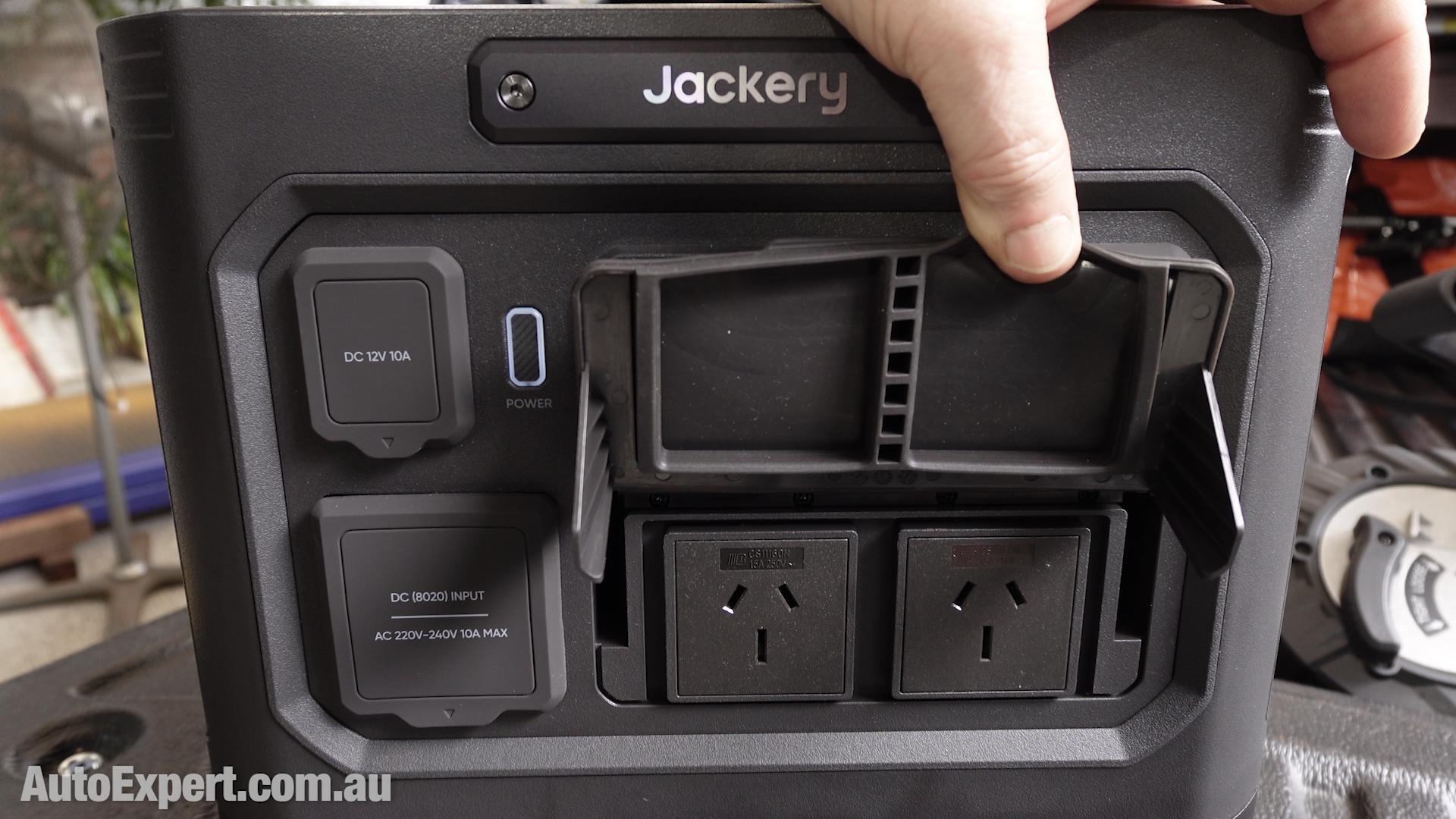
The AC output is the main event. It has two 15A-style GPO outlets, with an inverter rated at 1800W continuous output. It can support 2000W for up to 15 minutes, and it has 3600W surge capacity.
That is what makes it genuinely useful in the shed, at camp, on a job site, or during a power outage.
Learn more. (And use code AUTOEXPERTJC for an extra 5% off.)
Workshop test: running tools while charging
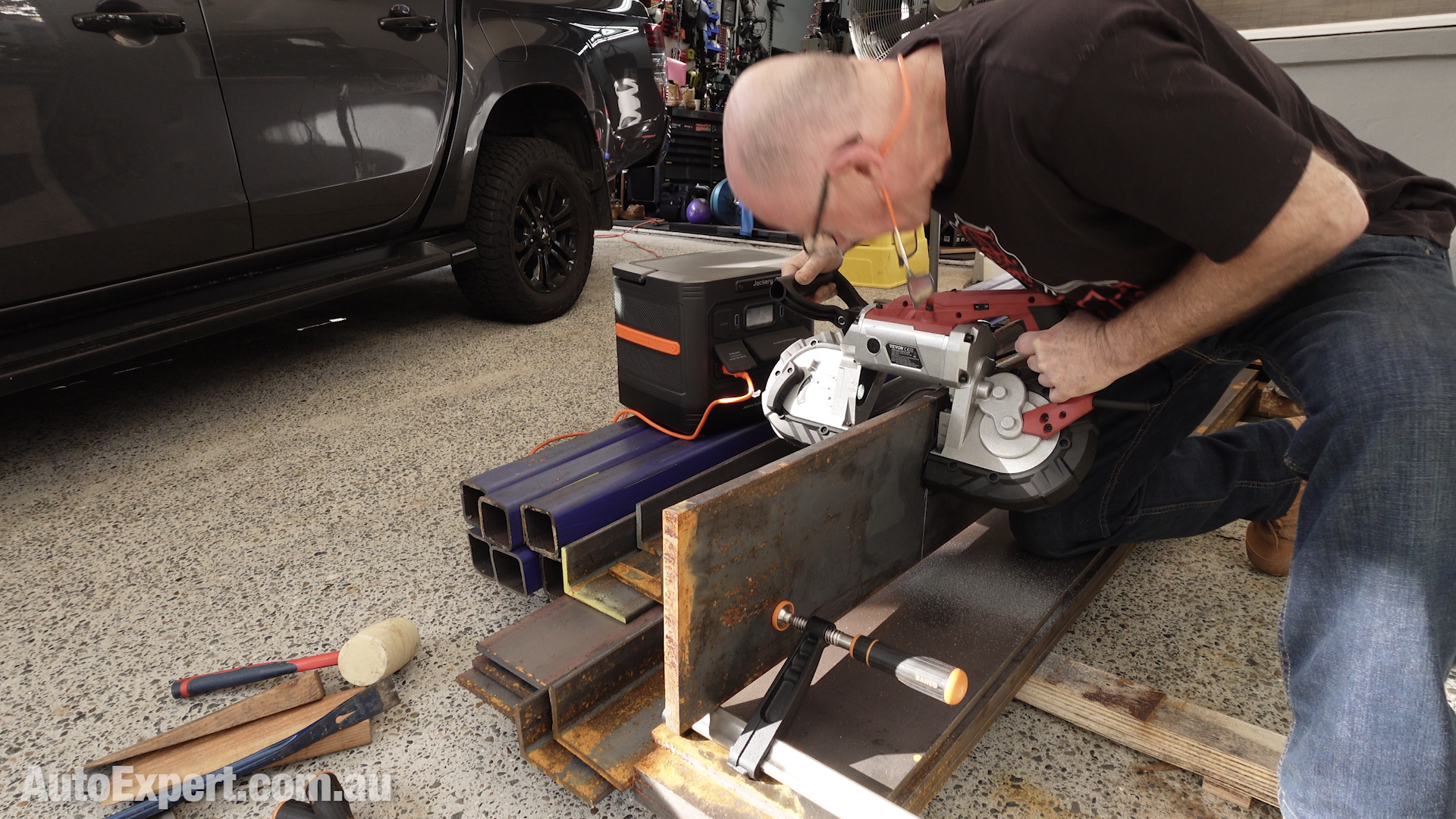
The first thing I did was pull it out of the box, fire it up, plug in the charger, plug in my Vevor mini bandsaw, and start cutting steel.
That is right: I used the Explorer 1500 Ultra to power the bandsaw while the Jackery was itself charging.
Pass-through charging works. You can charge and discharge the unit at the same time.
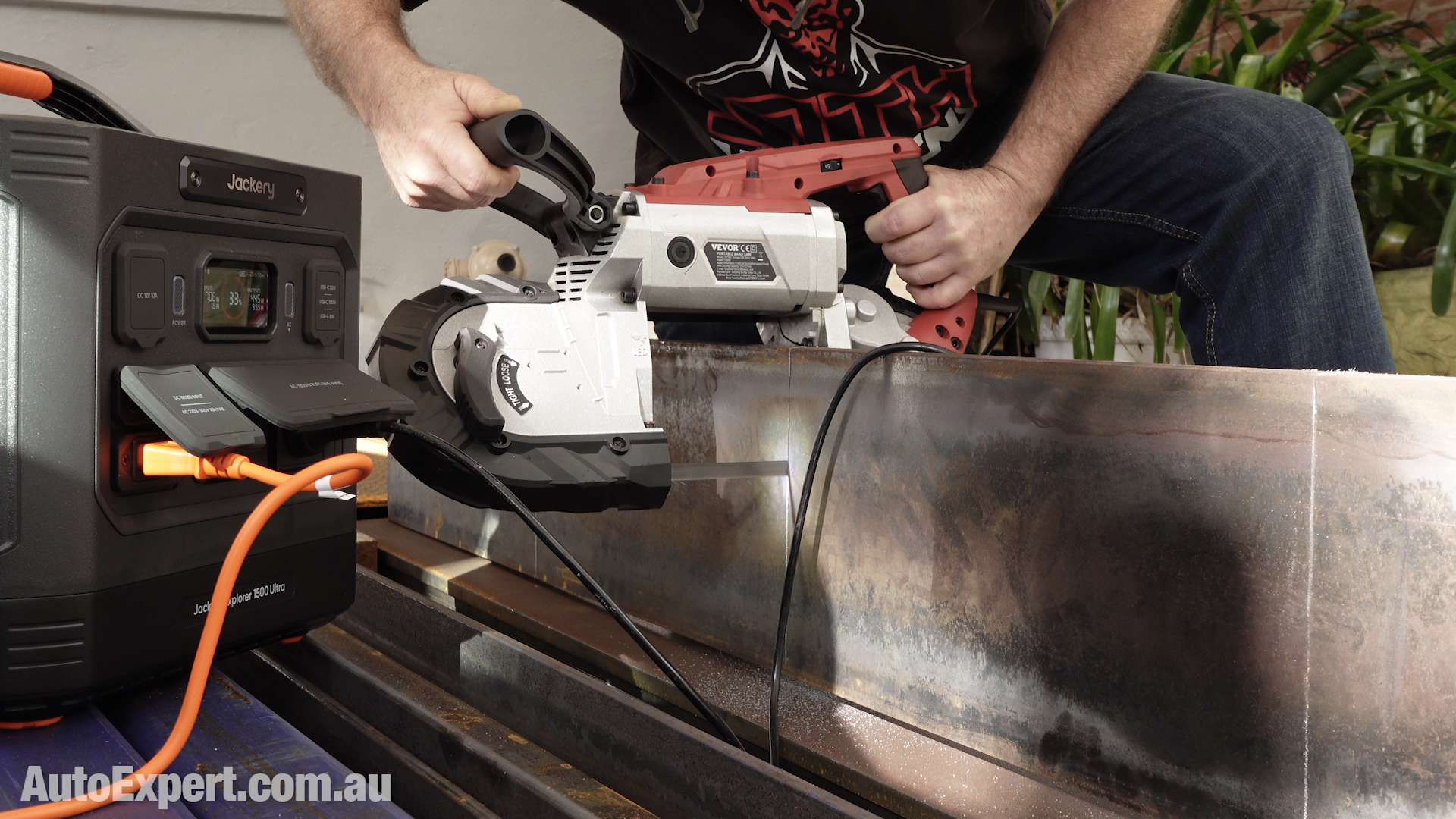
The saw is about 500W, and I used it to make 11 cuts through 250mm flat bar, 16mm thick, plus three more cuts through 250mm flat bar, 20mm thick.
That is nearly three metres of cutting length through steel at least 16mm thick, while charging the power station.
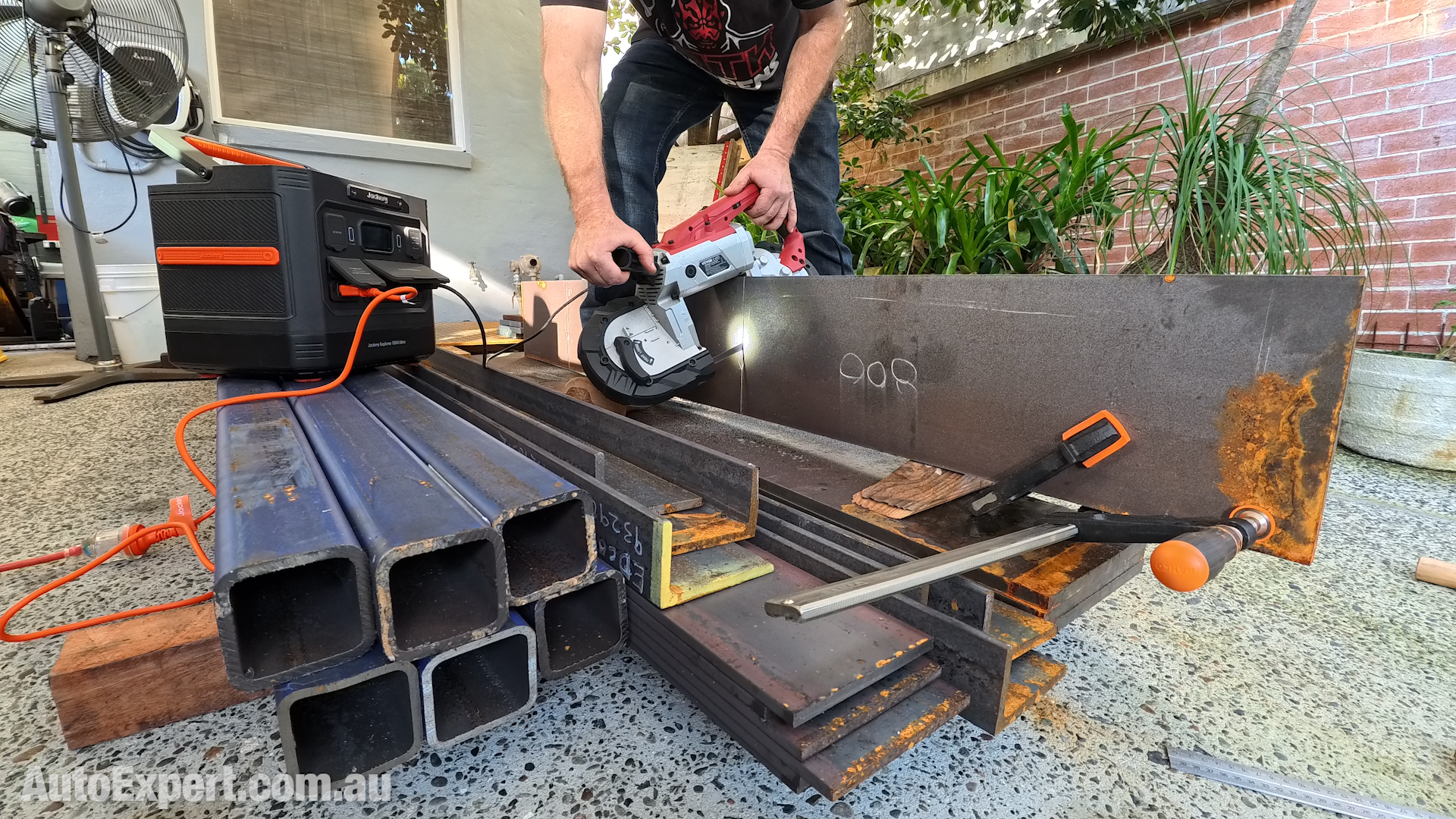
Because the saw only has a five-inch throat and the plate is roughly 10 inches wide, I had to flip the pieces and cut from both sides. In bananas, most of this steel was about five-eighths of a banana thick. One piece was closer to three-quarters of a banana. A robust scientific standard, obviously.
The Explorer 1500 Ultra also ran my 200mm bench grinder with the linisher attached, my bigger bandsaw, my drill press, and normal corded power tools.
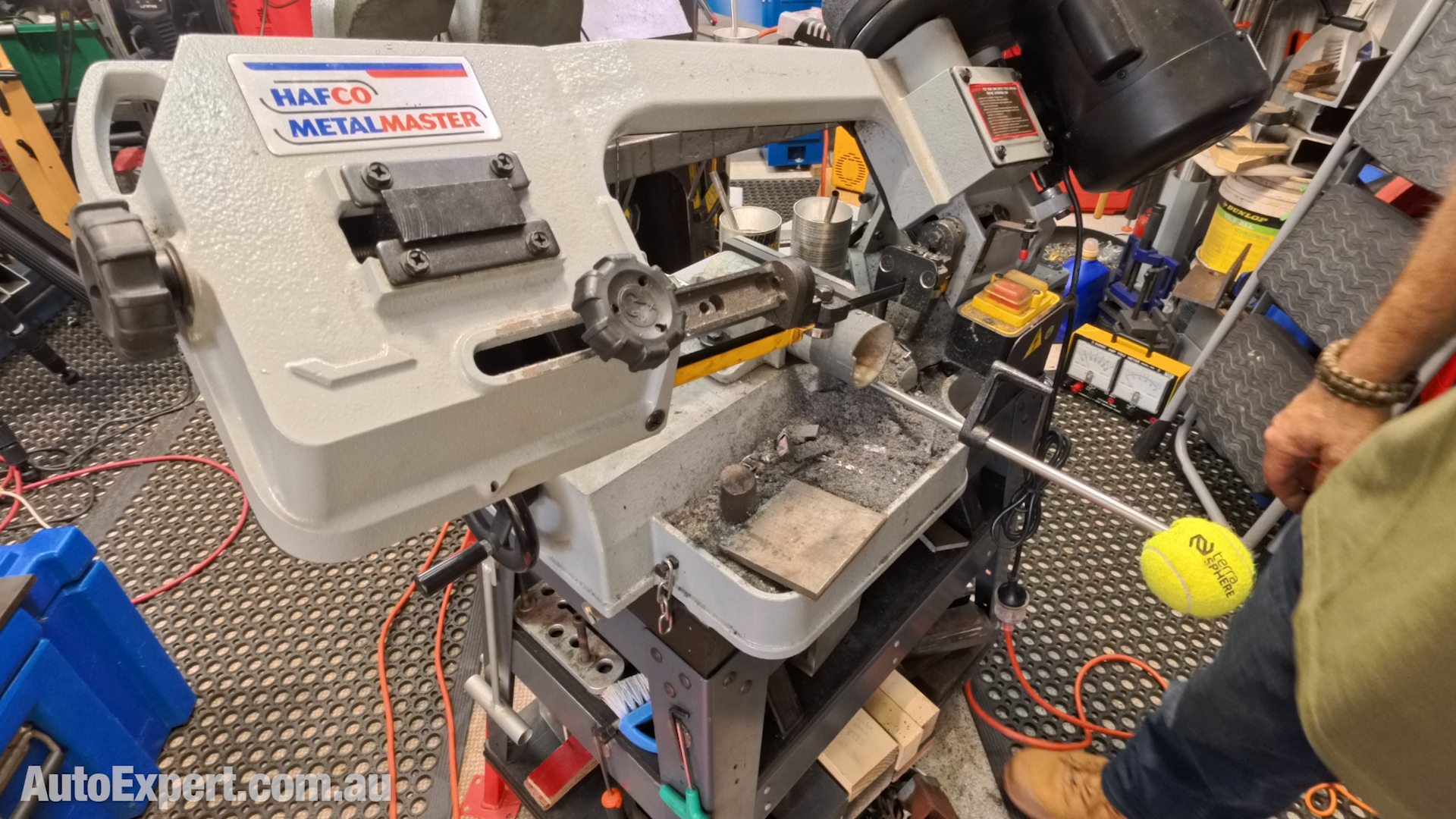
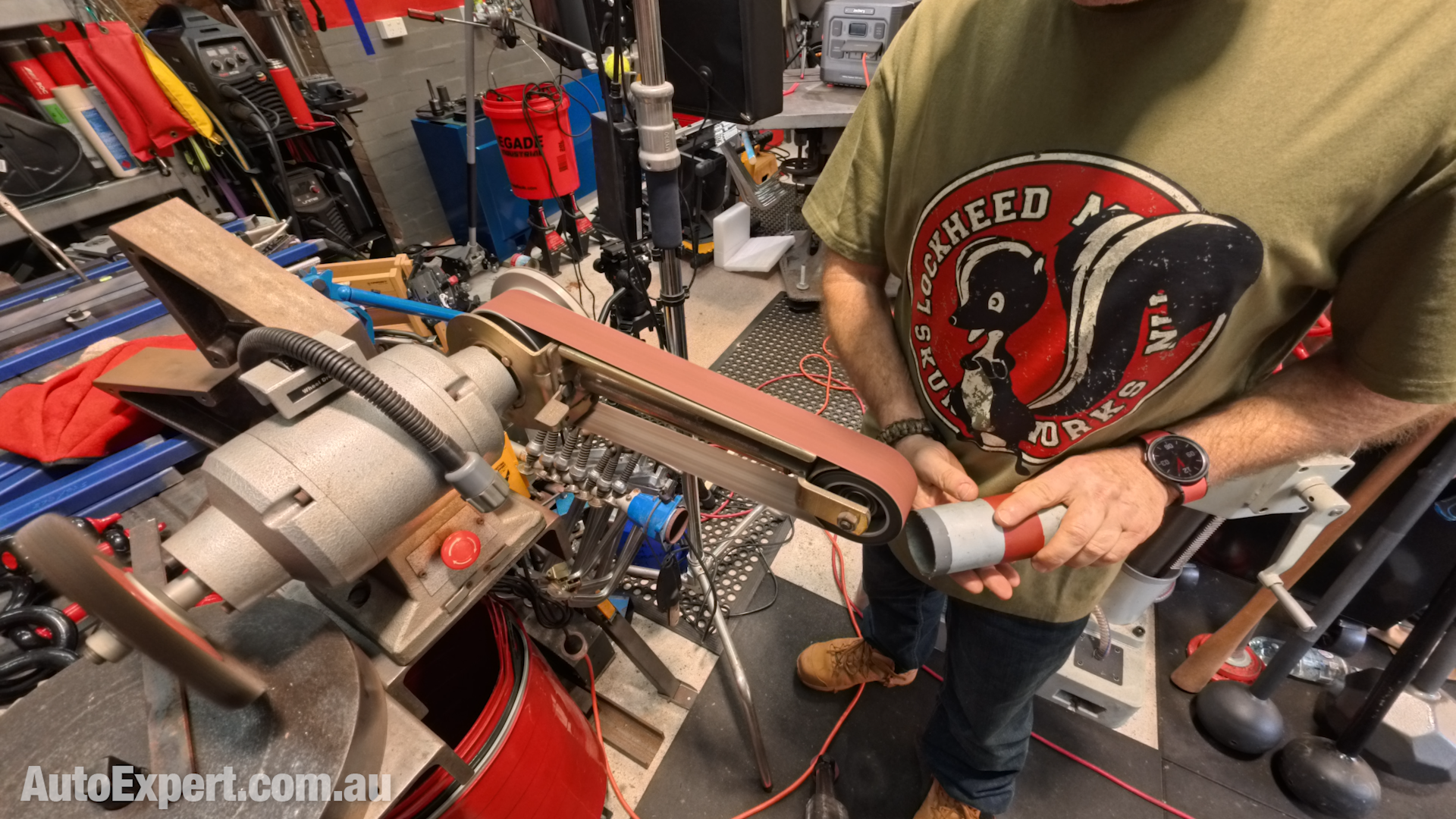
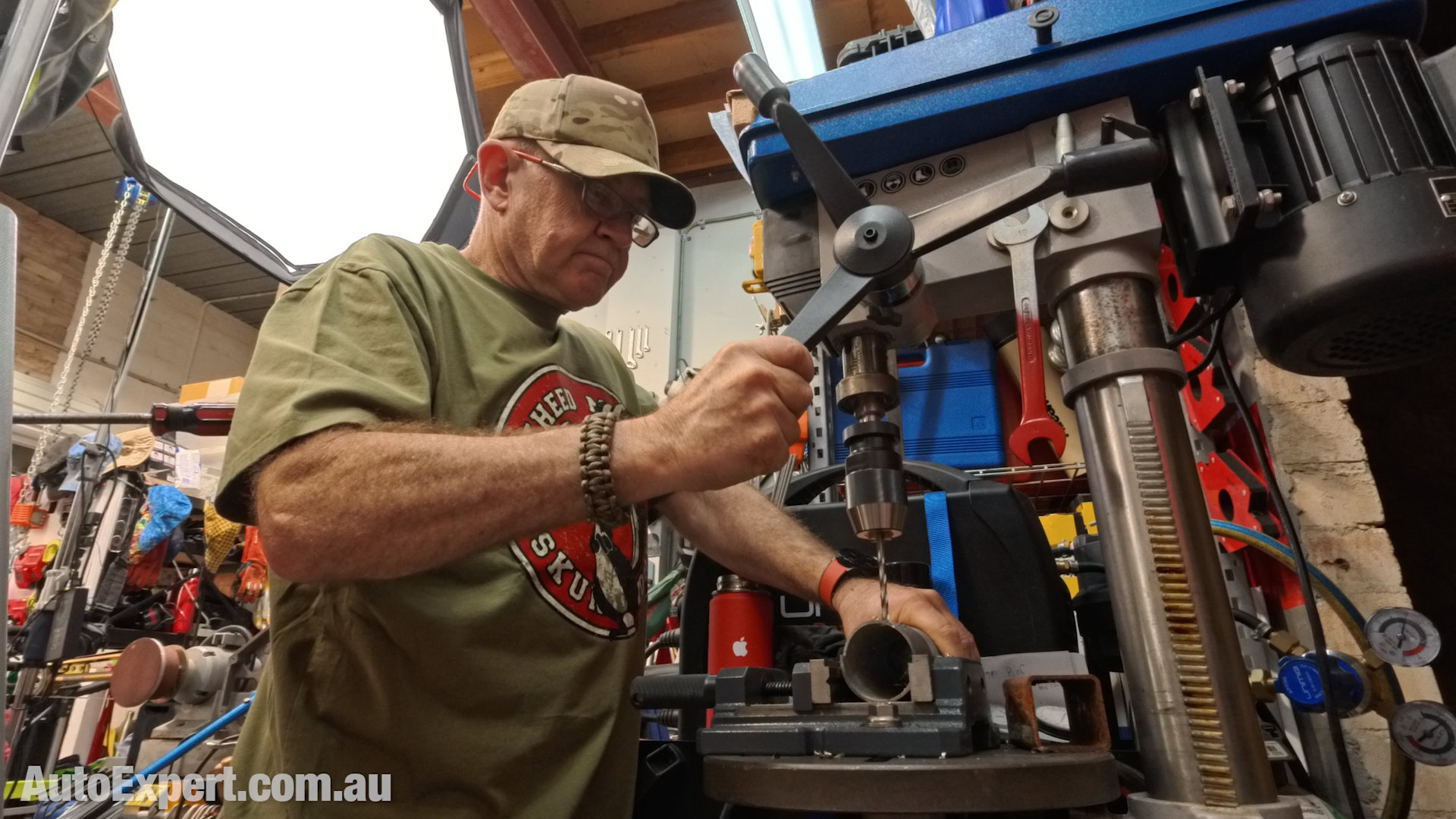
That matters, because a lot of portable power stations look good in a brochure but fall over when asked to do actual work. This one is genuinely useful in the shed.
What it ran — and what it did not
In domestic testing, the Explorer 1500 Ultra successfully ran:
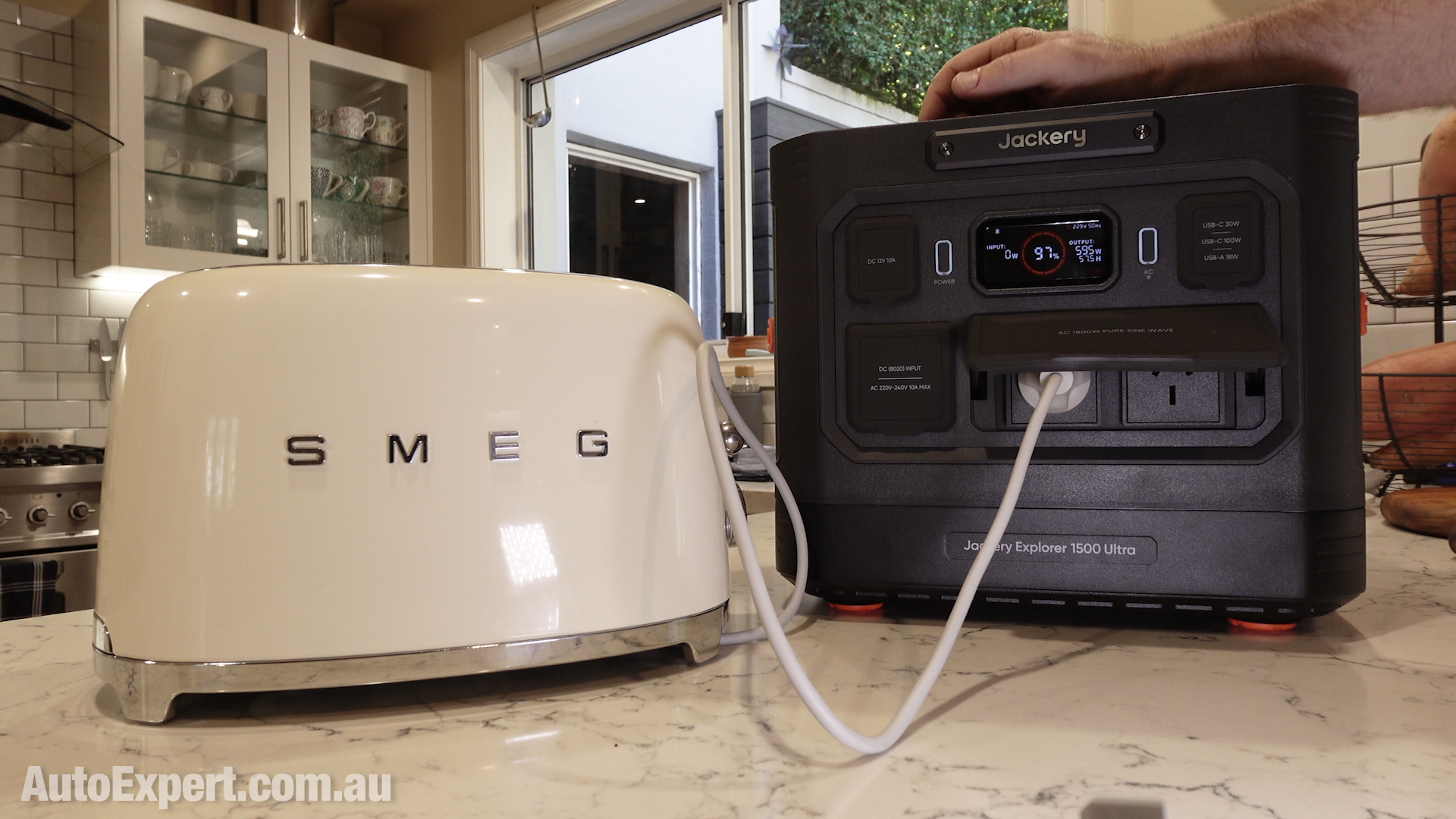
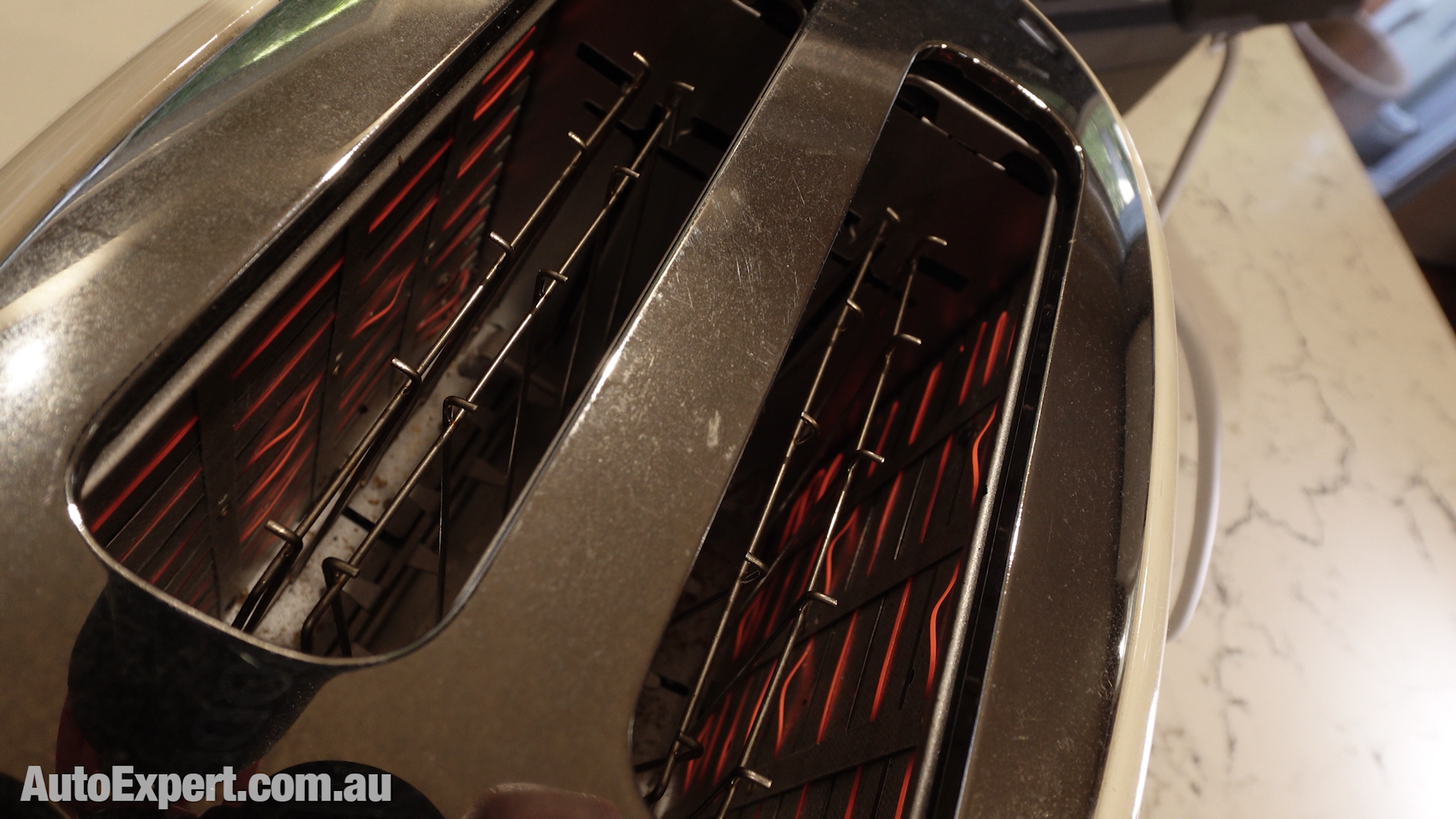
Toaster, about 930W
Blender, about 500W
Television
Large refrigerator
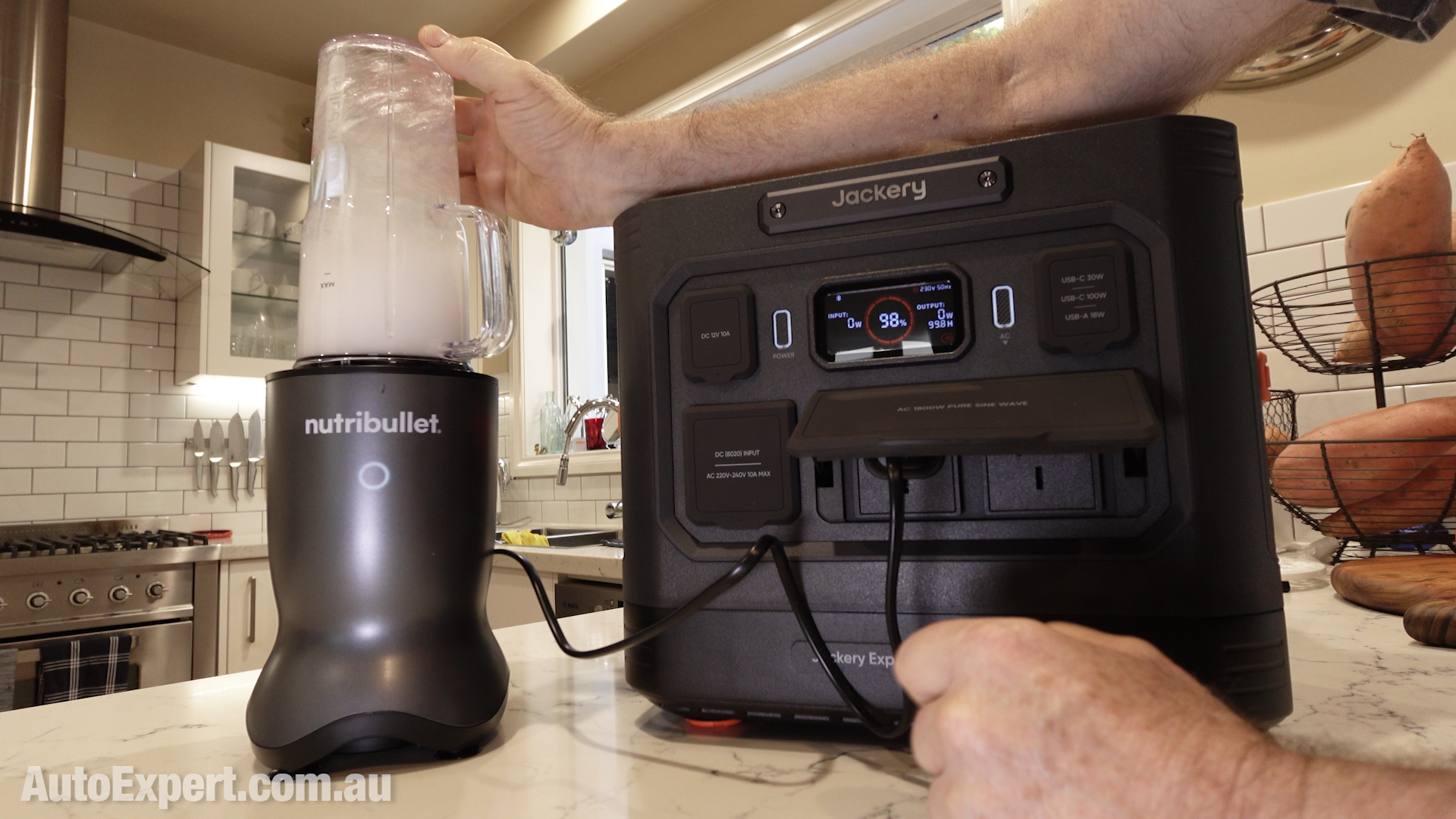
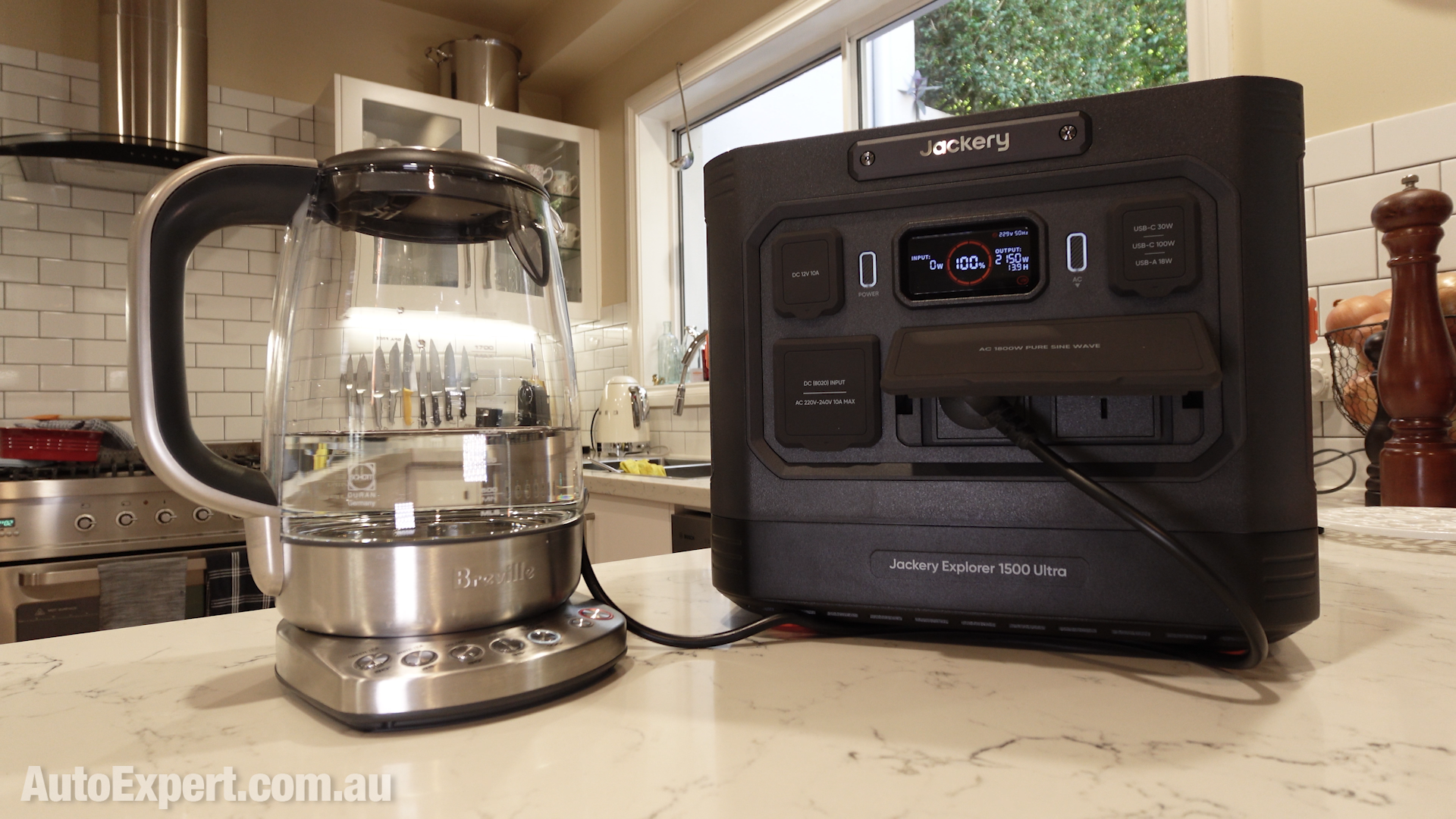
It did not run an electric jug. That is not surprising. Electric kettles are brutal loads. They are designed to turn electricity into heat very quickly, and portable power systems do not love that. You can see below the Jackery is delivering 2.15kW to the jug - that’s over its rated capacity, but it couldn’t sustain that output for more than 10-20 sec. (It tripped - protecting itself.)
In the shed, it successfully ran:
Grinder (plus linishing attachment)
Drill press
Bandsaw
Circular saw
It did not successfully run my small 2hp compressor, however.
That is the load I would still love to solve: a 230V AC compressor that starts reliably on this kind of portable power station. Compressors can be pigs on startup because the initial surge demand can be far higher than the running wattage suggests.
Learn more. (And use code AUTOEXPERTJC for an extra 5% off.)
The 12V output is not the point
The Explorer 1500 Ultra does have 12V DC output, but do not get too excited about that if you want serious power.
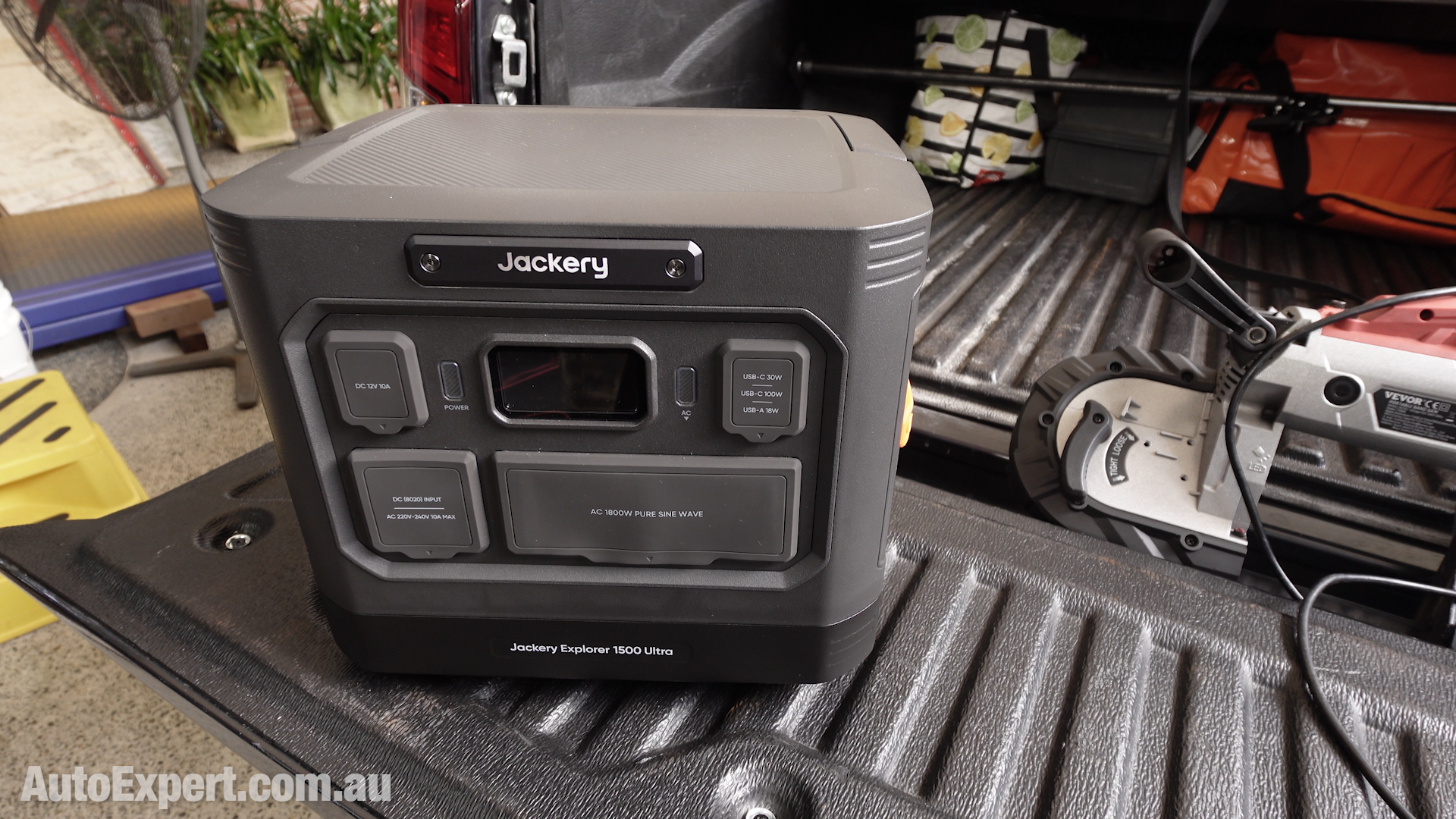
Even 12V at 50A is only 600W. This unit supplies three times that through AC.
If you really want a proper 12V output for vehicle-style accessories, Anderson plugs and the like, the rational workaround is to use a 230V AC to 12V DC power supply. Something like a Mean Well LRS-600-12 can take the Jackery’s 230V AC and convert it to Middle Ages-ready 12V at up to about 50A.
That is not a criticism of the Jackery specifically. It is just the maths of 12V power. Serious wattage at 12V requires serious current, and serious current means fat cables, proper connectors, and meaningful heat management.
Charging the Explorer 1500 Ultra
Charging is straightforward. On 230V AC, it plugs straight into the wall. There is no external charging brick to lose, curse, trip over, or accidentally leave at home.
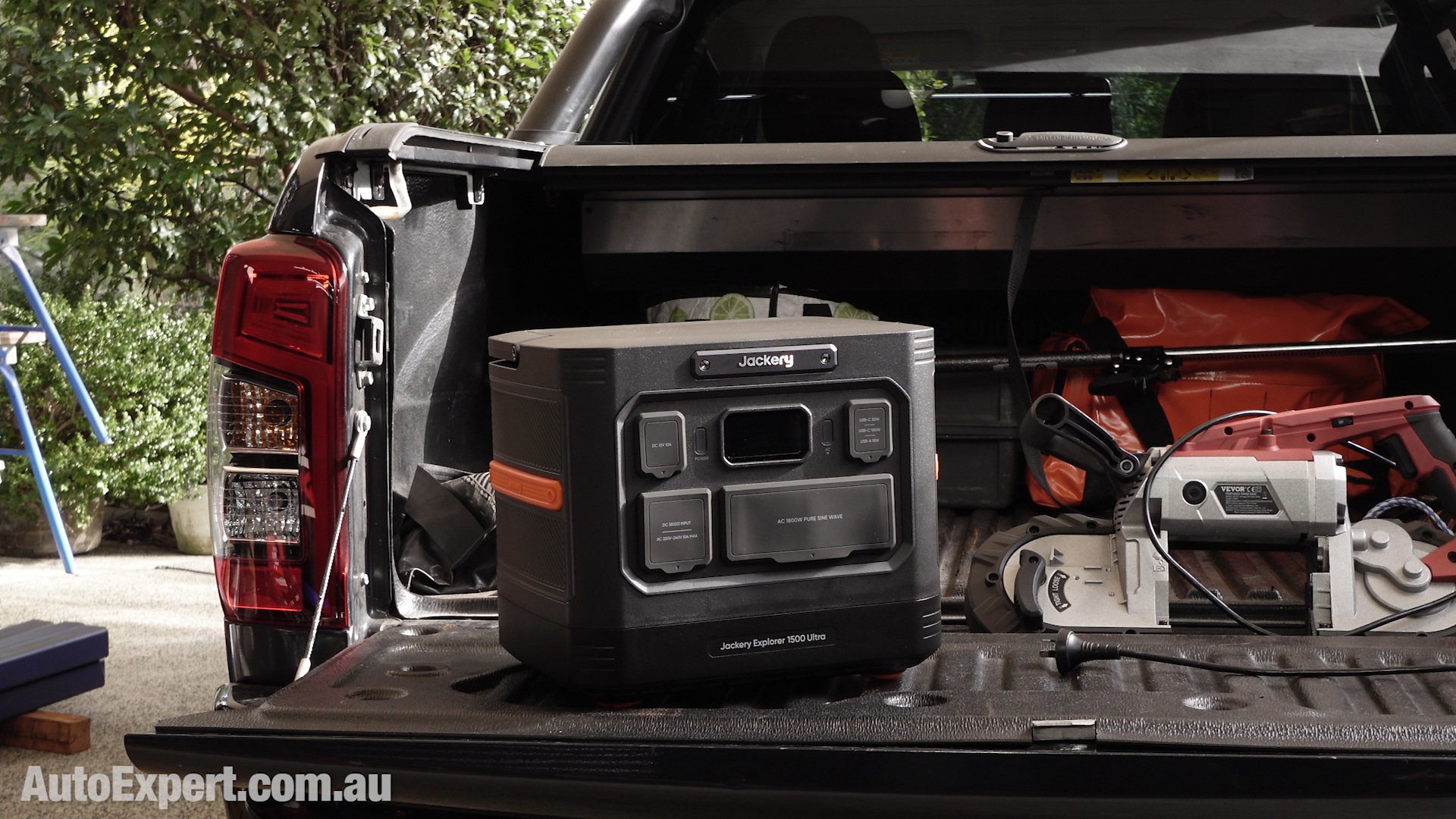
Jackery claims about 1.5 hours to full charge on AC.
It also supports solar charging, with two 400W solar inputs for up to 800W total. Jackery claims about 2.5 hours to full charge on maximum solar input.
In practical overlanding terms, a roof-rack panel or deployable panel system makes sense. A 200W panel delivering a realistic average of 200W for eight good hours would put a substantial amount of energy back into the unit while you are parked or travelling.
The Explorer 1500 Ultra can also operate as a UPS, with a claimed 20ms response time. That means it can sit between the wall and a load, then take over if the wall power disappears.
Blackout simulation
For a realistic home power-failure scenario, I simulated the kind of loads you might actually want to keep alive.
The rough emergency load looked like this:
LED lamps: about 40W
Phone charging/connectivity: about 40W
TV: about 100W
One refrigerator: about 100W
Jackery inverter overhead: about 20W
Total: roughly 300W.
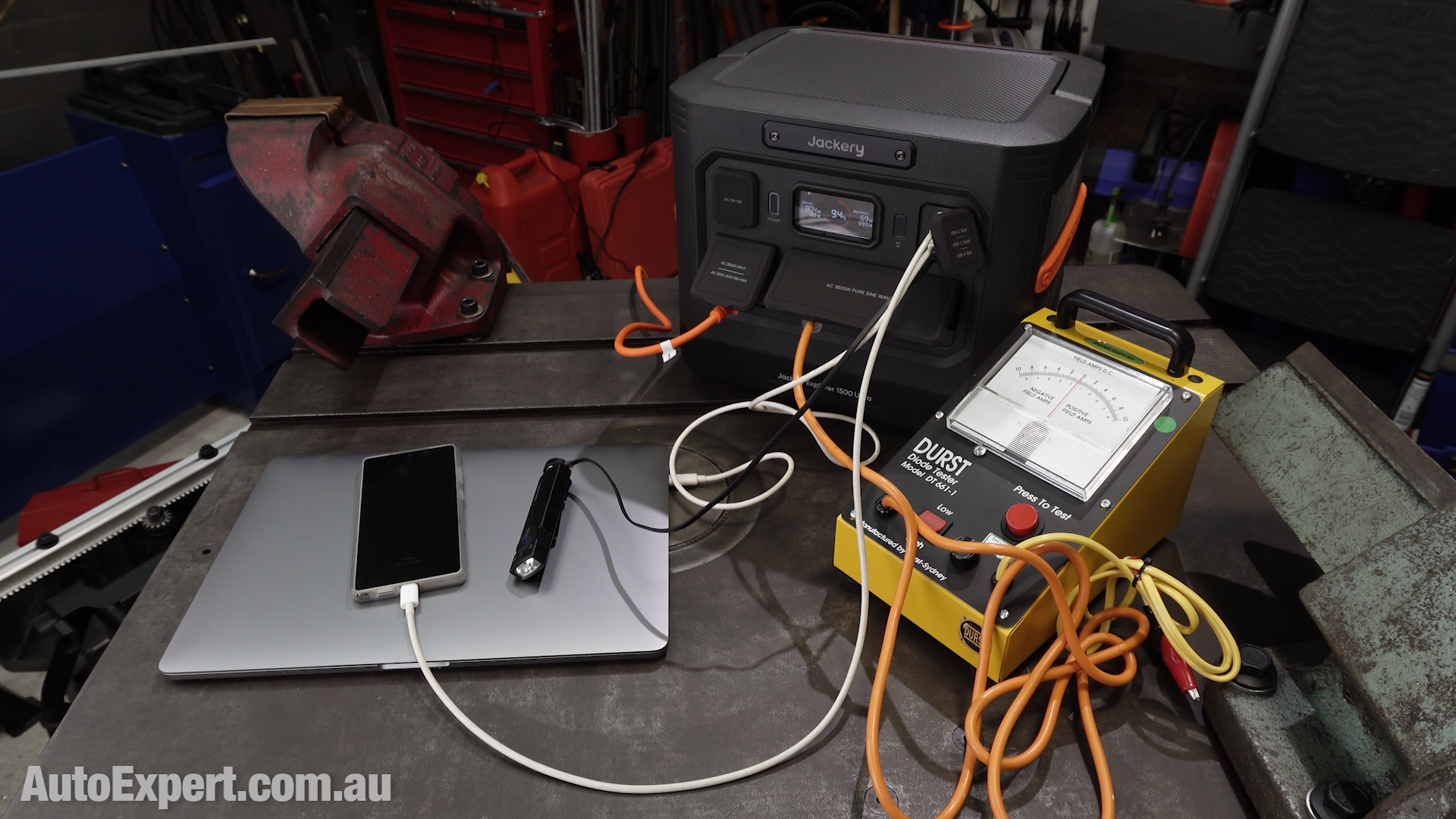
In that scenario, you are looking at a minimum of about five hours of endurance, depending on the exact fridge duty cycle, the real loads, and how you manage usage.
That is enough to get you through a typical evening blackout with lights, communications, TV, and refrigeration intact. Cook on the barbecue, avoid the electric kettle, and you are in good shape.
Add a 250W solar panel during the day, producing an average of maybe 200W for several hours, and the equation changes materially. Four hours of useful solar before sunset could support an evening of essential loads quite comfortably.
Learn more. (And use code AUTOEXPERTJC for an extra 5% off.)
Ruggedisation: the main trick
This is where the Explorer 1500 Ultra separates itself from the usual portable power station crowd.
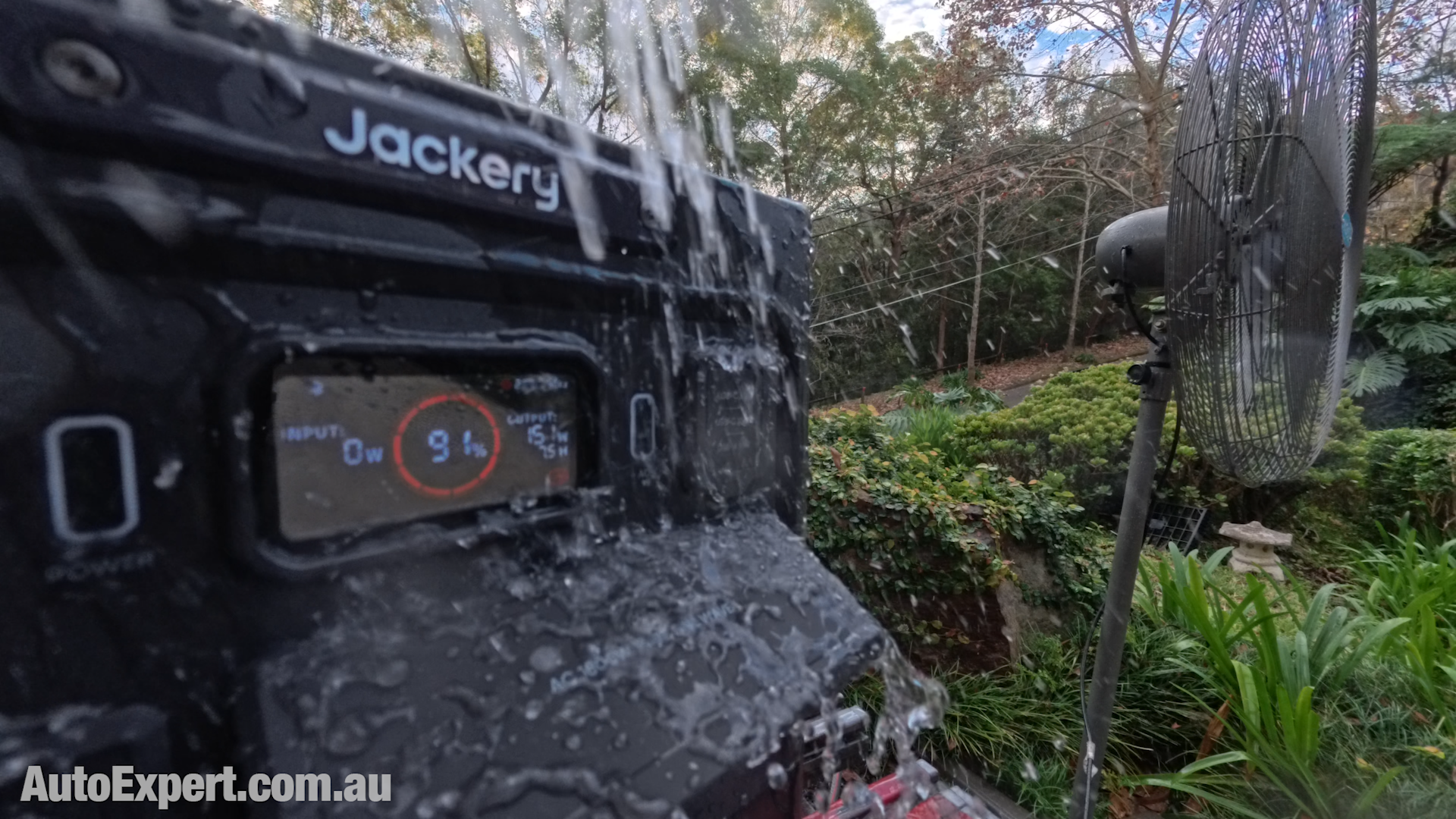
It is IP65 rated, which means dust-tight and protected against low-pressure water jets from any direction.
In practical terms: rain, dust, dirty job sites, camping weather, and general outdoor abuse are within the design envelope.
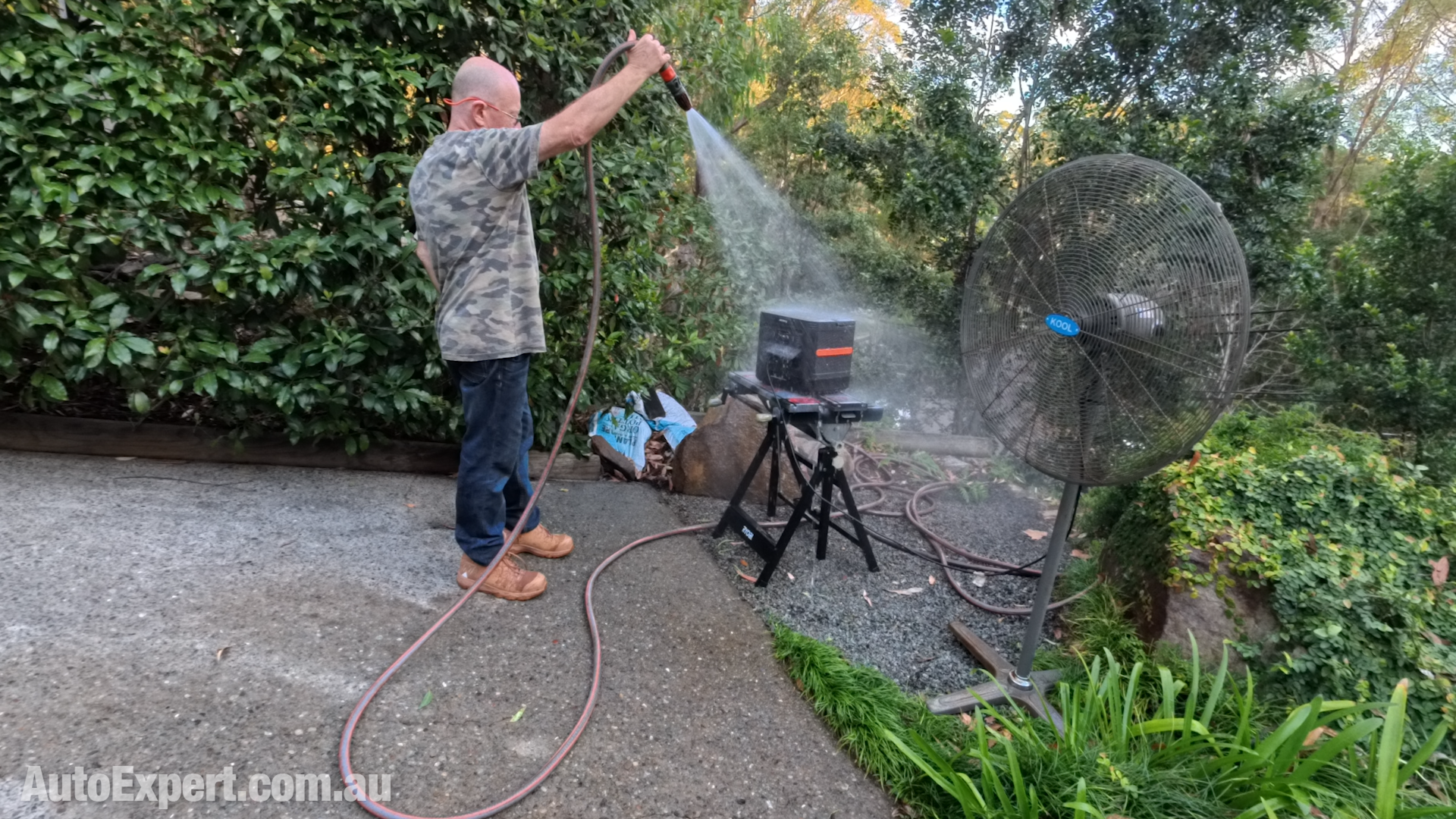
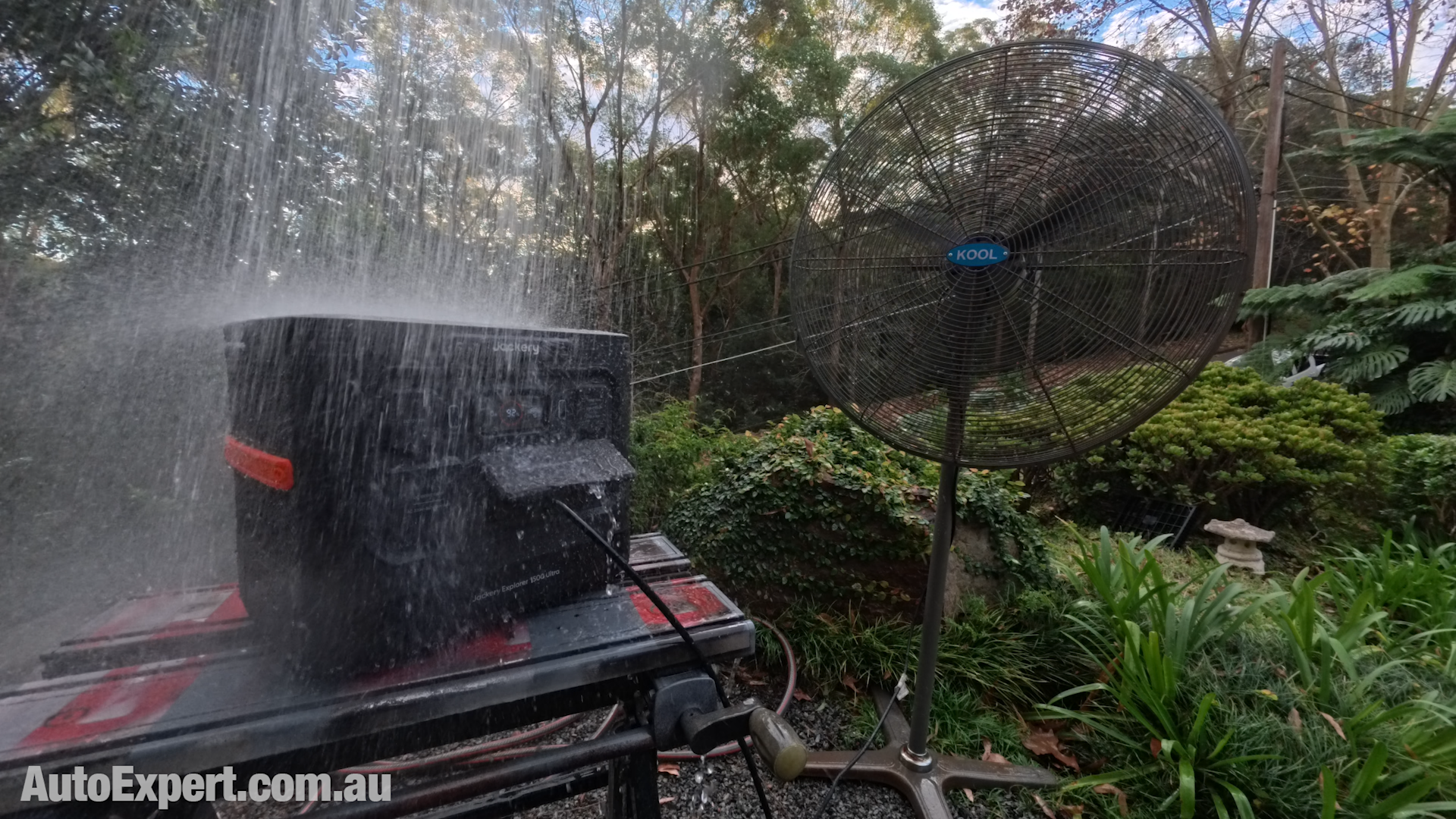
It does not mean “throw it in the pool”. It does not mean “pressure-wash it like a filthy wheel arch”. But it does mean the Explorer 1500 Ultra is not a precious indoor appliance pretending to be an outdoor product.
I drenched it with a hose. Properly. Harder than any rain it is realistically likely to experience. Several times, because filming anything properly takes forever.
No problem.
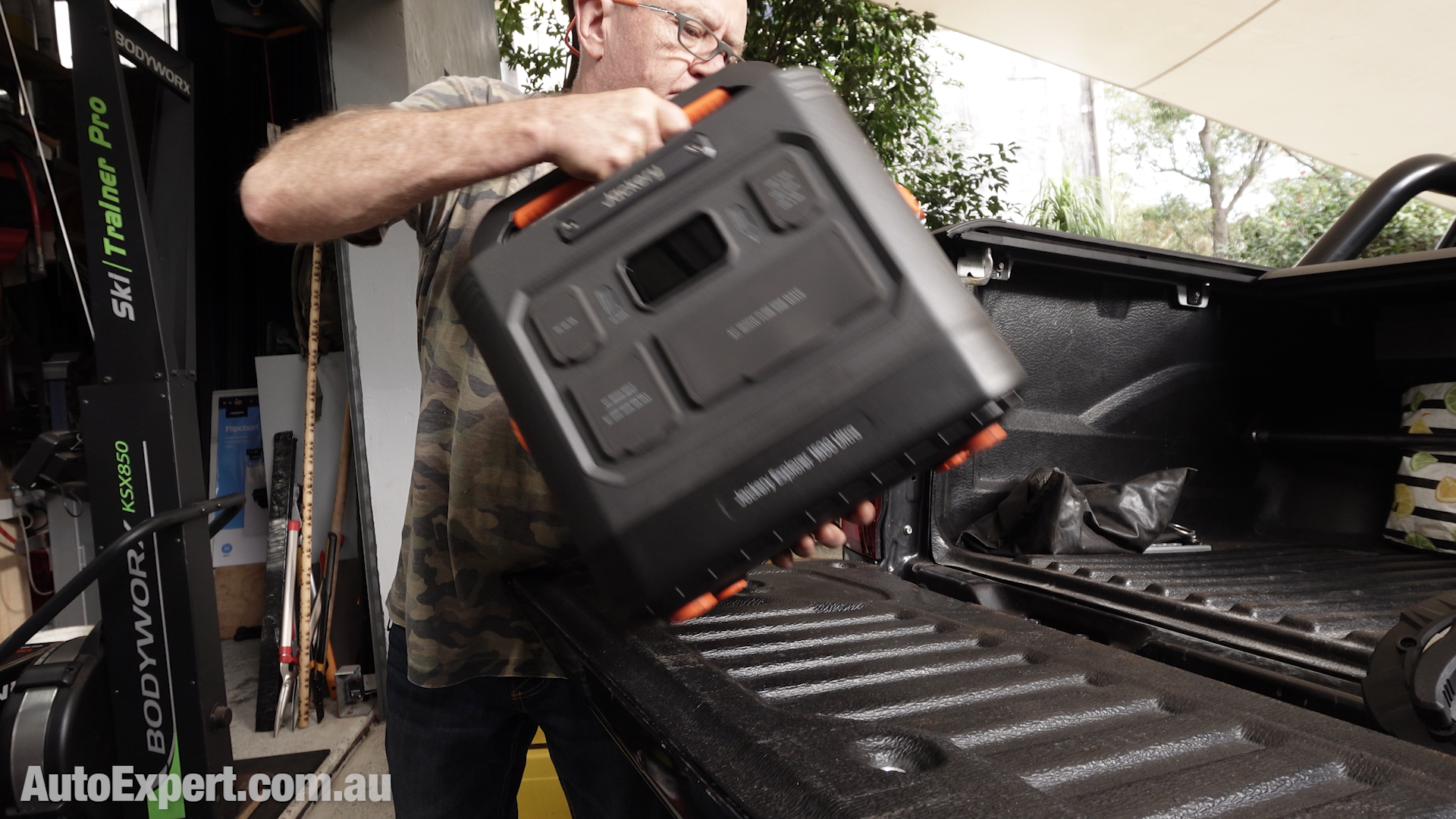
It is also rated for a one-metre drop. So I dropped it onto concrete. Twice. Frtom 1m up on the ute tailgate. That is a severe impact. (Correction: Two severe impacts.)
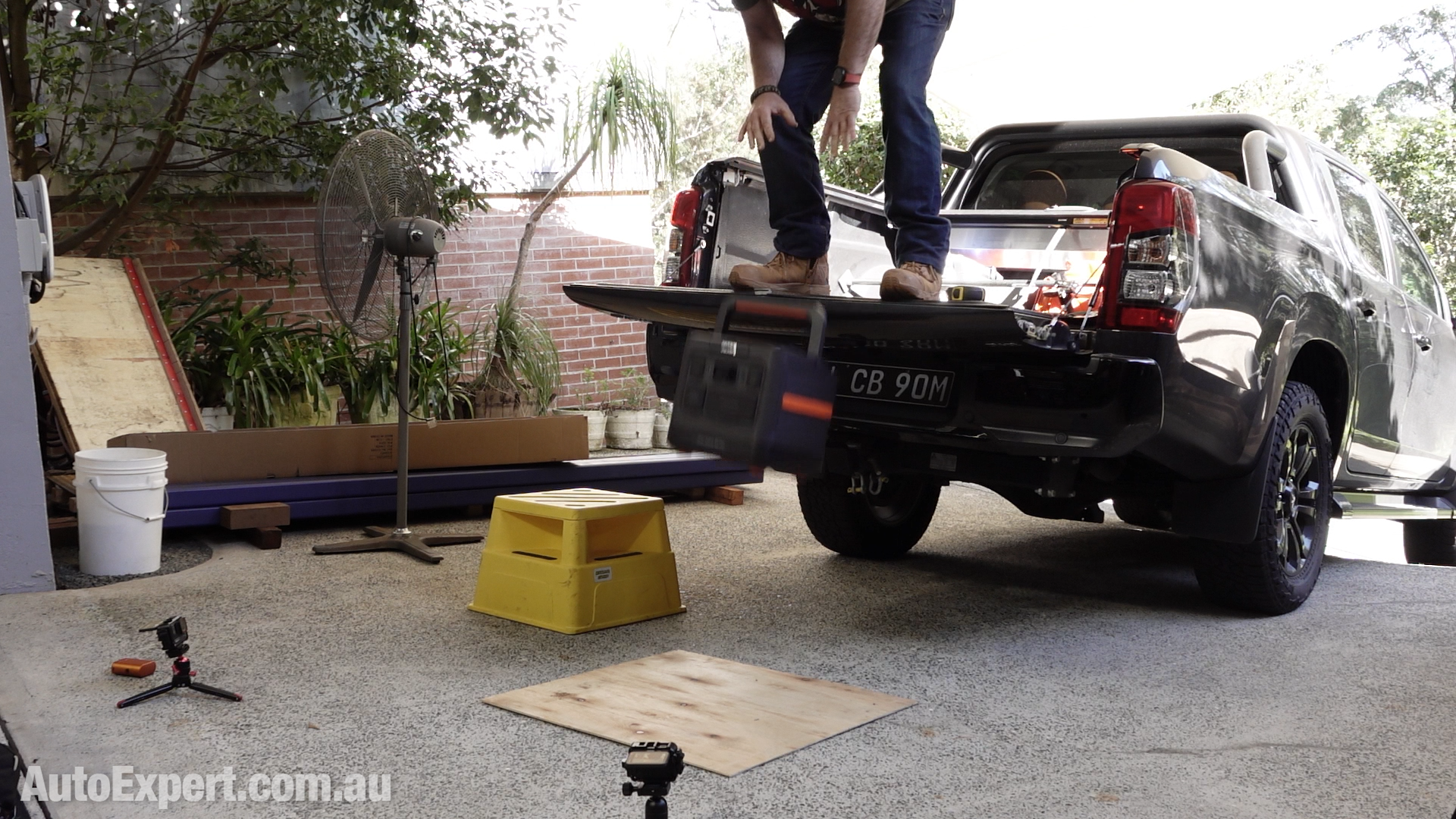
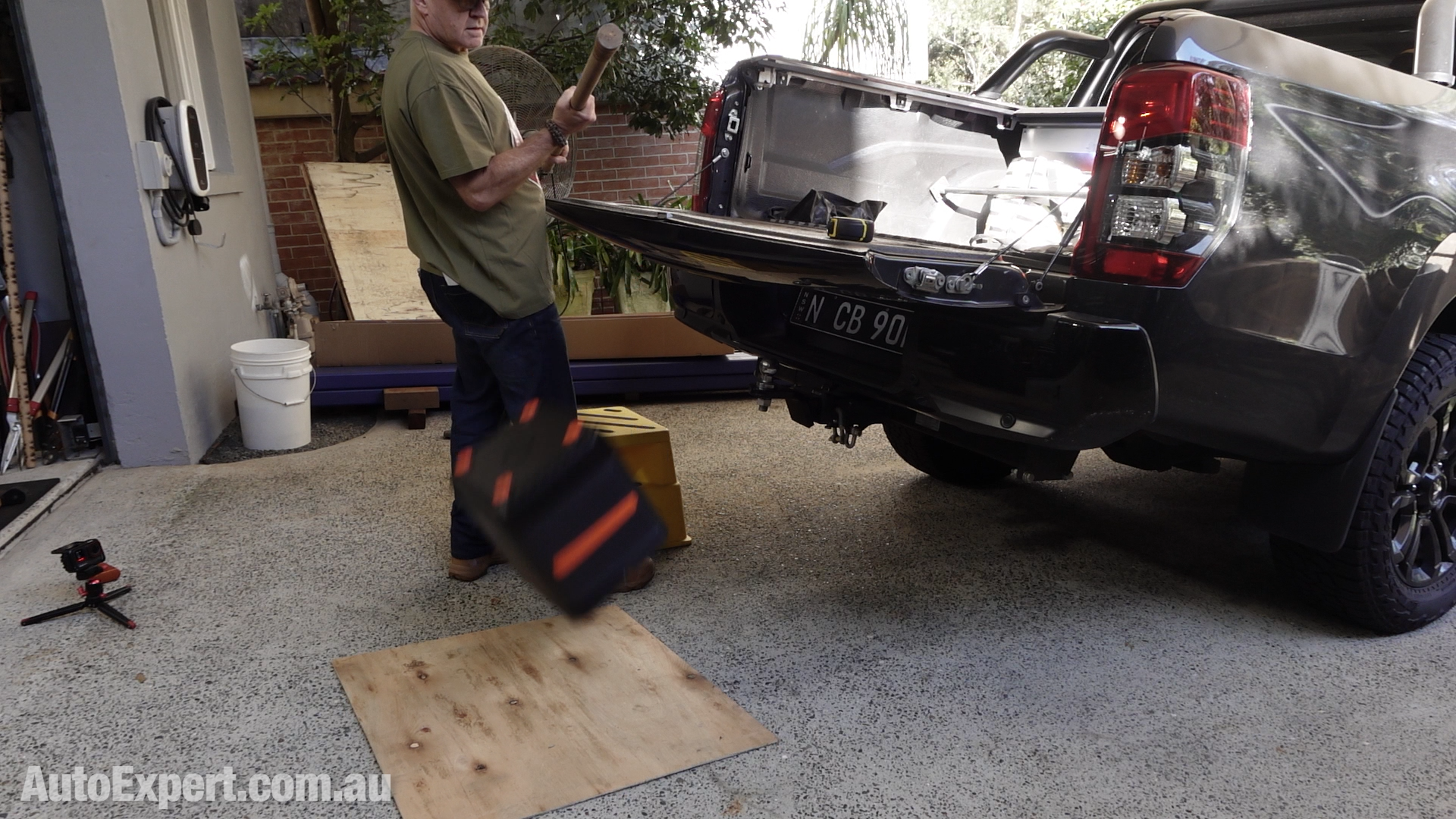
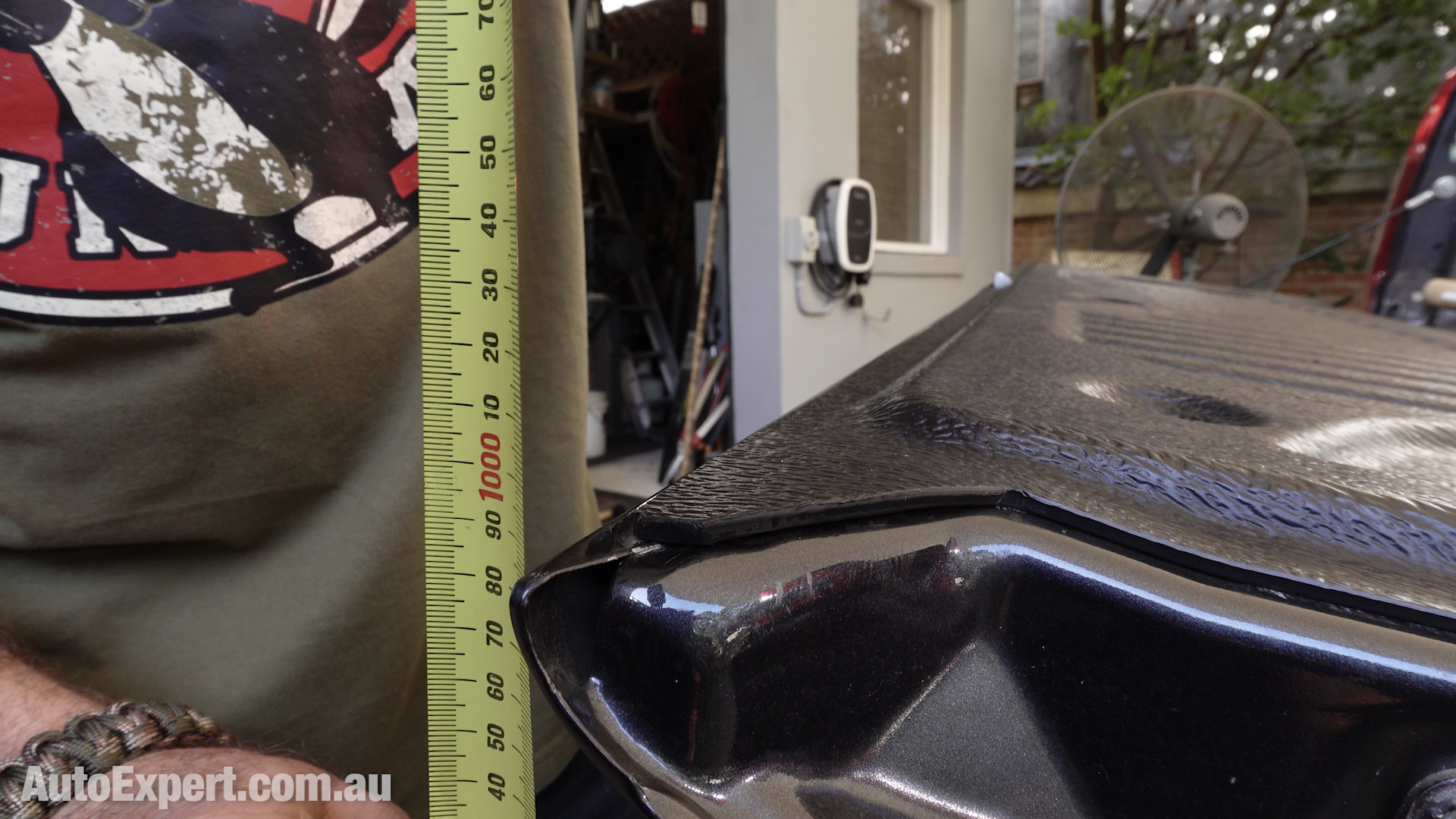
Again: no problem.
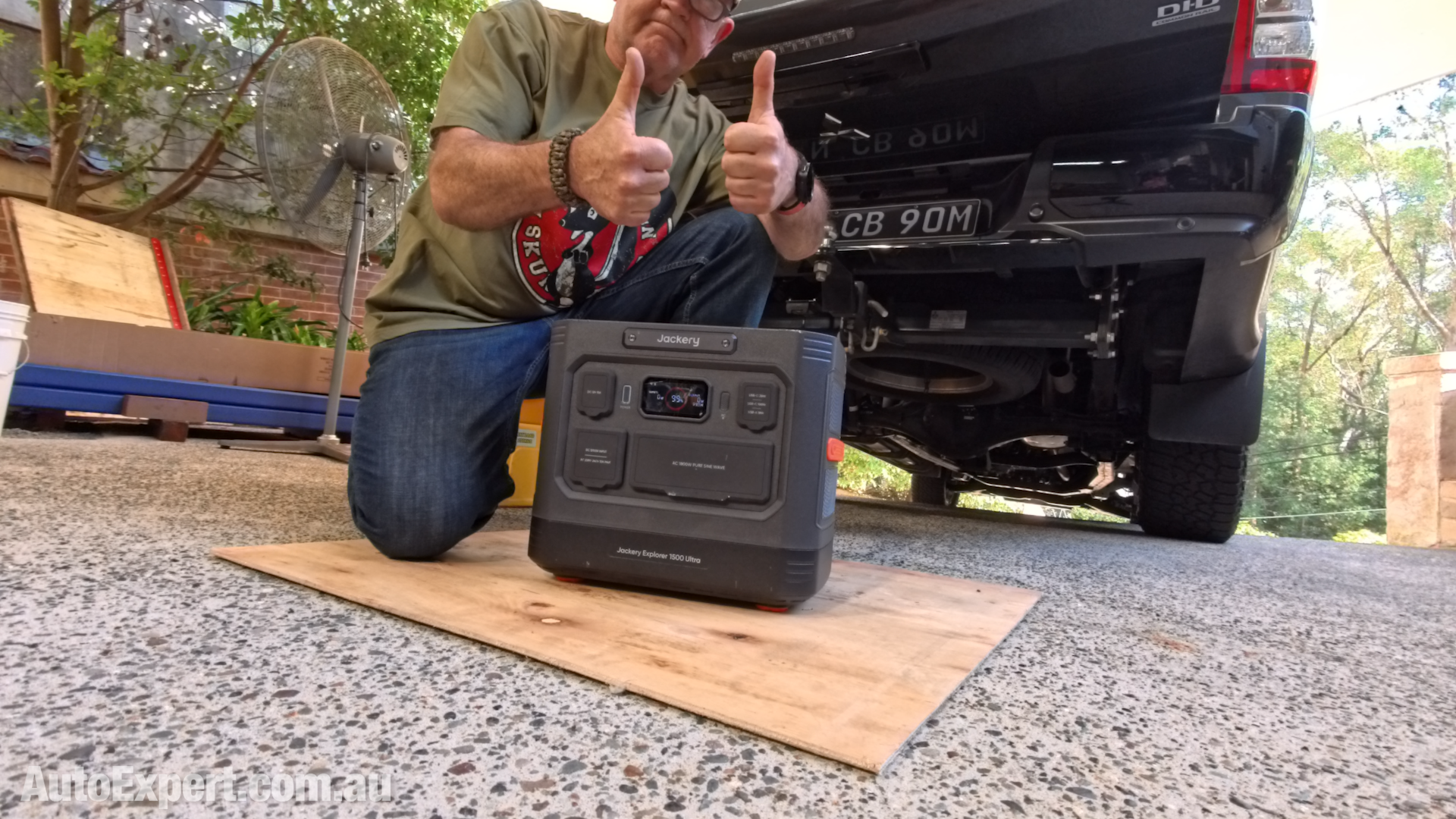
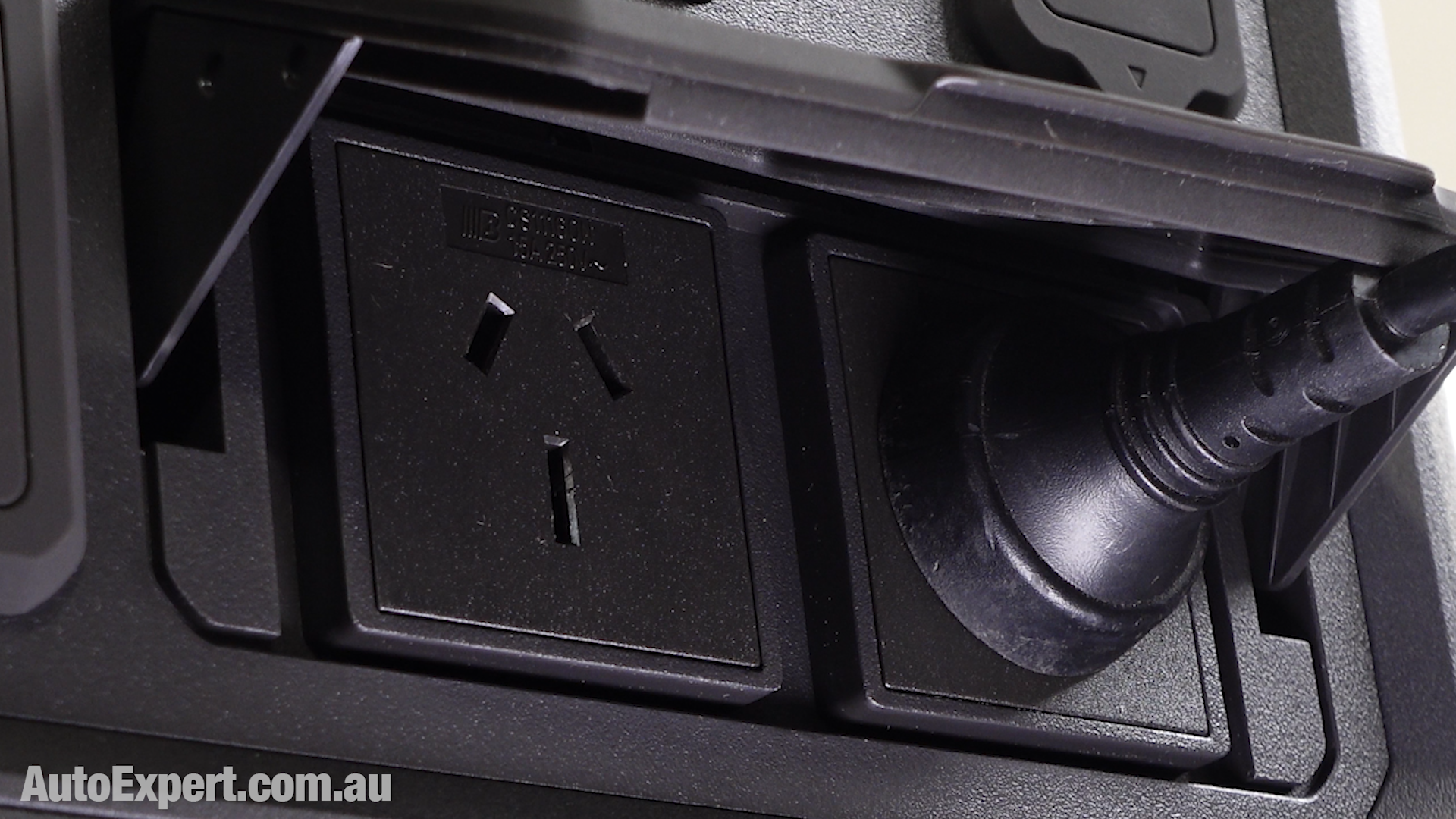
The design details matter here. The AC outlets sit under a cantilevered flap, there is obvious thought given to drainage and condensation management, and the base incorporates a washable, user-serviceable metal heat sink arrangement.
That last point is interesting. The Explorer 1500 Ultra has clever thermal management, and unlike most sealed black-box products, there is at least some practical user-serviceability built into the heat-sink base. Like, you can take the cover off, and clean the heat sink.
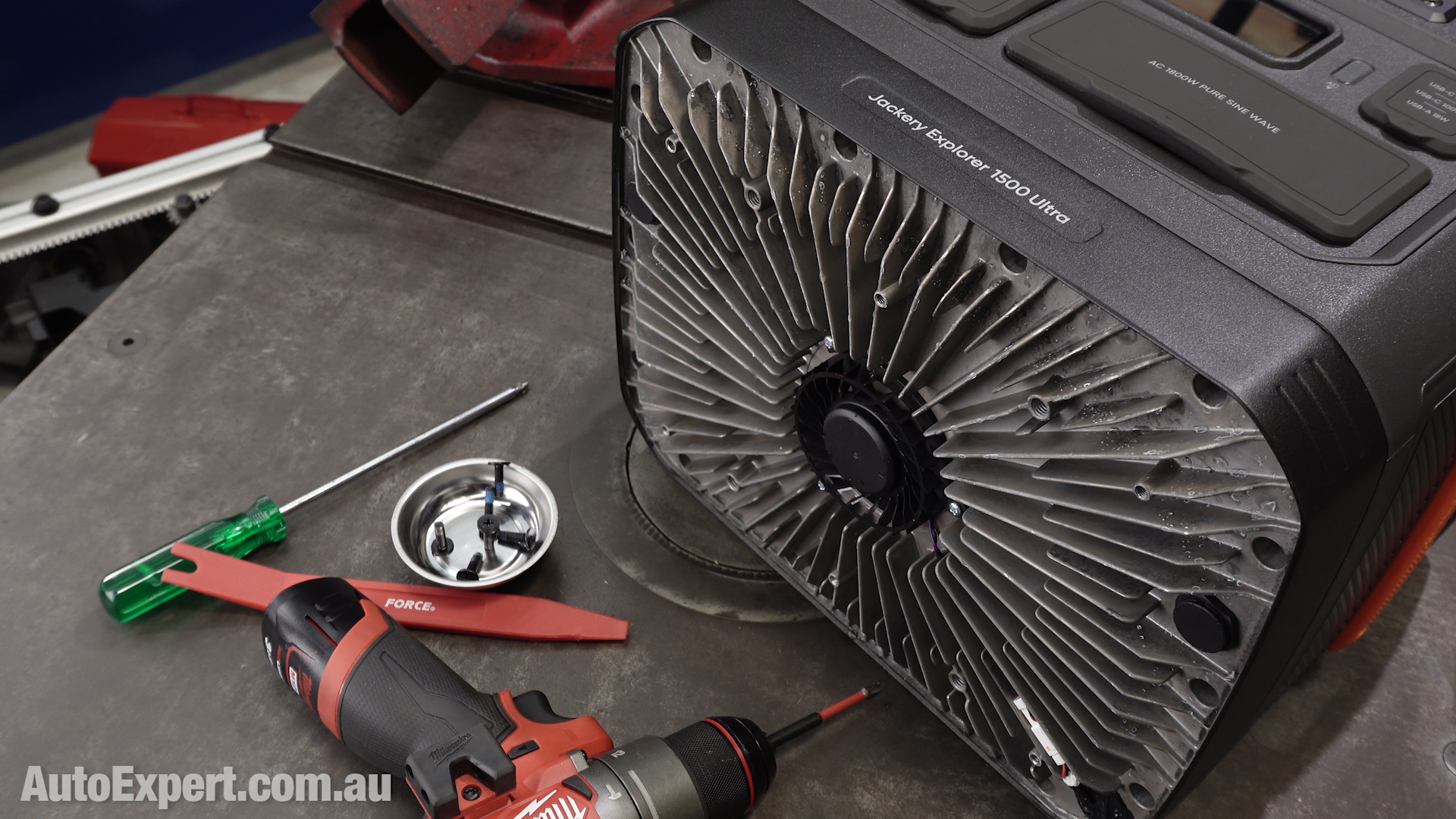
That is good design.
My only reservation is that the air intake is down low, close to the dust. On a job site or at camp, low-mounted intakes can become dirt magnets. The washable heat sink helps, but it is still something I would keep an eye on in genuinely filthy environments.
Learn more. (And use code AUTOEXPERTJC for an extra 5% off.)
Operating envelope and battery life
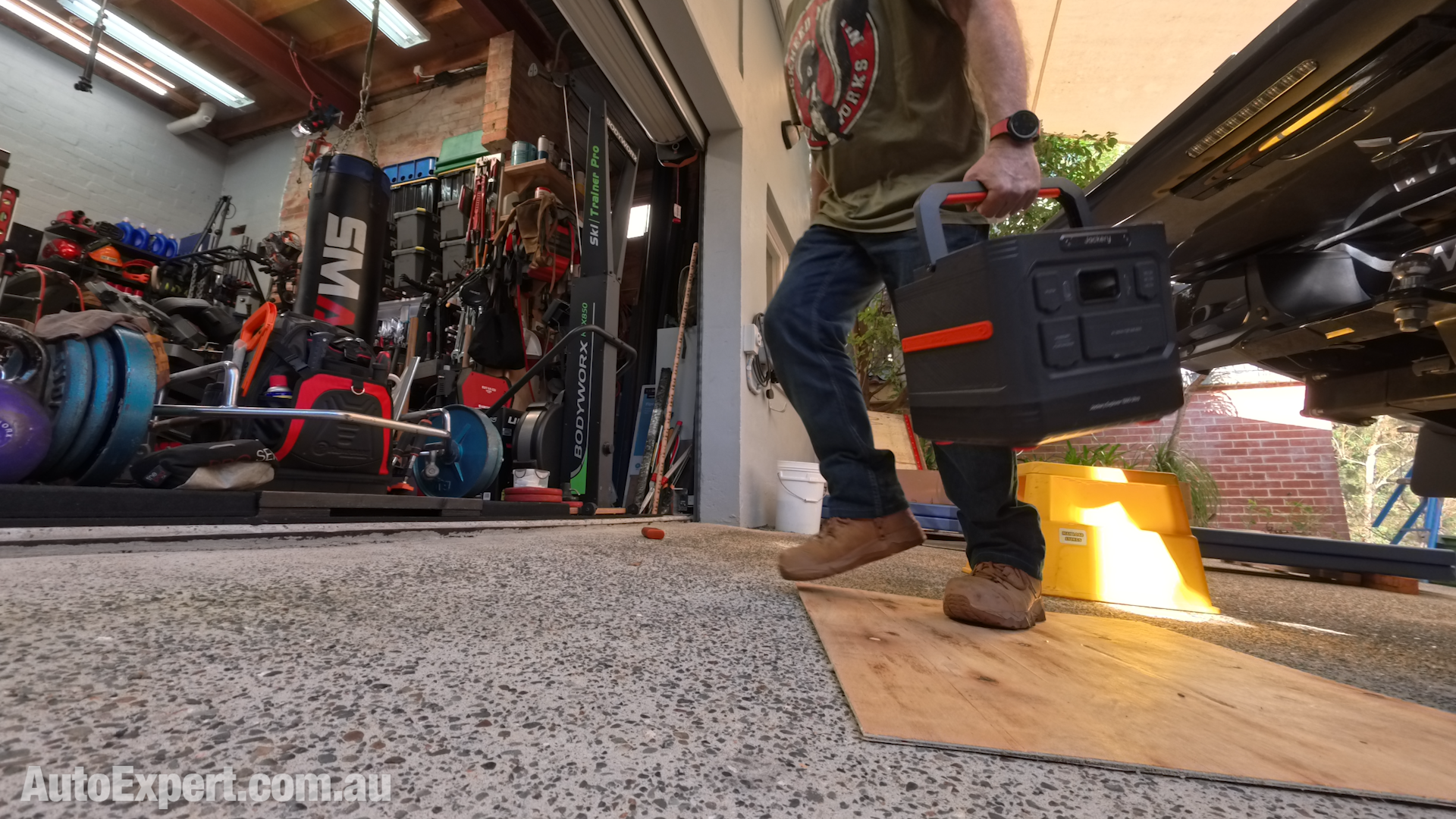
The Explorer 1500 Ultra weighs 17.5kg, which is reasonably light for this much capability.
It is not featherweight, but it is portable. You can move it around without needing a forklift, a gym membership, or a young apprentice with poor judgement.
The operating temperature range is quoted as 5°F to 113°F, which is about -15°C to 45°C. Charging temperature range is 0°C to 45°C.
The battery chemistry is LiFePO4, and the stated minimum lifespan is 4000 charge cycles to 70 per cent capacity.
Put that in human terms: one full cycle every day for 11 years, with a couple of weeks off. That is a lot of use.
The Jackery app
The Jackery app is simple and straightforward.
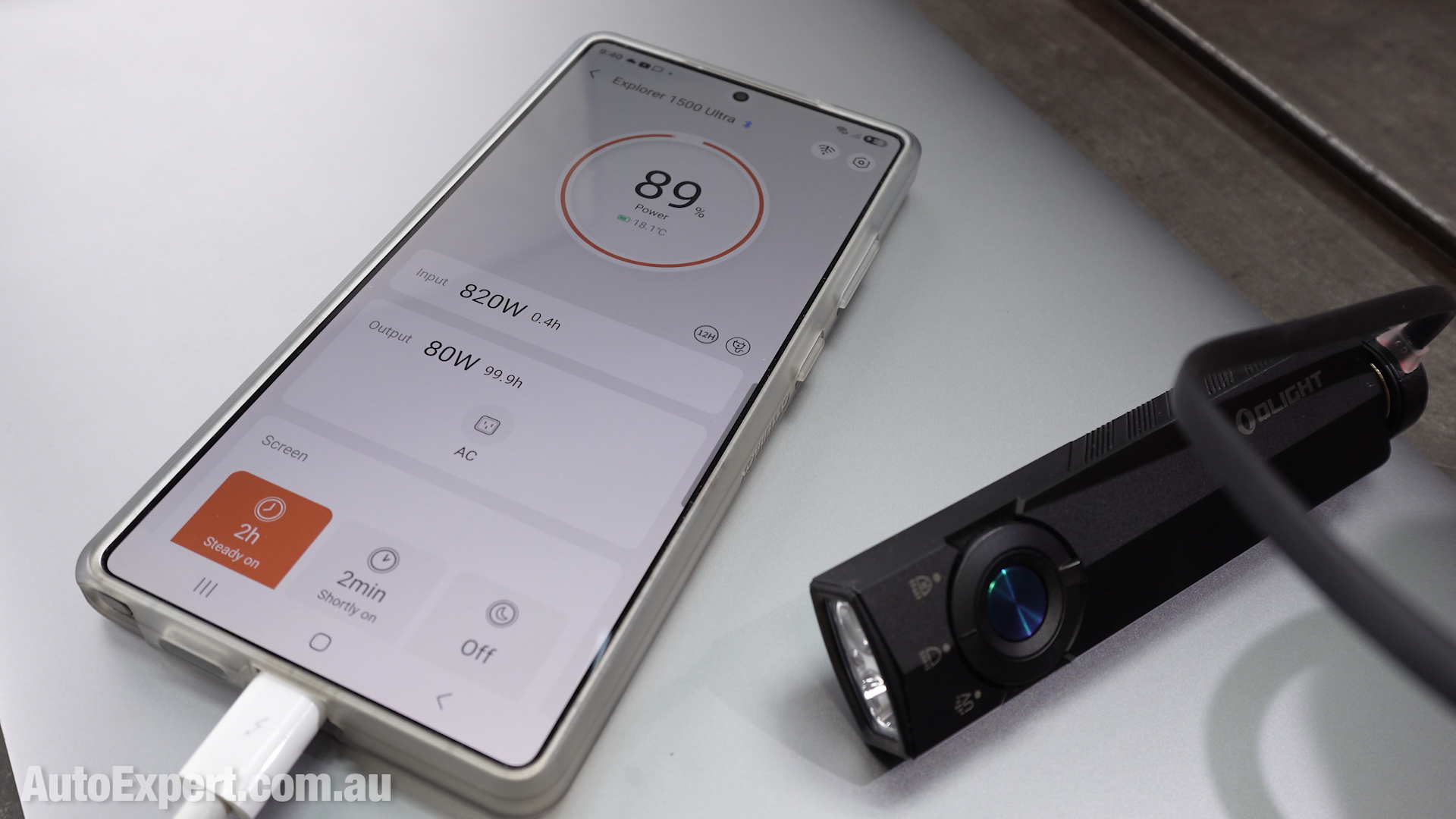
It installed easily, connected seamlessly, and gives you remote control and useful operational data without needing to be physically hands-on with the unit.
That is exactly what an app for this kind of product should be. Not a lifestyle ecosystem. Not a subscription trap. Just practical control and useful information.
Best use cases
The Explorer 1500 Ultra makes the most sense in three broad scenarios.
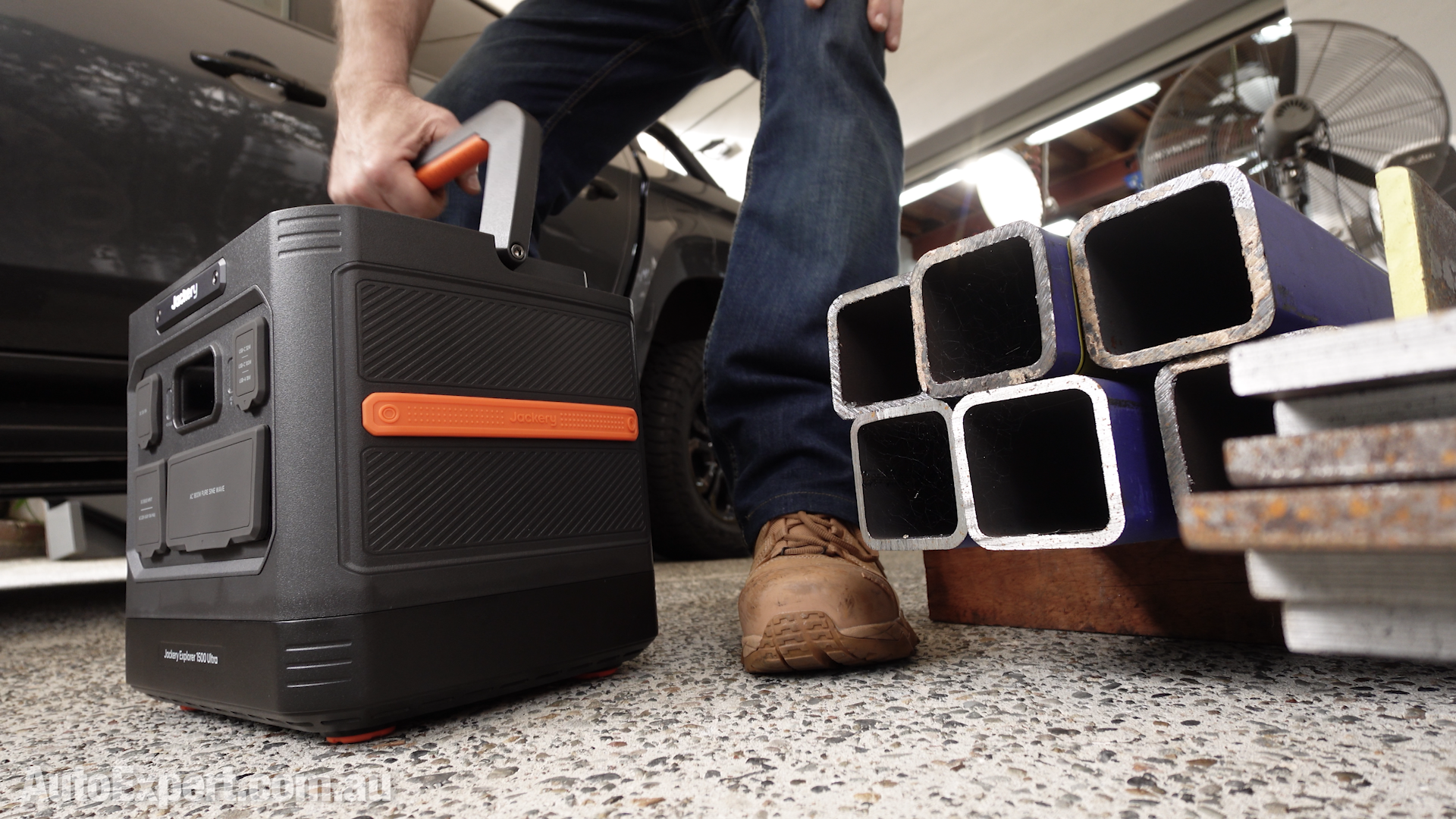
First: as a job-site or mobile-work companion. It can run real tools, and the ruggedisation means it is not terrified of dust, water, and being treated like equipment instead of jewellery.
Second: camping and overlanding. It is large enough to run meaningful loads, rechargeable from solar, and physically robust enough for outdoor use.
Third: blackout protection. It is not a whole-house battery, but it can keep the essentials alive: lights, phones, fridge, TV, and small appliances, provided you manage the load sensibly.
Learn more. (And use code AUTOEXPERTJC for an extra 5% off.)
What could be better?
I have a few constructive criticisms.
It would be great if tapping the side made the power button light up. In the dark, that would be genuinely useful.
It would be even better if there were an exterior LED light built in somewhere.
An amber emergency strobe on top would be almost impossibly perfect for roadside, campsite, job-site and blackout use.
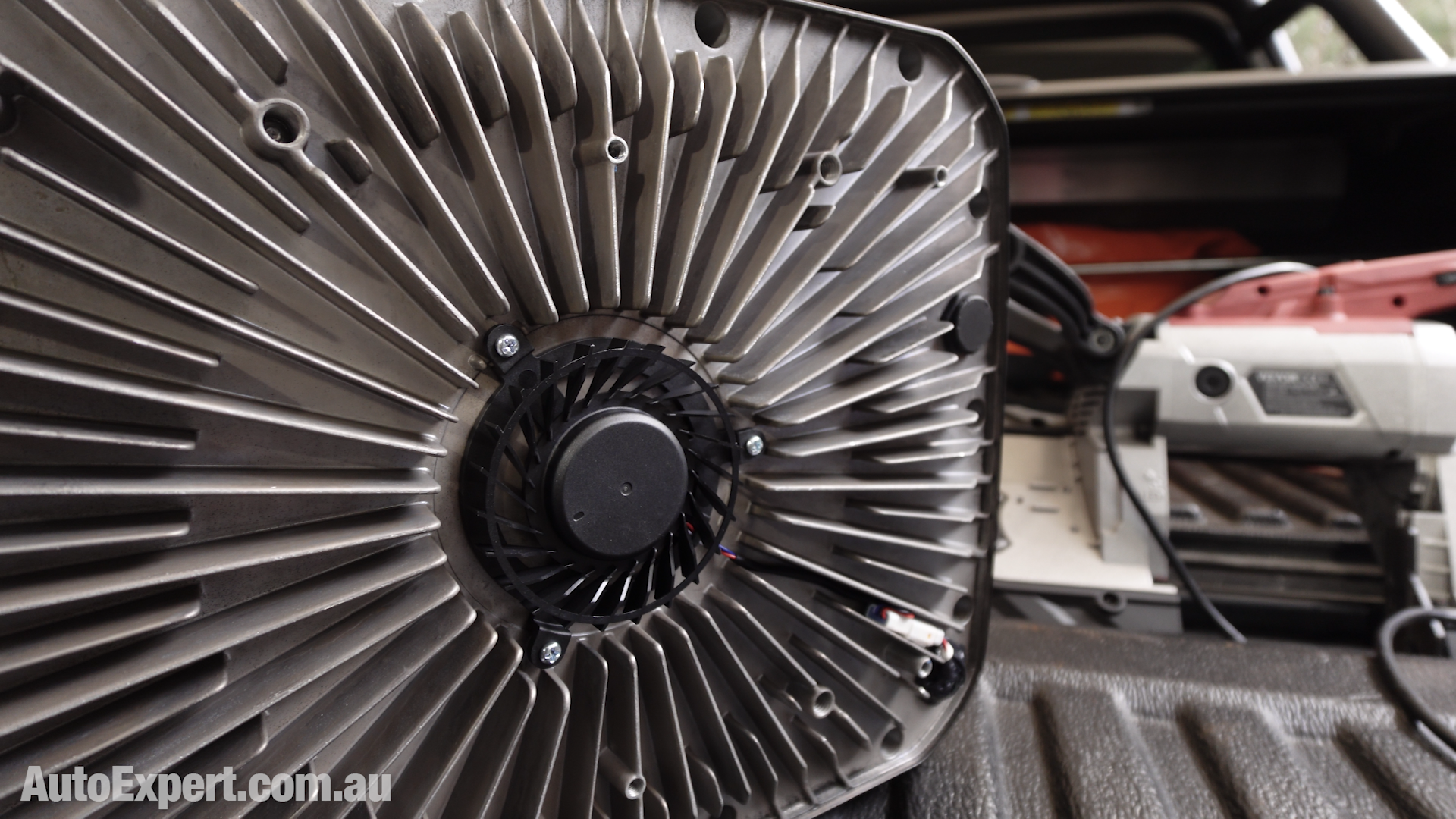
The thermal management is clever, and the washable heat-sink base is a good feature, but the intake is still down low where dust lives. That is not fatal, but it is worth noting.
And I would still love to find a 230V AC compressor that it runs successfully. That would make this thing even more useful for vehicle work, remote tyre inflation, and general shed duty.
Price and verdict
The Jackery Explorer 1500 Ultra is $1799 in Australia at the time of this review, with claimed two-to-three-business-day shipping.
That is not pocket change. But this is not a toy power bank for charging a phone at a picnic. It is a rugged, serious portable power station with meaningful AC output, LiFePO4 chemistry, fast charging, solar input, UPS functionality, and actual outdoor toughness.
The big story here is not just the capacity. It is the combination of capacity, output, ruggedisation and usability.
I hosed it. I dropped it. I ran workshop gear off it. I used it while charging. I simulated a blackout.
It kept working.
That is exactly what you want from this kind of equipment.
Learn more. (And use code AUTOEXPERTJC for an extra 5% off.)