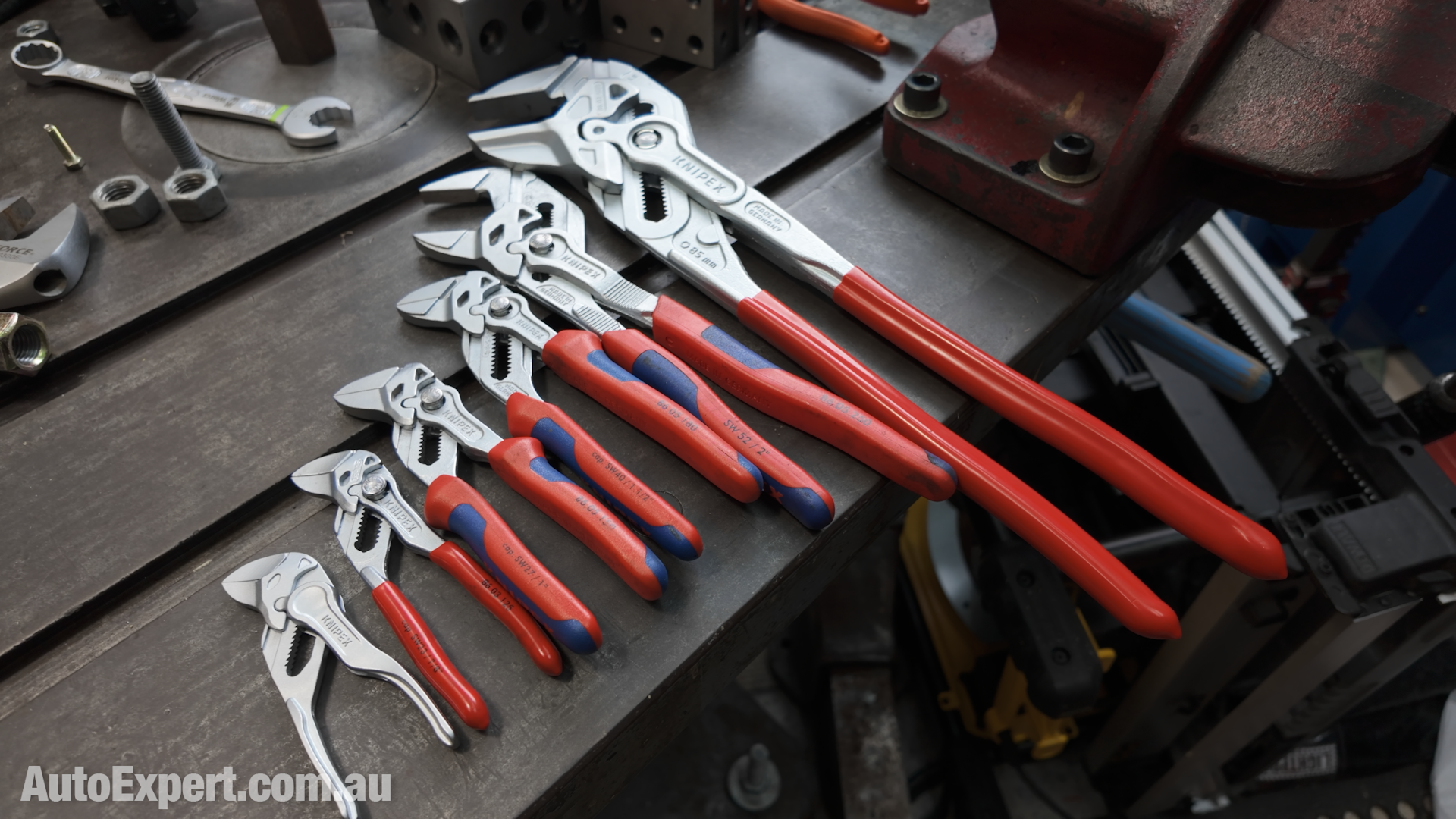
Pliers Wrench: The One Tool I’d Put in Every Car’s Roadside Repair Kit
Sometimes the difference between finishing a job and packing everything away in disgust is one oddly specific tool. I was reminded of this recently while helping my mate Brett Davis from Driving Enthusiast replace the rear brakes on his wife’s 2018 BMW X3.
The job involved the usual amount of German automotive IT hilarity, but the real mechanical problem arrived when we tried to reassemble the rear floating brake calipers. The caliper guide pins had very narrow milled flats on them — only about 6mm wide — and we needed to hold those flats while tightening the fastener.
None of my conventional spanners fitted. Not even a small adjustable spanner was thin enough to get in there. The alternatives were fairly unattractive: grind down an existing spanner (ie, butcher it for a one-off job) or manufacture a single-purpose tool from a piece of flat bar, using the mill (= burning time for a one-off).
Then I remembered the seven-inch Klein pliers wrench in my EDC bag. It smashed every wrench in the workshop and saved the day.
Legend.
The ones I'd buy
These are the models and sets I'd be looking at.
Klein Tools (budget friendly)
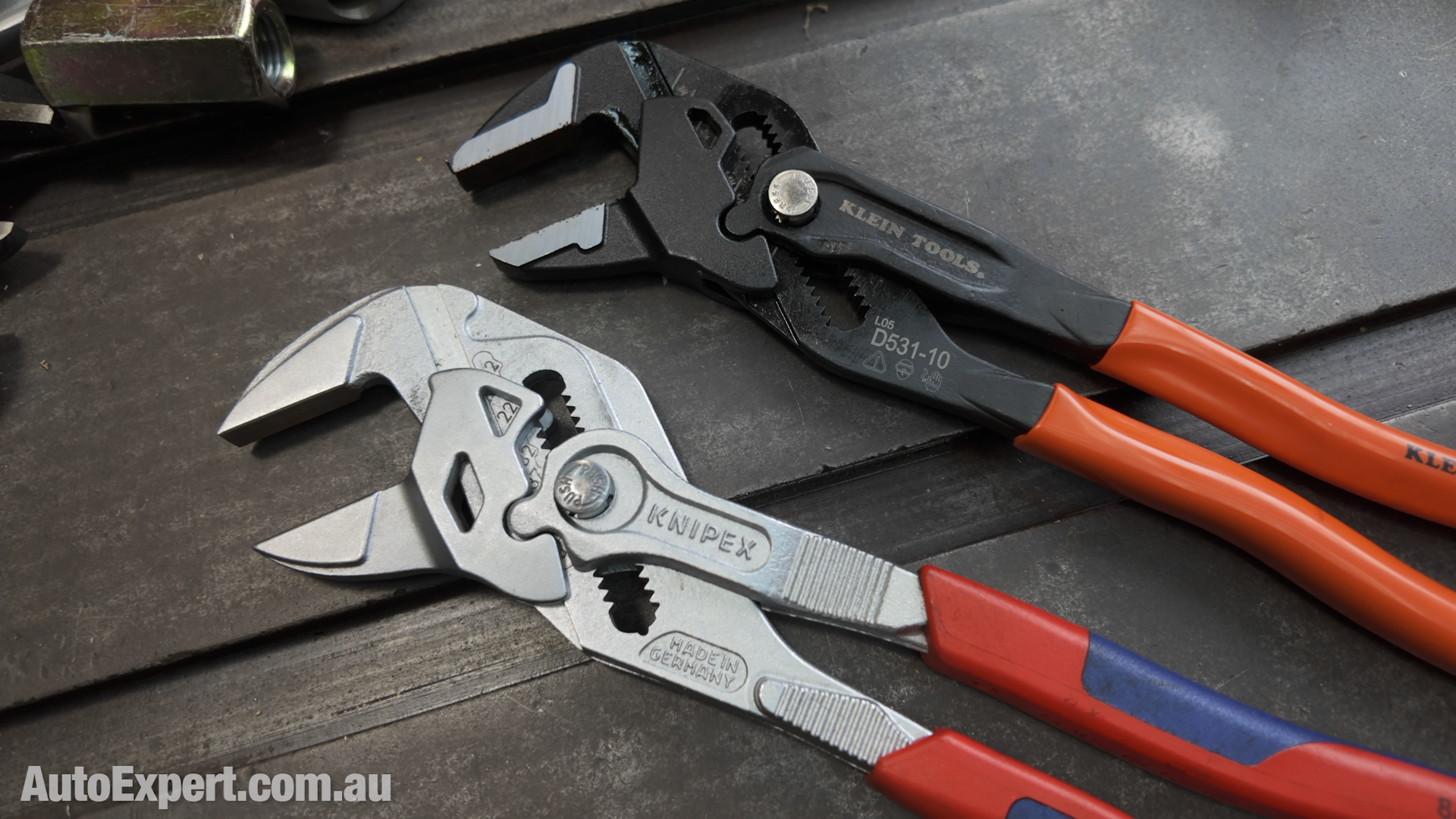
US-made Klein (top) versus German Knipex (below)
Klein 7-inch and 10-inch Pliers Wrench Set
Check price on Amazon - For most people, this is probably the sweet spot. You get the two sizes I consider most useful for portable tool kits.
Klein 7-inch, 10-inch and 12-inch Pliers Wrench Set
Check price on Amazon - A better option if you also want a larger tool for the workshop.
Fujiya (budget friendly; Japanese quality)
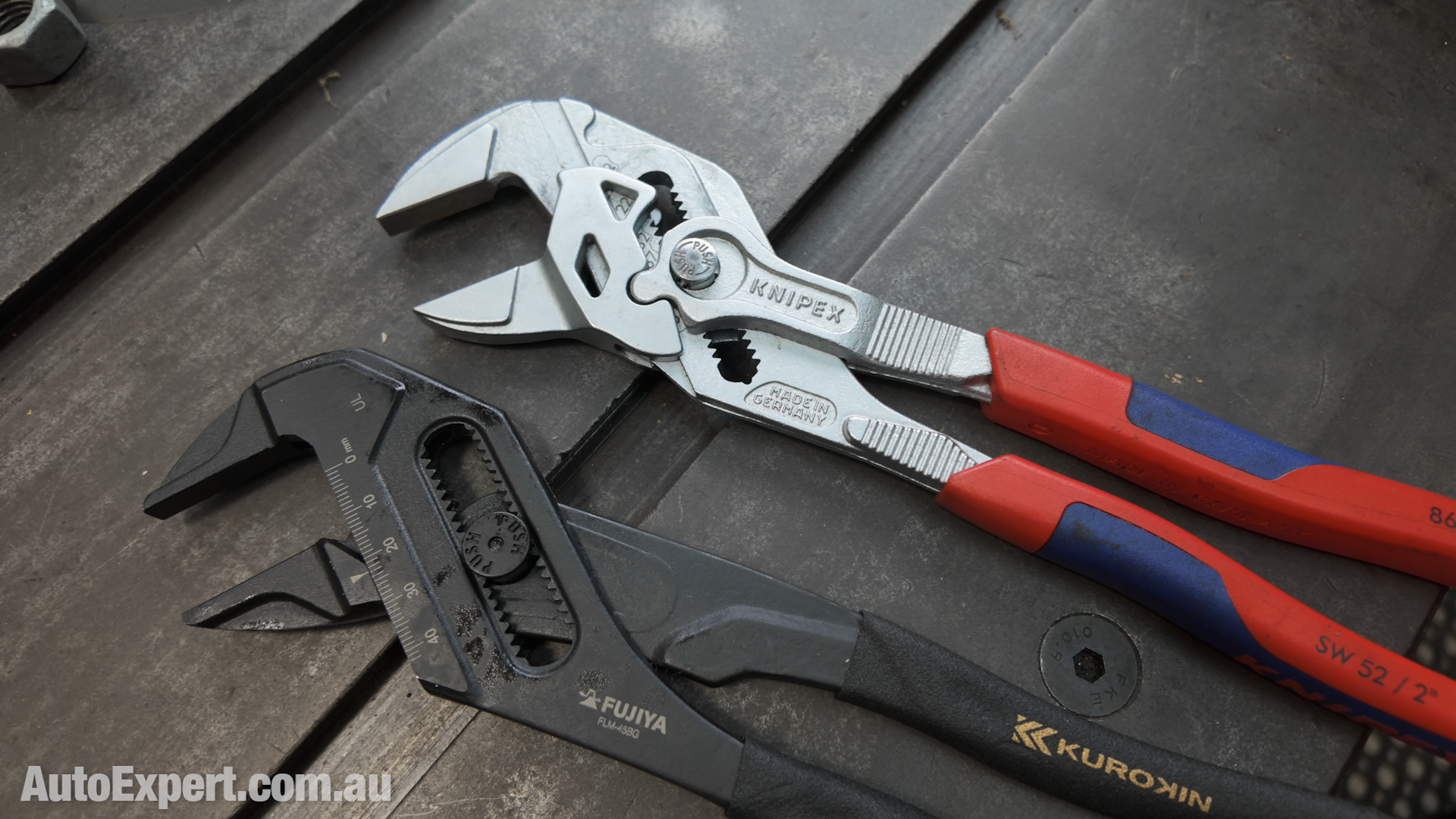
Japanese Fujiya (below) versus German Knipex (above)
Fujiya 7-inch Pliers Wrench
Check price on Amazon - A compact Japanese alternative for EDC and small tool kits.
Fujiya 10-inch Pliers Wrench
Check price on Amazon - The size I'd favour for the vehicle tool kit.
Fujiya Combination Pliers
Check price on Amazon - Another useful general-purpose option from Fujiya.
Knipex (expensive, but awesome - the OG pliers wrench)
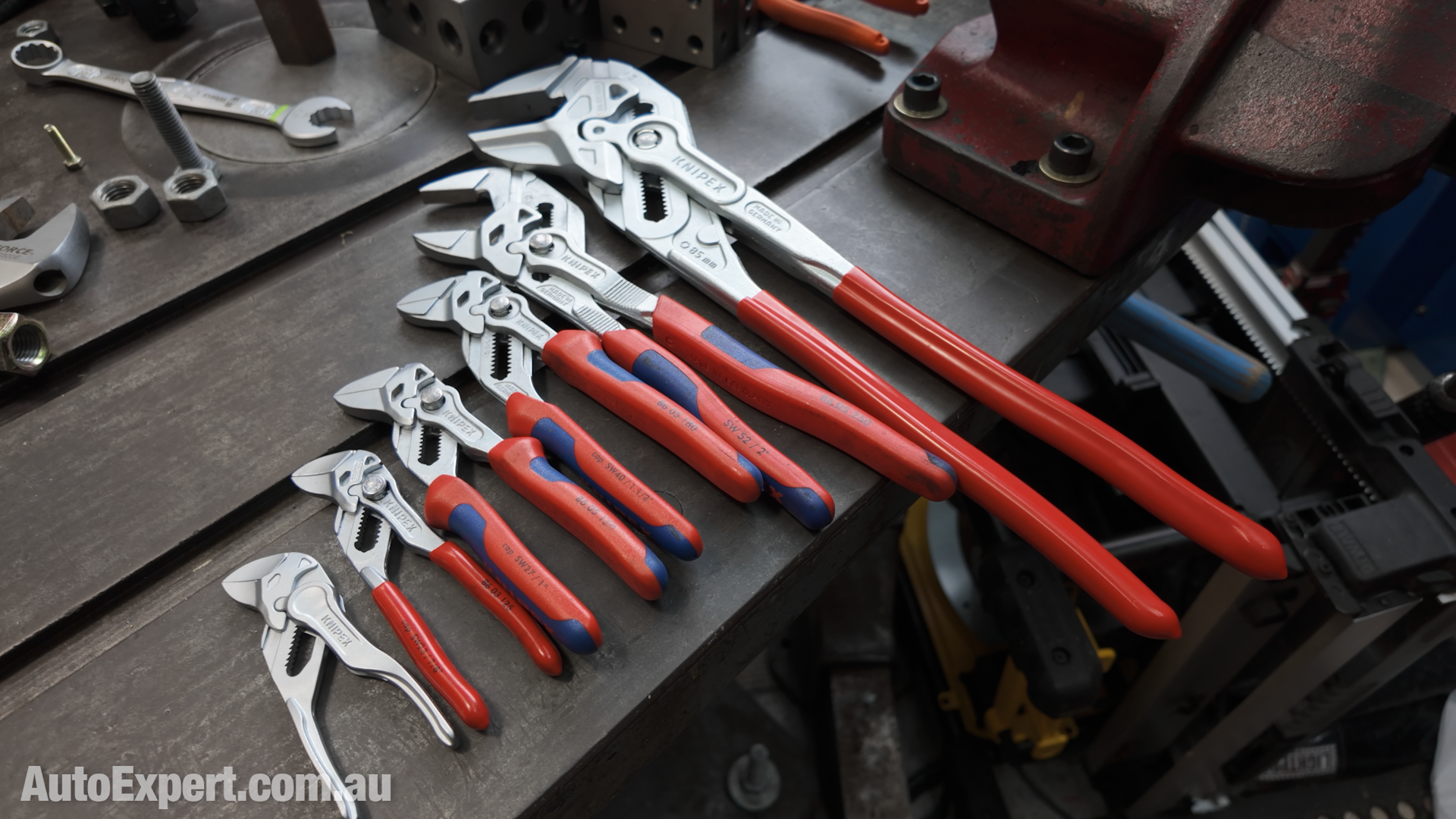
Knipex has the largest range of sizes, and the highest quality - but you certainly pay for it
Knipex Five-Piece Pliers Wrench Set
Check price on Amazon - The deluxe option if you want the full spread of sizes, but brace for impact on price.
Knipex 5-inch Pliers Wrench
Check price on Amazon - Tiny, beautifully made and extremely portable.
Knipex 7-inch Pliers Wrench
Check price on Amazon - Probably the most versatile compact size for EDC.
Knipex 10-inch Pliers Wrench
Check price on Amazon - An excellent general-purpose workshop and roadside size.
Knipex 12-inch Pliers Wrench
Check price on Amazon - More leverage and capacity for bigger jobs. Great ‘serious workshop’ tool.
What exactly is a pliers wrench?
A conventional pair of pliers is mechanically very simple: essentially two pieces of steel connected by a pivot.
A pliers wrench adds another layer of cleverness.
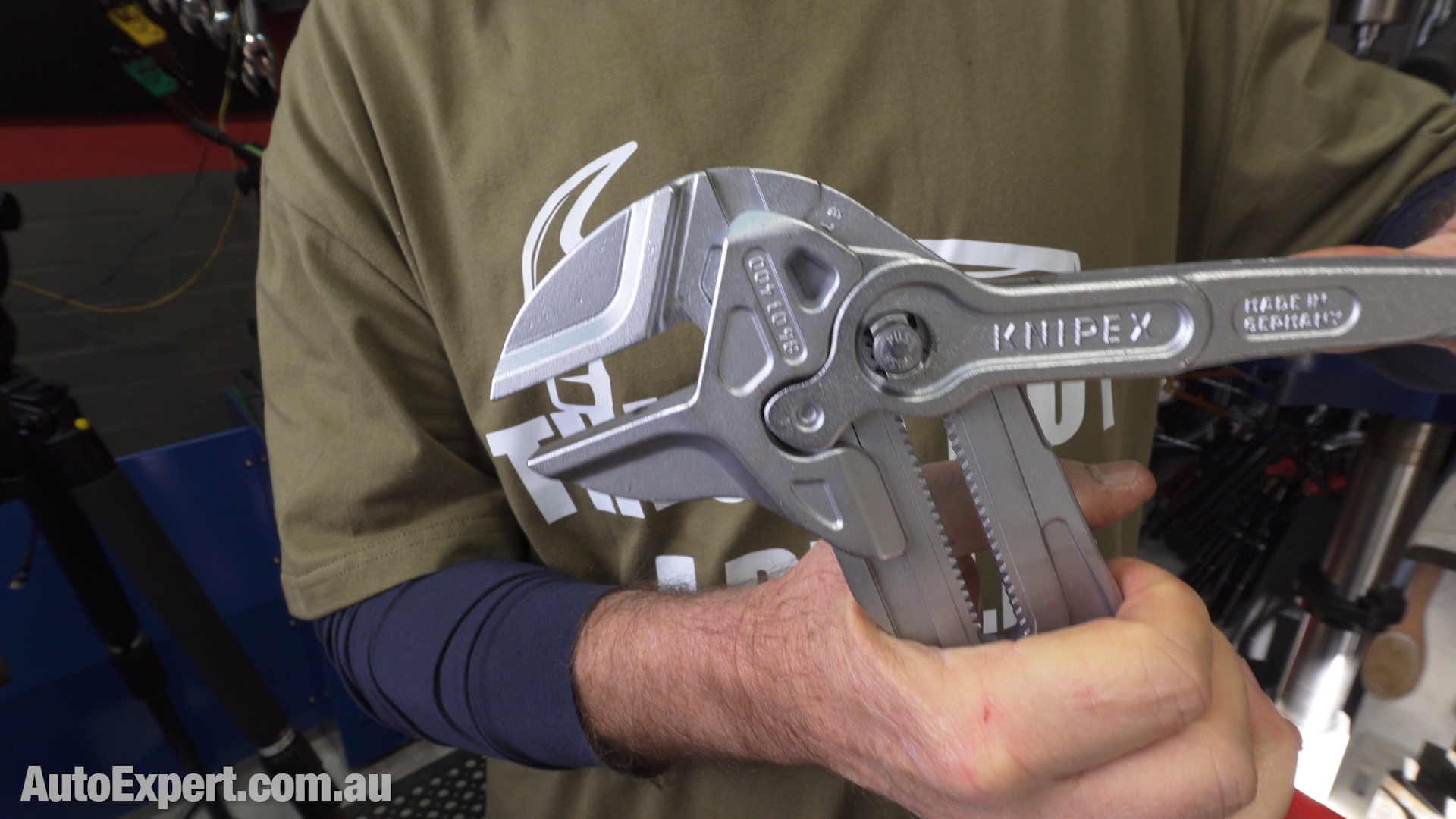
Pliers wrench boosts grip with an adjustable cam-operated dynamic jaw that stays parallel, requiring a complex, three-piece design, unlike traditional two-piece pliers
Instead of serrated jaws pivoting towards each other, you get smooth, parallel jaws, an adjustable slide mechanism and a compound leverage arrangement.
The result is essentially a highly adjustable parallel-jaw wrench that you squeeze with your hand.
That gives you several important advantages over an ordinary adjustable spanner.
The jaws stay parallel.
They grip harder as you apply more force.
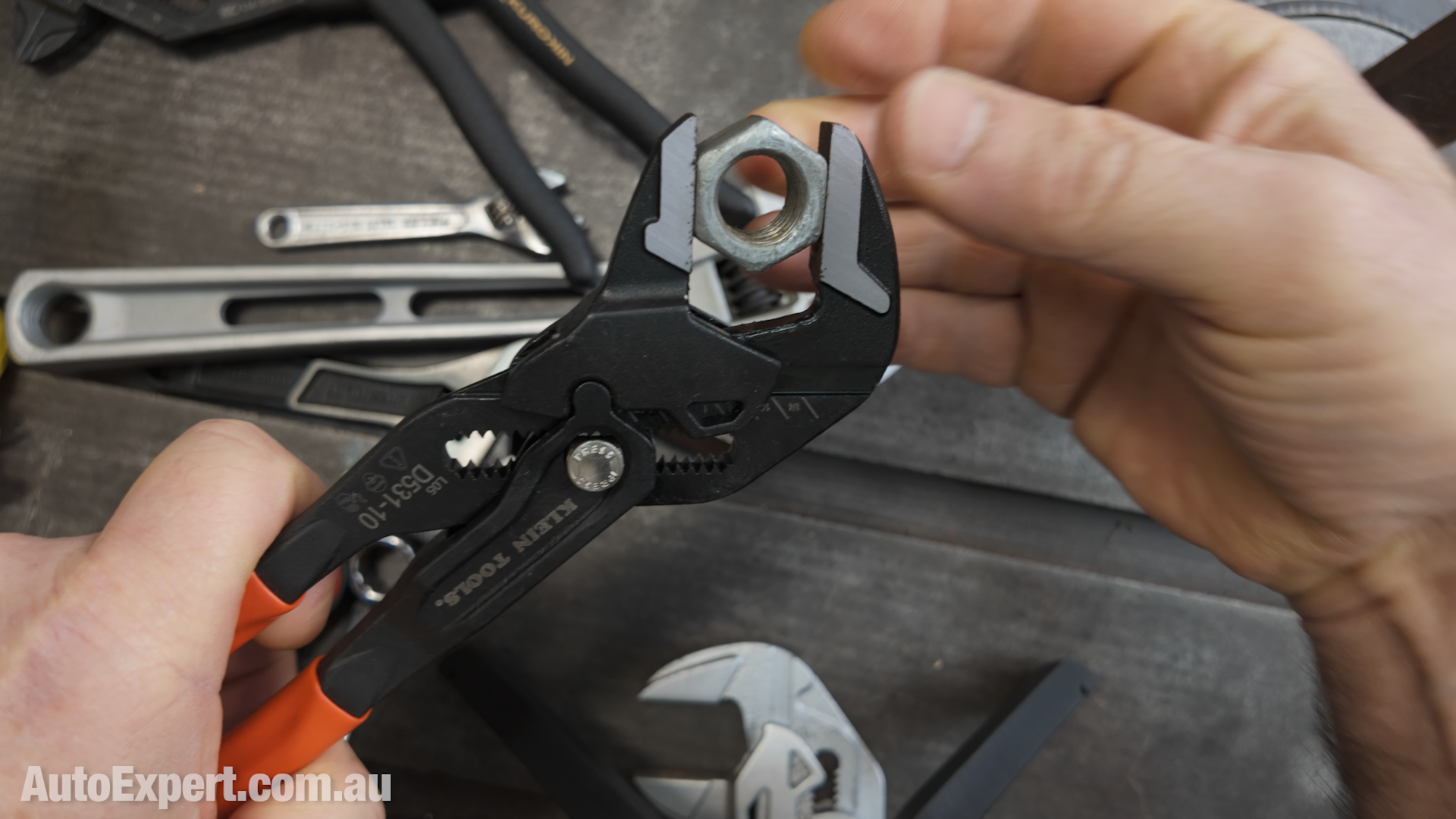
The smooth jaws don’t damage the nuts (or their protective coating) and they remain tight and parallel, reducing the risk of rounding over
They don't have teeth to mutilate nuts, bolts or plated fittings.
And because the mechanism multiplies the force from your hand, you can generate significantly more clamping force than you could with conventional pliers.
This is why they work so well on awkward fasteners.
Why I like them for EDC and roadside tool kits
The objective with an EDC tool kit isn't to carry the world's best collection of tools. It's maximum capability expansion for minimum weight and volume.
Exactly the same principle applies to the emergency tool kit in your car.
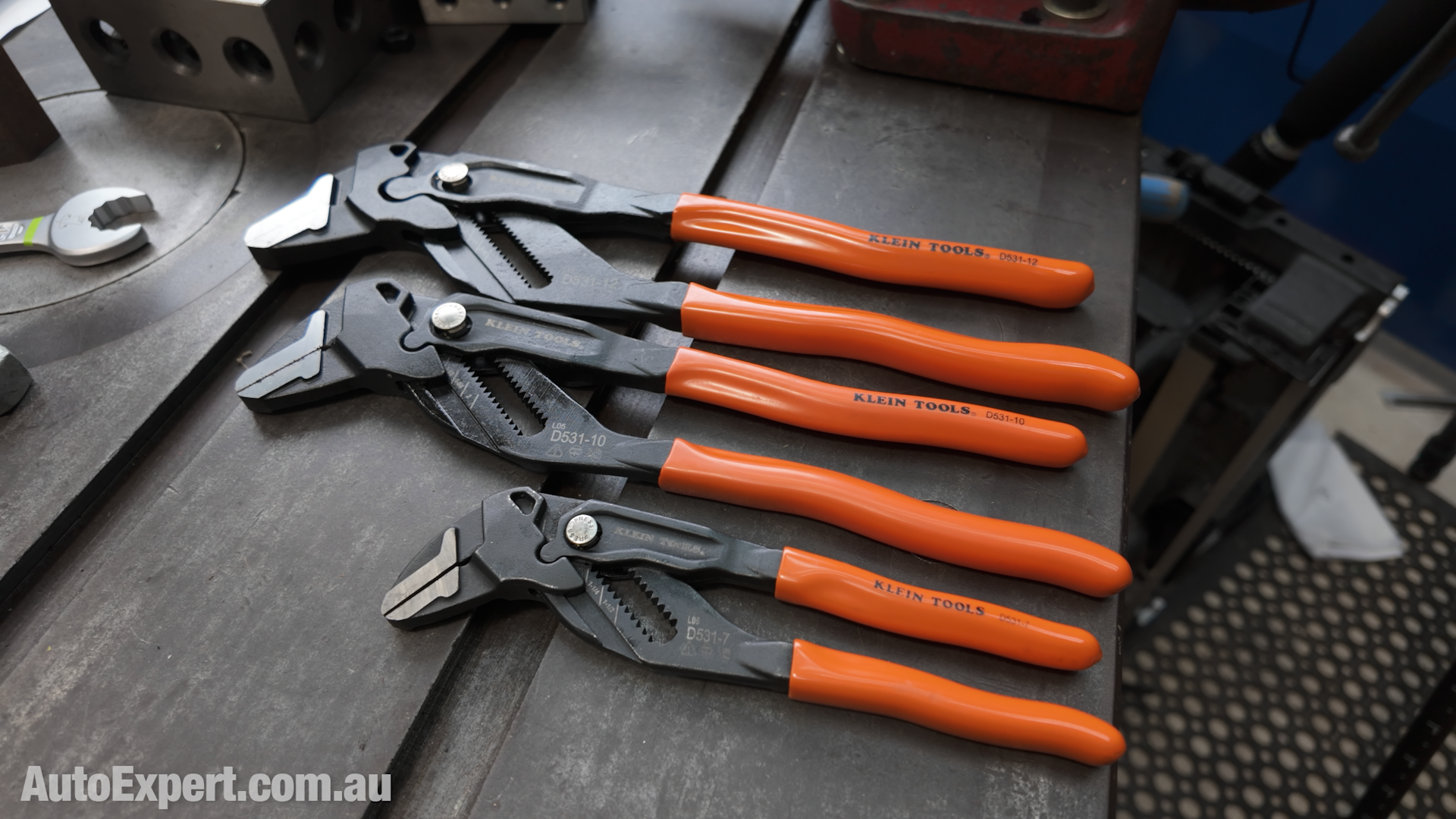
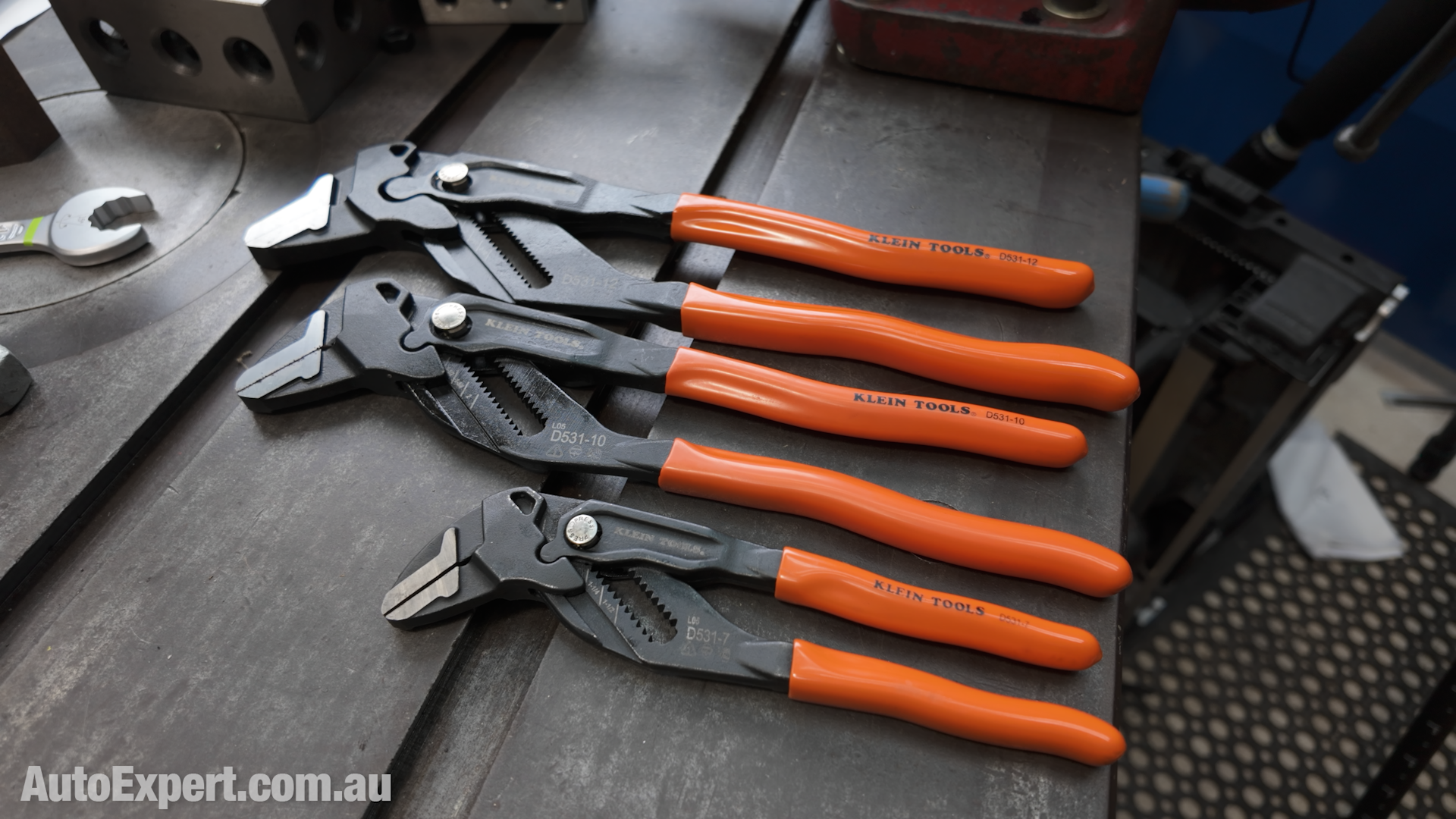
To me, this three-piece set from Klein is awesome because A) it won’t break the bank, and B) it gives you the big set for the car or workshop, with the middle set going in the workshop/car. while the small set can go in your EDC/go-bag (very useful if you are the ‘fix it’ bloke among your family and friends)
Your workshop can contain beautiful dedicated sockets, ring spanners, flare-nut spanners, ratchets, breaker bars and whatever other industrial jewellery you desire. Your car can't. Every tool has to earn the space it occupies. And this is where the pliers wrench becomes extraordinarily useful.
A seven-inch pliers wrench is physically quite compact, yet it can deal with fasteners from roughly M5 territory — about 8mm across the flats — all the way through to nuts and fittings exceeding 40mm, depending on the particular model.
Obviously it doesn't care whether the fastener is metric or imperial. One tool therefore covers a colossal range of sizes.
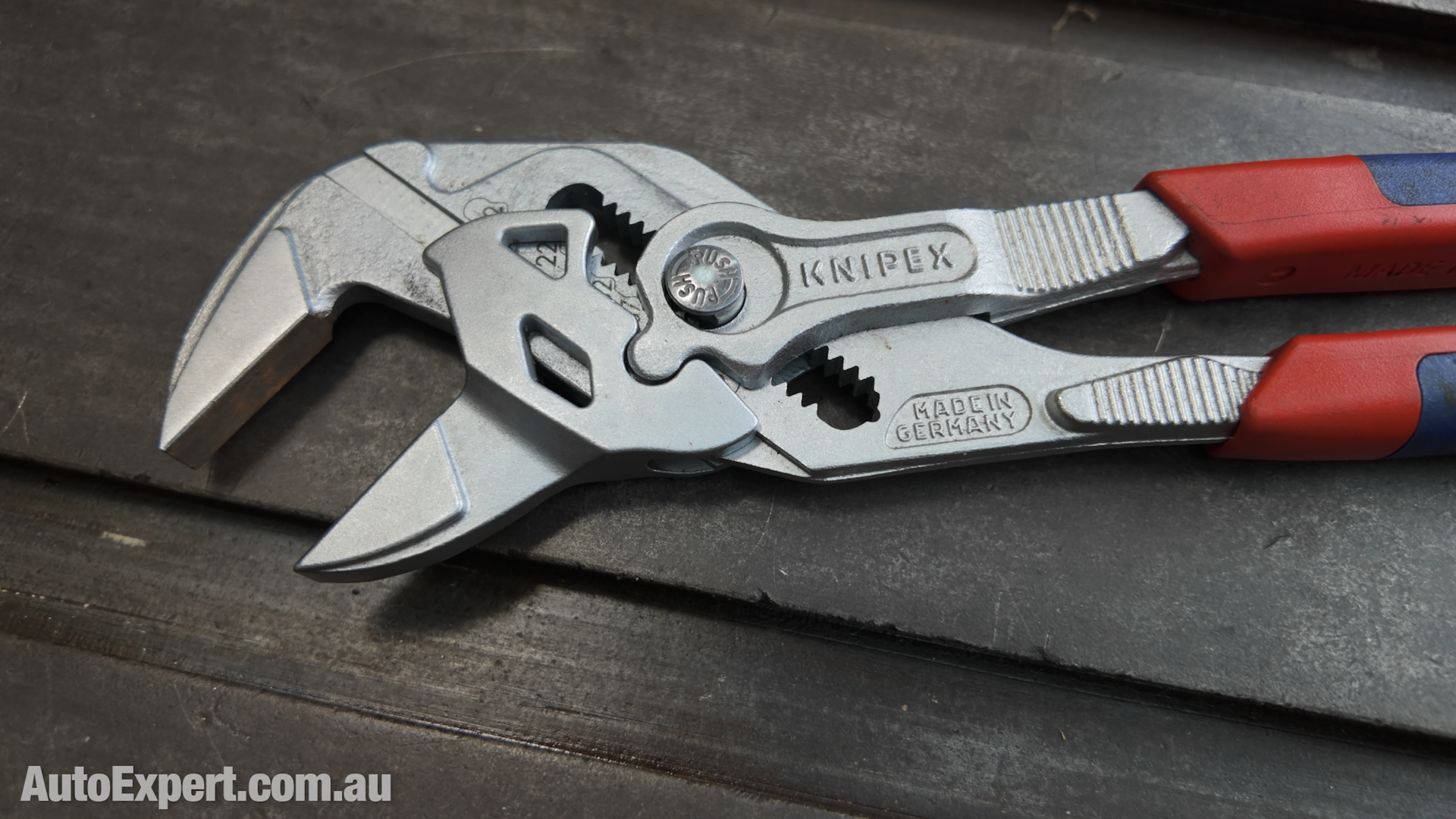
Don’t confuse them with multigrips, which are generally aq butcher’s tool for automotive (and other mechanical fitting) work. The parallel jaws and cam operation are a deadset game-changer.
It's also capable of doing jobs that aren't really wrench jobs at all.
You can use one as conventional pliers.
You can grip plumbing fittings without chewing them to pieces.
You can hold sheet metal.
You can squeeze components together.
You can use it for small pressing and straightening jobs.
You can even hold the opposite fastener while you start a nut by hand — something an adjustable wrench is particularly poor at because you need one hand just to stop the damn thing falling off.
For a compact kit, that's tremendous capability density.
Pliers wrench versus adjustable spanner
I own adjustable spanners. They have their place. But mechanically, the pliers wrench is simply a better answer to many of the same problems.
An adjustable spanner relies on the fit between its fixed jaw, movable jaw and worm mechanism. Under load there is inevitably some clearance, and the wrench tends to loosen slightly as you work. That's when an adjustable wrench starts rounding corners and earning its traditional workshop nickname.
A pliers wrench behaves differently. Because you're actively squeezing the handles, the jaws clamp onto the fastener. The harder you lean on the tool, the harder it grips. That means vastly less tendency to spread the jaws and butcher the hex.
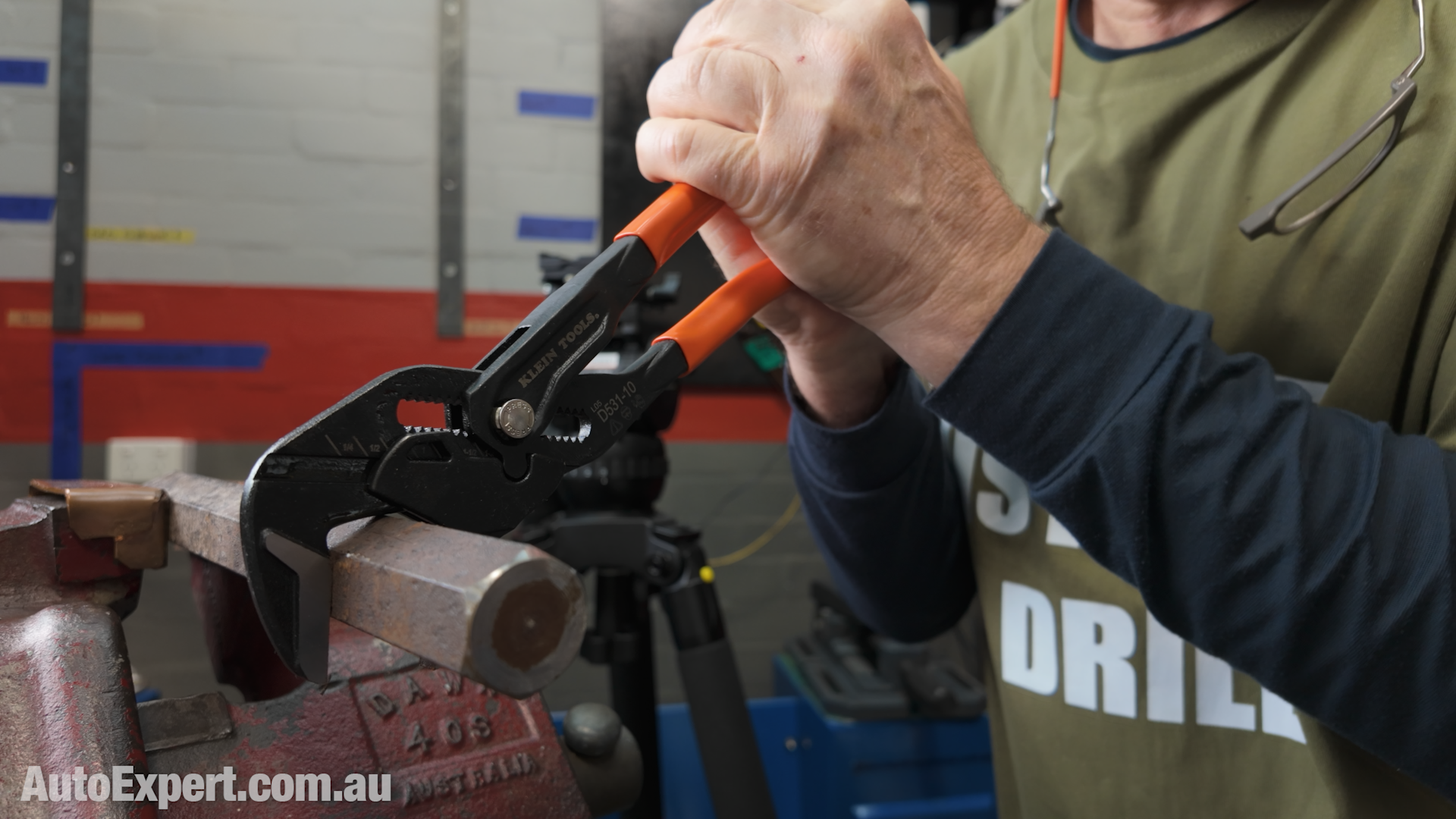
The harder you lean on these, the harder they grip. (This is the exact opposite of an adjustable spanner. The harder you lean on those, the further the jaws spring apart, increasing round-over potential.)
The smooth jaws are also excellent on plated, anodised, brass and plumbing fittings where you don't want serrations digging into the surface.
There are plenty of jobs where you'd still prefer the correct socket or ring spanner. But when you don't know what problem you're going to encounter — which is essentially the definition of an EDC or roadside repair situation — versatility matters more than perfection.
Knipex versus Klein versus Fujiya
Knipex is the benchmark here. Their Pliers Wrench is beautifully manufactured, extremely refined and available in a huge range of sizes. If you're buying tools for the main workshop and you simply want the best version, it's difficult to argue against Knipex.
But there is another question:
How much are you prepared to pay for the last few per cent of refinement?
I've also used pliers wrenches from Klein Tools and Fujiya, and both are genuinely good tools. In fact, it was the seven-inch Klein that saved the BMW brake job. It didn't solve the problem 92 per cent as effectively as the Knipex. It solved it. Job done.
The principal design difference you'll notice is that Knipex and Klein use a visible external slide mechanism, whereas Fujiya packages its adjustment mechanism internally. They feel slightly different in operation, but all three achieve essentially the same objective: smooth parallel jaws, substantial mechanical advantage and a huge adjustment range.
This is where tool snobbery can become expensive. If a boxed set of five Knipex pliers wrenches costs roughly $500 more than the alternatives, you have to ask whether those additional dollars would generate more practical capability if spent somewhere else in your tool kit.
For an EDC or vehicle kit, I think the answer is often yes.
My preference would be:
Knipex for the main workshop toolbox if you want the premium option.
Klein or Fujiya for the car and EDC kit.
Although, frankly, the Klein and Fujiya tools are good enough that I'd have no problem using them in the main workshop either.
Why the 7-inch and 10-inch sizes make the most sense
If I were assembling a minimalist tool kit, I'd concentrate on two sizes.
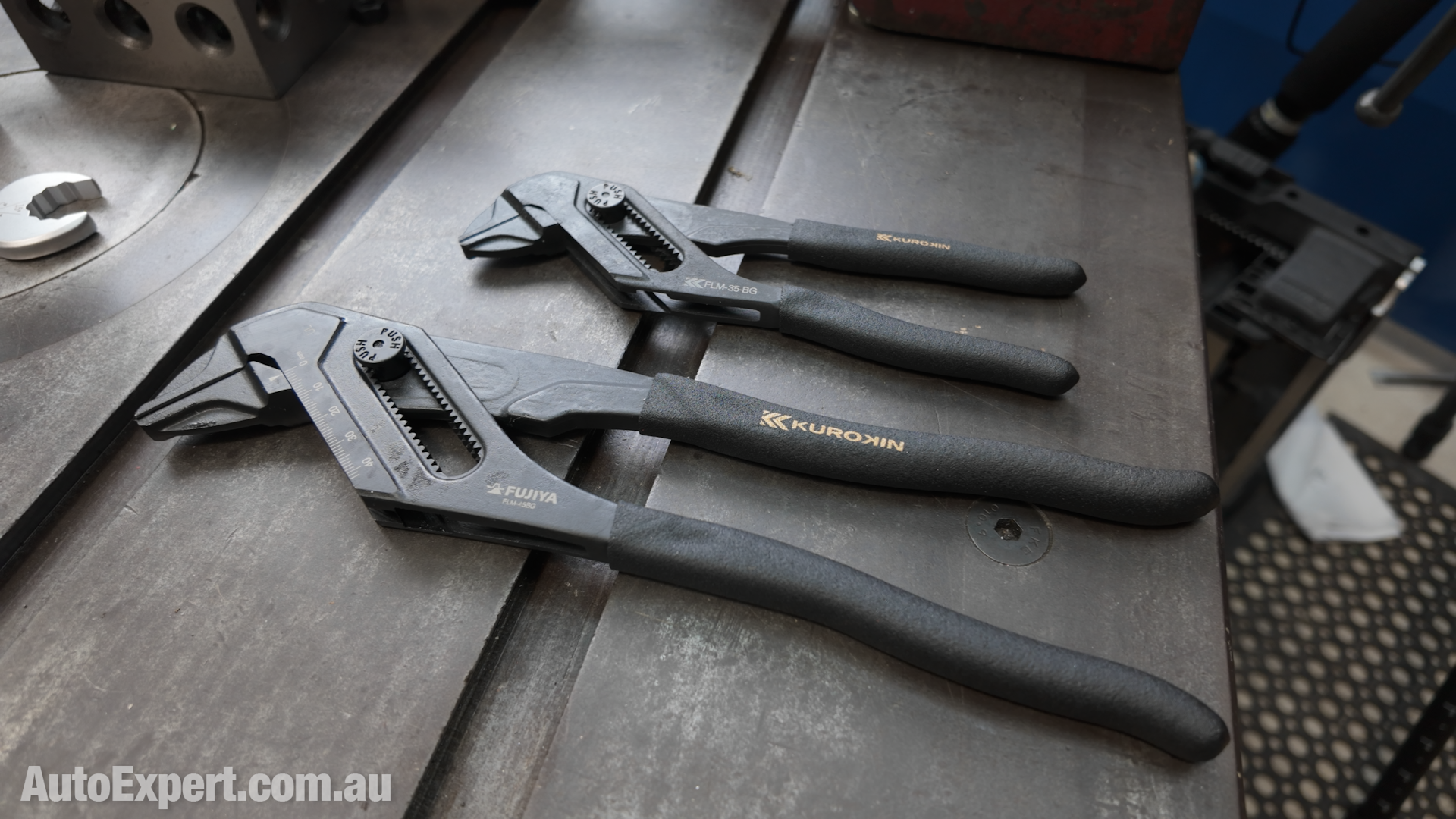
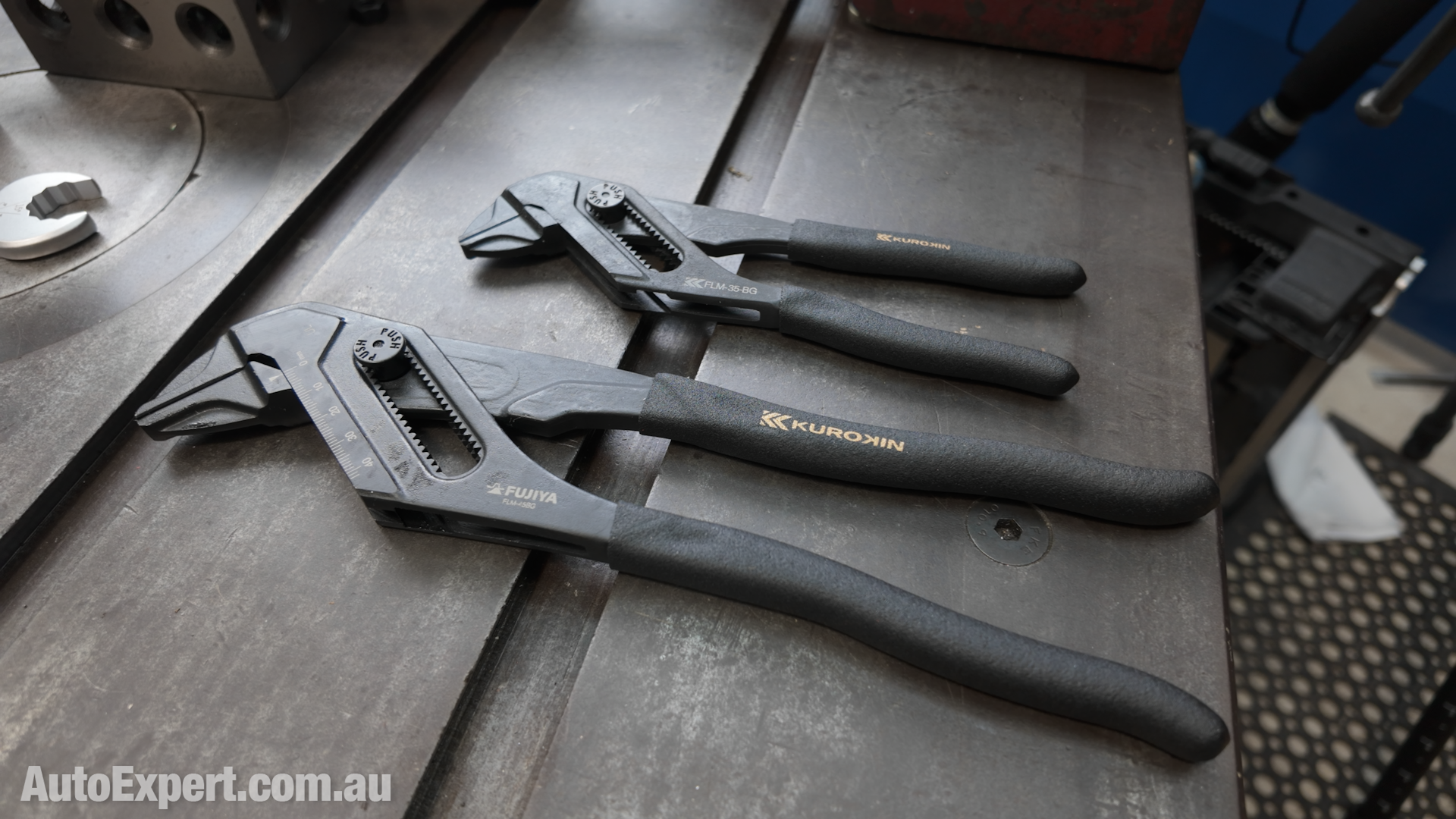
Seven-inch Fujiya (top) is almost pocketable - serious asset in the field. 10-incher (bottom) is a serious asset in the boot of your car (or workshop).
Seven-inch pliers wrench
This is the EDC sweet spot. It's compact enough to carry without becoming ridiculous, but it still opens far wider than you might expect. It can deal with a surprisingly large range of automotive, household and workshop fasteners while also functioning as general-purpose smooth-jaw pliers.
And, as the BMW demonstrated, the thin jaws can reach places where significantly larger conventional spanners simply cannot.
Ten-inch pliers wrench
This is the one I'd put in the car.
You gain considerably more jaw capacity and leverage without turning the tool into something cumbersome.
For roadside repairs, trailers, caravans, plumbing fittings and general mechanical improvisation, it's extraordinarily useful.
Consider something as simple as a conventional Australian 50mm towball. A common 3.5-tonne towball uses a 7/8-14 UNF thread with a 1-5/16-inch nut. That's about 33.34mm across the flats. A 33mm metric socket may therefore not fit, while many ordinary metric socket sets jump directly from 32mm to 35mm. (And that’s only in 3/4” drive sets - which hardly anyone I know carries for roadside repairs, except on Kenworths…)
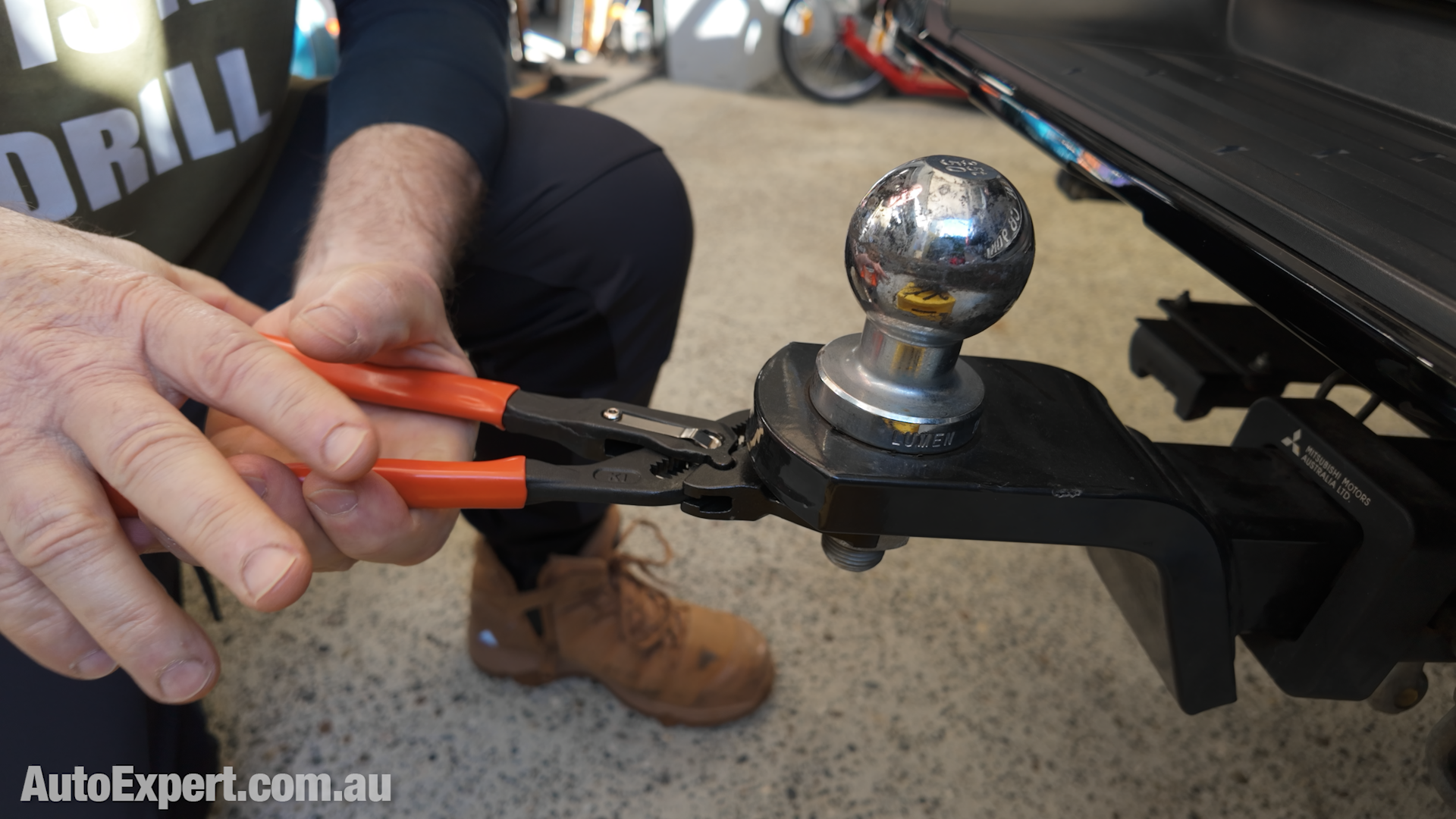
In the absence of carrying a 1-5/16 socket or ring spanner in the boot, the 10-inch Kleins are a serious roadside asset for (let’s call it) unexpected tightening. And let’s be realistic: you’ve probably got your act together, so you’ll probably be rescuing/assisting someone who hasn’t…
A 10-inch pliers wrench simply doesn't care. That's exactly the sort of annoying real-world problem these tools are brilliant at solving.
The bottom line
If you've already got a workshop full of sockets and spanners, a pliers wrench might look like just another shiny object designed to separate you from your money. It isn't. It's one of those relatively rare tools that genuinely expands what you can do. In a workshop, that means solving awkward problems quickly.
In an EDC or roadside kit, the advantage is even greater because one compact tool replaces — imperfectly, admittedly — an enormous range of dedicated tools.
My own hierarchy is pretty simple: If you want the nicest one for the workshop, buy the Knipex. If you're building an EDC or vehicle kit where price, size and versatility matter, buy the Klein or Fujiya. And if you can't bring yourself to spend Knipex money at all, I wouldn't lose any sleep over it. The cheaper tools are not disposable rubbish.
The Klein saved the BMW brake job. Ultimately, that's the only test that really matters.
These are the models and sets I'd be looking at.
The ones I'd buy
These are the models and sets I'd be looking at.
Klein Tools (budget friendly; US-made)
Klein 7-inch and 10-inch Pliers Wrench Set
Check price on Amazon - For most people, this is probably the sweet spot. You get the two sizes I consider most useful for portable tool kits. The quality is good - not ‘Knipex’, but dependable and feels pretty bomb-proof
Klein 7-inch, 10-inch and 12-inch Pliers Wrench Set
Check price on Amazon - A better option if you also want a larger tool for the workshop. The bigger set really does move you into ‘large fastener’ territory generally occupied by oversized wrenches and 3/4-drive sockets
Fujiya (budget friendly; Japanese quality)
Fujiya 7-inch Pliers Wrench
Check price on Amazon - A compact Japanese alternative for EDC and small tool kits. Fujiya’s take on these inverts the dynamic jaw mechanism - it’s on the inside of the slideway, whereas Klein and Knipex have it on the outside.
Fujiya 10-inch Pliers Wrench
Check price on Amazon - The size I'd favour for the vehicle tool kit. Japanese tools are often understated and slick - and these are no exception.
Fujiya Combination Pliers
Check price on Amazon - Another useful general-purpose option from Fujiya. These have a brilliant bevel on one face which is ideal for leverage (nail- and pin-pulling leverage).
Knipex (expensive, but awesome - the OG pliers wrench)
Knipex Five-Piece Pliers Wrench Set
Check price on Amazon - The deluxe option if you want the full spread of sizes, but brace for impact on price.
Knipex 5-inch Pliers Wrench
Check price on Amazon - Tiny, beautifully made and extremely portable.
Knipex 7-inch Pliers Wrench
Check price on Amazon - Probably the most versatile compact size for EDC.
Knipex 10-inch Pliers Wrench
Check price on Amazon - An excellent general-purpose workshop and roadside size.
Knipex 12-inch Pliers Wrench
Check price on Amazon - More leverage and capacity for bigger jobs. Great ‘serious workshop’ tool.
Disclosure: I purchased these products myself with my own money. The manufacturers and sellers had no involvement in this review and did not pay me, supply the products, approve the content or have any editorial control over what I say.
Some links in this article/video description are Amazon affiliate links. If you purchase through one of these links, I may receive a commission at no additional cost to you.
As an Amazon Associate I earn commissions from qualifying purchases.