
Haval H6GT PHEV review and buyer's guide
The Haval H6GT PHEV offers spicy electric performance with modern family SUV levels of comfort and practicality. But let’s see if Haval can offer you this plug-in hybrid five-seater at a price that will allow you to forgive its faults.
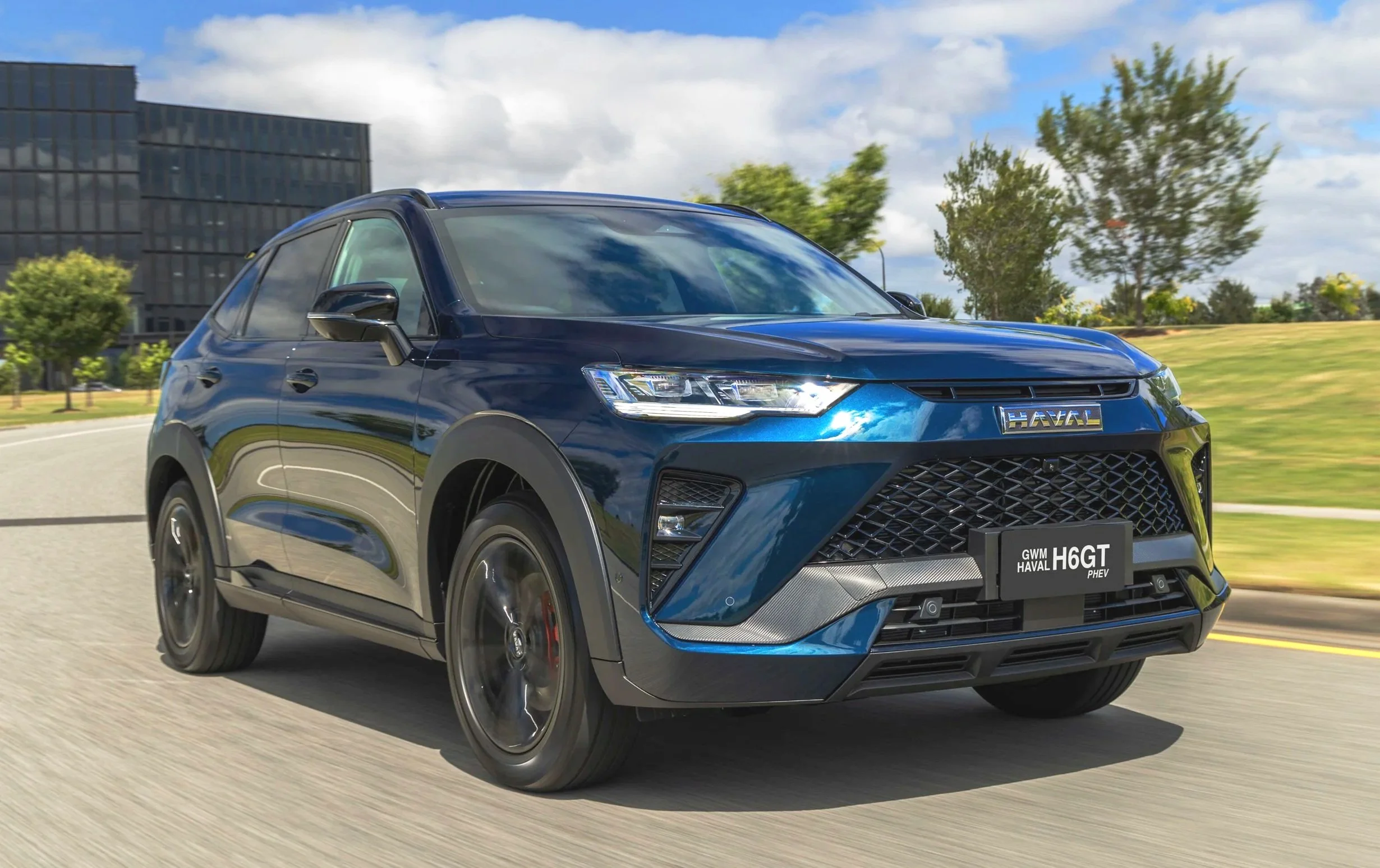
The Haval H6 GT PHEV is a plug-in hybrid medium SUV that offers outrageously good value both as an alternative to combustion-only vehicles, but also as a five-seat family vehicle.
While it might be priced very aggressively for what it offers, it remains far from the perfect vehicle and in this report you’ll get a balanced appraisal on why you should and should not consider a Haval H6 GT PHEV.
Haval, if you’re not aware, is part of the GWM (formerly Great Wall Motors) brand and it is a Chinese brand selling cars here in Australia for over 15 years, it’s just not until recently that they’ve entered our top 10 brands for sales volume.
The H6 GT PHEV you’re seeing here is basically the first version of this vehicle sold in Australia, which dates back about eight years. This is despite the regular H6 model actually going back 10 years and currently selling in its second generation. This is so you have some context to how new or old this brand and model is.
GWM (incl. Haval) sold over 52,800 vehicles in 2025, including over 13,200 H6 units in their varying forms, either petrol-only, hybrid or plug-in hybrid. For comparison, Hyundai Tucson managed over 20,000 sales, Mazda CX-5 and Mitsubishi Outlander both achieved 22,000 each respectively, and the RAV4 sold just shy of 52,000 units.
But in 2025, only the Outlander was available as a plug-in hybrid. So given that SUVs sold 733,831 units in 2025, and of those, 312,666 were plug-in hybrid (about 4 per cent), we can deduce that approximately 4 per cent of Outlander’s 22,000 sales were plug-in hybrids. That’s about 880 sales for a vehicle costing between $65,000 and $74,500.
Whereas 4 per cent of 13,217 H6 sales is 528 sales, which would be concerning for the notionally bigger brand Mitsubishi given the H6 GT PHEV is only in its first iteration and starts at just $41,000 driveaway. That’s a $24,000 saving and the ‘get what you pay for’ expression is a bit hollow in the context of the H6. Why is that?
It’s because this is actually a pretty good vehicle on most fronts. The level of standard equipment is high, the way it drives is acceptable against its rivals (as in, it doesn’t do anything galling like Kia’s over-sensitive hyper-paranoid auto-braking system that jams on the brakes when a passing car has already finished passing you), and it goes like the clappers.
But it also doesn’t do a great deal wrong to the point you would scratch it off your list of new medium SUVs to investigate and/or test drive. That does not mean it isn’t annoying or disappointing in ways, which we’ll get to.
As you go through the list of features below, see if there’s anything missing, such as ventilated (cooled) seats, which might make you reconsider paying another $20,000 for in order to have it in an Outlander or a RAV4 plug-in hybrid.
Click here to download the official Haval H6 GT PHEV spec sheet here >
FEATURES & PRICING
H6GT Ultra PHEV | $44,450 driveaway approx | 1.5L
DRIVER
Column electronic gear selector
10.25” digital instrument cluster
4-way steering column adjustment
Auto electronic park brake + auto hold
Automatic rain-sensing front wipers
Multi-function steering wheel
Push-button start
Adaptive & Intelligent cruise control
SAFETY
Front-centre airbag
360-degree camera system, 180-degree ‘transparent chassis’ view
Rear parking sensors
Tyre pressure monitoring system (TPMS)
Follow me home lighting
Trailer sway mitigation
ISOFIX child restraints
Hill ascent / descent control
Adaptive cruise control
Collision Mitigation (lane: keeping, departure warning, centring and emergency)
AEB junction assist
Front Collision Warning (FCW) (pedestrian + cyclist)
Traffic sign recognition, traffic jam assist, ‘intelligent turning’, ‘smart dodge’
Driver fatigue monitoring
OUTSIDE
19-inch black alloy wheels
LED: headlights (auto), DRLs, high beam (auto), taillights, rear fog light
Door mirrors (auto-fold, heated)
Puddle lamps
Smart keyless entry
Kick sensing electric tailgate (manual tailgate: petrol Lux)
INSIDE
14.6-inch touchscreen with wireless Apple CarPlay and Android Auto
Bluetooth, DAB+, voice command
8 speaker audio (hybrid/petrol)
Front USB outlets x2, rear USB outlets x2
5oW wireless phone charger
Telematics (PHEV only)
Microfibre leather steering wheel
Comfort Tek leather seats
Driver 6-way electric adjustable seat
Front passenger 4-way manual adjustable seat
Dual zone climate control with rear vents
Power windows – auto windows + anti pinch (all)
Sun visors with illuminated vanity mirror
Auto dimming rear view mirror
Front 12v socket
Luggage area 12v socket
Cargo cover
Specifications and price may change at any time: always check before signing any contract or paying a deposit.
INTERIOR
The interiors of an H6 GT PHEV is not as good as the build quality or the effortlessness of a Kia EV5, but it’s impressively close.
And it needs to be said that the the whole space feels very close to anything from Toyota, Mitsubishi or Subaru - without question. There are only the faintest of creaks or clicks and they’re usually on a cold morning as joins and panels expand.
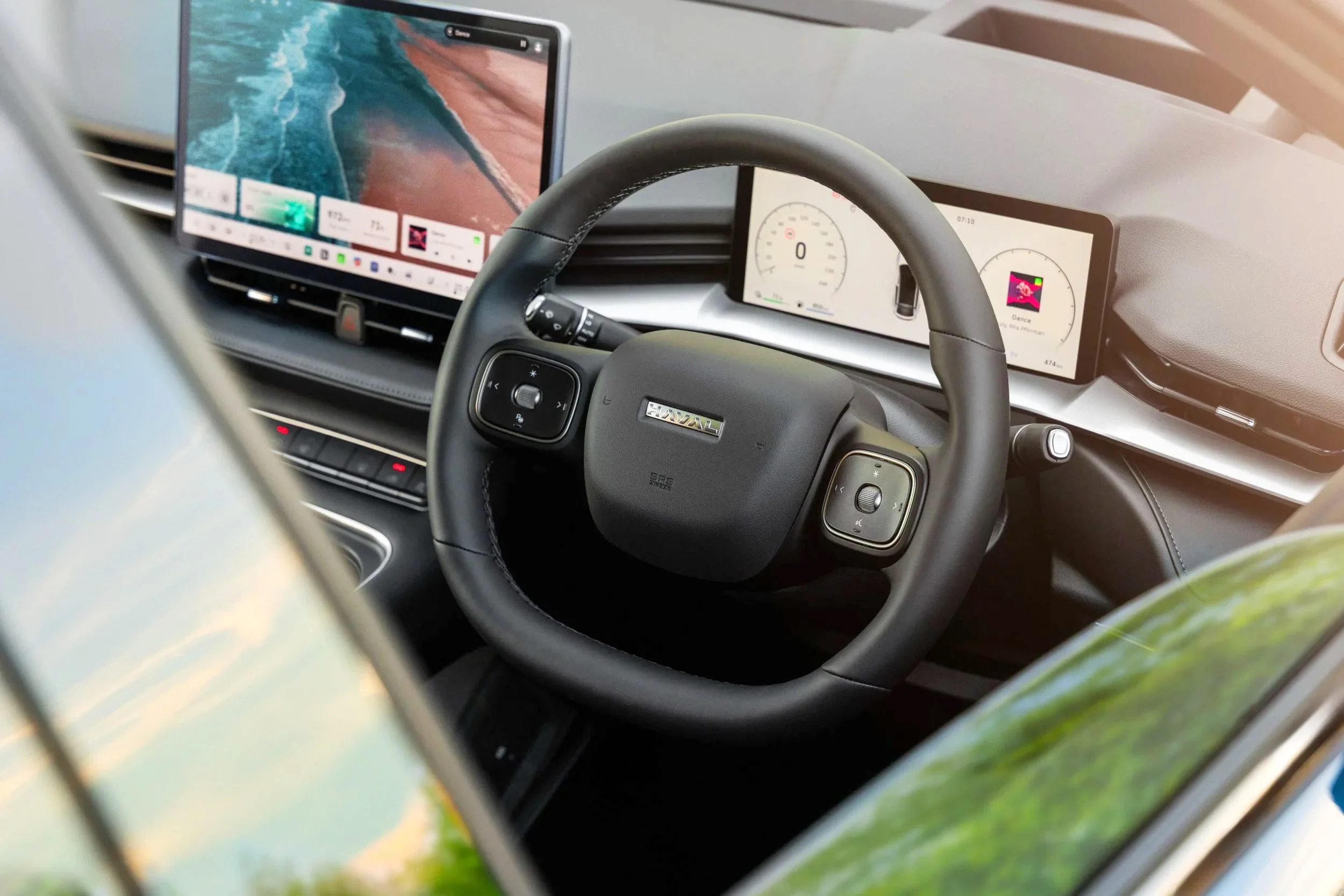
The enormous 14.6-inch infotainment screen is fixed in the landscape position, which is okay, but it is inelegantly just stuck there. It dominates the cabin.
A susbtantial number of the vehicle’s functions, besides the cruise and media buttons on the steering wheel, is operated via the screen. There are small HVAC buttons in a single row forward of the centre console, but the majority of it is in the screen.
This is unfortunate because it’s a pretty clunky graphics and user interface, however ambitious you can see it trying to be.
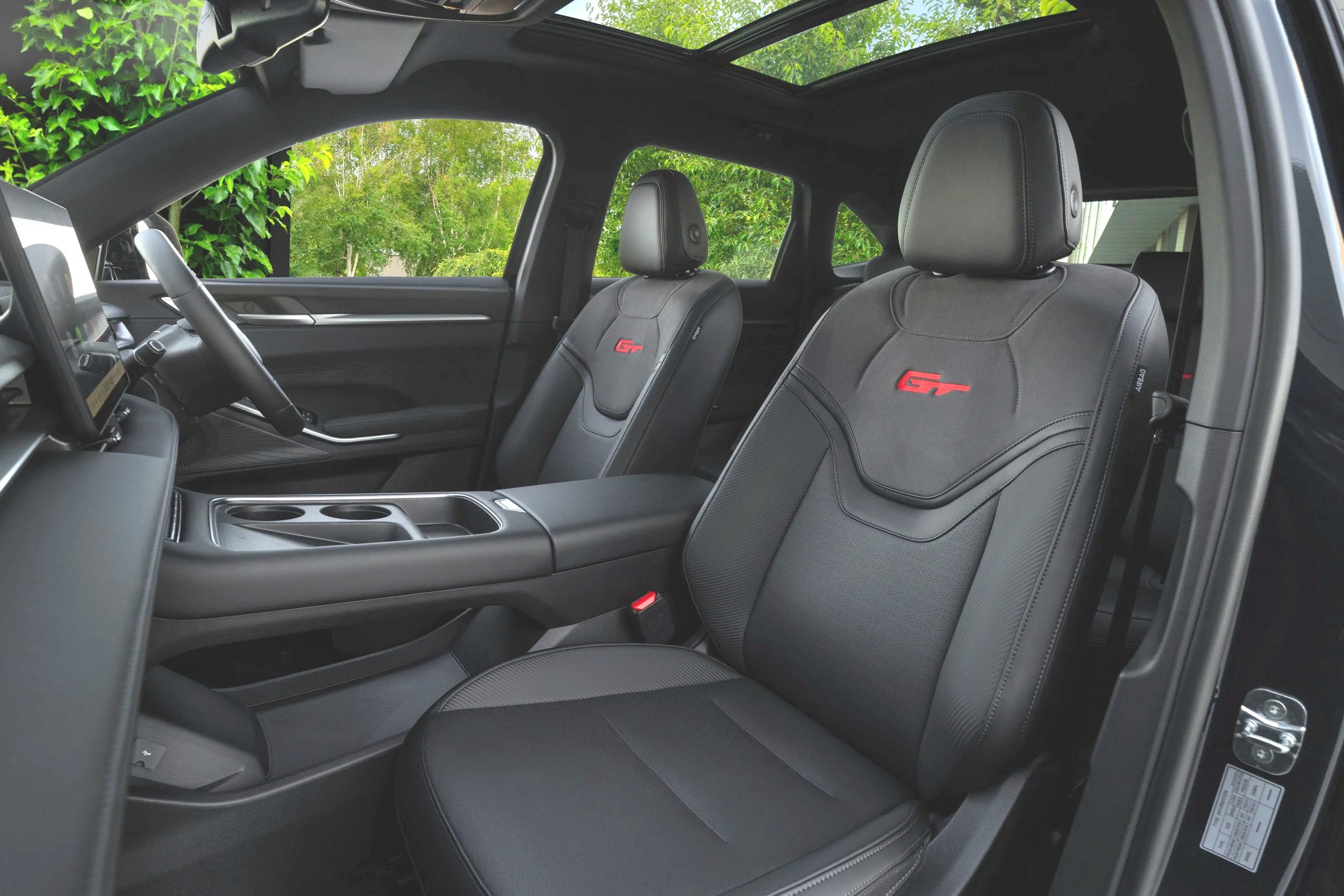
Clever interior design choices include the location of the cupholders on the RHS of the centre console, favouring the driver who’s statistically always going to be using the vehicle, meaning you don’t have to carry your hot sticky liquid over the smartphone cradle beside it. (Of course, this probably isn’t so much a design choice for our market and more a natural result of converting the vehicle to RHD and not any of the other interior elements.)
Having the transmission controlled by a steering column stalk means there plenty of centre console under-storage and no bulky transmission tunnel taken up by a driveshaft running down the centre, so no hump in the rear floor means less discomfort or annoyance for anyone using the centre row-2 seat or when stashing luggage in the footwell for those family trips away.
Fortunately for you, the driver, Haval/GWM has used actual buttons on the steering wheel (so revolutionary for Chinese cars) instead of the flat, backlit, translucent button panels used on the Jaecoo J7 and J8 which offer no haptic feedback and are hard to read in almost any morning/afternoon sun.
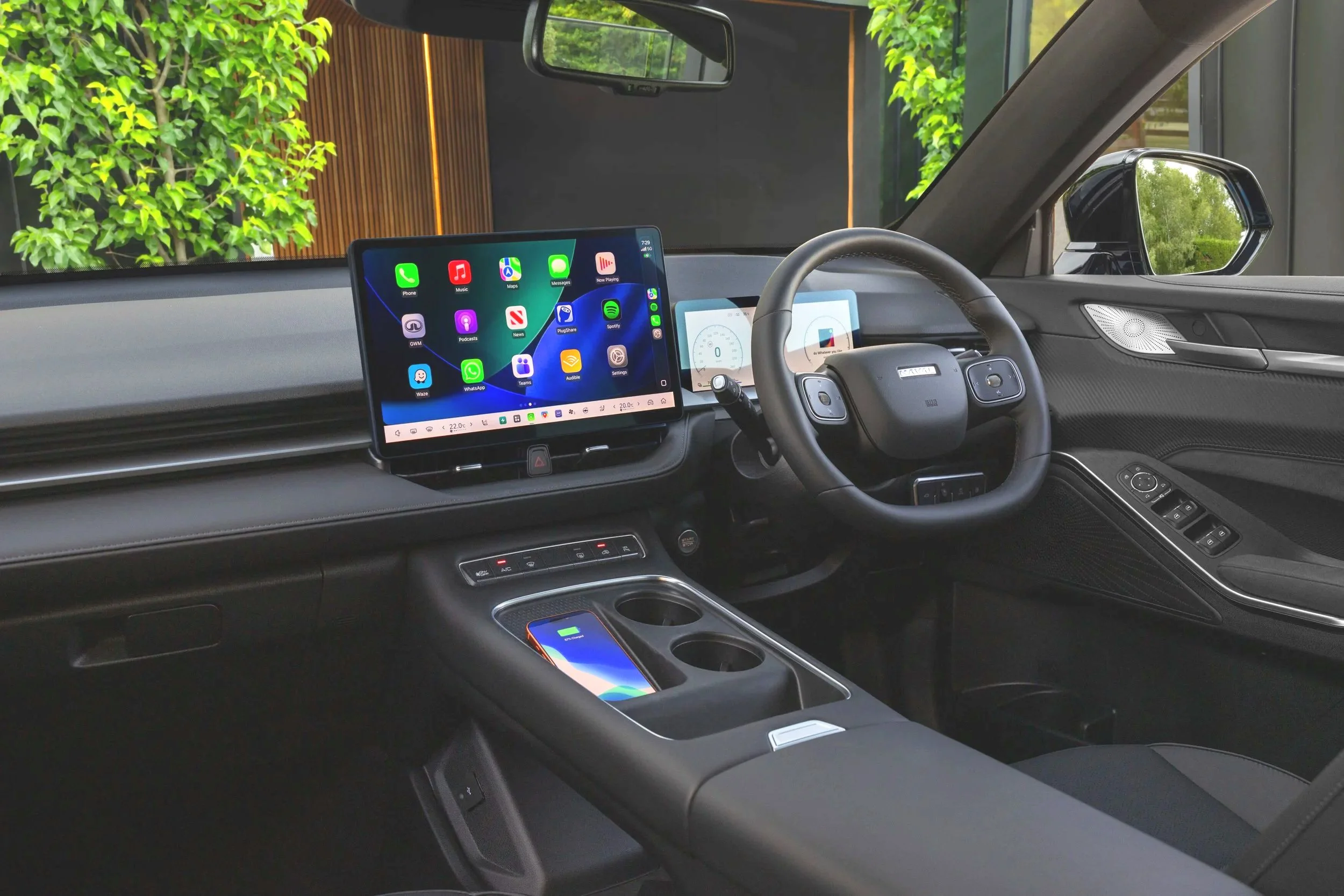
The floating centre console’s utility tray, cupholders and phone holder opens up stowage below where a transmission tunnel once took up space for a rear propshaft.
What you’ll need to familiarise yourself with is how to navigate the key controls within the touchscreen. In their press images, showing you the Android Auto or Apple CarPlay software interface is a great get-out-of-jail-free card to play, because it’s so much better than any carmaker’s proprietary software or graphics.
Problem is that sometimes you just don’t have time to fish out your phone and connect it, or sometimes you just want to put on the radio because you’re sick of listening to the kids’ garbage noise they call music. At some point you have to interact with the Haval menu and it’s clunky.
You also need to decode how those steering wheel buttons operate various information on the driver’s display to figure out how to configure it the way you want things. This is, unfortunately, the way new cars are these days, and generally the best carmakers find a way to turn these increasingly intricate menus and sub-menus into a simple experience for the user.
Unfortunately, if you never grew up playing video games or obsessed with technology - and admittedly that’s fewer people than it probably seems - then you might find the H6 weird to use.
For instance, the steering wheel controls are not conventional buttons. They’re touchpad buttons, meaning the whole up-down-left-right squared-circle area is one button, you just push it the way you want it. Then you have two scroll wheels in the centre of each.
The ergonomics issue here is that scroll wheels, when you’re driving need to be extremely intuitive, because your priority #1 is driving. Right? So whatever that function is, it needs to be simple and related to going up or down with the scroll. But there’s more.
The wheel itself is dished. Look closely at the image below and notice how the horn and the two spokes inboard of the rim itself are actually in a depression relative to the edge of the rim facing the driver. What this does is forces the meaty part of your palm to slope inwards. (Yes, this is an incredibly nit-picking detail the like you won’t see any other motoring media site report, but it’s important.)
This dished profile of the steering wheel makes it uncomfortable to hold in your hand for any moderate length of time. It doesn’t conform to the natural, neutral grip position of the human hand. So as a result, your hands don’t actually get to relax and your wrists tend to fold inwards and it has a low-level RSI-type effect. (See if you notice this when you take a test drive; again, it might not bother you on a 10-15 minute drive around the block, but it is noticeable after 30-40 minutes on the freeway.)
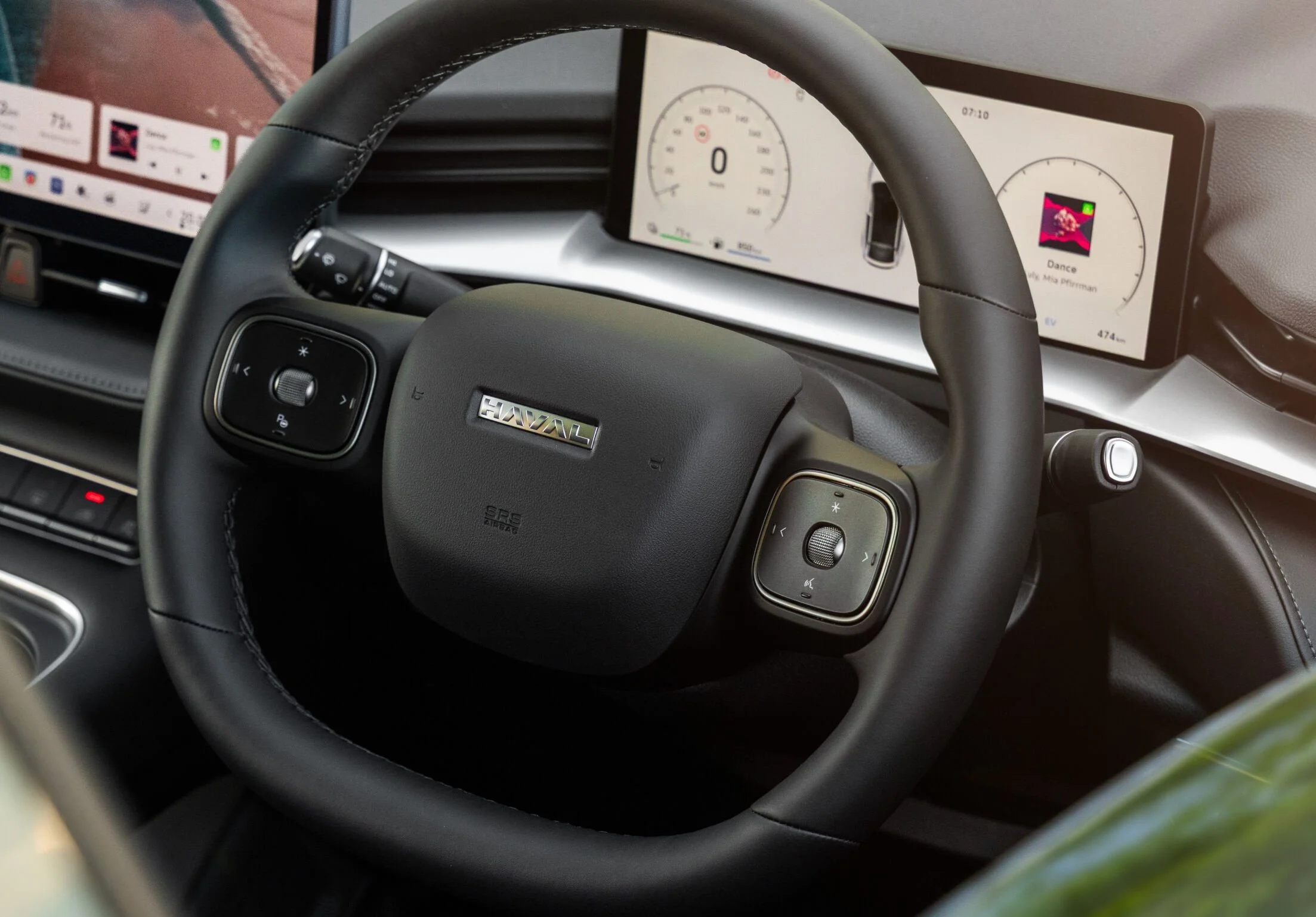
The flat-bottom steering wheel’s controls are not intuitive, indicators are Euro-style with the left stalk; transmission selection on the right; and the button icons don’t make sense - high adaptation is required here
But here’s the kicker with the H6’s interior: there’s no particularly critical problems with the rest of the interior. The majority of it seems quite intuitive, the various fixtures and panels and handles feel solid and well assembled. This is where Kia was just one major product portfolio cycle ago.
There are USB ports, bottle holders, HVAC buttons, a big screen that isn’t any more or less lagging in processing speed than any Korean or Japanese brand, the steering wheel controls are good enough and even the door mirrors are mounted on the door (not in the corner window glass) so visibility out is good.
This is one of the main reasons the H6 is so compelling, because it’s quite affordable and just as functional. It’s hard to fault it.
You’ve got over 2.7 metres of wheelbase in the H6, which is a fraction more than what’s available in the current (outgoing) Mazda CX-5 and there no glaring shortage of legroom in that vehicle until you start reaching NBA All-Star levels of height in which case: Why are you buying a medium SUV?
This is all very good news. There are no glaring design failures that are going to make it worse or better to operate than any other mainstream midsize SUV option.
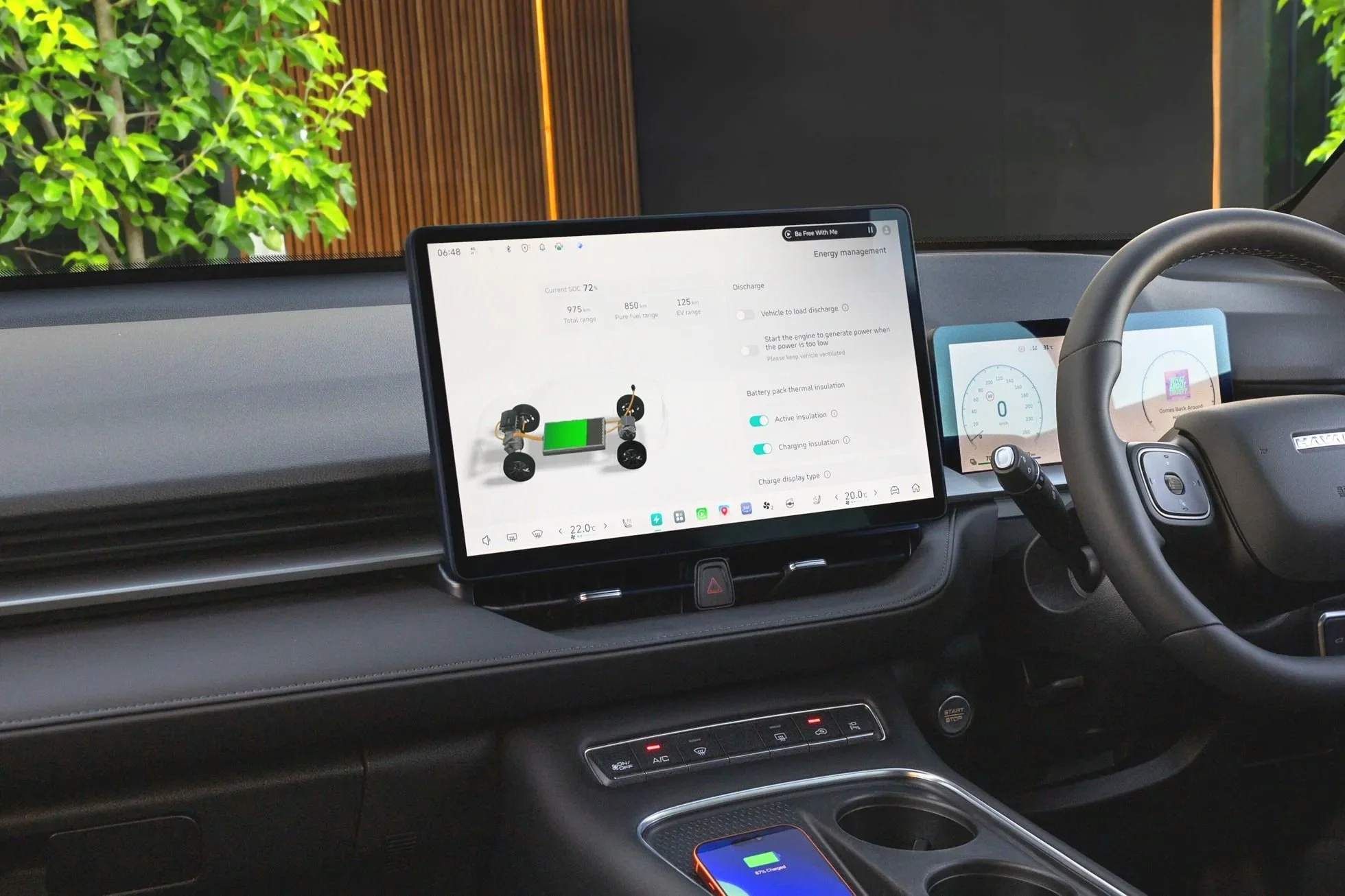
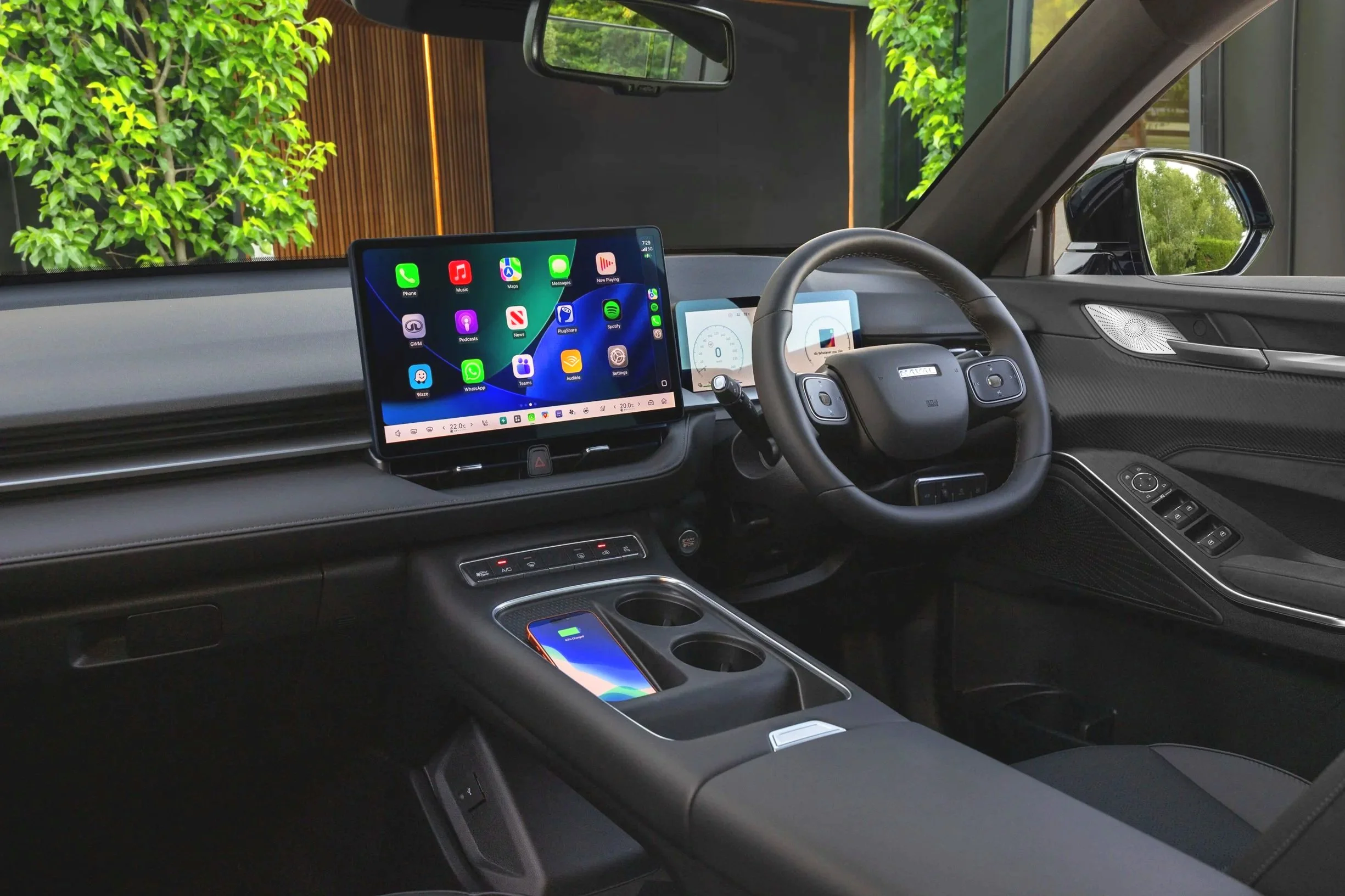
However, there are two important quirks. The first comes from the infotainment screen. It’s easy to get lost and frustrated in the menu layout. Something as basic like switching between the radio and Bluetooth audio is kinda nightmarish. Selecting a radio station is convoluted, while getting the BT audio to connect feels like hard work.
Next, we get to the driving position. It’s weird. The pedals are off-centre. The firewall is right next to your right foot. And there’s something up above your foot that constantly touches your shoe when you lift off the accelerator.
Then, when you go to change the steering wheel rake (tilt), you get an insufficient degree of adjustment.
Also, the A- and D- pillars are very thick. So it’s easy to lose entire cars and pedestrians behind them, so to speak, when you’re making right-hand turns because your A-pillar is significantly closer than on the left.
As far as the sound system is concerned, it’s a 9-speaker “premium” audio setup, but comes with no officially branded system like JBL, Bose, Yamaha or Infiniti like in the RAV4, Sportage/Tucson, Outlander or CX-5 higher-spec model competitors. Does it sound decent? Yes. Is it a kick-arse audio sensory experience? No. Is it pretty good for sub-$45K? Absolutely.
SAFETY
The wider Haval H6 range was crash tested by ANCAP back in 2022 under a now-superseded set of protocols. Meaning, there are newer midsize SUVs like the 2025 and 2026-launched RAV4, Mitsubishi Outlander (updated) and Subaru Forester (launched) which have been tested in a more recent, more stringent crash testing regime than the H6. (The new CX-5 is here and is yet to be rated.)
Some of the specific protocol changes the H6 was not tested against (unlike its rivals) include: the minimum pass mark for vulnerable road user scoring went from 60 to 70 per cent; mandatory motorcycle detection with the auto-braking system; Reverse AEB pedestrian detection includes children (very important); and expanded scoring for the Oblique pole impact test.
You can download the Haval H6 ANCAP technical report here >
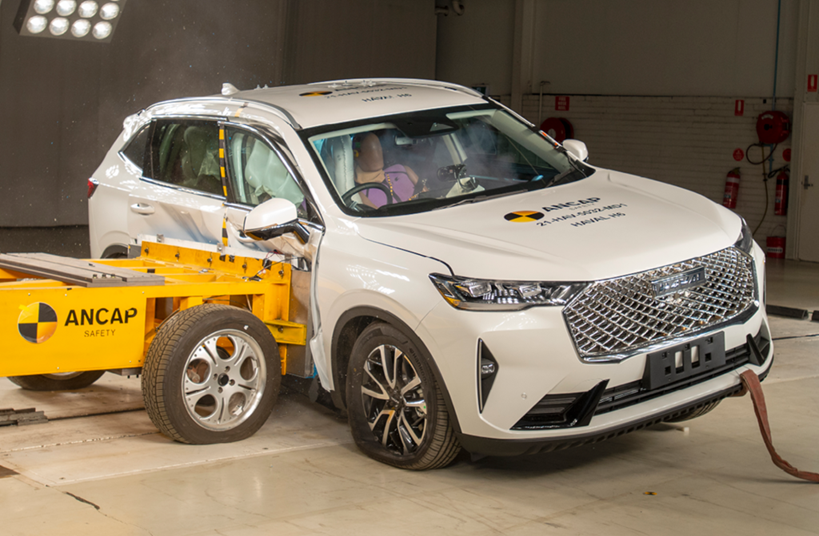
But the H6 GT PHEV is quite unique from the rest of the H6 range due to its massive battery and motor fundamentals, so it was also tested independently of the regular SUV range.
You can watch the GT PHEV crash testing here:
The first big point on safety here, which does not really get addressed by ANCAP is how the H6 PHEV performs against the 1400kg sled (AKA the mobile deformable barrier - just rolls off the tongue). It actually pushes the sled back almost immediately upon impact. This is because the GT PHEV weighs over 2 tonnes. It has 48 per cent more mass than the sled, at 2075kg.
There are two sides to this coin, in physics terms, as a result of this weight advantage. It means A) you are inherently going to be safer crashing in a heavier H6 GT PHEV than a 1400kg-whatever; but B) it means the 1400kg hatchback or sedan or small SUV you hit is going to be worse off. This is because the greater the mass, the more inertia it carries at the same speed (all other things being equal).
So you can consider that it’s safer for you and your family (self-preservation), but also that it’s worse for occupants in the smaller vehicle, which could easily be some other parent’s university graduates, or elderly grandparents or some learner driver’s first car. This is not meant to be a guilt trip, just a rational laying out of the facts here.
The Haval H6 PHEV is one of the heaviest medium SUVs on the market, on account of its relatively large battery and chunky AC electric motors. And in fairness, the Mitsubishi Outlander weighs over 2.1 tonnes. There is a strong case that the increased arms race toward heavier and heavier ordinary passenger vehicles incerases the wear-and-tear on our roads. So there’s that.
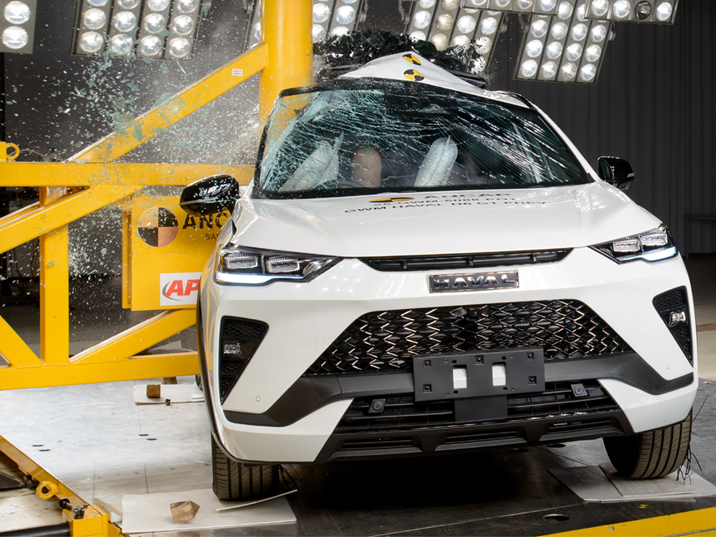
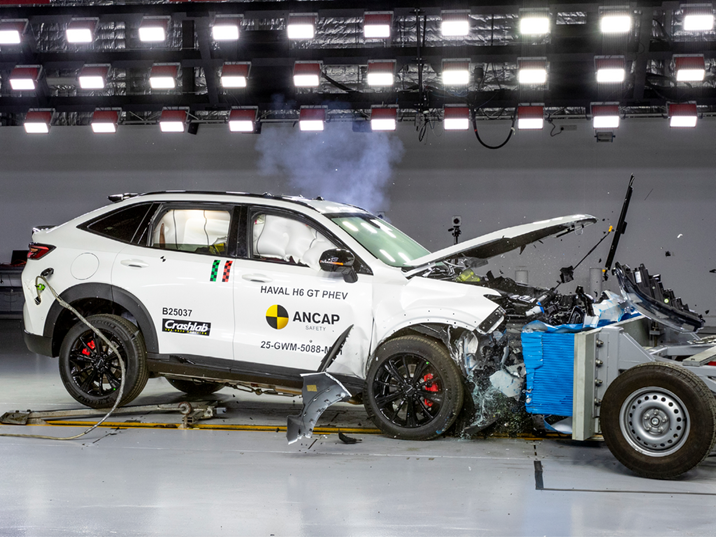
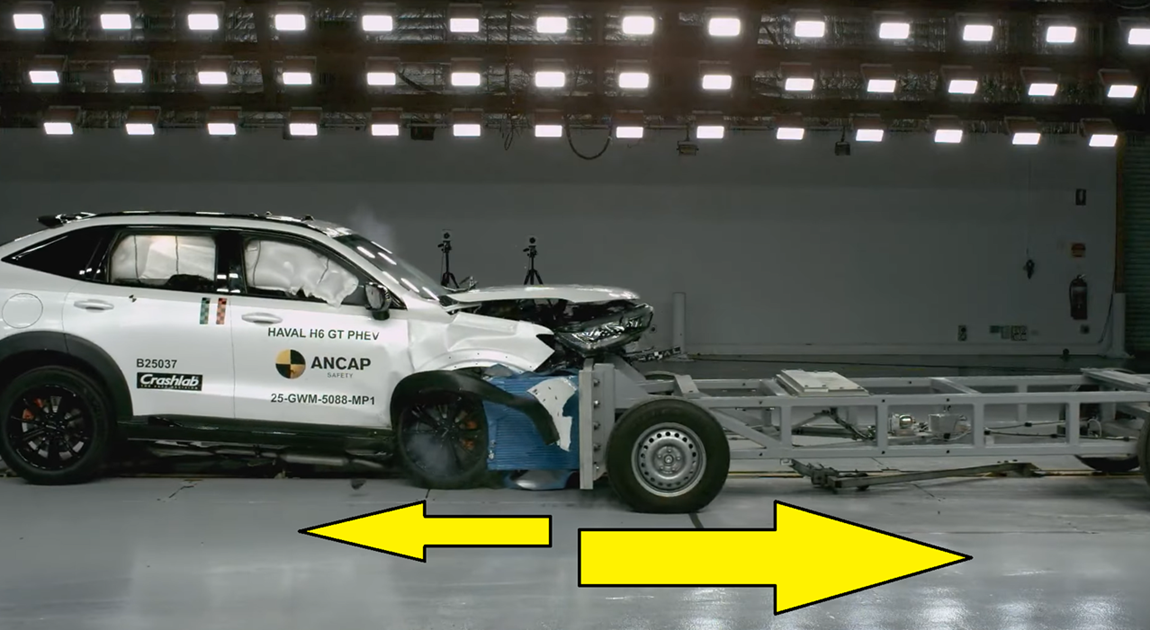
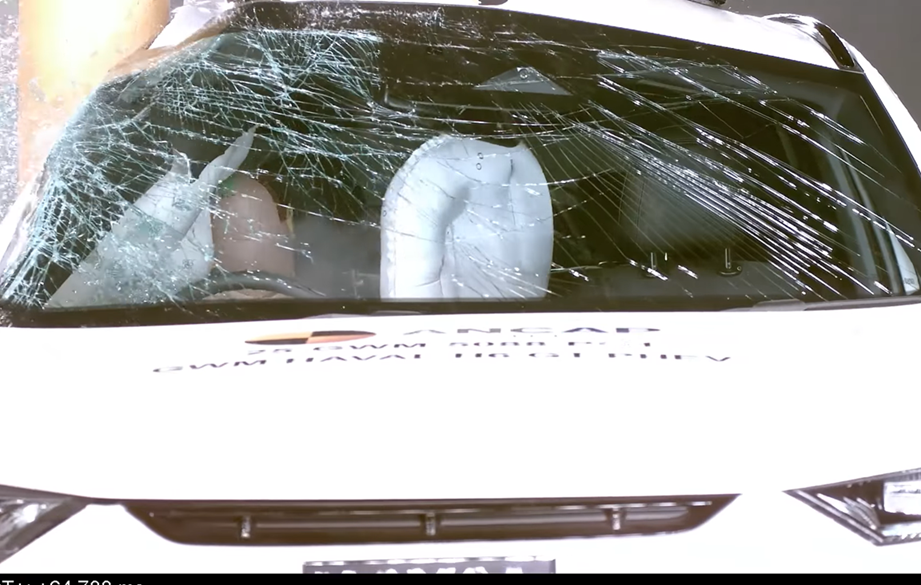
The H6 GT PHEV loses 3 separate points in the frontal offset test (at 60km/h with 40% overlap). One point was deducted for a footwell rupture which can lead to increased risk of feet and lower-leg injuries (which might sound trivial but can kill you at the roadside).
Another point deducted was for concentrated loads due to the way the seatbelt deployed across the chest, and another deduction was for hard contact points for the driver's knee - this would’ve been reduced had they included a knee airbag. And yes, knee injuries, which involve lots of broken bone, can rupture the artery carrying blood to your lower leg and kill you silently post-crash.
Elsewhere, the H6 does okay. It gets reasonable scores in driver assistance, although fails to get above a ‘poor’ rating for reverse auto-emergency braking (which replicates the second most common scenario cause of child-related deaths and serious injury: reversing out the home driveway). In vulnerable road user tests it also gets mixed results for pedestrian detection scenarios.
Child occupant protection is probably where the H6 does best, scoring 88 per cent derived from 43.5 points out of 49. The primary points deduction was during the frontal offset test where the 10-year-old dummy’s neck measured high loads and was rated as ‘adequate’. Neck injuries are a theme with the results of this test, including in the driver in the full-width crash test at 50km/h, earning only 1.35 points out of 4, and rated as ‘marginal’.
Overall, the H6 GT PHEV is okay - mediocre, even - at safety, but it’s not particularly bad. But it’s worth asking yourself if these kinds of results would be acceptable on a Toyota RAV4, or a Hyundai Tucson, or a Mitsubishi Outlander or a Mazda CX-5 etc.
I'll help you save thousands on a Haval H6 GT
Just fill in this form.
No more car dealership rip-offs.
Greater transparency.
Less stress.
ENGINE
The H6 PHEV has one powertrain option, which is a 110kW 1.5-litre 4-cylinder petrol engine and a Nickel-Cobalt-Manganese lithium-iron phosphate battery. The capacity is 35kWh and drive two electric motors, one on the front axle producing 80kW and a rear axle making 135kW, combined: 321kW.
The H6 PHEV offers impressive performance in a straight line, to the point it defies the price tag. This is because the torque on offer, just from the two motors, is 642 Newton-metres, which is more than a Subaru WRX STI, more than a BMW M2 or Audi RS5, it’s even more than a Nissan GT-R or Porsche 911 GTS.
So that’s more power in the H6 plug-in hybrid than some supercars, so obviously it’s going to out perform the new RAV4 PHEV (which is only available as of 2026, as it turns out), and it’s 73 per cent more power than the nearest rival, the Outlander PHEV. The RAV4 gets murdered by an H6 PHEV at just 227kW of peak power; that’s 18 per cent more in the H6.
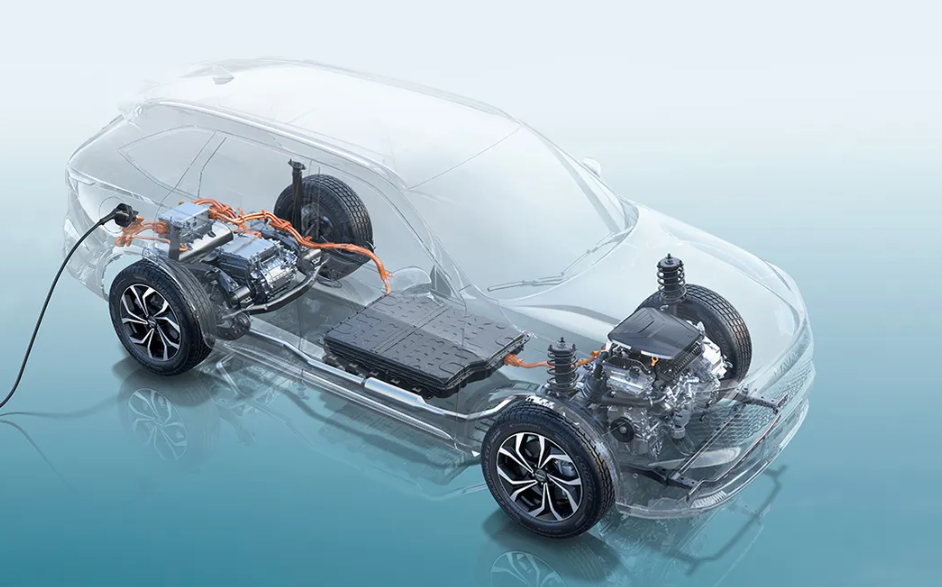
If you want to dramatically improve the driving experience, get a set of stickier brand-name tyres and watch the handling transform…
The 1.5-litre engine is the same 110kW unit from the combustion side of the H6 Hybrid, and it’s proven quite reliable.
The primary issue here will be the tyres which are generally from an inferior brand called Giti that offer a cheap, low-grip alternative to anything made by Michelin, Pirelli, Bridgestone, Toyo or Yokohama (to name a few of the quality brands).
The primary advantage of the hybrid here is that it’s offering about 40 per cent more torque than the combustion version, meaning it’ll be a much smoother vehicle to overtake with, to accelerate away from the lights in and to drive in general with a full passenger manifest and cargo bay. You’ll just need to get better rubber.
Keep in mind that the hybrid is going to be better suited to city commuter traffic where the battery is afforded lots of opportunity to regeneratively brake and recover kinetic energy when stopping for traffic lights, turning corners and braking in general.
Freeway driving is going to use more of the combustion side of the powertrain, generally speaking, because usually hybrids don’t have a battery big enough to hold enough electricity to drive the vehicle for long periods of time before being recharged. But in the hybrid, you are at least able to use that 530Nm at as low as 1500 revs, according to Haval Australia.
There is also something to consider here in that the 35kWh LFP battery is made in-house by GWM (Haval’s parent company).
The GT PHEV uses an all-wheel drive system that GWM/Haval calls Hi4, and it’s not like the typical all-wheel drive we’ve seen from Tucson/Sportage or Forester with a driveshaft running down the centre. It uses the motors at each end and the computer manages traction control, stability control, and monitors wheelspin.
Given how well these systems are managed in modern vehicles thanks to traction control, stability control and so on, Haval has not designed it to behave like some untamed Bronco. But it’s important to remember there’s a lot of torque coming from those rear motors directly into the wheels. When in electric mode, there are no powertrain loses as a result of: the flywheel dragging on the clutch, or the gearset, or the driveshaft or the rear differential. It’s instant torque on the axle, through the wheel.
If you were to give the PHEV full throttle from the lights in the pouring rain while taking off on tram tracks, then yeah, you’re going to get wheelslip, but in any other moderately benign acceleration scenario it’s actually going to be quite smooth and make getting up to speed effortless.
All variants run on standard 91 RON petrol with a 55 litre tank for the 1.5-litre combustion engine.
TRANSMISSION
The H6 GT PHEV has a 4-speed transmission and like most hardware designed by a carmaker, it gets a special (sometimes silly_ name. Here, it’s called the DHT which stands for ‘Dedicated Hybrid Transmission’.
‘Dedicated’ does refer to its level of commitment in a relationship, it refers to the fact it’s dedicated to transmitting drive from the power source - the engine and electric motor (the front one) - to the drive wheels. But it gets even more complicated than that, because there’s an electric motor on the rear axle as well, and there’s the regenerative braking, and the fact that for the first 50km/h you’re using primarily the front electric motor to drive the front wheels.
The front end uses a transaxle, which is basically a transmission and differential that are combined and connected directly to the axle to drive it. The H6 uses a transaxle in syncronisation with the front electric drive motor, which works like this:
You set off at a normal speed to flow with traffic outside your kids’ school, which is exclusively done in electric mode (using electricity you’ve both recovered from braking and also from charging up at home).
Then you get into conventional suburbs with 60-80km/h variable zones, which is driven in a combination of electric and petrol mode. Now, keeping in mind here, every time you casually start to decelerate or purposefully brake, you’re recovering a small amount of kinetic energy (which would’ve been lost otherwise) back into the battery. It’s not much, but it all adds up and reduces a little bit that might’ve had to come from your wall at home.
At these moderate speeds you’re also possibly going to see the battery get a small top-up from the petrol engine when it is at its most efficient and when power production is abundant. This allows you to take advantage of the petrol engine’s natural efficiency at higher revs, meaning you can use that electricity later to get going again - at which point it’s more efficient to use the electric motor’s torque advantage from take-off.
Then the road heads toward the freeway on-ramp because you’re heading into the city. This is where the engine and electric motors are going to work in tandem, except the other way around. The 1.5L petrol engine will be the primary source of propulsion, with the battery-powered motors kicking in for high demands such as steep hills and accelerating to overtake. They will also both kick in together for aggressive acceleration from stationary.
The previous 1.5L hybrid in the first iteration of the GT PHEV still used Haval’s “Dedicated Hybrid Transmission (DHT)”, but it was a 2-speed continuously variable transmission. This time around they have used the same transmission, which is a sign that it was reliable and therefore not in need of fixing or replacing - in fact they’ve simply used it as a base and continued to innovate with it.
In terms of the driveline, Haval says the plug-in hybrid’s brain:
“…adapts to changing conditions in just 10 milliseconds — 100 times per second — delivering optimal performance, traction, and efficiency”.
So it’s going to be very rare that you do actually experience wheelspin even in the most powerful model.
However, be aware that the rear motor is not being engaged to drive the rear wheels during low-load highway cruising, where the vehicle defaults to front-wheel drive. This is typical among most hybrid SUVs and is optimised for efficiency.
FUNCTIONALITY
The luggage space in the GT version of the H6 SUV is somewhat limited by a few different factors, starting with the shape of the rear end which determines the profile of the tailgate.
You essentially get a part tailgate, part sportback/liftback design which does help open out the aperture itself to make it easier to get things in and out, but this does also limit the amount of stuff you can actually pack into the cavity. This is because you need to leave room for the tailgate itself to close. If you notice the angle the photo is taken on below, you’ll see it helps emphasise the space available, and it hides this deficiency.
The boot floor does not contain a full-size or even space-saver spare, but you do get a tiny compressor and container of goop that will temporarily patch any minor puncture you get in the tread face, but it won’t suffice for bigger gashes or cuts in the sidewall. The lack of spare is due to the size and packaging constraints presented by the electrical components in the drivetrain, primarily the rear electric motor. As a result, there is no sub-floor for additional cargo space.
The third big issue with the boot cavity is the enormous and significantly sloped wheel arches. They dominate the space and because of the angle they’re sloped at, you can’t pack anything on top of them for bigger, longer holiday trips where every inch of space counts.
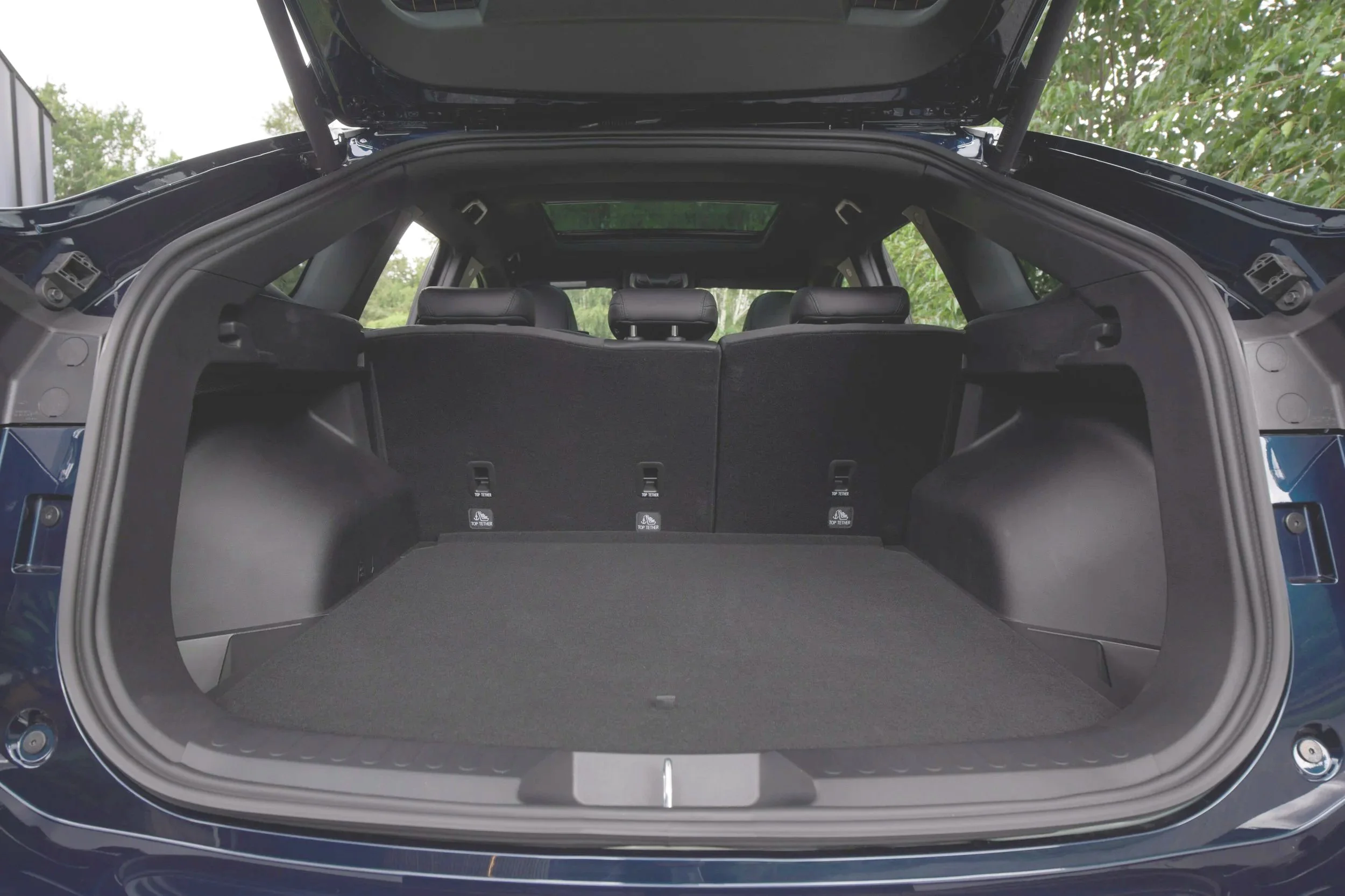
They’ve taken the cargo blind out of the boot to make it look more spacious; top tether anchor points are down the bottom of the seatbacks, making them hard to reach
The available luggage space in an H6 GT PHEV is a bit disappointing as a result of these volume-related compromises, however it’s not a complete failure.
You get 392 litres of cubic capacity with the second row of seats up, and with them dropped (which you cannot do remotely from the boot, mind you) is 1390 litres.
This means the H6 GT, with its row 2 seats up, is beaten by the outgoing Mazda CX-5 with 438 litres, Mitsubishi Outlander on 485L, the Subaru Forester with 498L, and continues falling even shorter of the Hyundai Tucson on 549 litres, Toyota RAV4 on 580 and the Kia Sportage on 586L.
If you instal child restraints often, you’ll possibly find it highly irritating if you go to the effort of clipping in the ISOFix points in the seat-fold only to discover the top tether anchor point on the seat-back is right down the bottom and your arm cannot reach over the top of the seat.
The solution in this instance is to disconnect the ISOFix, slide the capsule or restraint forward, collapse the seat-back, then clip in the top tether anchor over the headrest and into the anchor point, before pushing the seat-back back into place. Then of course, you can reconnect the ISOFix latches.
In the domain of towing, you get 1500kg of braked capacity and while this is actually fairly respectable considering the Outlander PHEV is restricted to 1600kg. But Mitsubishi actually makes the point to state the towball download limit of 160kg, which is a healthy 10 per cent and offers you knowledge to make a decision by.
But GWM/Haval doesn’t tell you what the towball download limit is, meaning it’s probably not something they want you to explore, which is disappointing given the previous version of H6 GT at least offered 150kg. Unbraked, you can tow up to 750kg which is standard fare, but again, keep it light on the towball.
DRAWBACKS
There’s no such thing as the perfect car. They’re all compromised in various ways and here is your executive summary for the Haval H6 GT PHEV.
The primary, tangible problems with the H6 GT PHEV is the clunky infotainment screen user experience thanks to an overindulgence on menus and sub-menus.
There’s the slightly off-kilter driving position and general ergonomics of that nature - as discussed.
The driver assist software is poorly calibrated and is often bleeping at you about things that are no threat to you or the vehicle at all.
There’s the distinct lack of any form of spare wheel and tyre, and the fact a tyre repair kit doesn’t always do what it says on the packaging, and together with the subdued towing capacity, its overall ability to be functional is limited to primary family transport and light travel assignments.
Naturally with a plug-in hybrid you have to plug it in and charge up that battery, otherwise your 1.5 petrol engine is lugging around the enormous battery and electric motors as additional ballast not contributing to the powertrain. This will consume massive amounts of fuel needlessly.
And lastly there’s the ride. Clearly this is a vehicle designed by the Chinese domestic market for the Chinese domestic market, and the quality of their highways is bested only to the likes of Singapore, Switzerland and Germany. Australia’s harsh conditions and sparse population with huge distances means our roads are terrible, but quite nuanced in that we like stiffer, better-handling vehicles.
The H6 GT, when cornering, feels heavy and slow to respond to inputs. This is a hard thing to explain, and for most people doing mundane driving around town, it’s seldom going to be something normal people will notice.
Over speed humps the body jiggles and it’s not hard to make the dampers fully compress and send a minor jolt through the cockpit. And because of the weird driving position, the whole car feels more like a prototype finished to an excellent standard, rather than a perfected finished product.
But these things are expected to change when the brand’s new “At-1” ride and handling re-engineering work being done by GWM on its products, with the Tank 500 being the first to roll out the end result.
MAIN COMPETITORS
MITSUBISHI OUTLANDER PHEV
Outlander PHEV offers the best of both a midsize SUV and plug-in hybrid. If you need a seven-seat PHEV, the Aspire makes that possible, although it’s not very commodius and would be reserved for surprise guests and unexpected family taxi duties. This is, clearly, something the H6 GT PHEV cannot do.
The 2.5-litre petrol engine is naturally aspirated, so it’s good enough without being punchy, and the battery is big enough with enough grunt from the electric motors front and rear to make it useful in both city traffic commutes and more urban driving. But it is down 100kW of maximum combined power output compared with the H6 GT PHEV.
If you’re likely to go off the sealed roads, the on-demand all-wheel drive system of Mitsubishi’s is excellent in most light mud, wet grassy carparks and steep, slippery driveways or take-offs at the lights. It’s an ideal weekend camping vehicle that also needs to commute into the CBD on Monday morning with good in the front and second rows. Mitsubishi also offers a 10-year warranty.
Click here for more on Mitsubishi Outlander PHEV >>
TOYOTA RAV4 PRIME
Toyota has finally gotten off its arse and rbought the RAV4 Prime plug-in hybrid to Australia, only about six years too late. They are nothing if not predictably mediocre, Toyota.
Unfortunately, it won’t be here until late 2026, so you’ll have to check back then. It’ll effectively use the same 2.5 turbocharged petrol 4-cylinder engine and prices will start at about $59,000 driveaway, which is going to get you front-wheel drive and a 201kW combined power output for the standard issue model grades.
Apparently a GR SPort version is coming which will offer 227kW, making it the gruntiest RAV4 ever, but don’t be surprised if it costs about $65,000.
Click here for more on Toyota RAV4 Prime >>
KIA SORENTO PHEV
The Kia Sorento PHEV (plug-in hybrid) doesn’t sell in the same numbers as the diesel or hybrids, but that doesn’t flag some underlying problem.
It actually highlights how impeccable it is for multi-purpose practicality and affordable luxury, while also being supremely well-built and reliable, qualities befitting all Kia products these days.
Sorento uses its 1.6L turbo-petrol four-cylinder with a 14kWh battery for a combined 195kW peak power. It uses multi-point injection on the combustion engine, much like the Outlander and RAV4.
Click here for more on Kia Sorento PHEV >
CHERY TIGGO 4 Super Hybrid
Value is the Tiggo 4 Super Hybrid’s main appeal, but it’s not necessarily a case of getting what you pay for, because the build quality is decent, if not class leading, and you do get plenty of features.
But its not actually a plug-in hybrid, either - it’s a regular series-parallel hybrid like a RAV4, Tucson or Sportage. It’s just the closest thing Chery has to a 5-seat PHEV at this point.
Much like the Sorento PHEV, the Tiggo 9 is actually the brand’s only plug-in hybrid, which will likely change much quicker than the Koreans or Japanese could get a new PHEV to market.
Tiggo 9 PHEV is huge, offers 100 additional kilowatts of power over the H6 GT PHEV, and costs over $58,000 - but even that is actually astonishingly good value. Although keep in mind they do require 95 RON premium petrol.
Download the Tiggo 4 Hybrid specs here > or the Chery Tiggo 9 specs here >
CONCLUSION
The Haval H6 GT PHEV is such a compelling package it trukly makes the term ‘first draft’ feel like a misnomer. It offers great performance (for a family 5-seat SUV) and build quality that deceives its $50,000 price.
It was only a few years ago that the Mitsubishi Outlander was the innovative plug-in hybrid model you could buy that combined the best of both worlds and only minimal inconvenience of either. But it seems the Haval H6 GT has stolen the Outlander’s thunder, by coming in at a ridiculously good price.
Unfortunately, it’s important to realise that this is not an Outlander PHEV in how it drives, it’s not built to quite the same high standard as a RAV4 and it isn’t quite as well polished as a Kia Sportage or Hyundai Tucson.
The driving ergonomics and the user experience with the touchscreen show that while Haval/GWM can get very close to their Japanese and Korean brand rivals, they’re not quite ‘there’ yet.
More reports

Buying a small SUV should always include the Kia Seltos. It’s a well-built, reliable vehicle, with a perky hybrid engine ideal for ordinary daily commuting or sportier driving. See how well the affordable, frugal Seltos suits you.