
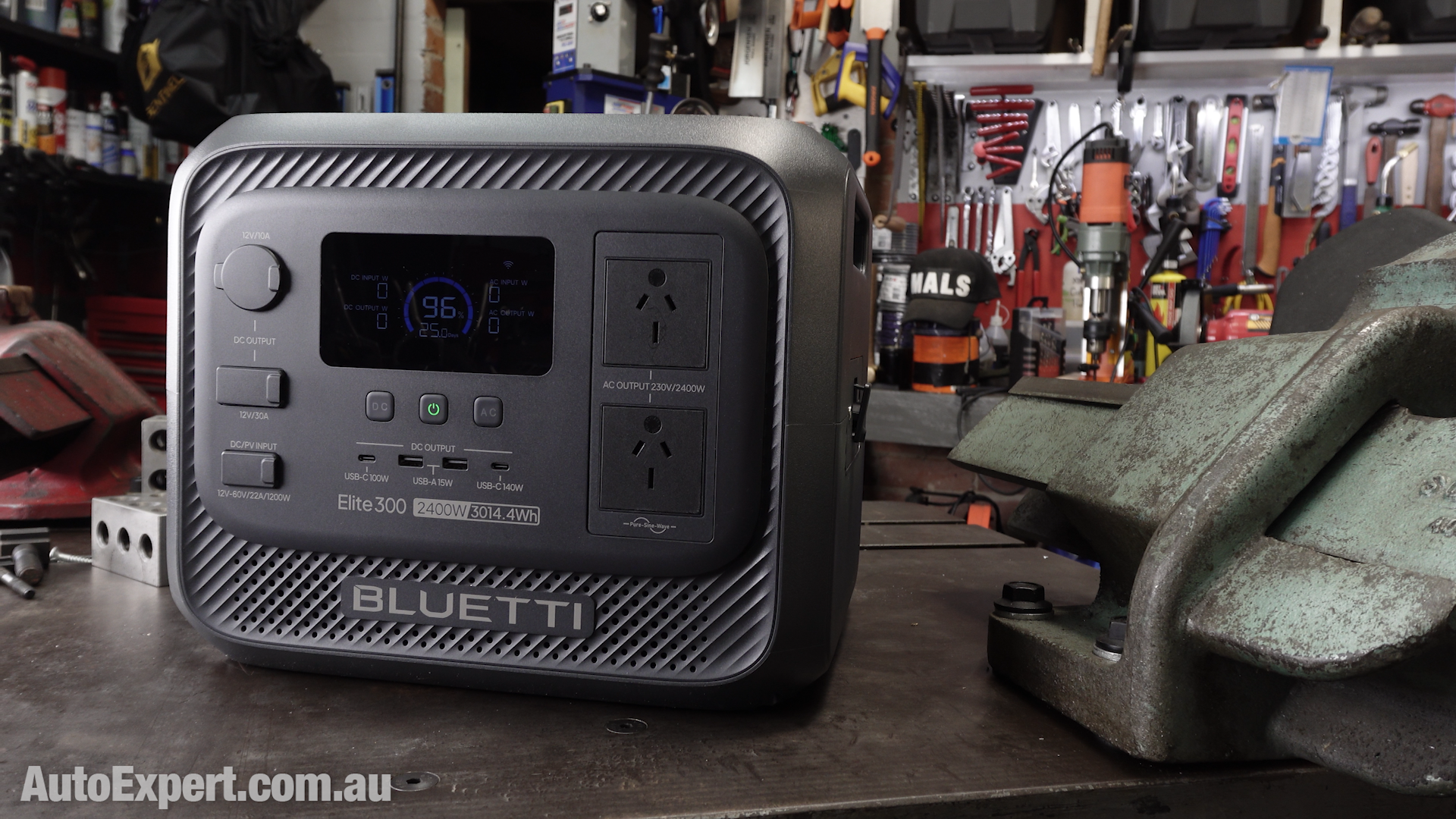
Bluetti Elite 300 Review: A 3kWh Portable Power Station That Can Run Real Workshop Gear
The Bluetti Elite 300 is the Swiss army knife of stored energy. It will:
Run your campsite overnight - lights, refrigerator, fan, power your electronics
Move easily from vehicle to home, shed, caravan, other vehicles or boat (ie - doesn’t need to be permanently installed, like a dual-battery system)
Run serious workshop gear off-grid
Power (the important bits of) your home during a blackout
The Bluetti Elite 300 iscompact, portable, self-contained, and surprisingly capable. Inside the box is just over 3kWh of stored electrical energy, delivered through LiFePO4 battery chemistry, with 2400 watts of continuous AC output and up to 4800 watts of surge capacity.
That is a serious amount of portable electricity.
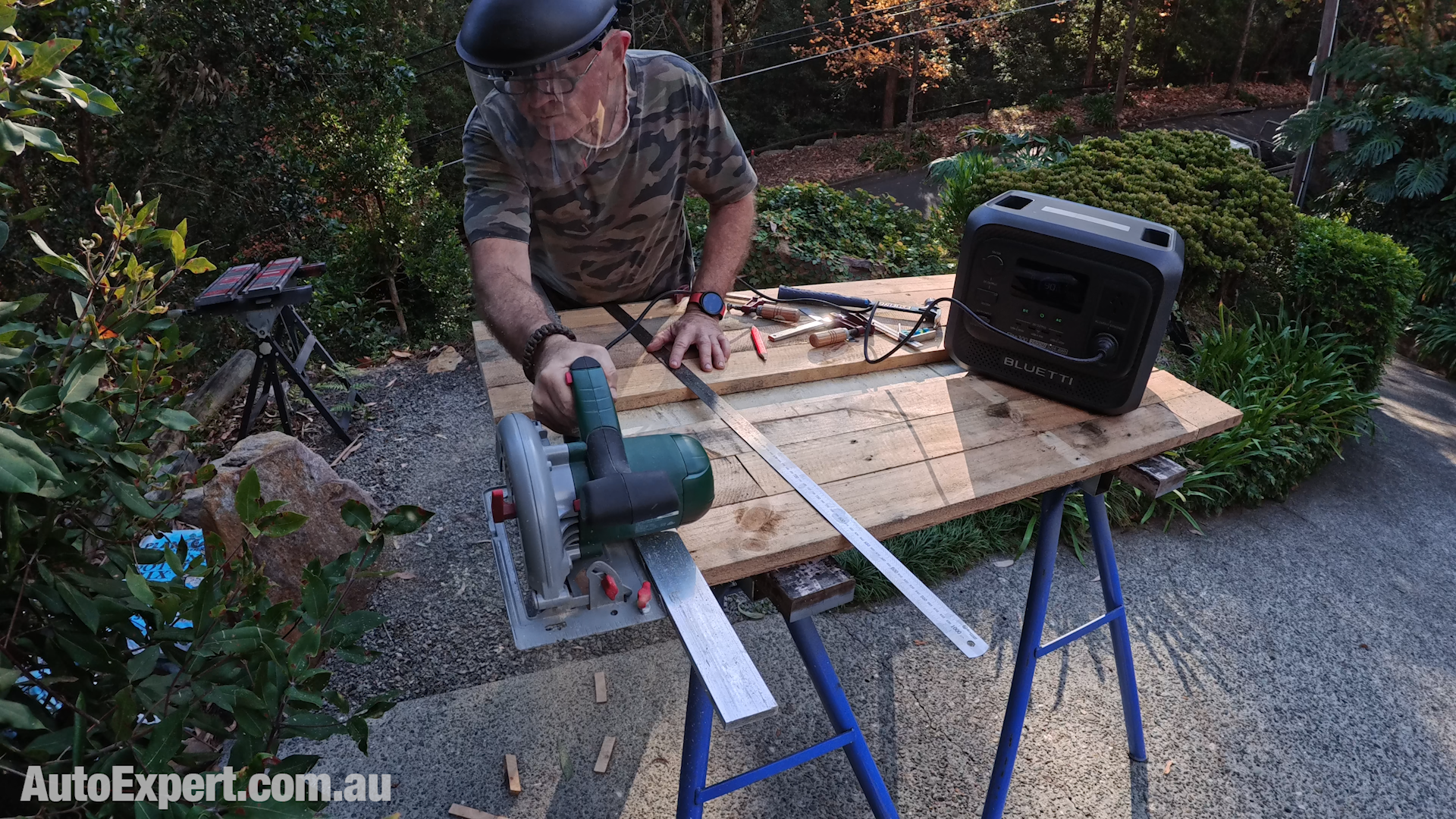
The Elite 300 packs 3kWh of stored energy in a package you can stow basically anywhere, and you can carry it (just) one-handed.
Get 6% off the Bluetti Elite 300 until June 15, 2026 with my exclusive code: AEJC6% on checkout
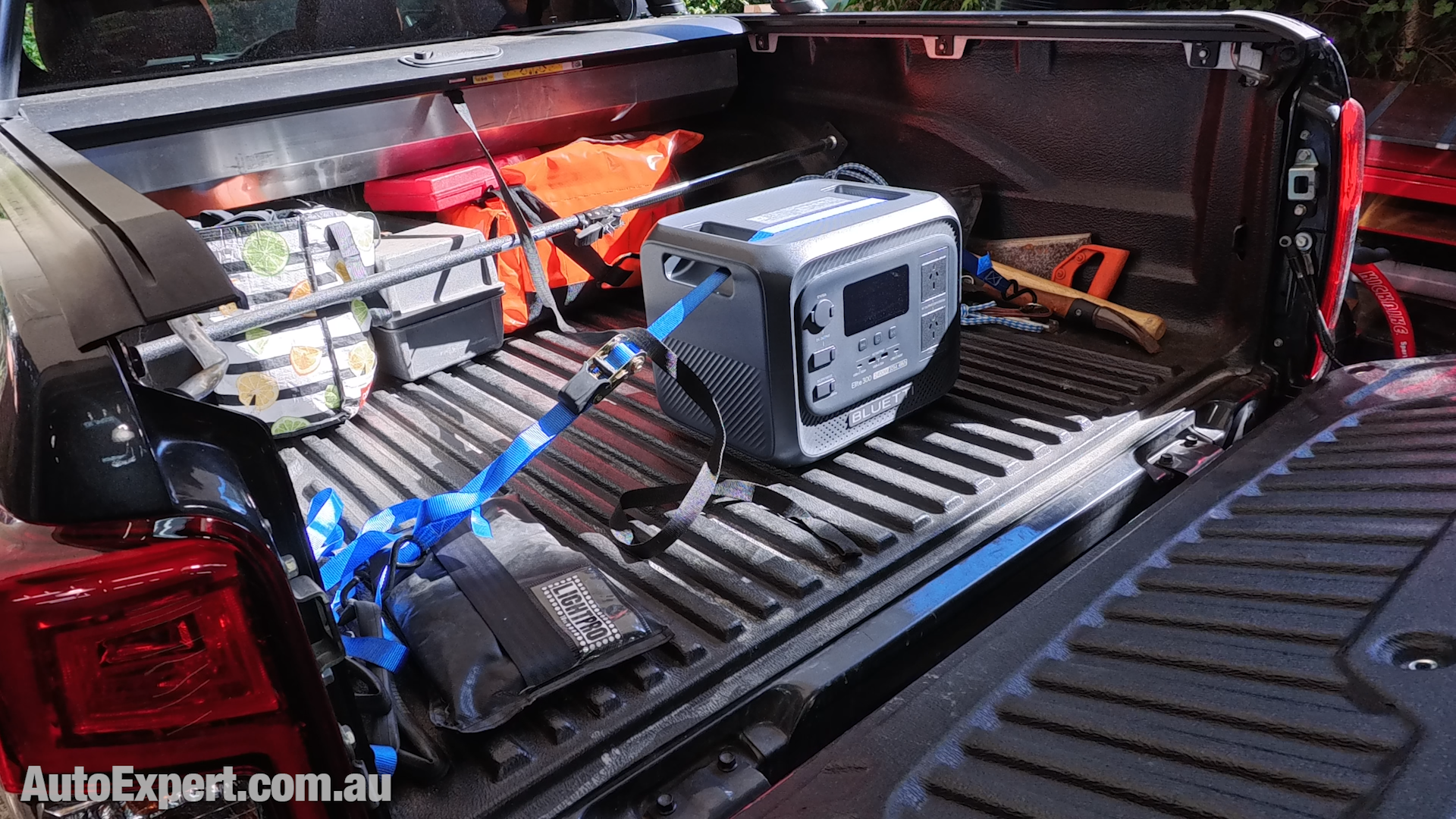
Dead easy to stow and lash down in the back of the ute
Bluetti describes the Elite 300 as the world’s smallest 3kWh portable power station. They sent me this review unit, along with a 500-watt portable solar panel, at no cost. They have not paid me to say nice things, and they have not reviewed or approved this review before publication.
I’ve been reviewing Bluetti power stations since shortly after the brand launched in Australia. My first Bluetti review was back in 2021. Since then, the category has evolved rapidly — and the Elite 300 is a good example of just how far these products have come.
Who the Bluetti Elite 300 Is For
The big advantage of a unit like this is portability.
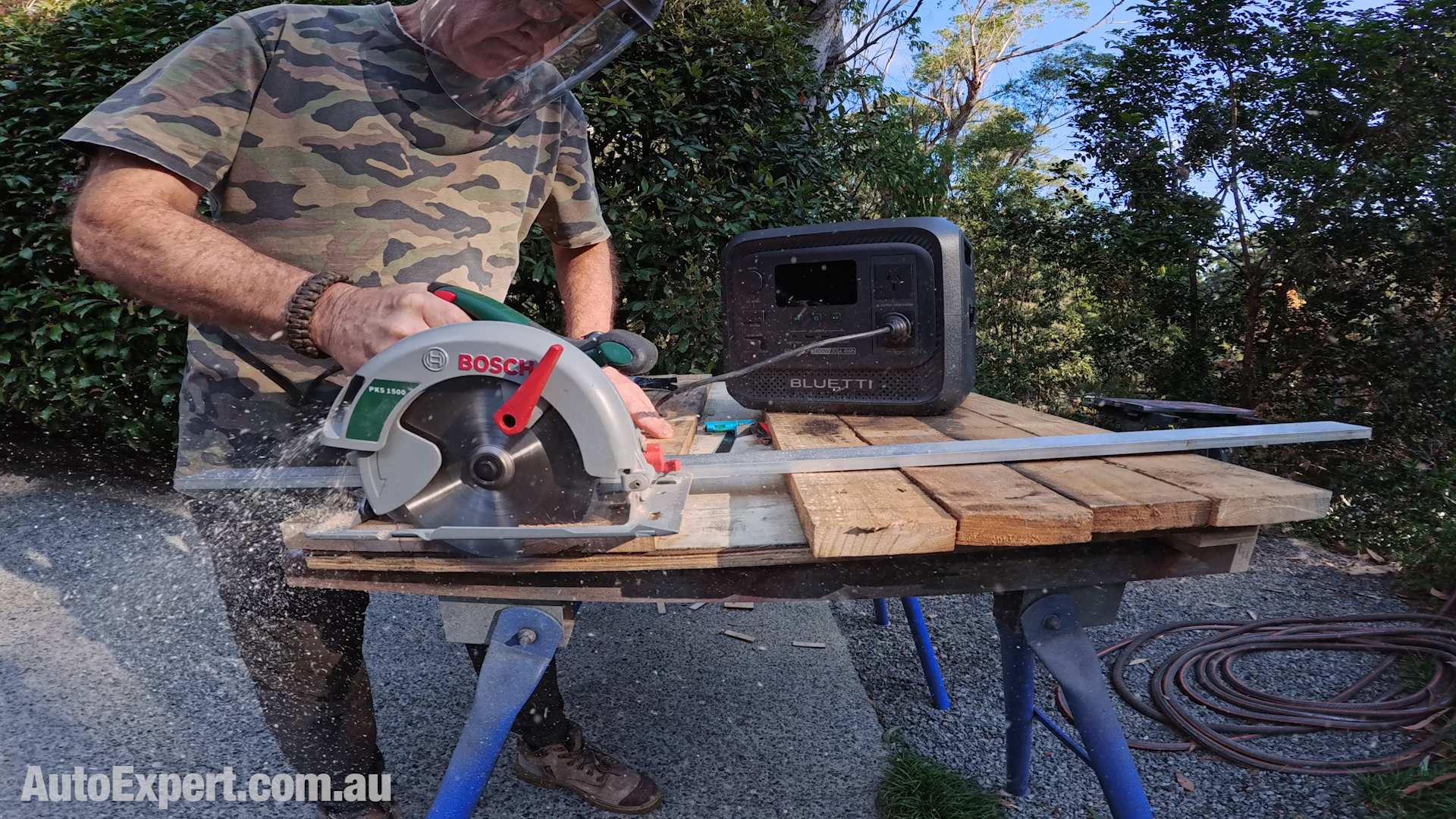
Real jobsite work with corded tools is easily achievable (saw above is 1500W)
You can take it from your 4X4 to your shed, from your caravan to your house during a blackout, or from your workshop to a paddock 100 kilometres from the grid. Nothing is hard-wired. There is no fabrication. No permanent vehicle modification. No bird’s nest of wiring to figure out. No DIY electrical system you hope won’t catch fire.
It arrives as a complete, integrated power system.
You get 240-volt AC output, high-power USB charging, 12-volt DC output, battery storage, inverter, charger, solar charge controller and onboard management electronics in one portable box.
That is a huge plus.
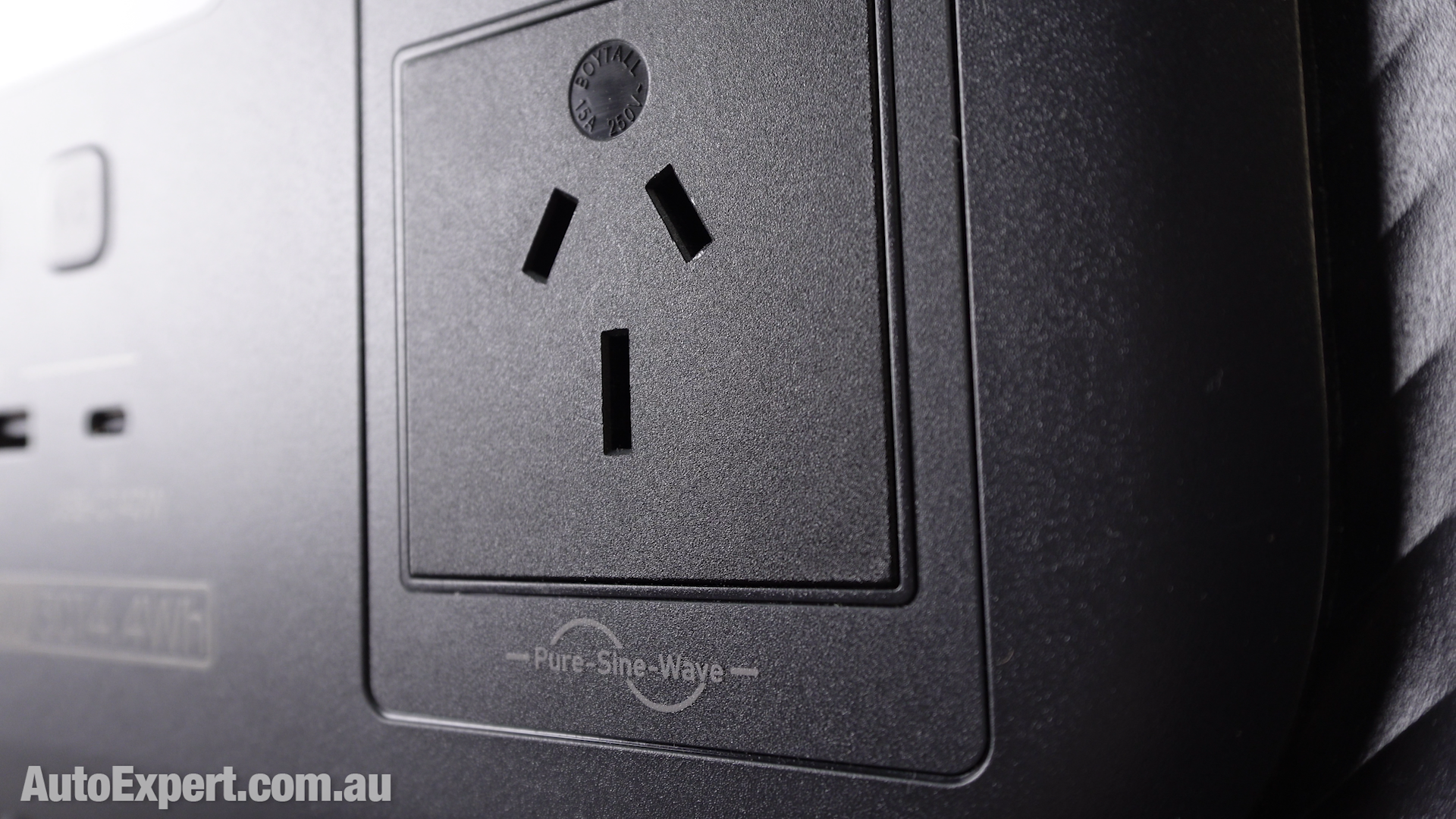
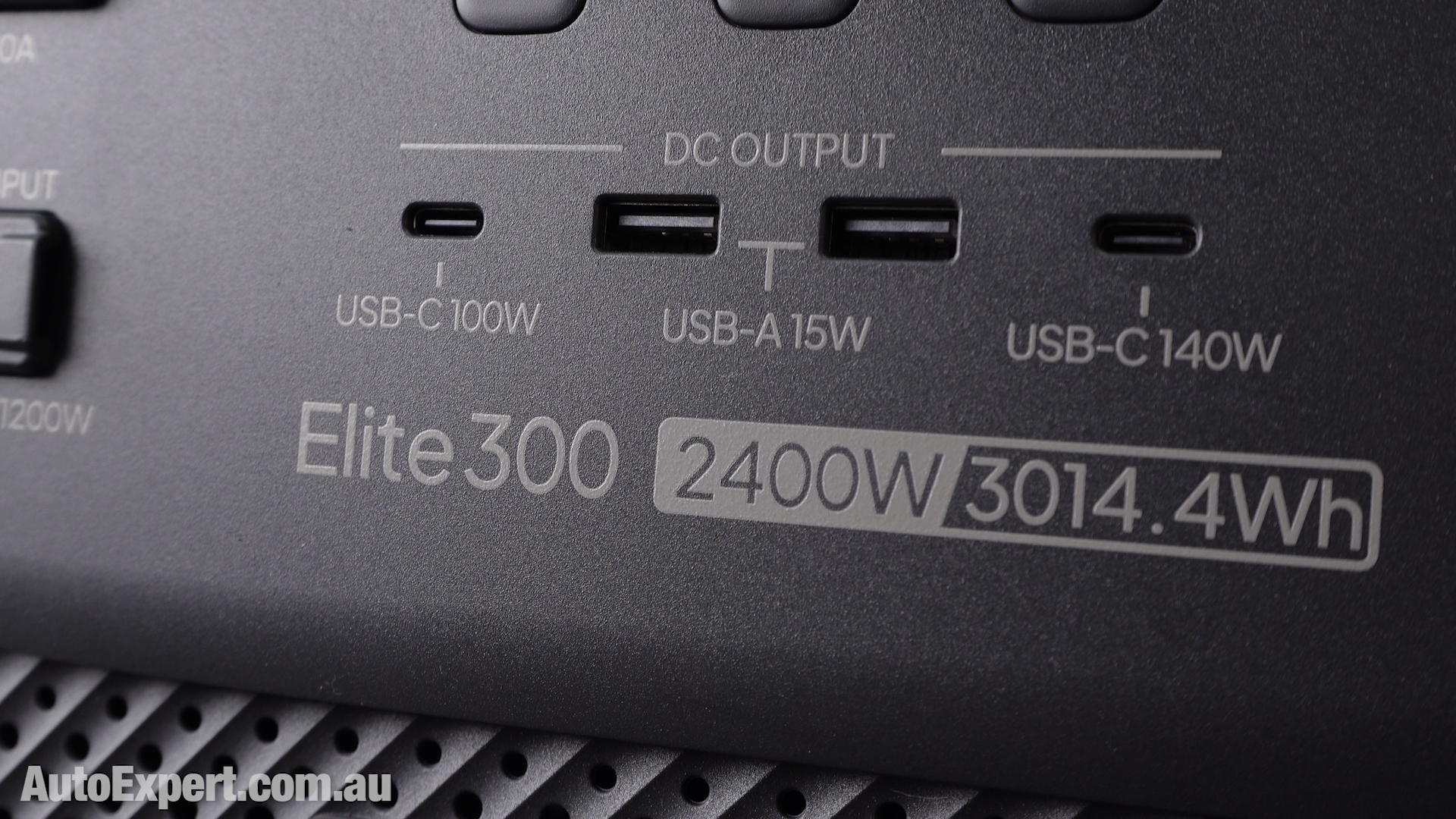
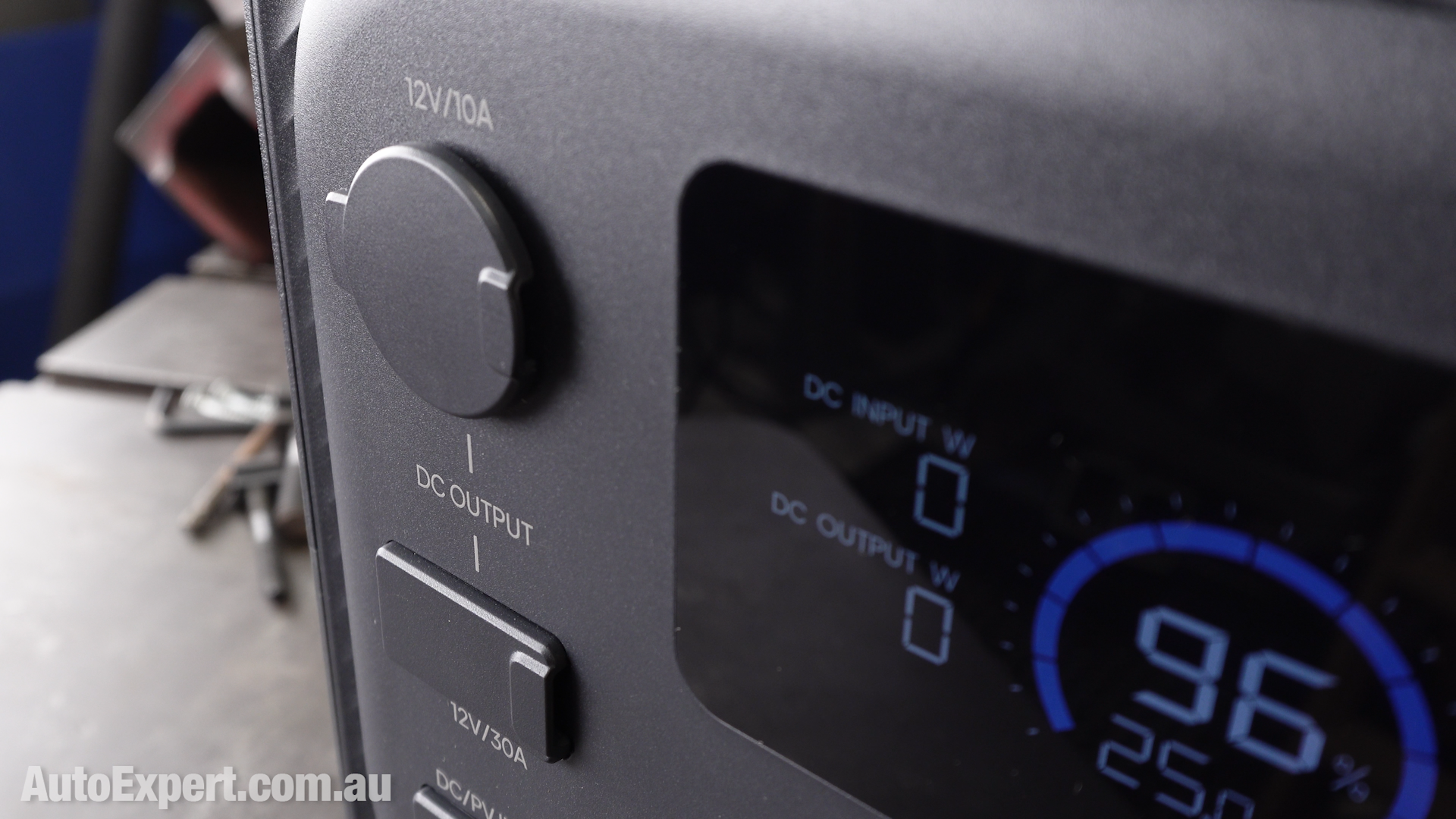
The Elite 300 will charge electronics, run household appliances during a power failure, power gear in a camper trailer or caravan, run tools on a building site, and support off-grid work where running extension leads is impossible.
It is not cheap, but it is very versatile.
Key Specifications
The Elite 300 stores a little over 3kWh of energy. For those still fluent only in 12-volt-speak, that’s roughly equivalent to 250Ah at 12 volts.
And that’s usable capacity.
With lead-acid batteries, only about half the nominal capacity is typically considered usable if you care about battery life. Manufacturers sometimes quote total capacity, which makes the system look better than it is in practice. With this kind of lithium power station, the usable energy figure is far more meaningful.
The Elite 300 delivers:
3kWh-class battery storage
LiFePO4 battery chemistry
2400W continuous AC output
4800W surge output
Pure sine wave AC power
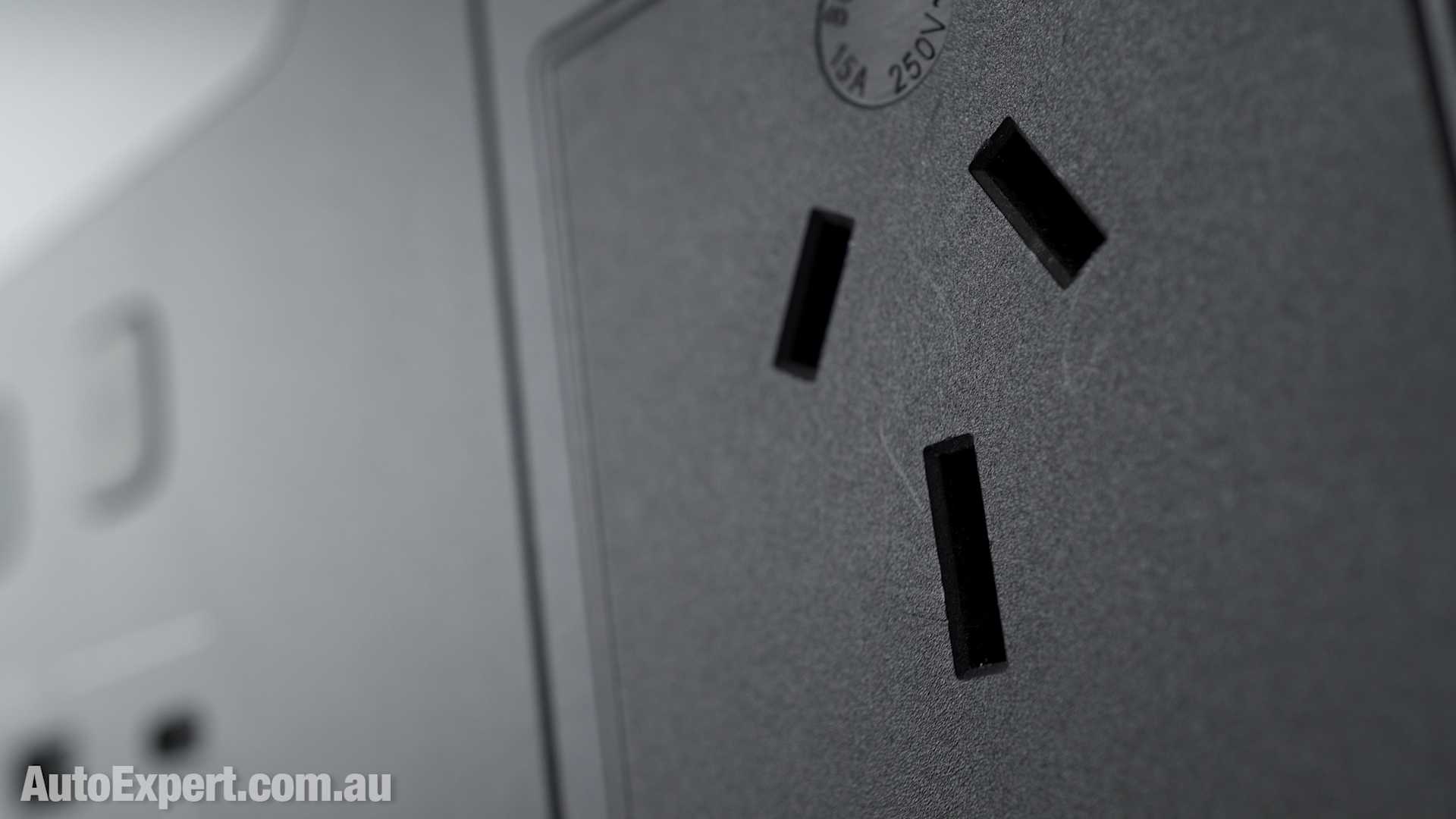
15-amp 240V outlets
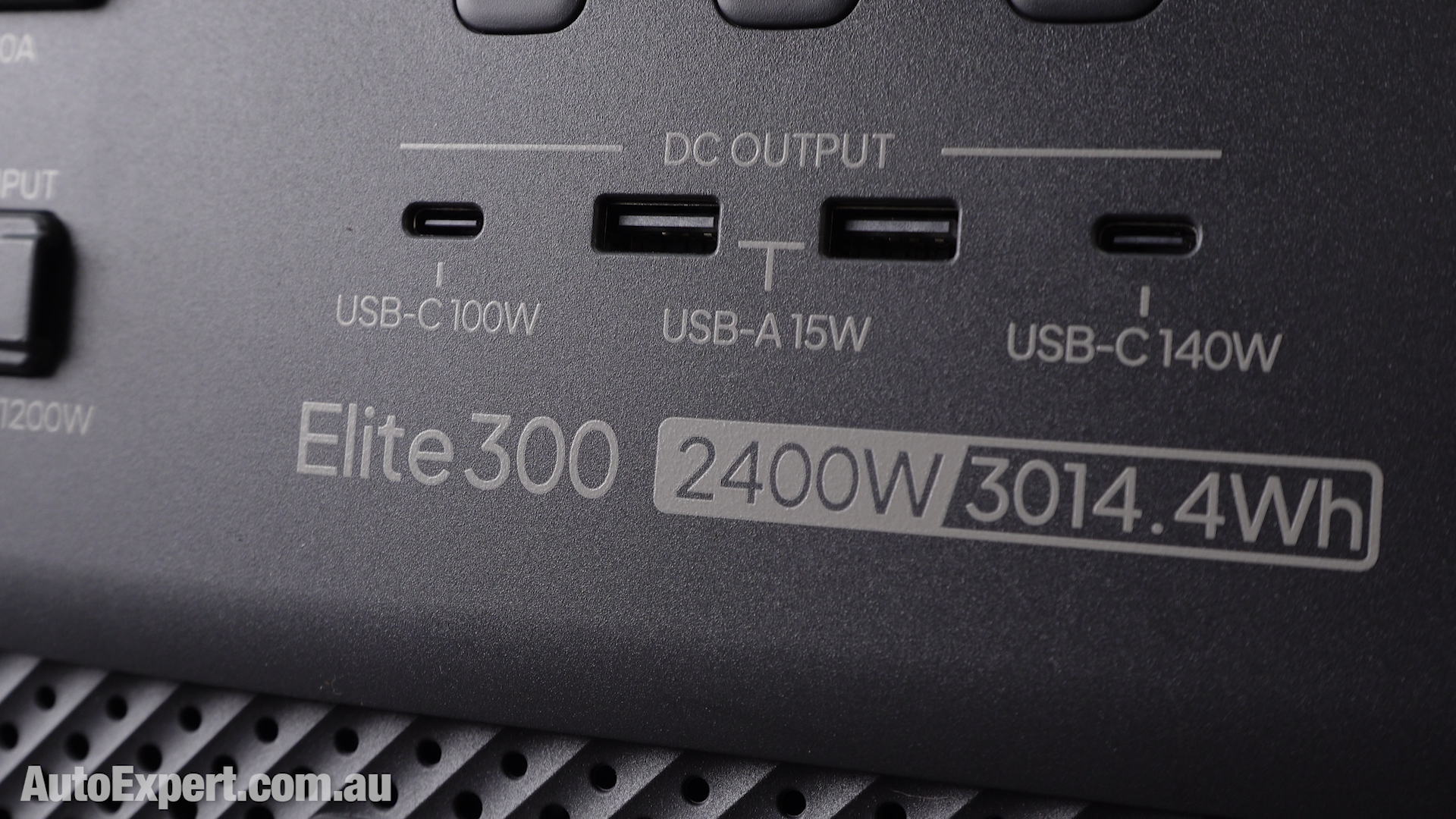
USB-C output up to 140W
12V DC output
Integrated AC charging
Built-in MPPT solar input
Bluetooth/app control
UPS functionality with 10ms changeover
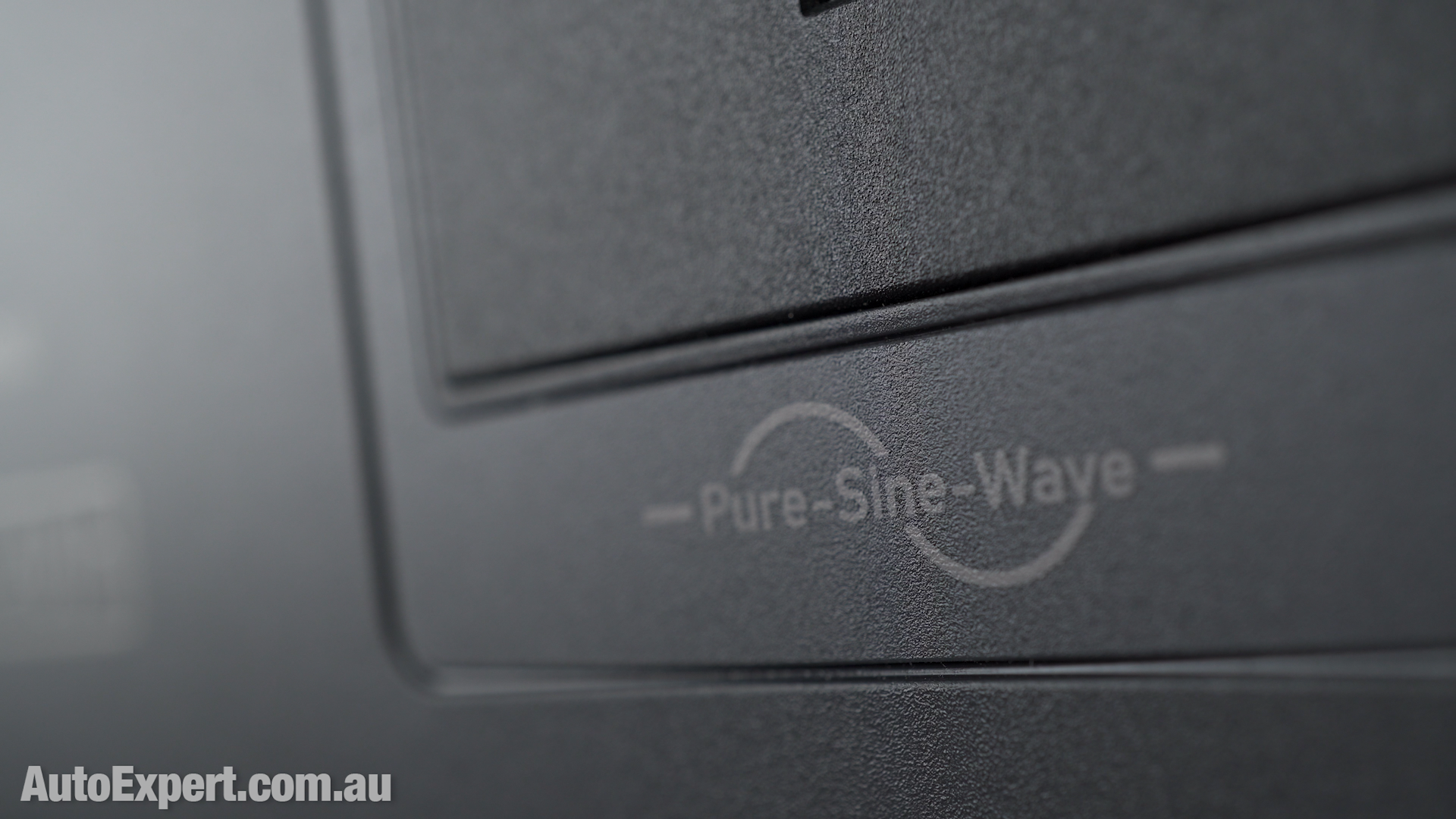
Sensitive 240-volt appliances are no problem - the Elite 300’s AC output is the pure sine wave kind
The 240-volt outlets are 15-amp sockets, meaning standard 10-amp devices plug in normally, but you can also connect equipment requiring a 15-amp plug — including some welders and caravan inputs.
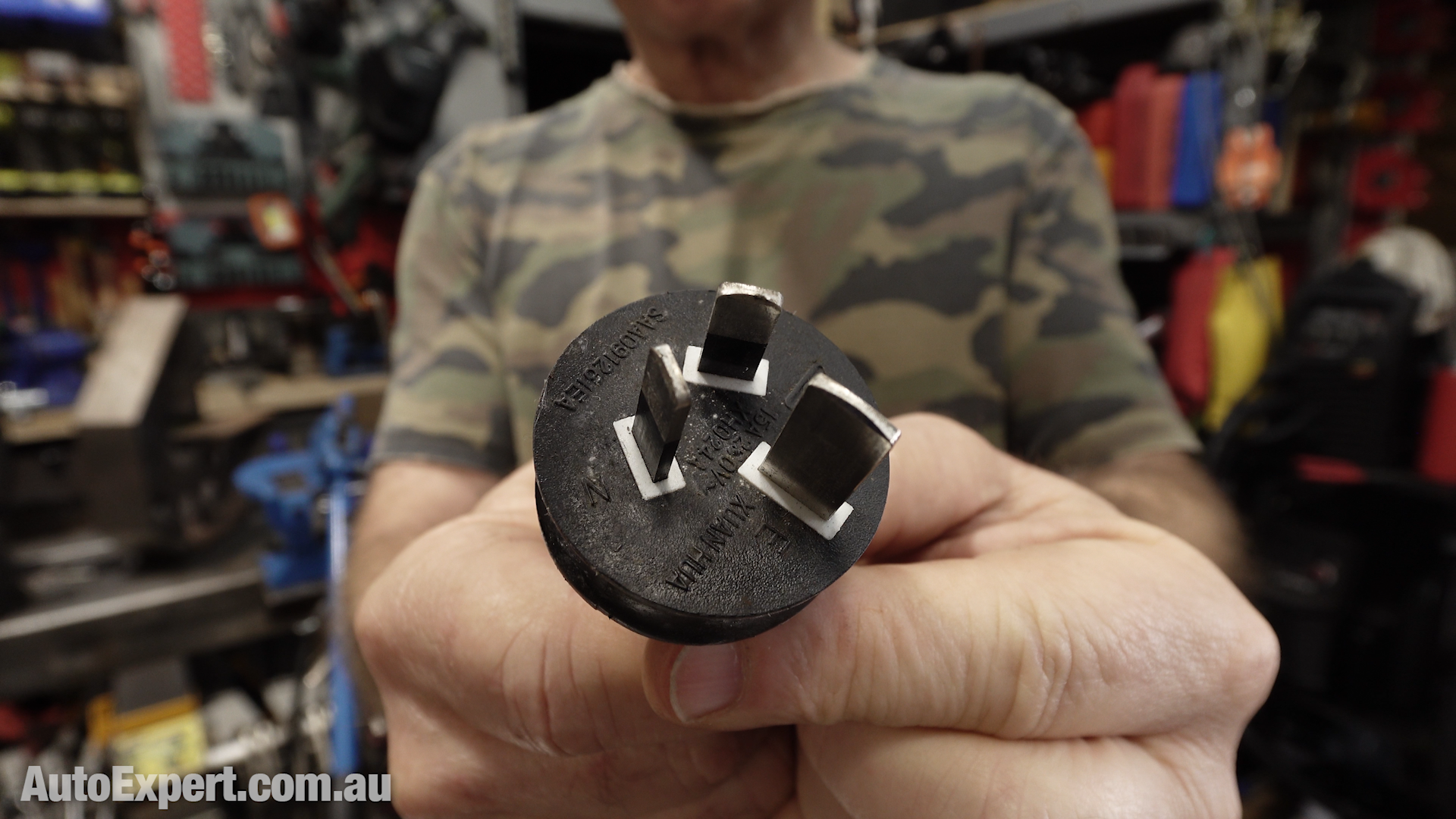
The Elite 300 will accept 15-amp plugs for high-power appliances (and caravans) but the sockets are also 10-amp compatible.
The AC output is pure sine wave, so it is suitable for sensitive electronics.
It also works as a UPS. Plug your computer or essential electronics into it, and if the grid drops out, the Bluetti can switch over in around 10 milliseconds.
That is useful if you live somewhere with unreliable power or you need continuity for computers, networking equipment, medical devices, security systems or other essentials.
How It Compares With Older Bluetti Units
Back in 2021, I reviewed the Bluetti AC200P. At the time, that was an impressive unit: 2kW output and 2kWh of battery storage.
Fast-forward to the Elite 300 and you’re looking at roughly 50 per cent more storage and 20 per cent more continuous output.
The older AC200P also required a separate external charging brick. The Elite 300 has the charger integrated into the unit.
The AC200P weighed 27.5kg and occupied about 45.5 litres, which is more than two jerry cans of volume. The Elite 300 is slightly lighter, despite packing more energy and more output, and it occupies about 33 litres.
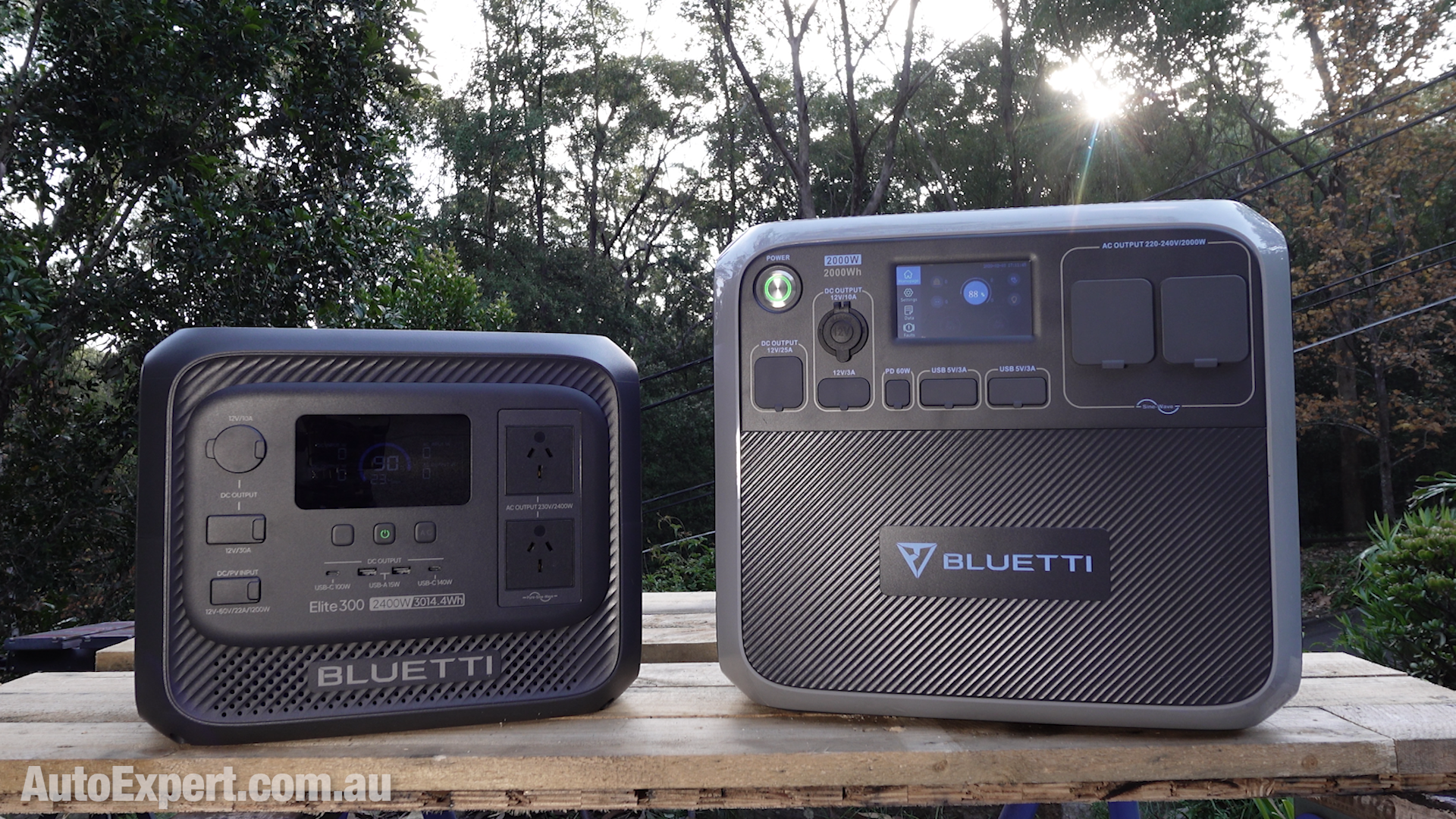
Elite 300 (left) versus older AC200P (right). The Elite 300 is smaller and lighter, despite packing more energy and more power output
That matters in a ute, caravan or camper trailer, where space is always limited.
My old AC200P is still going strong, incidentally. But the Elite 300 is easier to package, stores more energy, delivers more power, and has its charging system built in.
That is what rapid product evolution looks like.
Real-World Testing: Power Tools and Workshop Equipment
The key question with any portable power station is not what the brochure says. It’s what it will actually run.
So I tested the Elite 300 with real workshop gear.
Not toys. Not fairy-floss loads. Actual tools.
First, a 1500W circular saw pictured above. No problem. It made sawdust without drama.
Then I drilled a 27mm hole through 10mm steel using a magnetic base drill. In that test, the Bluetti had to power both the drill and the powerful electromagnet holding the drill in place. (Click the images below to enlarge.)
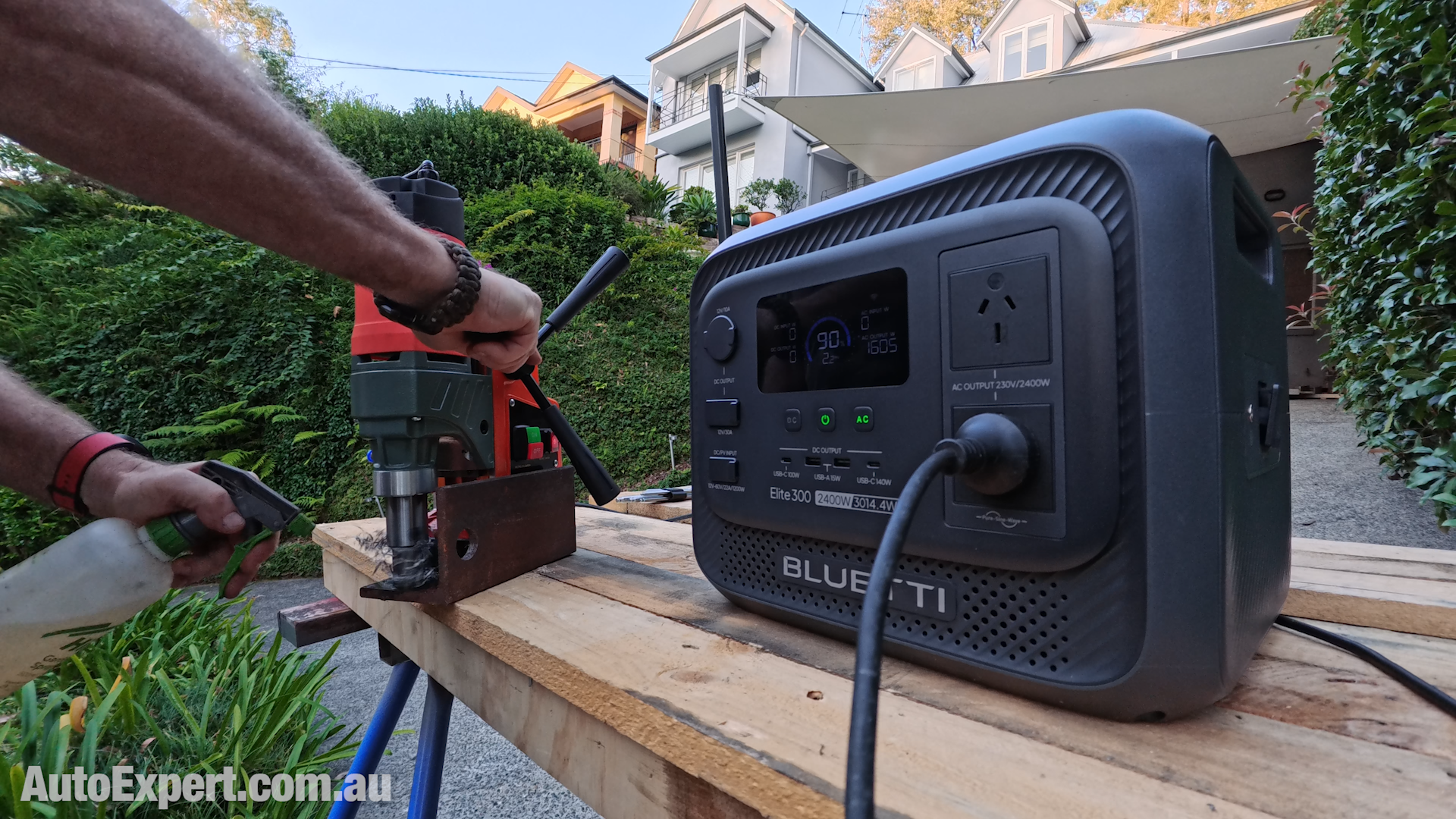
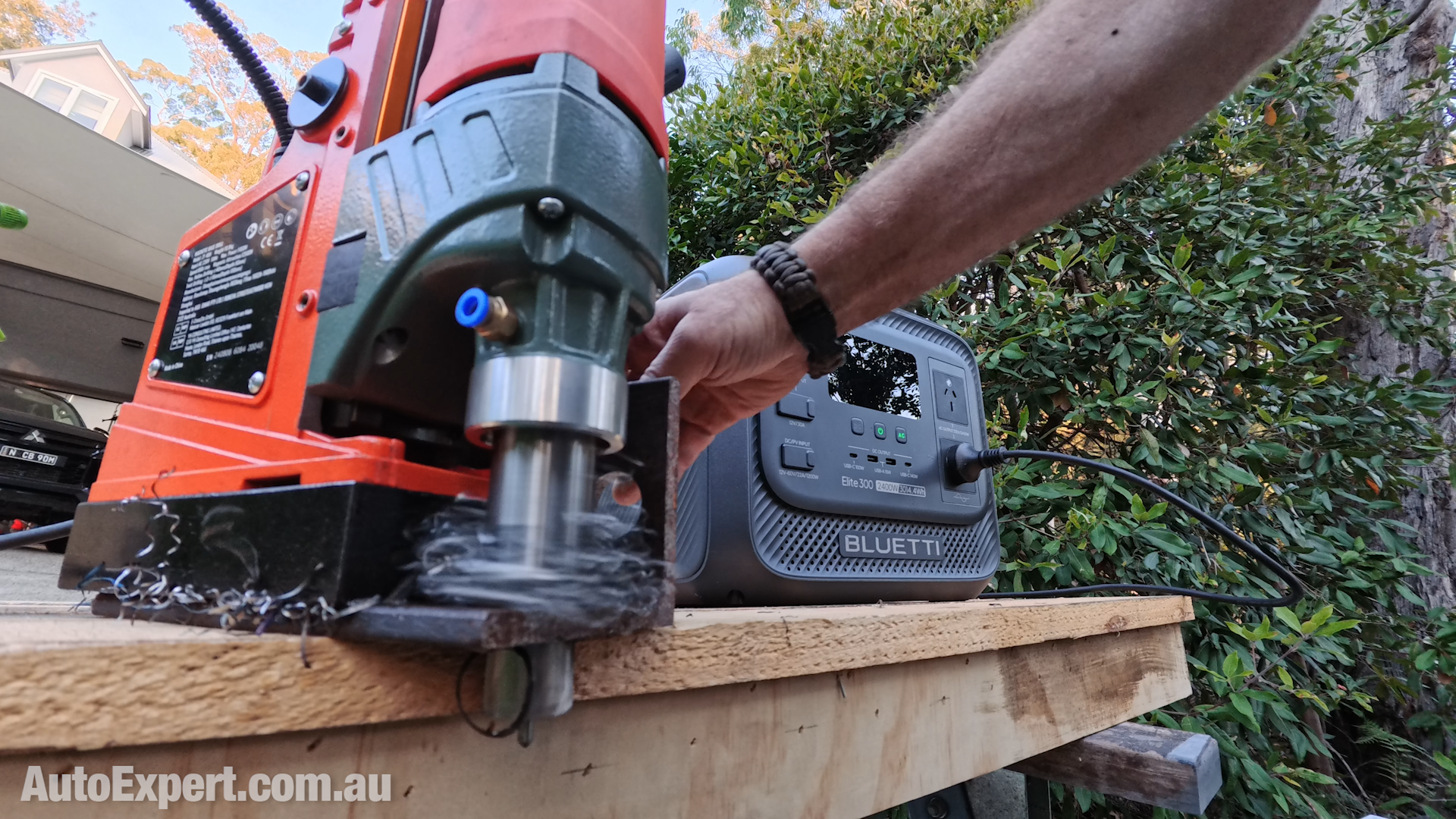
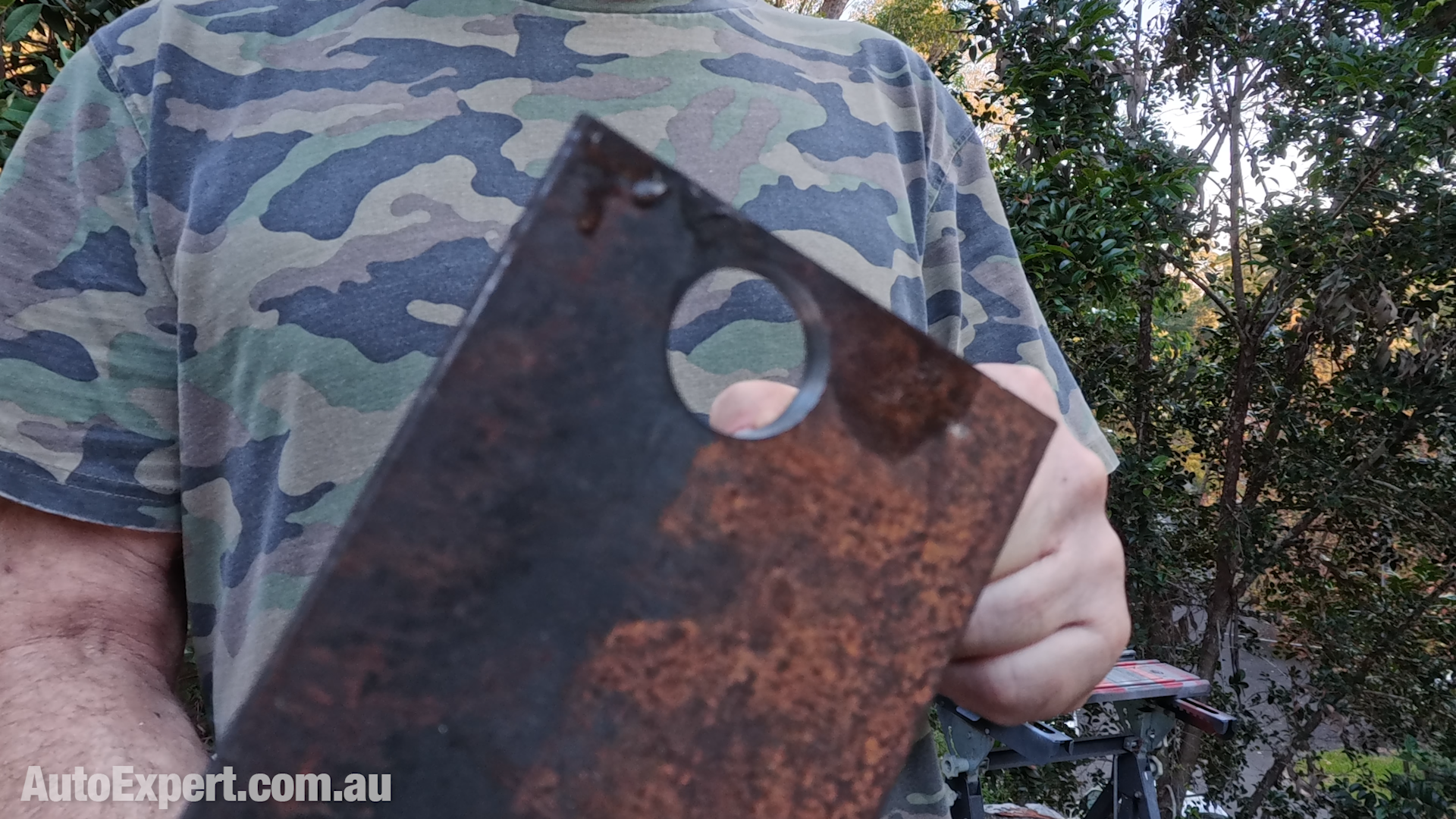
Again, no problem.
That means basic caravan and household loads — fridge, microwave, lights, electronics, small appliances — are not much of a challenge.
But I wanted to push it harder.
Welding From a Portable Power Station
One of the most impressive tests was running my UniMig Razor 205 Smart Set welder.
This is a 15-amp welder, not a toy. I ran it in DCEP synergic mode using 0.035-inch wire and Argoshield Light gas.
That is not heavy industry, but it is well beyond an entry-level shed welder. It is certainly more than enough for real rural repair work — the kind of thing you might need to do on a farm, a property, or a remote jobsite.
The Elite 300 ran it.
That surprised me.
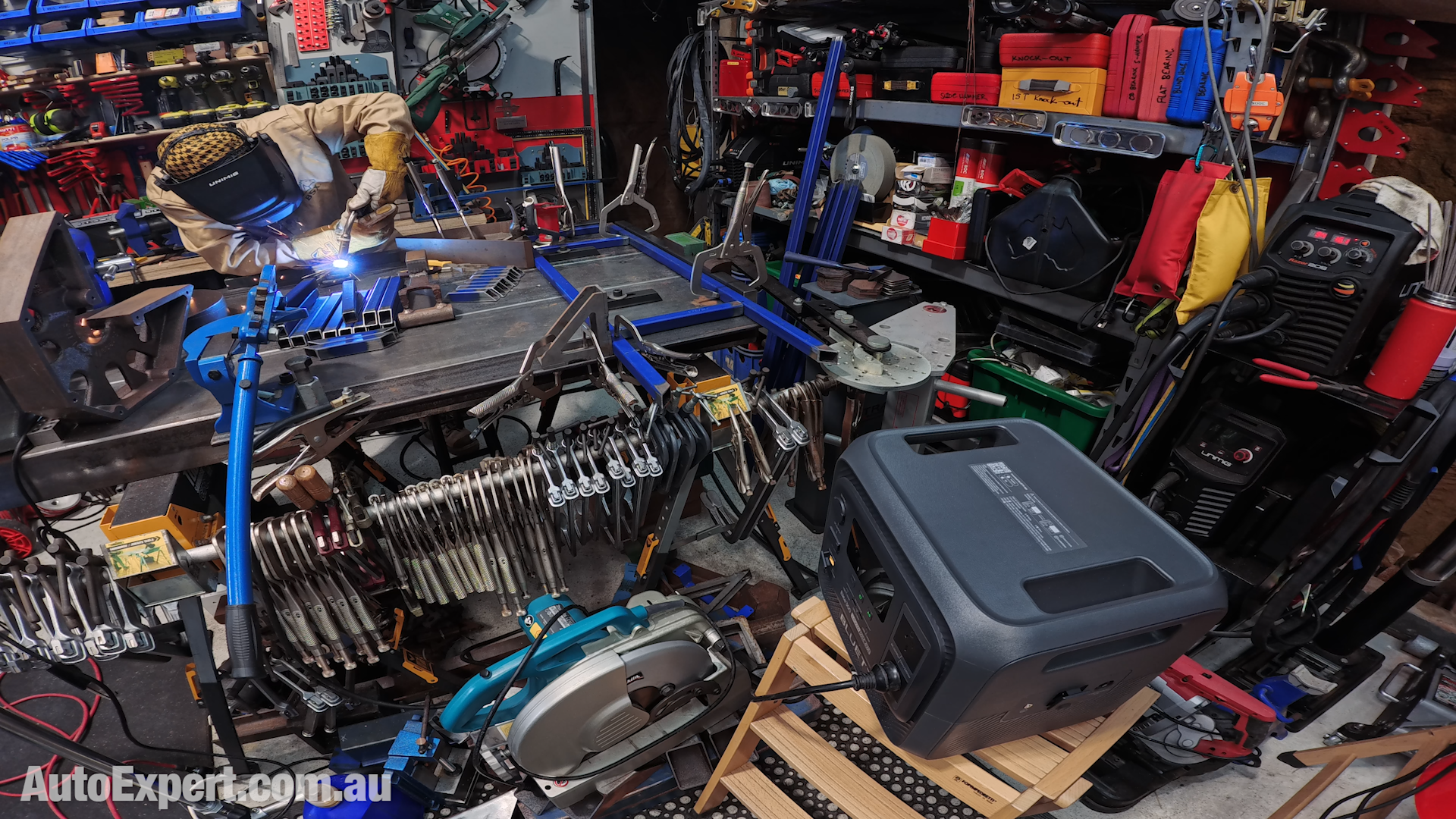
MIG welding with the Elite 300 - you can see the Bluetti and the welder on the right side of the frame
This is where the 4800W surge capacity becomes important. Many workshop tools draw a large spike of current at startup, especially anything with a capacitor-start AC motor. The machine needs to energise the capacitor, overcome rotational inertia, fight the drag of belts, pulleys and bearings, and then settle into its running load.
Startup is the punch. The Bluetti rolled with it pretty solidly - much better than I expected at the outset.
More Workshop Tests
I also tested it on an entry-level shed drill press with a 1hp, 750W motor. It started and ran the drill press easily.
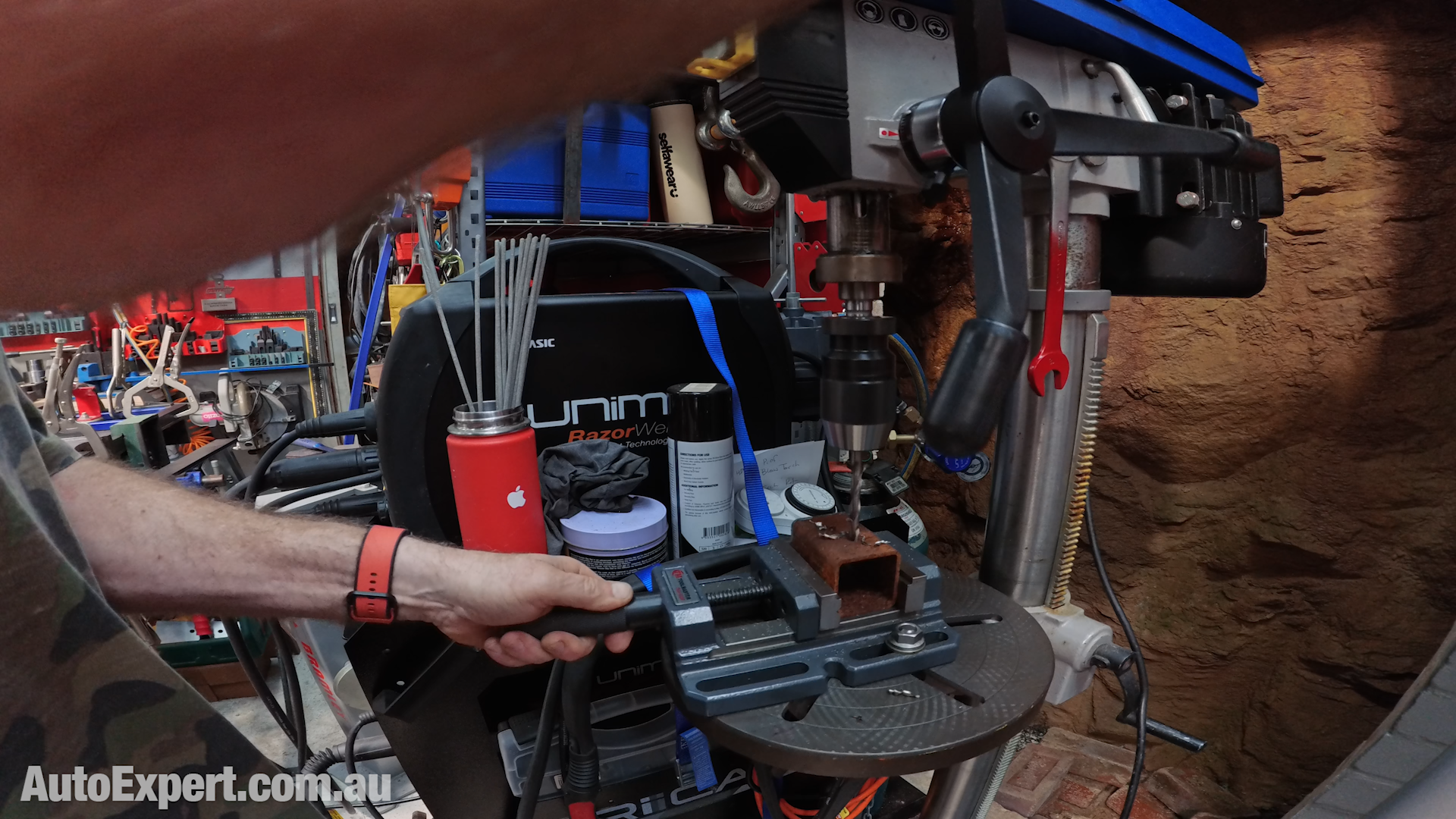
Need a drill press, but off grid? No problem.
Then I tried an 8-inch bench grinder with a linishing attachment. Same nominal motor power, but more rotational inertia and more drag at startup. Again, no issue.
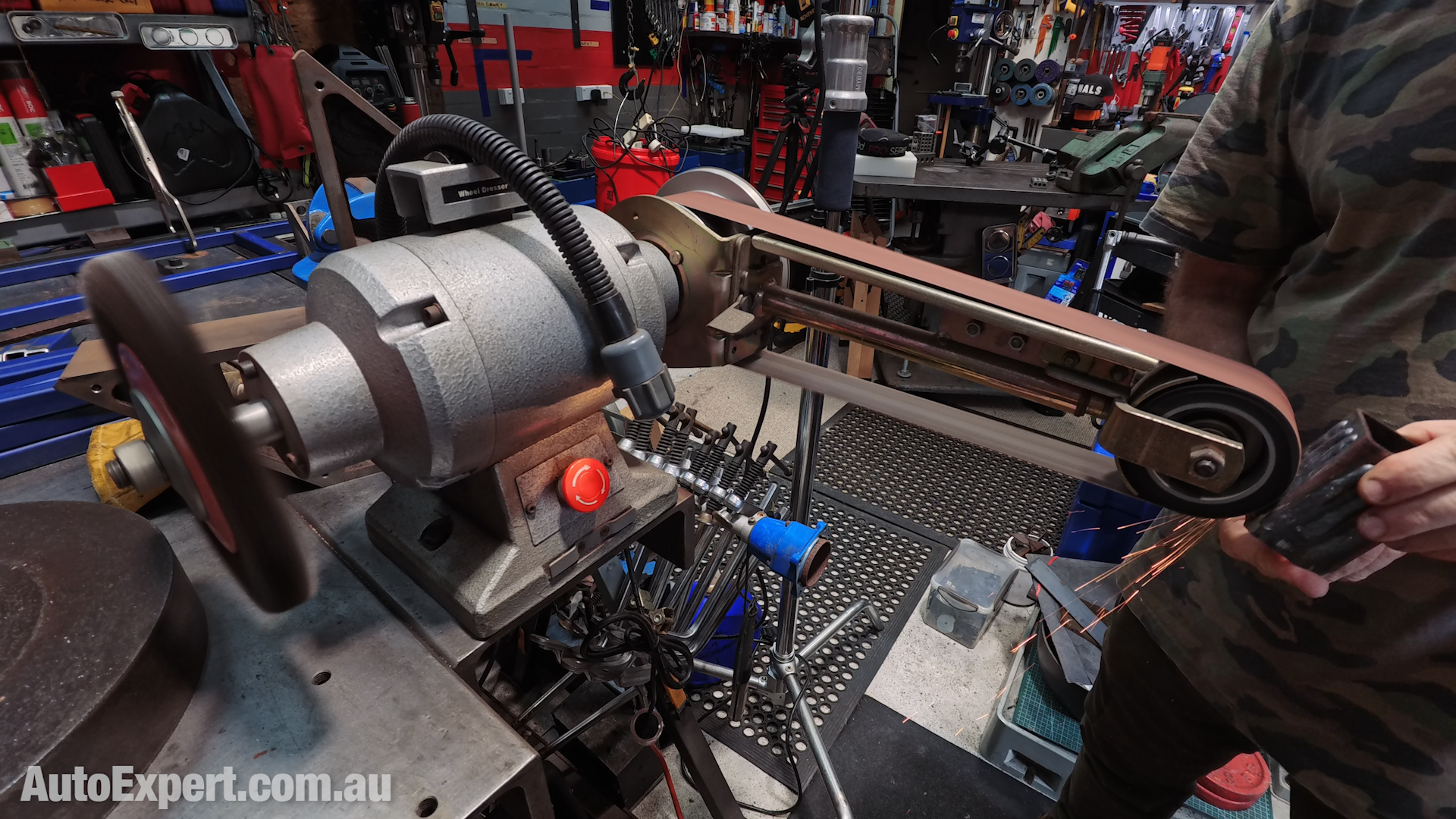
Bench grinder ran fine - despite the additional drag of the linisher and wire wheel
My metal bandsaw also ran easily. It’s only half a horsepower, but it has a worm gearbox, belt drive, blade tension, two wheels and the actual cutting load. In my test it was cutting three ganged-up 25x12mm hot-rolled flat bars — effectively a 25x36mm solid section.
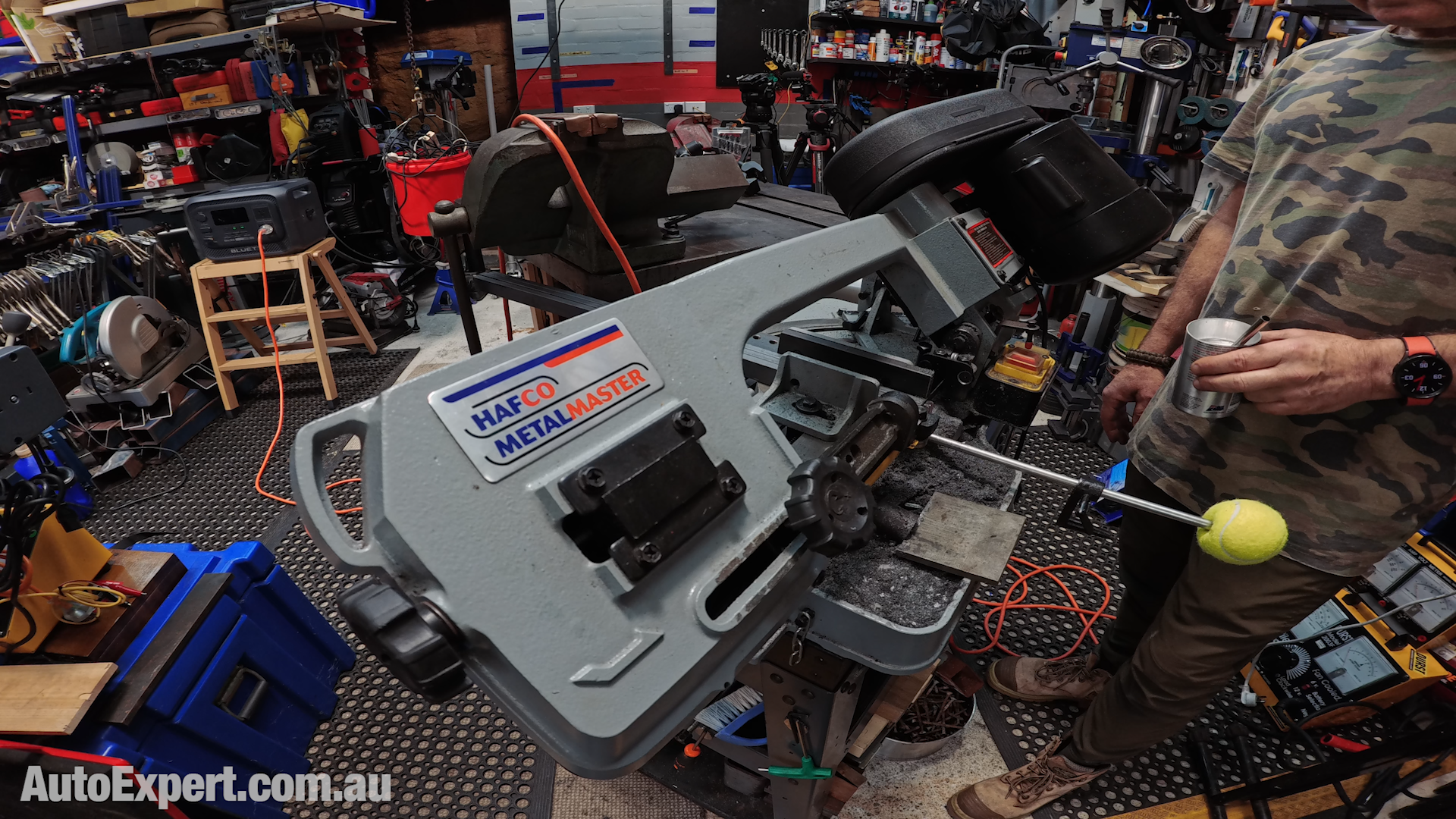
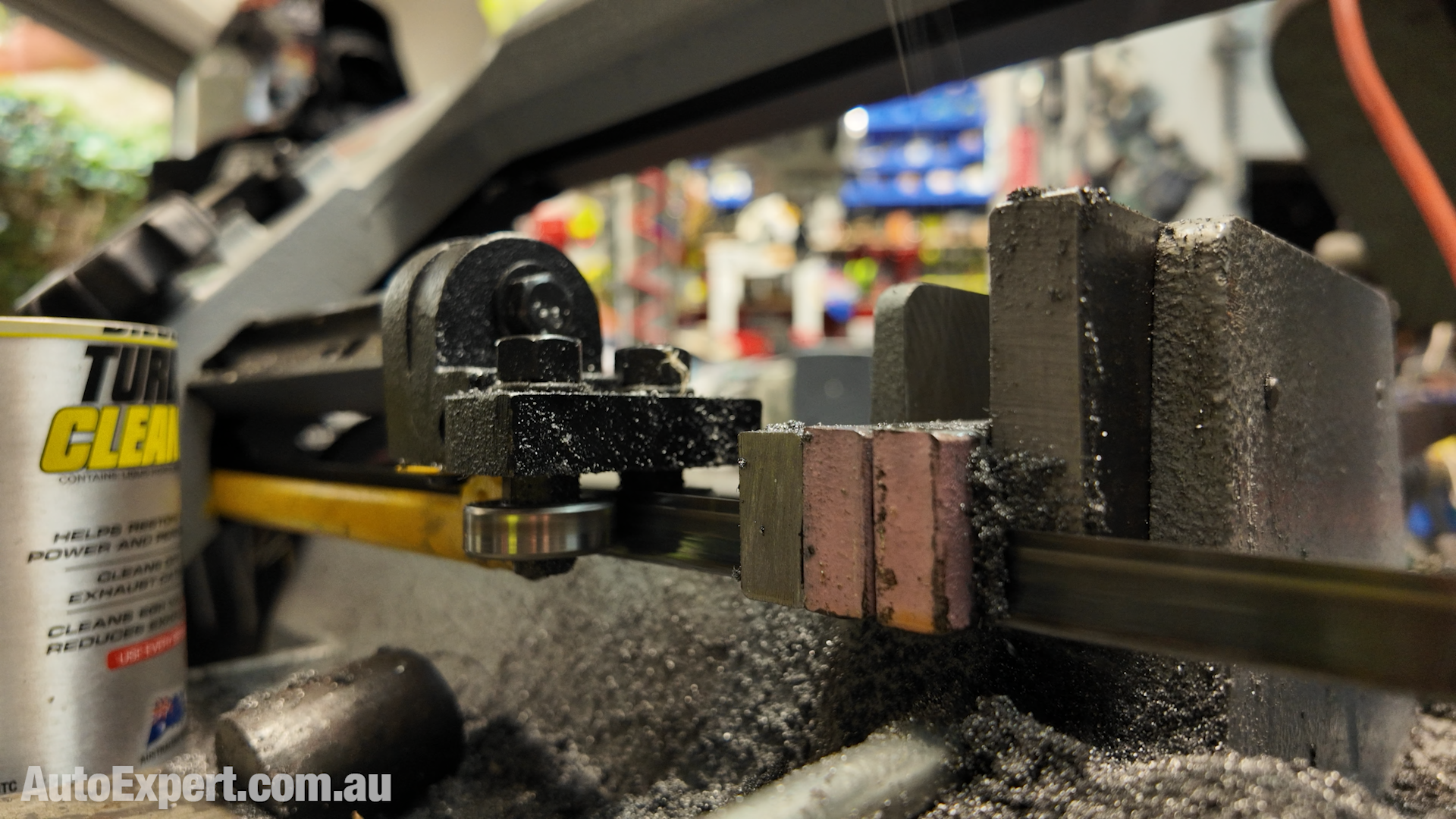
Cutting assignment here is three 25×12mm flat bars (mild steel)
The Elite 300 ran that flawlessly.
That test also replicated a real-world use case. I had about 1.5 tonnes of steel delivered for several projects, and my driveway was too steep for the delivery vehicle. So I had to cut the steel onsite and haul it up in manageable pieces.
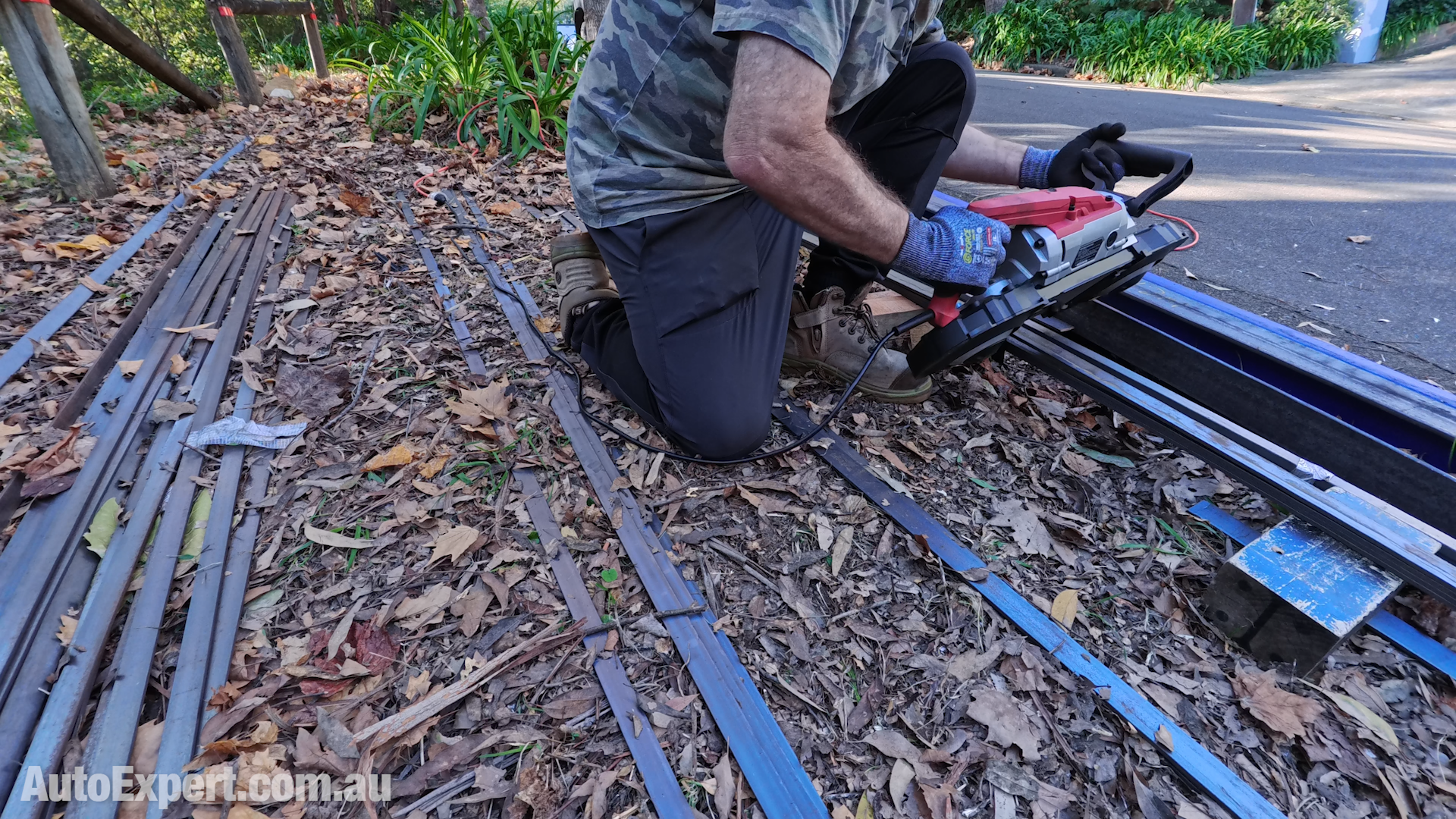
I had roughly 1.5 tonnes of steel delivered, and it had to be sectioned up to carry up the steep driveway - barely made a dent in the battery’s state of charge
That is exactly the kind of job where this unit makes sense: no grid, serious tool, practical problem.
The bandsaw ran all day, and after the steel-cutting session the Bluetti still had charge in the mid-80 per cent range.
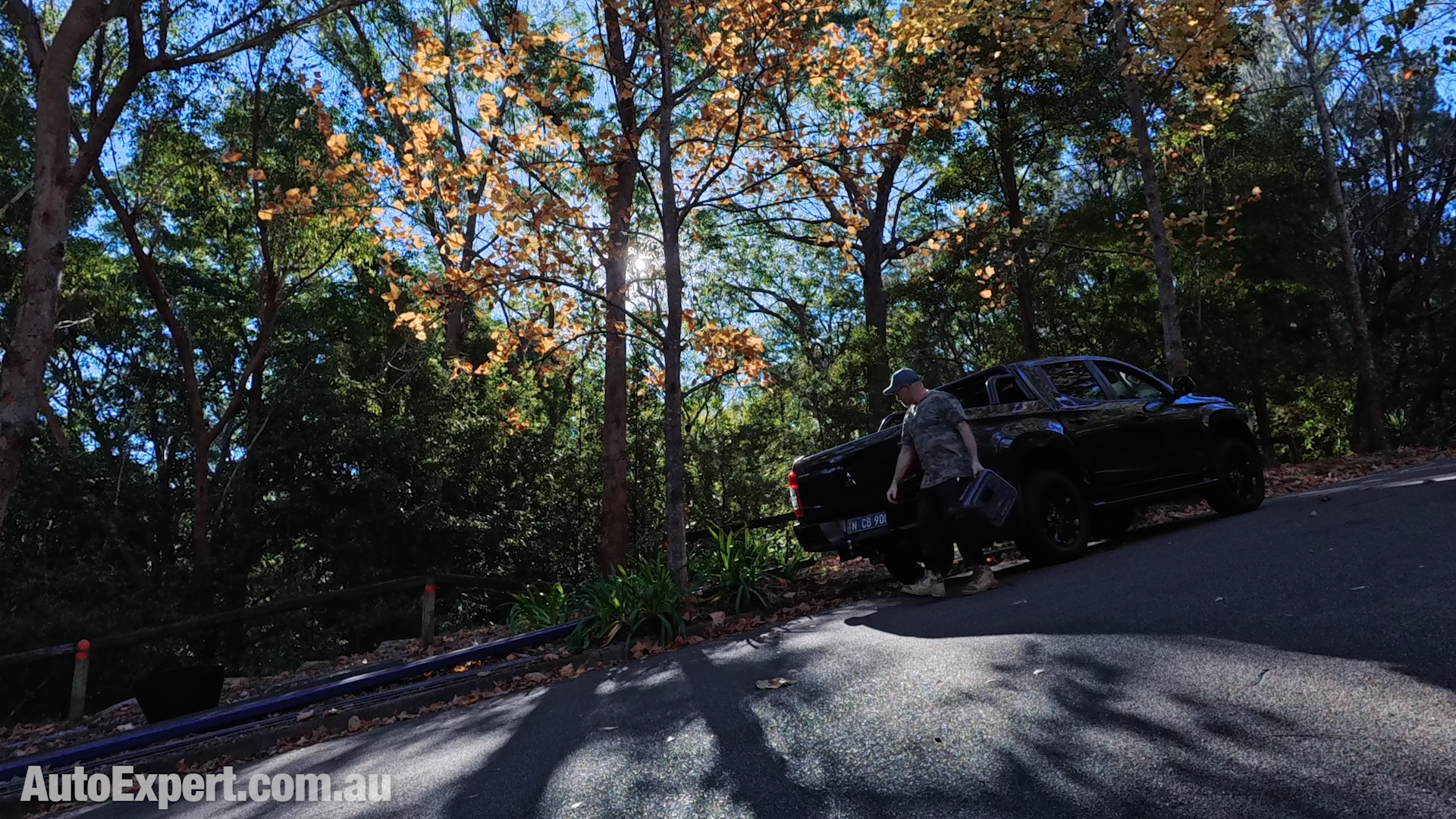
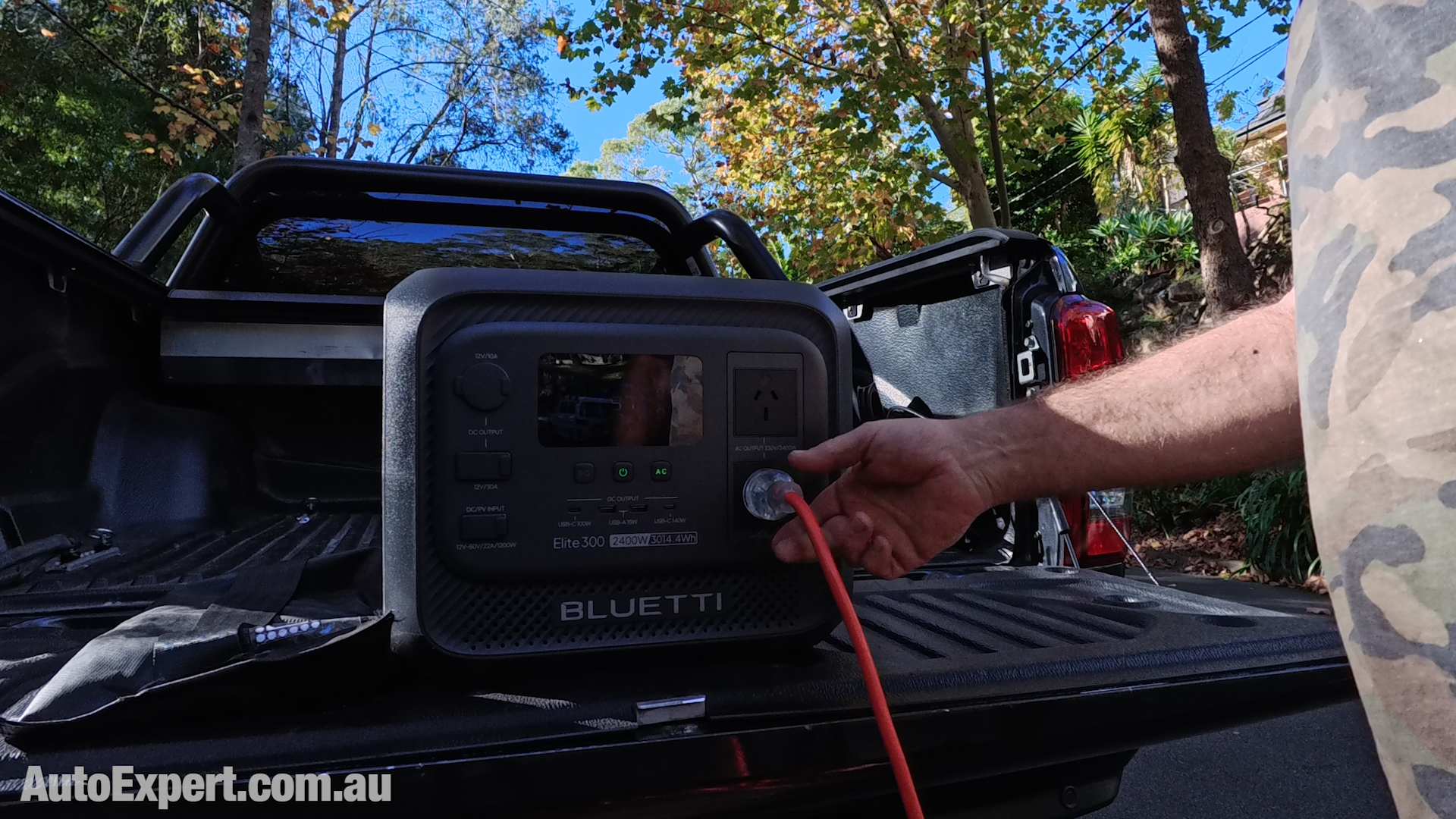
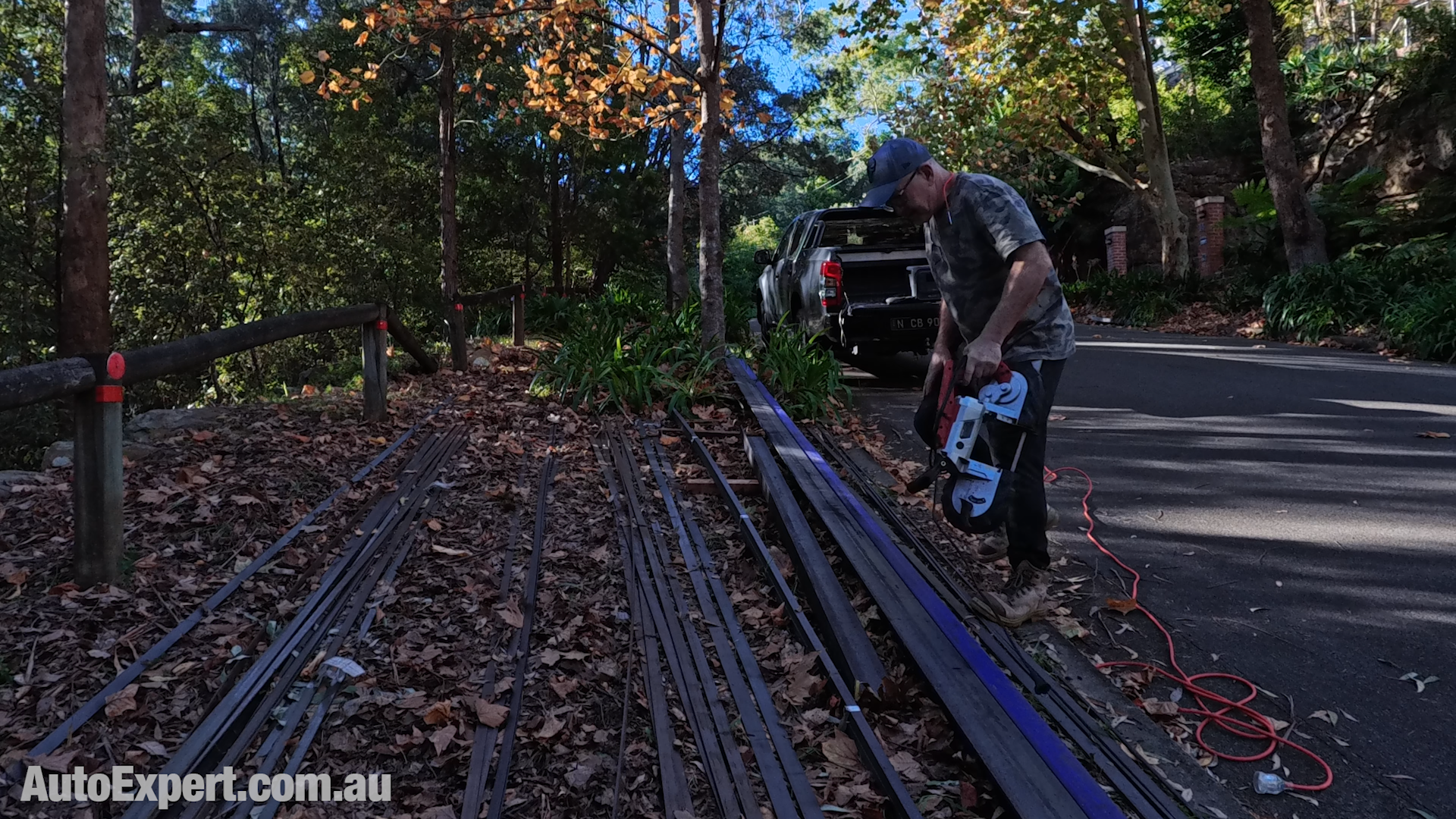
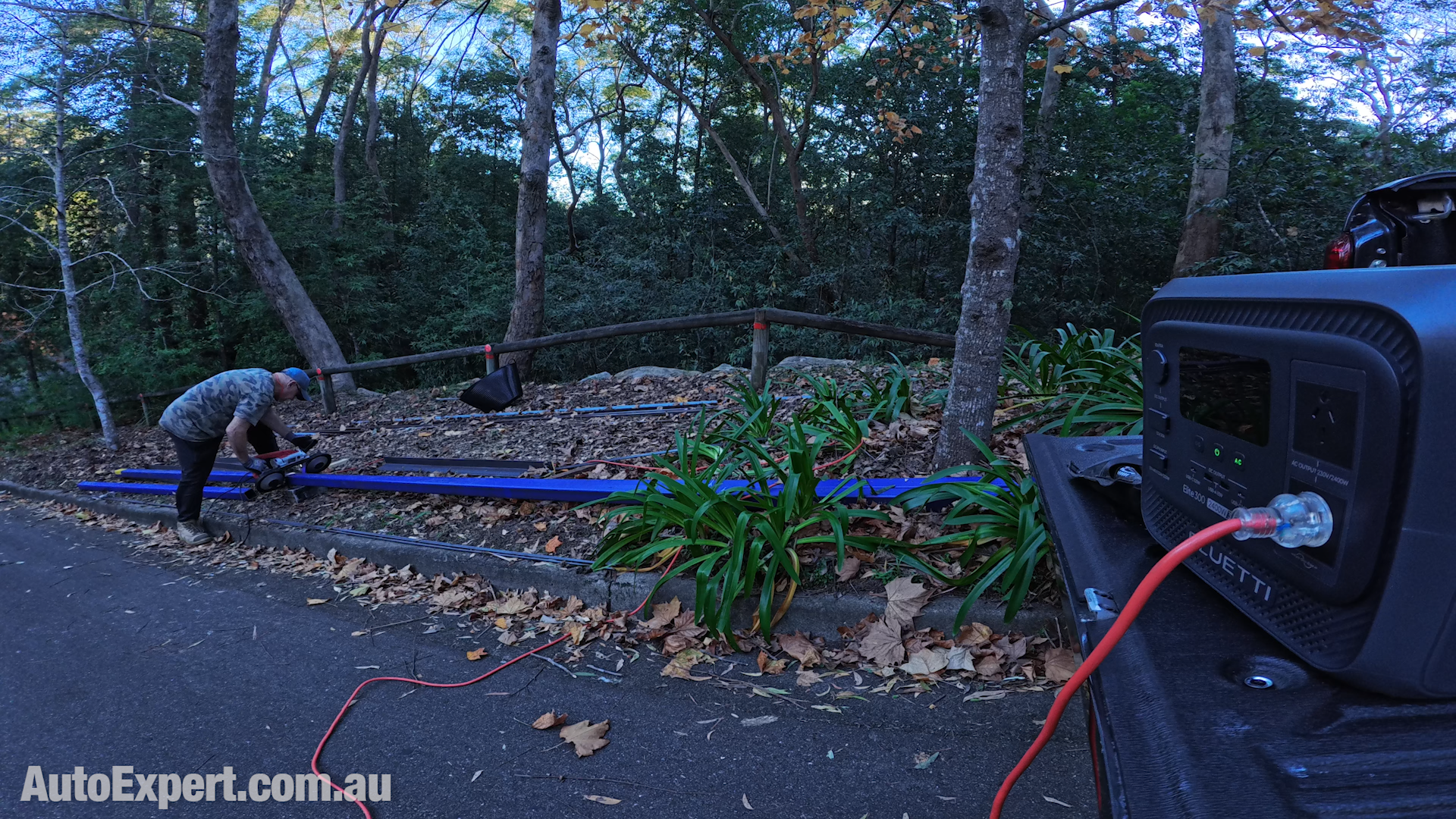
I also didn’t have to go to the gym that day…
What It Wouldn’t Run
The Elite 300 is impressive, but it is not magic.
It would not run everything.
My Radius Master belt grinder was right on the edge. It started, but tripped after a few seconds. That machine is a serious industrial-grade belt grinder with a 2hp, 1.5kW motor. It’s a $3000-class machine, not hobby gear.
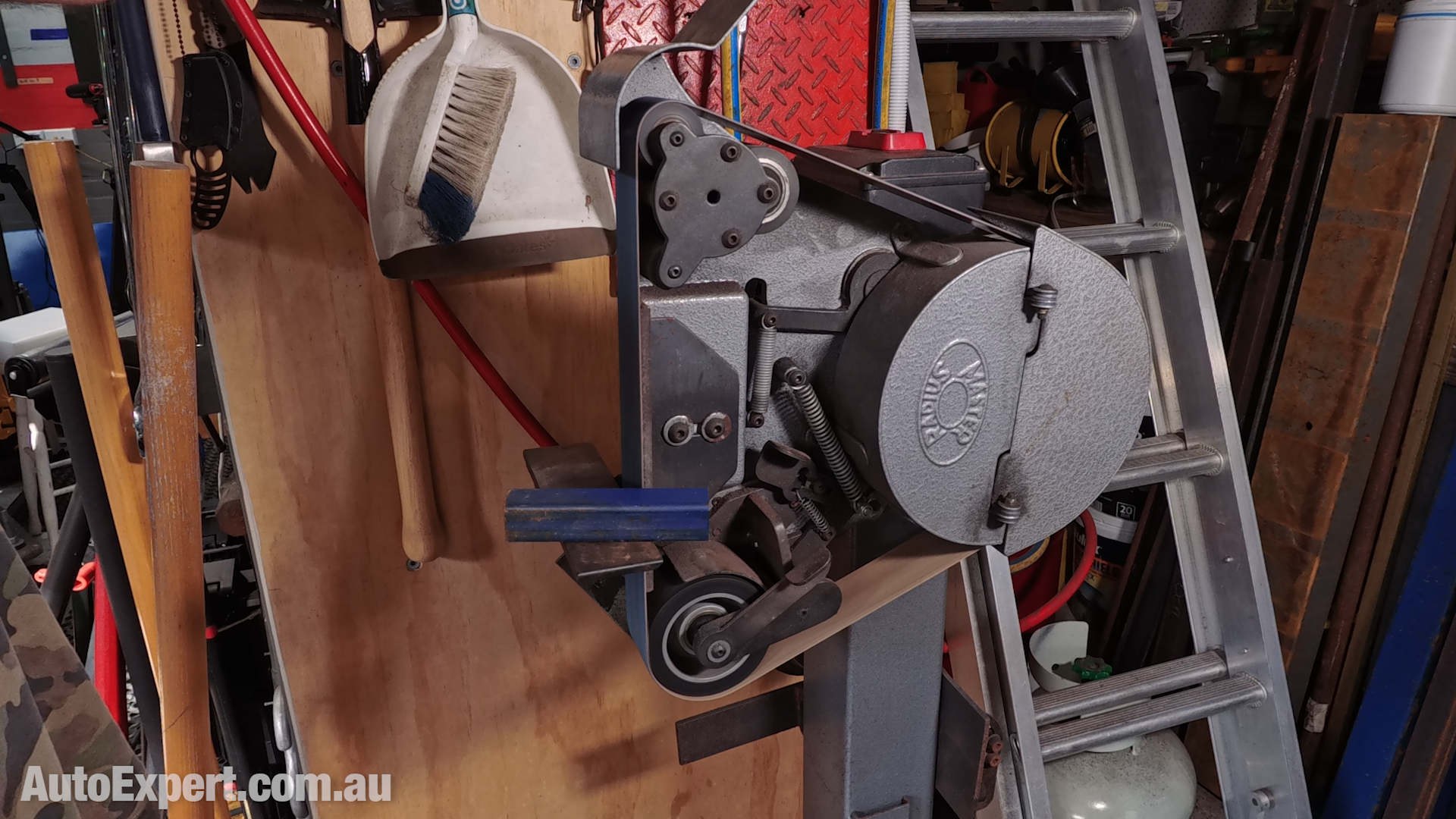
Radius Master’s surge on startup proved too heavy for the Bluetti
The Elite 300 also would not run my 2.5hp compressor, which is close to 2kW and delivers 240 litres per minute using twin pumps. That is essentially the biggest 10-amp compressor you can buy.
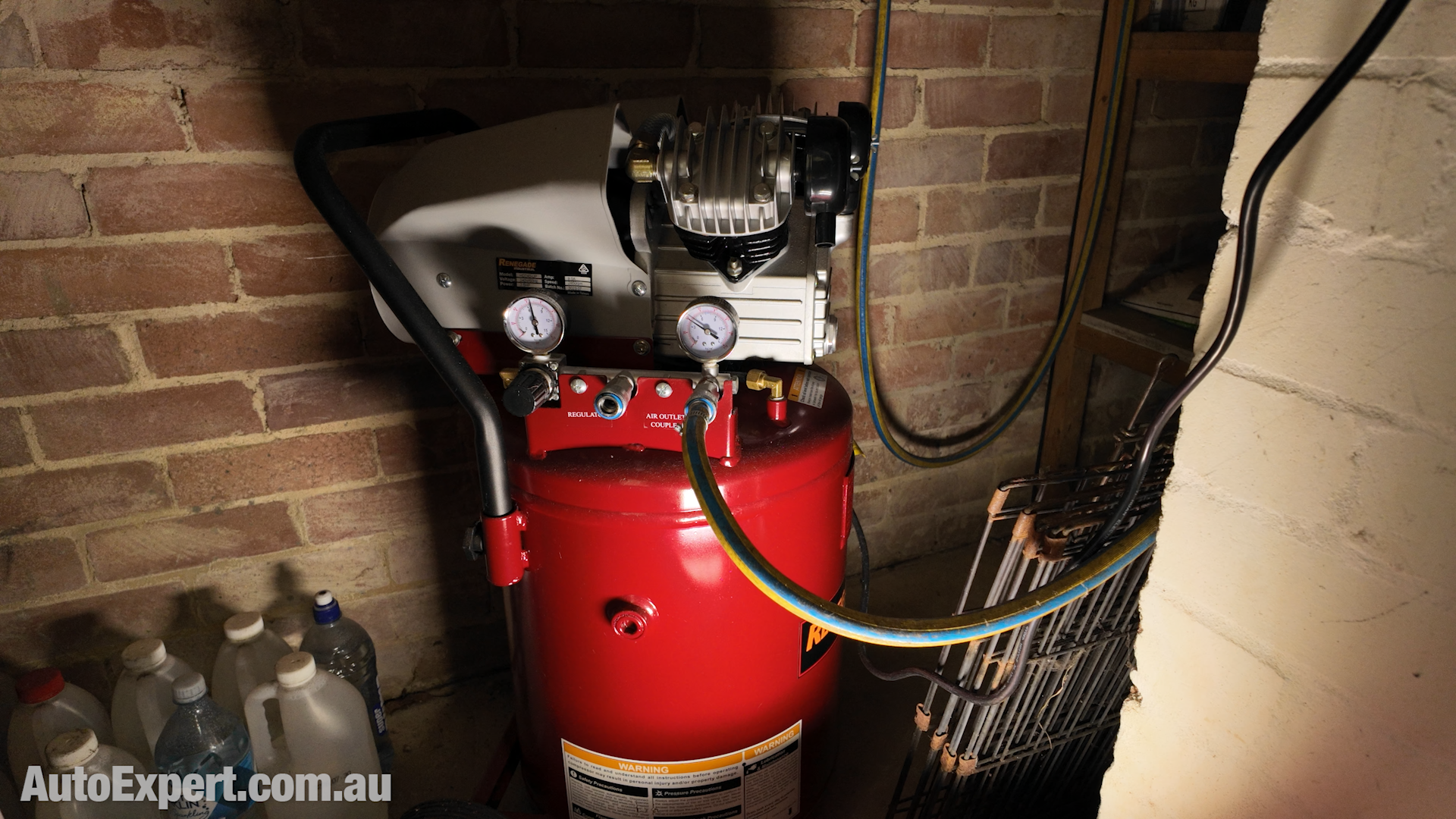
~2kW compressor was also a ‘no go’ for the Bluetti.
The compressor tripped the Bluetti every time.
I’m not especially critical of that. These are serious machines with heavy startup loads.
I also tried it on bigger equipment in the other workshop. It ran my HM-48B milling machine easily, and it also ran my biggest radial-arm drop saw.
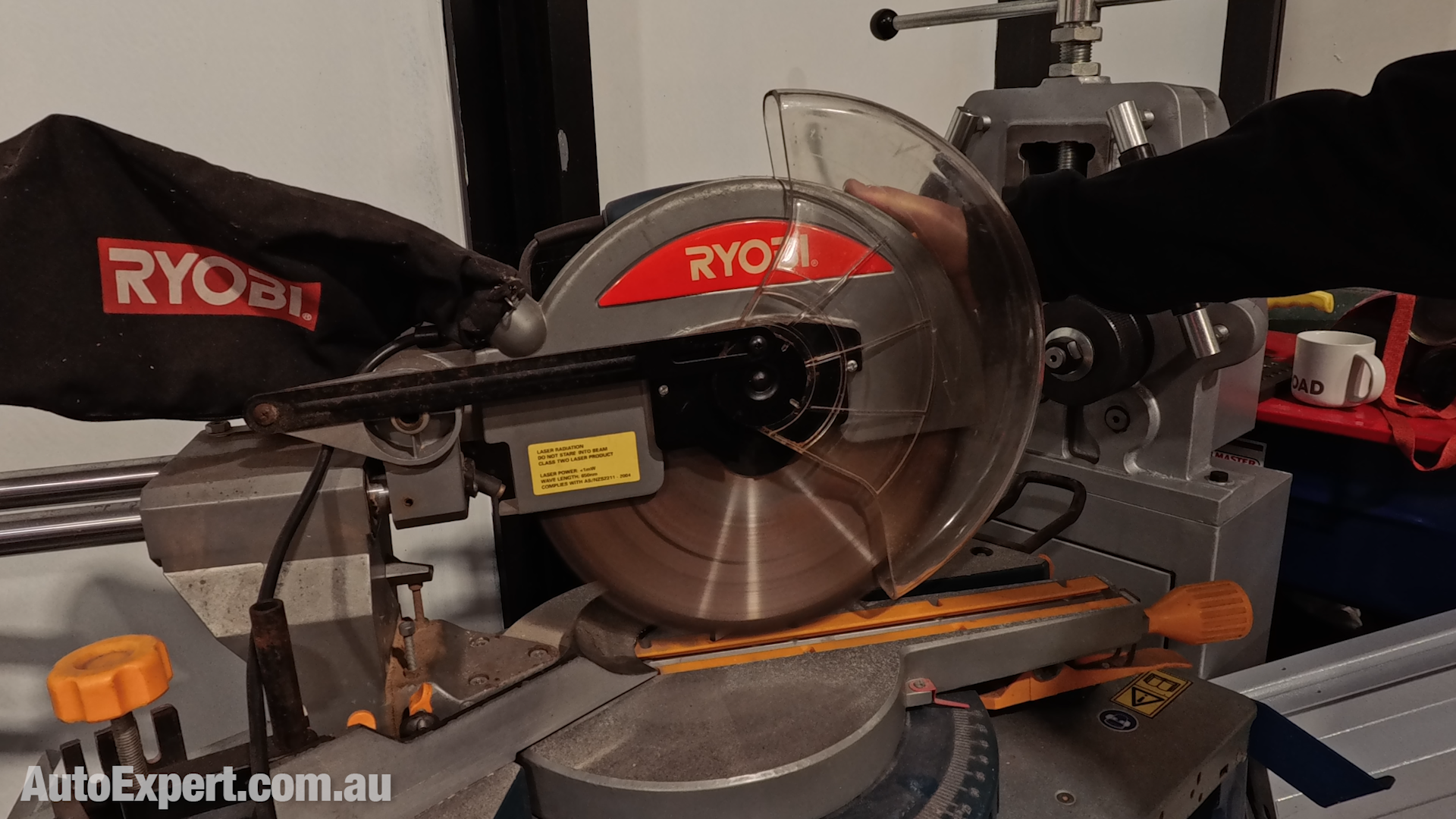
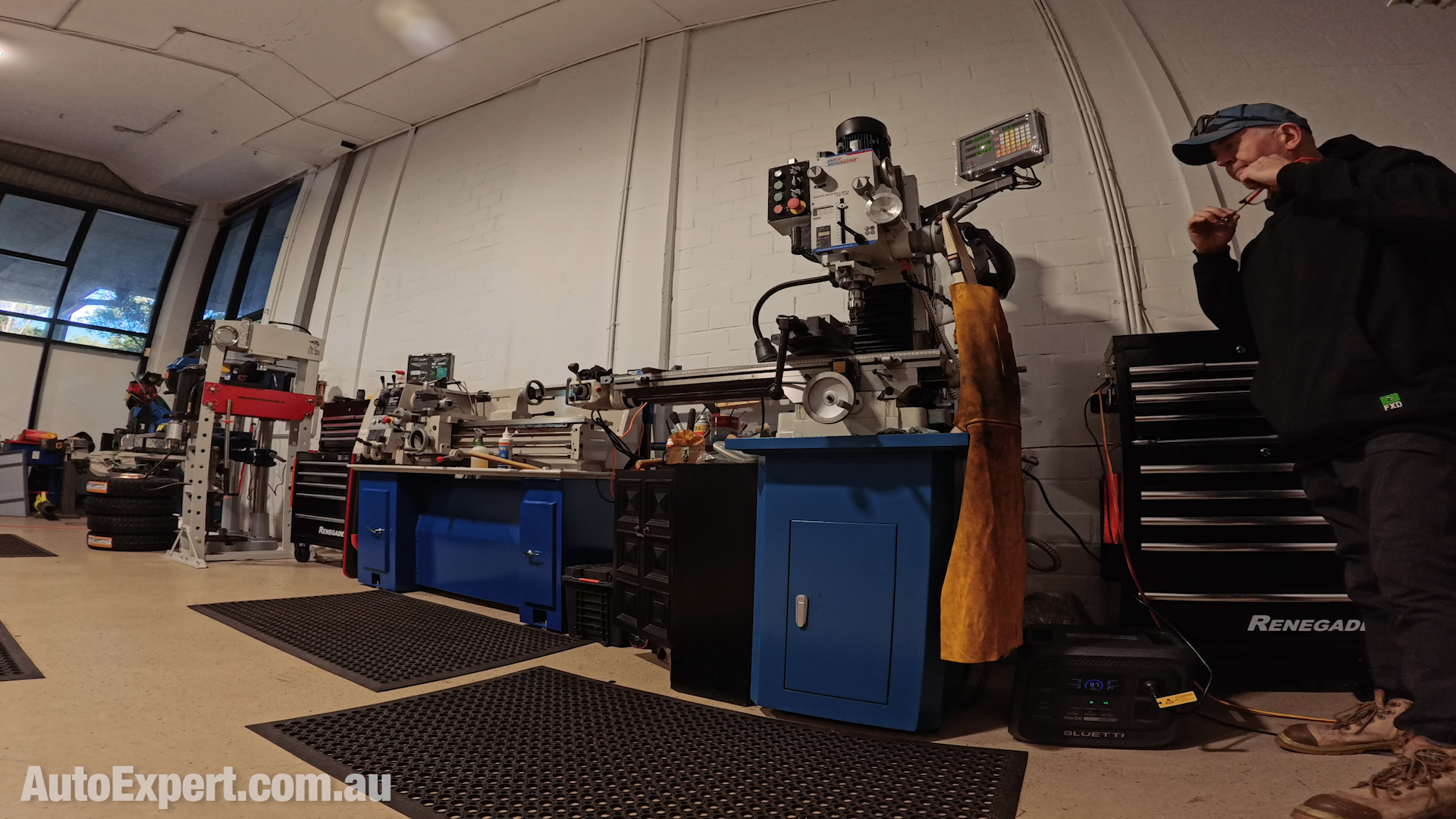
Above: Radial-arm drop saw and HM-48B Mill-drill both ran flawlessly in the big workshop, under Bluetti power.
It was very close with my AL-960B lathe, but ultimately not quite there. And it had no chance with my Lift King 9XL four-post hoist — although I was not expecting it to run that.
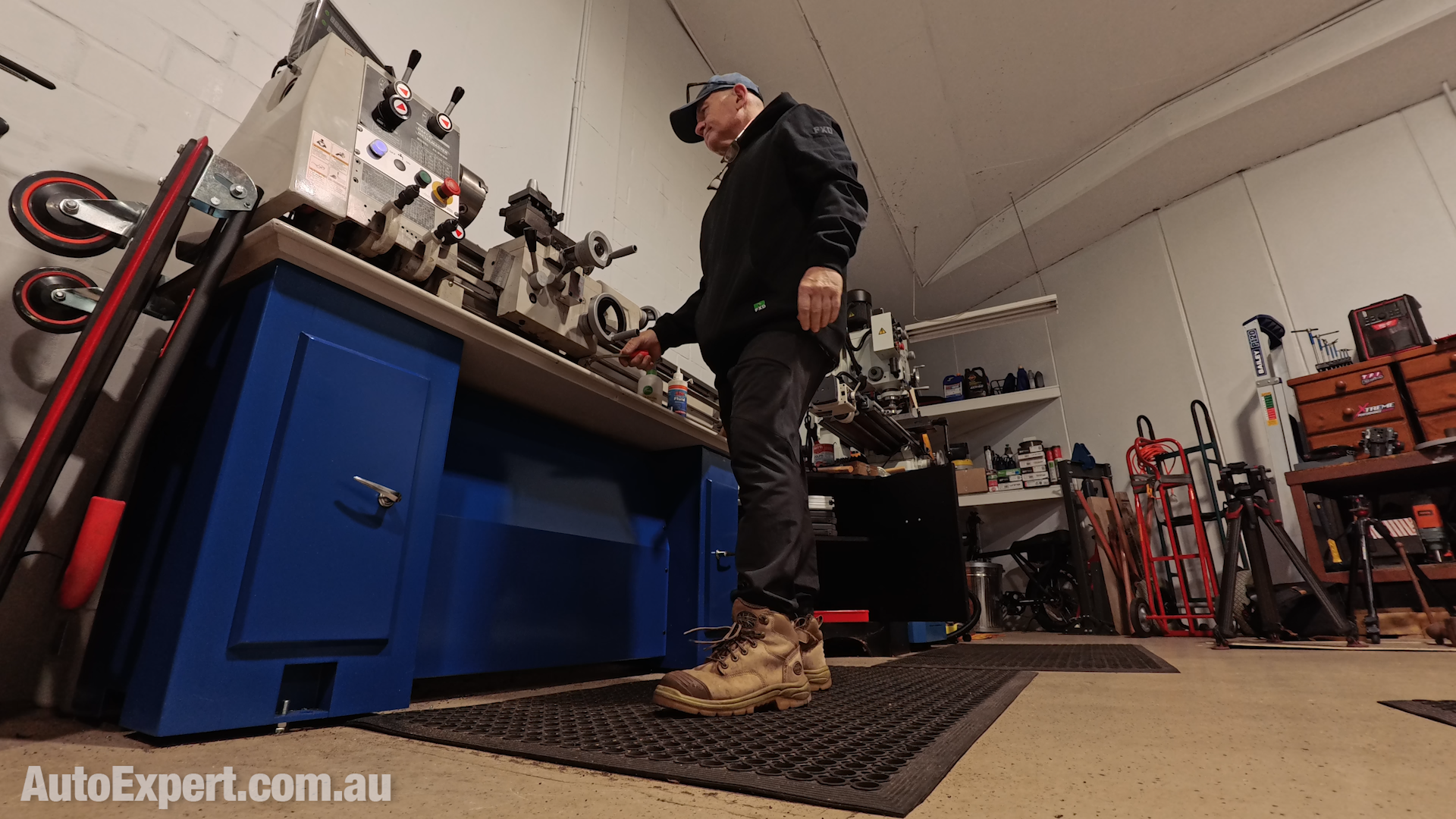
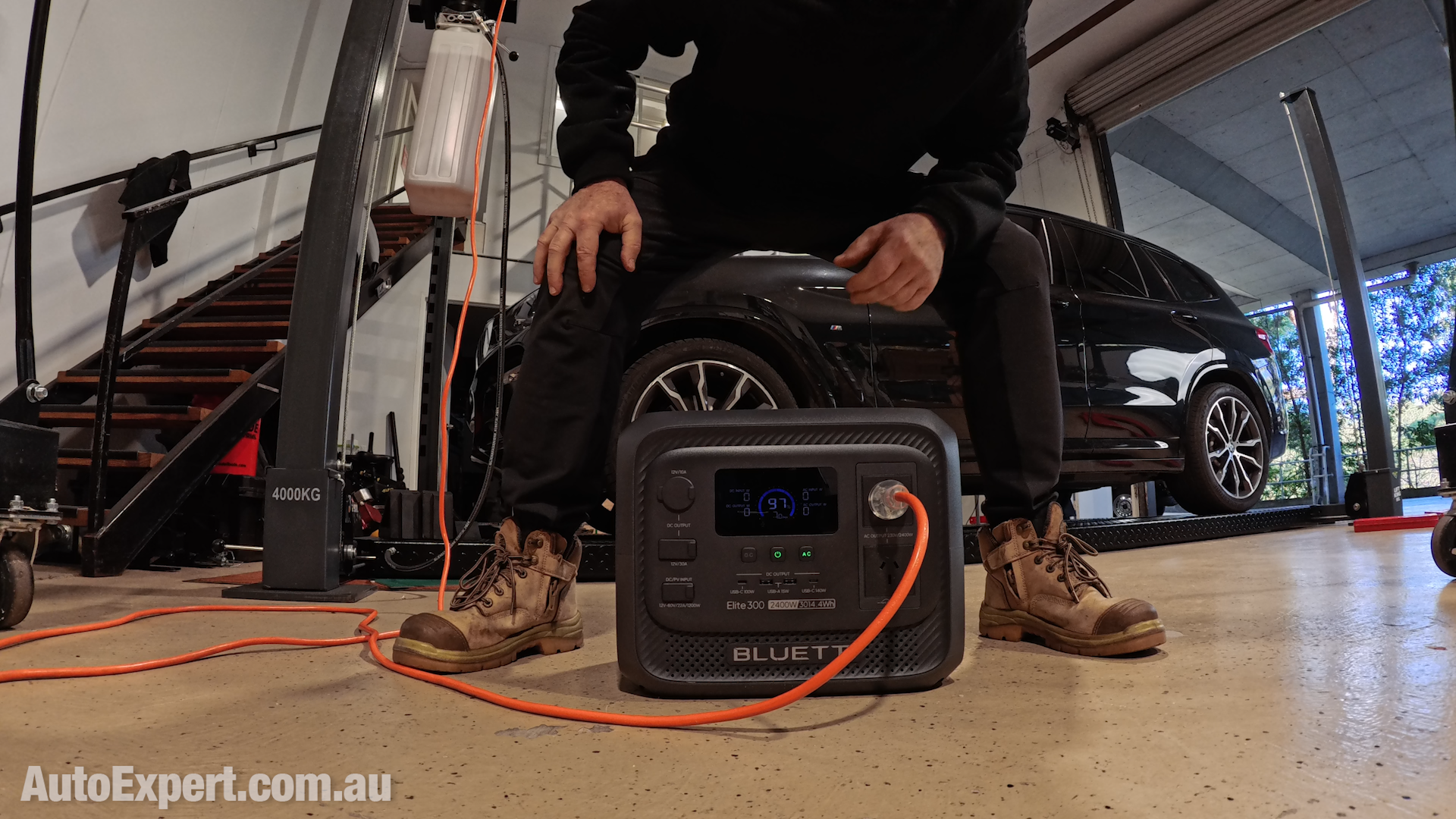
Above: The Elite 300 almost ran the AL-960B lathe, but ultimately tripped after every attempt, and it had no hope on the 9XL four-poster.
The conclusion is pretty clear: the Elite 300 is not an invincible off-grid fabrication powerhouse. But it will run a surprising amount of serious equipment, and its surge capacity is genuinely useful.
Unless you try to run hardcore industrial machinery, it is hard to see most people overloading it in normal use.
If you do trip it, the AC light flashes. Switch the AC side off and back on again to reset it. You’re not killing it. The internal protection is doing its job.
Caravan, Camping and Blackout Use
For caravan and camping use, the Elite 300 makes a lot of sense.
A fridge, lights, electronics, chargers, small appliances and even a small air conditioner are all realistic applications. During a blackout at home, it would also run essential loads without requiring a generator.
Boiling a kettle and cooking electrically are feasible, but you do need to be sensible.
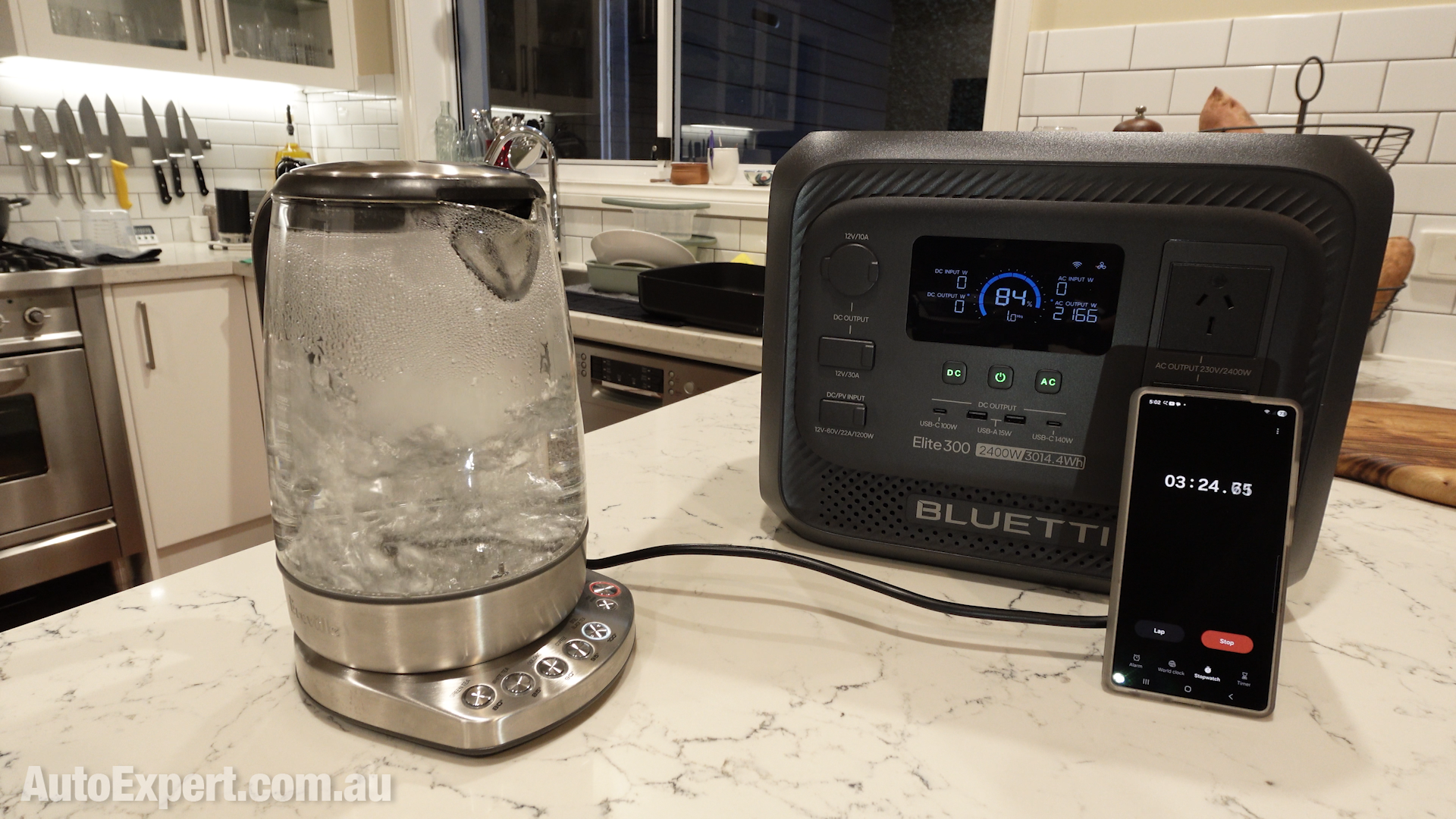
This is one of the harshest steady-state tests you can do on a unit like this. Water is hard to heat up, and electric jugs often draw more than 2kW continuously (2.2kW when this shot was taken, for example). The Elite 300 boiled more than one litre of water in under 3:30, which is quite impressive.
The unit is limited to 2400W continuous output. A kettle can pull a very large load. Induction cooking is also power-hungry. Trying to boil the kettle, cook on induction, run the fridge, power the air conditioner and keep everything else going simultaneously is overly ambitious.
Gas is still better for boiling water and cooking, especially off-grid.
Water takes a lot of energy to heat, and hydrocarbons dominate when it comes to energy density. If you want to run a fridge, lights and air conditioning overnight in a van or during a power failure, use gas for cooking and save the battery for the things electricity does best.
Charging Options
The Elite 300 has the key electronics onboard.
That includes the inverter, AC charger and MPPT solar charge controller. You do not need a separate solar controller: panels plug straight in, provided they are within the required limits.
Solar input is rated at up to 1200W, with a voltage range of 12 to 60 volts and a 22-amp maximum.
AC charging input is up to 2300W.
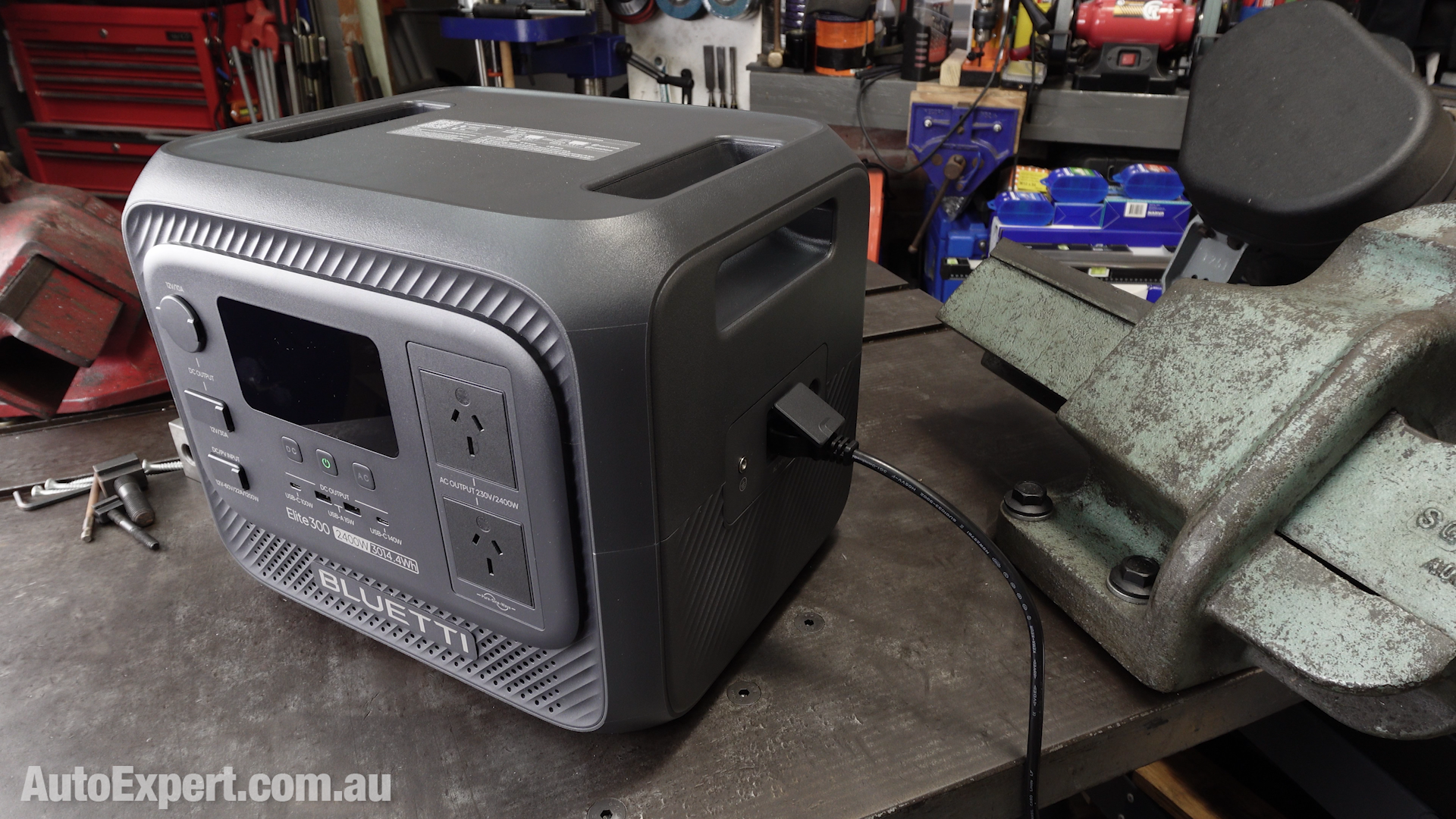
There’s no external charging brick for mains charging - you just plug a cord straight in.
Bluetti also sells the Elite 300 with a portable 500W solar array. It folds down to a size scarcely bigger than a briefcase, which is handy for camping, caravanning and temporary off-grid use.
If you already have solar panels on your 4X4, you can also connect those, provided the voltage and current are within spec.
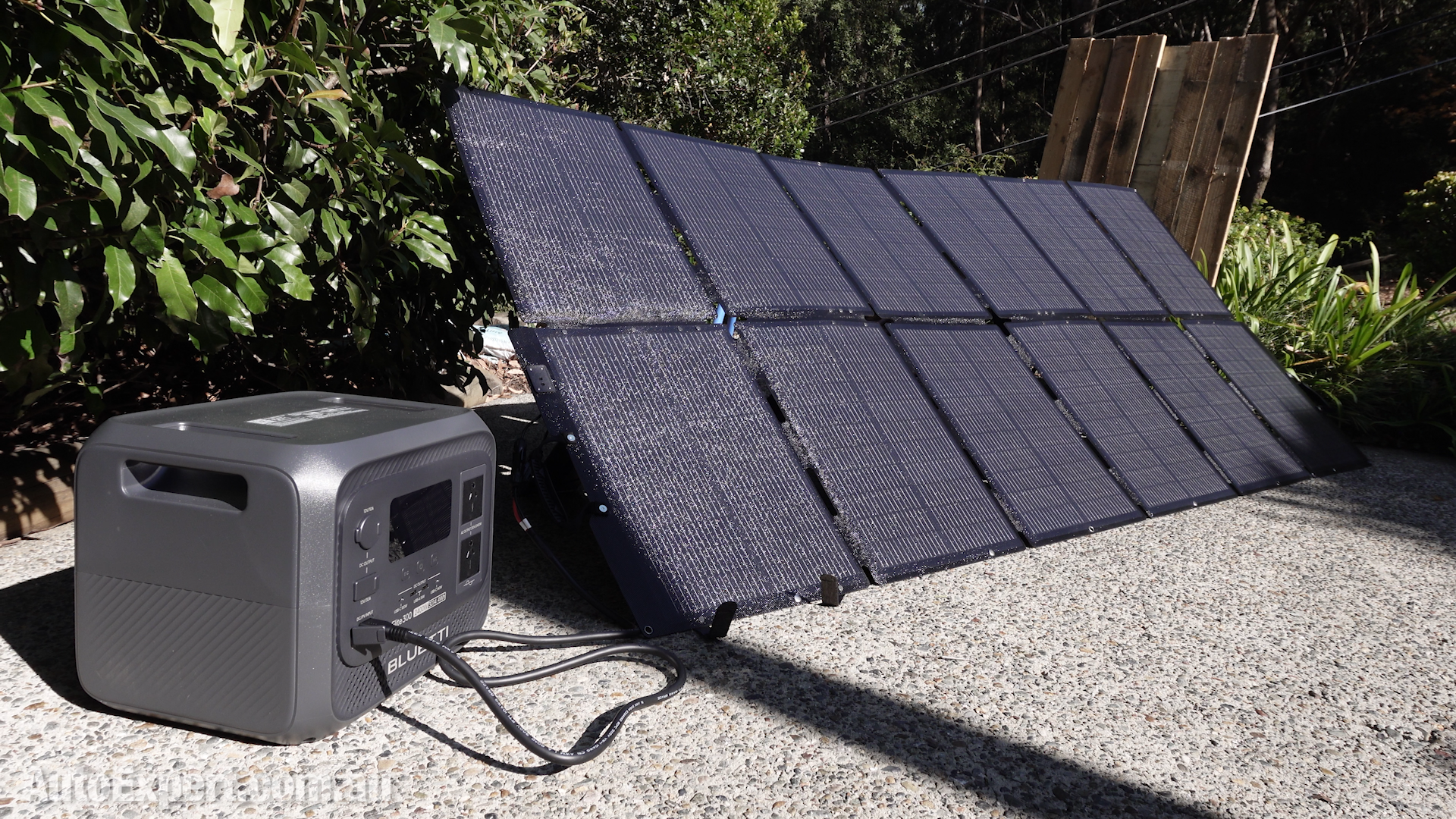
Bluetti’s 500W portable panel measures roughly 2550×115 deployed, and only takes about 60 seconds to un-furl once you’ve done it a couple of times.
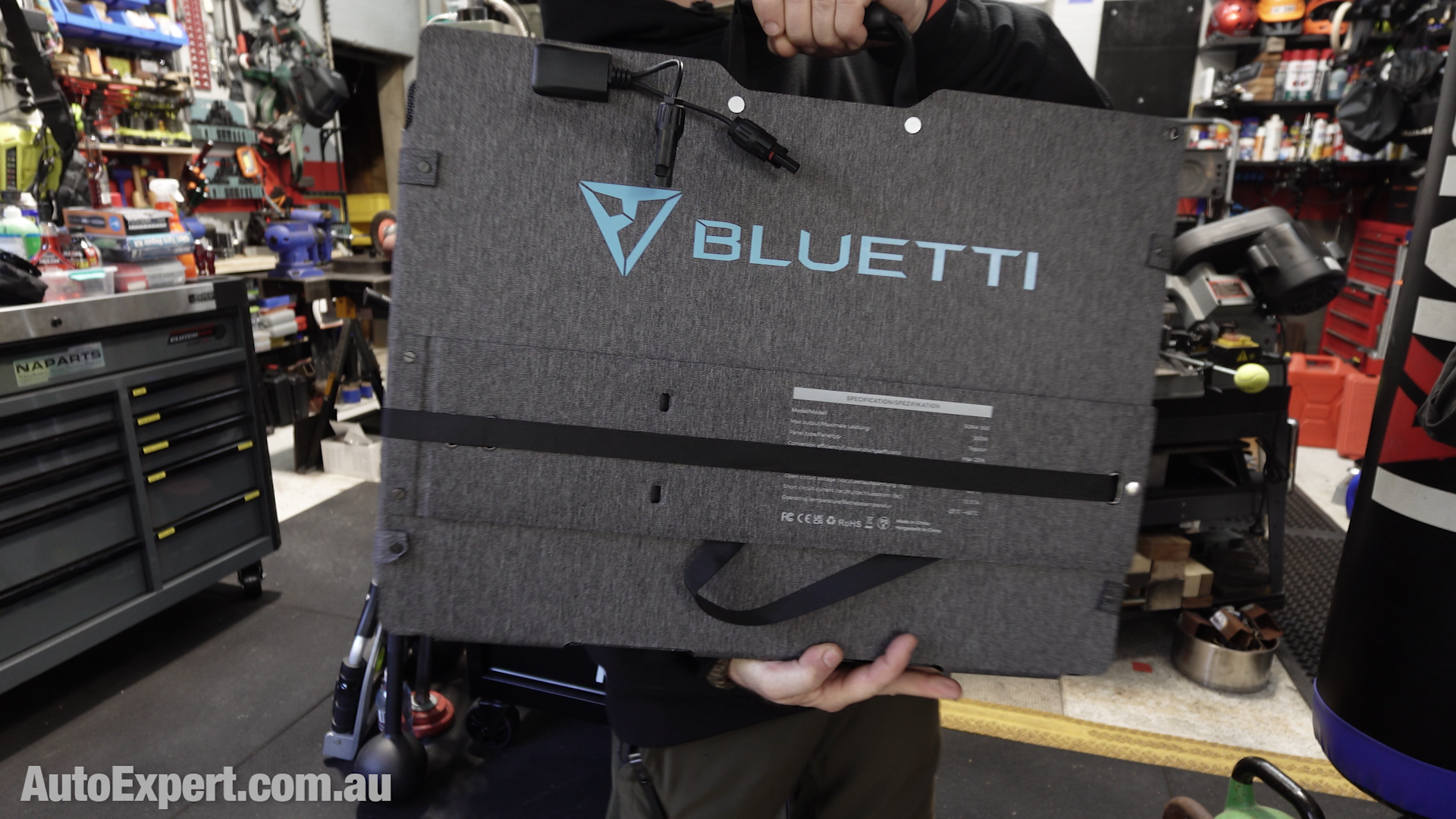
Pretty impressive design for camping applications - briefcase-sized when folded for transit or storage.
You can charge the unit from a vehicle’s 12V supply as well, but direct vehicle charging is limited to 200W. That is basically a trickle charge for a unit this large.
For faster vehicle charging, Bluetti offers optional dedicated 12V charging gear.
One option is a 600W standalone vehicle charger. At 12 volts, that is around 50 amps DC, so installation needs to be done properly. Fifty amps is unforgiving if cables are undersized, poorly protected, rubbing on bodywork or routed near exhaust heat.
Do not bodge that installation.
Another option combines up to 600W of 12V DC input with up to 600W of solar at the same time. That means you could potentially draw 600W from the alternator and 600W from rooftop solar while driving.
If you started driving with a flat Elite 300, a 600W charging system would get you back to full in about five or six hours, ballpark.
The reason these higher-output 12V charging systems are external rather than built into the power station is simple: thermal management and packaging. Not everyone needs that 4X4-specific charging capability, and building it into the main unit would make the unit bigger, hotter and more complex for everyone.
Think carefully about how you’ll actually use the Elite 300 before choosing the package.
App Control and Usability
The Elite 300 has Bluetooth and works with the Bluetti app.
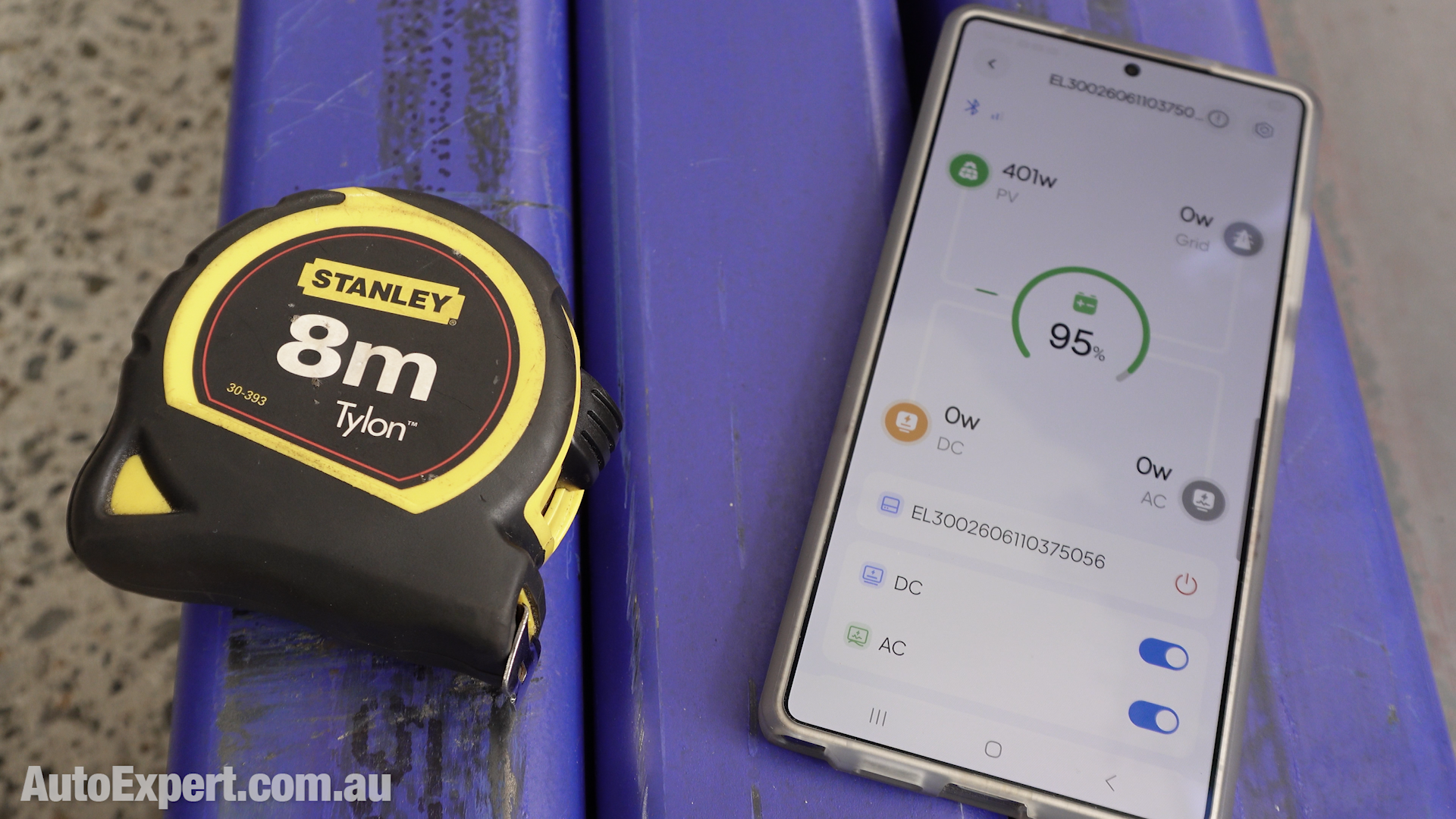
That is handy because the screen can be a bit hard to read outdoors in bright sunlight. From the app, you can monitor and control most functions.
The one thing you cannot do from the app is turn the unit on if it is fully shut down. That’s not a major criticism, just something to know.
Daily Use and Electricity Arbitrage
If you buy one of these for camping, caravanning or blackout protection, I would not let it sit idle in the shed for 11 months of the year.
You can use it every day.
For example, in Sydney, peak electricity can be about 60 cents per kWh, while off-peak can be about 30 cents. You could connect the Elite 300 to a power point using a simple timer, charge it overnight on off-peak power, then run something during the day or early evening.
Outdoor lights. A shed fridge. Ceiling fans. Sub-floor ventilation. A trickle charger for a weekend car. Whatever suits your situation.
That is electricity arbitrage: buy it cheap, store it, use it when grid power would be more expensive.
The saving is not enormous. Maybe around a dollar per full cycle in rough terms, depending on your tariff and usage. Over a year, perhaps a few hundred dollars if you used it intelligently and consistently.
So I am not saying you should buy one purely to save money on electricity.
But if you are buying it anyway for camping or backup power, daily use can extract more value from the hardware instead of leaving it to gather dust.
The Elite 300 is rated for thousands of charge cycles, so using it regularly is not unreasonable.
Price and Value
The Elite 300 is not cheap.
At the time of review, it was priced at $2799. The 500W solar array was $1699 on its own, or available as part of a bundle with the Elite 300 for just under $4000. That effectively discounts the panel when purchased as a package.
There are also bundle discounts with the optional vehicle charging systems.
As always, the right package depends on your use case.
If you only want home backup, the standard unit may be enough. If you want to camp for days off-grid, the solar package makes sense. If you want to use it heavily in a 4X4 while driving, the higher-output DC charging hardware may be worthwhile.
The key value proposition is not just the battery capacity. It is the integration.
You are not building a battery system, inverter system, charger system, solar controller system and wiring architecture yourself. You are buying a complete package where the engineering integration has already been done.
That matters.
Especially if the alternative is a DIY electrical science project in the back of a vehicle, with high current, vibration, dust, heat and a generous helping of optimism.
Verdict
The Bluetti Elite 300 is the best Bluetti power station I have tested so far.
It packs a serious amount of stored energy into a compact, portable unit. It delivers strong continuous output, impressive surge capacity, proper 15-amp AC sockets, useful USB and DC outputs, integrated charging, solar compatibility, UPS functionality and app control.
It will not run everything. Large compressors, industrial belt grinders, lathes and vehicle hoists can still defeat it.
But it will run a surprising amount of serious workshop gear, including saws, drills, grinders, bandsaws, a milling machine and even a 15-amp MIG welder in sensible use.
For camping, caravanning, blackout protection, remote work, farm jobs, mobile repairs and general off-grid power, it is an extremely capable all-in-one solution.
It is expensive, but it is good value if you actually need the capability. The biggest compliment I can give it is this: it does not feel like a gadget. It feels like infrastructure in a portable case.
Get 6% OFF the Bluetti Elite 300 Now
Get 6% off the Bluetti Elite 300 until June 15, 2026 with my exclusive code: AEJC6% on checkout