
Two-post, four-post, single-post or scissor lift? Here's how to choose the right car hoist for your home workshop, without making an expensive mistake.
If you're serious about maintaining your own vehicles, restoring an old car or simply making your home workshop more capable, a car hoist is one of the most transformational investments you can make.
Enquire here
Fill in the form below to learn more - there’s no obligation.
Getting a vehicle off the ground and up to a comfortable working height changes almost everything about servicing and repairing it. No more crawling around on the concrete, fighting with trolley jacks or spending half your time trying to position axle stands.
But there's a problem: Not all car hoists are created equal, and the best hoist for one workshop might be completely unsuitable for another.
To sort through the options, I recently spoke with Rohan Steele, owner of Hero Hoists Australia, who has approximately 20 years' experience in the car hoist industry.
We discussed the four principal hoist designs available to home workshop owners: four-post, two-post, single-post and scissor lifts. Each has its advantages, limitations and particular applications.
I also have some direct experience here. I own two Hero Hoists products myself, and they've fundamentally changed the way I use my workshop.
Four-Post Hoists: Versatility, Stability and Storage
A four-post hoist is arguably the most straightforward option for many home workshop owners.
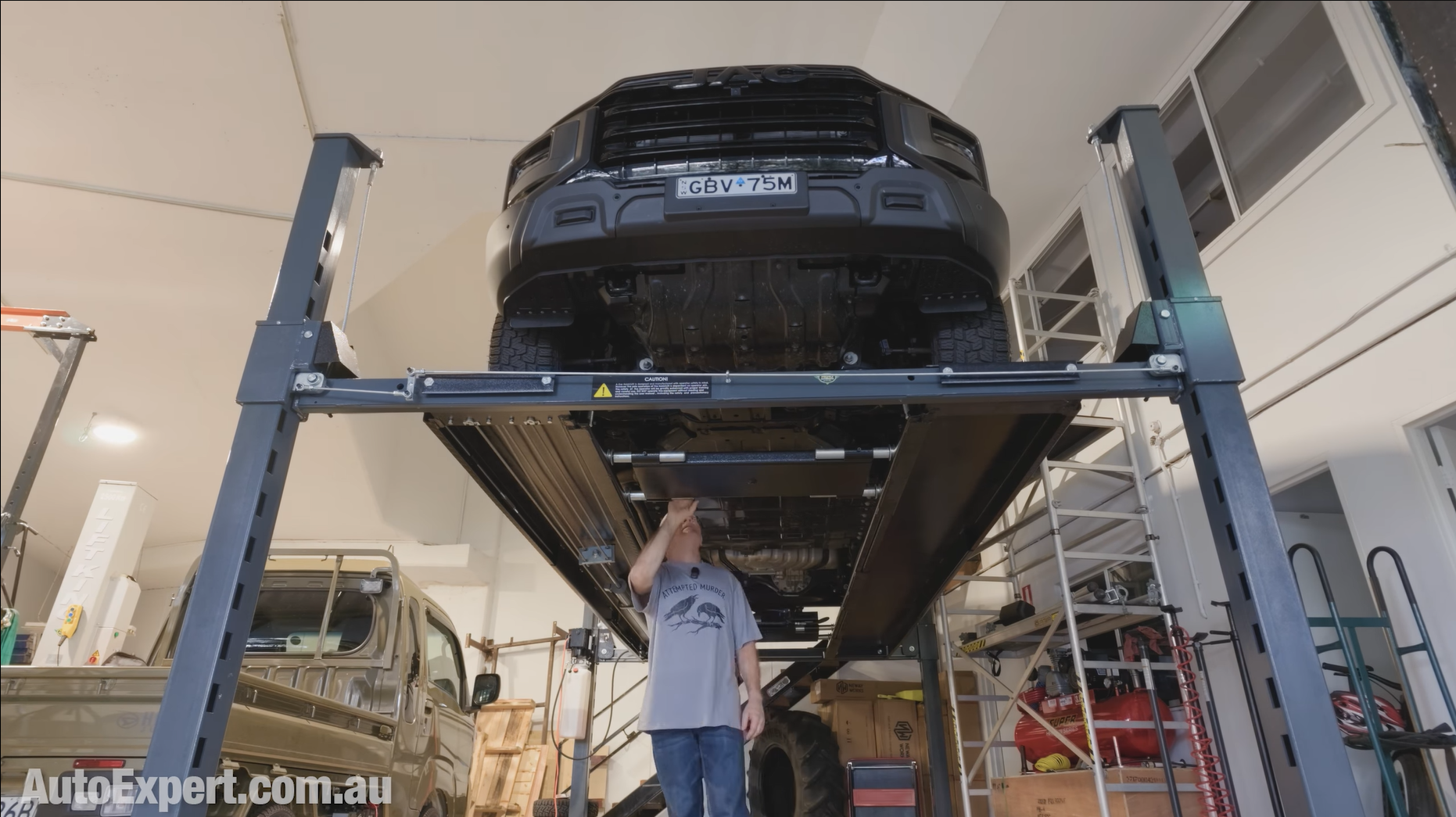
You simply drive the vehicle onto two runways and raise it. The vehicle remains supported by its wheels, which makes positioning relatively easy and eliminates the need to locate chassis lifting points.
Four-post hoists are particularly attractive if you want to combine routine maintenance with vehicle storage.
For example, if you have two cars but only one parking space, a suitable four-post parking hoist can allow one vehicle to be stored above the other, provided your garage has sufficient height.
And if you're restoring a classic car or maintaining a weekend toy, keeping it elevated can free up valuable floor space.
Advantages of a four-post hoist
Simple drive-on operation and straightforward vehicle positioning.
Excellent for inspection, cleaning, servicing and vehicle storage.
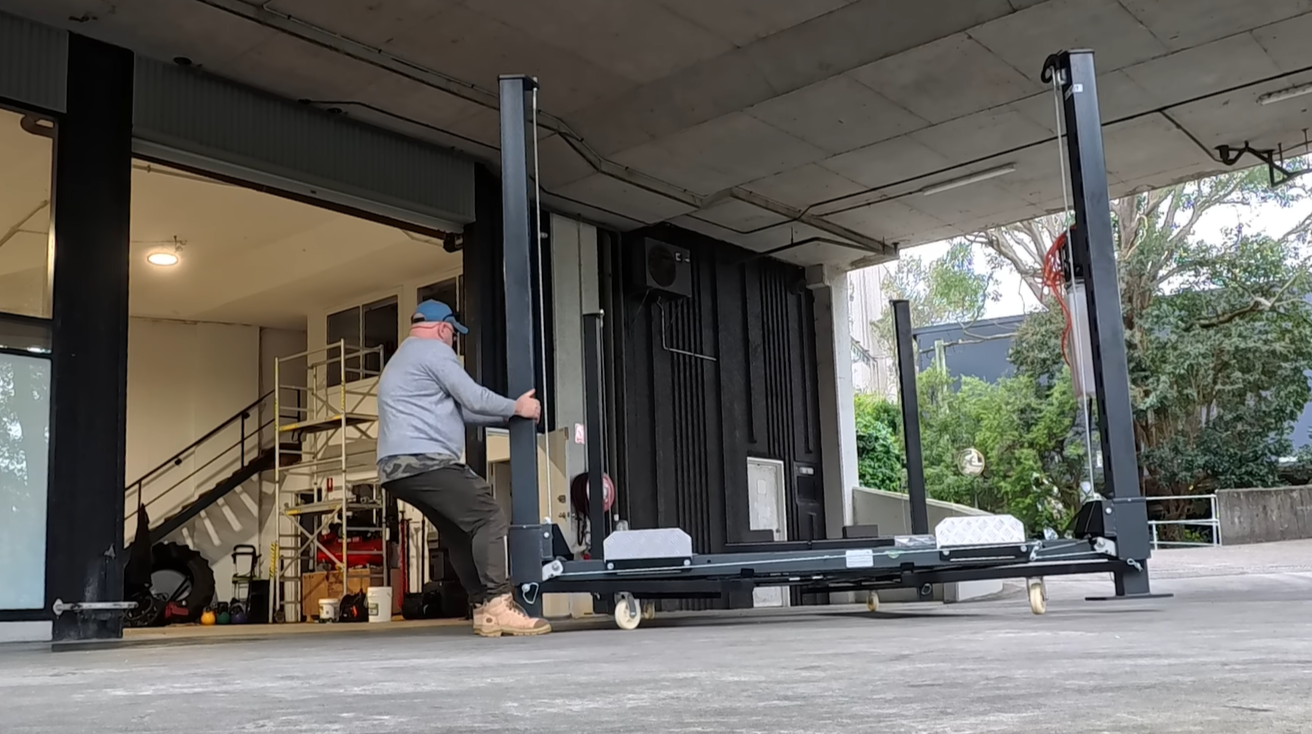
Many models are freestanding and can be repositioned using an optional caster kit.
The vehicle remains supported by its wheels.
Suitable models can accommodate large and relatively heavy vehicles.
Optional jacking beams allow wheels-free servicing.
The principal limitation is access. Because the vehicle sits on its tyres, you cannot simply remove the wheels to service brakes or suspension components.
However, this limitation can be overcome with a suitable jacking beam, which lifts the vehicle relative to the hoist runways.
My own four-post hoist
I own a Hero Hoists Lift King 9XL, a 4000kg-capacity four-post hoist.
It's freestanding, and with the appropriate caster arrangement it can be moved around the workshop when required.
Mine also has a manually operated hydraulic jacking beam, which significantly increases its utility for servicing work.
For my purposes, it's an excellent combination of lifting capacity, accessibility and practical versatility.
Best suited to: Home mechanics, classic car enthusiasts, vehicle collectors and owners who want a combination of servicing capability and additional parking space.
Two-post hoists: The traditional mechanic's solution
Walk into almost any professional automotive workshop and you'll see two-post hoists.
There's a reason for that.
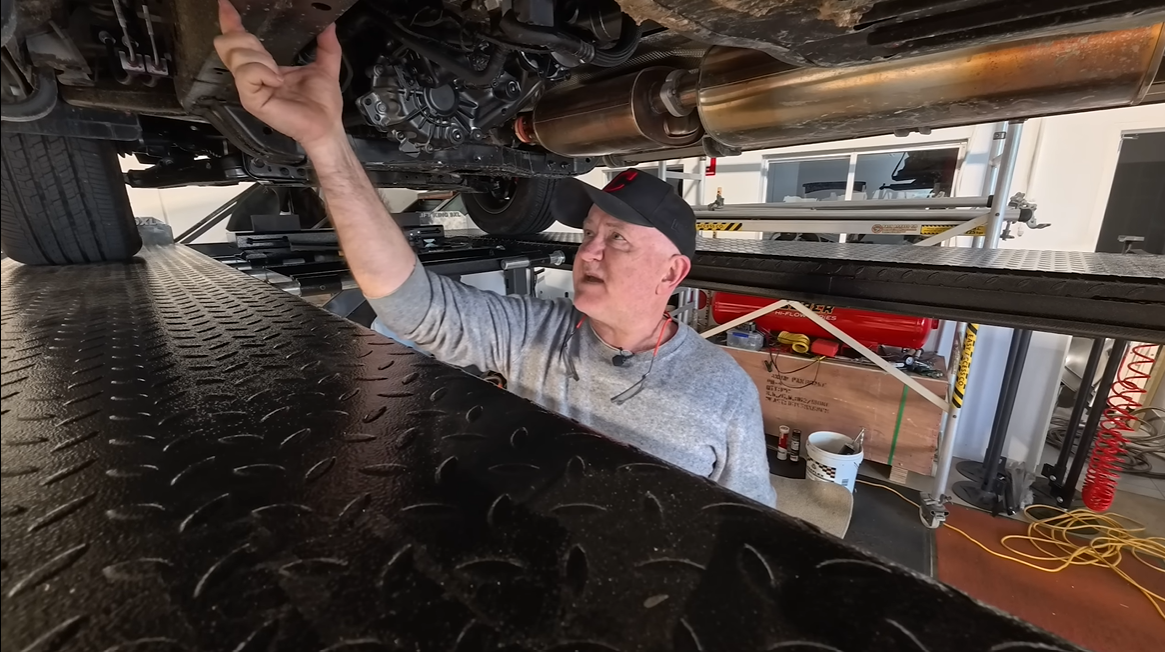
A two-post hoist supports the vehicle at designated lifting points beneath the chassis or body, leaving the wheels hanging free and providing excellent access to most of the underside.
For jobs involving brakes, suspension, steering, wheel bearings and a wide variety of mechanical repairs, this arrangement is extremely useful.
It's also a space-efficient way to provide substantial lifting capacity, although the required width, ceiling height and working clearances must be considered carefully.
Advantages of a two-post hoist
Excellent access to wheels, brakes and suspension.
Generally good access to the engine, transmission and underbody.
Well suited to extensive mechanical servicing and repairs.
A broad choice of lifting capacities and configurations.
Often attractive value for dedicated servicing applications.
Limitations to consider
Unlike many four-post hoists, conventional two-post units generally require permanent anchoring into a suitable concrete slab.
The slab's thickness, condition, strength and reinforcement must be appropriate for the selected hoist and its installation requirements.
Vehicle positioning is also more involved because the lifting arms must engage the correct lifting points, with suitable adapters where necessary.
Two-post hoists also occupy permanent workshop space, and their posts can complicate door opening or vehicle movement in confined garages.
Some models have overhead crossmembers, while others use floor-level connections. Both configurations have their advantages, depending on your available space and intended work.
Best suited to: Serious home mechanics, vehicle restorers and owners who prioritise mechanical servicing over vehicle storage.
Single-post hoists: A surprisingly practical alternative
Single-post hoists are an interesting development, particularly for home workshops where space is limited or flexibility matters.
Instead of supporting the vehicle between two posts, the lifting mechanism operates from one side.
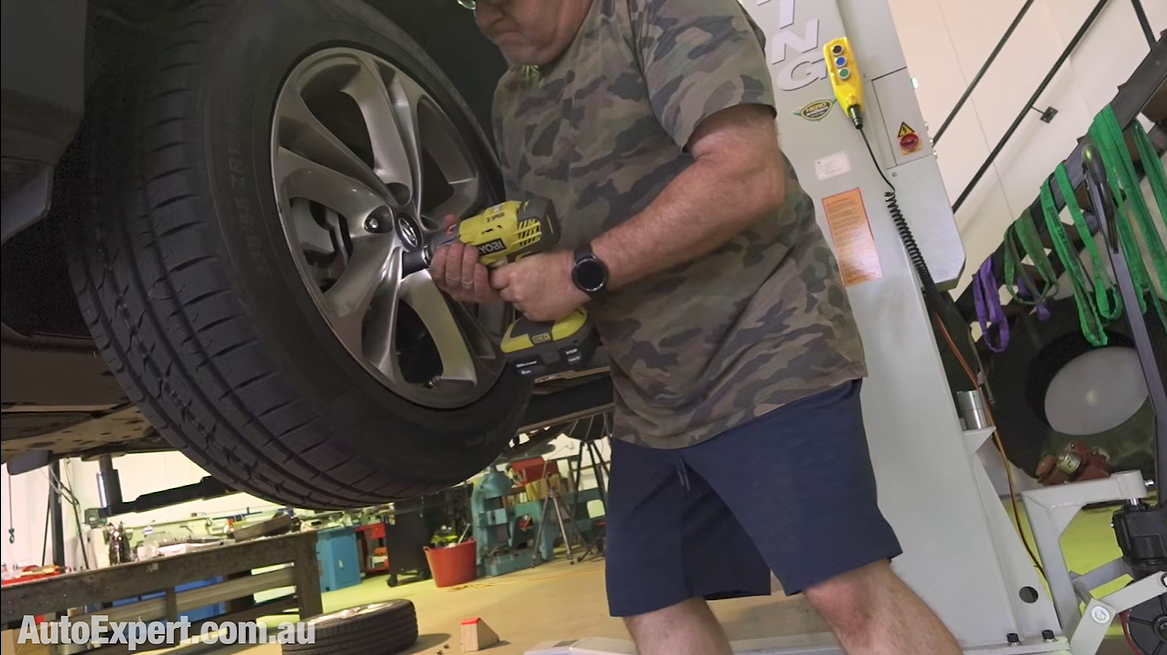
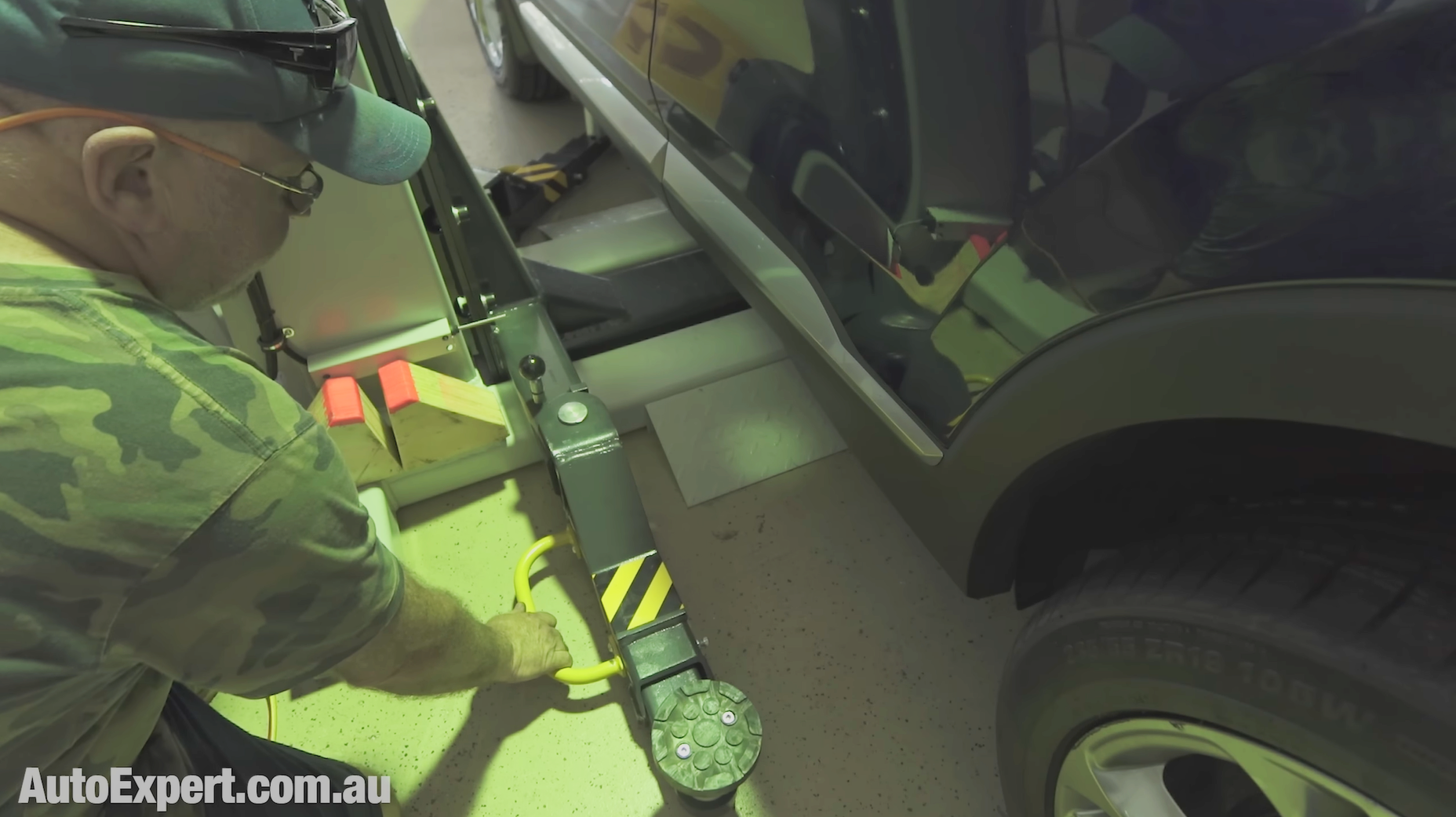
Hero Hoists offers a portable single-post service hoist, and I happen to own one.
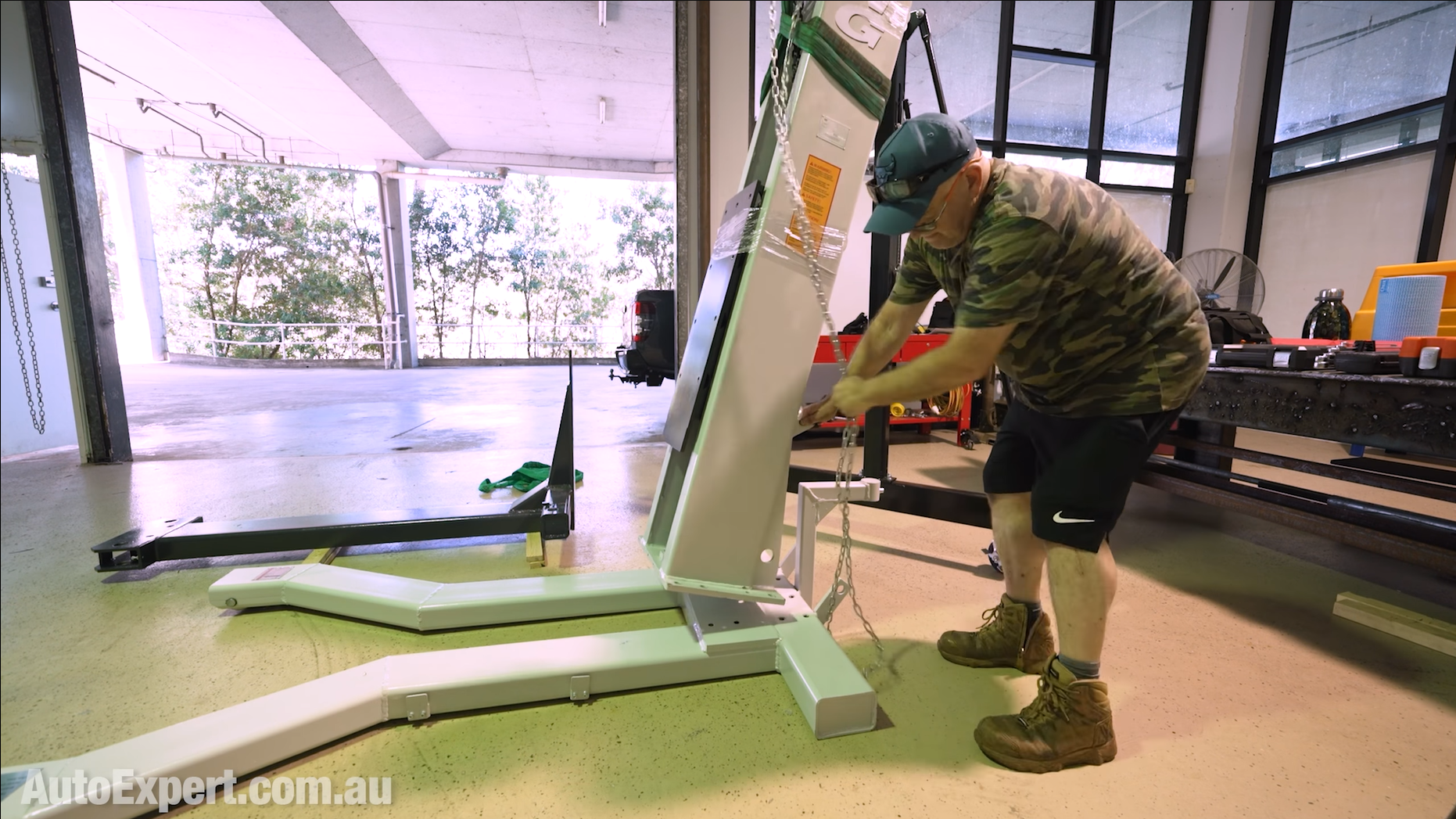
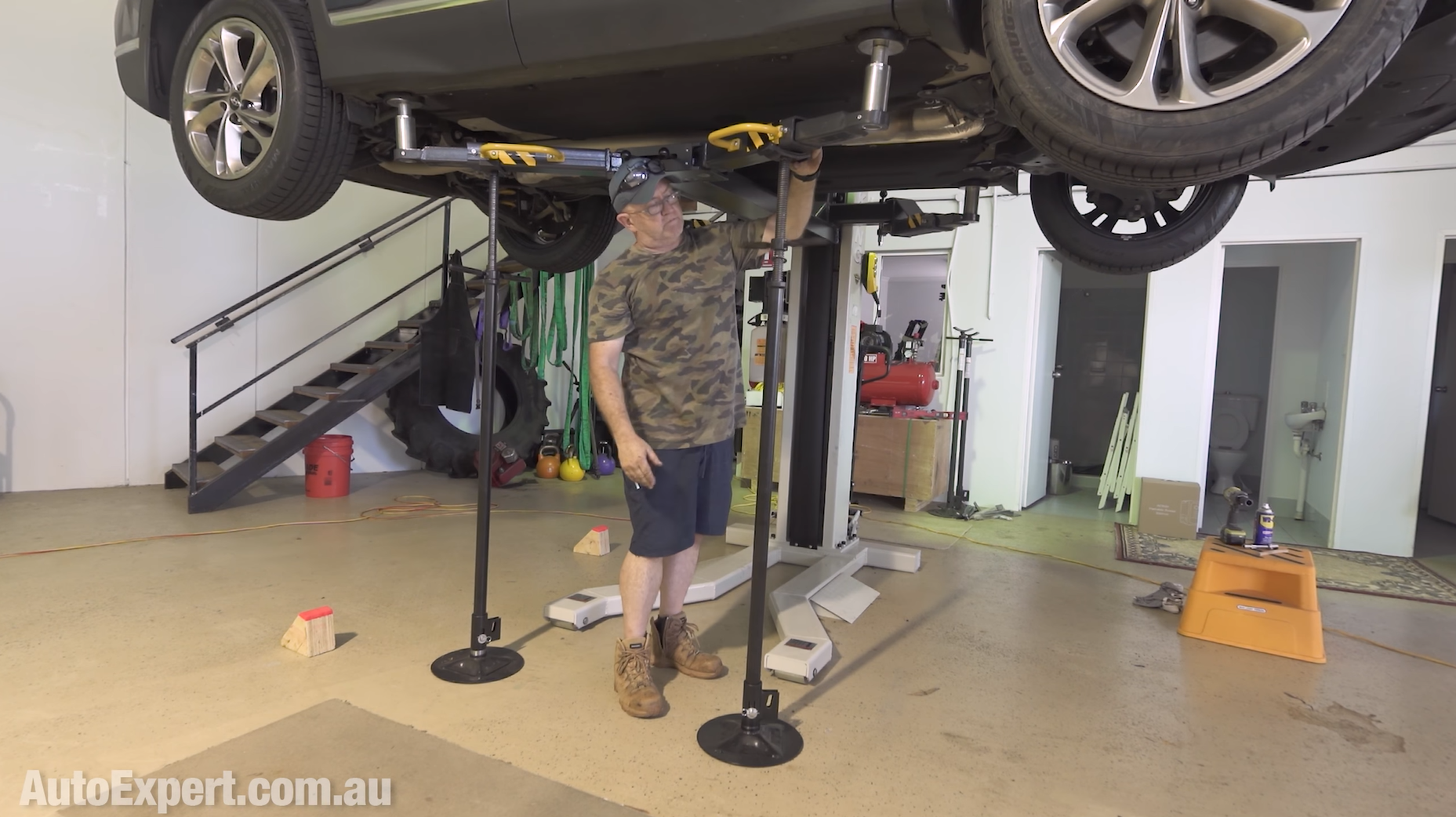
Mine is a 2500kg-capacity Lift King portable single-post hoist, which uses a pallet-jack-style arrangement to allow it to be moved around the workshop.
It can raise a vehicle to a proper working height, providing useful access for routine maintenance without permanently occupying a substantial area of floor space.
The first time you see a car suspended from a single column, it can look rather counterintuitive.
But the engineering principle is straightforward: the structure and its base must be designed to resist the overturning moment created by the vehicle's weight.
The result is a remarkably practical piece of equipment when used correctly and within its specified limits.
Advantages of a portable single-post hoist
Can be moved around the workshop when not required.
Doesn't need to occupy a permanent servicing bay.
Useful for routine servicing, inspection and many mechanical repairs.
Allows wheels-free lifting.
Particularly appealing in multipurpose home workshops.
Limitations to consider
The position of the central column and lifting structure can restrict access to some parts of the underside.
Vehicle mass, centre of gravity, lifting-point locations and compatibility with the hoist's arms are important considerations.
A portable hoist also needs a suitable floor surface and adequate space for positioning and operation.
It's not a universal substitute for a conventional two-post hoist, particularly for some more involved drivetrain or underbody operations.
My experience
I've been extremely happy with my single-post unit.
It has never missed a beat, and the portability is a major advantage. It's stable and practical for the majority of routine servicing operations I undertake.
Perhaps its most appealing feature is what happens when I'm finished using it: I park it under my welding bench.
Apart from the vertical column, it virtually disappears.
For somebody with a multipurpose workshop, where floor space must accommodate welding, fabrication and other activities, that's a genuinely compelling advantage.
Best suited to: Home mechanics seeking flexibility, owners of multipurpose workshops and people who don't want a permanently installed two-post servicing hoist.
Scissor lifts: Compact lifting for smaller workshops
Scissor lifts are another alternative worth considering, particularly where a conventional full-height hoist may not be practical.
Instead of using tall vertical columns, scissor lifts raise the vehicle through a folding mechanical structure beneath it.
They're available in several configurations, including compact, mid-rise and full-height models.
Some are portable, while others are designed for permanent surface mounting or recessed installation.
Advantages of a scissor lift
Compact designs can work well in smaller workshops or in confined motorsport pit garage applications.
Low-rise and mid-rise versions are useful for tyres, brakes and other servicing.
Some models are portable and easy to store.
No tall supporting posts are required.
Suitable configurations can offer convenient access around the sides of a vehicle.
Limitations to consider
The lifting mechanism generally occupies part of the space beneath the vehicle.
This can make certain exhaust, drivetrain and underbody repairs more difficult, depending on the design.
Mid-rise models also won't necessarily lift a vehicle high enough to work comfortably standing underneath it.
A full-height scissor lift is a different proposition from a compact portable unit, so it's important not to treat all scissor hoists as interchangeable.
Best suited to: Owners with limited space, people who regularly perform brake and wheel-related maintenance, and workshops where a conventional post hoist is impractical.
Which hoist is right for you?
Hoist type | Principal advantage | Main compromise
Four-post -Easy vehicle positioning, storage and servicing -Wheels-free servicing usually requires extra equipment
Two-post -Excellent mechanical access -Permanent installation and floor requirements
Single-post (portable) -Mobility and workshop flexibility -Some restrictions on underside access and vehicle compatibility
Scissor lift -Compact design and flexible installation options -Centre-underbody access and lifting height vary by model
There is no single universally superior design.
The right hoist depends on what you intend to do with it, which vehicles you own and the physical constraints of your workshop.
Six things to establish before buying a car hoist
Before spending thousands of dollars, there are several practical questions worth answering.
1. What vehicles will you lift?
Consider not just your current car, but the heaviest and largest vehicle you're likely to own.
A small sports car and a large four-wheel drive impose very different demands in terms of lifting capacity, lifting points, wheelbase, track width and clearance.
2. How much workshop space is available?
Measure the ceiling height, available width and length, and remember that the vehicle itself needs clearance as it rises.
Also consider garage door tracks, lighting, roof beams and other overhead obstructions.
3. What condition is the concrete floor in?
Many permanently installed hoists require a properly specified concrete slab and approved anchoring arrangements.
Don't assume that an ordinary residential garage floor is automatically suitable.
4. What sort of servicing will you undertake?
Oil changes and underbody inspections impose different access requirements from suspension rebuilding, gearbox removal or major restoration work.
Think about the most difficult job you're realistically likely to attempt.
5. Do you need the workshop floor for other things?
A permanently installed hoist may be ideal in a dedicated mechanical workshop.
If you're also welding, fabricating, woodworking or using large machinery, a portable solution may be much more attractive.
6. What electrical supply and installation work will be required?
Check the manufacturer's requirements for the specific model. Power supply, electrical protection, installation, commissioning and any necessary structural work should all form part of the purchase decision.
And, of course, any hoist needs to be installed, inspected, maintained and operated according to its manufacturer's instructions and applicable Australian safety requirements.
Hero Hoists also offers an assembly service if DIY is not an option for you.
Enquire here
Fill in the form below to find out more - there’s no obligation.
Why getting advice before buying makes sense
The mistake to avoid is buying a hoist based on price or appearance, only to discover that it's incompatible with your workshop or unsuitable for the work you actually want to perform.
Rohan Steele at Hero Hoists Australia deals with these questions regularly.
Hero Hoists offers a broad selection of lifting equipment, including different four-post, two-post, single-post and scissor-lift designs for both private owners and professional workshops.
It's worth having a conversation with somebody who understands the practical differences before committing to a particular design.
Thinking about buying a hoist for your workshop?
If you're planning a home workshop upgrade, building a new garage or simply sick of crawling around beneath your car, I can put you in touch with Rohan Steele at Hero Hoists Australia.
Fill out the enquiry form above, providing some basic details about your workshop, the vehicles you want to lift and the type of work you intend to do. Rohan can then contact you directly to discuss which Hero Hoists models are suitable for your requirements.
There's no obligation to buy anything. The idea is simply to help you make an informed decision before spending your money.
I personally own the two Hero Hoists products discussed above. AutoExpert has a commercial referral arrangement with Hero Hoists Australia. If you submit an enquiry through our website and subsequently purchase a hoist from Hero Hoists, we may receive a commission on the sale. This does not increase the price you pay. The opinions and recommendations expressed here are my own, informed by my engineering background and firsthand experience using Hero Hoists products in my workshop. Basically, I like the product - that’s why I recommend it.